Leggy Growth on Areca Palm: Causes, Checks & Fixes
Quick answer
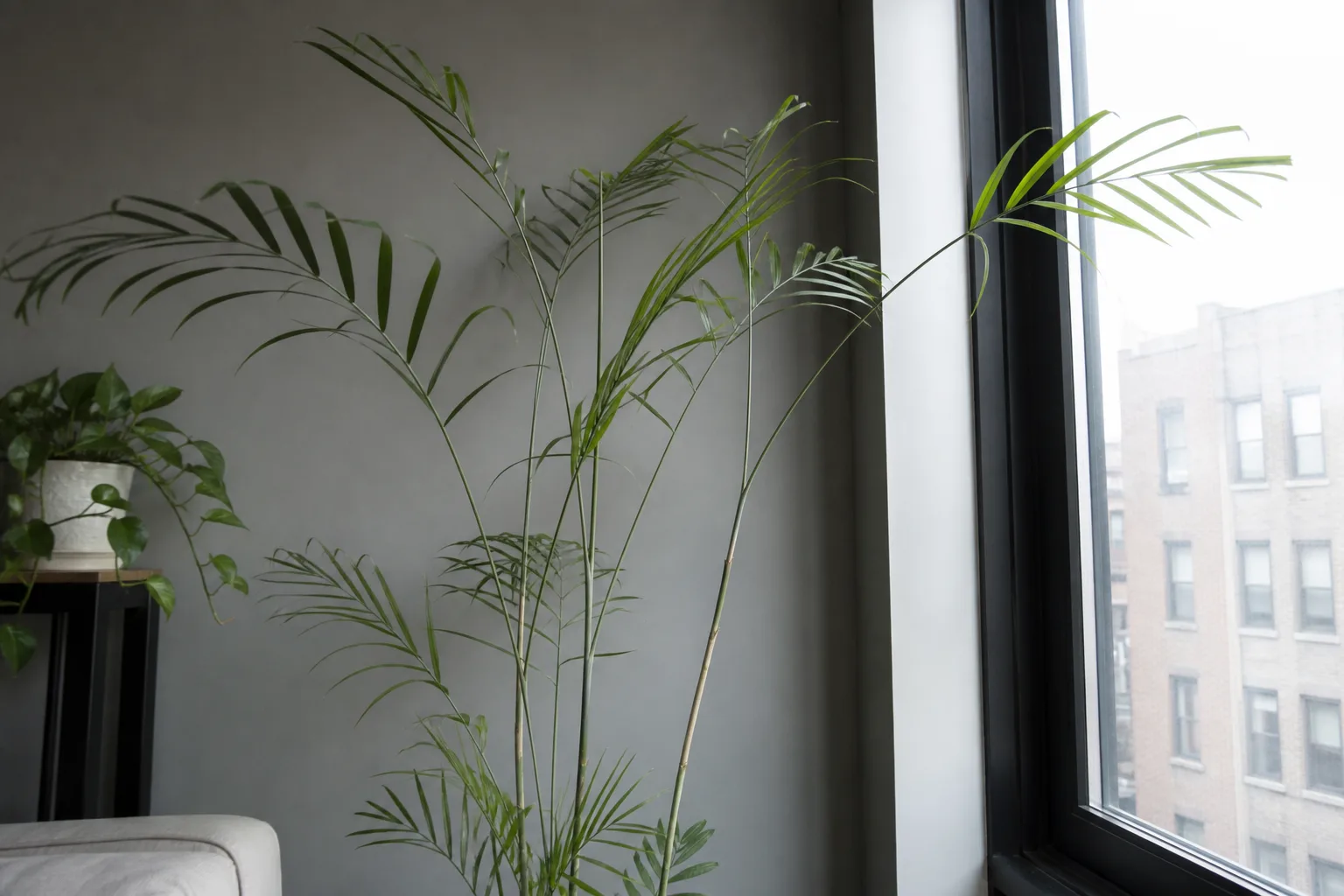
Leggy Areca Palm is etiolation: long thin arching fronds, widening gaps between spears, and sparse leaflets on new growth because light at frond height is too weak. First step: compare leaflet density on the newest spear to mature fronds above it, then move the clump to bright indirect light within a few feet of an east window or filtered south or west glass.
Leggy Growth on Areca Palm: Causes, Checks & Fixes
This guide covers leggy growth on Areca Palm. See also the general Leggy Growth guide, watering, and light pages for this plant.
Leggy Growth on Areca Palm: Causes, Checks & Fixes
Quick answer
Leggy Areca Palm (Dypsis lutescens) is etiolation-the clump stretches its long arching pinnate fronds toward usable light, opens new spears with fewer leaflets, and leaves bare lower cane zones as older fronds drop without replacements. Multiple bamboo-like stems share one root ball, so when light is weak every cane leans the same direction and the silhouette turns top-heavy and sparse.
First step: compare leaflet density on the newest spear to mature fronds above it. If rows are sparse, gaps between fronds are widening, and the clump points toward the brightest window, light is the primary limiter-move to bright indirect light today. For the full shadow test, placement trial, wet-soil trap, and acclimation workflow, see not enough light on Areca Palm-this page focuses on stretch diagnosis, clustering-canopy etiolation, permanent rachis elongation, and why pruning cannot fix legginess without more light.
Leggy growth vs not enough light vs slow growth
These Areca Palm problem pages overlap, but each answers a different search question:
| What you see | Most likely issue | Start here |
|---|---|---|
| Long thin arching fronds, sparse new leaflets, widening gaps between spears, window lean | Leggy growth (etiolation) | This page |
| Sparse dull fronds overall, slow dry-down, yellow lower fronds on wet soil, dim placement | Not enough light (broader light deficiency) | Not enough light |
| Little new spear growth for weeks, relatively tight old spacing but stalled output | Slow growth (roots, season, nutrients) | Slow growth |
| Limp fronds, wet or dry soil extremes, crown still firm | Drooping or watering stress | Drooping leaves or overwatering |
Leggy Areca Palm still opens new spears-often on visibly longer rachis-but each frond carries fewer leaflets and sits farther from the last. Slow-growth palms may look stable yet barely add spears for months. The not-enough-light guide covers the full sparse-canopy picture including dull color and the dim-corner overwatering trap; leggy growth zeroes in on rachis stretch, leaflet thinning on new spears, and clustering-canopy lean as the signature etiolation pattern-and the fact that old stretched rachis never shortens after light improves.
What leggy growth looks like on Areca Palm
Healthy Areca Palm carries a flush of arching feather-shaped fronds from each yellow-green cane-NC State Extension describes a clustering palm with multiple stems from one base and pinnate fronds suited to bright indoor rooms. Leggy etiolation breaks that density:
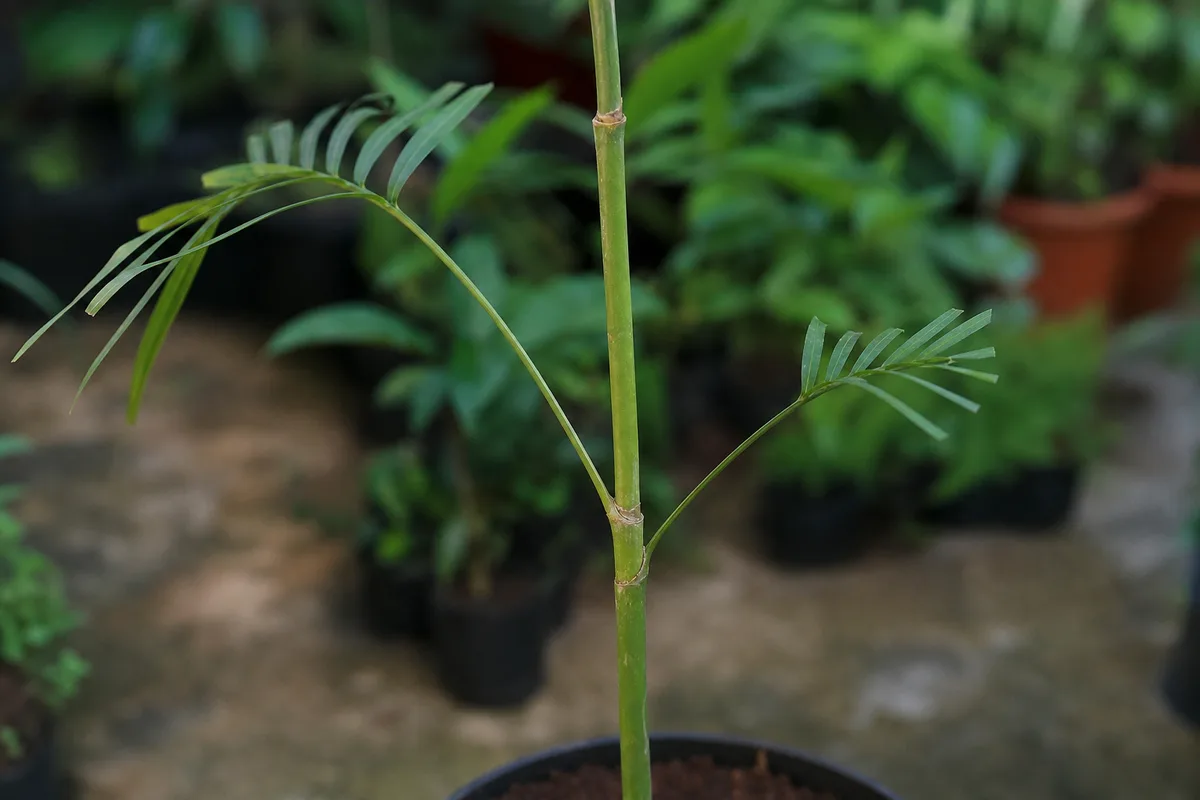
Leggy Growth symptoms on Areca Palm - compare with healthy tissue on the same plant.
- Long, thin arching fronds reaching toward the brightest direction-classic etiolation as the plant stretches for more light
- Sparse leaflets on new spears compared with older fronds higher on the same cane
- Widening gaps between fronds along each stem as internodal spacing increases
- All canes leaning together toward one window-the clustering habit magnifies one-sided stretch
- Bare lower cane zones with a green top-heavy crown-lower fronds drop without replacements when photosynthesis cannot keep pace
- Pale yellow-green new tissue instead of rich green leaflet pairs along the rachis
- Slow soil dry-down on your normal watering schedule because dim light reduces transpiration
Compare the last two spears on each cane. If rachis length increased and leaflet rows thinned, you are looking at etiolation-not the normal graceful arch of mature Areca fronds, which can be long while still carrying dense leaflet pairs. Insufficient light causes spindly leggy growth on many houseplants, including high-light tropical palms sold as easy indoor plants.
What leggy usually is not:
- Brown leaflet tips only on otherwise compact fronds in a bright spot-more often brown tips from fluoride or low humidity
- Sudden limp collapse with sour wet mix-overwatering or root rot, not stretch alone
- Bleached crispy patches on window-facing leaflets-too much direct sun; see Areca Palm light needs
Why Areca Palm gets leggy
Dypsis lutescens is native to moist forest areas in Madagascar, where it grows as a clustering palm beneath and beside taller canopy with filtered brightness-not the deep shade of a hallway shelf. Indoors it needs bright indirect light in a warm room to keep producing compact new spears.
Ranked causes on Areca Palm:
Low light at frond height (most common). Placement too far from windows, interior corners more than six feet from glass, short winter days, and dirty or curtained glass all cut intensity where the leaflets actually sit. Light intensity decreases rapidly with distance from the window-a room that feels bright to your eyes may fall well below what suppresses elongation on a palm with large compound fronds.
Clustering growth magnifies stretch. Multiple canes share one root ball. When light is low, every stem leans the same direction and lower fronds drop without replacements, leaving a bare trunk zone that looks like pruning damage but is really insufficient photosynthesis across the whole clump.
The low-light overwatering trap. Dim palms transpire slowly, so mix stays wet longer even on your normal soak. Yellow lower fronds and fungus gnats often trace to that wet-dry mismatch rather than a mysterious palm disease. Fixing water without improving light often fails; the not enough light guide walks through this pairing in detail.
Uneven window exposure. One-sided light produces aggressive lean on the shaded side while the sunward side looks slightly fuller. Weekly rotation evens lean but does not fix underlying dim placement.
Heavy fertilizing in dim light. Without adequate brightness, nutrients cannot build compact new spears-you may get pale elongated tissue without tightening leaflet density. Clemson HGIC notes that appropriate light supports healthy foliage growth indoors; feeding a stretched palm before correcting light wastes effort and can salt-stress roots.
Areca Palm does not branch from mid-frond cuts-new growth emerges only as spears from cane crowns. That is why Areca Palm pruning is cosmetic cleanup after light is corrected, not a shortcut to density.
How to confirm the cause
Work through this stretch-focused checklist before Areca Palm repotting guide, fertilizing, or stripping green fronds:
- Spear leaflet density trend - Compare the newest opening spear to the frond directly above it on the same cane. Thinning rows strongly suggest etiolation.
- Frond spacing along the cane - Widening gaps between successive fronds confirm stretch, not just a naturally arching mature blade.
- Shadow test at frond height - Hold your hand between the leaflets and the window at midday. No shadow means likely too dim; a sharp dark shadow on the leaflets means direct sun that may scorch. Full protocol lives on the not enough light page.
- Lean direction - Consistent tilt of all canes toward one window confirms active light-seeking stretch.
- Soil dry-down speed - Mix that stays damp two weeks after watering while fronds stretch pairs dim metabolism with your current schedule-often because light is low.
- Two-week placement trial - Move to brighter indirect light and change nothing else. Fuller leaflet rows on the next spear within three to six weeks confirm light was the main limiter.
Lookalike symptoms to rule out
Not enough light (broader) - Dull sparse fronds, winter thinning, and wet-soil yellowing without obvious rachis elongation may be general light stress. If stretch and leaflet thinning dominate, stay on this page; if overall sparseness and placement trial matter most, cross-check not enough light.
Overwatering / root stress - Yellow lower fronds with sour wet mix, often in the same dim corner where the palm uses water slowly. Fix light and dry-down together; inspect roots if the base softens.
Slow growth - Frond spacing stays relatively tight but almost no new spears appear for weeks; often cool winter conditions or root-bound pots.
underwatering on Areca Palm - Light pot, dry mix throughout, crispy leaflet tips and drooping fronds. Deep soak once, then resume schedule; do not move a thirsty palm farther from light.
Normal lower-frond senescence - Areca palms naturally drop oldest lower fronds on firm canes in bright light. Leggy etiolation adds long stretched rachis and sparse new spears, not just bare lower stems on an otherwise compact crown.
Spider mites - Stippling and fine webbing on frond undersides in warm dry air. Spider mites proliferate in hot, dry indoor conditions-treat pests after improving light, but mites alone do not cause long frond stretch.
First fix for Areca Palm
If spear leaflet rows are thinning and the clump leans toward the window: move the pot to bright indirect light today-east windowsill, one to three feet back from filtered south or west glass, or a full-spectrum grow light 12 to 18 inches above the canopy for 10 to 12 hours daily when natural windows are insufficient. Target roughly 1,000 to 3,000 lux at frond height as described in the Areca Palm light guide.
This single change addresses the most common cause without stacking stressors. Detailed placements, grow-light setup, and acclimation steps are on not enough light on Areca Palm.
Do not jump from a dark corner to unfiltered south or west sun. Direct full sun indoors may scorch the foliage on houseplant Areca Palm-acclimate over seven to fourteen days behind a sheer curtain if the clump lived in deep shade.
Change one variable at a time and read the next spear leaflet density before adding fertilizer, repotting, or heavy pruning.
Step-by-step recovery
After improving light:
- Hold watering steady for one week - Note how fast the top 1–2 inches of mix dry compared with the old spot. Brighter light usually means faster dry-down; adjust only after you see a new rhythm per the Areca Palm watering guide.
- Rotate the pot a quarter turn weekly - Clustering stems lean quickly toward glass. Even exposure helps new spears fill around the clump.
- Wipe dust from frond undersides monthly - Clean leaflets intercept usable light and make early spider mite stippling easier to spot.
- Wait for new spear growth before cosmetic pruning - Give the palm three to four weeks in improved light. If new fronds open with fuller leaflet rows, trim the longest bare lower stems only if they look unsightly. Old stretched rachis length will not shrink.
- Skip fertilizer until growth looks stable - Yellow fronds from low light are not fixed by feeding. Resume diluted palm fertilizer only when new spears look healthy for two weeks during spring or summer growth.
Recovery timeline
Expect the first sign of improvement-fuller leaflet rows on a new spear-within three to six weeks after a meaningful light increase during active growth. A thin clump may take two to three months to look dense again because old stretched fronds do not shorten; the palm rebuilds canopy from new spears outward.
Signs recovery is working:
- New spears open with more leaflets and greener color than the most recent pale growth
- Gaps between fronds on new canes tighten compared with the last stretched flush
- Lean stops increasing
- Soil dry-down becomes more predictable
Signs the problem is worsening:
- Continued yellowing with sour-smelling wet soil despite less frequent watering
- Soft tissue at the soil line or mass frond drop after acclimation
- New spears still tiny and pale after six weeks in bright filtered light-recheck distance from glass and consider a grow light
- Bleached fronds after slamming a dim palm into direct south sun-step back behind a sheer curtain
What not to do
Do not fertilize heavily to fix pale stretched fronds-without adequate light, nutrients cannot build compact new spears.
Do not move directly into harsh south or west sun to fix stretch quickly. Acclimate gradually; scorched leaflet tissue does not recover.
Do not water on the old calendar after a big light increase; check soil dryness instead.
Do not strip green fronds for neatness before light is corrected-you remove photosynthetic surface the palm needs to recover.
Do not assume palm shade tolerance because the label says easy-not enough light causes slow, spindly growth and small pale leaves on many houseplants, including clustering palms marketed for dim rooms.
Do not repot, prune heavily, and relocate on the same day unless root rot is confirmed-stacked stress obscures which fix worked.
How to prevent leggy growth next time
Place Areca Palm where bright indirect light reaches all canes, not only where the clump looks good decoratively. East windows, filtered south or west rooms, and grow-light stations are long-term targets-not interior walls far from glass.
Rotate the pot weekly. Re-check exposure at the spring equinox when sun angle increases on windows that were safe all winter. In dark homes, run a grow light on a timer through winter rather than accepting etiolation until longer days return. UF/IFAS Extension emphasizes matching light intensity to each species’ needs-Areca Palm sits on the brighter end of typical houseplant ranges.
Pair light awareness with dry-down watering. When you move the palm brighter, expect faster moisture use; when you must keep it in medium light, stretch the interval between soaks. The checkpoint that prevents repeat problems: firm new spears opening with full leaflet rows and a pot that dries on a predictable rhythm.
When to worry
Leggy stretch alone-firm stems, no smell, soil drying normally-is not an emergency. Move to better light this week and adjust water next.
Escalate when low light and wet soil overlap: yellowing that spreads up the stems, fungus gnats, soft tissue at the base, or mix that never dries within two weeks of watering. That pattern can become root stress quickly when photosynthesis cannot keep pace with moisture in the pot.
Related Areca Palm problems
- Not enough light on Areca Palm - shadow test, placement trial, wet-soil trap, and full light recovery workflow
- Slow growth on Areca Palm - when spacing stays relatively tight but spear production stalls
- Areca Palm pruning - cosmetic cleanup after light is corrected; why shearing green fronds will not fix legginess
- Areca Palm light needs - lux targets, window placement, and grow-light setup
- Areca Palm care overview - watering, humidity, and clustering-palm basics
Conclusion
Leggy growth on Areca Palm is etiolation-a structural stretch response to weak light at frond height, amplified by clustering canes that all lean together toward one window. Confirm it by comparing leaflet density on new spears, move to bright indirect light as the first fix, and judge recovery by new spear leaflet rows-not by whether old stretched fronds shrink back. Get light right first; cosmetic pruning and watering adjustments follow once new growth proves the clump is responding.
When to use this page vs other Areca Palm guides
- Areca Palm watering guide - Use for routine moisture checks before assuming leggy growth is the main issue.
- Areca Palm problems hub - Browse all 16 common issues on this species.
- Not Enough Light on Areca Palm - Different entry point when symptoms overlap with leggy growth.
- Slow Growth on Areca Palm - Different entry point when symptoms overlap with leggy growth.
- Yellow Leaves on Areca Palm - Different entry point when symptoms overlap with leggy growth.