Fungus Gnats on Areca Palm: Causes, Checks & Fixes
Quick answer
Fungus gnats on areca palm mean the soil surface stays wet too long-common when a moisture-loving Dypsis lutescens clump is watered on a calendar through a cool winter. First step: let the top 1–2 inches of mix dry before the next drink.
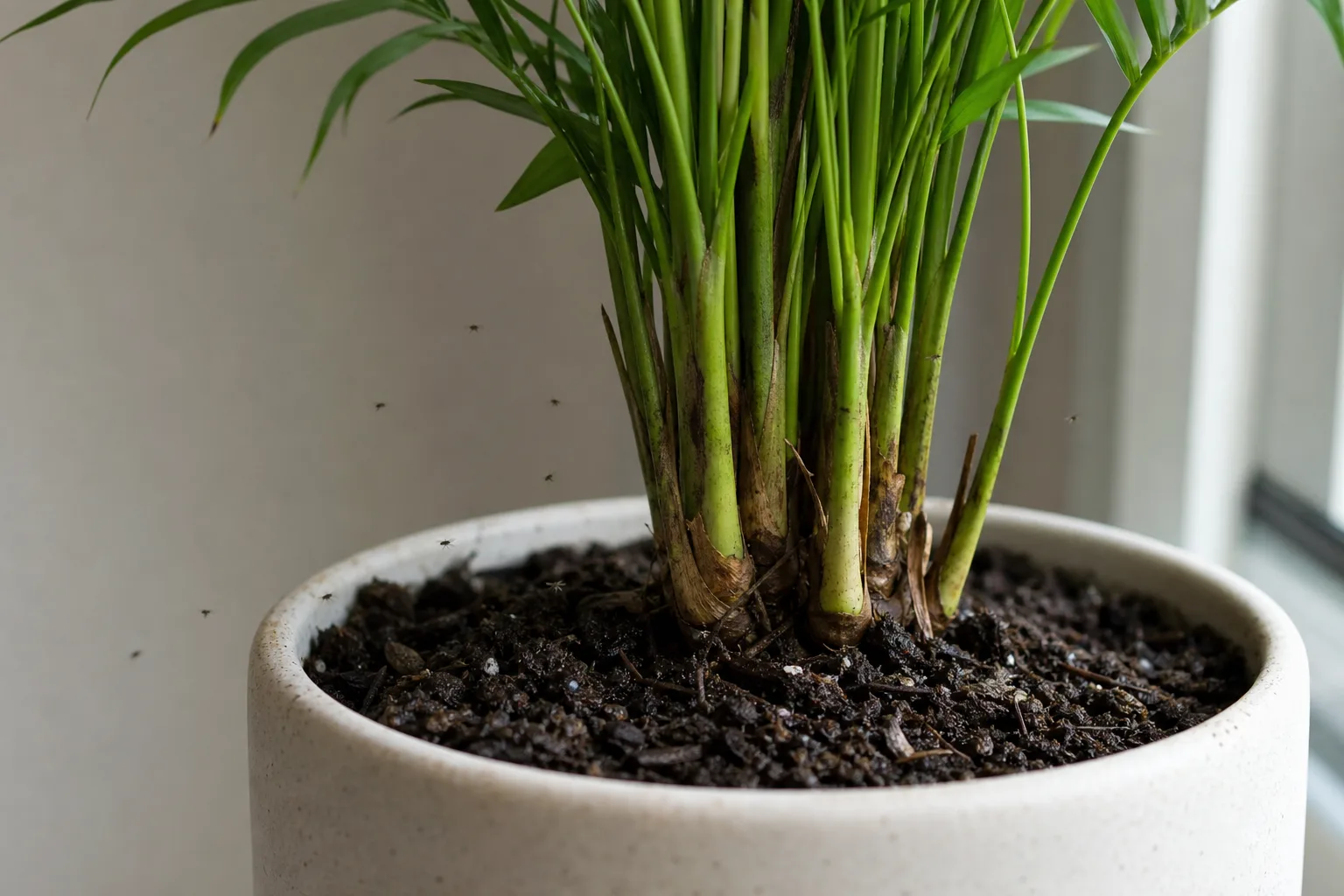
Fungus Gnats on Areca Palm: Causes, Checks & Fixes
This guide covers fungus gnats on Areca Palm. See also the general Fungus Gnats guide, watering, and light pages for this plant.
Fungus Gnats on Areca Palm: Causes, Checks & Fixes
Quick answer
Fungus gnats are small flies whose larvae live in damp potting mix, not on palm fronds. On areca palm (Dypsis lutescens - butterfly palm, golden cane palm) they almost always signal overwatering or slow surface dry-down - the same conditions that yellow lower fronds and invite root rot in soggy mix. The feathery fronds themselves rarely show gnat damage; the flies are a soil alarm on a palm that needs moist but not soggy roots.
That creates a narrow band many growers miss: Dypsis lutescens wants steady root-zone moisture, but gnats need the top layer wet for days. Winter calendar watering in a cool room, a multi-cane clump in an oversized pot, or bottom-watering that leaves the surface dark and damp all week keeps the egg zone alive even when you think you are being careful.
First step: let the top 1–2 inches of mix dry before the next drink - the same dry-check standard in our areca palm watering guide. That single dry cycle breaks the habitat larvae need and makes soil less attractive to egg-laying adults. Do not stop watering the entire pot until the root ball goes bone dry; target surface dry-down only.
What fungus gnats look like on areca palm
The palm often looks mostly fine at first. Damage is subtle compared with frond pests:
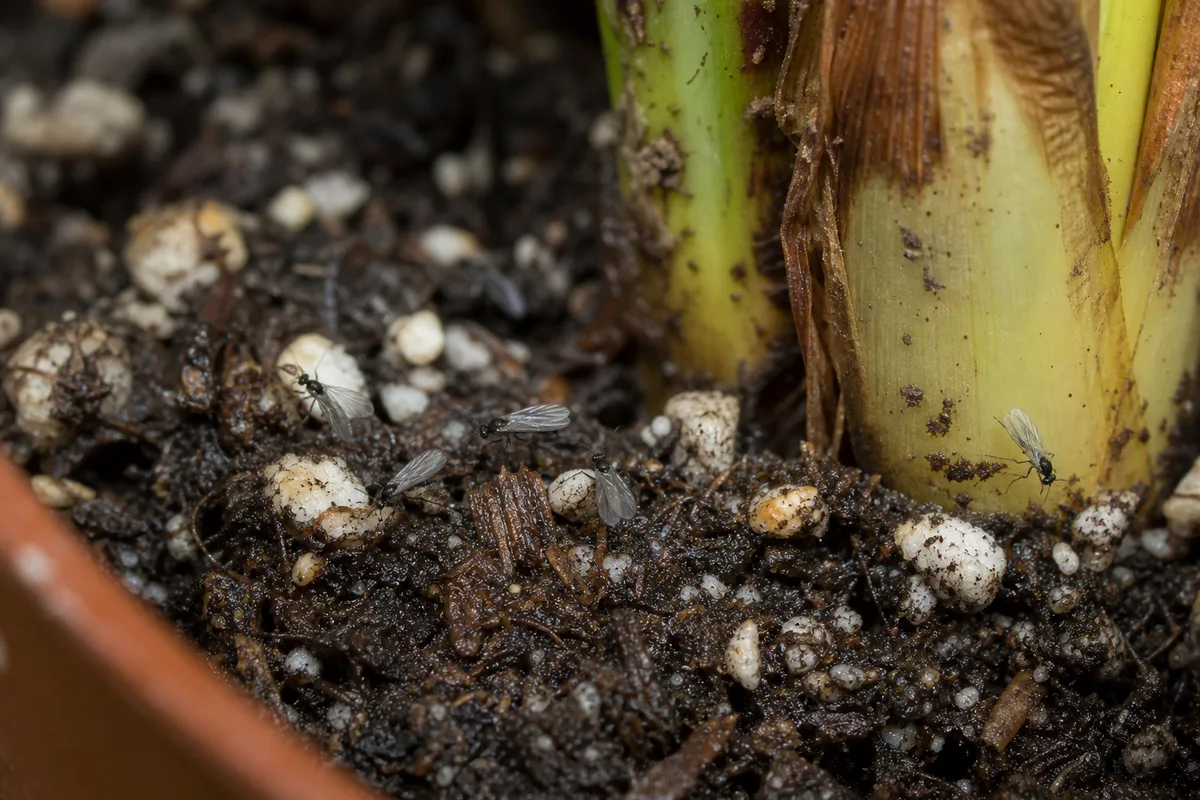
Fungus Gnats symptoms on Areca Palm - compare with healthy tissue on the same plant.
- Adults - Tiny dark or gray flies, about 1/8 inch long, that scatter when you water or disturb the pot. They hover near the soil line, windows, and lamps - not in clouds on feathery leaflet undersides.
- Larvae - Translucent, worm-like immatures in the top 1–2 inches of mix. You may see them when scraping the surface or sliding one cane out of the pot edge.
- Soil clues - Surface stays dark and damp five or more days after one drink. Sometimes a thin green algae film or fuzzy saprophytic growth appears on wet peat - see mold on soil when surface fuzz is the main symptom.
- Plant stress (later) - Yellow lower fronds, limp drooping spears despite moist soil, or stalled new growth when larval feeding and chronic wet roots combine.
Areca palm fronds do not get stippling, webbing, or sticky residue from gnats. If you see those patterns, look for spider mites, scale, or mealybugs instead. Gnats are a soil and watering problem wearing a flying nuisance.
Why areca palm gets fungus gnats
Fungus gnats breed wherever organic potting mix stays continuously moist near the surface. Adults lay eggs in that layer; larvae feed on fungi, decaying peat, and sometimes tender feeder roots. The flies are not picky about species - they follow water.
Dypsis lutescens makes wet surface soil more likely in several specific ways:
Moisture-loving biology meets gnat surface habitat. NC State Extension recommends growing areca palm in well-drained mix kept moist but not soggy. Owners who interpret “keep it moist” as frequent light splashes on top keep the egg zone wet while the center may still be usable - exactly where gnats breed.
Shallow, fibrous root system. Areca palms pull water through a relatively shallow root mass. In a large multi-cane clump, the soil volume is substantial; the surface can stay damp for a week while inner roots still have moisture - slowing dry-down without meaning the plant is thirsty.
Winter calendar watering. Growth slows as daylight shortens. The same watering rhythm that worked in July can leave mix damp twelve to twenty-one days in December. Cool rooms slow evaporation further - a common winter gnat trigger on palms.
Peat-heavy palm mix and cachepots. Standard bagged palm or tropical mix with high peat holds water at the surface. A decorative cachepot trapping runoff keeps the top layer anaerobic and attractive to egg-laying females even when you bottom-water carefully.
Oversized pots. Multi-stem nursery clumps sold in pots with extra soil mass mean more wet organic matter the palm cannot use quickly - especially in dim corners where transpiration is low.
The gnats are the visible alarm. The underlying risk on areca palm is the same wet-soil stress that causes yellow leaves, overwatering, and root rot - not the flies themselves on a healthy clump.
How to confirm the cause
Work through these checks before adding traps or drenches:
- Fly behavior - Do insects rise from the pot when watered? Do they run on the soil surface and up the pot sides? That pattern fits fungus gnats breeding in that container.
- Moisture at depth - Stick a finger or skewer 1–2 inches into the mix near the pot edge. If the upper zone is still cool and damp while you have been watering on schedule, overwatering is confirmed regardless of fly count.
- Pot weight and drainage - A heavy pot days after watering, a full saucer, blocked drain holes, or stale water in a cachepot support chronic surface moisture.
- Season and growth rate - Slow spear extension in winter with damp surface soil points to calendar watering out of sync with uptake.
- Larval check - Scrape the top inch of mix or inspect soil at the pot rim. Glossy worm-like larvae in damp peat confirm active breeding - not just stray flies from elsewhere.
- Frond and cane pattern - Whole-frond yellowing on lower leaves with wet soil points to root stress that may accompany gnats; stippled patches on feathery undersides do not.
If flies appear but the top 1–2 inches are bone dry and the pot is light, the infestation may be coming from a neighboring wet plant - identify which pot still holds moisture.
First fix for areca palm
Let the top 1–2 inches of mix dry fully before the next drink.
Use a finger or dry skewer at that depth - not a calendar. For many homes that means skipping one or two planned drinks while the deeper root zone stays lightly damp. Empty any standing water in the saucer or cachepot. This one change removes the habitat larvae need and makes the soil less attractive to egg-laying adults.
Do not mist heavily onto fronds, bottom-water continuously into a full cachepot, or “give it a little sip” while gnats persist. Half measures keep the surface damp enough for overlapping gnat generations to continue. Do not stop all watering until the entire root ball goes dusty dry - that drought-stresses a palm that needs steady root-zone moisture.
Step-by-step recovery
After the first dry cycle, layer fixes in this order based on severity:
- Maintain dry-down rhythm - Water only when the top 1–2 inches are dry per the watering guide. In Areca Palm light guide, that is often every 5–7 days in summer and every 10–14 days or longer in winter - but always verify with touch, not dates.
- Set yellow sticky traps - Place traps near soil level at the pot rim to catch adults and monitor progress. Traps reduce egg-laying; they do not replace drying the mix.
- Fix drainage culture - Lift the nursery pot out of cachepots to water at the sink; let it drain completely before returning. Confirm drain holes are open and saucers empty within thirty minutes.
- Top-dress or cultivate surface - A thin layer of sand on the surface, or gently loosening the top inch, can dry the egg zone faster on stubborn pots - methods extension services note for blocking egg-laying.
- Biological larval control (if flies persist two weeks) - Bacillus thuringiensis israelensis (BTI), available in products like Mosquito Bits, targets fungus gnat larvae in soil when used as a drench on the label schedule. UC IPM notes repeated applications at about five-day intervals because BTI does not persist indoors. BTI complements drying; it does not replace it.
- Repot only when mix fails - If soil smells sour, stays wet a week after one drink, or larvae return despite correct watering, repot into fresh well-drained palm mix with added perlite in a pot only one size up with open drainage. Remove loose wet surface mix during repot.
Skip hydrogen peroxide drenches as a solo fix while keeping soil soggy - they briefly knock larvae but do not fix the culture gnats exploit.
Light / moderate / heavy infestation tiers
| Severity | What you see | First actions |
|---|---|---|
| Light | Few flies when watering; surface damp 3–4 days | Dry top 1–2 inches; one sticky trap |
| Moderate | Daily flies; larvae visible in top inch | Dry-down + traps + fix cachepot/saucer habit |
| Heavy | Clouds of flies; yellow lower fronds; wet mix a week+ | All above + BTI drench series; inspect roots for rot |
Recovery timeline
Expect one to two weeks for adult counts to drop sharply once the top 1–2 inches dry consistently between every watering - a range extension educators cite for moisture-culture fixes. Larvae already in the mix hatch in overlapping waves, so full control may take three to four weeks while generations cycle out. Winter-slow areca palms may show fewer new spears during treatment; judge success by fly reduction and firm canes, not rapid frond flush.
Signs you are winning:
- Fewer flies when you water or walk past the pot
- Top soil light in color and dry to the touch at 1–2 inches before each drink
- Firm cane bases and new spears emerging from the crown
- Sticky traps catching fewer adults each week
Signs the problem is deepening:
- Yellow fronds climbing the clump while soil stays wet
- Soft, mushy tissue at cane bases near soil line
- Sour smell from drain holes
- Fly swarms increasing weekly despite dry surface attempts
Healthy Dypsis lutescens clumps rarely die from gnats alone. Death comes when wet roots go untreated - treat moisture as the primary disease and gnats as the messenger. If cane bases soften or soil smells sour, follow the root rot inspection protocol.
Lookalike symptoms
| What you see | Likely cause | Quick check |
|---|---|---|
| Tiny flies from soil when watering | Fungus gnats | Wet top inch; larvae in mix |
| Flies near kitchen fruit bowl, not pots | Fruit flies | Breeding site away from palm |
| Flies from sink or shower drain | Drain flies | Moist organic matter in plumbing |
| Webbing or stippling on fronds | Spider mites | Tap leaflet over white paper |
| White flies puffing off fronds when shaken | Whiteflies | Insects on leaf undersides |
| Mold fuzz on soil surface | Saprophytic fungi from wet peat | Often appears with gnats; fix moisture |
Mistakes to avoid
Do not water because fronds look droopy while the top 1–2 inches are still wet - areca palm wilts from root damage in soggy mix too. Do not spray insecticides on feathery fronds as a first response; palm leaflets are sensitive to foliar burn, and sprays do not reach larvae in soil. Do not rely on peroxide or cinnamon alone while keeping a peaty surface constantly damp. Do not stop all watering on a moisture-loving palm - dry the surface only. Do not repot into an oversized container “to fix gnats”; extra wet soil volume makes dry-down harder on a shallow-rooted clump. Do not assume every flying insect in the room came from the areca palm - check each pot’s moisture.
Areca palm care cross-check
While correcting gnats, align the rest of care with what Dypsis lutescens needs:
| Factor | During gnat treatment |
|---|---|
| Watering | Top 1–2 inches dry between drinks; deep soak then drain - watering guide |
| Light | Bright indirect exposure so the clump uses water steadily |
| Humidity | 50%+ if tips crisp; humidifier beats keeping soil constantly wet |
| Pot / cachepot | Drainage holes open; no standing runoff in decorative outer pot |
| Mix | Well-drained palm blend; refresh when peat compacts and surface stays wet |
Gnats should fade as these habits keep the surface dry between drinks while the root zone stays appropriately moist.
How to prevent fungus gnats next time
Water on dryness at 1–2 inches depth, not a fixed weekday. Reduce winter frequency as growth slows and evaporation drops. Empty saucers and cachepots after every watering. Quarantine new plants six weeks and inspect soil near cane bases before grouping them with your palm. Remove fallen frond debris from the pot surface so it does not decay into larval food. Keep a sticky trap in high-risk seasons as an early monitor - not a cure.
When you bring a multi-cane clump indoors from a humid greenhouse, expect a brief adjustment period; resist compensating with daily surface splashes that invite gnats in a cooler, drier room.
When to worry
Act beyond basic dry-down if:
- Multiple canes yellow while soil stays wet five or more days
- Cane bases soften at soil line - possible root rot overlapping gnat habitat
- New spear growth stalls while the pot remains heavy
- Infestation spreads to every pot on a shelf despite isolating the wettest one
In those cases, unpot the clump, inspect roots, trim mushy tissue, and repot into fresh draining mix. Gnats may remain a side issue until moisture culture is fixed.
Pet safety note
Areca palm is listed as non-toxic to cats and dogs by the ASPCA. Gnats themselves are not a pet hazard, but keep sticky traps and soil drenches out of reach of curious animals. BTI products are commonly used in home and garden settings; follow label directions for household use and storage.
Conclusion
Fungus gnats on areca palm - Dypsis lutescens - are a moisture-management problem on a clustering palm, not a mysterious frond plague. Confirm flies breeding in damp top soil, dry the upper 1–2 inches before every drink while keeping deeper roots appropriately moist, and use traps or BTI only as support. When the surface stays dry and new spears return, the flies leave - and the shallow roots stay safer too.
When to use this page vs other Areca Palm guides
- Areca Palm watering guide - Use for routine moisture checks before assuming fungus gnats is the main issue.
- Areca Palm problems hub - Browse all 16 common issues on this species.
- Overwatering on Areca Palm - Different entry point when symptoms overlap with fungus gnats.
- Mold on Soil on Areca Palm - Different entry point when symptoms overlap with fungus gnats.
- Root Rot on Areca Palm - Different entry point when symptoms overlap with fungus gnats.