Watering Bird of Paradise: Schedule, Soil Checks
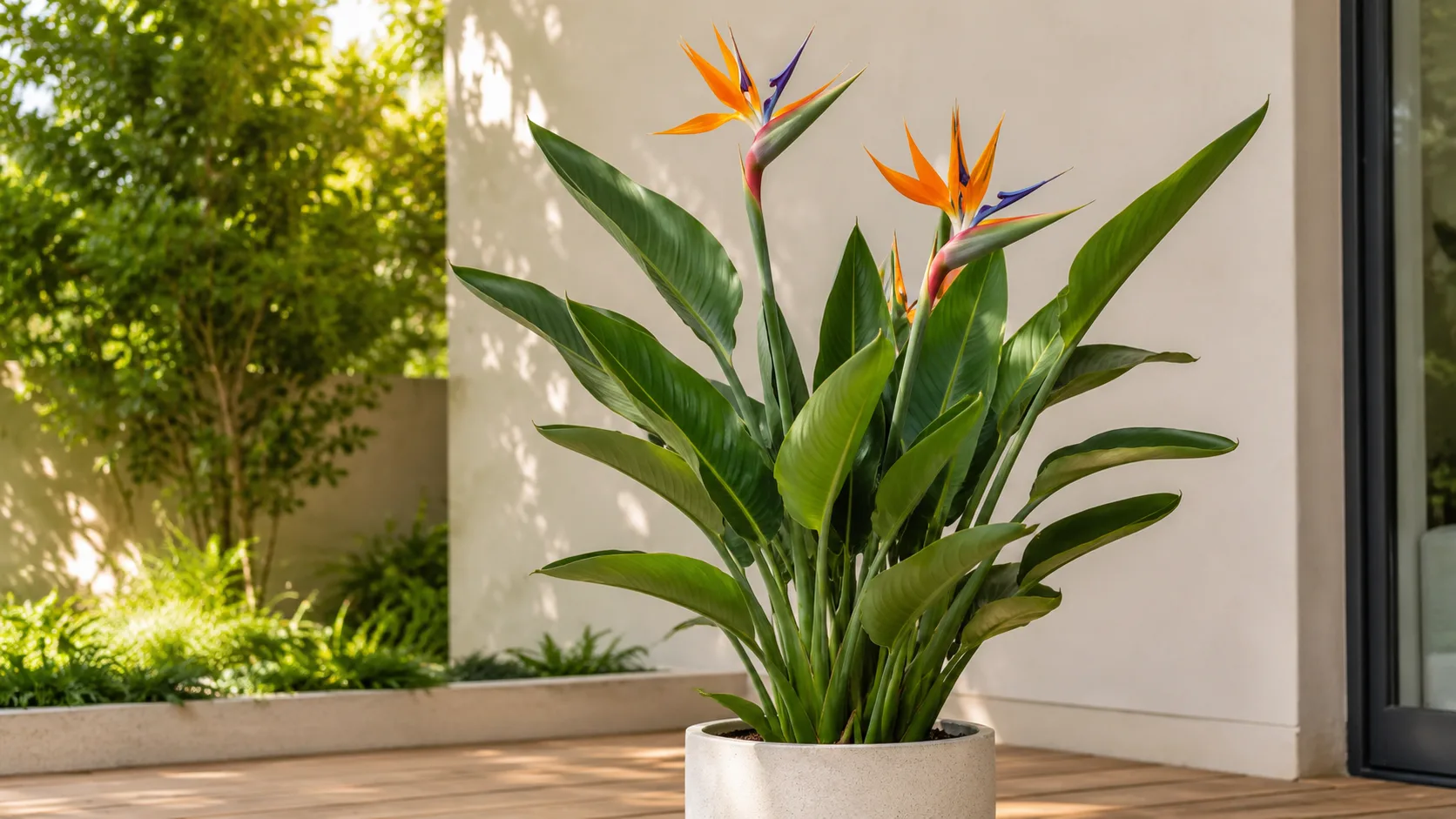
Watering Bird of Paradise: Schedule, Soil Checks, and Mistakes
Watering Bird of Paradise: Schedule, Soil Checks, and Mistakes
Bird of Paradise watering sounds straightforward until you realize the plant in your living room is not reading the same schedule as the one in a bright conservatory. Strelitzia reginae and Strelitzia nicolai both want a deep drink followed by a real dry-down, yet most indoor failures come from treating them like moisture-loving rainforest plants that need constant damp soil. This guide explains how bird of paradise actually uses water, what a realistic schedule looks like by season, which soil checks beat guesswork, and which watering mistakes turn paddle-shaped leaves yellow or thick rhizomes into a rescue job.
Why Calendar Watering Fails for Strelitzia
The most common watering mistake with bird of paradise is treating “every seven days” as a rule instead of a reminder to inspect the pot. Strelitzia does not drink on a calendar. It drinks according to light, temperature, humidity, pot size, soil texture, leaf surface area, and how actively it is growing. A Strelitzia nicolai in a sunny south-facing window in a porous terracotta pot may need water twice as often as a Strelitzia reginae on a dim interior shelf in a glazed ceramic cachepot. Watering both on the same day guarantees that one will stay too wet or the other too dry.
This matters because bird of paradise is more drought-tolerant than it looks. Its native range in southern Africa includes seasonal rainfall patterns with distinct wet and dry periods, not year-round saturation. Indoors, the plant stores water in thick, fleshy roots and rhizomes and can survive short dry spells better than many tropical houseplants. What it cannot survive is repeated cycles of soggy, airless soil - especially in low light, cool rooms, or pots without drainage. NC State Extension notes that root rot on Bird of Paradise can occur from overwatering on Bird of Paradise or poorly drained soils on Strelitzia reginae, and recommends watering freely in spring and summer while keeping the plant drier in winter.
Calendar watering also hides environmental changes. A week of cloudy weather, a move away from a window, Bird of Paradise repotting guide into fresh mix, turning on heat in autumn, or placing the plant near a drafty AC vent all change drying speed. If your routine never changes, the plant absorbs the stress silently until leaves yellow, split, curl, or growth stalls. The fix is not a better calendar. It is a better check.
One more source of confusion worth clearing up early: bird of paradise is not a fern, nor a true banana. It is a clumping Strelitziaceae perennial with large leaves that lose water quickly in bright conditions but roots that hate standing water. Advice written for constantly moist tropicals - calatheas, ferns, or alocasias - will overwater Strelitzia within a single season. The useful mental model is a wet-dry cycle: soak thoroughly, let the upper soil dry, then soak again.
How Bird of Paradise Uses Water in the Wild and at Home
In cultivation, bird of paradise behaves like a plant built for seasonal abundance and restraint. During active growth, large paddle leaves transpire heavily when light is strong, pulling water up through a rhizomatous root system that also stores reserves for drier intervals. That combination explains an apparent contradiction beginners often miss: the same plant can look thirsty after a few hot days in bright sun and dangerously wet after one heavy watering in a dim corner. The leaves respond quickly to moisture stress. The roots respond quickly to oxygen loss.
Strelitzia reginae, the orange-flowering species most often sold as a manageable indoor plant, typically reaches around 1.5 to 2 meters indoors with moderate growth when conditions are right. Strelitzia nicolai, the giant white bird of paradise, grows taller with larger leaves and generally uses more water in absolute terms because it has more leaf surface and often sits in bigger pots - but the same dry-down principle applies. Both species want the upper portion of the mix to dry before the next watering, not permanently damp soil from rim to base.
Drought tolerance has limits. One missed watering cycle on a healthy, established plant rarely causes permanent damage. Leaves may curl slightly inward, feel less rigid, or show a little edge crispness, then recover after a thorough drink. Repeated drought stresses fine roots, makes peat-heavy mix harder to rewet, and can reduce the plant’s ability to push new leaves cleanly. Chronic underwatering on Bird of Paradise also gets blamed for problems that are really about poor light or root damage, which is why soil checks matter more than leaf drama alone.
The Royal Horticultural Society describes Strelitzia as needing regular and plentiful watering in spring and summer - aiming to keep compost constantly moist but not saturated - while gradually reducing through autumn and letting compost get fairly dry between waterings from the end of November. That guidance fits a bright conservatory plant in active growth. In a typical indoor room with moderate light, “constantly moist” is easy to misread as “always wet.” The safer indoor translation is: water thoroughly when the top layer has dried, then allow a genuine dry-down before the next soak - not perpetual dampness.
A Practical Watering Schedule by Season
Because no honest guide can give you one number that fits every home, think in ranges tied to checks, not fixed dates. For many indoor bird of paradise plants, the mix is ready for water somewhere between every 7 and 10 days during active growth and every 14 to 21 days - sometimes longer - during slower months. Your job is to learn where your plant falls inside those ranges, then adjust when light, pot, species, or room conditions change.
Active Growth in Spring and Summer
During warmer months with longer days, Strelitzia usually pushes new leaves and uses water faster. Brighter light increases transpiration, and an actively growing root system pulls moisture from the mix more steadily. In a typical bright indoor setup, allowing the top 5 cm (about 2 inches) of potting mix to dry before watering again is a safe target cited by multiple reputable care sources. NC State Extension recommends watering freely in active growth while keeping the plant drier in winter.
Water thoroughly when the checks say yes. Run room-temperature water through the mix until it flows from the drainage holes, then empty the saucer within 30 minutes. A shallow sip every day keeps the surface damp while the center stays stale and airless. One full drink followed by a real dry-down works better for bird of paradise than frequent light top-ups. The RHS advises keeping compost moist through spring and summer, then reducing in autumn and winter - a reminder that active-season watering should be generous when the plant is actually growing, not timid half-measures that never reach the lower roots.
Plants in strong direct sun - which Strelitzia often tolerates when acclimated - may dry faster than the same species in Bird of Paradise light guide only. If new growth is firm, leaves are opening cleanly, and the pot dries on a predictable rhythm, your interval is probably right. If the mix stays wet for 10 days or more in summer, look first at light and drainage, not at watering more carefully on schedule.
Slower Growth in Fall and Winter
When light drops and indoor temperatures cool, growth slows and the same pot can stay wet much longer. Watering on your summer rhythm is one of the most common reasons bird of paradise fails in winter. Extend the interval deliberately. Let the mix dry more deeply before the next watering - in many homes that means stretching toward every 14 to 21 days, or even 3 to 4 weeks in cool, dim conditions, always confirming with a finger or weight check rather than counting days.
NC State Extension specifically recommends keeping Strelitzia drier in winter after the free watering of spring and summer. The RHS advises tailing off through autumn and allowing compost to get fairly dry between waterings from the end of November. Overwatering during slow-growth months is the primary indoor route to root rot because the plant is not using water quickly enough to refresh stale soil.
If new growth has paused and the plant looks stable, resist the urge to “do something” with the watering can. Cold, wet roots in a dim room are a worse combination than slightly dry soil around firm leaves. Resume your warmer-season rhythm only when you see consistent new growth and the pot is drying on a predictable pattern again.
Soil Moisture Checks That Beat Guesswork
The best watering schedule for bird of paradise is the one you verify at the pot. Surface color lies. Peat-based mixes can look dark while the top inch is actually dry, or look lighter while the center is still damp. Two or three simple checks, used together, beat any guess about “it’s probably time.”
The Finger Test at the Right Depth
Insert your finger 5 cm (about 2 inches) into the mix near the pot edge, not directly against the rhizome. If you feel cool dampness or soil clinging to your skin, wait. If the top layer feels dry and the depth you tested is dry too, the plant is likely ready for water. For Strelitzia, err slightly on the dry side rather than watering at the first hint of surface dryness with wet soil below.
In deeper pots - common with larger Strelitzia nicolai specimens - the top can dry while the lower root zone stays moist. Combine the finger test with pot weight before you water a recently repotted or oversized container. In very large pots, some experienced growers check halfway down or use a skewer to confirm the lower mix is approaching dry, not just the surface.
The Pot Weight Test
Lift the pot right after a thorough watering and notice the weight. Lift it again every few days as the mix dries. A moist pot feels noticeably heavier and often cooler at the base. A dry pot feels light. This test is especially useful for plastic and glazed ceramic pots where visual cues are unreliable. Many growers report that the weight shift tells them more than the surface appearance ever did, particularly after they learn the feel of their specific container.
If the pot still feels heavy but the top looks dry, the plant probably does not need water yet. That single observation prevents a large share of overwatering mistakes on bird of paradise, especially in winter or after repotting into fresh mix that has not yet been filled by roots.
When to Trust a Moisture Meter or Skewer
A wooden skewer or chopstick inserted near the edge, left for a minute, and pulled out works like a low-tech moisture meter: damp stick means wait, dry stick means consider watering. Electronic moisture meters can help in large pots, but they are not always accurate in chunky, airy mixes with lots of perlite or bark. Use them as a secondary tool, not the final authority.
Visual and tactile leaf cues matter too. Slight inward curling on otherwise healthy leaves plus dry checks at depth often mean go ahead. Soft tissue at the soil line, a sour smell, fungus gnats hovering over constantly damp soil, or yellowing lower leaves with wet mix mean stop and let the soil dry more aggressively, even if the plant still looks mostly upright.
How to Water Bird of Paradise Correctly
Correct technique matters because partial watering is a common hidden mistake. Watering only the surface leaves the lower root ball dry while the top layer looks cared for. Bird of paradise wants the entire root zone moistened, then allowed to dry again - not a permanently wet cap on dry roots below.
When checks say the plant is ready, water slowly and evenly across the soil surface until excess runs freely from the drainage holes. Pause, then water once more to ensure the mix has absorbed fully rather than channeling down the sides of a shrunken root ball. Let the pot drain for several minutes. Empty the saucer or lift the nursery pot out of any decorative outer container and pour away collected runoff. Standing water re-wicks into the mix within hours and reverses the drainage you just created.
Avoid letting the leaf bases or crowded crown stay soaked if your watering style splashes heavily. Strelitzia is not as crown-sensitive as an African violet, but constantly wet debris at the soil line invites fungal problems and makes diagnosis harder. Aim the stream at the soil, not the petioles.
If the mix has pulled away from the pot edge after a long dry spell, water in two stages. Give a moderate drink, wait ten minutes for the peat or coir to swell and re-expand against the pot wall, then water again until runoff appears. That prevents water from racing down the gap and leaving the center still dry - a frustrating pattern that makes growers think they watered thoroughly when they did not.
Drainage, Saucers, and Cachepots
Bird of paradise needs a pot with drainage holes and a path for excess water to escape. Without drainage, even a skilled watering technique eventually ends in root rot because there is no way for stale water to leave the system. After every watering, empty the saucer. If the plant sits inside a decorative outer pot, lift the nursery pot, water, drain, and only then return it - never let the inner pot swim in runoff.
Cachepots are where many bird of paradise plants quietly rot. Water drains from the inner pot, collects below, and wicks back up overnight. If you must use a cover pot, treat any pooled water at the bottom as an emergency to remove, not a normal state. The same rule applies after any bottom-watering experiment: drain completely before returning the plant to its display spot.
Oversized pots create a similar problem without a cachepot. After repotting into a container much larger than the root ball, a ring of wet mix sits unused around the roots, staying damp for weeks while the plant looks fine until it is not. Strelitzia reginae in particular often performs better slightly rootbound; many well-grown specimens go several years between repots. If your pot stays wet too long after upsizing, the container may be the problem, not your timing.
Signs Your Bird of Paradise Is Overwatered
Overwatering is the primary enemy of indoor bird of paradise. Thick roots that store water do not forgive soggy, airless mix - especially when light is moderate, temperatures are cool, or drainage is poor. Problems often start before the whole plant looks dramatic, which is why early signs matter.
Yellow Leaves, Splitting, and Mushy Stems
Yellowing often begins on older lower leaves while the soil stays damp. Leaves may also split along natural lines more readily when overwatered, because turgor and cell integrity suffer when roots fail. The confusing case is wilting or drooping with wet soil: the leaves sag because roots are damaged and cannot move water, not because the plant lacks water. Adding more water makes root damage worse.
Brown edges with a yellow band sometimes indicate overwatering, but brown tips alone can also come from underwatering, low humidity, or mechanical damage - which is why the soil check comes first. Press the rhizome and stem bases gently at soil level. Healthy tissue feels firm. Soft, darkened, or mushy tissue suggests rot moving up from the roots. A sour or musty smell from the mix is another red flag.
If you unpot the plant, healthy Strelitzia roots are firm and pale to light brown; rotten roots are dark, slimy, and fall apart easily. Leaf spot diseases can occur on Strelitzia reginae according to NC State Extension, and consistently wet conditions make fungal issues more likely. Once rot reaches the crown, recovery becomes uncertain. Early intervention - stopping water, improving light and airflow, removing the plant from wet outer pots - saves plants that still have firm rhizomes.
Signs Your Bird of Paradise Needs Water
Underwatering on bird of paradise usually shows as inward leaf curling, slightly limp petioles, slower new leaf opening, and a pot that feels very light. The plant may look less rigid overall, then perk up within several hours to a day after a thorough watering. One missed cycle on a healthy plant is rarely fatal. Repeated drought stresses fine roots, makes rewetting harder in compacted peat-heavy mix, and can cause brown leaf edges or tip dieback that growers misattribute to humidity alone.
Do not confuse natural older-leaf yellowing with thirst. If only one old leaf yellows while new growth looks firm and the soil is appropriately dry, the plant may simply be shedding senescent foliage. If multiple leaves curl inward at once, the pot is light, and the skewer comes out dry, water deeply, drain fully, and reset your check routine.
Strelitzia nicolai’s larger leaves can look dramatic when thirsty, sometimes folding or drooping in a way that alarms new owners. Check the soil before responding. A large plant in a large pot can still be wet below even when the top inch looks dry - weight and depth matter more than leaf theater alone.
How Light, Pot Size, and Species Change the Interval
Light is the hidden dial on watering frequency. A bird of paradise in bright indirect to direct sun - several hours of direct light when acclimated - uses water steadily and dries the mix predictably. The same plant in low light may sit wet for weeks after one watering, because transpiration drops and root activity slows. If your pot stays damp too long, improving light often fixes watering faster than guessing at a new schedule. Light and watering are linked systems, not separate chores.
Pot size matters after repotting. Fresh mix without roots filling the volume dries slowly. Upsizing more than one or two inches at a time leaves a reservoir of wet soil the roots never touch - a classic post-repot rot setup. Temperature and airflow change drying too. Plants near heating vents, radiators, or sunny glass may dry faster; plants in cool back rooms dry slower. Humidity influences leaf water loss but does not replace soil checks; average household humidity around 40 to 60 percent is usually acceptable for Strelitzia.
Species and size matter at the margins. Strelitzia nicolai in a large floor pot holds more mix and more leaf mass than a compact Strelitzia reginae on a plant stand, so absolute water volume per watering is higher even when the dry-down rule is the same. Nicolai may also dry the surface faster in bright conditions because of greater transpiration. The decision point remains identical: top portion dry, pot lighter, then soak - not a different philosophy for each species.
Soil Mix and Pot Material Make Watering Easier or Harder
Bird of paradise wants well-draining, fertile mix, not dense, moisture-retentive soil. A practical indoor blend includes standard potting mix amended with 20 to 30 percent perlite or coarse material for aeration, targeting a pH roughly between 6.0 and 7.5. The mix should drain freely within seconds when you water from the top, not pool on the surface or stay muddy for days.
Compacted, aged peat-heavy mix that has broken down over two or three years holds water longer and holds less air. If your watering interval suddenly lengthens without environmental change, the mix may be exhausted. Refreshing soil at repotting often resets drying behavior more effectively than tweaking the calendar.
Pot material changes timing. Terracotta breathes and pulls moisture through the walls, so plants dry faster - you may water slightly more often but with less rot risk. Plastic and glazed ceramic hold moisture longer; wait for more dry-down before watering again. Match your check habit to the container, not to a blog chart written for a different pot type in a different climate.
Water Quality and Temperature Mistakes to Avoid
Unlike some sensitive tropicals, bird of paradise is generally not fussy about municipal tap water for routine watering. Many growers use tap water successfully for years. If leaf tips brown despite good watering rhythm, drainage, and light, water quality may deserve investigation - but do not assume tap water is the problem before checking soil moisture patterns.
Room-temperature water is still important. Cold water shocks roots, especially in winter when the pot may already be cool near a window. Let water sit until it feels neutral to your hand before using it. Avoid hot water to “help” a struggling plant. Rainwater or filtered water is fine if you already use it, but it is not mandatory for Strelitzia the way it can be for more finicky species.
Salts from fertilizer and hard water can accumulate over time. An occasional thorough flush - watering until excess runs clear through the drainage holes - helps if crust forms on the soil surface or leaf edges brown despite correct dry-down timing. Flush during active growth, not during a winter rest when the plant is barely using nutrients.
Recovering From Watering Mistakes
Recovery depends on how far damage has spread. If you caught overwatering early - yellow lower leaves, slightly soft soil smell, but firm rhizomes - stop watering, move the plant to brighter conditions if light was part of the problem, increase airflow, and remove any standing water from saucers or cachepots. Let the mix dry to the appropriate depth before the next cautious watering. Do not fertilize a stressed plant to ” perk it up.”
If roots are clearly failing, unpot the plant, rinse away old mix, and inspect the root system. Trim dark, mushy roots with clean scissors, leaving only firm tissue. Repot into slightly moist - not wet - fresh airy mix in a pot sized to the remaining root mass, often the same pot or smaller. Water lightly once, drain fully, then return to full checks before the next drink. Success is likely when firm rhizome tissue remains and rot has not reached the crown.
Underwatering recovery is usually simpler. A thorough soak and consistent checks often restore turgor within a day or two. If the mix had shrunk away from the pot, use the two-stage watering method described above. Adjust your reminder frequency so the plant does not cycle through repeated drought stress, which weakens roots over time even when each episode looks recoverable.
Avoid stacking interventions. Do not repot, fertilize, prune heavily, and move to a new window in the same week unless multiple problems are clearly unrelated. Fix watering first when symptoms point to moisture - yellow leaves with wet soil, sour mix, gnats, or curling with a light dry pot each tell a different story. Read the root zone before the calendar.
Conclusion: Build a Check-Based Watering Habit
Watering bird of paradise well comes down to a short, repeatable habit: check the mix at depth, lift the pot, read the leaves, then water thoroughly or wait. Use seasonal ranges - roughly every 7 to 10 days in active growth and every 14 to 21 days or longer in slower months - as starting points, not commandments. Let Strelitzia dry down between deep soaks, drain every pot fully, and keep decorative outer pots from trapping runoff.
When something looks wrong, trust the root zone before the calendar. Yellow leaves with wet soil, mushy rhizomes, and sour mix mean pull back and inspect. Inward curling with a light dry pot means a full drink and better consistency. Get those responses right and bird of paradise rewards you with firm paddle leaves and steady growth - which is exactly what made the plant a statement piece in the first place.
When to use this page vs other Bird of Paradise guides
- Bird of Paradise overview - Start here for whole-plant context before deep-diving this topic.
- Bird of Paradise problems hub - Jump to symptom-specific fix guides when this care topic does not resolve the issue.
- Overwatering on Bird of Paradise - Escalate here when watering adjustments are not enough.
- Underwatering on Bird of Paradise - Escalate here when watering adjustments are not enough.
- Root Rot on Bird of Paradise - Escalate here when watering adjustments are not enough.
Related Bird of Paradise guides
- Bird of Paradise overview
- Bird of Paradise light
- Bird of Paradise soil
- Bird of Paradise propagation
- Bird of Paradise fertilizer
- Bird of Paradise repotting
- Overwatering on Bird of Paradise
- Underwatering on Bird of Paradise
- Root Rot on Bird of Paradise
- Wilting on Bird of Paradise
- Drooping Leaves on Bird of Paradise
- Mold on Soil on Bird of Paradise