Drooping Leaves on Bird of Paradise: Causes, Checks & Fixes
Quick answer
Drooping leaves on Bird of Paradise usually mean the heavy paddle leaves lost support - from thirst, wet rhizomes, weak light, or recent stress. First step: push your finger 5 cm into the mix and lift the pot. Light and dry needs a thorough soak; wet and heavy means stop watering and press the rhizome for softness.
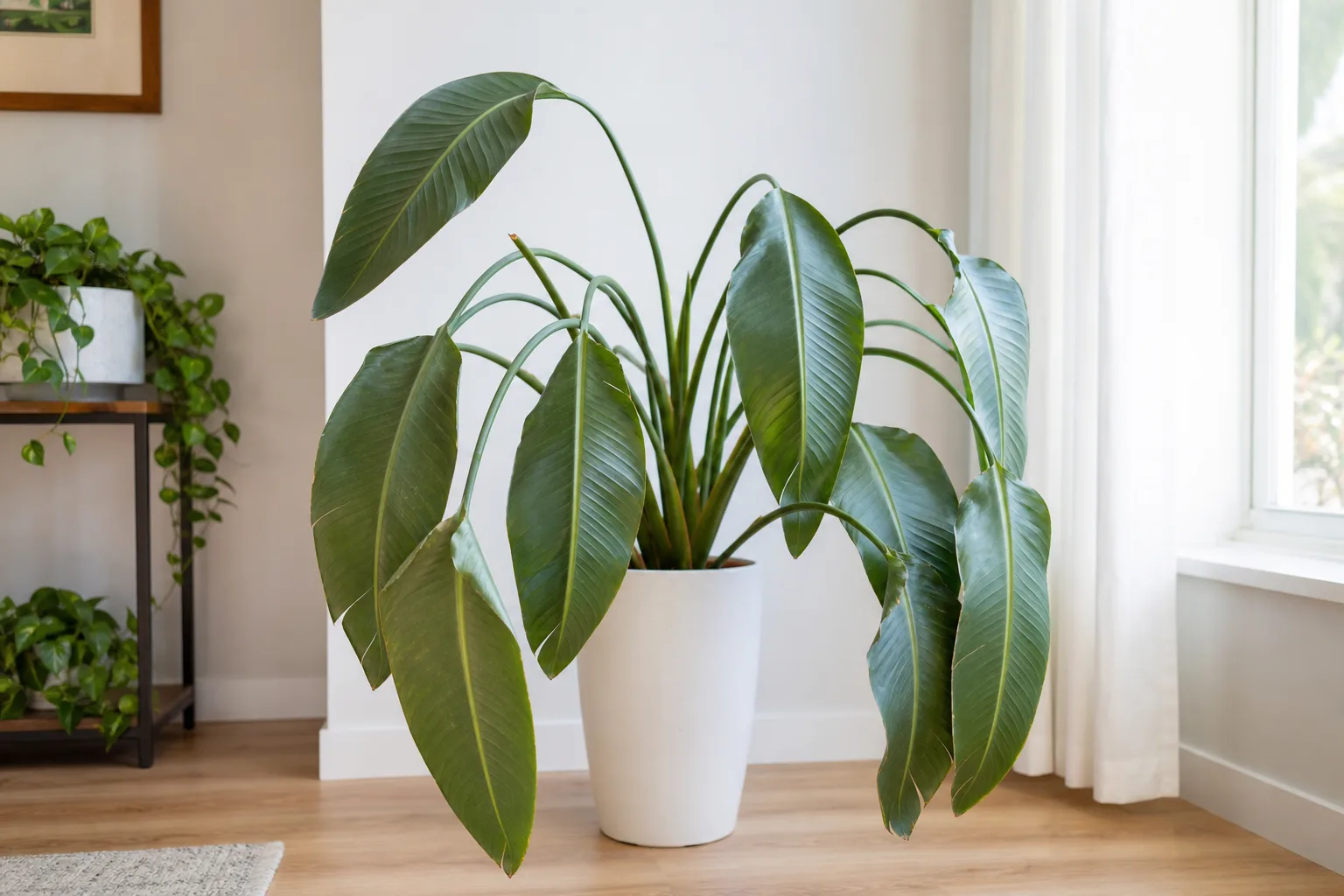
Drooping Leaves on Bird of Paradise: Causes, Checks & Fixes
This guide covers drooping leaves on Bird of Paradise. See also the general Drooping Leaves guide, watering, and light pages for this plant.
Drooping Leaves on Bird of Paradise: Causes, Checks & Fixes
Quick answer
Drooping leaves on Bird of Paradise (Strelitzia reginae and Strelitzia nicolai) show up when large paddle leaves hang at a lower angle than normal - petioles bend, blades sag, and the fan loses its upright posture. Because Strelitzia leaves are heavy and transpire quickly in bright light, droop is visible long before thinner-leaf houseplants would show stress.
First step: check soil moisture at depth and pot weight before you change anything. Insert your finger 5 cm (about 2 inches) into the mix near the pot edge and lift the container.
- Light, dry pot → likely thirst. See underwatering and give one thorough soak per the watering guide, then drain fully.
- Wet, heavy pot → likely overwatering or root rot. Stop watering and press the rhizome at soil level for softness.
- Moisture looks fine but leaves still sag → check light and recent moves. Dim rooms and post-repot stress are common droop triggers on Strelitzia.
Drooping is related to but not identical to wilting. Wilting is an acute soft collapse from lost turgor. Drooping can be slower - chronic downward posture from weak light, top-heavy growth, or a moisture imbalance that has not yet turned into full wilt. For species context and normal care rhythm, see the Bird of Paradise overview.
What drooping leaves look like on Bird of Paradise
Healthy bird of paradise holds stiff gray-green paddles on thick petioles at a proud angle above the rhizome crown. Drooping changes that silhouette.
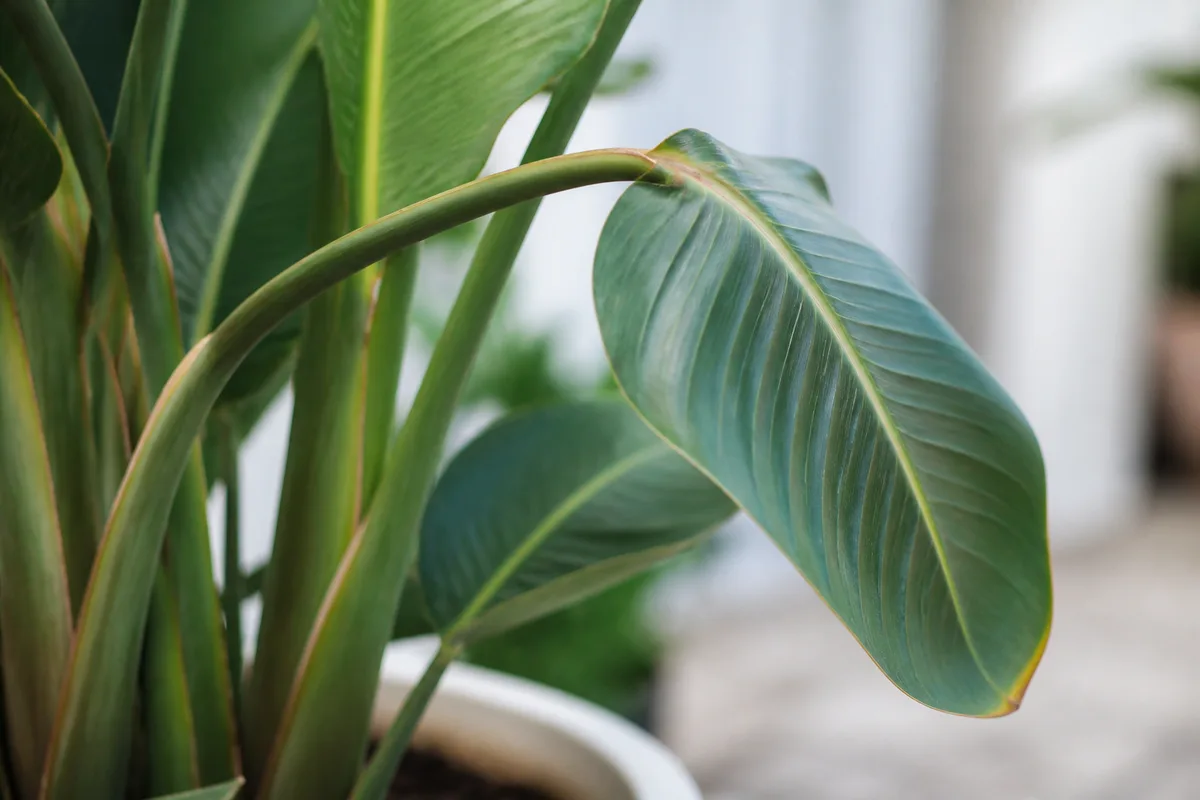
Drooping Leaves symptoms on Bird of Paradise - compare with healthy tissue on the same plant.
Typical droop patterns:
- Petioles bend downward so blades hang closer to horizontal or below.
- Lower outer leaves droop first on many specimens - they are older and heavier.
- New spears may stall or droop while unfurling when light or roots cannot support rapid leaf expansion.
- The plant still feels somewhat firm in mild cases - unlike the soft, collapsed hang of advanced wilt.
Drooping vs. wilting vs. curling
| Symptom | What you see | Speed | Soil clue | Urgency |
|---|---|---|---|---|
| Drooping leaves | Downward angle; may be chronic; plant can feel partly firm | Days to weeks | Variable - check weight | Routine unless base is soft |
| Wilting | Soft limp hang; lost stiffness across multiple paddles | Hours to days | Very dry or very wet | High if wet + spreading |
| Inward curl | Leaf edges roll inward; blade still firm early | Hours to days | Usually dry, light pot | Moderate - fix before full wilt |
If leaves are soft and collapsing quickly, treat it as wilt first - see the wilting page. If posture has sagged gradually while you debate whether to water, you are usually in droop territory.
Normal droop vs. problem droop
Often normal: One older outer paddle relaxing slightly; a new leaf that droops briefly while unfurling then firms up over a week; minor evening posture change on heavy leaves in bright rooms.
Problem droop: Every paddle sagging for days; droop paired with yellow lower leaves on wet soil; soft rhizome; new growth smaller or stalling; droop that followed a move to a dim corner or a repot two weeks ago.
Species note: reginae vs. nicolai
Strelitzia reginae - the orange-flowering bird most often grown on window sills - has moderate petioles and stiff gray-green paddles. Droop from low light often shows as elongated, weak petioles leaning toward the brightest window.
Strelitzia nicolai - giant white bird - carries far more leaf surface on taller petioles and is frequently grown as a floor specimen under standard ceilings. Indoor nicolai may droop from insufficient overhead light even when soil moisture looks fine: the plant cannot support its own leaf mass without strong bright indirect to direct sun. Recovery after a brighter placement takes longer because new petioles must rebuild stiffness from the crown up - old stretched leaves rarely re-stand fully.
Why Bird of Paradise leaves droop
Strelitzia grows from thick underground rhizomes with large paddle leaves that lose turgor visibly when water, oxygen, or light falls short. The same outward sag can come from opposite root conditions - which is why soil checks come before any fix.
Underwatering and dry soil
Bird of paradise stores water in fleshy roots and rhizomes and tolerates short dry spells better than many tropical houseplants. Repeated drought still removes turgor from heavy leaves. Dry droop often follows a missed watering, a heat wave near a window, or winter furnace air drying a small pot fast. Wisconsin Horticulture notes that underwatered bird of paradise leaves may curl inward before posture sags - an early thirst signal worth catching before full droop.
Overwatering and rhizome stress
Saturated mix reduces oxygen around roots and damages fine root hairs. Damaged roots cannot hydrate leaves even when soil is wet - paddles droop while the pot stays heavy. Root rot can occur from overwatering or poorly drained soils on Strelitzia. Yellow lower leaves, sour smell, and fungus gnats often accompany wet-soil droop when surface mix never dries.
Not enough light
Strelitzia is a high-light plant indoors. Grow indoors in a well-lit, sunny spot is NC State’s baseline. In dim rooms, petioles elongate and weaken; large leaves sag under their own weight even when soil moisture looks acceptable. Slow evaporation in low light also keeps pots wet longer - compounding droop from root stress. See not enough light and the light guide for placement and recovery signs.
Cold drafts and temperature shock
Moderate night temperatures around 55 to 65 °F suit Strelitzia. Cold air from AC vents, winter window glass, or sudden drops below about 10 °C (50 °F) can impair water movement. Leaves droop despite moist soil because the root system cannot keep up - a pattern that does not fix with more water. Large floor S. nicolai specimens near ceiling AC vents often show this winter pattern on outer paddles first.
Repotting and division stress
Strelitzia dislikes root disturbance. Fresh mix, damaged feeder roots, or a deeper pot that stays wet too long commonly cause outer paddle droop for one to three weeks. Division shock can look worse because each section has fewer roots per leaf mass. Follow the repotting guide for firming protocol - water once when the top 5 cm of new mix is dry, not on a calendar, and avoid fertilizer for four to six weeks.
Root-bound stress in large specimens
A mature Strelitzia nicolai in the same undersized pot for years may droop from crowded roots and uneven moisture - the center stays wet while the top dries. Drooping here often pairs with stalled new growth and soil that never dries on a predictable rhythm. When root-bound stress is confirmed, repot in spring per the repotting guide rather than increasing water frequency.
How to confirm the cause
Work through these checks in order. One clear branch is enough to choose a first fix.
- Finger test at 5 cm depth near the pot edge - dry, damp, or wet?
- Pot weight - light compared with after a soak, or still heavy days after watering?
- Rhizome firmness - press gently at soil line; firm is reassuring, soft or mushy is urgent.
- Leaf pattern - all paddles vs. lower only; yellowing on wet soil; inward curl before sag.
- Recent changes - repot, division, move away from a window, new heater or AC vent.
- Light exposure - is this the brightest realistic spot in the room, or a decorative corner?
Dry vs. wet vs. low-light droop - comparison table
| Clue | Dry-soil droop (thirst) | Wet-soil droop (root stress) | Low-light droop |
|---|---|---|---|
| Pot weight | Light | Heavy | Often moderate; slow to dry |
| Top 5 cm of mix | Dry | Wet or cool and dark | May feel evenly moist |
| Leaf color | Gray-green; possible inward curl | Yellow lower leaves common | Smaller new leaves; lean toward window |
| Rhizome | Firm | Soft or dark if rot advanced | Firm |
| First action | Thorough soak, drain | Stop watering; check roots | Move to brighter light |
| Urgency | Routine - soak within 24 hours | Same-day rhizome check if soft | Routine - brighten over 1–2 weeks |
First fix for Bird of Paradise
Make one care change at a time so you can read the plant’s response over the next week.
If soil is dry and pot is light
Water thoroughly until excess runs from drainage holes, then empty the saucer within 30 minutes. Water freely in spring and summer but keep drier in winter - match your season, not a fixed calendar. Do not mist instead of soaking; heavy paddles need root-zone moisture. Recheck weight in 24 hours - a perkier posture and firmer petioles mean thirst was the cause.
If soil is wet and lower leaves yellow
Stop watering immediately. Move the plant to the brightest safe indirect spot so the mix dries faster - slow evaporation worsens wet-soil droop. Press the rhizome; if soft, unpot and inspect for dark mushy roots the same day. Trim only clearly dead tissue with clean pruners. See overwatering and follow the numbered root rot recovery steps if mushy tissue is confirmed - do not wait out advanced crown rot hoping leaves will perk.
If light was recently reduced
Move the pot to the brightest location you can offer - within a few feet of a south-, west-, or east-facing window with gradual acclimation if it lived in shade for months. Do not increase water to “support” a dim plant; weak light slows water use and keeps soil wet. See not enough light and the light guide for recovery signs on reginae window plants versus tall nicolai floor specimens.
If rhizome feels soft
Treat as urgent. Stop watering, improve airflow and light, and inspect roots the same day. Soft crown tissue on wet mix can advance quickly on Strelitzia. Repot into fresh, airy mix only after removing mushy roots per the root rot guide - not as a first reflex on firm rhizomes.
If droop followed repotting within the last month
Hold steady. Water when the top 5 cm of new mix is dry per the repotting guide. Avoid fertilizer and unnecessary pruning. Expect gradual firming over one to three weeks as roots re-establish. If the base goes soft on wet soil after repotting, inspect for rot rather than waiting it out.
Recovery timeline
Thirst droop: Often visible improvement within several hours to two days after one proper soak.
Wet-soil / root stress: One to four weeks for stability; old paddles may stay slightly angled even after roots recover.
Low-light droop: One to three weeks after a brighter placement - judge by shorter, stiffer new petioles, not old stretched leaves.
Repot shock: One to three weeks common; longer if the plant was root-bound or divided hard.
Signs of improvement: Firmer rhizome, new spear emerging, petioles holding a higher angle, no spread of yellowing - judge progress by stable new growth, not old damaged paddles alone.
Signs of worsening: Spreading softness at the base, sour soil, multiple paddles collapsing while mix stays wet, new growth rotting before opening.
What not to do
Do not fertilize a drooping Strelitzia before you confirm moisture and light - especially on wet soil. Fertilizer on struggling roots adds salt stress.
Do not stake paddles as a permanent fix; it masks diagnosis and can damage petioles.
Do not repot on day one for simple dry droop - water correctly first. Unnecessary repotting adds shock.
Do not confuse natural leaf splitting along paddle edges with drought stress. Splitting increases with age and wind; droop from thirst usually pairs with a light pot and dry depth.
Do not stack repotting, heavy pruning, and pesticide on the same day.
How to prevent drooping leaves next time
Follow the wet-dry cycle from the watering guide: soak thoroughly when the top 5 cm (about 2 inches) of mix is dry and the pot feels lighter, then let it dry again. The RHS advises keeping compost moist through spring and summer while reducing in autumn and letting compost get fairly dry between waterings from late November - indoors, translate that to a real dry-down, not constant sogginess.
Place Strelitzia where bright light is realistic year-round per the light guide. Rotate the pot weekly for even growth. Use well-drained mix with perlite, empty saucers after watering, and reduce frequency in winter when growth slows.
Inspect weekly: pot weight, rhizome firmness, and whether new leaves open cleanly. Early correction of a light drift or wet spell prevents chronic sag before every paddle is involved.
Bird of Paradise care cross-check
Stable Strelitzia resists droop when three systems align:
| Factor | Droop risk when wrong |
|---|---|
| Water | Chronic drought in summer sun OR wet cycles in dim winter rooms |
| Light | Dim corners elongate petioles; strong sun dries pot predictably |
| Roots / mix | Soggy dense mix OR root-bound uneven moisture in large nicolai pots |
| Pot / placement | No drainage, cachepot pooling, or AC vent drafts on floor specimens |
Cross-link your routine: the overview hub summarizes placement; watering covers seasonal ranges; light covers brightness for reginae and nicolai; repotting covers post-transplant firming.
When to worry
Treat droop as urgent when:
- Rhizome at soil line feels soft, dark, or mushy on wet mix
- Soil smells sour or musty despite pausing water
- Droop spreads to newest leaves over several days while mix stays heavy
- Wet soil persists more than two weeks in a typical indoor pot
- Droop continues after a confirmed dry-pot soak - suggests hidden rot, not thirst
Lower urgency when one missed watering on a firm rhizome perks posture within a day, or when a single new spear droops briefly while unfurling then firms over a week.
Related Bird of Paradise problems
- Wilting - acute soft turgor collapse; wet-vs-dry pot paradox
- Overwatering - wet heavy pot with limp paddles
- Underwatering - light dry pot with inward curl
- Root rot - soft rhizome escalation and numbered recovery
- Not enough light - chronic sag from weak petioles
- Fungus gnats - clue that surface mix never dries
- Bird of Paradise overview - species hub
Conclusion
Drooping leaves on bird of paradise are a posture and support problem tied to moisture, light, or recent stress - not a single fix for every sagging paddle. Heavy Strelitzia leaves show droop days before thinner houseplants would, and wet soil can produce the same downward hang as dry soil with opposite first actions. Before you water, stake, or repot, confirm wet versus dry at depth, lift the pot, and press the rhizome. Soak dry light pots; stop watering wet heavy ones; brighten dim corners without adding extra water. Judge recovery by firm underground tissue and new spear unfurling - not by whether every old paddle re-stiffens. Get the branch right and Strelitzia returns to the architectural upright fans that make the plant worth the patience.
When to use this page vs other Bird of Paradise guides
- Bird of Paradise watering guide - Use for routine moisture checks before assuming drooping leaves is the main issue.
- Bird of Paradise problems hub - Browse all 20 common issues on this species.
- Underwatering on Bird of Paradise - Different entry point when symptoms overlap with drooping leaves.
- Overwatering on Bird of Paradise - Different entry point when symptoms overlap with drooping leaves.
- Root Rot on Bird of Paradise - Different entry point when symptoms overlap with drooping leaves.