How to Propagate Bird of Paradise: Division & Seeds
How to Propagate Bird of Paradise: Division & Seeds
How to Propagate Bird of Paradise: Division & Seeds
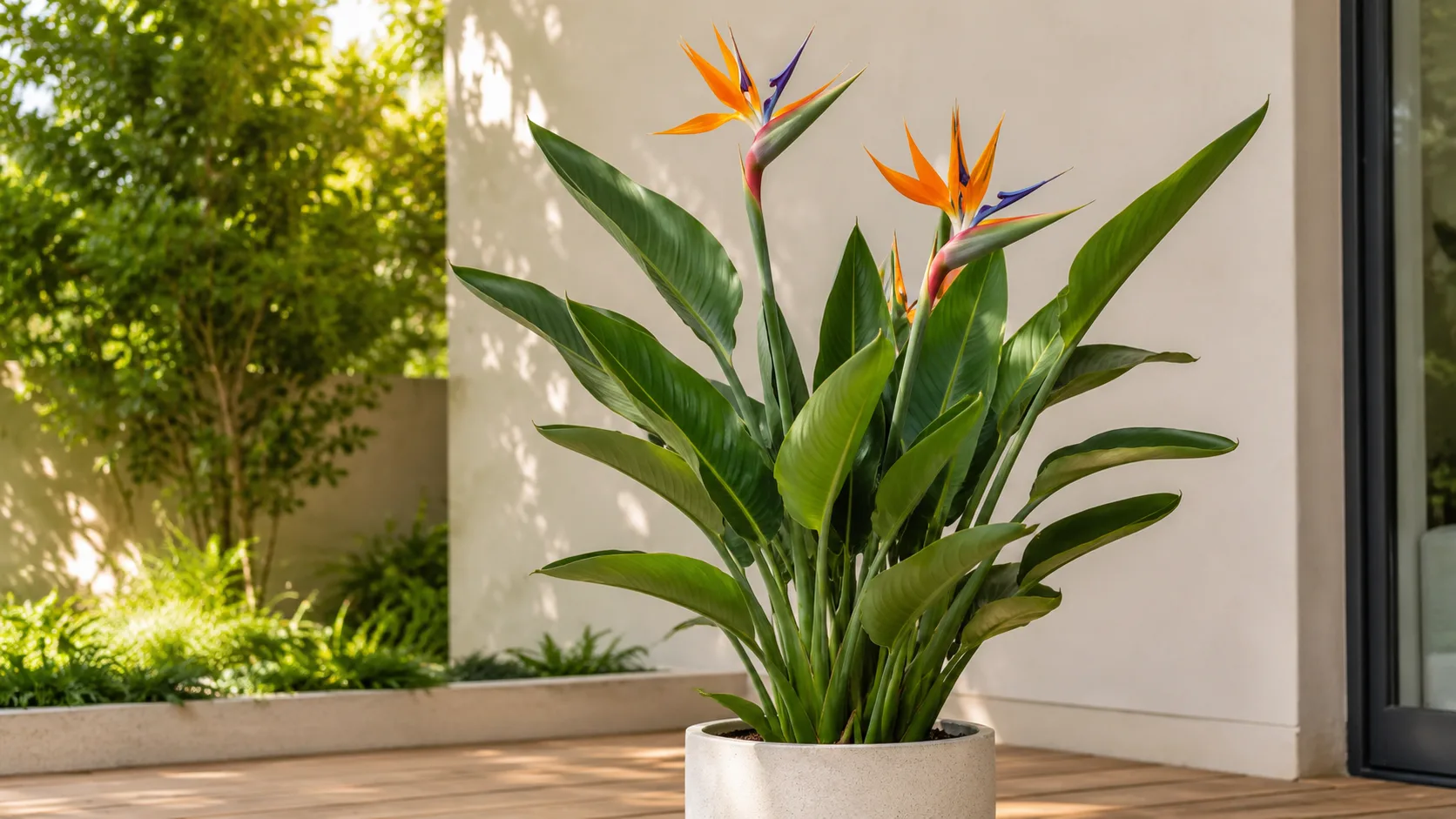
A mature bird of paradise can feel like one plant doing the work of three. Strelitzia reginae pushes orange-and-blue crane flowers from a tight clump of paddle leaves, while Strelitzia nicolai - the giant white bird of paradise - sends up woody stems surrounded by dense basal shoots that gardeners often call pups, suckers, or offsets. When the clump outgrows its pot or the garden bed starts to look crowded, bird of paradise propagation becomes the practical next step. The catch is that Strelitzia does not behave like a pothos or a philodendron. You cannot stick a leaf stalk in water and wait for roots. You divide rhizome-backed clumps, or you start from seed and accept a much longer road to flowers.
This guide covers the two methods that actually work - division and seed propagation - with step-by-step instructions for indoor pots and outdoor plantings. You will learn how to tell whether your plant is ready to split, how deep offsets need to be separated, how to scarify and sow Strelitzia seed, and what to expect in the first three months after you pot up a new division. The goal is not just more plants. It is more plants that survive, establish roots, and eventually bloom on a realistic timeline.
Why Bird of Paradise Propagation Starts With Rhizomes, Not Cuttings
What makes Strelitzia different from typical houseplant propagation
Bird of paradise belongs to Strelitziaceae, a family of rhizomatous, clumping perennials native to southern Africa. The plant grows from a thick underground rhizome - a horizontal stem that stores energy and produces shoots at its nodes. Each shoot becomes a fan of leaves on a long stalk, and mature clumps contain multiple shoots sharing one interconnected root system. That growth habit is why division works so well. You are not forcing a detached leaf to reinvent itself. You are separating pieces of rhizome that already contain living shoots, roots, and stored reserves.
The method that does not work is the one many beginners try first: stem or leaf cuttings. A Strelitzia leaf stalk has no dormant bud capable of producing a new plant on its own. Cut a paddle leaf free and place it in water or soil, and it may stay green for weeks on stored energy, but it will never develop a crown or rhizome. The same applies to sections of bare stem on older Strelitzia nicolai specimens. Without rhizome tissue attached to a shoot, there is nothing to regenerate. University of Florida IFAS Extension lists division and seed as the only propagation methods for bird-of-paradise and makes no mention of cuttings for good reason - the biology does not support them. (Ask IFAS - Powered by EDIS)
Water propagation is equally misleading here. Divisions need soil contact around their roots from day one. Seeds need a warm, moist medium, not a jar on a windowsill. If a guide shows bird of paradise “cuttings” rooting in water, it is describing a different plant or repeating a common error.
Strelitzia reginae versus Strelitzia nicolai for propagation
Both species propagate by division and seed, but the practical experience differs because the plants grow differently. Strelitzia reginae - the orange bird of paradise or crane flower - stays relatively compact indoors, usually reaching 3 to 5 feet in a container. It forms a clumping rosette without a tall woody trunk. Divisions tend to be manageable in a 10- to 14-inch pot, and the shoots sit closer to the soil surface, which makes separation easier for indoor growers.
Strelitzia nicolai - white bird of paradise or Natal wild banana - grows much larger. Outdoors in frost-free climates it can reach 20 to 30 feet with a distinct woody stem and massive paddle leaves. Indoors it is still a big plant, and offsets often emerge deep in the root mass at the base of the trunk. NC State Extension notes that nicolai produces dense offshoots that should be thinned occasionally and recommends division or seed as the propagation methods. (NC State Extension) Many nicolai propagation failures happen when a gardener pulls a green side shoot that looks independent but lacks its own root system - the shoot stays green briefly, then collapses because it was never truly separated.
For both species, the rule is the same: each division needs its own shoot, its own roots, and a share of rhizome. The difference is scale. Reginae divisions fit on a kitchen counter while they recover. Nicolai divisions may require a spade, two people, and a wheelbarrow.
Choosing Division or Seeds: A Practical Decision Framework
When division is the clear winner
Division is the easiest and most reliable bird of paradise propagation method for nearly every home grower. UF/IFAS states that bird-of-paradise is easily propagated by division and that divided plants can reach flowering size in one to two years - far faster than seed. (Ask IFAS - Powered by EDIS) Choose division when:
- Your plant has four or more shoots in one clump and feels crowded in its pot
- You see offsets or pups with their own leaf fans at the base of the parent
- You are already Bird of Paradise repotting guide and can combine propagation with a scheduled root disturbance
- You want a genetic copy of a plant that already performs well in your home or garden
- You need a new plant on a one- to three-year bloom timeline rather than a multi-year seed project
Division gives you an instant plant with existing roots - not a promise of roots. That head start is the entire advantage. A well-separated division in warm, bright conditions often shows new leaf growth within a few weeks and settles into regular care within a season.
When seed propagation makes sense
Seed propagation is legitimate but slow. UF/IFAS notes that a bird-of-paradise grown from seed will take three to five years to bloom, and Wisconsin Horticulture reports seed-grown plants may take 4–7 years before blooming begins. Choose seeds when:
- You have access to fresh seed from your own hand-pollinated flowers or a reputable source
- You want to grow many plants cheaply for a landscape project
- You are curious about seedling variation and do not need an exact clone
- You have space, patience, and a warm propagation setup for the long germination period
Seeds are not a shortcut around buying a division. They are a separate project with their own timeline. If your primary goal is a flowering bird of paradise on a balcony within two years, buy or divide a mature plant instead of sowing seed.
Best Timing, Plant Size, and Red Flags Before You Start
The best time to divide bird of paradise is late spring through early summer, when the plant is entering active growth, days are lengthening, and temperatures are stable. UF/IFAS specifically recommends dividing clumps during late spring or early summer for best results. (Ask IFAS - Powered by EDIS) In the Northern Hemisphere, that usually means April through June, though the signal matters more than the calendar. Look for fresh leaf unfurling, rising temperatures above 65°F (18°C), and a pot that dries at its normal pace - signs the plant is awake, not stressed.
Wait until the clump has at least four to five shoots before you divide. Smaller plants do not have enough rhizome mass to split cleanly, and you risk leaving both sections weakened. UF/IFAS recommends dividing clumps with four to five shoots into single-stem divisions. A single-stem young plant in a 6-inch pot is not ready. Give it another year or two.
Red flags that mean you should postpone propagation:
- The parent plant is recently repotted, shipped, or recovering from root rot on Bird of Paradise
- Active pest problems - scale, mealybugs, or spider mites will travel with divisions
- Cold or dark conditions - winter divisions in dim rooms root slowly and rot easily
- The only available “offset” is a small green shoot without its own roots
- You cannot keep the new division in bright light and evenly moist - not soggy - soil for three months
Propagation is not emergency surgery. If the plant is struggling, fix the underlying care problem first. Dividing a dehydrated, pest-ridden, or root-rot-infected clump multiplies the problem instead of solving it.
Tools, Sanitation, and the Potting Mix You Need
You do not need specialized propagation equipment for bird of paradise division. The essentials are a sharp spade or garden knife for outdoor work, a serrated knife or hori-hori for container plants, 70% isopropyl alcohol or dilute bleach solution for blade sterilization, sturdy gloves, fresh pots with drainage holes, and a well-draining potting mix.
Sterilize blades before every cut. Strelitzia rhizomes are tough, and a dull or dirty tool crushes tissue instead of slicing cleanly. Crushed rhizome tissue invites fungal and bacterial decay - the most common cause of division failure. Clean the blade between the parent and each division, especially if you noticed any soft spots in the root zone.
For potting mix, use a free-draining blend similar to what the parent plant already grows in. A practical indoor mix is high-quality potting soil amended with 20 to 30 percent perlite or pumice. UF/IFAS recommends moist, well-drained soil for Strelitzia nicolai, and the same principle applies to newly potted divisions. (Ask IFAS - Powered by EDIS) Avoid heavy garden soil in containers - it compacts, holds water around disturbed roots, and slows recovery.
For seed propagation, prepare a sterile, low-fertility medium: vermiculite, a 1:1 mix of peat and perlite, or a fine seed-starting blend. UF/IFAS suggests sowing seeds at one-half to one inch depth in vermiculite, peat-perlite, or a ready-made mix and keeping the medium consistently damp until germination. (Ask IFAS - Powered by EDIS) You will also want a clear humidity dome or plastic cover, a heat mat set to 75–85°F (24–29°C), and small individual pots for transplanting seedlings after their second true leaves appear.
How to Propagate Bird of Paradise by Division
Identifying offsets and clumps ready to split
Start by examining the base of the plant. A division-ready clump shows multiple shoots - each shoot is a fan of leaves emerging from its own point in the rhizome. In Strelitzia reginae, these shoots form a tight cluster at soil level, like several leaf fans in one pot. In Strelitzia nicolai, shoots may appear around the trunk base or along the outer edge of a large root ball, sometimes several inches below the soil surface.
A viable offset or division section needs three things: at least one healthy shoot with two to three leaves, a visible network of its own roots, and a section of rhizome connecting the shoot to those roots. If you wiggle a side shoot and it moves freely without resistance from roots, it is too young to remove. If you dig down and find a shoot attached only by a thin runner with no roots, leave it on the parent.
For crowded indoor reginae, the entire clump may need dividing even if no single offset looks like a perfect pup. The goal is to split the rhizome mass into balanced sections rather than to hunt for one ideal baby plant. For large nicolai, you may intentionally reduce the number of basal shoots as part of routine maintenance - each removed shoot with roots becomes a propagation candidate.
Seven-step division walkthrough for pots and garden beds
- Water the parent 12 to 24 hours before dividing. Hydrated roots bend and recover; dry roots snap. Moist rhizome tissue also heals faster after cutting.
- Remove the plant from its container or dig a wide circle around an in-ground clump. For pots, tip the plant sideways, squeeze the pot sides, and slide the root ball out. For garden plants, dig 8 to 12 inches beyond the clump and at least 10 to 24 inches deep depending on size, then lever the root mass out with your spade.
- Brush or rinse away loose soil until you can see where individual shoots connect to the rhizome. Natural separation lines - places where the rhizome narrows between shoots - are your best cut points.
- Separate shoots by hand where the rhizome pulls apart cleanly. Where it does not, make one decisive cut with a sterilized knife through the rhizome, ensuring each section retains roots and at least one shoot. UF/IFAS recommends dividing clumps with four to five shoots into single-stem divisions for best results. (Ask IFAS - Powered by EDIS)
- Trim damaged material. Remove broken roots, mushy rhizome sections, and dead leaves. A clean division heals faster than a intact-but-rotting one.
- Replant at the same depth the division was growing before. Burying the crown too deep encourages rot; planting too shallow leaves rhizome tissue exposed. Firm the mix gently and water once to settle soil around roots.
- Place in bright, indirect to partial direct light and maintain even moisture for at least three months while roots establish. UF/IFAS advises keeping soil moist until roots are established - a period of at least three months - before resuming normal fertilization. (Ask IFAS - Powered by EDIS)
Some leaf droop or tearing in the first week is normal transplant stress, especially on large nicolai leaves. What you are watching for is new shoot activity - a fresh leaf starting to unfurl means the division is recovering. If all leaves collapse and the soil smells sour, root rot has started and you need to inspect the rhizome immediately.
Aftercare for New Divisions in the First Three Months
The first three months after division are about steady conditions, not aggressive intervention. Do not fertilize immediately, do not repot again, and do not move the plant every few days between rooms. The division is rebuilding its root system with reduced reserves. Your job is to keep light, moisture, and temperature consistent enough that the plant can focus on that work.
Place new divisions in bright light - the same exposure the parent tolerated. Strelitzia reginae accepts several hours of direct sun indoors; nicolai prefers Bird of Paradise light guide with some direct morning sun. Avoid dark corners and avoid hot afternoon sun through glass on a freshly divided plant with torn roots. Either extreme slows recovery.
Water when the top 2 to 3 centimeters of mix feel dry, then water thoroughly until excess drains. The classic division mistake is keeping the soil constantly saturated out of fear the plant is thirsty. Disturbed roots need moisture and oxygen. A soggy pot provides only the first. If the mix stays wet for more than a few days, reduce watering frequency, confirm the pot has drainage, and check that the container is not oversized.
Hold off on fertilizer for at least three months or until you see active new growth. When you do feed, start at half strength of a balanced liquid fertilizer during the growing season. The Royal Horticultural Society recommends feeding Strelitzia during the growing season and keeping compost moist in summer while reducing water in winter. (Royal Horticultural Society) New divisions follow the same seasonal rhythm but with a longer establishment phase before they can handle full feeding.
Humidity helps but is secondary to correct watering. Target 50 to 60 percent relative humidity if your home is dry, especially for indoor reginae. Large nicolai leaves lose water quickly through transpiration when roots are limited, so avoid placing divisions near heating vents or air-conditioning drafts. A torn leaf is cosmetic; a dehydrated rhizome is structural. Prioritize the root zone over perfect foliage.
How to Propagate Bird of Paradise From Seed
Collecting, cleaning, and scarifying Strelitzia seeds
Seed propagation begins with fresh seed. Strelitzia seeds are large, black, and pea-sized, with a fuzzy orange aril attached to one end - the remnant of the flower’s seed coat that birds eat in the wild. After pollination, seed pods develop over several months on the flower stalk. Harvest when pods are dry, brown, and beginning to split, then extract the seeds promptly. Older, dried-out seed from unknown storage often fails to germinate even with perfect technique.
Before sowing, you must scarify the hard seed coat. UF/IFAS recommends soaking seeds in lukewarm water for one to two days, then nicking the coat with a knife or small file. (Ask IFAS - Powered by EDIS) Scarified seeds usually germinate in one to two months. Unscarified seeds may take six months to a year - or never sprout.
A practical scarification routine:
- Remove the orange aril by rubbing seeds between damp paper towels
- Soak seeds in lukewarm water for 24 to 48 hours, refreshing the water once
- Discard any seeds that float after soaking - they are often hollow or non-viable
- Rub each seed lightly with fine sandpaper or make a shallow nick with a file until you breach the hard outer coat without crushing the embryo
- Soak again for several hours before sowing
Some growers shorten germination time further with cold stratification: place unscarified seeds in a sealed plastic bag in a refrigerator at 40–45°F (4–7°C) for two weeks, then scarify and sow. UF/IFAS documents this optional step as a way to reduce germination time. (Ask IFAS - Powered by EDIS) It is not required, but it can help with stubborn batches.
Sowing, warmth, and the long germination wait
Sow scarified seeds one-half to one inch deep in moist vermiculite, peat-perlite mix, or seed-starting medium. Cover the container with clear plastic or a glass pane to hold humidity, and place it in warm, indirect light. Temperature is the critical variable: maintain 75 to 85°F (24 to 29°C) at the soil level using a propagation heat mat. Bird of paradise seed germination is slow and irregular without bottom warmth.
Keep the medium consistently damp but not waterlogged for the entire germination period. Check every few days and water from below when the surface begins to dry. Vent the cover briefly every few days to prevent mold. Patience is non-negotiable - even under ideal conditions, seeds may sprout over several weeks to a few months, with some stragglers arriving later than others.
When seedlings emerge, they first produce seed leaves followed by true leaves that look like tiny Strelitzia paddles. UF/IFAS recommends transplanting seedlings individually into pots when they have two true leaves, at which point light fertilization can begin. (Ask IFAS - Powered by EDIS) Do not rush this step. Seedlings with only one true leaf have fragile roots that tear easily during handling.
Transplanting Seedlings and Growing Them to Maturity
Seedlings need small pots at first - 3 to 4 inches is enough - because oversized containers hold excess moisture around undeveloped roots. Use the same free-draining mix you would for a mature bird of paradise, and place seedlings in bright, indirect light with gradually increasing exposure as they size up. Direct sun on tiny seedlings can scorch leaves; too little light produces leggy, weak growth.
Water when the top of the mix dries slightly, and feed at quarter to half strength every four to six weeks during active growth once the second true leaf appears. Repot into the next size container only when roots circle the pot - Strelitzia seedlings benefit from slightly snug conditions early on, similar to mature plants that bloom more reliably when somewhat root-bound.
The long wait is for flowers, not for foliage. Seed-grown bird of paradise may produce impressive leaves within the first year, but bloom requires maturity. Plan on three to five years minimum for reginae under good conditions, with some seed-grown plants taking longer. Divisions reach flowering size faster because they start from adult rhizome tissue. UF/IFAS reports divided plants reach mature flowering size in one to two years.
If blooms are your goal, give seedlings strong light, consistent feeding during spring and summer, and eventually a pot size that allows root development without constant drowning. Cool winter rest with reduced watering helps mature Strelitzia set buds, but seedlings under two years old should not be pushed into bloom - they need to build rhizome mass first.
Why Propagation Fails and How to Avoid Common Mistakes
The most widespread mistake is attempting leaf or stem cuttings. No amount of rooting hormone, water changes, or patience will turn a detached Strelitzia leaf into a plant. If a “cutting” stays green for weeks without producing a shoot at its base, it is running on stored carbohydrates, not rooting. Stop before it rots and use division instead.
The second most common failure is removing offsets that lack roots. This is especially frequent with Strelitzia nicolai, where side shoots look independent long before they are. The shoot turns yellow within one to two weeks because it has no water supply of its own. Always dig down and confirm roots before separating. If the offset is not ready, leave it attached and revisit the following spring.
overwatering on Bird of Paradise divisions causes rhizome rot that smells sour and spreads fast. Disturbed roots cannot handle saturated anaerobic soil. Water thoroughly, then let the top layer dry before watering again. A division in a pot that is too large for its root mass is especially vulnerable because the excess mix stays wet for days.
Dividing too early or too late creates weak plants. Clumps with fewer than four shoots do not split well. Winter divisions in cold, dim homes sit unchanged for months and then collapse when warmth returns and dormant rot activates. Spring and early summer divisions recover while the plant’s natural growth cycle supports new root production.
For seeds, failure usually traces to old seed, skipped scarification, or insufficient warmth. Floating seeds, moldy medium from never venting the cover, and sowing in a cool room are the top seed-starting errors. Fresh seed, scarified coats, bottom heat, and consistent moisture solve most germination problems.
Realistic Timelines: Roots, Leaves, and First Flowers
Setting honest expectations prevents the frustration that makes growers abandon otherwise healthy propagations. Divisions typically show new leaf growth within two to six weeks in warm, bright conditions. Root establishment takes at least three months before the plant can tolerate normal watering and feeding rhythms. First flowers on a division often appear in one to three years, depending on species, light, and how large the division was at separation. UF/IFAS reports one to two years to mature flowering size for divisions.
Seeds germinate in four to eight weeks after scarification under optimal warmth, though unscarified or cool-sown seed may take six to twelve months. Seedlings reach transplant size with two true leaves in two to four months after germination. Bloom from seed is a three- to five-year minimum project, with a decade not impossible for slow-growing specimens in suboptimal conditions.
These timelines assume adequate light, correct watering, and protection from cold drafts. A division kept in a dark hallway will not match a division in a bright sunroom. A seed flat without bottom heat in a 65°F room will not match one on a 80°F mat. Match your expectations to your setup, not to the best-case scenario in a greenhouse.
Conclusion
Bird of paradise propagation succeeds when you work with Strelitzia biology instead of against it. Mature clumps with four or more shoots divide cleanly in late spring or early summer, producing new plants that already have roots and rhizome tissue. Seeds offer a slower path - scarified, soaked, and sown warm - for patient growers with fresh seed and space to wait years for blooms. Leaf cuttings, water propagation, and shallow pup removal are the methods that fail predictably, and skipping them saves months of false hope.
Sterilize your tools, confirm each division has roots before you cut, replant at the same depth, and keep soil evenly moist for the first three months without drowning the rhizome. Whether you are splitting a crowded Strelitzia reginae on a repotting day or thinning basal shoots from a towering Strelitzia nicolai, the process is the same: separate living rhizome sections, give them bright light and steady care, and wait for new growth to tell you the propagation worked. That is when one architectural tropical becomes two - and your window or garden gains another crane flower worth the wait.
When to use this page vs other Bird of Paradise guides
- Bird of Paradise overview - Start here for whole-plant context before deep-diving this topic.
- Bird of Paradise problems hub - Jump to symptom-specific fix guides when this care topic does not resolve the issue.