Best Soil for Bird of Paradise: Mix Recipe, Drainage
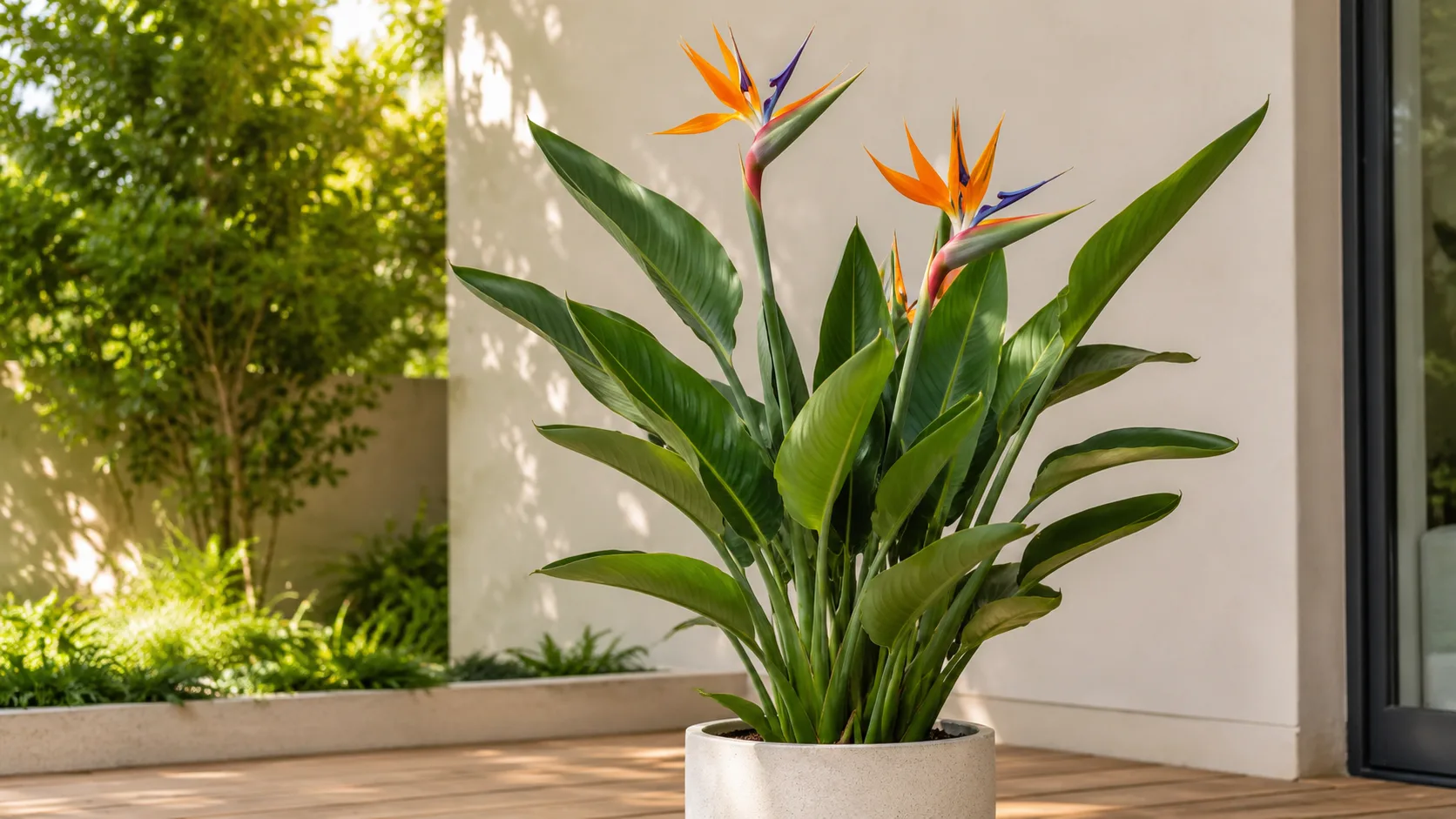
Best Soil for Bird of Paradise: Mix Recipe, Drainage, and Container Tips
Best Soil for Bird of Paradise: Mix Recipe, Drainage, and Container Tips
Why Root Zone Air Matters More Than a Fancy Bag Label
Bird of paradise - most often Strelitzia reginae indoors, with Strelitzia nicolai in larger rooms - is sold for its architectural leaves and crane-shaped flowers, but its survival indoors depends on something you never see: the air pockets around its roots. Strelitzia species carry thick, fleshy roots and rhizomes that store water and anchor a heavy clump. That root style is powerful in the right mix and dangerous in the wrong one. Dense, soggy potting soil suffocates those roots long before the glossy leaves tell the full story.
The best bird of paradise soil is not a single branded product. It is a well-drained, fertile, airy potting mix that holds moderate moisture, releases excess water quickly, and stays open enough for oxygen to reach the root zone between waterings. UF/IFAS Extension describes bird-of-paradise culture as performing best on moist, well-drained soil, noting that poorly drained conditions cause the same leaf-yellowing problems indoor growers see when a pot stays wet too long.
That framing changes how you shop. A bag labeled “indoor potting mix” may be fine as a starting point, not a finished solution. Standard peat-heavy blends are engineered for a wide range of houseplants, often skewing toward moisture retention. Bird of paradise tolerates brief dryness better than chronic wet feet once established, but it still needs enough organic matter to support steady leaf production. Your job is to balance drainage, fertility, and structure - then match the container and Bird of Paradise watering guide to that balance.
Reading Strelitzia’s Native Soil Clues
Strelitzia reginae occurs naturally along South Africa’s eastern coast from Humansdorp to northern KwaZulu-Natal, in coastal bush, thickets, and along river banks, often in Bird of Paradise light guide though sometimes at forest margins in shade. PlantZAfrica (SANBI) notes it grows on river banks in full sun and can flower on forest margins where light filters through. NC State Extension summarizes the cultivated preference as loam with good drainage and neutral soil pH (6.0–8.0), in open sunny positions.
None of that means you should dig up backyard dirt and call it done. It means the plant evolved where water moves through the profile, organic material is present, and roots never sit in stagnant anaerobic mud for weeks. Indoors, you recreate the principle, not the geology.
Coastal Bush and Riverbank Conditions
Riverbank and coastal scrub soils share a pattern: periodic moisture from rain or groundwater, followed by drainage and drying at the surface. Organic litter breaks down into a fertile layer; sand and fine particles keep structure from collapsing entirely. Kirstenbosch National Botanical Garden, on PlantZAfrica, publishes a professional strelitzia potting formula used for seedlings and divisions: 2 parts loam, 2 parts sand, 3 parts 12 cm bark, 3 parts compost, plus small amounts of bone meal and fertilizer. (PlantZAfrica) Home growers rarely need that exact production mix, but the ratios reveal priorities: rough bark for aeration, sand or grit for drainage, compost for fertility, loam for body.
Your indoor equivalent trades garden loam for sterile potting base and uses perlite or pumice instead of sand for lighter weight. The lesson stays the same: bird of paradise is not a desert plant and not a bog plant. It wants moisture on demand, not moisture by default.
The Four Jobs Bird of Paradise Soil Must Do
Every potting mix must solve four problems at once: support the plant physically, store and release water, drain excess, and maintain air space so roots respire. Miss any one job and you get a familiar indoor failure mode - tipping, alternating drought stress, root rot on Bird of Paradise, or slow suffocation from compaction.
For Strelitzia, fertility matters more than for many purely decorative foliage plants because new leaves are large and costly to produce. A mix with zero organic nutrition forces you to fertilize perfectly from day one. A mix with some compost, worm castings, or quality potting base gives a gentler buffer, though it is not a substitute for feeding during active growth.
Drainage Without Constant Drought
Drainage and drought tolerance get conflated constantly. Bird of paradise can survive a missed watering better than it survives weeks in waterlogged soil, especially in low light. That does not mean you should pack it in pure perlite and forget it. Roots still need consistent access to moisture during the warm growing season when new leaves unfurl.
The target texture is chunky and springy. When you squeeze a slightly damp handful, it should hold together briefly, then crumble when you poke it. If it forms a tight mud ball, add perlite and bark. If water races through and the plant wilts two days later, increase the potting base or coir fraction slightly - but fix pot size and watering before chasing a “wetter” mix.
Best Homemade Bird of Paradise Soil Mix
Homemade mix is worth the ten minutes because you control particle size and drainage percentage. Bird of paradise responds well to blends modeled on tropical potting mix with extra aeration, not on cactus grit alone.
The Reliable 2-1-1 Indoor Recipe
This is the most dependable starting recipe for Strelitzia reginae in a typical indoor pot:
| Ingredient | Parts | Role |
|---|---|---|
| Quality peat- or coir-based potting mix | 2 | Structure, baseline fertility, moisture buffer |
| Perlite or pumice | 1 | Drainage, air pockets, weight reduction |
| Orchid bark or coarse pine bark | 1 | Long-term aeration, anti-compaction |
Mix thoroughly in a tub or on a tarp until the bark and perlite are evenly distributed. Lightly moisten before potting so dry peat does not repel the first watering.
Scale example for Bird of Paradise repotting guide a medium plant: 4 liters potting base, 2 liters perlite, 2 liters bark - adjust to pot volume, not leaf height. The mix should fill the pot without settling into a dense layer at the bottom.
Wisconsin Horticulture Extension recommends a rich, loamy, well-drained potting mix for bird of paradise, citing a proven blend of 2 parts peat or coco coir, 1 part perlite, 1 part coarse sand for the heavy root system. (Wisconsin Horticulture Extension) Sand adds weight and sharp drainage; indoors, perlite plus bark usually behaves better than sand in small pots because it resists compaction and is easier to handle on a balcony or carpeted room.
For growers who want a fertility boost at mixing time, add 5 to 10 percent worm castings or mature compost by volume - not more. Too much hot compost in a closed pot can burn roots and hold excess moisture.
Upgrading Bagged Potting Mix
If you only buy one bag, choose a general indoor or tropical potting mix without moisture-control gel crystals. Improve it with one part perlite or bark for every three parts bagged mix. That simple 3:1 amendment fixes many store mixes that would otherwise stay wet around Strelitzia roots for days.
Cactus or succulent mix alone is usually too fast-drying for bird of paradise unless you blend it back toward balance. A workable shortcut is equal parts cactus mix and standard potting mix, then a handful of bark per gallon for texture. Test dryness speed in your home before repotting a prized plant.
Avoid pure peat moss, topsoil from the yard, and unscreened garden compost in containers. Peat alone holds too much water and becomes hydrophobic when it dries completely. Garden soil introduces pathogens, weed seeds, and fine silt that clog pore space. UF/IFAS frames bird-of-paradise success around well-drained soil, including mound planting when native soil is compacted - the outdoor equivalent of “do not trap water around roots.”
pH, Salts, and Long-Term Fertility
Bird of paradise performs best in slightly acidic to neutral conditions. Most credible ranges land between pH 5.5 and 7.5, with NC State Extension listing neutral (6.0–8.0) as acceptable for routine culture. Within that band, major nutrients and micronutrients like iron and manganese remain available without constant adjustment.
Target pH and Simple Testing
Most peat- or coir-based mixes with perlite and bark fall into the acceptable range without lime or sulfur. Hobbyists rarely need a pH meter unless leaves show persistent interveinal yellowing on new growth while light and watering are correct - a pattern that can indicate micronutrient issues linked to pH or excess salts, not always “needs more fertilizer.”
Salt buildup is the more common indoor enemy. Tap water, synthetic fertilizer, and slow-release prills leave white crust on the soil surface and pot rim. Bird of paradise leaf tips may brown when salts concentrate. If crust appears, flush the pot with plain water several times until runoff runs clear, or refresh the mix at the next repot. Do not respond to tip burn by adding more fertilizer on old, dense soil.
Organic matter in the mix - compost, castings, quality potting base - supplies slow, gentle nutrition and improves cation exchange capacity. It decomposes over one to two years, which is one reason refresh timing matters. Fresh mix breathes better and holds fewer salts.
Container Choice That Protects Drainage
Soil and container work as one system. The best bird of paradise potting mix in a pot with no drainage hole, or in an oversized decorative cachepot holding runoff, behaves like bad soil within a week.
Pot Size, Depth, and Drainage Holes
Choose a pot only one size larger than the current root ball unless you are dividing a massive clump. Strelitzia reginae often lives happily in a 25–35 cm (10–14 inch) container for years once established; jumping to a huge pot “for growth” leaves wet unused soil around roots and slows drying. Strelitzia nicolai, the white bird, eventually needs much larger, heavier pots because of sheer size, but the same rule applies: modest increments, not doubling volume overnight.
Depth matters. These plants produce horizontal rhizome spread as well as vertical roots. A pot slightly wider than deep often suits reginae; nicolai may need deeper stable containers to prevent toppling. Always use at least one drainage hole; several holes improve flow on large pots. If you use a cachepot for aesthetics, lift the inner pot to drain after every watering. Never let the plant sit in a puddle.
Material changes drying speed: Unglazed terra-cotta pulls moisture through walls and helps cautious growers; glazed ceramic and plastic retain moisture longer - fine if the mix is airy and light is strong, risky if the mix is dense and the room is cool. Match material to your watering habits, not to Instagram aesthetics alone.
How to Test Whether Your Mix Drains Correctly
Before repotting your only specimen, run a drainage speed check on a small batch:
- Fill a nursery pot with your mixed soil and water until excess runs from the bottom.
- Note whether water pools on the surface for more than a few seconds - pooling suggests the mix is too fine or hydrophobic.
- After watering, pick up the pot at 1 hour, 4 hours, and 24 hours. It should feel lighter at 24 hours than at 1 hour, but not bone dry unless your home is extremely arid.
- Stick a wooden skewer deep into the test pot. At 48 hours in a typical indoor room, the lower half should read barely moist, not wet mud.
In the live plant pot, the one-minute check after watering is simpler: water should exit the drainage hole within seconds of a thorough pour, not minutes of sitting on the surface. If you water correctly and the top stays soggy for days while lower roots may still be wet, the mix or pot size is wrong - not your calendar.
Bird of paradise prefers frequent watering during warm growth when established outdoors, according to UF/IFAS, but reduced watering in cooler dormant periods when soil should dry more between drinks. Indoors, that translates to checking top 5 cm (2 inches) dryness before watering rather than obeying a fixed weekly schedule.
Strelitzia reginae vs Strelitzia nicolai Soil Needs
Both species want well-drained, fertile mix, but scale changes management. Strelitzia reginae - the orange-and-blue crane flower most common as a houseplant - fits moderate pots and the 2-1-1 recipe above without modification for most homes. Strelitzia nicolai grows into a tree-sized indoor specimen with a larger root mass and higher water demand in bright conditions. It still rots in heavy soil, but it may dry a large airy mix faster, especially under grow lights or near south windows.
For nicolai, prioritize stable, wide bases, multiple drainage holes, and slightly higher total organic fraction if you struggle to keep up with watering in peak summer - for example, 2 parts base, 1 part bark, 1 part perlite, plus a modest compost addition - while never removing bark and perlite entirely. Do not switch to dense all-purpose mix because the plant is “big.” Large plants need more air, not less.
Species confusion at purchase is common. If your “bird of paradise” grows massive paddle leaves on thick trunks quickly, treat it as nicolai container logic even if the soil recipe matches reginae ratios.
When to Refresh Soil Without Stressing the Plant
Peat and fine organic components decompose and compact over time, shrinking air space. Even perfect watering fails when macropores collapse. Plan to refresh or repot every two to three years for active indoor plants, or sooner when:
- Water runs straight down the sides without soaking the root ball
- The mix smells sour or stagnant
- White salt crust returns quickly after flushing
- Growth stalls despite good light and feeding
- Roots circle densely at the surface or exit drainage holes
PlantZAfrica notes Kirstenbosch repots and divides in autumn so the plant focuses on recovery rather than flowering stress, though many northern-hemisphere indoor growers prefer early spring when days lengthen. (PlantZAfrica) Either timing works if you avoid repotting a wilted, cold, or recently waterlogged plant. Fix acute root problems first.
Top-dressing - scraping out the top 3–5 cm and replacing with fresh mix - helps between full repots but does not fix compacted cores. Full repot with gentle root loosening, same depth placement, and fresh airy mix solves structural failure.
Signs the Mix Is Right-or Root Rot Is Starting
Healthy soil shows up in whole-plant behavior, not in a lab report. When the mix works, new leaves emerge firm and full-sized, petioles stand with normal stiffness, and the pot dries on a predictable rhythm for your light and season. After watering, the plant does not wilt the next day. Soil smells earthy, not swampy.
Failure signs tied to soil and drainage include:
- Yellowing lower leaves while the mix stays wet at depth
- Brown, mushy roots when you inspect after a gentle slip from the pot
- Fungus gnats in consistently moist surface soil
- Slowed growth in bright light with regular feeding - sometimes compacted, salt-heavy mix
- Leaf splitting or browning edges that worsen after repotting into denser mix
Splitting leaves on bird of paradise often trace to low humidity or mechanical damage, not soil alone. Always cross-check light and watering before blaming the recipe. Still, if problems follow every repot into unamended bagged mix, soil is the lead suspect.
Soil Mistakes That Kill Bird of Paradise Indoors
These errors appear repeatedly in otherwise bright homes:
Using unamended all-purpose potting mix. It compacts and holds water too long for thick Strelitzia roots.
Adding gravel or pot shards at the pot bottom “for drainage.” That creates a perched water table - a saturated zone above the gravel where roots sit wetter than if the pot were uniformly filled with good mix. Fill the entire container with well-draining medium.
Oversized pots after purchase. Nursery plants often need one season in the same pot while you learn drying speed. Upsizing immediately multiplies wet soil volume.
Garden soil in containers. Too dense, unpredictable salt and pH, pathogen risk.
Moisture-control gel crystals mixed in for “easier care.” They extend wet time exactly where bird of paradise needs less stagnation.
Repotting into dry peat without pre-moistening, then watering from above while the center stays dry - roots avoid the dry core; you think you watered enough.
Ignoring the drainage hole because of a decorative outer pot. Stagnant runoff is root rot in slow motion.
Chasing pH fixes before fixing structure. Lime or sulfur does not open compacted peat.
Dividing or repotting during active bloom on mature specimens. PlantZAfrica describes flowering after division as a stress response; trimming flower stalks can speed recovery when division is necessary. (PlantZAfrica)
Pairing Soil with Watering and Light
Soil never works in isolation. A perfectly airy mix in a dim corner dries slowly and still rots because the plant uses little water. Dense mix in strong direct sun may dry fast enough to mask the problem until the next repot collapses structure.
Bird of paradise indoors typically wants bright light, including several hours of direct sun for reginae once acclimated. More light increases transpiration and legitimate water use, which means an airy mix dries faster - good for oxygen, demanding for the caregiver. In low light, prioritize smaller pots and maximum aeration rather than richer, wetter mix.
Water thoroughly until runoff, then empty the saucer. Match the next watering to depth dryness, not guilt. UF/IFAS emphasizes that dry or soggy conditions during establishment cause yellowing leaves, and that established plants prefer frequent irrigation in warm seasons but much less in cool periods. Your soil’s job is to buffer one mistake, not to forgive a weekly drowning.
If you change soil, change one variable at a time. Fresh mix in the same pot size with the same light teaches you how the new blend dries. Stack repot, relocation, and fertilizing on the same weekend and you will not know which action helped or hurt.
Conclusion: A Soil System You Can Trust
The best bird of paradise soil is a well-drained, fertile, chunky potting mix - think two parts quality base, one part perlite, one part bark, adjusted for your home’s drying speed - in a properly sized pot with drainage holes, watered when the upper few centimeters approach dry, not on autopilot. Target pH 5.5 to 7.5, refresh the mix when it compacts or smells sour, and treat store-bought soil as raw material until you prove it drains fast enough for Strelitzia roots.
Native habitat tells you the plant wants organic richness and oxygen at the same time. Indoor success is copying that balance, not buying the heaviest bag on the shelf. Run the simple drainage tests, skip the gravel layer, and repot on a calm schedule when structure breaks down. When soil, container, light, and watering align, bird of paradise stops being a rot lottery and becomes what it should be indoors: a steady, dramatic clump that earns its floor space year after year.
When to use this page vs other Bird of Paradise guides
- Bird of Paradise overview - Start here for whole-plant context before deep-diving this topic.
- Bird of Paradise problems hub - Jump to symptom-specific fix guides when this care topic does not resolve the issue.
- Root Rot on Bird of Paradise - Escalate here when soil adjustments are not enough.
- Mold on Soil on Bird of Paradise - Escalate here when soil adjustments are not enough.
Related Bird of Paradise guides
- Bird of Paradise overview
- Bird of Paradise watering
- Bird of Paradise light
- Bird of Paradise propagation
- Bird of Paradise fertilizer
- Bird of Paradise repotting
- Root Rot on Bird of Paradise
- Mold on Soil on Bird of Paradise
- Bird of Paradise problems
Related tool
Try the Soil Mix Calculator with bird-of-paradise pre-selected to estimate needs for your setup.