Bird of Paradise Repotting: When, How, and Mistakes to Avoid
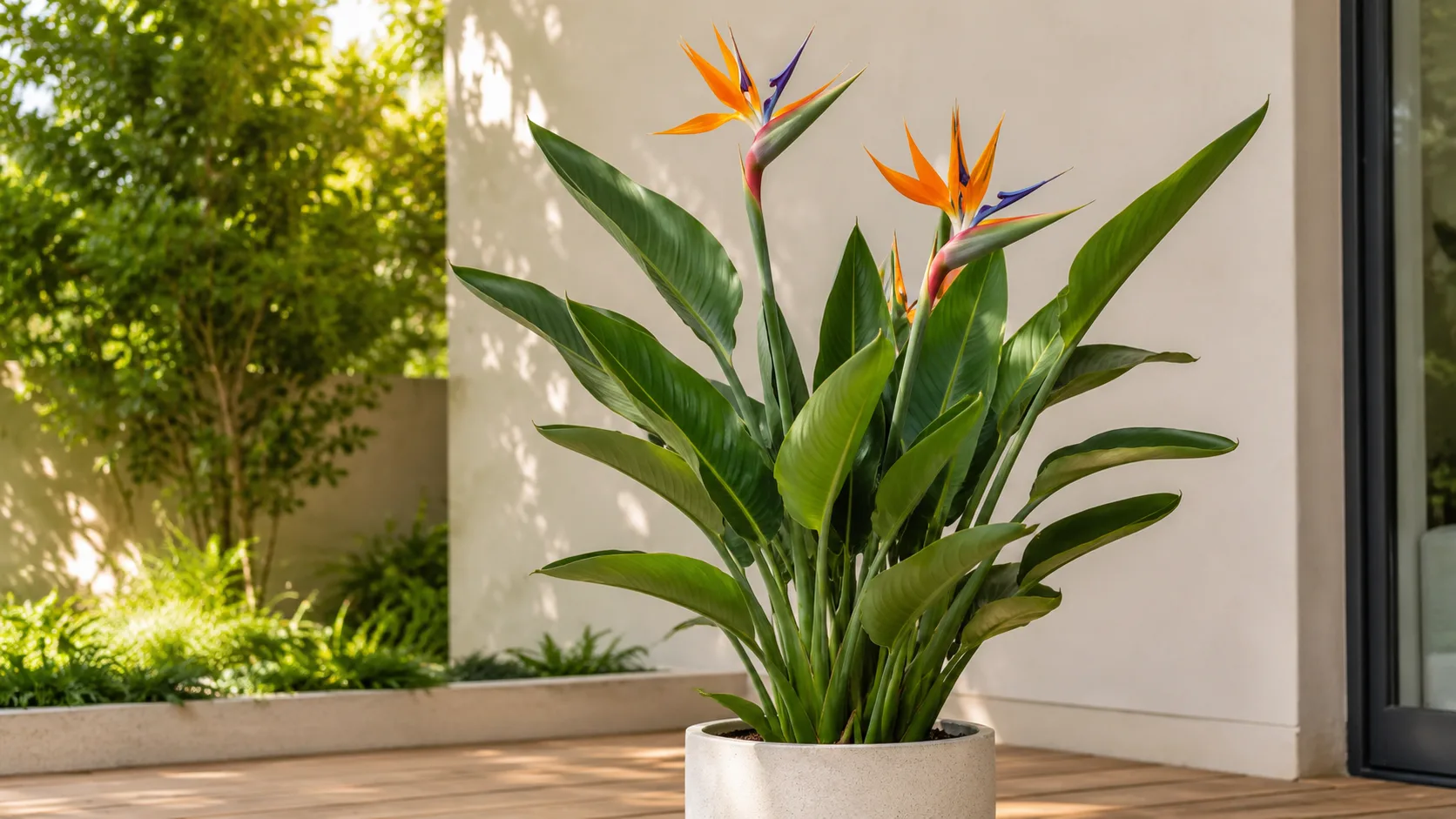
Bird of Paradise Repotting: When, How, and Mistakes to Avoid
Bird of Paradise Repotting: When, How, and Mistakes to Avoid
Bird of paradise repotting is one of those houseplant jobs that sounds simple until you realize the plant does not follow the usual “bigger pot, faster growth” script. Strelitzia reginae and Strelitzia nicolai build thick rhizomes, push out heavy paddle-shaped leaves on long petioles, and often perform better when the root zone is slightly snug than when it is swimming in fresh, unused soil. Repot when the plant clearly needs room or better drainage-not because a calendar says so, and not because the leaves look a little tired. Get the timing, pot size, and soil right, and recovery is usually straightforward. Jump two pot sizes, bare-root the clump, or repot in cold dim weather, and you can trade a one-hour chore for months of stalled growth or lost flowers.
This guide covers when repotting is actually warranted, how S. reginae differs from giant white bird of paradise, the best season to work, pot and mix rules that prevent rot, a full step-by-step routine, aftercare, and the mistakes that cause the most unnecessary damage.
Why Repotting Bird of Paradise Is Not Like Most Houseplants
Most beginner houseplant advice treats repotting as routine upsizing: roots peek out, buy a bigger pot, done. Bird of paradise breaks that pattern because it is a slow-building, top-heavy tropical perennial that uses root constriction as one signal among several before it invests energy in flowers. The Royal Horticultural Society notes that newly bought strelitzias usually do not need repotting for a year or two, and that keeping plants slightly pot-bound tends to encourage flowering-but once roots have filled the container, it is time to move. (RHS)
That single sentence changes the whole decision tree. Repotting bird of paradise is less about chasing maximum leaf size and more about resetting a degraded root environment, restoring stability, or relieving severe root crowding. Many healthy specimens go two to five years between full repots if the mix stays open and the plant is not drying out abnormally fast. Treating it like a pothos that wants a bigger pot every spring is one of the fastest ways to reset blooming for a season or two while the plant colonizes unused soil volume.
The Root-Bound and Blooming Connection
Does bird of paradise like to be root bound? Mildly, yes-within limits. A root system that fills the pot without displacing most of the soil tells the plant that horizontal space is limited, which experienced growers associate with stronger flower initiation in mature S. reginae. Severe root-binding is a different story: when roots circle densely, water runs straight through the root mass, salts accumulate, and new rhizome growth stalls. The useful middle ground is comfortably full, not desperately cramped.
If you repot a blooming-sized plant into a much larger container, expect the plant to prioritize root and leaf expansion before flowers return. That delay is normal, not a sign you killed the plant. It is also why the safest upsize is one pot size, not a dramatic jump to “room to grow for years.” Excess soil holds moisture the roots cannot reach yet, which raises the risk of anaerobic pockets and root rot on Bird of Paradise-especially indoors where evaporation is slower than in a conservatory or outdoor summer placement.
Strelitzia reginae vs Strelitzia nicolai Repotting Needs
Both species share the same core repotting logic, but scale and timeline differ. Strelitzia reginae, the orange bird of paradise most often grown for flowers indoors, typically reaches roughly 1.5 m (5 ft) tall and over 1 m (3¼ ft) wide in long-term cultivation. It is usually repotted on a two- to three-year rhythm when young, then less often once mature, with division in early spring as an optional propagation path. (RHS)
Strelitzia nicolai, the giant white bird of paradise, grows on a tree-like stem with enormous leaves and eventually becomes far too large for most homes outdoors. Indoors it still needs repotting, but the priority shifts toward stability and depth: a tall, top-heavy plant tipping over is often a repot trigger even before roots escape every drainage hole. Nicolai may tolerate three- to four-year intervals in a stable mix, but use conservative pot-size increases because overpotting large specimens creates a huge wet soil reservoir around a relatively small root ball. If you are growing nicolai primarily for foliage architecture rather than flowers, root-bound bloom strategy matters less-but drainage and pot weight still matter enormously.
When Bird of Paradise Actually Needs Repotting
The right question is not “how long have I had this pot?” but “what is the root zone doing?” Bird of paradise sends clear physical signals when the container is failing. Two or more signs together mean you should plan a repot in the next active growth window-not necessarily today, unless the plant is actively declining from root problems.
Signs Your Plant Has Outgrown Its Pot
Watch for these reliable indicators:
- Roots emerging from drainage holes or circling tightly at the soil surface
- Water running straight through a root-packed pot within seconds, leaving the core dry
- Soil drying much faster than it did last season-often every two to three days after a thorough watering
- Visible rhizome pressure deforming a thin plastic pot or lifting the plant
- Top-heavy instability where the pot tips despite a wide leaf spread
- Sour, compacted, or crusted mix that no longer absorbs water evenly
- Stalled new leaf production despite good light and appropriate feeding during the growing season
A single surface root is not an emergency. A plant that needs watering every other day in winter, while sitting in dim light, is telling you the root mass has outgrown the soil volume-or the mix has collapsed. NC State Extension notes that root rot can occur from overwatering on Bird of Paradise or poorly drained soils on strelitzia, which is why repotting into fresh, airy mix sometimes doubles as a rescue when old substrate stays wet too long. (NC State Extension)
Why a Fixed Calendar Schedule Usually Fails
Calendar repotting-”every spring, no matter what”-works poorly here. A young S. reginae in a fresh mix may not need a full repot for 18–24 months after purchase. A mature specimen in a heavy ceramic pot with stable drainage may go three to five years if you refresh the top layer each spring. The RHS recommends repotting every couple of years in spring, after flowering, once roots have filled the container-but that interval assumes active growth and depleted mix, not an arbitrary date. (RHS)
Top-dressing-scraping away the top 5 cm (2 in) of old compost and replacing it with fresh mix each spring-is often enough when the root ball still fits the pot. That refresh supplies new organic matter and reduces salt crust without resetting the bloom-friendly root constraint. Reserve full repotting for when the root ball is dense, the pot is unstable, or drainage has clearly failed.
Best Time of Year to Repot Bird of Paradise
Season matters because strelitzia roots regenerate fastest with warmth, bright light, and active leaf production. Repotting during dormancy or low light forces the plant to sit in disturbed, moist mix while it cannot repair roots efficiently.
Spring and Early Summer: The Safest Window
Early spring through early summer is the default window in most homes-roughly when overnight temperatures stay consistently above 15°C (59°F) and you see new leaf spears emerging. For S. reginae, the RHS specifically recommends repotting in spring, after flowering, which protects winter bloom displays and gives the plant a full growing season to re-establish. (RHS)
If your plant flowers in late winter indoors, you do not need to wait months after the last bloom fades-but avoid repotting in the middle of a heavy bloom stalk if you can. Flower removal is cosmetic; root health is structural. When roots are circling and the pot dries in two days, waiting solely for petals to drop can do more harm than waiting one week for a calmer window.
When Winter or Fall Repotting Is Justified
Avoid major repotting in late fall and winter unless the situation is urgent. Cold soil, shorter days, and reduced evaporation keep disturbed mix wet longer, which slows recovery and increases rot risk. The exceptions are worth naming because they are common:
- Active root rot with sour-smelling mix and mushy rhizome tissue
- Severe root-binding where the plant cannot hold moisture at all
- Physical instability posing a safety risk from a falling pot
- Pest or disease contamination of old mix that requires full substrate replacement
If you must repot in winter, keep the plant warm (18–24°C / 65–75°F), in Bird of Paradise light guide, and water more conservatively than you would in spring. Skip fertilizer entirely until new growth looks normal. Fall is a reasonable time for top-dressing only, not for upsizing and dividing, unless you live in a frost-free climate where the plant stays actively growing outdoors.
Choosing the Right Pot and Soil Mix
Pot and soil choices do more work than the actual lifting and shifting. Bird of paradise needs drainage, weight, and modest volume increase-not the biggest decorative planter that fits the corner.
Pot Size Rules That Prevent Overwatering
The safe rule: increase pot diameter by only 1–2 inches (2.5–5 cm)-one nursery pot size. A plant in a 25 cm (10 in) pot moves to 27–30 cm (11–12 in), not 35 cm (14 in). For very large S. nicolai specimens, choose the smallest larger pot that restores stability, even if root room is still tight.
Every pot needs multiple drainage holes. If you use a decorative cachepot, never let the inner pot sit in drained water. Tall bird of paradise plants benefit from ** heavier pots**-ceramic, concrete, or thick plastic-that counterbalance leaf weight. Terracotta dries faster and can be excellent in bright, warm rooms; sealed plastic retains moisture longer and suits drier air or inconsistent waterers. Match material to your watering habits, not only to aesthetics.
Soil Mix for Drainage, Weight, and Long-Term Stability
Bird of paradise wants rich but fast-draining mix. The RHS recommends peat-free loam-based compost such as John Innes No. 3 with added grit for repotting strelitzia-a structure that holds nutrients and moisture without collapsing into a wet block. (RHS)
If you use standard indoor potting mix, amend it for aeration:
- 20–30% perlite, pumice, or coarse horticultural grit
- 10–20% orchid bark or coarse coconut husk for long-term openness
- Optional 10% composted bark or worm castings for fertility without heaviness
Target a slightly acid to neutral range around pH 6.0–7.5. Avoid straight garden soil indoors; it compacts and carries pest eggs. The mix should feel crumbly in your hand, not sticky. When you squeeze a moist handful, it should hold shape briefly then fall apart-not ooze water.
Tools and Pre-Repot Checklist
Gather everything before you unpot a plant that may weigh more than you expect. Running mid-job to find scissors turns a controlled repot into root drying and leaf damage.
You will need:
- New pot with drainage holes, cleaned with hot water
- Fresh mix, pre-moistened lightly so it is damp but not wet
- Sharp pruning shears or a serrated knife for dead roots and optional division
- Drop cloth or tarp-soil plus large leaves make a mess fast
- Stake and soft ties if the plant wobbles after repotting
- Watering can with a narrow spout for controlled first watering
- Gloves-handling crushed leaves releases sap; keep pets away during cleanup
One day before repotting, water thoroughly so the root ball holds together. Do not fertilize for at least four to six weeks after repotting; fresh mix usually carries enough baseline fertility, and salt burn on damaged roots is a common post-repot setback. If the plant is severely root-bound, have a utility knife ready to score the bottom of a plastic nursery pot rather than yanking the plant by the stems.
Pet note: ASPCA lists Strelitzia reginae as toxic to cats and dogs, with GI irritants that can cause mild nausea, vomiting, and drowsiness-especially from fruit and seeds. (ASPCA) Repotting scatters soil and bruised tissue; keep dogs and cats out of the work area and wipe spilled mix promptly.
Step-by-Step: How to Repot Bird of Paradise
Work on a stable surface at roughly pot height so you are not lifting the full plant repeatedly. Enlist help for large S. nicolai specimens-the leaf span is awkward long before the root ball is.
Step 1 - Prepare the new pot. Add enough fresh mix to the bottom so the top of the root ball will sit 1–2 cm (½–1 in) below the rim. Bird of paradise should be planted at the same depth it was growing before; burying the rhizome crown deeper invites rot.
Step 2 - Remove the plant. Tip the pot on its side and slide the root ball out. If it will not budge, run a knife around the inside edge or cut away a deformed plastic pot. Never pull by the leaf petioles; they snap easily and wounds invite disease.
Step 3 - Inspect the roots. Healthy strelitzia roots are firm and white to tan. Trim black, mushy, or hollow sections back to solid tissue with clean tools. Tease circling roots at the bottom and outer edges; you do not need to eliminate every curve.
Step 4 - Optional division. Mature clumps produce offsets with their own leaves and roots. The RHS describes dividing by cutting through the rootball in early spring, ensuring each section has healthy roots and leaves, then potting into free-draining compost. (RHS) Division is optional-not required at every repot.
Step 5 - Center and backfill. Place the plant in the new pot, fill around the sides with fresh mix, and tap the pot gently to settle soil without compacting it into concrete. Leave 2–3 cm (1 in) of headspace below the rim for watering.
Step 6 - First watering. Water until excess drains freely, then empty the saucer. If the mix sinks and exposes roots, top up once. Do not stomp the soil surface with your hands.
Step 7 - Stabilize. Insert a stake if the plant leans. Rotate the pot a quarter turn each week during recovery so new growth stays balanced, the same rotation habit the RHS recommends for ongoing watering. (RHS)
Inspecting, Trimming, and Dividing the Root Ball
The most common repotting damage comes from over-cleaning roots. Bare-rooting a healthy bird of paradise strips fine absorbing root hairs and extends shock by weeks. Keep a soil buffer around the central rhizome unless you are treating rot. When you find rot, remove all affected tissue even if the plant looks smaller afterward-a smaller healthy root system in a appropriately sized pot beats a large rotten one in an oversized container.
Division is worth doing when the clump is clearly multi-stemmed and you want a second plant, not when you are repotting purely for space. Each division needs several leaves and a viable rhizome section. Undivided plants often recover faster because the root-to-leaf ratio stays intact. If you divide, pot each section one size smaller than you would for the combined clump.
Planting Depth, Backfilling, and First Watering
Planting too deep is a silent killer. The rhizome crown-where petioles emerge-should sit at or barely above the final soil line, the same level as before repotting. Deep planting traps moisture against the stem base and mimics the conditions that lead to root rot noted on strelitzia by NC State Extension. (NC State Extension)
After backfilling, check that the plant stands upright without rocking. A wobble means the mix is too loose at the base or the pot is still oversized relative to roots. Add mix beneath the root ball, not piled against the stem. First watering should moisten new mix completely but not flood a plant that already had moist old core-if you pre-watered yesterday, you may need less than you expect.
Aftercare, Recovery Timeline, and When to Resume Normal Care
Transplant shock on bird of paradise usually shows as slight leaf curl, paused new spears, or one older leaf yellowing-not instant collapse. Mild symptoms often clear within one to two weeks if light and temperature stay stable. Full root re-establishment typically takes four to six weeks in spring; winter recoveries can take longer.
For the first month:
- Keep bright indirect light; avoid sudden moves into harsh direct sun through glass
- Water when the top 3–5 cm (1–2 in) of mix is dry, erring slightly dry rather than wet
- Hold fertilizer for four to six weeks minimum
- Skip pruning except to remove fully brown, dead leaves
- Maintain moderate humidity if your air is very dry, but do not mist heavily late in the day
Resume normal feeding when you see a new leaf spear opening at normal size and water use returns to a predictable rhythm. If multiple leaves yellow progressively, or the base feels soft, unpot again and inspect for rot-usually overwatering in too large a pot, not “shock” alone.
New growth is the recovery signal that matters. Old damaged leaves will not revert to perfect green; new paddles coming in firm and glossy mean the root zone is working again.
Common Bird of Paradise Repotting Mistakes to Avoid
Most failures repeat a short list of errors. Avoid these and you eliminate the majority of post-repot disasters.
Jumping two or more pot sizes. The classic mistake. Excess soil stays wet; roots stall; leaves yellow from oxygen loss, not “adjustment.”
Repotting on a schedule instead of on signals. Unnecessary repots reset flowering and stress stable plants.
Bare-rooting healthy plants. Tease, do not scrub. Preserve the root ball core.
Repotting in cold, dark winter without urgency. Slow recovery and rot risk rise together.
Fertilizing immediately. Salt burn on cut roots shows up as brown leaf margins within days.
Pulling the plant by leaves or stems. Mechanical damage looks like disease and never heals on old foliage.
Using a pot with no drainage because the ceramic pot is pretty. Cachepots are fine; sealed bottoms are not.
Dividing every repot when you only needed one size up. Division is propagation, not maintenance.
Ignoring stability on tall nicolai. A wider base or heavier pot prevents tip-over damage that no amount of watering fixes.
Conclusion
Bird of paradise repotting rewards patience and restraint more than enthusiasm. Repot when roots, drainage, or stability demand it-usually in spring or early summer, with a pot only one size larger and a gritty, loam-based or amended indoor mix that drains fast. Keep the rhizome at the same depth, disturb roots only as much as necessary, and expect a short pause in growth rather than instant payoff. Mild root constriction can support flowering in mature S. reginae; severe binding and soggy old mix are problems, not goals. Top-dress in spring when the pot still fits; divide only when you want new plants. If you remember one rule above the rest, make it this: give bird of paradise better soil and slightly more room-not a mansion it cannot fill.
When to use this page vs other Bird of Paradise guides
- Bird of Paradise overview - Start here for whole-plant context before deep-diving this topic.
- Bird of Paradise problems hub - Jump to symptom-specific fix guides when this care topic does not resolve the issue.
- Root Rot on Bird of Paradise - Escalate here when repotting adjustments are not enough.