Overwatering on Bird of Paradise: Causes, Checks & Fixes
Quick answer
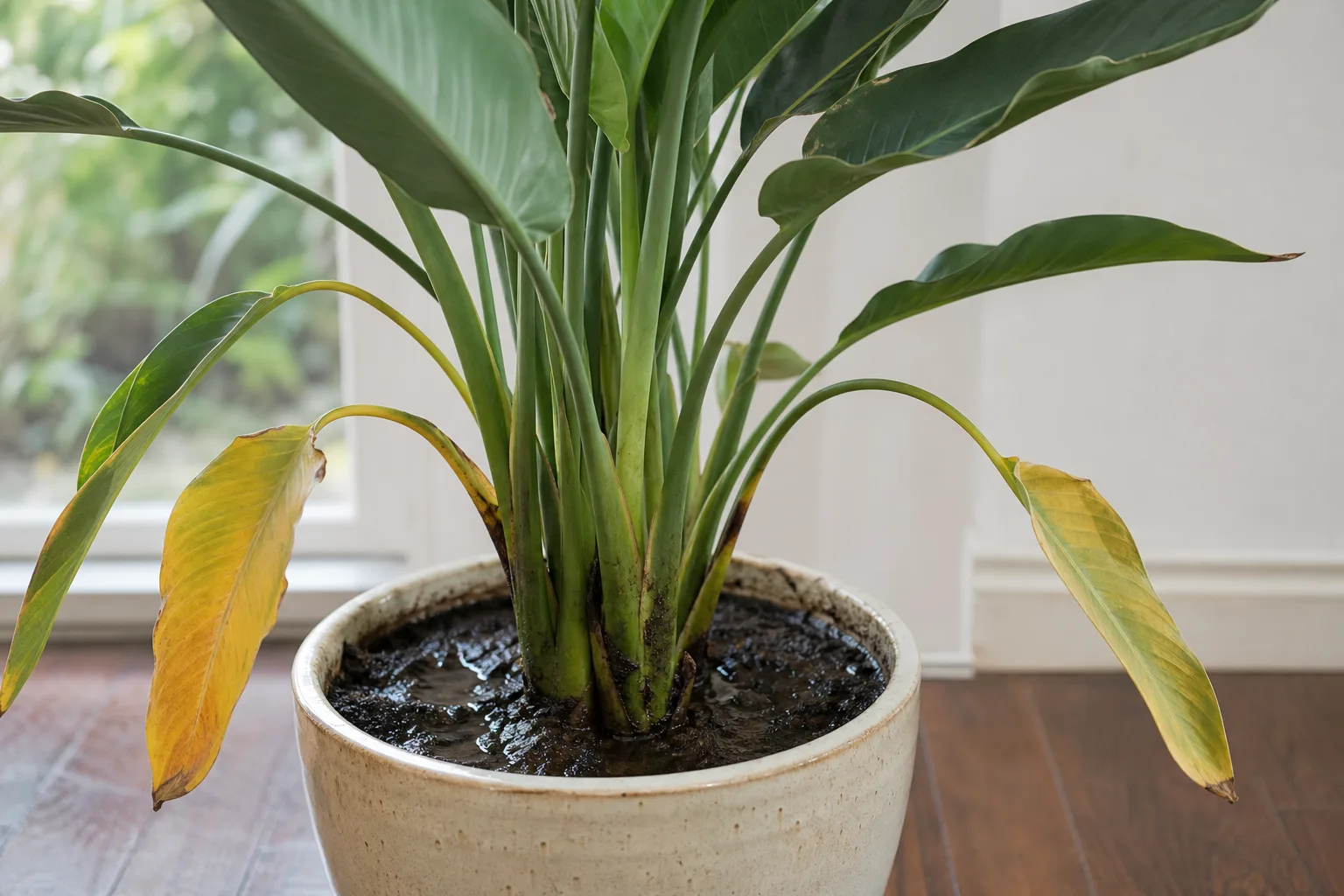
Overwatering on Bird of Paradise (Strelitzia reginae) shows as yellow lower leaves, limp paddle foliage, and a heavy pot that never lightens-often while growers keep watering because leaves look wilted. First step: stop watering until the top 5 cm of mix are dry.
Overwatering on Bird of Paradise: Causes, Checks & Fixes
This guide covers overwatering on Bird of Paradise. See also the general Overwatering guide, watering, and light pages for this plant.
Overwatering on Bird of Paradise: Causes, Checks & Fixes
Quick answer
Overwatering on Bird of Paradise (Strelitzia reginae) is chronic wet mix around the rhizome and fleshy roots, not one heavy drink after a dry spell. This clumping perennial with underground rhizomes wants generous water during active growth but cannot tolerate saturated, poorly drained soil-roots lose oxygen, feeder roots fail, and yellow lower leaves on a heavy wet pot appear while upper paddle foliage may still look acceptable.
First step: stop watering until the top 5 cm of mix are dry. Lift the pot-if it feels heavy days after the last drink and lower leaves are yellowing, treat overwatering as confirmed before you add more water.
For species context and normal care rhythm, see the Bird of Paradise overview. For full seasonal watering, see the watering guide. If roots are already mushy, escalate to the root rot guide.
Overwatering vs. lookalikes on Strelitzia
| Pattern | Pot weight | Soil at 5 cm | Leaf pattern | What it usually means |
|---|---|---|---|---|
| Overwatering | Heavy | Wet, cool | Yellow lower leaves, limp paddles | Saturated rhizome zone |
| underwatering on Bird of Paradise | Light | Dry | Crisp brown edges, fold along midrib | Drought stress |
| Low humidity | Normal | Dry on schedule | Brown tips only, firm leaves | Air too dry-not overwatering |
| Root rot (advanced) | Heavy | Wet, sour smell | Collapse, soft rhizome | Failed roots on chronic wet mix |
Compare with wilting for the wet-vs-dry pot paradox, yellow leaves for nutrient or light causes on dry soil, and fungus gnats as a clue that surface mix never dries.
What overwatering looks like on Bird of Paradise
Strelitzia signals root stress through large paddle leaves on thick petioles, not a tight succulent crown. Symptoms often start on lower foliage while the upper clump still looks upright-making it easy to miss until the pot stays heavy for weeks.
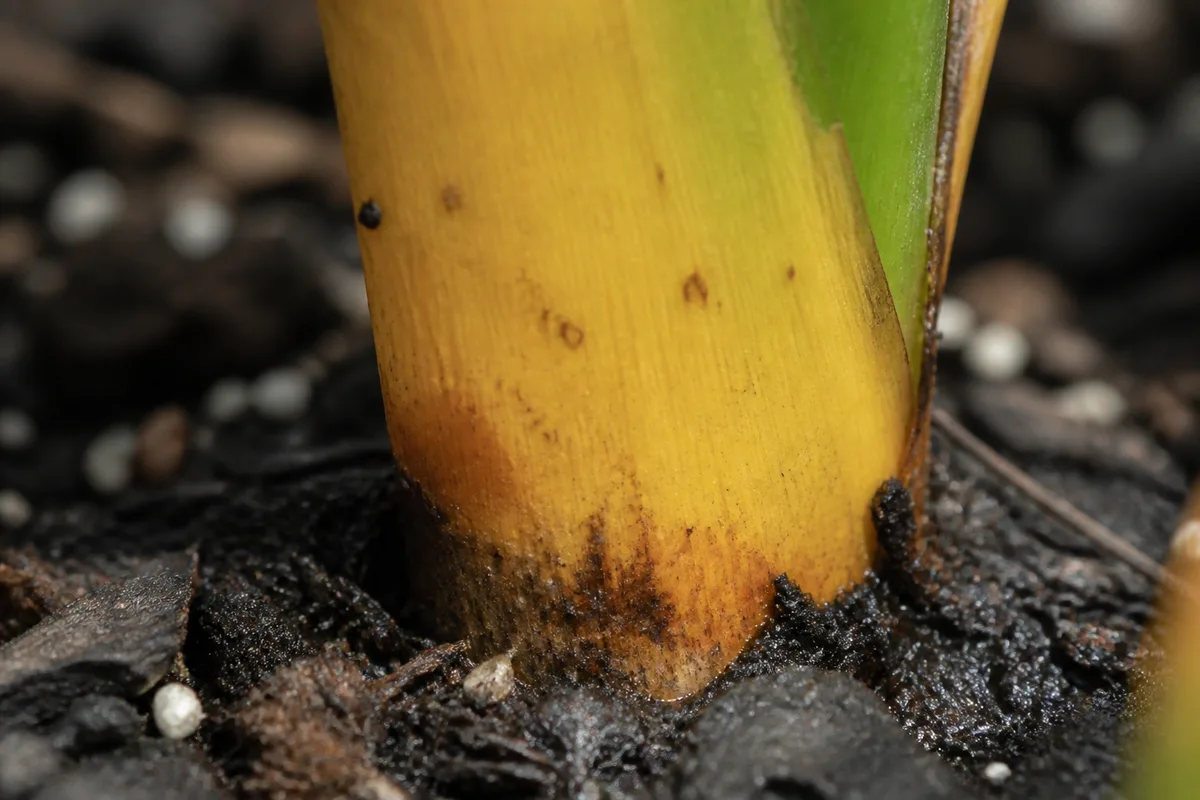
Overwatering symptoms on Bird of Paradise - compare with healthy tissue on the same plant.
Early signs
- Yellow lower leaves while mix stays damp-not one old leaf aging out naturally
- Limp paddle-shaped leaves that do not perk within 24 hours after watering on already-wet soil
- Heavy pot that never lightens between scheduled drinks
- Fungus gnats near the soil surface
- Slowed new leaf emergence from the clump center
Advanced signs
- Soft or foul-smelling rhizome at soil line when you unpot
- Leaf collapse with brown mushy bases despite moisture
- Sour odor from drain holes
- Progression toward root rot if the wet cycle continues
Firm vs. mushy rhizome - what you are checking for
The fastest way to separate early overwatering from advancing rot is a squeeze test at the soil line after you gently knock the plant from its pot. Strelitzia stores water in thick underground stems, so healthy tissue should feel solid-not spongy.
| Rhizome feel | Color at cut | Roots on rinse | Diagnosis | Next step |
|---|---|---|---|---|
| Firm, resists squeeze | Cream to pale green | White, firm | Early overwatering | Dry-down; fix drainage |
| Slightly soft in spots | Tan with dark streaks | Mostly firm, some brown tips | Advancing stress | Trim soft spots; repot airy mix |
| Squishy, collapses on pressure | Dark brown to black | Slimy, translucent | Root rot | Full root rot rescue |
| Hollow through crown | Black slime | No firm tissue | Severe decline | Division salvage or discard |
You do not need to unpot for every yellow leaf-but if the pot smells sour, lower paddles keep yellowing on wet mix, or wilt does not resolve after a dry-down week, inspection beats guessing.
Why Bird of Paradise gets overwatered
Calendar watering in low light
Water freely in spring and summer but keep Strelitzia drier in winter is the extension pattern most indoor growers miss. The RHS recommends plentiful water while keeping compost moist but not saturated in active growth, then letting compost get fairly dry between waterings from late November onward. Same weekly schedule in a dim winter room keeps mix wet for weeks while the plant uses a fraction of its summer water needs.
Poor drainage around the rhizome zone
Blocked holes, dense peat without perlite, oversized pots, and cachepots holding runoff all saturate the rhizome zone. Root rot on Strelitzia occurs from overwatering or poorly drained soils-the same failure mode this page addresses before tissue turns to slime. Stems rotting at the base are a direct sign of overwatering on strelitzia, often after compost stays too wet too long.
Wilt misread as thirst
Wilting with moist soil often means roots cannot absorb water because they are damaged-owners water again and worsen saturation. Strelitzia paddles droop from turgor loss whether the cause is drought or root failure; pot weight and soil moisture at 5 cm depth tell you which.
Humid rooms without airflow
Bathrooms and kitchens stay damp; mix dries slowly at the surface while the center around rhizomes stays wet. Good ventilation once temperatures rise above about 20°C (68°F) helps the RHS-recommended moist-but-not-saturated cycle work indoors without turning into constant saturation.
How to confirm the cause
- Depth probe - Finger or skewer 5 cm deep near pot edge. Wet clinging soil plus yellow lower leaves supports overwatering.
- Pot weight - Compare to how heavy the pot felt right after a proper soak; persistent heaviness means slow dry-down.
- Recovery test - If fronds do not firm within 24 hours after watering on already-wet mix, suspect root stress not thirst.
- Rhizome check - Unpot if smell or advanced yellowing: firm white/cream rhizome with white roots means recovery is likely; mushy black tissue means rot rescue.
- Drainage audit - Confirm holes are open and saucer is empty.
First fix for Bird of Paradise
Stop watering until the top 5 cm of mix are dry throughout the root ball’s upper zone.
Move the pot to brighter indirect light with good airflow (not hot direct sun through glass on a stressed plant). Empty saucers and cachepots. Do not fertilize until new growth resumes.
If the mix smells sour or rhizome tissue softens, unpot, trim mushy roots and rhizome sections, air-dry cuts, and repot into fresh airy mix per the repotting guide. Withhold water one week, then resume 5 cm dry-check watering.
Step-by-step recovery
- Cease irrigation - Let top 5 cm dry; may take one to two weeks in cool rooms.
- Improve conditions - Bird of Paradise light guide, airflow, empty standing water.
- Trim losses - Remove fully yellow or mushy-base leaves at the rhizome.
- Repot if needed - Fresh mix with perlite; same or smaller pot if roots were trimmed.
- Resume watering - Deep soak when top 5 cm dry; drain fully.
- Monitor center growth - New paddle leaves unfurling cleanly mean the fix worked.
Recovery timeline
Early overwatering with firm rhizome may show stabilized lower leaves within two to three weeks after dry-down. Yellow leaves that already detached will not return-judge by new center leaves and lighter pot weight on schedule. Advanced rhizome rot needs root-rot protocol; timeline extends to four to eight weeks or longer.
What not to do
- Do not water because paddles look limp on wet soil-overwatering causes roots to die from lack of oxygen.
- Do not mist heavily as a humidity substitute-wet crowns plus stagnant air invite fungal issues.
- Do not repot into garden soil or a pot without drainage.
- Do not fertilize stressed roots.
How to prevent overwatering next time
Follow the watering guide: top 5 cm dry, seasonal cuts in winter, pot weight checks. Use well-drained mix, appropriate pot size, and empty saucers within 30 minutes.
When to worry
Escalate when rhizome tissue turns black mush, most roots are slime on inspection, or the entire clump collapses on soggy mix despite dry-down. At that point follow root rot recovery-severe cases may not save all divisions.
When to use this page vs other Bird of Paradise guides
- Bird of Paradise watering guide - Use for routine moisture checks before assuming overwatering is the main issue.
- Bird of Paradise problems hub - Browse all 20 common issues on this species.
- Root Rot on Bird of Paradise - Different entry point when symptoms overlap with overwatering.
- Yellow Leaves on Bird of Paradise - Different entry point when symptoms overlap with overwatering.
- Wilting on Bird of Paradise - Different entry point when symptoms overlap with overwatering.
Related Bird of Paradise guides
- Bird of Paradise overview
- Bird of Paradise watering
- Bird of Paradise light
- Bird of Paradise soil
- Root Rot on Bird of Paradise
- Yellow Leaves on Bird of Paradise
- Wilting on Bird of Paradise
- Fungus Gnats on Bird of Paradise
- Mold on Soil on Bird of Paradise
- Drooping Leaves on Bird of Paradise
- Bird of Paradise problems