Yellow Leaves on Bird of Paradise: Causes, Checks & Fixes
Quick answer
Yellow leaves on Bird of Paradise are a symptom, not one diagnosis. First step: check whether the top 2 inches of mix are wet or dry and whether direct sun actually hits the leaves for several hours daily-insufficient light and overwatering are the two most common indoor causes, and they often occur together.
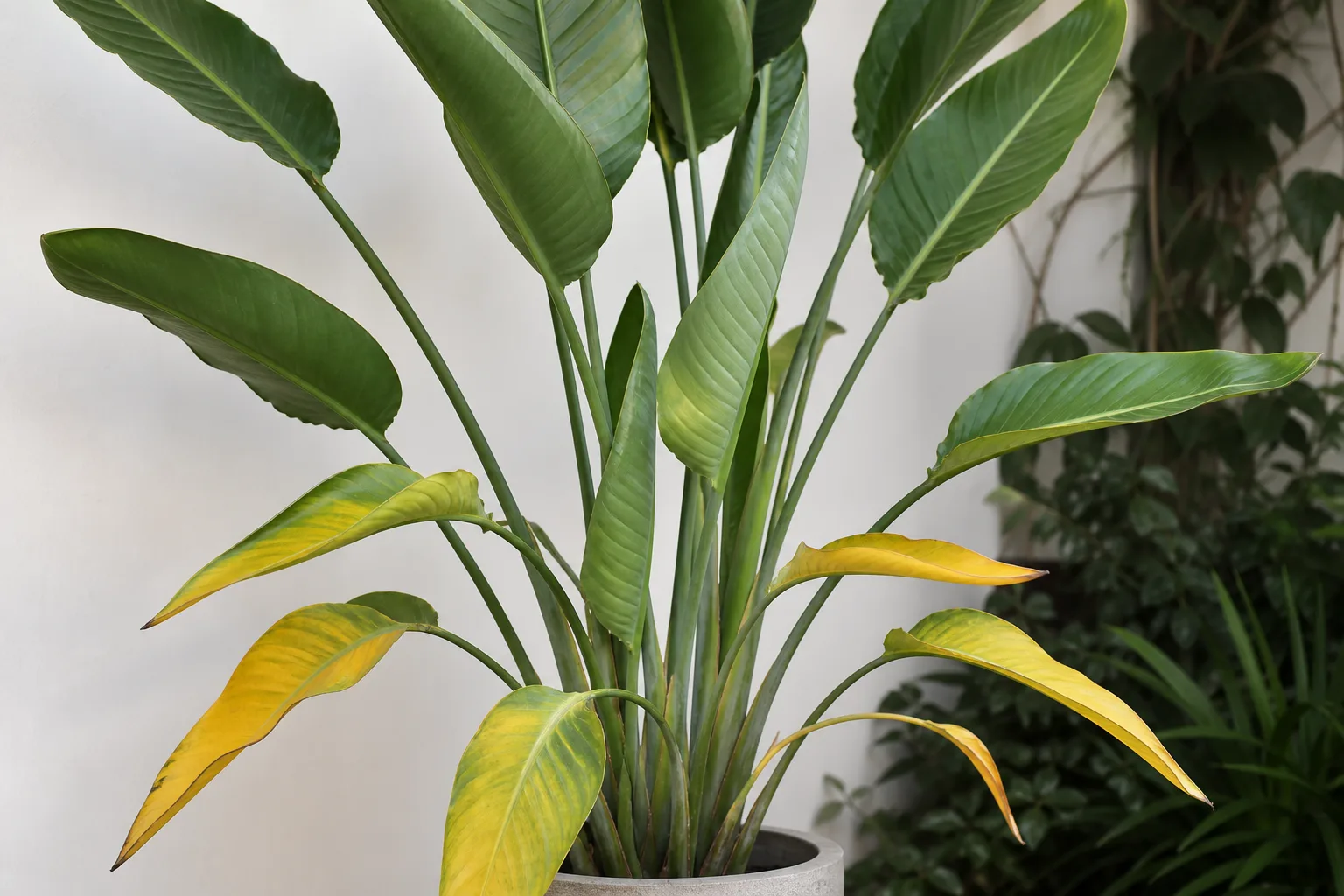
Yellow Leaves on Bird of Paradise: Causes, Checks & Fixes
This guide covers yellow leaves on Bird of Paradise. See also the general Yellow Leaves guide, watering, and light pages for this plant.
Yellow Leaves on Bird of Paradise: Causes, Checks & Fixes
Quick answer
Yellow leaves on Bird of Paradise (Strelitzia reginae or S. nicolai) are a symptom, not a single diagnosis. This is a clumping, fan-leaved subtropical plant with large paddle blades on long petioles-not a rosette succulent and not a shade-loving tropical. Indoors, yellowing most often traces to too little direct sun, soil that stays wet too long, or normal aging of the outermost fan leaves.
First step: check soil moisture at the top 2 inches and whether direct sun actually falls on the leaves for several hours each day. Push your finger into the mix near the pot edge, lift the pot to feel weight, and hold your hand between plant and window at midday-a sharp shadow means direct sun is hitting the foliage. Wet heavy soil with multiple limp yellow fans points to overwatering or root stress. Dry light soil with curled, crispy margins points to underwatering. Pale yellow-green color on most fans with long leaning petioles usually means insufficient light, even if you water on a fixed schedule.
Do not fertilize, repot, or move the plant into harsh south sun on day one. Match the first fix to what you find: dry the mix or water thoroughly for moisture stress; improve direct light (gradually) for chlorosis; trim one spent outer fan for normal senescence. Full species context: Bird of Paradise overview.
What yellow leaves look like on Bird of Paradise
Yellowing on Strelitzia follows recognizable patterns tied to fan architecture. The plant produces flattened clumps of large gray-green paddle leaves from underground rhizomes-leaves arise from a crown at the base and grow alternately so each clump looks somewhat flattened, not in a tight central rosette like an aloe.
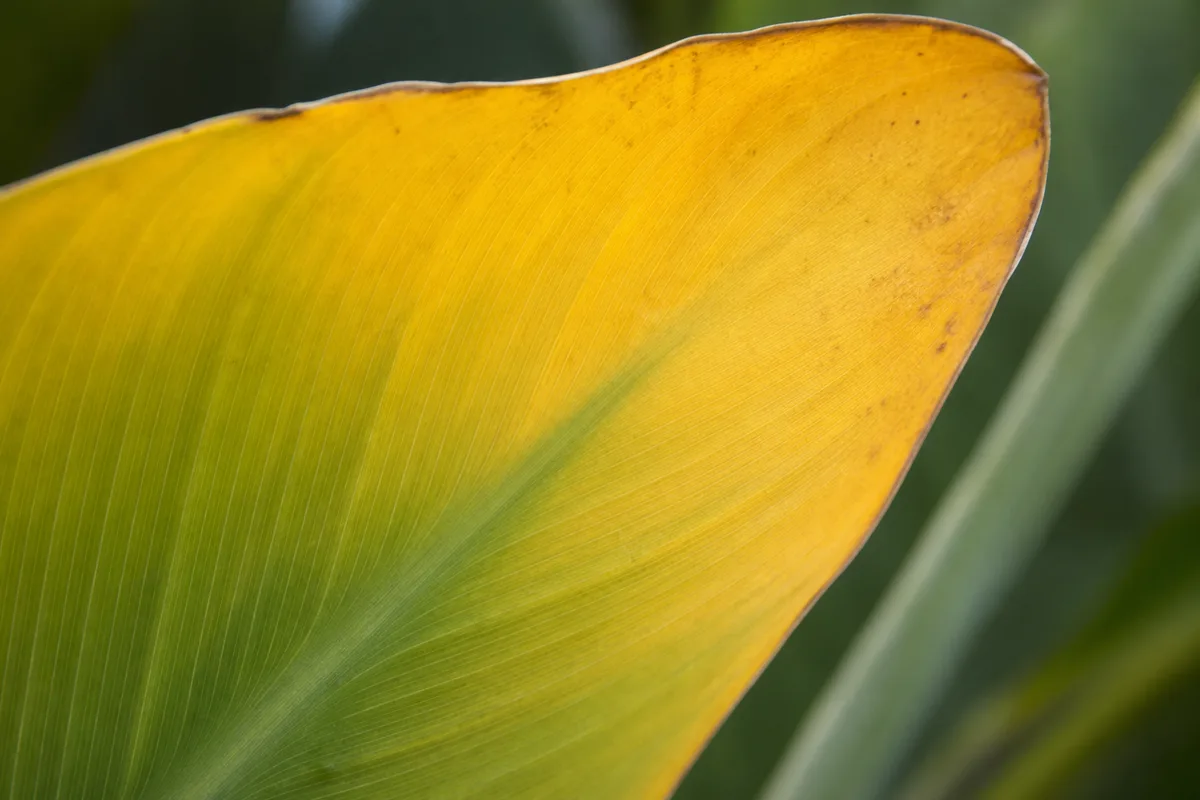
Yellow Leaves symptoms on Bird of Paradise - compare with healthy tissue on the same plant.
Low light (most common indoor cause):
- Overall pale yellow-green wash across multiple fans, sometimes deeper green only on the newest spear
- Long petioles leaning toward the brightest window; smaller new paddle blades than older growth from brighter months
- Soil that stays damp 10+ days in summer despite modest watering-metabolism is too slow to use water
- No crisp brown sun-scorch patches (that pattern follows a sudden harsh move into direct sun)
Overwatering and root stress:
- Lower or outer fans yellow first, often with limp, heavy-feeling leaves while mix is wet or cool at depth
- Surface stays dark; pot feels heavy for days after the last watering
- New leaf spears may stall, brown at the tip, or rot before unfurling
- Sour smell, fungus gnats, or soft darkened tissue at the rhizome base in advanced cases-see overwatering on Bird of Paradise and root rot
Underwatering:
- Leaves curl inward or feel less rigid; edges may crisp brown while the blade turns yellow
- Pot feels light; top 2+ inches of mix are dusty dry
- Yellowing often appears on outer fans first because they are farthest from the root zone-but soil confirms dryness, not wetness
Normal outer-fan senescence:
- One outer fan (sometimes two) fades from tip to base over weeks to months
- Inner spears stay green and firm; new growth continues from the center
- No widespread limpness, no sour wet soil, no rapid multi-fan collapse
Cold or draft damage:
- Yellowing or browning after nights near a drafty winter window or AC vent
- NC State Extension recommends moderate night temperatures around 55–65°F for indoor culture-sustained exposure below that range stresses foliage
Sun shock after a sudden move:
- Bleached or yellow patches on the window-facing side within days of moving from a dim room into unfiltered midday sun
- Distinct from slow low-light chlorosis-this follows a placement change, not months of gradual fade
Bird of Paradise growth form: fans, not rosettes
Understanding where leaves age helps you separate harmless senescence from stress.
Bird of paradise is a slow-growing, clump-forming perennial with fleshy rhizomes-not a stemless rosette. New leaf spears emerge from the center of the clump; the outermost fans are the oldest and naturally yellow, brown, and die back as the plant replaces them. That is normal on a healthy plant with one or two fading outer leaves.
What is not normal: three or more fans yellowing within two weeks, yellowing that climbs inward toward new spears, or yellow fans paired with wet soil and a soft base. Those patterns mean the root zone or environment is failing-not routine leaf turnover.
Strelitzia reginae typically reaches 3–4 feet indoors; S. nicolai grows taller with larger leaves and bigger pots, so absolute water demand differs-but the fan senescence pattern and light requirement apply to both.
Why Bird of Paradise gets yellow leaves
The light–watering trap
This is the non-obvious cause most generic houseplant guides miss. Bird of paradise is built for full sun-NC State lists full sun (six or more hours of direct light daily) as the preferred condition. In a dim room the plant photosynthesizes slowly, transpires less, and the same watering rhythm that worked in a south window keeps soil wet too long. Roots lose oxygen; lower leaves yellow; you assume you are overwatering when the deeper problem is insufficient light.
Wisconsin Horticulture notes that insufficient light is one of the most common reasons mature Strelitzia fail to thrive indoors and recommends a sunny winter spot with nearly full summer sun when possible. A plant in a north room or six feet from glass can look “correctly watered” on a calendar while the mix never dries-until fans yellow. Fix light and watering together: see Bird of Paradise light and watering guide.
Overwatering and poor drainage
Root rot can occur from overwatering or poorly drained soils on Strelitzia. Calendar watering in winter, oversized glazed pots, dense peat-heavy mix, and low light all extend wet cycles. Excess moisture reduces oxygen in soil, damages fine roots, and shows as wilting or yellowing of lower leaves-the same drought-like symptoms as underwatering, which is why soil checks beat leaf appearance alone.
Underwatering in bright conditions
In strong direct sun, large paddle leaves lose water quickly. A missed cycle or a pot that dried out and became hard to rewet can yellow outer fans with curled, crisp edges. This is less common than the light–water trap but real on south-window plants in summer.
Nutrient stress (secondary)
Chronic yellowing with uniform pale new growth on an otherwise well-lit, correctly watered plant may involve nitrogen or magnesium deficiency-but do not reach for fertilizer until you rule out light and moisture. Salt buildup from overfeeding can also yellow margins. Fertilizer is a poor first response for a stressed BoP.
Lookalike symptoms to rule out
| What you see | More likely cause | Quick check |
|---|---|---|
| Long stretched petioles, no yellow yet | Not enough light | Distance from window; shadow test at midday |
| Limp fans, wet soil, sour smell | Overwatering / root rot | Pot weight; rhizome firmness at base |
| Curled leaves, light pot, dry mix | Underwatering | Finger to 2 inches; lift pot |
| One outer fan fading slowly | Normal senescence | Inner spears green and firm |
| Bleach patches after window move | Sun shock | Recent placement change |
| Fine webbing, stippling | Spider mites | Underside inspection in dry heat |
Natural leaf splitting along paddle veins is normal in bright conditions and is not yellowing-do not treat splits alone as a moisture problem.
How to confirm the cause
Work through these checks in order. One honest soil-and-light reading beats guessing from photos.
- Soil moisture at 2 inches - Insert your finger near the pot edge. Wet cool mix with yellow limp fans supports overwatering. Dusty dry mix with light pot supports underwatering. Evenly moist mix with only one fading outer fan supports aging.
- Direct sun on the leaves - At midday, hold your hand between plant and window. Sharp dark shadow = direct sun on foliage. No shadow with pale yellow-green fans = light deficiency likely. Compare with light requirements for Bird of Paradise.
- Which fans are affected - Outer only, slowly = senescence. Multiple fans, quickly = stress. Newest spear yellowing inward = urgent root or environmental failure.
- Rhizome firmness - Gently press the base where petioles emerge. Firm is normal; soft or mushy with wet soil warrants unpotting-see root rot.
- Recent changes - New window, repot, heating season, or AC draft in the last two weeks narrows sun shock, transplant stress, or cold damage.
First fix for Bird of Paradise
Match one action to your top finding-do not stack Bird of Paradise repotting guide, fertilizer, and a window move on the same day.
- Wet soil + multiple yellow limp fans: Stop watering until the top 2 inches dry. Empty saucers. Move to brighter direct light if the plant is in shade-evaporation and root recovery both need light. Do not fertilize.
- Dry soil + curled yellow fans: Water thoroughly until it runs from drainage holes; discard saucer water after 30 minutes. Recheck in one week before watering again.
- Pale yellow-green fans + damp soil that never dries + dim placement: Move to the brightest spot with several hours of direct sun (acclimate over 7–14 days if coming from deep shade). Stretch watering interval until the top layer genuinely dries-see not enough light.
- One outer fan only, firm base, normal soil: Trim the spent fan at the base with clean shears. No other treatment required.
Step-by-step recovery by confirmed cause
Low light chlorosis
Move the pot within one to two feet of south or west glass, or add a full-spectrum grow light 12–14 hours daily. Increase exposure gradually if the plant lived in shade-sudden harsh sun without acclimation can scorch leaves. Adjust watering downward until dry-down returns; brighter light increases water use. Expect shorter new petioles and greener new spears in three to six weeks-not instant re-greening of old blades.
Overwatering / early root stress
Pause watering until top mix dries. Confirm drainage holes are open. Improve light to speed dry-down. If yellowing continues after the mix has been appropriately dry for two weeks, unpot and inspect-trim only mushy roots, repot into well-draining mix, and withhold fertilizer until new firm growth appears. Full protocol: overwatering guide.
Underwatering
Soak thoroughly once; do not sip daily. If peat has pulled away from the pot wall, bottom-water for 30 minutes so the center rewets. Resume the wet-dry cycle from the watering guide. Outer yellow leaves may not recover; watch the next spear.
Normal senescence
Remove the yellow outer fan when it is mostly brown or yellow. Leave inner growth alone. Continue normal bright-light care.
Cold or sun shock
For cold: move away from drafty glass; stable room temperatures above 60°F at night. For sun shock: pull back to bright filtered light temporarily; acclimate again over two weeks. Do not overwater while leaves recover.
Recovery timeline
Recovery is judged by new spears, not old paddle color.
- Watering correction (over- or underwatering): Firm new leaf unfurling within 2–4 weeks after soil rhythm stabilizes
- Light correction: Greener, stiffer new growth within 3–6 weeks; chronically dim plants may take a full growing season to look architectural again
- Root rot rescue: Months if salvageable; some plants do not recover-honest stop point when rhizome is extensively mushy
- Single aging outer fan: Replacement spear visible within weeks on an otherwise healthy clump
Fully yellow tissue does not re-green. Remove spent fans to reduce pest hiding spots and redirect energy.
What not to do
- Do not assume yellow leaves need fertilizer-salt buildup from overfeeding yellows margins; low-light chlorosis will not respond to feed alone
- Do not increase watering on wet soil because leaves look limp-limp with wet mix often means damaged roots, not thirst
- Do not move a shade-grown BoP into unfiltered south midsummer sun in one day-acclimate over 7–14 days
- Do not repot on day one unless roots are visibly mushy or soil is compacted and hydrophobic-repotting stresses an already declining plant
- Do not treat “indirect light” as sufficient prevention-this species needs meaningful direct sun indoors for long-term health
How to prevent yellow leaves on Bird of Paradise
- Place the plant where direct sun hits the leaves for several hours daily, or supplement with a grow light-full sun is the preferred cultural condition
- Water when the top 2 inches of mix dry, not on a fixed calendar-adjust interval when light or season changes
- Use well-draining mix and pots with drainage; empty saucers after watering
- Remove spent outer fans before they harbor pests
- In winter, water less when growth slows-keep Strelitzia drier in winter after active-season watering
- Wipe dust from broad leaves monthly so available light is not wasted
When to worry
Treat yellowing as urgent if:
- Several fans yellow within two weeks with wet, sour soil or soft rhizome tissue
- Newest center spears yellow or rot before opening
- Yellowing spreads inward from outer fans while soil stays wet
- The plant collapses or the base smells rotten-escalate to root rot immediately
Lower urgency: one outer fan fading over months with firm green inner growth-that is routine turnover on a clumping Strelitzia.
Symptom quick-reference
| Cause | Leaf appearance | Soil | Urgency | First fix |
|---|---|---|---|---|
| Low light | Pale yellow-green, lean toward window | Often wet too long | Medium | Brighter direct sun; dry-down watering |
| Overwatering | Limp yellow lower/outer fans | Wet, heavy pot | High if base soft | Stop watering; improve light and drainage |
| Underwatering | Curl, crisp edges | Dry, light pot | Medium | Thorough soak; resume wet-dry cycle |
| Aging outer fan | One fan fades slowly | Normal | Low | Trim spent leaf |
| Sun shock | Bleach/yellow on sun side | Variable | Medium | Filter light; re-acclimate |
| Cold draft | Patchy yellow/brown after cold nights | Normal | Medium | Move off cold glass |
When to use this page vs other Bird of Paradise guides
- Bird of Paradise watering guide - Use for routine moisture checks before assuming yellow leaves is the main issue.
- Bird of Paradise problems hub - Browse all 20 common issues on this species.
- Overwatering on Bird of Paradise - Different entry point when symptoms overlap with yellow leaves.
- Underwatering on Bird of Paradise - Different entry point when symptoms overlap with yellow leaves.
- Not Enough Light on Bird of Paradise - Different entry point when symptoms overlap with yellow leaves.