Not Enough Light on Bird of Paradise: Causes, Checks & Fixes
Quick answer
Bird of Paradise is a high-light plant that stretches and blooms poorly in dim rooms. First step: move it to the brightest spot in your home-within a few feet of a south, west, or east window with several hours of direct sun.
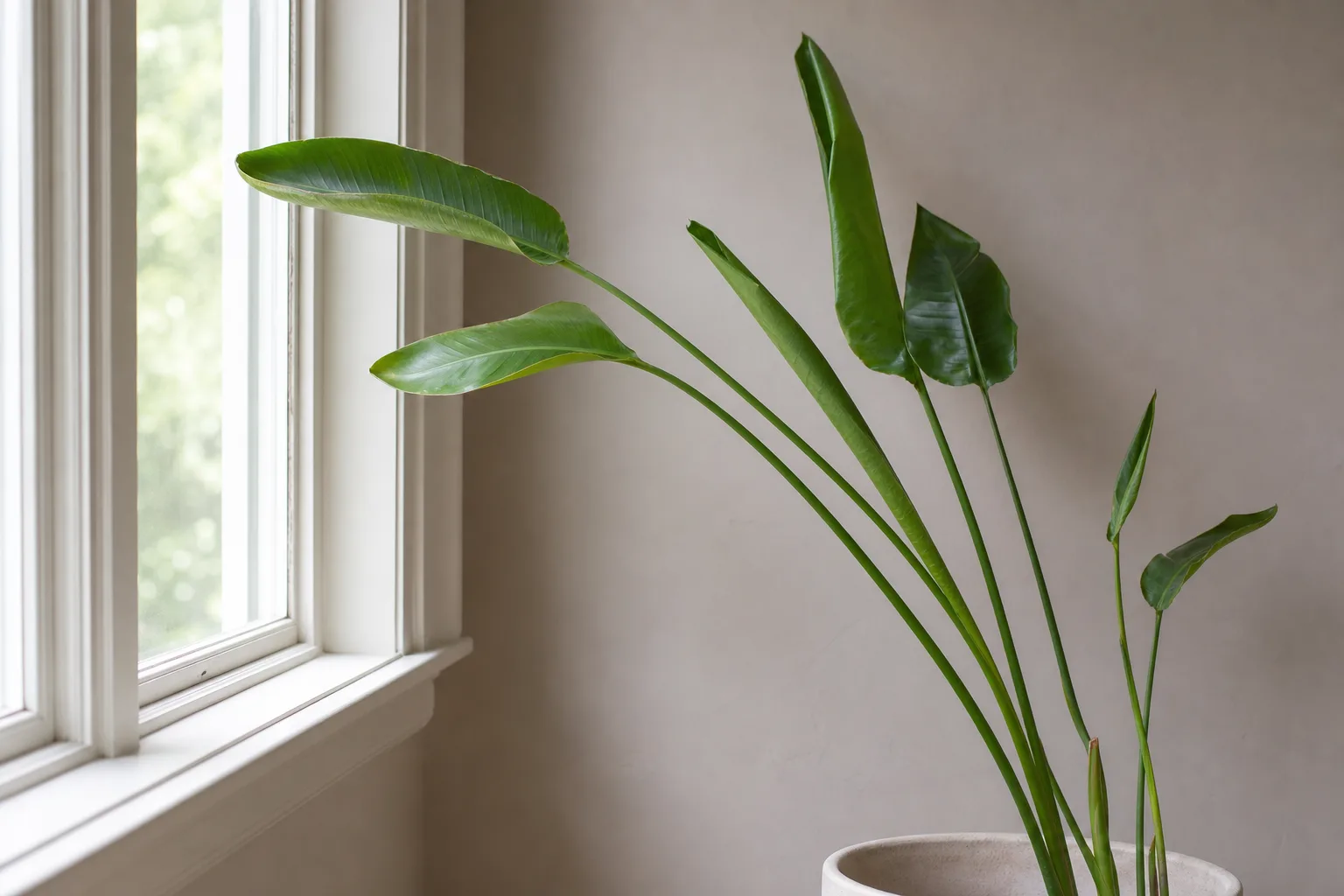
Not Enough Light on Bird of Paradise: Causes, Checks & Fixes
This guide covers not enough light on Bird of Paradise. See also the general Not Enough Light guide, watering, and light pages for this plant.
Not Enough Light on Bird of Paradise: Causes, Checks & Fixes
Quick answer
Bird of Paradise (Strelitzia reginae) is built for sun. Outdoors it grows in full sun to part shade; indoors it needs a well-lit, sunny spot-not a decorative corner far from glass. When light is too weak, the plant cannot photosynthesize enough to support its large paddle leaves and flower stalks, so growth slows, stems stretch toward windows, and blooms rarely appear.
First step: move the pot to the brightest safe spot in your home. For most rooms that means within a few feet of a south-, west-, or east-facing window where the plant receives several hours of direct sun after a gradual acclimation if it has lived in shade for months. Do not repot, fertilize, or prune heavily on the same day. Fix light first, then reassess watering once the plant is using moisture faster.
What not enough light looks like on Bird of Paradise
Low light on Bird of Paradise overview shows up as structure problems, not just pale color. The large banana-like leaves sit on long petioles; when energy is scarce, those stalks elongate and the plant leans toward the brightest direction.
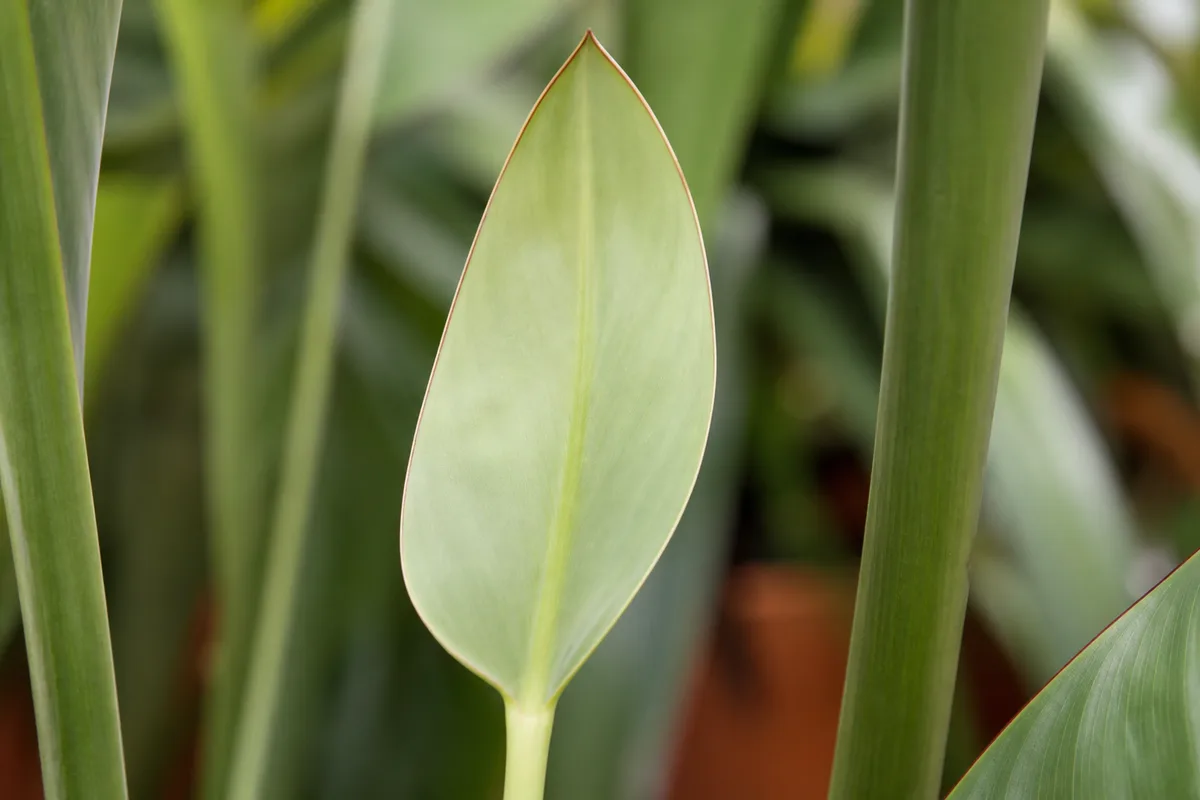
Not Enough Light symptoms on Bird of Paradise - compare with healthy tissue on the same plant.
Typical patterns include:
- Leggy, stretched leaf stalks with wide gaps between leaves-plants not receiving enough light often stretch or lean toward the light
- Smaller new paddle leaves compared with older growth from brighter months
- Strong lean toward one window or light source
- Slow or stalled growth-sometimes only one or two new leaves per year in a dim room
- New leaf spears that hesitate or fail to unfurl while the rest of the plant looks otherwise healthy
- No flower buds for years, even on mature plants
- Deeper green, thinner-looking foliage because the plant is reaching rather than filling out
Bird of Paradise leaf splitting is normal in bright conditions-large blades tear along natural lines to reduce wind damage. In weak light, splitting can look worse because the plant produces softer, less rigid tissue. Do not confuse cosmetic splits with a light diagnosis; pair them with stretch, lean, and slow new growth.
What low light usually does not look like: crisp brown patches on the sun-facing side (that is more often sun scorch after a sudden move into harsh direct rays), widespread yellowing with sour-smelling wet soil (overwatering on Bird of Paradise or root rot on Bird of Paradise), or fine webbing and speckled leaves (spider mites).
Why Bird of Paradise gets too little light indoors
This is not a low-light houseplant like a snake plant or ZZ plant. Strelitzia reginae is native to South Africa and uses high light to fuel thick leaves, stiff petioles, and the energy-intensive orange-and-blue flowers. Indoors, the same species is often sold as a tropical statement piece and placed where it looks good rather than where it grows well.
Common reasons light falls short:
- Distance from the window. Light intensity decreases rapidly with distance from the source. A Bird of Paradise on a side table across the room may receive only a fraction of what it needs.
- North-facing windows or rooms with no direct sun. Many homes never give this plant the hours of direct light it uses outdoors.
- Obstructions. Sheer curtains, tinted glass, overhangs, neighboring buildings, and dirty panes all cut usable light.
- Winter daylight shrink. Shorter days and a lower sun angle reduce exposure even when the pot has not moved since summer.
- Competing expectations. Bird of Paradise tolerates medium light briefly but does not thrive long-term without strong bright light. Survival in a dim room is not the same as healthy growth.
Weak light also changes how the plant handles water. Plants that do not receive adequate light can become stressed or waterlogged, which leads to slower drying and the same Bird of Paradise watering guide that worked in summer leaving soil wet too long. That is why dim Bird of Paradise plants often develop yellow lower leaves or fungus gnats-not because light directly yellows leaves, but because low light plus unchanged watering invites root stress.
How to confirm the cause
Work through these checks before treating pests, Bird of Paradise repotting guide, or feeding:
- Window direction and distance. Note which way the window faces and measure how many feet the pot sits from the glass. South and west exposures usually deliver the most direct sun; north-facing rooms rarely suffice without supplemental lighting.
- Shadow test at midday. Hold your hand between the plant and the window. A sharp, dark shadow suggests enough intensity for high-light species; a faint or absent shadow suggests the spot is too dim for Bird of Paradise.
- New growth direction. If every new leaf opens on the side facing the window and petioles on that side are longest, the plant is actively reaching for light.
- Two-week placement trial. Move the pot closer to the brightest window without changing water, fertilizer, or pot size. If the next emerging spear unfurls faster and the new petiole is noticeably shorter, light was limiting growth.
- Soil moisture rhythm. Stick a finger 5 cm into the mix. If the surface stays damp for a week or more while the plant looks limp, compare light and watering together-chronic wet soil in a dark corner is a compound problem.
- Rule out lookalikes. Firm roots, dry mix, and wilt point to underwatering on Bird of Paradise. Yellow leaves with sour wet soil point to overwatering. Speckled undersides and webbing point to spider mites, which also worsen in stagnant, dim conditions.
If light is adequate but the plant still will not bloom, age, pot size, and feeding matter too-but leggy stretch with no buds almost always starts with insufficient light.
First fix for Bird of Paradise
Move the plant to the brightest location available-within a few feet of a sunny window.
Choose south, west, or east exposure if possible. Bird of Paradise can take direct sun indoors once acclimated; it is not a shade foliage plant. If the plant has lived in a dim room for months, increase light gradually over one to two weeks-a few hours closer each day-so leaves do not scorch from a sudden jump into hot afternoon glass.
Hold everything else steady while you test the move:
- Do not repot on the same day.
- Do not apply fertilizer to a stressed plant.
- Do not increase watering because leaves look limp-check soil first.
If the best window still is not bright enough, add a full-spectrum LED or fluorescent grow light 30–45 cm (12–18 inches) above the foliage for 12–16 hours daily. That is the practical indoor substitute when architecture or season limits natural sun.
Step-by-step recovery
After the first move, support recovery in this order:
- Acclimate to stronger light. Start with bright indirect light at the window edge, then slide the pot into direct morning or late-afternoon sun. In summer, screen against very bright direct sun on hot glass-rotate and watch for pale tan patches on the sun-facing side.
- Rotate the pot weekly. Even light prevents one-sided lean and uneven leaf size.
- Adjust watering to match new light. Brighter exposure dries soil faster. Resume watering when the top 5 cm of mix is dry rather than on a fixed calendar. Bird of Paradise tolerates drought better than chronic wet feet.
- Remove only dead or fully yellow leaves. Do not strip healthy green leaves hoping to force flowers-those leaves still feed the plant.
- Wait before fertilizing. Resume mild balanced feed only after one or two new leaves open cleanly and the plant shows stable growth for two weeks.
- Add grow lights if needed. In winter or north rooms, combine window light with supplemental fixtures rather than accepting slow stretch all season.
Recovery timeline
Two to three weeks: The next leaf spear should unfurl more confidently, and new petioles should look shorter than the most recent stretched leaves. Lean may lessen slightly after rotation, but old stalks will not shrink.
One to two months: Growth rate should pick up in warm, bright conditions-you may see a second new leaf where the plant previously produced one per season.
Flowering: Even with corrected light, indoor blooms are uncertain and often require a mature, slightly root-bound plant with years of strong sun. Better light is necessary but not a guarantee of flowers the same season.
Old stretched tissue: Permanent. Trim an ugly leaf only after new growth looks healthy, not as the first response to dim light.
Worsening signs after a light increase: Brown scorched patches mean too much direct sun too fast-pull back from hot glass and acclimate more slowly. Yellowing with wet soil means reduce water even though light improved.
Lookalike symptoms
- Overwatering / root rot - Yellow or drooping leaves with moist, sour-smelling soil and soft roots. Common when a dim plant is watered on a summer schedule. Fix drainage and dry-down before blaming light alone.
- Underwatering - Very light pot, dry mix throughout, wilt with firm leaf tissue. Deep soak once, then resume a dry-down rhythm.
- Normal winter slowdown - Slower growth in short days even in a good window. Supplement light or accept fewer new leaves until spring; stretch and lean should not worsen dramatically if base light is adequate.
- Spider mites - Fine speckling, webbing, and dusty leaf undersides, often in dry heated rooms with weak airflow. Rinse and treat pests; also improve light because stressed plants recover slowly.
- Sudden sun scorch - Pale or brown patches on leaves after a one-day move from a dark corner to blazing south glass. Not low light-too much unacclimated direct sun.
What not to do
Do not leave Bird of Paradise in a north room or hallway and expect compact growth or flowers. Do not jump from deep shade to harsh midday sun without acclimation. Do not water more because stems look limp in a dim spot-check whether soil is already wet. Do not fertilize heavily to compensate for stretch; excess nitrogen can push more weak foliage without fixing the energy deficit. Do not repot into a larger container hoping to spark growth-extra wet soil volume worsens problems in low light.
How to prevent low-light stress next time
Match placement to the plant’s actual needs before décor. Bird of Paradise belongs where bright indirect light plus several hours of direct sun is realistic most of the day-not where the pot fills an empty corner.
- Clean windows seasonally and keep foliage from pressing against frosted or tinted glass.
- Rotate the pot weekly for even growth.
- Use grow lights in winter or in rooms with limited sun.
- When light increases, shorten the watering interval only after confirming the mix dries faster.
- Accept that this species is a poor fit for dim apartments unless you commit to strong supplemental lighting.
Healthy Bird of Paradise in adequate light grows stiff, upright leaves on moderate-length petioles, dries its pot predictably between waterings, and-on a mature plant-has at least a fighting chance to bloom. In weak light it becomes a slow, stretched plant with diminished flowering that never matches the label on the nursery pot. Fix the window first; everything else follows from there.
When to use this page vs other Bird of Paradise guides
- Bird of Paradise watering guide - Use for routine moisture checks before assuming not enough light is the main issue.
- Bird of Paradise problems hub - Browse all 20 common issues on this species.
- Leggy Growth on Bird of Paradise - Different entry point when symptoms overlap with not enough light.
- Slow Growth on Bird of Paradise - Different entry point when symptoms overlap with not enough light.
- Yellow Leaves on Bird of Paradise - Different entry point when symptoms overlap with not enough light.