Leggy Growth on Bird of Paradise: Causes, Checks & Fixes
Quick answer
Leggy Bird of Paradise is etiolation-long petioles and wide gaps between paddle leaves from too little light. First step: move the pot within a few feet of your brightest south, west, or east window and hold watering steady while you watch the next leaf set.
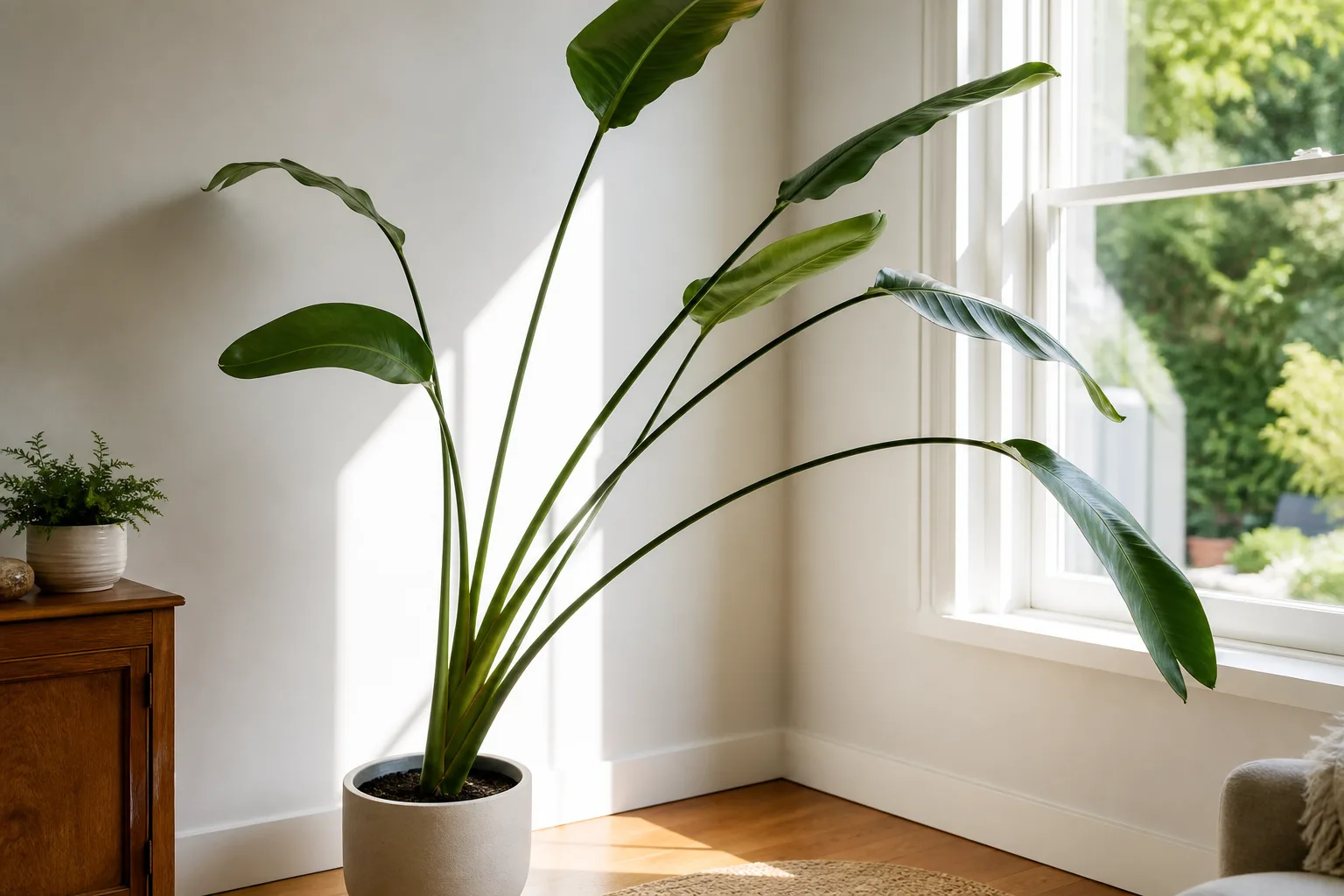
Leggy Growth on Bird of Paradise: Causes, Checks & Fixes
This guide covers leggy growth on Bird of Paradise. See also the general Leggy Growth guide, watering, and light pages for this plant.
Leggy Growth on Bird of Paradise: Causes, Checks & Fixes
Quick answer
Leggy growth on Bird of Paradise (Strelitzia reginae) is etiolation-the plant elongates its leaf stalks (petioles) toward usable light because it cannot photosynthesize enough to support stiff, compact architecture indoors. Outdoors this species grows in full sun to part shade; indoors it needs a well-lit, sunny spot, not a decorative corner far from glass. When light is too weak, petioles stretch, gaps between paddle leaves widen, and the whole clump leans toward the brightest window.
First step: move the pot to the brightest safe position in your home-within a few feet of a south-, west-, or east-facing window where several hours of direct sun can reach the leaves after gradual acclimation. Do not repot, fertilize, or strip long green leaves on the same day. Fix light first; judge success by the next leaf set, not by old stretched stalks shortening.
This page focuses on leggy etiolation-what stretched petioles look like, how to confirm them, and when pruning helps. For broader low-light symptoms including stalled spears and years without flowers, see not enough light on Bird of Paradise. For window placement and grow-light distance, see the Bird of Paradise light guide.
What leggy growth looks like on Bird of Paradise
Leggy growth on Strelitzia shows up as structure problems on stiff petioles, not soft vine-like stems. Each large paddle leaf sits on a thick stalk; when energy is scarce, those stalks elongate and the plant leans toward the brightest direction.
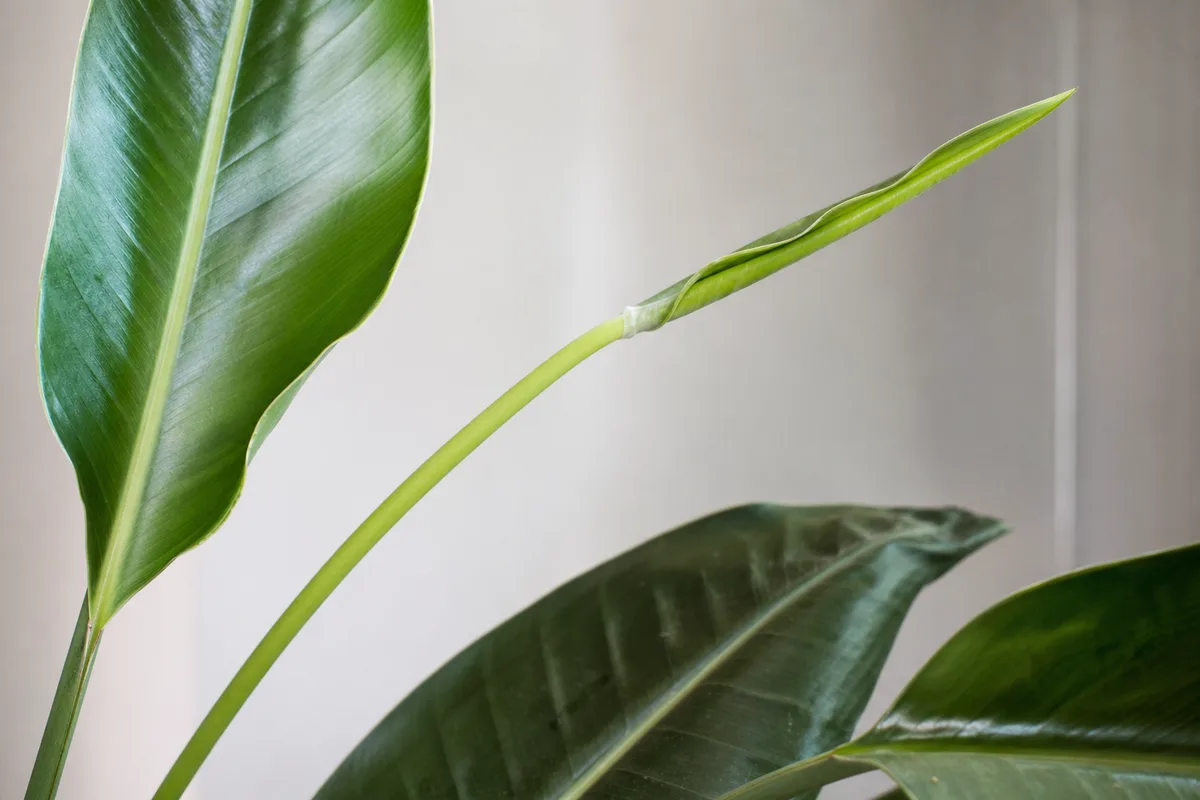
Leggy Growth symptoms on Bird of Paradise - compare with healthy tissue on the same plant.
Typical patterns include:
- Elongated petioles with noticeably wider gaps between leaves than growth from brighter months
- Smaller new paddle blades on the longest, most recent stalks
- Strong window lean-new spears open on the glass-facing side with the longest petioles there
- Thin, reaching posture-the clump looks taller and sparser despite green foliage
- Slow unfurling of new spears while older leaves stay dark green (the plant is surviving, not thriving)
Bird of Paradise leaf splitting along natural paddle veins is normal in bright conditions-large blades tear to reduce wind stress. Splitting alone is not legginess. Pair splits with stretch, lean, and small new blades before diagnosing etiolation.
What leggy growth usually is not: crisp brown patches on the sun-facing side after a sudden move (sun scorch-see the light guide); widespread yellowing with sour wet soil (overwatering or root stress); or fine webbing on undersides (spider mites in dry stagnant air).
Strelitzia reginae vs. giant white bird (S. nicolai)
Both species stretch in dim rooms, but scale differs. Orange bird of paradise (S. reginae) typically reaches 90–150 cm (3–5 feet) indoors on moderate petioles when well lit. Giant white bird (S. nicolai) pushes ceiling-height leaves on even longer stalks and etiolates dramatically in north rooms. The diagnostic pattern is the same-long petioles, wide gaps, lean-but S. nicolai needs stronger supplemental lighting to stay architectural indoors.
Why Bird of Paradise gets leggy indoors
This is not a low-light houseplant. Strelitzia reginae is native to South Africa and uses high light to fuel thick leaves, stiff petioles, and flower spikes. Indoors, the same species is often placed where it looks good rather than where it grows compactly.
Primary cause: insufficient light intensity or duration. Plants not receiving enough light often stretch or lean toward the light. Bird of Paradise tolerates mediocre light long enough to look acceptable while petioles silently elongate-only the next leaf set reveals whether light was the limiter.
Common triggers:
- Distance from the window. Light intensity decreases rapidly with distance from the source. A pot on a side table across the room receives a fraction of what it needs.
- North-facing rooms or blocked glass. Sheers, tinted panes, overhangs, and dirty windows cut usable light below what this species uses outdoors.
- Winter daylight shrink. Shorter days reduce exposure even when the pot has not moved since summer-stretch often worsens from October through February.
- Uneven exposure. One-sided lean develops when the pot is never rotated; the window-facing side carries the longest petioles.
Secondary causes that compound stretch but rarely cause it alone:
- Oversized pot in dim light. Extra wet soil volume slows metabolism and keeps the plant in survival mode-weak new stalks, not compact growth.
- Heavy nitrogen feed in low light. Fertilizer pushes soft foliage the plant cannot structurally support without adequate photosynthesis. Do not feed to fix stretch.
- Chronic overwatering in a dark corner. Plants that do not receive adequate light can become stressed or waterlogged; wet soil plus weak light produces yellow lower leaves and stalled spears-an urgent compound pattern, not cosmetic legginess alone.
Leggy growth vs. related problems
| Pattern | Likely cause | First check |
|---|---|---|
| Long petioles, wide gaps, window lean, green leaves | Leggy etiolation (low light) | Window distance; two-week light move |
| Same stretch plus no buds for years | Low light limiting energy | Not enough light + light guide |
| One new leaf every 12+ months, no lean change | Slow growth in marginal light | Slow growth vs. active stretch |
| Yellow leaves, sour wet soil, soft base | Root stress + weak light | Overwatering before more light |
| Pale tan patches after one-day sun move | Sun scorch | Pull back; acclimate over 7–14 days |
Leggy growth and not enough light overlap heavily on Bird of Paradise-etiolation is often the visible signature of chronic under-lighting. This page goes deeper on petiole stretch, pruning timing, and the old-stalk persistence rule; the sibling page covers the full low-light picture including flowering failure.
How to confirm the cause
Work through these checks before repotting, feeding, or mass pruning:
- Petiole comparison. Measure or eyeball the newest petiole against one from last summer or from a brighter window month. Leggy growth adds length between the soil line and the paddle-not just overall plant height from age.
- Window direction and distance. Note exposure and feet from glass. South and west usually deliver the most direct sun; north rarely suffices without grow lights.
- Hand-shadow test at midday. Hold your hand between the plant and the window. A sharp, dark shadow suggests enough intensity for high-light species; a faint shadow means the spot is too dim.
- Lean direction. If every new spear opens toward the same window and that side carries the longest stalks, the plant is actively reaching-not randomly floppy.
- Two-week placement trial. Move closer to the brightest window without changing water, fertilizer, or pot size. If the next emerging spear unfurls faster and the new petiole is noticeably shorter, light was limiting growth.
- Soil moisture rhythm. Stick a finger 5 cm into the mix. Surface damp for a week plus stretch points to low light slowing dry-down-compare with the watering guide.
If light is adequate but petioles still elongate toward one bulb or window only, rotate weekly and check whether a grow light sits too far above the canopy.
First fix for Bird of Paradise
Move the plant to the brightest location available-within a few feet of a sunny window.
Choose south, west, or east exposure if possible. Bird of Paradise can take direct sun indoors once acclimated; compact petioles require photosynthesis on the leaves, not just bright ambient room light. If the plant lived in shade for months, increase light gradually over one to two weeks-a few hours closer each day-so leaves do not scorch from a sudden jump into hot afternoon glass.
Hold everything else steady while you test the move:
- Do not repot on the same day.
- Do not apply fertilizer to a stressed plant.
- Do not prune all long stalks hoping for compact regrowth in the same dim spot.
- Do not increase watering because leaves look limp-check soil first.
If the best window still is not bright enough, add a full-spectrum LED grow light 30–45 cm (12–18 inches) above the foliage for 12–16 hours daily on a timer. That is the practical substitute when architecture or season limits natural sun. Details on distance and bleach-vs-stretch signs sit in the light guide.
When to prune long petioles
Pruning is a second step, not the first fix for legginess.
- Do not strip all long green leaves immediately-they still photosynthesize, even weakly.
- Do remove fully yellow or dead paddles anytime.
- After one or two new leaves open with shorter, stiffer petioles, trim the worst old stretched leaves at the base for appearance using clean shears per the pruning guide.
- Never prune heavily in the same week as a large light jump or repot-stacking stress slows recovery.
The goal is compact new architecture, not forcing the plant to releaf from rhizome reserves in unchanged dim conditions.
Recovery timeline
Two to three weeks: The next leaf spear should unfurl more confidently, and the new petiole should look shorter than the most recent stretched stalk. Lean may lessen slightly after weekly rotation, but old elongated petioles will not shrink.
One to two months: In warm, bright conditions, growth rate should pick up-you may see a second new leaf where the plant previously produced one per season.
Old stretched tissue: Permanent. Judge success only by new stalk length and blade size, not by old leaves shortening.
Worsening signs after a light increase: Brown scorched patches mean too much direct sun too fast-pull back from hot glass and acclimate more slowly. Yellowing with wet soil means reduce water per the watering guide even though light improved.
Lookalike symptoms
- Phototropism without full etiolation - Strong lean toward one window but moderate petiole length elsewhere. Fix with weekly rotation and slightly more total light; see not enough light if bloom and growth also stall.
- Normal age and pot size - Mature Strelitzia is naturally tall. Legginess adds disproportionate petiole length and sparse spacing, not just height.
- Overwatering / root rot - Yellow or drooping leaves with moist, sour-smelling soil. Fix drainage and dry-down before blaming light alone.
- Slow growth without active stretch - Dim light but stable petiole length from years ago. May need the same light fix but presents as slow growth rather than active reaching.
- Sudden sun scorch - Pale or brown patches after a one-day move from a dark corner to blazing south glass. Not legginess-too much unacclimated direct sun.
What not to do
Do not leave Bird of Paradise in a north room or hallway and expect compact petioles. Do not jump from deep shade to harsh midday sun without acclimation. Do not fertilize heavily to compensate for stretch-excess nitrogen pushes more weak foliage without fixing the energy deficit. Do not repot into a larger container hoping to spark compact growth-extra wet soil volume worsens problems in low light. Do not confuse normal leaf splitting with etiolation and prune healthy paddles. Do not stack repotting, pruning, and pesticide on the same day as a major light move.
How to prevent leggy growth next time
Match placement to the plant’s light hunger before décor. Bird of Paradise belongs where bright indirect light plus several hours of direct sun is realistic most of the day-not where the pot fills an empty corner.
- Place within one to two feet of the brightest window; read the light guide for exposure by direction.
- Rotate the pot weekly for even petiole length.
- Clean windows seasonally; dust broad leaves monthly so paddles absorb more light.
- Use grow lights in winter or dim apartments-12–16 hours daily when natural sun is weak.
- When light increases, adjust watering only after confirming the mix dries faster per the watering guide.
- Accept that cosmetic stretch on old stalks persists-prevention means catching elongation on the second long petiole, not the fifth.
Healthy Bird of Paradise in adequate light grows stiff, upright leaves on moderate-length petioles with predictable spacing. In weak light it becomes a slow, stretched plant with diminished flowering that never matches the nursery photo. Fix the window first; trim later; everything else follows from usable light on the leaves.
Related Bird of Paradise guides
- Not enough light - full low-light diagnosis including bloom failure and compound root-stress patterns
- Light guide - window placement, hand-shadow test, grow-light distance
- Watering - dry-down rhythm after you increase light
- Pruning - removing spent petioles after new growth looks healthy
- Overview - species context and placement basics