Spider Mites on Bird of Paradise: Causes, Checks & Fixes
Quick answer
Spider mites on Bird of Paradise show fine stippling and webbing on large paddle leaves in warm, dry air-especially bright south or west windows in winter. First step: isolate the plant and rinse leaf undersides with lukewarm water before any spray.
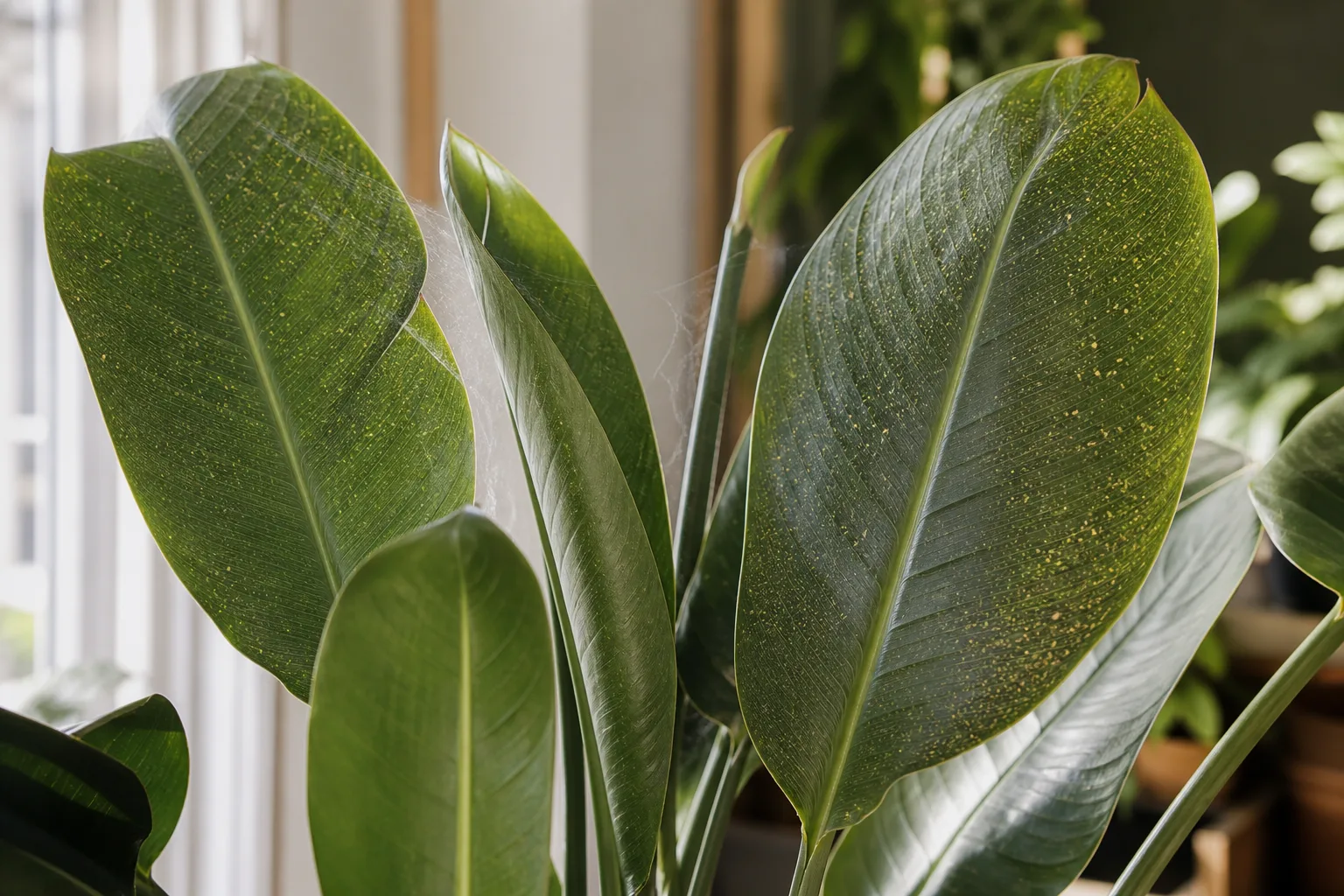
Spider Mites on Bird of Paradise: Causes, Checks & Fixes
This guide covers spider mites on Bird of Paradise. See also the general Spider Mites guide, watering, and light pages for this plant.
Spider Mites on Bird of Paradise: Causes, Checks & Fixes
Quick answer
Spider mites on Bird of Paradise (Strelitzia reginae and large S. nicolai floor specimens) are tiny sap-feeding arachnids-not insects-that colonize the undersides of broad paddle leaves, tight axils where new spears emerge, and lower foliage on multi-stem plants near forced-air vents. They thrive when bright window placement meets dry winter air: the same high-light spot that keeps Strelitzia healthy also creates a warm, low-humidity microclimate spider mites exploit in dry, warm conditions.
First step: isolate the plant the same day you see stippling or webbing. Move it away from other houseplants-especially when broad leaves touch neighboring pots on a shared windowsill-then rinse leaf undersides with lukewarm water from a shower, sink sprayer, or hose before reaching for soap or oil.
What spider mites look like on Bird of Paradise
On this plant, mite damage concentrates on large, leathery paddle blades and the sheltered zones where they attach-not on random spots across the whole crown without a pattern.
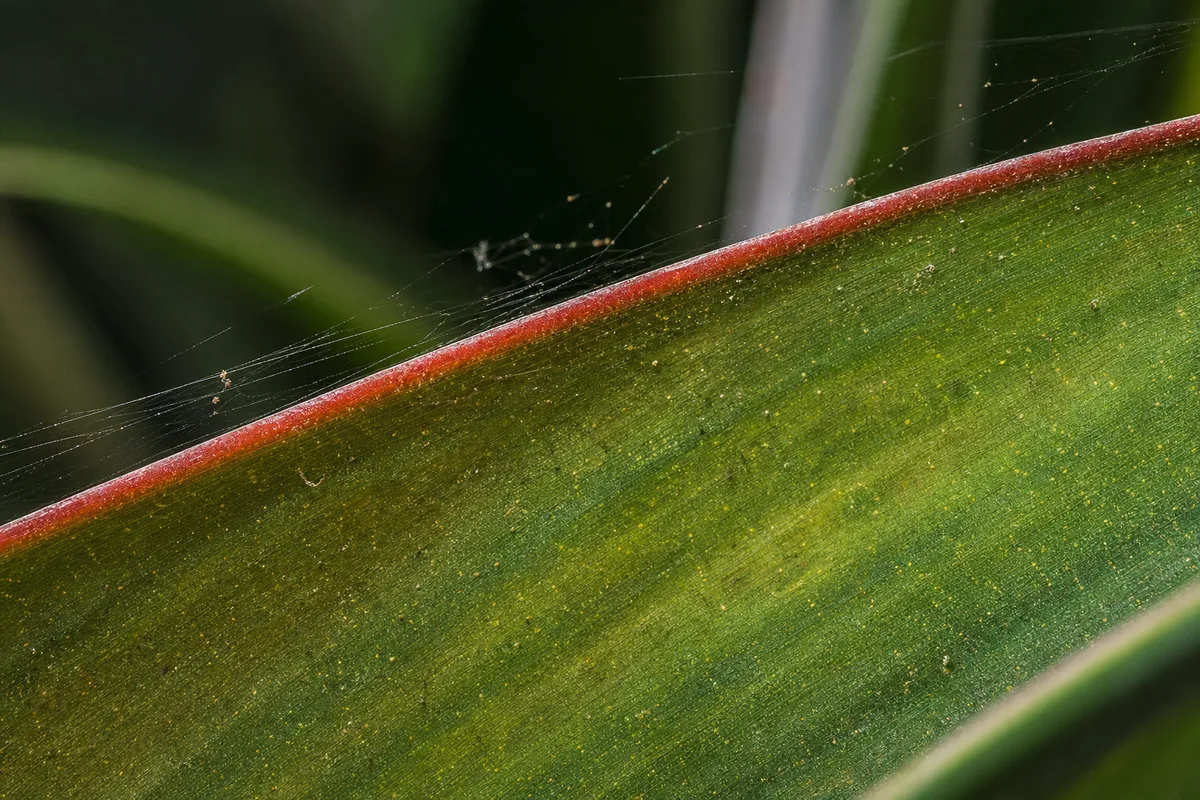
Spider Mites symptoms on Bird of Paradise - compare with healthy tissue on the same plant.
Typical signs:
- Fine yellow or white stippling across the upper leaf surface-thousands of tiny chlorotic dots where mites pierced cells from below
- Bronzing or graying on heavily fed paddles as feeding continues; severe cases look bleached before edges crisp
- Delicate silk webbing at petiole bases, between overlapping lower leaves, or tucked in crown axils where new spears wrap
- Amber mite eggs, whitish cast skins, and black fecal specks on undersides when you inspect with magnification-signs extension guides list for spider mites
- Lower leaves affected first on tall floor specimens-the paddles you rarely tilt are often the first to show stippling
- No sticky honeydew-unlike aphids or mealybugs, spider mites do not leave shiny residue (though confused owners sometimes mistake dust on broad leaves for honeydew)
Bird of Paradise leaves are smooth, glossy paddles when mature-not fuzzy or hairy. That matters for treatment: you can shower-rinse most Strelitzia specimens aggressively without the leaf-spotting risk that delicate African violets face. The trade-off is scale: a single S. nicolai paddle can span two feet, so undersides along the midrib are easy to miss unless you tilt each leaf deliberately.
Splitting vs. stippling: Mature bird of paradise leaves naturally split along veins as paddles widen. Those splits are usually green-edged and stable on established foliage. Mite stippling adds a speckled pattern across the blade surface and often pairs with webbing at the petiole-see the brown tips guide for more on normal splitting.
Why Bird of Paradise gets spider mites
Spider mites are not proof you failed as a grower. They arrive on new nursery plants, shared tools, or drift in on warm air. Bird of Paradise has a few traits that make outbreaks common once mites are in the room.
Bright south or west windows plus winter heating. Strelitzia needs strong light to push healthy paddles-often direct sun for part of the day. In winter, glass intensifies heat while furnaces drop room humidity. That combination is exactly what spider mites prefer: warm, dry air with stressed leaf tissue losing moisture faster than roots replace it. See the low-humidity guide when margins crisp without stippling.
Large transpiring surface area. Each paddle is a broad evaporating panel. Multi-stem floor plants transpire heavily in bright rooms, and mites multiply quickly on foliage that cannot stay evenly hydrated in dry air.
Dusty leaf undersides. Broad horizontal paddles collect dust on upper surfaces and along midribs below. Dusty, dry foliage gives mites cover and favorable microclimates-monthly wipe-downs make colonies easier to spot.
Forced-air vents and radiators. Lower leaves on tall specimens sit in the driest zone near floor registers. Mite colonies on those undersides stay out of your casual sight line until stippling spreads upward.
Crowded collections and skipped quarantine. Mites walk between pots when leaves touch or when you handle multiple plants without washing hands. Skipping a two-week quarantine on a new purchase is the most common introduction route.
NC State Extension notes that Bird of Paradise is usually pest-free but should be monitored for mealybugs, scale, and spider mites-the same trio that overlaps on stippling, wax, and honeydew symptoms across our aphids and mealybugs guides.
Lookalike symptoms to rule out
| What you see | Likely cause | Quick check |
|---|---|---|
| Fine stippling plus webbing on paddle undersides | Spider mites | White-paper tap test shows slow-moving specks |
| Silvery streaks, distorted new spears | Thrips | Slender fast insects under magnification; see thrips guide |
| Sticky leaves, green clusters on new growth | Aphids | Pear-shaped insects that move; honeydew present |
| White cottony patches in crown sheaths | Mealybugs | Waxy smear when crushed; no stipple pattern |
| Brown immobile bumps on petioles | Scale | Shell does not move when flicked |
| Bleached patches on sun-facing blades only | Sun scorch | Damage on exposed side after sudden light increase; no webbing |
| Clean green-edged splits on mature leaves only | Normal Strelitzia splitting | Stable pattern; no dots or silk at petiole base |
| Crisp margins, moist soil, no webbing | Low humidity | Air dry at glass; see low-humidity guide |
How to confirm the cause
Work through these checks before you treat. The goal is to confirm live spider mites-not to guess from one yellow dot on a paddle.
- Isolate first - Move the plant away from others before handling so mites do not walk to neighboring pots on a shared bright shelf.
- White-paper tap test - Hold white paper under a suspect leaf and tap the blade firmly. Slow-moving specks confirm spider mites; fast jumpers may be thrips instead.
- Inspect undersides along the midrib - Tilt each accessible paddle and check where the thick vein runs-mites cluster here on Strelitzia because it is sheltered and vascular tissue is rich.
- Crown axils and petiole bases - Spread emerging spears gently and look for fine silk where new leaves wrap the rhizome. Webbing here distinguishes mites from thrips or mineral spray residue.
- Lower leaves on floor specimens - On tall S. nicolai, kneel and inspect the bottom third of paddles you normally see only from above. Stippling often starts low near vents.
- Neighbor scan - Check every plant within a few feet that shares the same window. Matching stippling on two pots confirms an active outbreak, not a one-off stress mark.
Confirmed diagnosis requires stippling or webbing plus live mites on the paper test or undersides. A single crisp edge on one paddle in dry winter air is not enough-cross-check the low-humidity guide before treating.
First fix for Bird of Paradise
Isolate the plant and rinse leaf undersides with lukewarm water.
Bird of Paradise handles a forceful spray of water better than ferns or African violets, which makes water your best first tool:
- Carry the pot to a shower, bathtub, or outdoor hose (weather permitting). On immovable floor specimens, use a handheld sprayer and work section by section.
- Tilt each paddle and spray undersides from multiple angles-especially along the midrib and at the petiole base where webbing hides.
- Repeat until running water carries away visible webbing and dust. Pay extra attention to lower leaves and crown axils.
- Let the plant drain completely. Do not return it to the collection until drips stop.
This single step knocks down most of a moderate infestation without chemicals. Wait until foliage is dry, then inspect with a hand lens. If stippling spreads or you still see live mites within three to five days, move to secondary treatment.
If rinsing is not enough (soap or oil repeat schedule)
Apply insecticidal soap or horticultural oil labeled for houseplants and spider mites, covering leaf tops, undersides, petioles, and crown thoroughly. These products kill on contact only-spray must wet the mites directly.
Repeat every five to seven days for at least three cycles. Most miticides are not effective on eggs, so one good week is rarely enough; staggered hatches rebuild the colony if you stop early.
For a few mites on one accessible paddle, spot-treat with a damp cloth wipe along the underside midrib instead of spraying the whole plant.
Step-by-step recovery
After the initial rinse, follow this sequence based on severity:
Light infestation (stippling on one or two paddles, minimal webbing):
- One to two thorough rinses may be enough.
- Recheck in three to five days.
- Raise humidity slightly in the plant’s zone-pebble tray or humidifier, not misting alone.
Moderate infestation (multiple paddles stippled, webbing at several petiole bases):
- Rinse, then insecticidal soap or horticultural oil three times at five- to seven-day intervals.
- Wipe dust off upper paddle surfaces so you can spot new stippling early.
- Keep the plant isolated until two clean weekly checks.
Heavy infestation (bronzing across lower third, webbing between many leaves, neighbors showing matching stippling):
- Rinse aggressively, then begin soap or oil sprays immediately.
- Inspect every plant on the same windowsill and treat any with matching symptoms.
- On floor S. nicolai, schedule lower-leaf inspection into weekly care-you cannot fix what you cannot see.
- Consider discarding only a small, replaceable plant if treatment cannot reach every crevice and the rest of your collection is at risk.
Throughout recovery, maintain normal Bird of Paradise care: bright light per the light guide, let the top 5 cm of mix dry before watering per the watering guide, and avoid fertilizing until new paddles emerge clean. Feeding a pest-stressed plant pushes more tissue before the colony is gone.
Recovery timeline
Expect visible improvement within one to two treatment cycles if you are consistent.
- Days 1–3: Most adult mites gone after a thorough rinse; old stippling remains visible on damaged tissue.
- Week 1: Nymphs from eggs you missed may hatch-this is normal and why one treatment is rarely enough.
- Weeks 2–3: With repeated rinses or soap sprays every five to seven days, stippling should stop spreading to new paddles.
- Week 4+: Call the plant clear when two weekly inspections find zero live mites and no fresh webbing on new growth.
What can recover: New paddles and spears that emerge after treatment should open clean. Mature leaves with light stippling stay cosmetically marked but continue photosynthesizing.
What may not recover: Heavily stippled or bronzed paddles do not re-green. They still feed the plant until naturally shed-remove them only if mostly destroyed.
Signs treatment is working: Fewer mites at each paper test, no new stippling on upper paddles, webbing not reappearing at petiole bases, and clean new spears from the crown.
Signs the problem is worsening: Webbing spreading to additional stalks, stippling climbing from lower to upper leaves despite rinsing, or matching damage on neighboring plants.
Mistakes to avoid
- Spraying soap or oil before rinsing. Contact products cannot reach mites hiding under webbing on broad undersides. Rinse first to expose them.
- One-and-done treatment. Mite eggs hatch on a staggered schedule indoors. A single spray leaves survivors that rebuild within a week.
- Using dish soap instead of labeled insecticidal soap. Do not mix homemade soap products-household detergents can burn large Bird of Paradise leaves, especially in bright light after application.
- Treating in hot direct sun. Do not apply soap in full sun or at temperatures above 90 ºF-wet paddle leaves in afternoon sun can spot or scorch. Treat in morning or evening, or move the plant out of direct rays until dry.
- Assuming general insecticides kill mites. Mites are arachnids, not insects; many insect sprays miss them. Use products labeled for spider mites, or oils and soaps that smother on contact.
- Leaving water pooled in crown axils overnight. Strelitzia tolerates shower rinsing, but dense clumps where multiple petioles meet can hold water-tip the pot to drain and avoid soaking the crown center repeatedly overnight.
- Returning the plant to the collection too soon. Two clean weekly inspections beat guessing.
- Misting once and calling it prevention. Occasional misting does not raise humidity enough to deter mites; a humidifier or pebble tray near the pot works better.
Bird of Paradise care cross-check
While treating mites, keep baseline care steady. Swinging watering, light, or humidity in multiple directions makes it harder to judge recovery.
| Symptom pattern | Likely cause | What to check |
|---|---|---|
| Fine dots across blade, webbing at petiole | Spider mites | Paper test; underside midrib inspection |
| Crisp margins, no stippling, dry winter air | Low humidity | Room humidity at glass; see low-humidity guide |
| Bleached patches on sun-facing side only | Sun scorch | Recent light increase; no mites on paper test |
| Yellow lower leaves, wet heavy soil | overwatering on Bird of Paradise stress | Moisture depth per watering guide |
| Green-edged vein splits on mature paddles only | Normal splitting | Stable; no webbing |
- Light: Maintain bright indirect to direct sun-the plant needs light to push healthy new paddles after damage.
- Water: Let the top 5 cm dry between waterings. Soggy mix weakens roots and does not deter mites.
- Humidity: Target 50–60% in the plant’s immediate zone during heating season-mites struggle less when leaf tissue stays hydrated.
- Fertilizer: Hold off until two weeks after the last live mite is gone, then resume lightly during active growth.
- Airflow: Space pots so you can tilt each paddle without leaves touching neighbors.
How to prevent spider mites next time
Prevention on Bird of Paradise is mostly about early detection in bright, dry placements, not routine pesticides.
- Quarantine every new plant for two to three weeks before it joins a windowsill display.
- Inspect paddle undersides along midribs weekly from fall through spring-when heating and glass dry air peak.
- Wipe dust off broad leaf surfaces monthly; clean leaves make stippling obvious sooner.
- Run a humidifier or pebble tray near the pot in winter-not occasional misting alone.
- Keep pots spaced so broad leaves do not bridge between plants.
- Check plants after any outdoor summer stay before bringing them indoors.
- Keep a hand lens near your watering can. Thirty seconds on lower leaf undersides beats three weeks of treatment on a floor specimen.
A healthy Bird of Paradise in a sunny window will still get mites if they are introduced-but you will catch them on one paddle instead of an entire multi-stem crown.
When to worry
Most spider mite problems on Bird of Paradise are manageable with isolation, rinsing, and repeated contact sprays. Escalate your response if:
- Webbing spreads across multiple paddles despite two rinse cycles
- Stippling appears on neighboring plants sharing the same bright window
- Lower leaves bronze and crisp while upper paddles still look green-mites are winning below your sight line
- You have completed four weekly treatment cycles and still find live mites on every paper test
- The plant was already weak from root rot on Bird of Paradise, severe underwatering on Bird of Paradise, or recent repot shock before mites arrived
Discarding a large Bird of Paradise is rarely necessary for mites alone. Reserve that option for a small, inexpensive plant you cannot physically treat-and only after you have protected the rest of your collection.
Related Bird of Paradise problems
- Aphids - sticky honeydew and colonies on tender new growth, not stippling
- Mealybugs - cottony wax in crown sheaths, not fine dots across paddles
- Thrips - silvery streaks and scarring, not webbing at petiole bases
- Low humidity - crisp margins without stippling; shared dry-window trigger
- Watering - recovery rhythm and moisture cross-check
- Bird of Paradise overview - species hub, seasonal care, normal leaf splitting
Conclusion
Spider mites on Bird of Paradise exploit the bright, dry microclimate this plant needs to thrive-especially large paddle undersides along midribs and lower leaves on floor specimens near vents. Confirm stippling plus live mites with a paper test, isolate the pot, and rinse undersides before layering soap or oil. Repeat treatment every five to seven days until new paddles stay clean for two weeks, keep normal bright-light care steady, and inspect weekly through heating season. Caught early on one leaf, mites are a nuisance; left on unreachable lower paddles of a tall S. nicolai, they can bronze half the plant before you notice.
When to use this page vs other Bird of Paradise guides
- Bird of Paradise watering guide - Use for routine moisture checks before assuming spider mites is the main issue.
- Bird of Paradise problems hub - Browse all 20 common issues on this species.
- Low Humidity on Bird of Paradise - Different entry point when symptoms overlap with spider mites.
- Slow Growth on Bird of Paradise - Different entry point when symptoms overlap with spider mites.