Aphids on Bird of Paradise: Causes, Checks & Fixes
Quick answer
Aphids on Bird of Paradise cluster on tender new leaves and flower stalks. First step: move the plant away from others and rinse colonies off with a strong shower spray before applying any soap or oil.
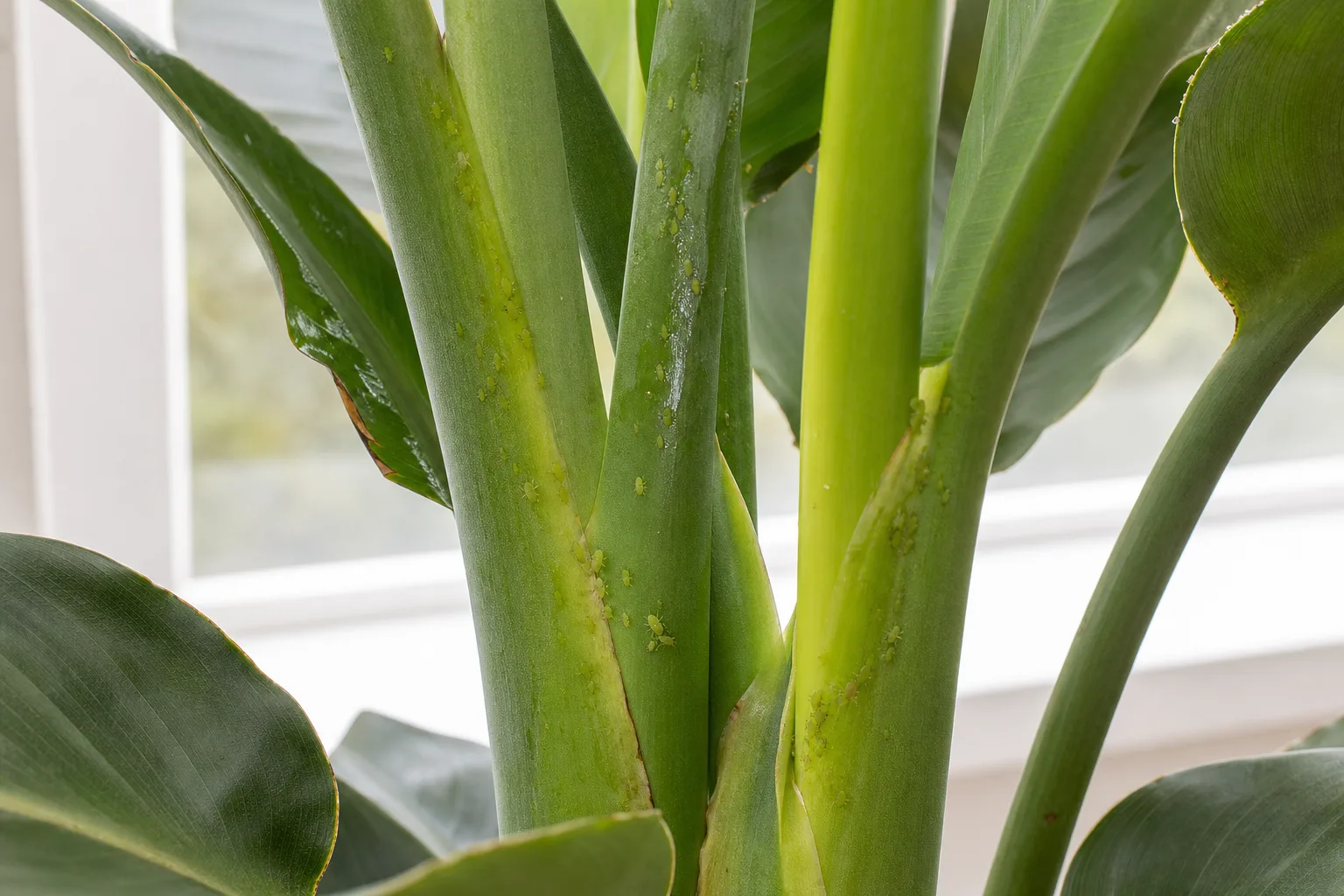
Aphids on Bird of Paradise: Causes, Checks & Fixes
This guide covers aphids on Bird of Paradise. See also the general Aphids guide, watering, and light pages for this plant.
Aphids on Bird of Paradise: Causes, Checks & Fixes
Quick answer
Aphids on Bird of Paradise (Strelitzia reginae) are small sap-sucking insects that colonize the plant’s softest tissue-newly emerging paddle leaves, leaf bases in the crown, and the tender skin of flower stalks. They rarely kill a mature plant outright, but heavy feeding can curl young leaves, weaken growth, and coat broad foliage in sticky honeydew that leads to sooty mold.
First step: isolate the plant and rinse visible aphids off with a strong shower or sink spray. Bird of Paradise has large, sturdy leaves that tolerate forceful water better than many delicate houseplants, so physical removal should come before you reach for soap or oil. Only after you have knocked down the live colony should you decide whether a follow-up spray is needed.
What aphids look like on Bird of Paradise
On Bird of Paradise overview, aphids almost always show up where growth is newest and most succulent-not on old, stiff leaf blades lower on the stem.
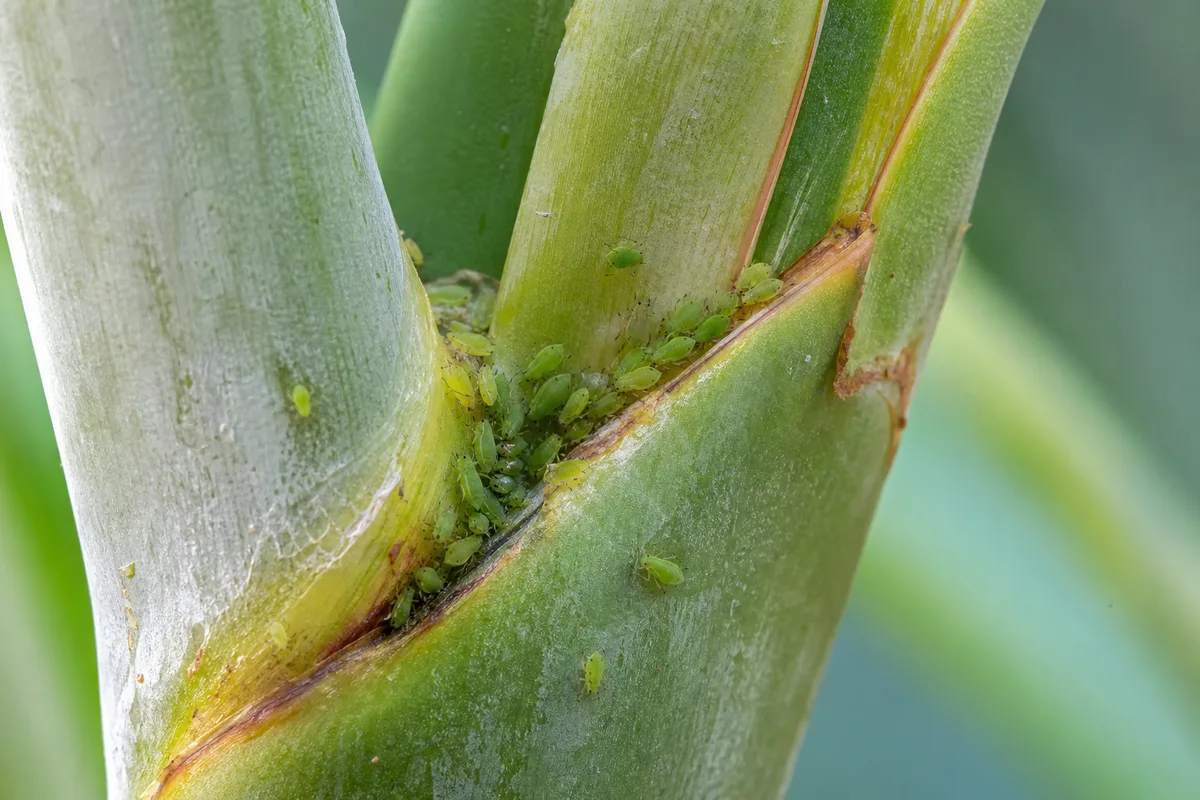
Aphids symptoms on Bird of Paradise - compare with healthy tissue on the same plant.
Typical signs:
- Clusters of tiny pear-shaped insects on unfurling leaves, often green but sometimes black, brown, or gray
- Colonies packed along the midrib and petiole base where a new leaf is still soft
- Groups on flower stalks and inside or just below the spathe (the hard sheath that holds the flower)
- Shiny, sticky honeydew on leaf surfaces, the pot rim, or the floor beneath the plant
- Whitish cast skins left behind after aphids molt-easy to miss if you only look for live bugs
- Young leaves curling, puckering, or growing unevenly when feeding is heavy
Bird of Paradise leaves are large and leathery when mature, so damage concentrates at the growing tip. A single new leaf can host hundreds of aphids while the rest of the plant looks fine, which is why a quick glance at older foliage often misses an active infestation.
Honeydew and follow-on problems: Aphids excrete sugary honeydew as they feed. On broad Bird of Paradise leaves, that stickiness collects dust and can turn into black sooty mold. Ants sometimes arrive to harvest the honeydew and will defend aphid colonies-if you see ant trails on the pot or stand, check the newest growth immediately.
Why Bird of Paradise gets aphids
Aphids are not a sign that you failed as a grower. They are common indoor pests that arrive on new plants, through open windows, or from infested neighbors in a collection. Bird of Paradise has a few traits that make it a regular target once aphids are in the room.
Fast spring and summer growth. In bright light, Bird of Paradise pushes large new leaves and occasional flower stalks during warm months. Aphids prefer that tender tissue because it is easier to pierce than hardened mature leaves. More new shoots mean more feeding sites through the active season.
High-Bird of Paradise light guide near windows. The same bright spot that keeps this plant healthy also situates it where outdoor aphids can drift in on warm days. If you summer the plant outdoors or on a balcony, inspect it carefully before bringing it back inside.
Nitrogen-rich feeding. Bird of Paradise appreciates fertilizer during active growth, but heavy nitrogen produces soft, lush shoots that aphids favor. That does not mean you should stop feeding a healthy plant-it means you should inspect new growth closely for the few weeks after each application.
Crowded collections and skipped quarantine. Aphids spread plant to plant when pots touch or when you handle multiple plants without washing hands between them. Skipping a two-week quarantine on a new purchase is the most common way they enter a home.
Stressed plants attract pests faster. Chronic overwatering on Bird of Paradise, dim light, or root problems weaken Bird of Paradise and slow recovery from feeding damage-but aphids can also thrive on a vigorous, well-fed specimen because of the sheer volume of tender new tissue. Do not assume a healthy-looking plant is immune.
How to confirm the cause
Work through these checks before you treat. The goal is to confirm live aphids-not to guess from leaf curl alone.
- Find the newest leaf or flower stalk. Peel back or gently spread unfurling foliage at the crown. Aphids cluster on stems below flower buds and newly opening leaf buds here first.
- Look for movement. Disturb the colony with a cotton swab or toothpick. Aphids walk away slowly. Scale insects stay glued in place; mealybugs smear white wax when crushed.
- Check for honeydew. Run a finger along the leaf underside near the colony. Sticky residue that glints under light supports aphids over drought stress or mechanical damage.
- Use magnification if needed. Aphids are only 1/16 to 1/8 inch long-visible to the naked eye in clusters, but a hand lens makes cast skins and early nymphs obvious.
- Scan neighboring plants. Aphids colonize many houseplant species. If one Bird of Paradise has them, inspect anything nearby, especially plants with soft new growth.
- Rule out lookalikes:
- Mealybugs on Bird of Paradise - white cottony masses in leaf axils, not scattered green pear-shaped bugs
- Scale - immobile bumps with hard shells along stems and midribs
- Thrips - silvery streaks and scarring on leaves, not clustered round insects
- Physical leaf curl from underwatering on Bird of Paradise - dry soil throughout the pot, no sticky residue, no insects on inspection
Confirmed diagnosis requires live insects plus feeding signs on tender tissue. Leaf curl alone, especially on older blades, is not enough.
First fix for Bird of Paradise
Move the plant away from others and rinse off every aphid you can see.
Bird of Paradise handles a forceful spray of water better than ferns or African violets, which makes water your best first tool:
- Carry the pot to a shower, bathtub, or outdoor hose (weather permitting).
- Tilt the plant and spray the undersides of leaves, petiole bases, crown center, and any flower stalk from multiple angles.
- Repeat until running water carries away visible insects. Pay extra attention to the newest leaf still wrapped in its sheath.
- Let the plant drain completely. Do not return it to the collection until drips stop.
This single step removes most of a moderate infestation without chemicals. Wait until foliage is dry, then inspect with a hand lens. If you still see live aphids-or honeydew reappears within a few days-move to secondary treatment.
Secondary step (only if rinsing was not enough): Apply insecticidal soap or horticultural oil labeled for houseplants, covering leaf tops, undersides, stems, and crown thoroughly. These products kill on contact only, so spray must wet the insects directly. Repeat every five to seven days until two consecutive inspections find no live aphids on new growth.
For a few isolated bugs on one leaf, a cotton swab dipped in rubbing alcohol can spot-treat instead of spraying the whole plant.
Step-by-step recovery
After the initial rinse, follow this sequence based on severity:
Light infestation (small cluster on one new leaf):
- One thorough rinse may be enough.
- Recheck in three to five days.
- Wipe honeydew off mature leaves with a damp cloth so sooty mold does not spread.
Moderate infestation (multiple leaves or a flower stalk affected):
- Rinse, then insecticidal soap or horticultural oil three times at five- to seven-day intervals.
- Prune only the worst-curled leaf if it is still soft and mostly damaged-cut at the base with clean shears.
- Keep the plant isolated until you have two clean weekly checks.
Heavy infestation (colonies across the crown, ants present, sooty mold on several leaves):
- Rinse aggressively, then begin soap or oil sprays immediately.
- Trim heavily distorted new leaves that are more insect than tissue.
- Inspect every plant within a few feet and treat any that show honeydew or colonies.
- Consider whether a systemic soil treatment is warranted only after repeated contact sprays fail-contact methods should be exhausted first indoors.
Throughout recovery, maintain normal Bird of Paradise care: bright light, let the top 5 cm of mix dry before watering, and avoid fertilizing until new growth emerges clean. Feeding a pest-stressed plant pushes more soft tissue before the colony is gone.
Recovery timeline
Expect visible improvement within one to two treatment cycles if you are consistent.
- Days 1–3: Most adult aphids gone after a thorough rinse; honeydew may still feel sticky until you wipe it away.
- Week 1: Nymphs from eggs you missed may hatch-this is normal and why one treatment is rarely enough.
- Weeks 2–3: With repeated rinses or soap sprays every five to seven days, colonies should collapse.
- Week 4+: Call the plant clear when two weekly inspections of new growth find zero live aphids.
What can recover: New leaves and flower buds that emerge after treatment should open clean. Mature leaves with light honeydew wash off; sooty mold fades once the stickiness is gone.
What may not recover: Leaves that already curled, puckered, or tore while infested often stay cosmetically damaged. They still photosynthesize, but they will not flatten out. Remove them only if they are mostly destroyed-otherwise let the plant shed them naturally.
Signs treatment is working: Fewer insects at each check, no fresh honeydew on new tissue, ants disappearing, and upright new growth.
Signs the problem is worsening: Colonies spreading to additional stalks, winged aphids appearing (a dispersal stage), flower buds aborting, or sooty mold covering large leaf areas despite treatment.
Lookalike symptoms
| What you see | Likely cause | Quick check |
|---|---|---|
| Sticky leaves, green clusters on new growth | Aphids | Insects move when touched; pear-shaped bodies |
| White cottony patches in leaf bases | Mealybugs | Waxy smear when crushed; no honeydew trails from green bugs |
| Brown immobile bumps on stems | Scale | Fingernail test-shell does not move |
| Silvery streaks, distorted flowers | Thrips | Magnification shows slender fast insects |
| Leaf curl, dry soil, no stickiness | Underwatering | Pot light; mix dry deep down; no insects |
| Yellow lower leaves, wet soil | Overwatering/root stress | Check moisture and root firmness-not aphids |
Mistakes to avoid
- Spraying soap or oil before rinsing. Contact products cannot reach aphids hiding inside a tightly wrapped new leaf. Rinse first to expose them.
- One-and-done treatment. Aphid eggs hatch on a staggered schedule indoors. A single spray leaves survivors that rebuild the colony within a week.
- Using dish soap instead of labeled insecticidal soap. Do not mix homemade soap products-household detergents can burn large Bird of Paradise leaves, especially in bright light after application.
- Treating in hot direct sun. Do not apply soap in full sun or at temperatures above 90 ºF-soap and oil on wet leaves in afternoon sun can cause spotting on broad foliage. Treat in morning or evening, or move the plant out of direct rays until dry.
- Returning the plant to the collection too soon. Two clean weekly inspections beat guessing.
- Ignoring ants. Ants protect aphids from predators. If ants are present, rinse honeydew sources and consider ant bait away from the pot-not on soil where pets can reach it.
- Bird of Paradise repotting guide to fix aphids. Aphids on Bird of Paradise feed above soil. Repotting adds stress without removing the colony unless you also have soil-dwelling pests, which is uncommon for aphids.
Bird of Paradise care cross-check
While treating aphids, keep baseline care steady. Swinging watering, light, or fertilizer in multiple directions makes it harder to judge recovery.
- Light: Maintain bright indirect to direct sun-the plant needs light to push healthy new leaves after damage.
- Water: Let the top 5 cm dry between waterings. Soggy mix weakens roots and does not deter aphids.
- Humidity: 50–60% is fine; aphids are not cured by misting alone.
- Fertilizer: Hold off until two weeks after the last live aphid is gone, then resume lightly during active growth.
- Airflow: Space pots so you can inspect both sides of large leaves without leaves touching neighboring plants.
How to prevent aphids next time
Prevention on Bird of Paradise is mostly about early detection during the growth season, not pesticides.
- Quarantine every new plant for two weeks before it joins your display.
- Inspect crown centers and flower stalks weekly from spring through summer-when this plant pushes its largest flush of tender leaves.
- Rinse dust off broad leaf surfaces occasionally; clean leaves make colonies easier to spot.
- Avoid overfeeding with nitrogen during peak growth if you have had repeat aphid issues.
- Check plants after any outdoor summer stay before bringing them indoors.
- Keep a hand lens near your watering can. Thirty seconds of inspection beats three weeks of treatment.
A healthy Bird of Paradise in strong light will still get aphids if they are introduced-but you will catch them on one new leaf instead of an entire crown.
When to worry
Most aphid problems on Bird of Paradise are manageable with isolation, rinsing, and repeated contact sprays. Escalate your response if:
- Colonies cover a developing flower spathe and buds are aborting
- Sooty mold blocks light on more than a few leaves and is not washing off
- Winged aphids appear and multiple plants in the room show honeydew at the same time
- You have completed four weekly treatment cycles and still find live insects on every new leaf
- The plant was already weak from root rot on Bird of Paradise, severe underwatering, or recent repot shock before aphids arrived
Discarding a large Bird of Paradise is rarely necessary for aphids alone. Reserve that option for plants so heavily infested that treatment cannot reach every crevice in the crown-and only after you have protected the rest of your collection.
Conclusion
Aphids on Bird of Paradise concentrate on the tender growth that makes the plant exciting-new paddle leaves and flower stalks-not random old foliage. Confirm live insects and honeydew, isolate the pot, and rinse colonies away before layering soap or oil. Repeat treatment until new growth stays clean for two weeks, keep normal bright-light care steady, and inspect weekly through the active season. Caught early, aphids are a nuisance; left on a developing flower stalk, they can cost you the bloom.
When to use this page vs other Bird of Paradise guides
- Bird of Paradise watering guide - Use for routine moisture checks before assuming aphids is the main issue.
- Bird of Paradise problems hub - Browse all 20 common issues on this species.
- Mealybugs on Bird of Paradise - Different entry point when symptoms overlap with aphids.
- Spider Mites on Bird of Paradise - Different entry point when symptoms overlap with aphids.
- Yellow Leaves on Bird of Paradise - Different entry point when symptoms overlap with aphids.