Mealybugs on Bird of Paradise: Causes, Checks & Fixes
Quick answer
Mealybugs on Bird of Paradise hide in leaf axils, petiole sheaths, and the tight crown where new paddles emerge. First step: isolate the plant and dab every visible cottony cluster with a cotton swab dipped in 70% isopropyl alcohol.
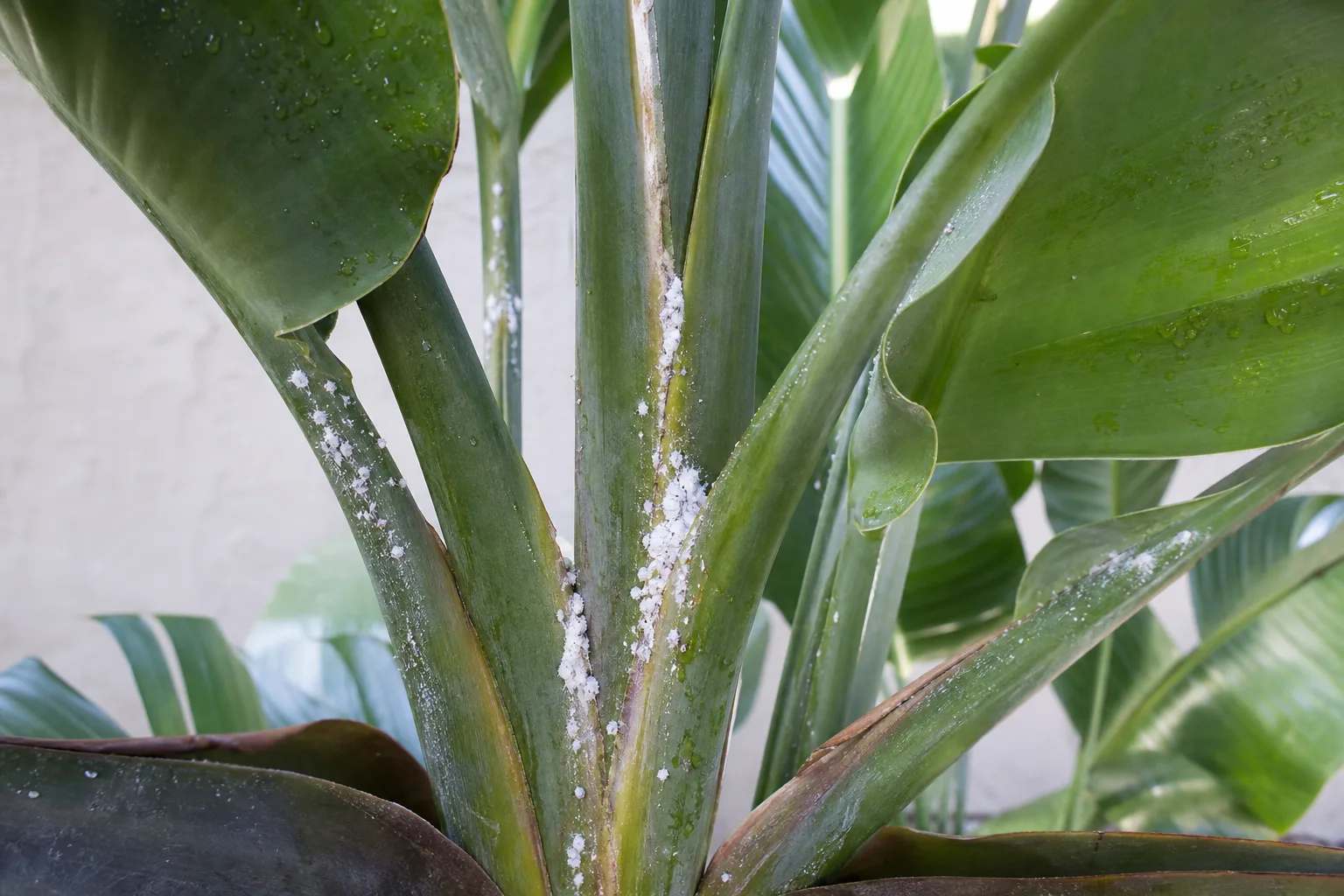
Mealybugs on Bird of Paradise: Causes, Checks & Fixes
This guide covers mealybugs on Bird of Paradise. See also the general Mealybugs guide, watering, and light pages for this plant.
Mealybugs on Bird of Paradise: Causes, Checks & Fixes
Quick answer
Mealybugs on Bird of Paradise (Strelitzia reginae, with the same treatment approach for large S. nicolai floor specimens) show up as white cottony clusters tucked into petiole sheaths at the rhizome crown, along thick stem bases, and under the broad paddle leaves where they attach. They are common sap-sucking pests on houseplants and bird of paradise is among the plants UC IPM lists as frequently infested. Heavy feeding can yellow leaves, slow new paddle emergence, and coat large foliage in sticky honeydew that leads to sooty mold.
First step: isolate the plant the same day you spot cottony wax. Move it away from other houseplants-especially floor specimens whose broad leaves touch neighboring pots-before you dab, spray, or rinse anything. Once isolated, dab every visible cluster with a cotton swab dipped in 70% isopropyl alcohol.
What mealybugs look like on Bird of Paradise
On this plant, mealybugs almost always colonize sheltered crevices in the architecture Strelitzia builds-not random spots on mature stiff paddle blades.
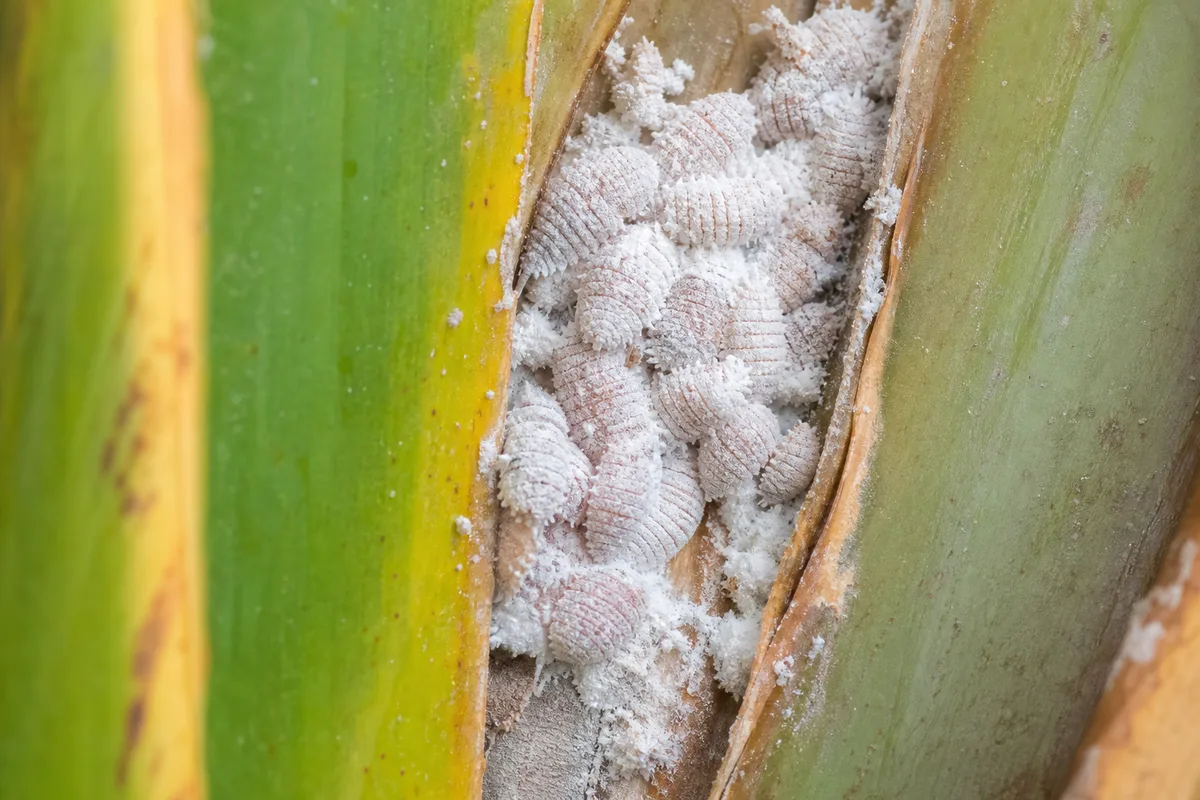
Mealybugs symptoms on Bird of Paradise - compare with healthy tissue on the same plant.
Typical signs:
- White fluffy tufts in petiole sheaths where thick leaf stalks wrap the rhizome at the crown center
- Cottony patches at leaf bases where a paddle meets its petiole, especially on newly emerging spears still tight in their sheaths
- Clusters along woody stem bases on multi-stem floor plants, hidden behind overlapping lower leaves
- Waxy masses at the soil line and inside cache pots that hide the crown on large containers
- Sticky, shiny honeydew on broad leaf surfaces, the pot rim, or the floor beneath a tall specimen
- Black sooty mold on paddle leaves that honeydew has coated
- Yellowing or stunted new paddles on infested crown sections while older lower leaves still look firm
- White cottony material near drainage holes when you water-a sign of root-zone mealybugs on heavy floor pots
Bird of Paradise leaves are smooth, leathery paddles when mature-not fuzzy or hairy like some soft-leaved houseplants. That matters for diagnosis: white patches in crown crevices and petiole sheaths are almost always wax, not natural leaf texture. The broad surface area also makes undersides harder to inspect than on compact plants, so mealybugs can spread through a crown before you notice a few specks on a lower leaf.
Visual ID cues at the crown
Without a photo in hand, match these three patterns during inspection:
Petiole-base cluster: Cottony white wax packed into the sheath where a thick green petiole wraps the rhizome-often the size of a grain of rice at first, expanding to a cotton-ball tuft as the colony grows. Wax sits in the crevice, not on the open paddle blade.
Scale lookalike on woody stem: A hard tan or brown dome flush with the petiole surface that does not smear when crushed-same sheltered zone as mealybugs, different texture. Run the pink-crush test on any bump you are unsure about.
Honeydew on mature paddle: A glossy, tacky film on the broad leaf surface below an infested petiole base, sometimes with fine black sooty mold specks. Wipes off with a damp cloth; mineral dust does not feel uniformly sticky.
Honeydew and follow-on problems: Mealybugs excrete sugary honeydew as they feed. On large Bird of Paradise leaves, that stickiness collects dust and can turn into black sooty mold-the same secondary chain described on our aphids guide. Ants sometimes arrive to harvest honeydew and will protect mealybug colonies; if you see ant trails on the pot stand beneath a floor specimen, inspect petiole bases immediately.
Why Bird of Paradise gets mealybugs
Mealybugs hitchhike-they do not appear because you neglected the plant. Most indoor collections pick them up from a new nursery purchase, shared pruning shears, or a neighbor pot whose broad leaves brushed yours. Once mealybugs are in the room, Bird of Paradise has several traits that make it a regular host.
Tight crown architecture. Strelitzia grows from a thick rhizome that pushes large paddle leaves through overlapping sheaths. Mealybugs favor those protected feeding sites because casual watering checks often skip the crown center-especially on tall S. nicolai specimens where the growing tip sits above eye level.
Large floor-plant scale. A mature Bird of Paradise can span several feet with multiple thick petioles emerging from one rhizome. Each petiole base is a separate hiding zone, so a moderate infestation can mean dozens of colonies spread across one pot while upper leaves look clean from across the room.
Warm indoor rooms. Indoor ornamentals are especially vulnerable because mild temperatures favor mealybug populations year-round and natural enemies are absent indoors. A recent nursery arrival, summer patio time, or a plant pushed into a dim corner with soft, slow new growth often coincides with the first visible clusters.
Nitrogen-rich feeding during active growth. Bird of Paradise appreciates fertilizer in bright light, but excess nitrogen combined with regular irrigation stimulates soft new growth where mealybugs prefer to lay eggs. That does not mean you should stop feeding a healthy plant-it means you should inspect crown centers closely for a few weeks after each application per the fertilizer guide.
Crowded collections and skipped quarantine. Mealybugs spread when pots touch, when broad leaves bridge between plants, or when you handle multiple specimens without washing hands between them. A new purchase that skips two weeks of isolation is the most common entry point.
NC State Extension notes that Bird of Paradise is usually pest-free but should be monitored for mealybugs, scale, and spider mites-the same pests that overlap on honeydew and sooty mold symptoms across our spider mites guide.
How to confirm the cause
Work through these checks before you treat. The goal is to confirm live mealybugs-not to guess from one white speck on a paddle.
- Isolate first - Isolate infested plants away from others before handling so crawlers do not walk to neighboring pots.
- Crown and petiole bases - Spread emerging paddles gently and inspect where each thick petiole wraps the rhizome. Mealybugs cluster in these sheaths before they spread to open leaf blades.
- Emerging paddle spears - On stiff new spears still rolled in their sheaths, part the outer leaf gently along the seam-do not tear mature paddles. Mealybugs often colonize the seam where the spear meets the rhizome before wax is visible on open foliage.
- Underside midribs near petioles - Tilt each accessible leaf and check where the paddle attaches-not just the broad flat surface, which often looks clean.
- Soil line and drainage - Lift lower leaves and check where stems enter the mix, the pot rim, and drainage holes. Some mealybug species feed on roots as well as shoots.
- Disturbance test - Touch a white patch with a dry cotton swab. Mealybugs smear pinkish when crushed; mineral deposits, perlite splash, or hard-water spots do not.
- Neighbor check - Inspect plants that shared a room, windowsill, or floor display for crown clusters or honeydew.
Confirmed diagnosis requires cottony wax plus stickiness or live insects in petiole sheaths or crown crevices. A single yellow lower leaf on an otherwise firm plant is not enough.
Lookalike symptoms
| What you see | Likely cause | Quick check |
|---|---|---|
| White cottony patches in petiole sheaths | Mealybugs | Smears pink when crushed; may have honeydew |
| Hard brown immobile bumps on woody stems | Scale | Fingernail test-shell does not move or smear |
| Flat white powder on paddle surface | Powdery mildew | Wipes off dry; not tufted in crown crevices |
| Chalky white crust on leaf tops | Mineral or hard-water deposits | Dry scrape; no pink smear, no clustering in sheaths |
| Fine webbing and stippling on paddles | Spider mites | See spider mites guide-no cottony wax |
| Sticky leaves, green clusters on new growth | Aphids | Pear-shaped insects that move; see aphids guide |
| Yellow lower leaves, wet heavy soil | overwatering on Bird of Paradise stress | Check moisture per watering guide-no wax in crown |
First fix for Bird of Paradise
Isolate the plant and dab every visible cottony cluster with a cotton swab dipped in 70% isopropyl alcohol.
That single action removes adults you can reach and confirms the pest is alive-not dust-before you commit to sprays. UC IPM recommends dabbing small houseplant infestations with 70% or less isopropyl alcohol; test a hidden petiole sheath first and wait 24 hours before treating the whole crown. Bird of Paradise paddle leaves are generally tolerant, but alcohol can cause leaf burn on sensitive tissue-especially on sun-stressed foliage in hot direct light per our light guide.
Once isolated and dabbed:
- Work petiole base by petiole base rather than spraying the whole plant on day one
- Reach crown clusters with a fine brush dipped in alcohol when a swab cannot fit into tight sheaths
- Wipe honeydew off paddle leaves below colonies with a damp cloth
- Check neighboring plants you have not yet isolated
Do not reach for systemic insecticides or repot on day one unless root-zone mealybugs are confirmed at drainage holes. Do not fertilize a pest-hit Bird of Paradise hoping to push new paddles-that produces more tender tissue pests prefer.
Pet safety note: Strelitzia reginae is toxic to cats and dogs if chewed, with gastrointestinal irritants concentrated in fruit and seeds. Wear gloves when dabbing and pruning, keep pets away from the treatment area until alcohol dries, and do not leave soaked swabs where animals can reach them.
When dabbing is not enough
Mealybug wax repels contact sprays, so alcohol dabs come first. When colonies persist in crown sheaths alcohol cannot reach after two weekly passes, escalate using this comparison:
| Treatment | Best use on Bird of Paradise | Paddle phytotoxicity notes | Repeat schedule |
|---|---|---|---|
| 70% alcohol dab | Light to moderate crown clusters in petiole sheaths | Safest first contact; test sun-stressed paddles first | Every 5 to 7 days for at least 3 weeks |
| Insecticidal soap | Nymphs and wax in reachable sheaths after dab rounds | Avoid hot direct sun for 24 hours after spray; wet broad leaves thoroughly | Every 5 to 7 days for 3 to 4 cycles |
| Horticultural oil or neem | Stubborn wax after soap underperforms | Higher burn risk on sun-exposed paddles; keep out of direct rays 48 hours per light guide | Per label; usually 7 to 14 days between sprays |
- Insecticidal soap coats mealybug nymphs on contact when you wet petiole sheaths, crown center, and leaf undersides thoroughly. Repeat at label intervals until crawlers stop hatching.
- Horticultural oil or neem oil can supplement soap on persistent waxy colonies-especially younger nymphs with less wax buildup. Test one paddle section first and wait 24 to 48 hours; oils on broad sun-stressed Strelitzia foliage in summer carry more phytotoxicity risk than alcohol dabs in shade.
- Do not stack alcohol dab, soap, and oil on the same day. Space contact treatments and let foliage dry between applications.
Step-by-step recovery
After the initial alcohol dab, follow this sequence based on severity:
Light infestation (small cluster at one petiole base):
- One thorough dab pass may be enough.
- Recheck in five to seven days.
- Wipe honeydew off mature paddles with a damp cloth so sooty mold does not spread.
Moderate infestation (multiple petiole bases or crown clusters):
- Dab every visible colony, then repeat every five to seven days for at least three cycles to catch newly hatched crawlers. Mealybug wax repels pesticides and makes control difficult without repeat treatment.
- Apply insecticidal soap if colonies persist after several dab rounds. Cover petiole sheaths, crown center, and leaf undersides thoroughly; repeat at label intervals.
- Add horticultural oil on a separate day only if soap fails on stubborn crown wax-after a paddle spot-test passes.
- Keep the plant isolated until you have two clean weekly checks.
Heavy infestation (wax across the crown, ants present, sooty mold on several paddles):
- Dab aggressively, then begin insecticidal soap sprays immediately on areas alcohol cannot reach.
- Inspect every plant within a few feet and treat any that show honeydew or cottony wax.
- On floor-sized S. nicolai specimens, use a step stool and work systematically from soil line to crown-do not skip lower petiole bases hidden behind overlapping leaves.
- Consider Bird of Paradise repotting guide only if root-zone mealybugs are confirmed: unpot, rinse roots gently, trim badly infested sections, and repot in fresh mix. Discard old soil.
Throughout recovery, maintain normal Bird of Paradise care: bright light, let the top 5 cm of mix dry before watering per the watering guide, and avoid fertilizing until new paddles emerge clean. Feeding a pest-stressed plant pushes more soft tissue before the colony is gone.
Honeydew cleanup: shower rinse vs. damp cloth
Our aphids guide recommends a forceful shower rinse as the first fix because aphids sit on exposed new growth. Mealybugs are different-they hide in waxy sheaths alcohol must reach, so rinsing does not replace dabbing.
For honeydew and sooty mold cleanup after colonies are treated:
- Smaller S. reginae pots you can move safely: a lukewarm shower spray on paddle surfaces can wash sticky honeydew and dislodge exposed mealybugs with a strong stream of water on reachable petioles. Wrap the pot in plastic to keep soil contained. Let foliage dry fully before the next alcohol or soap pass.
- Floor-sized S. nicolai specimens too heavy to shower: wipe honeydew with a damp cloth on reachable paddles. Do not blast stiff mature leaves with high-pressure water that can tear tissue or funnel moisture into the rhizome crown.
- Never rinse instead of treating wax in petiole sheaths. Honeydew cleanup is secondary; colony removal is primary.
Recovery timeline
Expect visible improvement within one to two treatment cycles if you are consistent.
- Days 1–3: Most adult mealybugs gone after a thorough dab pass; honeydew may still feel sticky until you wipe it away.
- Week 1: Crawlers from eggs you missed may hatch-this is normal and why one treatment is rarely enough.
- Weeks 2–3: With repeated alcohol dabs or soap sprays every five to seven days, colonies should collapse.
- Week 4+: Call the plant clear when two weekly inspections of crown and petiole bases find zero live wax.
What can recover: New paddles that emerge after treatment should unfurl clean. Mature leaves with light honeydew wash off; sooty mold fades once the stickiness is gone.
What may not recover: Leaves that already yellowed, curled, or tore while infested often stay cosmetically damaged. They still photosynthesize, but they will not fully green up. Remove them only if they are mostly destroyed-otherwise let the plant shed them naturally.
Signs treatment is working: Fewer wax clusters at each check, no fresh honeydew on new tissue, ants disappearing, and upright new paddle spears from the crown.
Signs the problem is worsening: Wax spreading to additional petioles, sooty mold covering large paddle areas despite treatment, or new clusters appearing at drainage holes after crown treatment.
Editorial case note (March 2026): A floor-sized S. nicolai in a bright living room developed cottony wax at three petiole bases after an unquarantined nursery plant joined the display. Week 1 brought isolation and alcohol dabs on every visible crown cluster; honeydew on lower paddles was wiped with a damp cloth. Week 2 repeat dabs found two new crawlers at a fourth petiole base. Week 3 added insecticidal soap on petiole sheaths the day after an alcohol pass. By week 4 a new paddle spear unfurled clean at the base, and two consecutive weekly crown inspections found zero live wax before the pot returned to its spot.
Mistakes to avoid
- One-and-done treatment. Mealybug eggs hatch on a staggered schedule indoors. A single dab leaves survivors that rebuild the colony within a week.
- Spraying alcohol on sun-stressed paddles in hot direct light. Test alcohol on a small area first and treat in morning or evening, or move the plant out of direct rays until foliage dries.
- Using dish soap instead of labeled insecticidal soap. Do not mix homemade soap products-household detergents can burn large Bird of Paradise leaves, especially in bright light after application.
- Shower-rinsing instead of dabbing. Unlike aphids, mealybugs survive in protected wax-rinse honeydew, but do not skip alcohol on sheaths.
- Returning the plant to the collection too soon. Two clean weekly inspections beat guessing.
- Ignoring ants. Ants protect mealybugs from predators and farm honeydew. If ants are present, address honeydew sources and consider ant bait away from the pot-not on soil where pets can reach it.
- Composting infested prunings indoors where crawlers can spread to other pots.
- Repotting to fix crown mealybugs alone. Repotting adds stress without removing shoot colonies unless root-zone wax is confirmed.
Bird of Paradise care cross-check
While treating mealybugs, keep baseline care steady. Swinging watering, light, or fertilizer in multiple directions makes it harder to judge recovery.
- Light: Maintain bright indirect to direct sun-the plant needs light to push healthy new paddles after damage. See the light guide.
- Water: Let the top 5 cm dry between waterings per the watering guide. Soggy mix weakens roots and does not deter mealybugs.
- Humidity: Average household humidity is fine; mealybugs are not cured by misting alone.
- Fertilizer: Hold off until two weeks after the last live cluster is gone, then resume lightly during active growth per the fertilizer guide.
- Airflow: Space floor specimens so you can inspect both sides of large paddles without leaves touching neighboring plants.
How to prevent mealybugs on Bird of Paradise
Prevention is mostly about early detection in crown and petiole zones, not pesticides.
- Quarantine every new plant for two to three weeks before it joins your display.
- Inspect crown centers and petiole sheaths weekly-especially on tall floor plants where the growing tip sits above eye level.
- Use a step stool and hand lens during watering; thirty seconds at the rhizome crown beats three weeks of treatment.
- Avoid overfeeding with nitrogen during peak growth if you have had repeat mealybug issues.
- Check plants after any outdoor summer stay before bringing them indoors.
- Clemson recommends inspecting for common houseplant insects when bringing plants indoors from patios or when mixing new nursery stock into a display.
A Strelitzia in strong light will still get mealybugs if they are introduced-but weekly crown checks catch wax at one petiole base before it coats an entire rhizome.
When to worry
Most mealybug problems on Bird of Paradise are manageable with isolation, alcohol dabs, and repeated contact sprays. Escalate your response if:
- Cottony wax encircles most petiole bases on a multi-stem floor specimen
- Sooty mold blocks light on more than a few paddles and is not washing off
- Ants farm honeydew across multiple plants in the same room at the same time
- White wax appears at drainage holes after crown treatment-suggesting root-zone infestation
- You have completed four weekly treatment cycles and still find live wax on every new paddle sheath
- The plant was already weak from root rot on Bird of Paradise, severe underwatering on Bird of Paradise, or recent repot shock before mealybugs arrived
Heavy mealybug infestations may require discarding the plant to protect a large collection-reserve that option for specimens so heavily infested that treatment cannot reach every crevice in the crown, and only after you have protected neighboring plants.
Related Bird of Paradise problems
- Aphids - honeydew and sooty mold overlap; shower rinse works as first fix on exposed new growth
- Spider mites - stippling and webbing, not cottony wax
- Watering - care cross-check during recovery
- Light - sun-stress context for alcohol and oil caution
- Fertilizer - hold nitrogen during treatment; resume after clearance
- Bird of Paradise overview - species hub
Conclusion
Mealybugs on Bird of Paradise hide in the petiole sheaths and crown architecture that make this plant dramatic-thick rhizome bases, overlapping paddle sheaths, and sheltered crevices on floor-sized specimens. Confirm cottony wax with the pink-crush test, isolate the pot, and dab visible colonies with alcohol before layering soap or oil. Repeat treatment until new paddles stay clean for two weeks, keep normal bright-light care steady, and inspect crown centers weekly. Caught early at one petiole base, mealybugs are a nuisance; left across a tall S. nicolai crown, they can weaken growth and coat broad foliage in sooty mold.
When to use this page vs other Bird of Paradise guides
- Bird of Paradise watering guide - Use for routine moisture checks before assuming mealybugs is the main issue.
- Bird of Paradise problems hub - Browse all 20 common issues on this species.
- Yellow Leaves on Bird of Paradise - Different entry point when symptoms overlap with mealybugs.
- Slow Growth on Bird of Paradise - Different entry point when symptoms overlap with mealybugs.
- Spider Mites on Bird of Paradise - Different entry point when symptoms overlap with mealybugs.