Wilting on Bird of Paradise: Causes, Checks & Fixes
Quick answer
Wilting on Bird of Paradise usually means moisture stress - but wet soil and dry soil produce the same limp paddle leaves. First step: stick your finger 5 cm into the mix and lift the pot. Wet and heavy with limp leaves means stop watering and check rhizome firmness; light and dry with inward-curling leaves means a thorough soak.
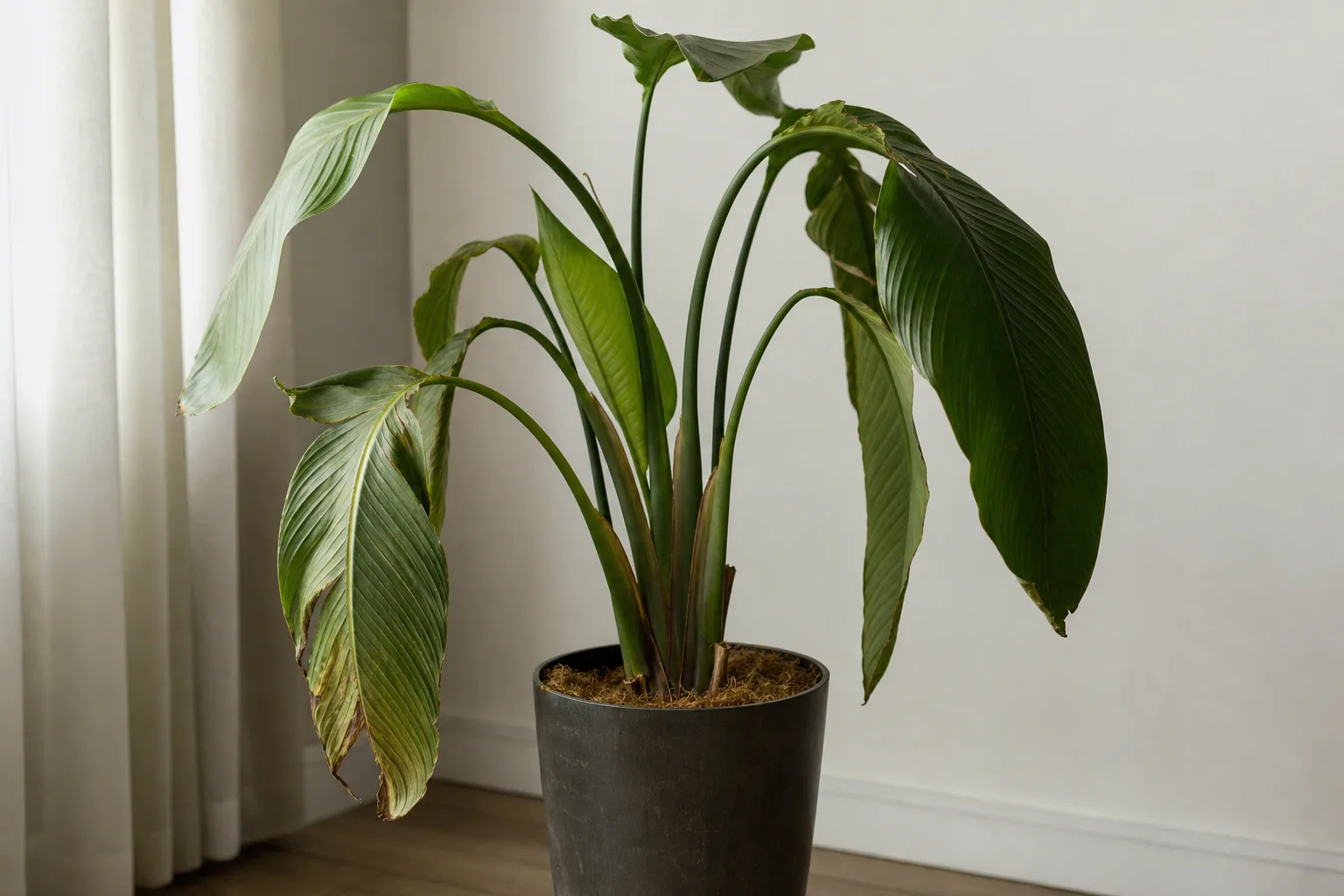
Wilting on Bird of Paradise: Causes, Checks & Fixes
This guide covers wilting on Bird of Paradise. See also the general Wilting guide, watering, and light pages for this plant.
Wilting on Bird of Paradise: Causes, Checks & Fixes
Quick answer
Wilting on Bird of Paradise (Strelitzia reginae and Strelitzia nicolai) shows up as limp, soft-hanging paddle leaves that have lost turgor - the stiff upright posture healthy Strelitzia fans normally hold. The trap is that underwatering and overwatering look almost identical from above. Large tropical leaves transpire heavily in bright light, so the plant can look desperately thirsty even when roots are drowning in wet mix.
First step: check soil moisture at depth and pot weight before you touch the watering can. Insert your finger 5 cm (about 2 inches) into the mix near the pot edge. Lift the container at the same time.
- Wet, heavy pot + limp leaves → likely overwatering or root rot. Stop watering. Press the rhizome at soil level - softness is urgent.
- Light, dry pot + inward-curling or limp leaves → likely underwatering. One thorough soak, then drain fully.
Bird of paradise is more drought-tolerant than it looks - thick rhizomes store water - but it cannot survive repeated cycles of soggy, airless soil, especially in dim winter rooms.
What wilting looks like on Bird of Paradise
On Strelitzia, wilting is not subtle once turgor drops. Large gray-green leaves arise from underground rhizomes on this clumping perennial - paddle leaves that normally stand at a proud angle go soft and hang downward along the petiole. The leaf blade may fold slightly along its midrib. Newest leaves often show stress first because they have the thinnest tissue and the highest water demand.
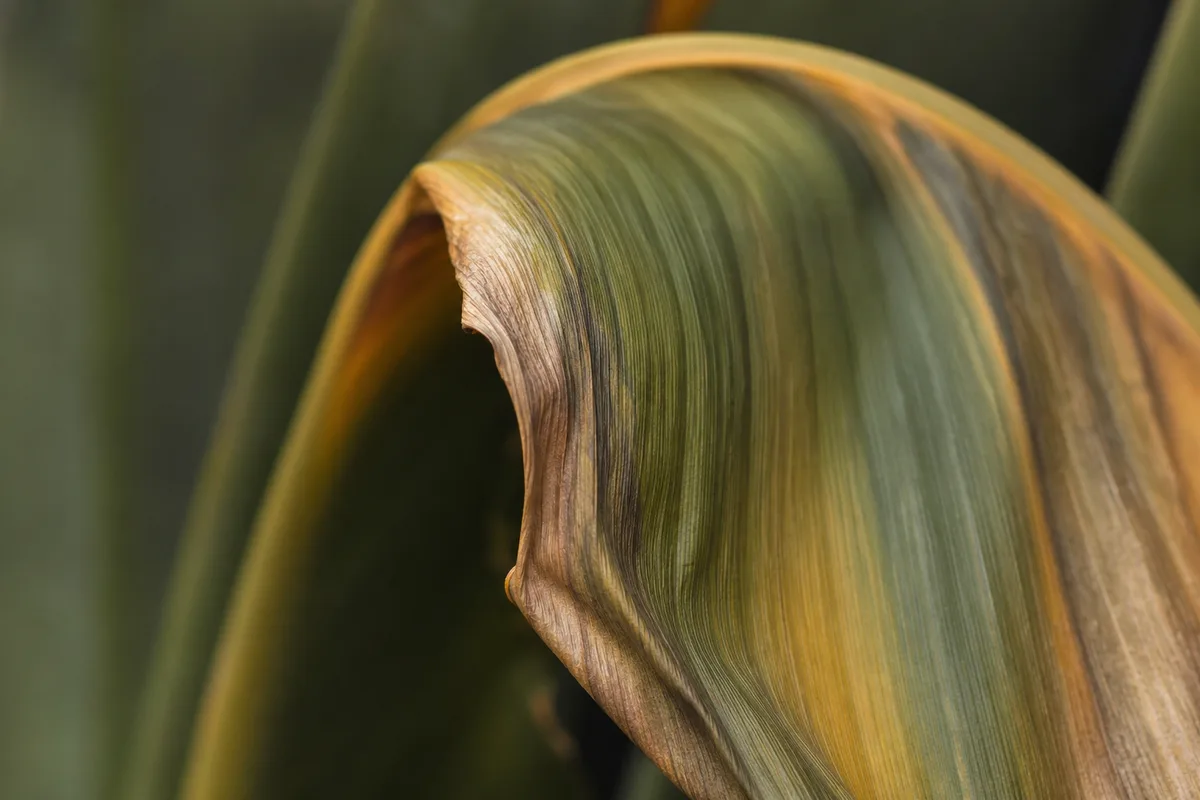
Wilting symptoms on Bird of Paradise - compare with healthy tissue on the same plant.
Wilting vs. curl vs. droop
These three symptoms get confused constantly on Strelitzia:
| Symptom | What you see | Soil clue | Urgency |
|---|---|---|---|
| Wilting | Soft limp hang, lost stiffness, may affect several paddles at once | Either very dry or persistently wet | High if wet + spreading |
| Inward curl | Leaf edges roll inward; blade still somewhat firm early on | Usually dry, light pot | Moderate - fix before full wilt |
| Drooping leaves | Downward angle, sometimes chronic; plant may still feel firm | Variable - see drooping leaves page | Lower unless base is soft |
Wilting is an acute turgor collapse. Curl is often the early underwatering signal on bird of paradise - the plant tightens leaf surface area before full limpness. Drooping can be long-term posture from weak light, top-heavy pots, or slow moisture imbalance without the dramatic soft collapse of true wilt.
Wet-soil wilt vs. dry-pot wilt
The diagnostic split that saves plants:
Dry-pot wilt: Pot feels light. Top 5 cm and deeper mix are dry. Leaves may curl inward before going fully limp. Rhizome at soil line feels firm. Recovery after one deep watering is usually fast - often within hours to a day.
Wet-soil wilt: Pot stays heavy for days or weeks after the last watering. Surface may look dry while the center stays damp. Leaves sag despite moisture. Lower leaves may yellow. Rhizome press feels spongy or dark. Sour smell, fungus gnats, or constantly damp saucer water support root rot - not thirst.
University of Maryland Extension notes that excess moisture reduces soil oxygen, damages fine roots, and produces wilting that mimics drought - the classic indoor Strelitzia trap.
Species note: reginae vs. nicolai
Strelitzia reginae - the orange-flowering bird most often grown indoors - has stiff gray-green paddles on moderate petioles. Wilting usually involves several fans at once when moisture fails.
Strelitzia nicolai - giant white bird - carries more leaf surface and often sits in larger pots. It may wilt faster in summer heat and bright sun because transpiration demand is higher, but the same dry-down rule applies: top portion dry, pot lighter, then soak. Nicolai’s sheer size makes a limp plant look more dramatic; do not interpret leaf theater alone as proof of thirst.
Why Bird of Paradise wilts - ranked causes
1. Overwatering and root oxygen loss (most dangerous indoors)
Indoor bird of paradise fails more often from too much water than too little. NC State Extension lists root rot from overwatering or poorly drained soils as a primary problem on Strelitzia reginae. When mix stays saturated, roots cannot breathe. They decay. The plant wilts because uptake has failed, not because the soil lacks water.
Winter calendar-watering in a dim room is the primary indoor route from wilt to rot: the plant uses little moisture, but the grower keeps soaking on a summer schedule.
2. Underwatering and transpiration exceeding uptake
Large paddle leaves lose water quickly in bright conditions. A missed cycle in summer - or a pot that dried unevenly after shrinkage pulled mix away from the walls - leaves roots unable to supply demand. The RHS notes that Strelitzia can lose substantial water through large leaves and may need generous watering in active growth, always paired with a real dry-down between drinks.
Underwatering wilt is usually easier to reverse than rot if rhizomes remain firm.
3. Heat and high-light transpiration stress
A healthy bird of paradise in strong direct sun to partial shade can wilt on a hot afternoon when root uptake momentarily lags behind leaf water loss - especially if the top dried faster than expected. Check whether the plant recovers by evening after soil moisture is even. Persistent afternoon wilt with dry soil means increase watering consistency, not shade alone.
4. Post-repot and transplant shock
Freshly disturbed roots underperform for days to two weeks. Wilting after Bird of Paradise repotting guide - especially into oversized pots with wet outer rings of unused mix - is common. Hold watering until the root ball approaches normal dry-down, provide bright indirect light, and avoid fertilizing until new growth firms.
5. Root-bound constriction or compacted mix
A severely root-bound rhizome in a small pot dries so fast that wilt returns between waterings. Conversely, old peat-heavy mix that has broken down holds water too long and mimics overwatering wilt. Both need repot timing - but not on the same day you first notice wilt unless mushy roots demand emergency unpotting.
6. Cold drafts with wet soil
Cool roots slow water uptake. A plant near a cold window in winter may sit in damp mix for weeks while leaves look tired. The wilt pattern pairs slow growth, cool room, and heavy pot - fix by reducing water frequency and improving warmth, not by adding more moisture.
How to confirm the cause - six-step inspection
Work through these in order. Stop when one branch clearly fits.
- Finger test at 5 cm depth - Dry throughout? Lean dry branch. Cool damp clinging to skin? Lean wet branch.
- Pot weight - Compare to how it felt right after the last thorough watering. Light = dry. Still heavy days later = wet.
- Rhizome firmness - Press gently at the soil line where thick stems emerge. Firm = safer. Soft, dark, or mushy = unpot soon.
- Newest growth - A firm new leaf unfurling suggests roots still work. Collapsed newest paddle with wet soil is a red flag.
- Saucer and drainage - Standing water, blocked holes, or cachepot pooling? That explains wet-soil wilt even if you “water correctly.”
- Light and recent changes - Repot, move, heat wave, or winter slowdown in the last two weeks? Context narrows the branch.
If wet and dry signs conflict - surface dry but pot heavy - trust weight and depth over leaf appearance. Strelitzia nicolai in deep containers often has dry tops and wet centers.
Wet soil vs. dry soil - diagnostic branch
Use this decision path before any fix:
Dry branch confirmed:
- Pot light; skewer or finger dry at 5 cm
- Inward curl may be present
- Rhizome firm
- First fix: One thorough top watering until runoff, or bottom-soak 30–45 minutes then drain completely. If mix shrunk from the pot wall, water in two stages ten minutes apart.
Wet branch confirmed:
- Pot heavy; mix cool and damp at depth
- Limp leaves may include yellow lower paddles
- Rhizome soft or sour smell present
- First fix: Stop all watering. Empty saucer. Move to brighter spot if light was low. Do not fertilize. If rhizome is soft, unpot, trim mushy roots, repot into airy mix sized to remaining roots - details on the root rot page.
Heat-transpiration branch:
- Soil appropriately moist; wilt appears mid-afternoon only
- Plant perks by evening or after a modest drink
- First fix: Ensure even moisture at depth; avoid letting the top dry to bone-dry while roots in the center still hold water. Filter harsh midday sun if leaf edges scorch.
First fix for Bird of Paradise (by confirmed cause)
Make one primary correction, then wait three to seven days before stacking more interventions.
| Confirmed cause | First fix |
|---|---|
| Dry pot / underwatering | Thorough soak + full drain; reset check routine per watering guide |
| Wet pot / overwatering | Stop watering until top 5 cm dries; improve light and airflow |
| Mushy rhizome / root rot | Unpot, trim rot, repot smaller; see root rot guide |
| Heat wilt | Even moisture + afternoon shade filter if scorching |
| Repot shock | Stable bright light; water only when root ball dries normally |
| Root-bound dry cycles | Plan repot next active season; interim soak when dry checks pass |
The single most costly mistake on bird of paradise is watering a wet, wilted plant because the leaves look thirsty. Excess moisture produces the same wilt symptom as drought once roots fail - adding water kills recoverable plants.
Recovery timeline - what old paddles vs. new growth will do
Recovery expectations differ by cause:
Underwatering: Turgor often returns within several hours to 48 hours after a proper soak - Wisconsin Horticulture notes that underwatered bird of paradise leaves may curl before recovering after thorough watering. Crisp brown edges on old leaves may stay cosmetic. Success = firm petioles and a new leaf continuing to open.
Overwatering caught early: Stop watering and let mix dry. Lower yellow leaves may not re-green. Allow one to two weeks for root function to stabilize. Success = no new yellowing and firm rhizome.
Root rot after trimming: Two to six weeks minimum. Many old paddles stay limp or yellow permanently. Judge recovery only by firm rhizome tissue and new growth - not by old leaf re-firming.
Repot shock: One to three weeks for wobble and mild wilt to settle if rot is absent.
Heat afternoon wilt: Often same-day improvement once moisture is even.
Do not declare failure at day three on wet-soil cases. Do declare failure if rhizome softness spreads, smell worsens, or newest growth collapses despite corrected watering.
Lookalike symptoms to rule out
Wilting overlaps with several Bird of Paradise problems:
- Drooping leaves - Chronic downward angle without soft turgor collapse; often light or posture related
- Yellow leaves - Frequently pairs with wet-soil wilt from overwatering; yellow alone without limpness may be senescence
- Brown tips - Edge damage from dry air or inconsistent water; paddles may still feel firm
- Not enough light - Weak floppy new growth in dim rooms; soil may stay wet too long
- Pests - Spider mites or scale cause stippling and gradual decline; check undersides before assuming moisture alone
If multiple paddles wilt while soil is wet and the base softens, treat as root failure first - not a pest spray, not fertilizer, not repotting into a bigger pot.
What not to do
Do not water again when soil is wet and leaves are limp - that is the fastest route to rhizome rot on Strelitzia.
Do not fertilize a wilted plant to ” perk it up.” NC State recommends feeding during active growth on healthy plants, not stressed ones with failing roots.
Do not repot into a larger container on day one hoping drainage improves - oversized wet rings around the root ball prolong saturation.
Do not move a wilted plant into blazing direct sun immediately - acclimate gradually to avoid scorch on already stressed tissue.
Do not stack repotting, heavy pruning, and pesticide on the same day. Fix moisture first.
Do not confuse natural older-leaf senescence with wilt - one aging lower paddle yellowing while the rest stay firm and soil checks are normal is not an emergency.
How to prevent wilting next time
Build the same check-based rhythm described in the Bird of Paradise watering guide:
- Water when the top 5 cm dries and the pot feels lighter - roughly every 7–10 days in active growth, every 14–21 days or longer in winter for many indoor plants
- Let compost get fairly dry between waterings from late autumn onward when growth slows
- Use well-draining mix with 20–30% perlite; see the soil guide
- Empty saucers within 30 minutes; never let cachepots hold standing water
- Keep the plant in bright light so the pot dries predictably - appropriate light supports healthy foliage indoors - see the light guide
- Learn your species and pot size: nicolai in large containers needs depth checks, not surface color alone
Weekly pot lifts during the first month after any wilt scare teach you what “ready to water” feels like for your room - more reliable than any calendar.
When to worry
Treat wilting as urgent when:
- Rhizome or stem base at soil line feels soft, dark, or mushy
- Soil smells sour or musty despite your pause in watering
- Limpness spreads to newest leaves over 48–72 hours
- Wet soil persists more than two weeks in a typical indoor pot
- Wilting continues after a confirmed dry-pot soak - suggests hidden rot, not thirst
Lower urgency when one missed watering on a firm rhizome perks the plant within a day. Heat afternoon wilt that resolves by evening with stable moisture is manageable.
If more than half the rhizome is mushy on inspection, recovery is uncertain - focus on saving firm offsets rather than every old paddle.
Bird of Paradise care cross-check
Stable Strelitzia resists wilt when three systems align:
| Factor | Wilting risk when wrong |
|---|---|
| Water | Wet cycles in winter OR chronic drought in summer sun |
| Light | Dim rooms keep mix wet; strong sun dries pot fast |
| Roots / mix | Dense soggy mix OR root-bound dry spikes |
| Pot | No drainage, cachepot pooling, or oversized wet ring |
Cross-link your routine: the overview hub summarizes placement; watering covers seasonal ranges; overwatering and underwatering go deeper on each branch; root rot covers emergency rhizome rescue.
Conclusion
Wilting on bird of paradise is a moisture diagnosis problem disguised as a leaf problem. Large paddle leaves look thirsty quickly, but UF/IFAS Gardening Solutions describes Strelitzia as drought-tolerant once established - thick rhizomes tolerate short dry spells better than constant wetness. Before you water, confirm wet versus dry at depth, lift the pot, and press the rhizome. Stop watering wet limp plants; soak dry limp ones thoroughly. Judge recovery by firm underground tissue and new leaf unfurling - not by whether every old paddle re-stiffens. Get the wet-dry branch right and Strelitzia returns to the architectural upright fans that make the plant worth the patience.
When to use this page vs other Bird of Paradise guides
- Bird of Paradise watering guide - Use for routine moisture checks before assuming wilting is the main issue.
- Bird of Paradise problems hub - Browse all 20 common issues on this species.
- Underwatering on Bird of Paradise - Different entry point when symptoms overlap with wilting.
- Overwatering on Bird of Paradise - Different entry point when symptoms overlap with wilting.
- Root Rot on Bird of Paradise - Different entry point when symptoms overlap with wilting.