Rosemary Light Needs: Full Sun, Best Windows & Warning Signs
Rosemary Light Needs: Full Sun, Best Windows & Warning Signs
Rosemary Light Needs: Full Sun, Best Windows & Warning Signs
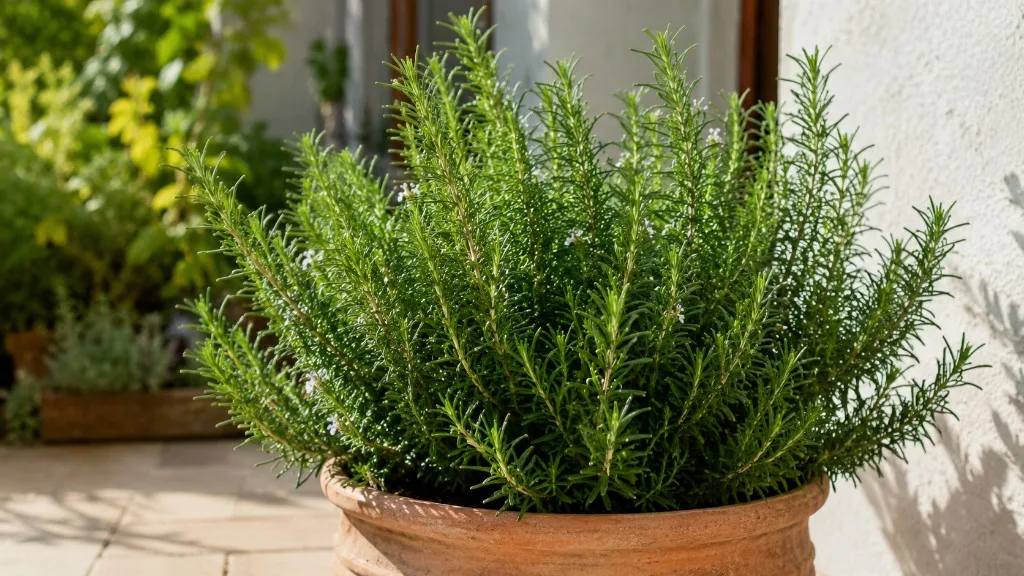
Rosemary is not a forgiving houseplant that happens to smell good. Salvia rosmarinus - the woody Mediterranean subshrub formerly classified as Rosmarinus officinalis - is a full-sun herb that evolved on rocky, rain-starved slopes along the Mediterranean basin, where summer days are long, bright, and dry. Treat it like a shade-tolerant foliage plant and it may hang on for weeks before the needles pale, stems stretch, and the aroma you bought it for disappears. Treat it like the sun-loving shrub it is, and the same pot produces firm needle clusters, compact branching, and leaves worth harvesting.
The practical target is straightforward: full sun - at least six hours of direct sunlight daily, with eight hours ideal outdoors in many climates. NC State Extension defines full sun as six or more hours of direct sunlight a day, and lists that exposure as the cultural standard for rosemary in garden beds and containers. (NC State Extension) That is not marketing language. Direct sun means light strong enough to cast a sharp, dark shadow on the leaf surface - not the soft ambient brightness of a room that feels “well lit” to human eyes.
This guide focuses on the light decisions that keep rosemary healthy indoors and out: how much sun it actually needs, why full sun is preferred over partial shade, where to place pots and garden plants, when to add grow lights, how light ties to flavor and essential oils, and how to read warning signs before legginess or scorch becomes the plant’s permanent shape.
How Much Light Rosemary Actually Needs
Rosemary belongs to the small group of common kitchen herbs that actively prefer direct sun rather than merely tolerating it. Penn State Extension recommends full sun and light, well-drained, sandy or gravelly soil for garden rosemary, noting that overwintering potted plants indoors is often difficult because of low-light conditions combined with watering mistakes. (Penn State Extension) Illinois Extension likewise specifies six to eight hours of bright light daily for container rosemary brought indoors for winter, ideally from a south-facing window.
Outdoors in USDA hardiness zones where rosemary is reliably perennial - generally zones 8 through 10, with some cold-hardy cultivars pushing lower - full sun is the default placement. In raised beds, rock gardens, herb borders, and patio containers, choose the brightest open exposure you have. Partial shade is listed as tolerated by NC State Extension for established outdoor plants, but tolerance is not the same as peak performance; shaded rosemary grows more slowly, produces fewer flowers, and often develops looser, less aromatic foliage.
Indoors, the bar is higher, not lower. Window glass filters UV and reduces intensity, so a south-facing pane that delivers seven hours of sun may only provide the equivalent of five to six hours of usable outdoor light once you account for modern double-pane reduction. East- and west-facing windows typically supply two to four hours of direct rays - enough to keep a plant alive short-term, not enough for the compact, fragrant growth most cooks want from a windowsill pot.
What Full Sun Means for Mediterranean Herbs
“Full sun” is a horticultural term with a measurable threshold, not a vibe. For rosemary, think in hours of direct rays on the foliage, not total daylight or room brightness. A plant sitting three meters from a large window receives far less photosynthetically active radiation than one whose canopy touches the glass, even though both spots look sunny to you when you walk by.
Rosemary’s native range - coastal hills and scrubland from the western Mediterranean through parts of North Africa and western Asia - selected for plants that withstand heat, drought, wind, and salt spray while maintaining evergreen needle foliage in high light. NC State Extension notes tolerance for drought, heavy pruning, and most soil types except clay, but low tolerance for wet, humid environments - conditions that low-light indoor setups often accidentally create when watering schedules do not adjust. (NC State Extension)
The useful indoor test is simple. On a clear day, watch the pot at mid-morning, noon, and mid-afternoon. If direct sun patches move across the needles for at least six cumulative hours, you are in full-sun territory. If the plant sees bright sky all day but never catches a sharp shadow, you are in bright indirect light - fine for pothos, insufficient for rosemary long-term.
The Short Answer for Busy Growers
If you only remember four rules, use these. Outdoors: place rosemary in the sunniest open spot available - six to eight hours of direct sun daily. Indoors: a south-facing window with the pot within 30 cm (12 inches) of the glass is the most reliable option in the northern hemisphere; supplement with a grow light in winter when days shorten. Do not confuse survival with success: rosemary may persist in an east window or under weak ambient light for months while slowly declining - leggy stems, pale needles, and musty rather than resinous scent are the tell. Judge by new growth: firm, densely spaced needles on the newest tips mean current light is working; stretching, thinning, or yellow-green new foliage mean increase brightness before changing fertilizer or Rosemary repotting guide.
Give any placement change 10 to 14 days before deciding it failed. Old needles do not re-darken after a move; only new shoots report the truth about your current setup.
Why Rosemary Evolved for Bright, Dry Exposures
Understanding rosemary’s origin explains why it breaks the usual houseplant rulebook. Most popular indoor plants come from forest understories or tropical canopies where filtered light and steady moisture dominate. Rosemary comes from open, rocky maquis and garrigue - low shrubland with intense summer radiation, fast drainage, and long dry intervals between rain events. That ecology shaped a plant with narrow, resin-coated leaves designed to minimize water loss while maximizing photosynthesis per unit of surface area under strong light.
Essential oils in rosemary - the compounds responsible for aroma and culinary value - accumulate under high light stress within the plant’s tolerance band. Growers and extension sources consistently link strong direct sun with more robust fragrance and tighter growth habit. When light drops, the plant prioritizes stem elongation (etiolation) to reach a brighter zone, producing longer internodes, thinner needles, and fewer aromatic compounds per leaf. You are not imagining the flavor difference between a sun-baked patio pot and a dim kitchen sill; the chemistry shifts with photon supply.
Heat tolerance and light demand travel together in rosemary, but they are not identical variables. A plant can receive enough hours of sun yet suffer if leaf temperature spikes through hot window glass, dark containers on reflective pavers, or sudden exposure jumps from a shaded nursery bench to a west-facing brick wall in July. The goal is high light with manageable heat, which is why morning-heavy exposures and gradual acclimation matter even for a species labeled full sun.
Air movement matters alongside light indoors. Penn State Extension and multiple herb references recommend good air circulation to reduce humidity around dense needle clusters and limit powdery mildew - a disease that becomes more likely when plants are kept in dim, stagnant corners with slow soil dry-down. A fan on the lowest setting for a few hours daily, or a spot with natural draft from a frequently opened window, supports the dry, bright conditions rosemary expects.
Outdoor Placement for Maximum Sun and Flavor
Outdoor rosemary is where the plant shows its best self: upright or prostrate forms with silvery-green needles, blue flowers that attract pollinators, and harvestable tips that regrow quickly after pruning. Light is the foundation. Without full sun, outdoor rosemary still grows - but often as a sparse, open shrub that takes years to fill out compared to a sun-soaked counterpart planted in the same soil mix.
Choose sites with unobstructed sky from mid-morning through afternoon. Against a south-facing wall in cool climates can work beautifully, reflecting heat and light onto the canopy. Under deciduous trees that leaf out in summer, expect seasonal light loss that slows growth and reduces flowering. In herb gardens, place rosemary at the sunniest edge rather than tucked behind taller perennials that cast afternoon shadow.
Best Garden Beds, Borders, and Containers Outdoors
In ground, rosemary wants what NC State and Penn State both emphasize: excellent drainage paired with full sun. Sandy or gravelly amendments, raised mounds, or rock garden placements mimic the slopes it evolved on. Spacing of roughly 60 cm (2 feet) between plants allows airflow and prevents one shrub from shading another as they mature toward 1.2–1.5 m (4–5 feet) tall in favorable climates.
Containers outdoors follow the same light rule with one extra wrinkle: pot material and color affect root-zone heat. Terracotta and light-colored containers reduce the risk of cooked roots on dark patios in summer sun. Black plastic in all-day sun can stress roots even when foliage receives enough light, producing wilt symptoms that look like underwatering on Rosemary but trace to heat damage below. If containers overheat, shift them slightly into open bright exposure where direct sun hits foliage for six-plus hours but the pot base catches afternoon shade from a low wall or neighboring pot.
Prostrate cultivars used as cascading border plants still need full sun on the growing tips. Trailing stems that wander into shade often thin out and lose vigor while the sun-facing portion remains healthy - a visible map of where photons land.
Seasonal Sun Angles and Latitude Adjustments
Sun angle changes through the year, and rosemary notices. In summer at mid-latitudes, a south or west patio may deliver eight to ten direct hours. In winter, the same spot might fall to four to six hours as the sun rides lower and days shorten. Established in-ground rosemary in mild climates often rides out winter light dips dormant-but-green. Potted rosemary you move indoors for frost protection hits the hardest light cliff - which is why overwintering fails so often when plants land in a “bright” room that never receives direct rays.
At high latitudes, outdoor rosemary may be an annual or container-only crop brought inside for winter. Plan for a south window plus LED supplementation from October through March rather than assuming summer sun habits carry the plant through. At low latitudes with intense summer heat, full sun remains correct for rosemary, but afternoon heat management - open air movement, gravel mulch instead of moisture-retentive organic mulch per Penn State guidance, and careful watering - prevents scorch on the hottest days.
Indoor Window Placement for Rosemary
Indoor rosemary succeeds or fails on light more than on any other single factor. NDSU Extension’s Dakota Gardener column notes that potted rosemary indoors should sit in a south-facing window or under grow lights, with longer durations under artificial light because intensity still falls below outdoor summer levels. (NDSU Extension) The most common failure pattern is not mysterious disease - it is a slow light starvation in a spot that looks fine to human eyes.
Place the pot close to the glass, not on a table across the room. Light intensity drops sharply with distance. Rotate the container a quarter turn every few days if growth leans toward the pane, but prioritize maximizing total direct hours over perfect symmetry. Remove sheer curtains during peak sun months if heat is manageable; add diffusion only when bleaching or leaf scorch appears on the glass-facing side.
Avoid placing rosemary near tropical humidity lovers that dictate a dimmer, moister microclimate. Misting rosemary or grouping it with ferns raises humidity around needles that prefer low to moderate air moisture (roughly 30–50%) and strong light - a combination that matches Mediterranean winter rain, not rainforest canopy conditions.
South, East, West, and North Windows Compared
A south-facing window is the default best choice for indoor rosemary in the northern hemisphere. From fall through spring, south glass delivers the longest duration and highest intensity of direct sun. In summer, watch for heat buildup - if needles on the pane side bleach or crisp, pull the pot back slightly or use a light sheer during peak afternoon hours while preserving morning direct rays.
An east-facing window provides cooler morning sun, typically three to five direct hours depending on season and obstructions. East can maintain a rosemary plant alive and usable if you accept slower growth and slightly milder flavor than a south exposure. Treat east as borderline for long-term indoor display quality unless you add supplemental LED hours.
A west-facing window delivers strong afternoon rays - higher heat load than east, often four to six direct hours in summer. West can work when the plant is acclimated and air movement is good, but sudden exposure without hardening off causes scorch more readily than east morning sun. Monitor the first week closely after any move to west glass.
A north-facing window does not provide meaningful direct sun at most latitudes. North may sustain slow decline rather than active health. If north is your only option, plan on a full-spectrum grow light from day one, not as a later rescue when the plant is already woody and bare at the base.
When Rosemary Can Tolerate Partial Shade
Outdoors, rosemary tolerates partial shade more gracefully than indoors. NC State Extension lists partial shade among tolerated conditions for established plants in well-drained soil. In hot-summer climates, light afternoon shade during extreme heat waves can prevent leaf burn on container plants without sacrificing overall daily totals if morning and midday sun remain strong. That is a stress-management tactic, not a permanent shade-garden placement.
Partial shade trade-offs are predictable. Stems grow looser and less compact. Flowering decreases. Needles may stay green but feel less resinous when crushed. Harvest regrowth slows. For ornamental hedging or pollinator value in a sunny-but-not-blazing bed, partial shade may be acceptable. For culinary quality and tight form, full sun remains preferred.
Indoors, partial shade is rarely viable beyond short transitional periods. The combination of already-reduced intensity through glass plus partial obstruction equals chronic under-lighting. If your indoor spot cannot deliver six hours of direct sun on the plant itself, assume partial shade conditions and install grow lights rather than hoping rosemary adapts like a snake plant.
Prostrate forms and upright varieties differ slightly in habit but not in baseline light demand. A trailing rosemary in a hanging basket still needs direct sun on the active growing tips; shaded lower stems inside the basket crown often die back while outer sun-exposed portions look healthy - misleading you into thinking the plant is fine overall.
Grow Lights When Windows Fall Short
When natural light cannot deliver six-plus hours of effective intensity - common in winter, north apartments, and office kitchens - a full-spectrum LED grow light is the most reliable fix. Rosemary is among the most light-demanding common culinary herbs grown indoors. Treating it like basil or parsley under a weak desk lamp produces leggy, aromatically flat plants within weeks.
Research on Mediterranean herbs and commercial herb lighting suggests target Daily Light Integral (DLI) values around 15–20 mol/m²/day for vigorous vegetative growth, which translates roughly to 300–400 μmol/s/m² PPFD at the canopy when measured 30–45 cm (12–18 inches) below a quality full-spectrum fixture. You do not need a PAR meter to start; you need a bright LED designed for plants, a timer, and attention to new growth.
Fixture Height, Hours, and Spectrum for Indoor Rosemary
Position a full-spectrum LED 15–30 cm (6–12 inches) above the tallest needles for typical 15–30 W herb fixtures, adjusting upward if leaves show heat curl or bleaching. Run the lamp 12 to 16 hours daily when window sun is insufficient - longer photoperiod compensates for lower intensity compared to outdoor summer days. Illinois Extension and multiple indoor herb guides converge on six to eight hours of direct window sun OR supplemental lighting for overwintering success.
Use a timer. Rosemary benefits from consistent day length rather than random on-off patterns. Combine window sun with LED extension in winter: let the plant take all available natural direct rays, then top up with artificial light until total effective exposure meets your growth target.
Watch temperature at the canopy. LEDs run cooler than old HID lamps, but ** enclosed fixtures close to needles** on small windowsill setups can still raise leaf temperature. If growth stays compact and needles feel firm, height is correct. If tips desiccate despite moist soil, raise the lamp or improve airflow.
How Light Affects Aroma, Flavor, and Flower Production
Light is not separate from the reason most people grow rosemary. Essential oil concentration - the monoterpenes that produce piney, resinous aroma - responds to light intensity within the plant’s tolerance range. Strong direct sun drives compact needle morphology and higher oil density per leaf compared to shaded growth, which prioritizes stem length over chemical defense compounds in foliage.
Flavor follows the same pattern. Cooks often report that sun-grown rosemary tastes sharper and more camphor-forward than shaded or indoor-stretched plants. While exact chemical profiles vary by cultivar and season, the directional relationship holds: more usable light up to the scorch threshold equals more aromatic harvests from the same volume of leaves.
Flowering connects to light as well. Rosemary blooms on mature wood in late winter to spring in mild climates, with blue to violet flowers that attract bees and other pollinators. Plants in chronic shade flower sparsely or not at all indoors. Full sun outdoors promotes the energy reserves needed for bloom without sacrificing culinary needle production - especially when you prune lightly after flowering to encourage dense foliage, as NC State Extension recommends for maintaining shape. (NC State Extension)
Harvest timing interacts with light subtly. On well-lit plants, volatile compounds in needles fluctuate through the day as photosynthesis and transpiration shift, so flavor can vary slightly with pick time - though total sun exposure over the season matters far more than the hour you snip. For kitchen use, grow the plant in enough sun that any pick time satisfies you.
Acclimating Rosemary to Stronger Light
Rosemary handles full sun when the foliage currently on the plant was built for full sun. Nursery stock grown under shade cloth, grocery-store herbs under fluorescent benches, and winter-weakened indoor plants are not immediately ready for a July patio or unfiltered south glass. Sudden jumps produce bleached patches, crispy needle tips, and partial defoliation that look like disease but trace to photoinhibition and heat shock.
Acclimate over 7 to 14 days when moving to stronger exposure. Outdoors, start in morning sun only for three to four days, then expand to midday, then full all-day sun if desired. Indoors, move from a back table to the windowsill in stages, or add one hour of direct sun daily through a partially opened blind before full exposure.
Watch the newest needle clusters during acclimation. Slight temporary yellowing on old interior needles while new tips stay firm is often acceptable transition noise. Widespread bleaching on young growth means hold at the current level longer before increasing intensity. Water slightly more during acclimation in bright outdoor sun - not soggy, but recognize that photosynthesis and transpiration ramp together when light increases.
Plants moved outdoors for summer after an indoor winter need the same gradual protocol even though the species “likes sun.” Indoor leaves are physiologically softer with less UV protection. Reverse acclimation matters in fall too: pull outdoor pots to bright indoor transition zones before frost, rather than jumping from open patio to a dim shelf.
Warning Signs Your Rosemary Has the Wrong Light
Rosemary communicates light problems through growth habit and needle texture more reliably than through instant collapse. Because it is drought-tolerant and slow to show root distress, growers often blame water or pests when light was the primary limiter for weeks. Reading symptoms on new growth only prevents misdiagnosis from old damage that will never heal.
Too Little Light - Leggy Growth, Pale Needles, Decline
Chronic under-lighting produces a recognizable syndrome. Internodes stretch - visible gaps between needle clusters along upright stems. New needles emerge smaller, paler, or more yellow-green than older sun-formed foliage lower on the branch. The plant leans hard toward the brightest vector, often a window or door. Lower interior needles drop or brown as the shrub prioritizes tips it can barely feed. Aroma on crush becomes weak, hay-like, or flat compared to resinous sun-grown leaves.
Indoors, low light couples with slow soil dry-down, inviting root rot on Rosemary if you water on a sunny-outdoor schedule copied from summer patio habits. Penn State Extension explicitly warns that overwatering on Rosemary in low light kills overwintering rosemary alongside insufficient sun. (Penn State Extension) If the pot stays wet and the plant looks sad, increase light before cutting water to dangerous extremes - often both adjustments are needed, but light drives transpiration.
Pests appear more readily on stressed, shaded rosemary. Spider mites, aphids, and whiteflies proliferate on soft, stretched indoor growth with poor airflow. Fixing light alone will not erase an active infestation, but preventing chronic shade stress reduces repeat vulnerability after treatment.
Too Much Light - Scorch, Heat Stress, and Winter Burn
Rosemary wants sun, but unacclimated or heat-amplified sun still damages foliage. Watch for bleached or silvery patches on sun-facing needles, crisp brown tips that spread from exposed surfaces inward, and cupping or rolling during the brightest hours. Sudden moves from shade to blazing west afternoon produce whole-side defoliation within days - the plant may recover from latent buds if roots stay healthy, but harvest quality drops for weeks.
Hot window glass creates one-sided damage on indoor pots pressed against the pane. Pull back a few centimeters or diffuse peak hours while keeping total direct time high. Dark containers on metal balconies combine root heat and leaf scorch - lift pots on feet for air gap cooling.
True “too much sun” on acclimated outdoor rosemary in appropriate climates is rare compared to under-lighting indoors. When scorch appears on a long-established full-sun plant, investigate water deficit, root rot, or salt buildup before blaming light alone - stressed roots cannot supply the water photoprotection demands in extreme heat.
Winter sun burn on cold mornings - needles damaged when frozen tissue thaws rapidly in bright light - affects some outdoor plants in marginal zones. That is a cold-hardiness and microclimate issue as much as a light issue; protect containers or choose hardier cultivars like ‘Arp’ where frost-heave cycles occur.
Light and Watering - Why Bright Plants Dry Faster
Every light change rewires rosemary’s water needs. Higher photon flux drives more transpiration through needle stomata, so a plant moved from a dim corner to a south window drinks faster even if temperature feels similar. Penn State Extension describes rosemary as moderately drought-tolerant once established, needing water when soil dries - but “dry” arrives sooner in bright light.
The practical rule: when light increases, check soil moisture every day for two weeks and water only when the top 5–8 cm (2–3 inches) of mix is dry - not on a calendar. When light decreases in fall indoor transitions, extend the interval between waterings even if the pot size unchanged. Keeping soil wet in low light is one of the fastest paths to root rot, which browns needle tips in a pattern easily mistaken for drought.
Light and drainage interact. Penn State recommends clay pots for rapid drying when overwintering indoors. Bright light plus porous terracotta plus gritty soil mimics Mediterranean dry cycles. Dim light plus plastic pots plus peat-heavy mix mimics swamp - rosemary’s nemesis.
Do not change light, pot size, and watering volume simultaneously. Move light first, stabilize new growth, then adjust other variables if needed. Stacking changes makes failure diagnosis impossible and often kills a recoverable plant.
Conclusion
Rosemary light needs boil down to one non-negotiable preference: full sun - six or more hours of direct sunlight daily, with eight hours ideal outdoors and south-window exposure plus winter supplementation indoors. NC State Extension, Penn State Extension, and experienced herb growers align on that baseline because Salvia rosmarinus evolved in open, dry, high-radiation Mediterranean landscapes - not in the filtered comfort of typical houseplant habitats.
Place outdoor plants in the brightest well-drained site you have. Indoors, prioritize south glass at close range, accept east or west only with realistic expectations, and treat north as grow-light territory. When windows fall short, run a full-spectrum LED 12 to 16 hours daily rather than nursing a leggy survivor. Acclimate gradually, read new needle growth for pass-fail, and link every light shift to a watering recheck because bright rosemary dries faster and dim rosemary rots easier.
Get light right and rosemary rewards you with compact form, strong aroma, and harvests that regrow quickly after pruning. Miss the sun target and no amount of fertilizer, repotting, or wishful thinking replaces what the plant expects from a Mediterranean sky.
When to use this page vs other Rosemary guides
- Rosemary overview - Start here for whole-plant context before deep-diving this topic.
- Rosemary problems hub - Jump to symptom-specific fix guides when this care topic does not resolve the issue.
- Not Enough Light on Rosemary - Escalate here when light adjustments are not enough.
- Leggy Growth on Rosemary - Escalate here when light adjustments are not enough.
Related Rosemary guides
- Rosemary overview
- Rosemary watering
- Rosemary soil
- Rosemary propagation
- Rosemary fertilizer
- Rosemary repotting
- Not Enough Light on Rosemary
- Leggy Growth on Rosemary
- Rosemary problems
Related tool
Try the Plant Problem Diagnosis Tool with rosemary pre-selected to estimate needs for your setup.