Overwatering on Rosemary: Causes, Checks & Fixes
Quick answer
Rosemary is a Mediterranean drought herb-keeping gritty mix wet suffocates roots and invites rot, especially indoors in winter. First step: stop watering until the top 5 cm is completely dry and empty any saucer water.
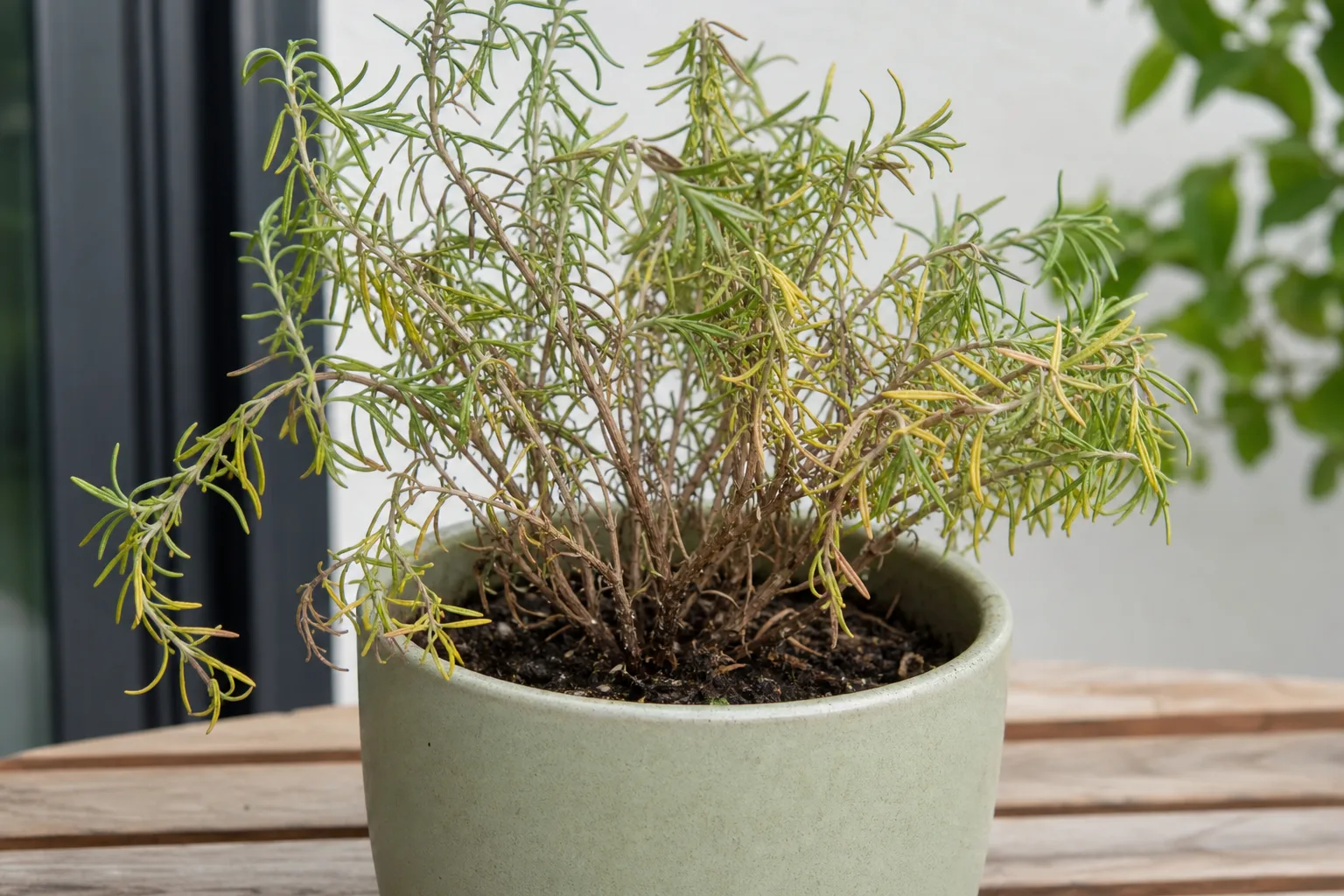
Overwatering on Rosemary: Causes, Checks & Fixes
This guide covers overwatering on Rosemary. See also the general Overwatering guide, watering, and light pages for this plant.
Overwatering on Rosemary: Causes, Checks & Fixes
Quick answer
Rosemary (Salvia rosmarinus) evolved on dry Mediterranean hillsides. It wants dry to medium, well-drained soils and good drought tolerance once established-not the steady moisture rhythm you might use on basil or mint.
When gritty mix stays wet for days, roots lose oxygen and begin to fail. Overwatering deprives roots of oxygen, which is why container rosemary in humid climates often dies from water stress before it ever dies from drought.
First step: stop watering until the top 5 cm of mix is completely dry, and empty any water sitting in the saucer. Do not pour another drink because needles look limp-that reflex worsens the problem when the soil is already saturated.
Why Rosemary gets overwatered
Rosemary is frequently killed by kindness. Growers treat all kitchen herbs the same, watering on a weekly calendar even when winter light is weak and the plant is barely growing. In that situation the pot cannot dry fast enough, and wet, poorly-drained soils in winter are usually fatal.
Several setup choices make chronic wetness worse on Rosemary overview:
- Peat-heavy or moisture-retentive mix - Rosemary does poorly in wet or poorly drained clay soil and needs light, sandy, gritty texture instead.
- Oversized pots - A large volume of mix stays damp around a small root ball long after the surface looks acceptable.
- Low light indoors - Without at least six hours of direct sun, transpiration drops and water use slows dramatically.
- Decorative cache pots - Water trapped between pots keeps the root zone saturated even when you think you watered lightly.
- Humid monsoon or coastal climates - Outdoor rosemary in Rosemary light guide tolerates heat, but pots that never dry invite root rots if plants are overwatered.
Fear of underwatering on Rosemary sometimes pushes the opposite mistake after a hot week: one heavy soak on already-wet mix adds to saturation rather than fixing drought.
What overwatering looks like on Rosemary
Overwatered rosemary often sends mixed signals. Needles may wilt or droop even though the mix feels moist-that happens because damaged roots cannot pull water up efficiently.
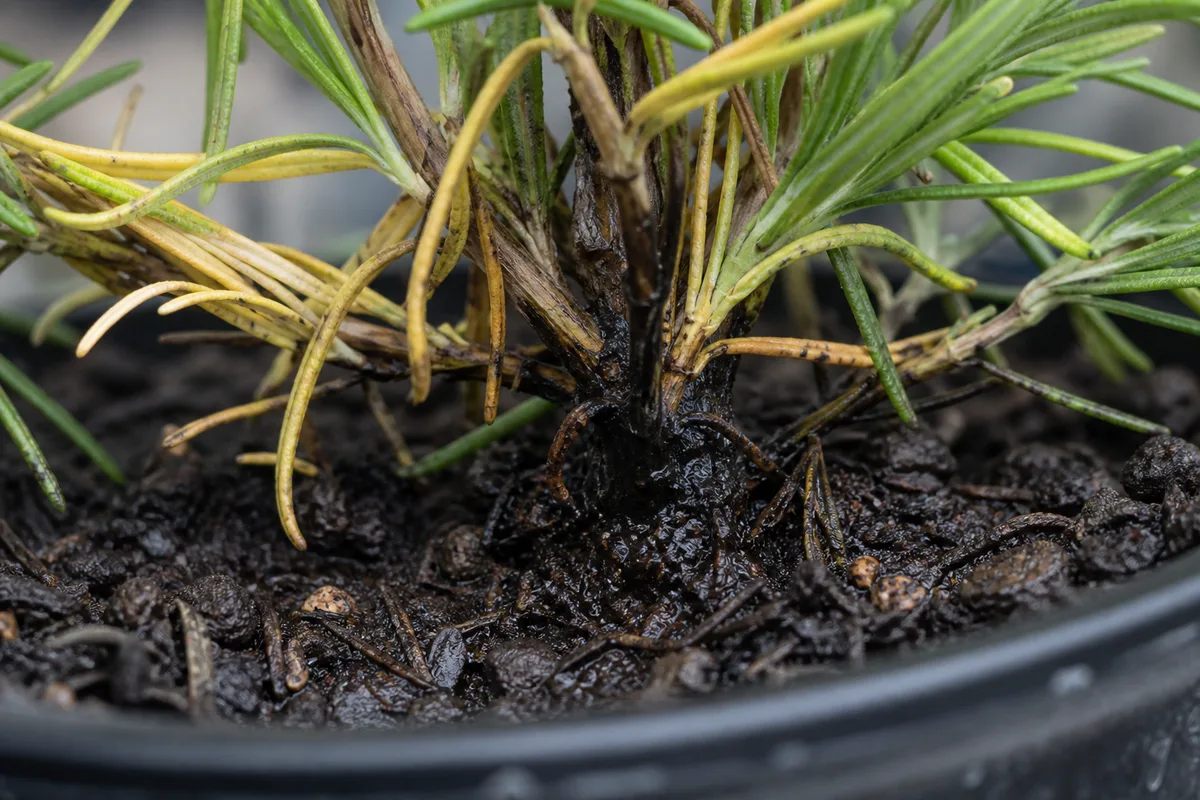
Overwatering symptoms on Rosemary - compare with healthy tissue on the same plant.
Common patterns to watch for:
- Yellow lower needles while upper growth still looks green, often on soil that has not dried for several days
- Soft, limp foliage on a heavy pot, sometimes with a dull or gray-green cast instead of crisp aromatic green
- Brown mushy stems at the base where tissue meets wet mix
- Sour or rotten smell when you lift the plant or probe deep into the mix
- White mold or fungus gnats on Rosemary on the surface-signs the root zone has stayed wet too long
- Wilting that does not improve on Rosemary within a few hours after you stop adding water
Penn State Extension notes browning of tips as a sign of root rot-often the downstream result of chronic overwatering rather than a separate disease on its own.
Powdery mildew can appear when airflow is poor around overwet foliage, but white dusty coating on needles is a different problem from soggy roots. Sort wet-soil symptoms before you treat for fungus.
How to confirm the cause
Work through these checks in order before Rosemary repotting guide or pruning heavily:
- Moisture at 5 cm depth - Push your finger or a bamboo skewer 5 cm into the mix. If it comes out cool and clings with wet soil after you have not watered for several days, the root zone is holding water too long.
- Pot weight - Lift the container. A feather-light pot in full sun suggests drought; a heavy pot days after watering suggests saturation.
- Drainage flow - Water should exit drainage holes within minutes in gritty mix. Slow dribbles or blocked holes mean water is pooling at the bottom.
- Saucer check - Standing water under the pot re-wets the mix from below.
- Stem base firmness - Pinch woody stems at the soil line. Soft, dark tissue on wet mix confirms advanced trouble.
- Recovery test - If you suspect drought, one thorough soak should restore turgor within hours. If wilt persists on wet soil, overwatering or root damage is the more likely cause.
When symptoms are moderate, confirmation stops at dry-down and drainage fixes. When stems soften or smell turns sour, unpot and inspect roots-pale firm roots are healthy; brown mushy roots confirm rot linked to excess moisture.
First fix for Rosemary
Stop all watering until the top 5 cm of mix is completely dry, and remove any water from the saucer.
This single pause breaks the cycle that keeps roots oxygen-starved. Let soil dry out between water applications-dry on top and dry enough at depth that the plant can breathe again.
Move the pot to the brightest spot you have-full sun if possible-so remaining healthy roots can use moisture faster without another soak. Improve airflow around crowded herb shelves.
Do not fertilize, repot, or prune heavily on day one unless you already confirmed mushy roots. Stacking interventions makes it harder to see what helped.
Step-by-step recovery
After the dry-down pause, proceed based on severity:
- Resume watering only on the finger test - When the top 5 cm is completely dry, water until a little runs from holes, then discard saucer water within 30 minutes.
- Improve mix and pot setup if soil stays wet - Repot into gritty alkaline mix with perlite, coarse sand, and fine gravel. Confirm open drainage holes; do not cover holes with stones.
- Downsize or match pot to roots - Rosemary tolerates being slightly root-bound; an oversized pot holds excess moisture.
- Unpot if stems are soft or smell is sour - Trim black mushy roots with clean scissors, let the root ball air-dry for several hours in bright indirect light, then replant in fresh dry mix. Hold fertilizer until new growth looks stable.
- Adjust seasonal rhythm - Cut watering frequency sharply in winter and during monsoon weeks when evaporation is slow.
- Monitor new shoot tips weekly - Firm aromatic new needles mean the root zone is recovering even if old yellow foliage stays discolored.
If more than one-third of roots are mushy and most stems are soft, take healthy semi-hardwood cuttings from firm upper growth before the plant collapses completely.
Recovery timeline
Minor overwatering caught early-wet mix without mushy roots-often stabilizes within one to two weeks once dry-down rhythm returns. Needles that yellowed may stay pale; judge success by firm new tips, not by old foliage color.
Moderate root damage can take three to six weeks in spring or summer when the plant is actively growing. Severe rot with extensive pruning may need a full growing season, and some specimens never regain dense form indoors.
Signs of improvement:
- Pot weight drops predictably between waterings
- New needle clusters stay rigid and fragrant when pinched
- No spread of yellowing up the stem
- Soil smell stays neutral when lifted
Signs the problem is worsening:
- Stem bases blacken and climb upward
- Wilting spreads on soil that never dries
- Mushy roots increase on re-inspection
- White mold and gnats persist after dry-down
Lookalike symptoms to rule out
Underwatering - Pot feels very light, mix pulls away from the pot edge, needles curl inward and feel brittle. A deep soak restores turgor within hours. Overwatering and poor drainage damage can look similar at first because both cause wilt, but drought responds to water while saturated mix does not.
Not enough light - Leggy pale growth with sparse needles in a dim window. Soil may stay wet because the plant is not using water. Moving to full sun often fixes dry-down speed without changing how much you pour.
Powdery mildew - Dry white powder on needle surfaces in stagnant humid air, without sour soil smell or constant wetness.
Cold damage - Sudden browning after frost or cold drafts; roots may still be firm if rot is not involved.
Spider mites or scale indoors - Stippling, webbing, or sticky residue on needles with otherwise appropriate dry-down. Check undersides before assuming water stress alone.
Mistakes to avoid
Do not water because needles look sad without checking soil moisture first-a limp rosemary on wet mix needs less water, not more.
Do not repot into a much larger container to “give roots room.” Extra mix holds moisture and slows recovery.
Do not use standard peat-heavy houseplant mix without grit. Texture matters more than watering frequency on rosemary.
Do not let the root ball sit in saucer water “just for a few minutes.” Standing water re-saturates gritty mix from below.
Do not mist foliage hoping to perk up wilted needles. That adds humidity around already stressed tissue without fixing root oxygen.
Do not keep winter watering on a summer schedule when the plant is in a cool room with short days.
How to prevent overwatering on Rosemary
Match watering to how fast your pot dries, not a calendar. In summer full sun, small terracotta pots may need attention every five to seven days; in winter indoors, ten to fourteen days-or longer- is common.
Use sandy, gritty, alkaline mix with exceptional drainage. Avoid overwatering which inevitably leads to root rot-prevention is easier than rescuing a rotted root ball.
Place rosemary where it gets full sun-six or more hours of direct light daily when possible-so transpiration keeps the mix cycling. Indoors, a sunny south window or supplemental grow lights prevent the slow dry-down that traps moisture.
Overwatering and poor drainage remain among the most common reasons rosemary fails in home gardens and containers. Good airflow between plants reduces powdery mildew pressure that often accompanies stagnant wet conditions.
Empty saucers promptly, use pots with open drainage, and reduce watering during dormancy or low-light months. A moisture meter can help beginners, but the finger test at 5 cm depth is usually enough once you learn your pot’s rhythm.
When to worry
Treat as urgent when stem bases soften, blackening moves up woody stems, or the plant wilts on soil that stays soggy for a week despite stopping water. Unpot immediately and assess root mass.
Also act quickly when fungus gnats swarm, surface mold spreads daily, or more than one-third of roots are mushy on inspection. Cool indoor overwintering combined with frequent watering can collapse a container plant within one to two weeks.
If only lower needles yellow but stems are firm, roots smell neutral, and dry-down fixes pot weight within days, the situation is serious but not yet emergency-level-hold to the dry-down first fix before escalating to root surgery.
When most of the root system is gone and lower stems are mushy, propagation from healthy upper cuttings may be the practical path rather than prolonged rescue attempts on the parent plant.
Conclusion
Overwatering on rosemary is a setup and rhythm problem as much as a watering problem. This Mediterranean herb needs gritty mix, full sun, and dry-down between soaks-especially indoors in winter. Stop watering until the top 5 cm is dry, confirm drainage, and watch new shoot tips for recovery. Catching chronic wetness early prevents the root rot that makes many container rosemary plants impossible to save.
When to use this page vs other Rosemary guides
- Rosemary watering guide - Use for routine moisture checks before assuming overwatering is the main issue.
- Rosemary problems hub - Browse all 18 common issues on this species.
- Root Rot on Rosemary - Different entry point when symptoms overlap with overwatering.
- Yellow Leaves on Rosemary - Different entry point when symptoms overlap with overwatering.
- Wilting on Rosemary - Different entry point when symptoms overlap with overwatering.