Wilting on Rosemary: Causes, Checks & Fixes
Quick answer
Wilting on Rosemary often hides behind stiff needles-dry pots need a deep soak, but limp stems on wet soil mean root failure. First step: check pot weight and soil moisture at 5 cm before adding water.
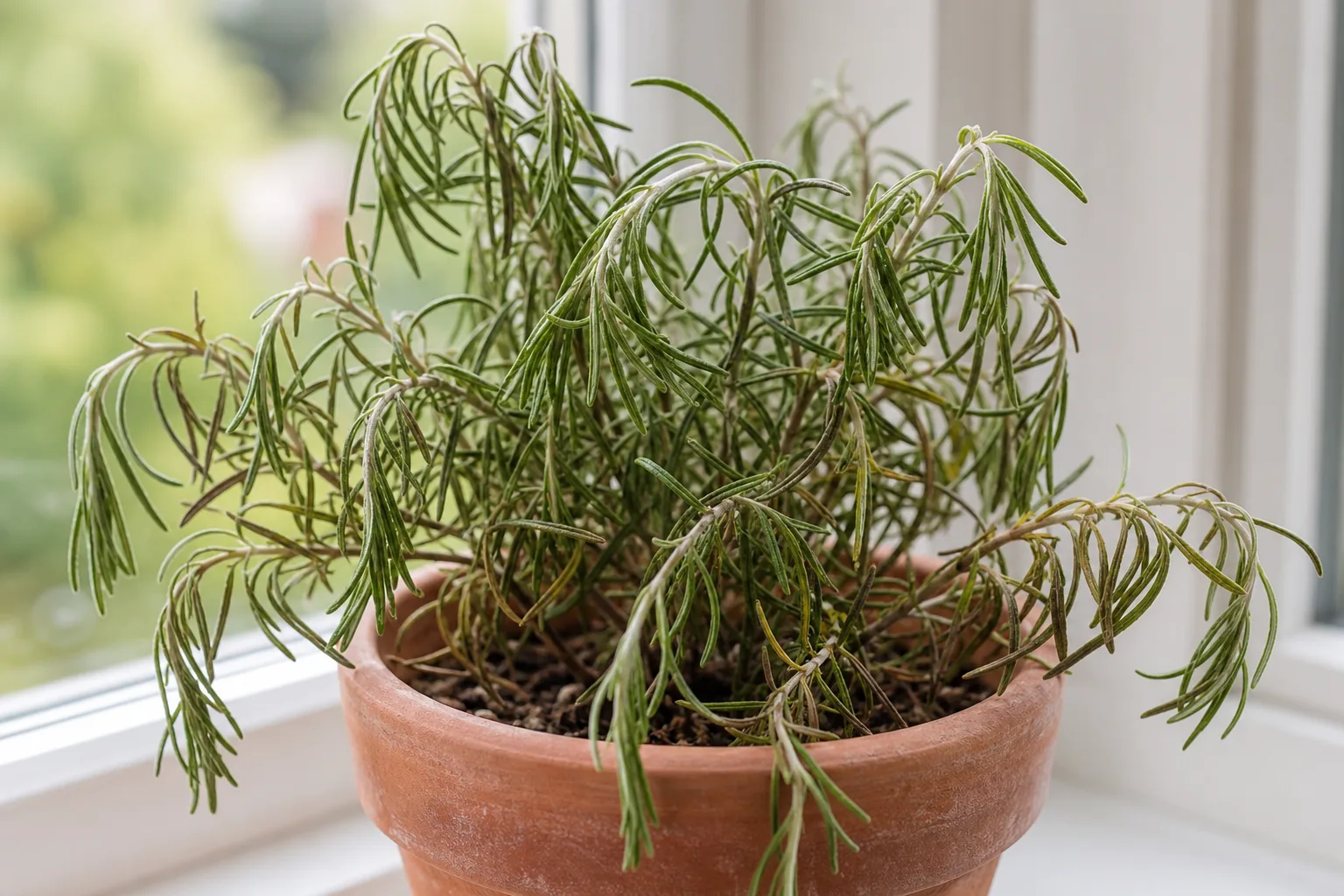
Wilting on Rosemary: Causes, Checks & Fixes
This guide covers wilting on Rosemary. See also the general Wilting guide, watering, and light pages for this plant.
Wilting on Rosemary: Causes, Checks & Fixes
Quick answer
Wilting on Rosemary is a split signal that catches growers off guard because stiff, needle-like foliage does not always look limp the way a peace lily or basil does. A genuinely dry pot needs a deep soak; the same collapsed, gray-green look on already wet soil usually means roots can no longer pull water up.
First step: lift the pot and check soil moisture at 5 cm before you add water. Light weight plus dry mix calls for irrigation. Heavy, soggy mix with soft stems calls for drying out and root inspection-not another drink.
Why Rosemary wilts
Rosemary (Salvia rosmarinus) evolved on dry Mediterranean hillsides with sharp drainage and intense sun. In that environment, established plants tolerate drought well once roots are deep-but container plants in full sun can exhaust a small pot in a few hot days. Heat drives transpiration faster than roots can replace moisture, and needles may shift from deep green to gray-green before anyone notices classic wilt.
The opposite failure is more common indoors and in humid climates: overwatering and poor drainage suffocate roots in peat-heavy mix. Saturated soil fills air pockets roots need; decay spreads even while the surface still looks damp. A wilted plant on moist soil is a textbook sign that uptake has failed-not that the plant needs more water.
Texas A&M Extension notes a rosemary-specific trap: needles do not wilt as broad leaves do, so underwatering on Rosemary and overwatering both get misread. Growers see brown tips or a tired silhouette, assume thirst, and pour water onto rotting roots-or they see stiff needles, assume the plant is fine, and miss a pot that has gone bone dry.
Winter compounds the problem. Rosemary moved indoors faces weak light and slower evaporation. The same Rosemary watering guide that worked on a sunny balcony keeps roots wet for days in a dim room, triggering root rot while top growth still looks merely dull rather than dramatically flopped.
What wilting looks like on Rosemary
Rosemary wilting rarely matches the floppy tropical-houseplant image. Learn these patterns instead:
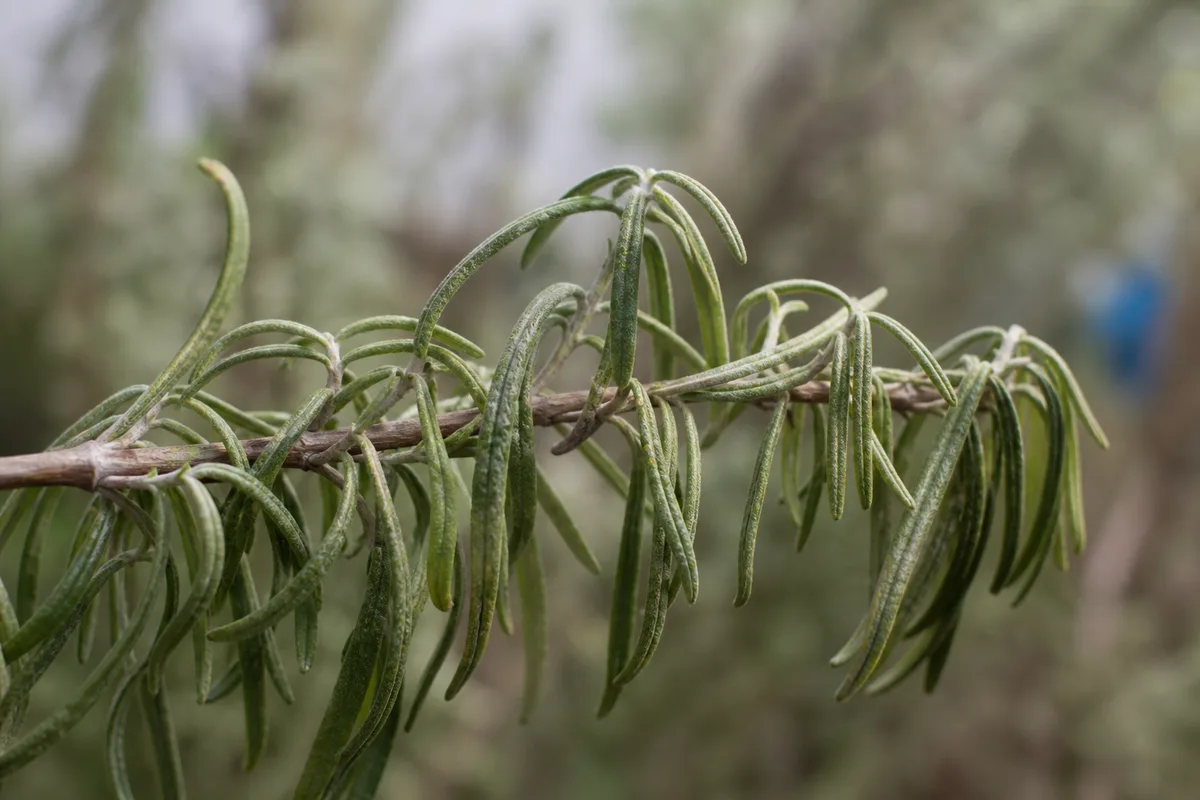
Wilting symptoms on Rosemary - compare with healthy tissue on the same plant.
Drought-related collapse:
- Pot feels noticeably light; soil pulls away from the pot edge
- Needles curl inward, feel dry or brittle, and tips brown
- Stems may look slightly limp or the whole plant appears shrunken and gray-green
- Dramatic improvement within a few hours after a thorough soak
Root failure on wet soil:
- Soil stays wet at 5 cm even though you have not watered recently
- Stems feel soft at the base; lower needles yellow or brown while mix is damp
- Sour smell when you lift the plant from the pot
- Continued collapse or branch dieback despite moist soil-classic overwatering damage
Temporary heat wilt:
- Afternoon slump on a hot, dry balcony that recovers by evening
- Firm needles return overnight without stem softening
- Pot was borderline dry before the heat spike
Post-repot or transplant stress:
- Mild droop for several days after Rosemary repotting guide, especially if roots were disturbed in heat
- Usually stabilizes once soil moisture stays even and the plant is not baking in direct sun right after the move
If stems are firm, needles hold their shape, and only the very tips look tired, you may be seeing early stress rather than full wilting-still worth a moisture check before the pattern worsens.
How to confirm the cause
Work through these checks in order. The goal is to separate dry wilt from wet wilt before you act.
- Pot weight - Lift the container. A feather-light pot in summer almost always means drought. A heavy pot that has not been watered in days suggests waterlogged, compacted mix.
- Soil probe at 5 cm - Push your finger or a skewer 5 cm deep. Completely dry means soak. Wet or cool and clinging means hold water and inspect roots if collapse continues.
- Drainage test - Water should exit drainage holes within seconds of a soak and not pool in the saucer. Slow or zero flow points to blocked holes or overly water-retentive mix.
- Stem base feel - Pinch lower woody stems near the soil line. Firm is good; mushy or hollow suggests rot or stem involvement.
- Recovery test (dry pots only) - Water thoroughly once, drain the saucer, and recheck in four to six hours. Perking up confirms drought. No change on already-wet soil confirms uptake failure.
- Light and season context - Full-sun outdoor pots dry faster than indoor winter pots. Reduce watering expectations when the plant moves inside, even if needles still look stiff.
If more than one-third of roots are brown and mushy when you unpot, treat as urgent root rot-not reversible with a single watering adjustment.
First fix for Rosemary
Lift the pot, probe soil at 5 cm, and match your action to what you find-do not water by habit.
- If the pot is light and soil is dry at 5 cm: Water deeply until water runs from drainage holes, empty the saucer, and let the plant drain fully. For hydrophobic dry mix that repels water, bottom-water the pot for 20–30 minutes, then let it drain.
- If soil is wet and stems are soft or collapsing: Stop watering immediately. Move the plant to brighter air circulation if it is indoors, tilt the pot to check for standing water, and unpot only if smell or mushy stems confirm rot. Trim black roots, air-dry the root ball for a day, and replant in gritty mix-do not fertilize until new growth looks stable.
This single diagnostic step prevents the most costly mistake on rosemary: drowning a plant that already cannot drink.
Step-by-step recovery
After the first fix, follow the path that matches your diagnosis.
For confirmed drought:
- Resume the let soil dry out rhythm-water only when the top 5 cm is completely dry.
- Trim only fully brown, brittle needles that snap cleanly; leave gray-green tissue if it still feels slightly flexible.
- On hot balconies, check small terracotta pots every two to three days in summer rather than relying on a calendar.
- Avoid moving the plant into harsh midday sun on the same day as a heavy soak; even drought-stressed rosemary can scorch if roots were recently shocked.
For confirmed root failure:
- Unpot, rinse roots gently, and cut away all brown or mushy tissue with clean scissors.
- Let the root ball air-dry in bright indirect light for 12–24 hours before replanting in sandy, gritty mix with open drainage holes.
- Hold water for several days after repot, then water lightly only when the new mix is dry at the top 5 cm.
- Cut back severely damaged top growth only after you see firm new tips-heavy pruning on day one removes photosynthetic tissue the plant needs to rebuild roots.
For heat wilt only:
- Provide afternoon shade or move the pot out of radiated heat against glass or metal railing.
- Ensure even moisture before the next hot afternoon; one deep soak beats repeated shallow sprinkles.
Do not stack repotting, fertilizer, pesticide, and heavy pruning on the same day. Fix the water pathway first, then reassess after 48–72 hours.
Recovery timeline
Mild drought wilt often shows firmer needles within hours and visible new tip growth within one to two weeks once watering rhythm stabilizes. Heat-related afternoon slump should resolve the same evening if soil moisture was corrected.
Root rot recovery is slower. Expect one to three weeks before firm new shoot tips appear if enough healthy root tissue remains. Badly browned needles rarely return to deep green; judge success by stopped dieback and aromatic new growth, not by old foliage reversing.
If the plant keeps declining after correct dry-down care and root trimming, woody stems may be too far gone-propagate from healthy softwood cuttings if any firm growth remains.
Lookalike symptoms
Drooping leaves vs. wilting: On rosemary these overlap, but wilting here emphasizes the water-uptake failure split-dry pot versus wet pot-while drooping may describe softer needle hang from heat alone. Always confirm with soil moisture.
Underwatering vs. wilting: Underwatering is the cause; wilting is the symptom. Inward-curling needles and a light pot confirm drought. If those signs appear on wet soil, the problem is not underwatering.
Root rot vs. wilting: Root rot is the cause when wilt persists on moist mix. Yellow lower needles, sour soil, and mushy roots distinguish it from a dry pot that revives after one soak.
Not enough light: Leggy, pale stretch toward a window weakens the plant and slows drying cycles indoors, indirectly causing wet-root wilt. If the pot stays heavy for a week without watering, improve light before the next drink.
Mistakes to avoid
- Watering because needles look tired without checking soil - the most common way to kill container rosemary in winter.
- Assuming stiff needles mean the plant is hydrated - rosemary hides drought longer than broad-leaf herbs.
- Leaving water in the saucer - Mediterranean herbs need exceptional drainage; stagnant saucer water mimics the wet clay soils rosemary does poorly in.
- Repotting into standard peat-heavy mix without grit when rot is suspected-same conditions that caused failure.
- Fertilizing a collapsed plant hoping to push growth-stressed roots cannot handle salts.
- Placing a wilted plant in deeper shade when the real issue is wet roots and poor airflow-light helps the mix cycle, not hurt it, once watering is corrected.
How to prevent wilting on Rosemary
Match watering to how fast your pot dries, not a generic schedule. Outdoors in full sun, small containers may need deep soaks every five to seven days in summer; indoors in winter, ten to fourteen days-or longer-may be closer to correct if light is weak.
Use gritty alkaline mix with perlite, coarse sand, or fine gravel. Choose pots with drainage holes and skip rocks at the bottom-they do not improve drainage and can perch water tables. Terracotta helps small pots dry evenly compared with glazed ceramic.
Give at least six hours of direct sun daily so the plant uses water predictably and foliage stays dense. Improve airflow between grouped pots to reduce humidity around stems-especially relevant where powdery mildew and root rot both appear when air stagnates.
After travel or a schedule change, weigh the pot before assuming the plant needs water. A few days of neglect on a dry balcony causes drought wilt; a well-meaning neighbor who overwatered during your absence causes the opposite.
When to worry
Treat wilting as urgent if:
- Stem bases soften while soil remains wet
- Black or brown dieback climbs from soil line up woody stems
- The plant does not respond within 24 hours after a correct deep soak on a confirmed dry pot
- More than one-third of roots are mushy on inspection
- Entire branches turn brown and brittle on damp soil with sour odor
In those cases, root salvage may still work if firm white roots remain-but delay increases the odds you are propagating from cuttings instead of saving the parent plant.
Practical checks
Urgency check
Soft stem bases plus wet soil, or rapid branch browning on moist mix, need same-day root inspection-not a wait-and-see watering cycle.
Best inspection order
Pot weight, soil at 5 cm, stem base firmness, drainage-hole flow, then roots only if wet-soil collapse continues.
Rosemary care cross-check
Rosemary wants drought-tolerant rhythm in full sun with fast-draining mix. If wilting repeats every few weeks, the pot, mix, or light-not the species-is usually the weak link.
When to use this page vs other Rosemary guides
- Rosemary watering guide - Use for routine moisture checks before assuming wilting is the main issue.
- Rosemary problems hub - Browse all 18 common issues on this species.
- Underwatering on Rosemary - Different entry point when symptoms overlap with wilting.
- Overwatering on Rosemary - Different entry point when symptoms overlap with wilting.
- Root Rot on Rosemary - Different entry point when symptoms overlap with wilting.