Yellow Leaves on Rosemary: Causes, Checks & Fixes
Quick answer
Yellow needles on rosemary usually mean the mix has stayed wet too long, or winter light is too weak for this full-sun herb. First step: probe soil moisture 5 cm deep and check whether roots are firm before you water or feed again.
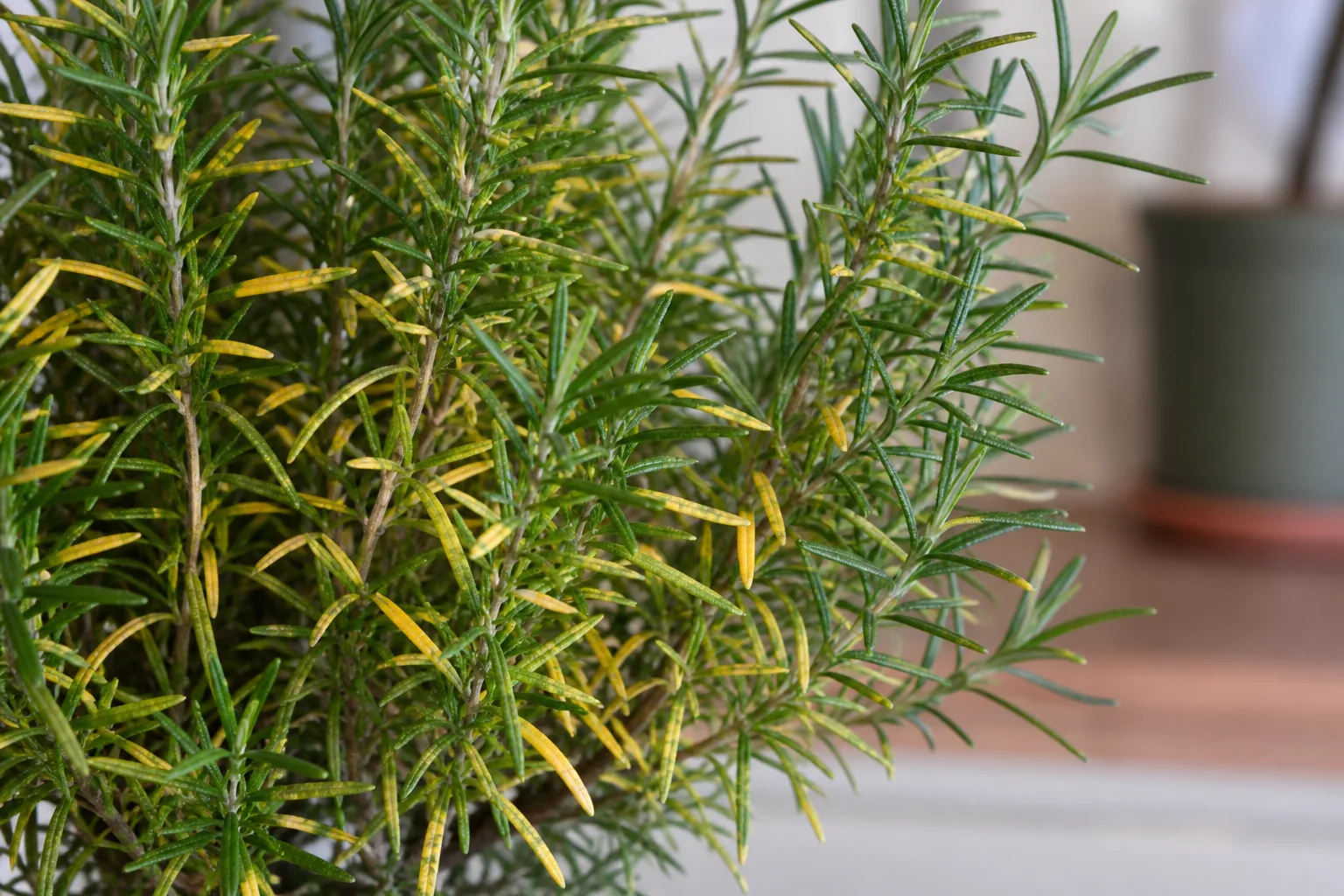
Yellow Leaves on Rosemary: Causes, Checks & Fixes
This guide covers yellow leaves on Rosemary. See also the general Yellow Leaves guide, watering, and light pages for this plant.
Yellow Leaves on Rosemary: Causes, Checks & Fixes
Quick answer
Yellow needles on rosemary (Salvia rosmarinus) are a stress signal, not a single diagnosis. This Mediterranean evergreen wants dry gritty soil and strong direct sun. When those basics slip-especially on a pot brought indoors for winter-needles often fade on lower or inner shoots first.
The two most common triggers are opposite sides of the same mistake: mix that stays wet too long, or too little light so the plant cannot use water and nutrients efficiently. Both can yellow foliage even when you think you are watering carefully.
First step: probe soil moisture 5 cm deep and check whether roots and stem bases are firm before you water or feed again. That one check prevents the reflex that worsens wet-root yellowing and tells you whether drought-not excess water-is the real problem.
Why Rosemary gets yellow leaves
Rosemary evolved on dry scrub and rocky places in the Mediterranean with sharp drainage and long sun exposure. Its needle-like leaves transpire actively in full sun, which helps the mix dry between soaks. When light drops or drainage fails, the plant’s water balance breaks down and chlorophyll fades.
Wet roots and root rot on Rosemary
Chronic moisture is the leading cause of yellow needles on container rosemary, particularly in humid climates and during indoor overwintering. Saturated mix forces oxygen out of the root zone. Stressed roots cannot deliver water and minerals efficiently, so lower needles yellow even though the soil feels damp. Root crown rots result in the yellowing and dying of leaves, and overwatering on Rosemary with poor drainage invites these failures.
Rosemary is sensitive to wet, poorly drained soils. Overwatering causes root rot that can be deadly outdoors and especially in pots overwintered indoors. Browning of needle tips often follows as rot advances.
Insufficient light
Rosemary performs best in full sun-at least six hours of direct light daily. In dim winter windows, photosynthesis slows, new growth may look pale yellow-green, and older inner needles fade. Low light also slows water use, which means an otherwise moderate Rosemary watering guide keeps the mix wet longer and compounds root stress.
Drought stress
Rosemary tolerates drought once established, but prolonged dry cycles still damage fine roots. When underwatering on Rosemary, needles may curl inward, then yellow or brown at tips before dropping. A lightweight pot and dry mix throughout-not just on the surface-support this diagnosis. Drought yellowing is less common than wet-soil yellowing on potted rosemary, but it happens when growers swing too far toward underwatering after a rot scare.
Pests on indoor plants
Spider mites, aphids, whiteflies, and mealybugs can stress rosemary brought inside for winter. Mite feeding creates stippled yellow patches with fine webbing on needle undersides. Heavy sap-feeder pressure weakens new shoots and can yellow foliage without changing your watering rhythm. Outdoor rosemary in full sun is more pest-resistant; indoor specimens in dry heated air are the usual victims.
Powdery mildew and poor airflow
Powdery mildew appears when humidity is high and air circulation is poor around overwintered plants. A white dusty coating on needles is distinct from uniform yellowing, but affected tissue may yellow as it declines. Crowded shelves, cache pots, and stagnant corners invite this problem.
Natural aging on healthy plants
A few yellow needles on lower, shaded branches of an otherwise vigorous outdoor shrub can be normal turnover. Concern starts when yellowing spreads to multiple stems, hits new growth, or appears alongside wet soil, soft stems, or pest signs.
What yellow leaves look like on Rosemary
Pattern matters more than color alone. Use these signatures:
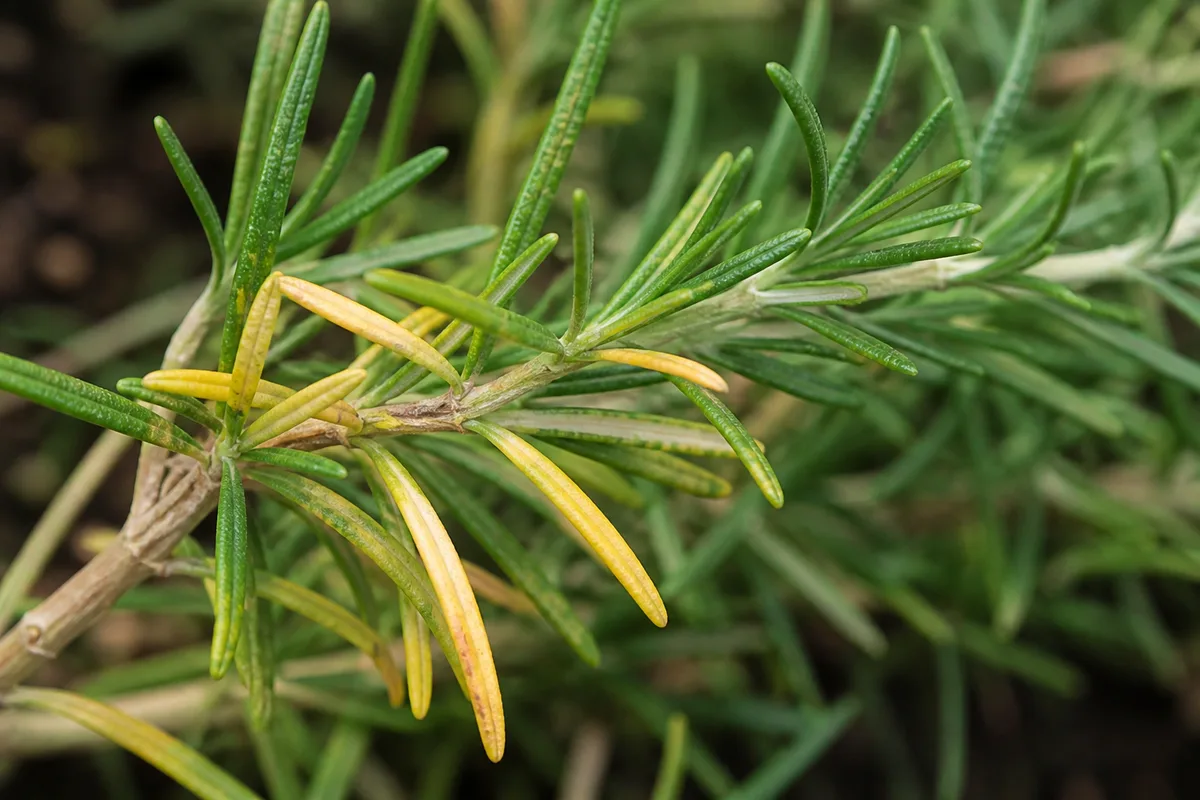
Yellow Leaves symptoms on Rosemary - compare with healthy tissue on the same plant.
Wet-root yellowing:
- Uniform pale yellow on lower or inner needles while mix stays damp for days
- Limp or wilted foliage on a heavy pot
- Dull gray-green cast instead of crisp aromatic green
- Soft brown tissue at stem bases where wood meets wet mix
- Sour smell when you lift the plant
Low-light yellowing:
- Pale yellow-green new tips on stretched, leggy stems
- Thin sparse growth toward a window while back sides stay darker
- Plant looks weak despite soil moisture that seems acceptable
- More common on indoor overwintered pots than outdoor shrubs in full sun
Drought yellowing:
- Dry mix throughout and a very lightweight pot
- Needles curling inward with dry brown tips
- Wilting that improves within hours after one thorough soak
Pest-related yellowing:
- Speckled yellow patches with fine webbing (spider mites)
- Sticky residue or ants on stems (aphids, whiteflies, mealybugs)
- Distorted or stunted new shoots with insects visible on undersides
Powdery mildew:
- White powdery patches on needle surfaces, often in crowded indoor placements
- Yellowing may follow on heavily coated tissue
How to confirm the cause
Work through these checks in order. Stop when one path clearly fits-do not stack treatments before you know the cause.
- Moisture at 5 cm depth - Push your finger or a dry skewer 5 cm into the mix. Clinging wet soil days after your last watering points to saturation. Bone-dry throughout suggests drought.
- Pot weight - Lift the container. Heavy and wet confirms slow dry-down; feather-light in full sun suggests underwatering.
- Drainage and saucer - Water should exit holes within minutes in gritty mix. Standing saucer water re-wets roots from below.
- Stem base firmness - Pinch woody stems at the soil line. Soft dark tissue on wet mix signals advanced root trouble.
- New growth color - Pale stretched tips in a dim room point to light before fertilizer.
- Underside inspection - Check needle undersides and stem joints for webbing, insects, or white mildew patches.
- Recovery test - If drought is suspected, one deep soak should restore turgor within hours. Persistent wilt on wet soil means stop watering, not add more.
When wet soil and soft stems align, gently unpot and rinse roots. Pale firm roots are healthy; brown mushy roots confirm rot linked to excess moisture.
First fix for Rosemary
Stop watering until the top 5 cm of mix is completely dry, and empty any water in the saucer.
This single step halts the most common cause-wet-root stress from overwatering-without making drought worse. Let soil dry out between water applications before the next soak. Do not fertilize stressed yellowing rosemary hoping to green it up; feeding waterlogged plants pushes soft growth and can worsen rot when roots cannot function.
If the mix is bone-dry throughout and the pot is light, skip the dry-down and give one thorough soak until water runs from drainage holes, then resume dry-between-soaks checks.
If new growth is pale and leggy in a dim window, move the pot to the sunniest available spot the same day-but still confirm moisture before the next drink.
Step-by-step recovery
After the first fix, follow the path that matches your diagnosis:
For wet-root yellowing:
- Hold water until the top 5 cm is dry at every check.
- Improve drainage-confirm open holes, remove saucer water, and avoid cache pots that trap moisture.
- If roots are mushy when you unpot, trim brown tissue with clean scissors, air-dry the root ball for several hours, and replant in fresh gritty mix sized to the root mass.
- Resume watering only on full dry-down cycles.
For low-light yellowing:
- Move to full sun outdoors when temperatures allow, or to the brightest south-facing window indoors.
- Add supplemental grow lighting if six hours of direct sun is not realistic through winter.
- Reduce winter watering to match slower growth in cool dim conditions.
For drought yellowing:
- Soak thoroughly once, then wait until the top 5 cm dries before the next drink.
- Avoid repeated light sprinkles that wet only the surface.
For spider mites or other sap feeders:
- Rinse needle undersides with a strong water stream early in the day.
- Repeat every two to three days until live pests are gone on inspection.
- Improve airflow around the plant; mites thrive in hot dry stagnant pockets indoors.
For powdery mildew:
- Increase airflow and reduce crowding.
- Remove heavily coated stems.
- Avoid wetting foliage during late-day watering.
Do not repot, prune heavily, and fertilize on the same day-that makes it impossible to see which change helped.
Recovery timeline
Yellow needles rarely return to perfect deep green. Judge recovery by new growth, not old damage.
Within one to two weeks of correct dry-down and light improvement, new shoot tips should look firmer and more aromatic if roots are still largely healthy. Moderate root damage may need three to six weeks before stable new growth appears. Severe rot with most roots mushy may not be salvageable-propagating firm stem cuttings is often the practical backup.
Spreading yellowing on wet soil despite a dry-down protocol is a worsening sign, not a slow recovery.
Lookalike symptoms to rule out
Brown crispy needles with dry soil point to drought or low humidity stress more than wet-root yellowing. The pot will be light and needles may snap brittle.
Uniform browning after a hard frost is cold damage, not a watering issue. Rosemary is hardy in warm zones but potted plants near freezing can decline quickly.
White dusty coating on needles is powdery mildew, not chlorosis from nutrients. Confirm patches wipe differently from uniform yellow fade.
Leggy growth without much yellowing may be insufficient light alone before needles fully bleach. Move the plant before growth becomes woody and bare at the base.
A few yellow lower needles on a blooming outdoor shrub in full sun may be normal aging-remove them and watch whether new tips stay green.
Mistakes to avoid
Do not water more because needles look limp when the mix is already wet-that deepens root failure on a drought-adapted herb.
Do not reach for nitrogen fertilizer on yellowing rosemary without confirming moisture, light, and root health first. Rosemary often needs little fertilizer, and excess nitrogen can produce soft growth with weaker aroma.
Do not assume every yellow needle means overwatering. Dry pots, dim windows, and spider mites produce similar color change with different fixes.
Do not leave the plant in a warm dim corner all winter with the same summer watering schedule-reduced light and growth demand drier cycles.
Do not ignore saucer water. Even one session of standing water can re-saturate gritty mix from below.
Rosemary care cross-check
Yellow leaves often mean the growing system-not just one watering-has drifted off rosemary’s tolerances. This plant wants full sun, gritty alkaline mix with exceptional drainage, and watering only when the top 5 cm is completely dry. It dislikes very high humidity and stagnant air around crowded indoor placements.
If your pot stays heavy for days despite sparse watering, fix light and mix texture before the next drink. Rosemary in strong sun dries predictably; chronic wetness usually traces to drainage, oversize pots, or weak winter light slowing water use.
How to prevent yellow leaves next time
Match watering to dry-down at 5 cm depth, not a calendar. Cut frequency sharply in winter when growth slows indoors.
Use sandy, gritty mix in a pot sized close to the root ball. Rosemary tolerates being slightly root-bound better than swimming in excess damp mix.
Give full sun whenever possible-six or more hours of direct light daily. Supplement with grow lights if overwintering indoors in zones where outdoor culture pauses.
Empty saucers after every soak. Never let the root ball sit in standing water.
Scout needle undersides weekly on indoor plants for spider mites and other sap feeders before yellow stippling spreads.
Improve airflow around overwintered pots to reduce powdery mildew pressure. Overwatering and poor drainage remain the most common reasons rosemary fails at home.
When to worry
Treat as urgent when stem bases soften while soil stays wet, yellowing climbs into new growth over several days, or black mushy roots appear on inspection. Cool dim rooms combined with frequent watering can push a salvageable plant to fatal rot within one to two weeks.
Spider mite or mildew outbreaks that coat most of the canopy also need prompt action before new growth collapses.
A few yellow lower needles on an otherwise firm, aromatic outdoor plant in full sun is lower urgency-confirm normal aging before you repot or change mix.
Conclusion
Yellow needles on rosemary usually trace back to wet roots, weak winter light, or-less often-drought or indoor pests. Probe moisture 5 cm deep, check stem firmness, and read the pattern on new versus old growth before you water or feed. Fix the condition that fits, then judge recovery by firm aromatic new tips-not by hoping faded needles green up again. That diagnostic order saves Mediterranean herbs from the two reflexes that cause most yellowing: another drink on wet mix, or fertilizer on roots that cannot use it.
When to use this page vs other Rosemary guides
- Rosemary watering guide - Use for routine moisture checks before assuming yellow leaves is the main issue.
- Rosemary problems hub - Browse all 18 common issues on this species.
- Overwatering on Rosemary - Different entry point when symptoms overlap with yellow leaves.
- Underwatering on Rosemary - Different entry point when symptoms overlap with yellow leaves.
- Not Enough Light on Rosemary - Different entry point when symptoms overlap with yellow leaves.