Not Enough Light on Rosemary: Causes, Checks & Fixes
Quick answer
Rosemary starved for light stretches toward windows, grows pale sparse needles, and loses its sharp scent. First step: move the pot to a spot with at least six hours of direct sun daily-or add supplemental grow lights if a south window is not available.
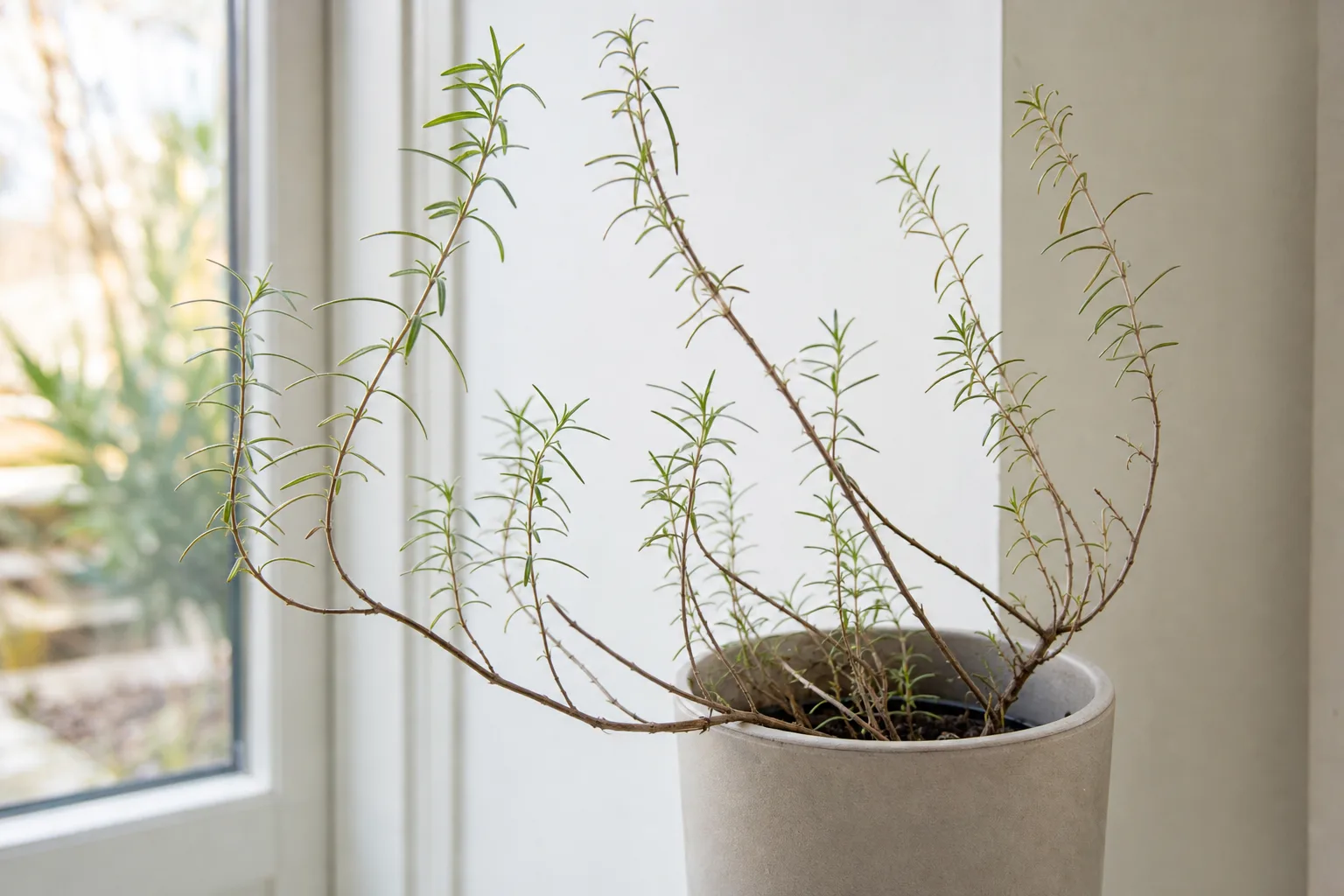
Not Enough Light on Rosemary: Causes, Checks & Fixes
This guide covers not enough light on Rosemary. See also the general Not Enough Light guide, watering, and light pages for this plant.
Not Enough Light on Rosemary: Causes, Checks & Fixes
Quick answer
Rosemary is a Mediterranean sun shrub. It wants full sun-at least six hours of direct light daily-not the filtered glow of a distant indoor shelf. When light is too weak, stems stretch, needles fade, aroma drops, and regrowth after harvest slows to a crawl.
First step: move the pot to the brightest available spot with direct sun for most of the day. Outdoors, that means an open patio or balcony once frost is past. Indoors, a sunny south-facing window is the default. If you cannot hit six hours of direct sun inside, add supplemental grow lights before you tweak watering or fertilizer.
Why rosemary runs out of light
Rosemary evolved on dry, rocky Mediterranean slopes where full sun and sharp drainage are the norm. Its needle-like leaves are built for intense light and heat, not the low footcandle levels typical several feet from a north window.
Indoor placement is the usual trigger. Kitchen counters, hallway tables, and bathroom ledges look convenient but often deliver medium or low light by the time rays pass through glass, sheers, and neighboring buildings. Light intensity drops sharply with distance from the window-what feels bright to you may still be too dim for a sun herb.
Seasonal change matters too. Winter shortens daylight even at a good window. Rosemary brought inside for cold protection often lands in a cooler room with less direct sun than it had outdoors. The plant keeps respiring and using stored energy while photosynthesis slows, which shows up as pale, sparse new growth.
Rosemary in weak light also dries more slowly. Growers sometimes interpret that as “needing less water” and keep the mix damp-a combination that invites root rot on Rosemary and powdery mildew when air circulation is poor. Low light is often the root cause; soggy soil is the dangerous partner.
What insufficient light looks like on rosemary
Early signs:
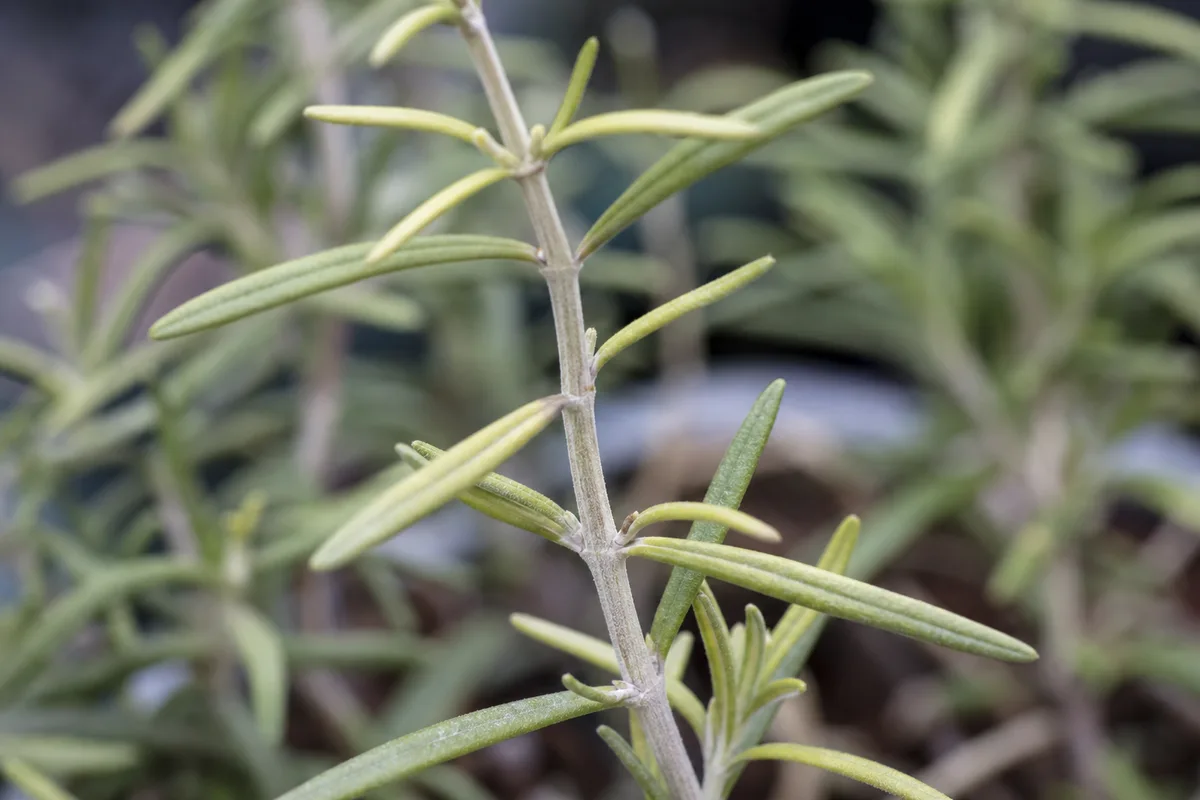
Not Enough Light symptoms on Rosemary - compare with healthy tissue on the same plant.
- Stems lean or grow toward the brightest window
- Long gaps between needle pairs along new shoots-classic leggy growth
- New needles smaller, paler, or gray-green instead of deep green
- Weak or flat scent when you crush a tip
- Slow regrowth after you harvest sprigs
As stress continues:
- Lower, shaded needles yellow and drop while top growth stays thin
- Woody base looks bare while only weak tips remain green
- Few or no flowers even during the normal bloom window
- Plant stays damp longer between waterings because it is not using moisture
What low light does not usually look like:
- Needles curling tightly inward on bone-dry soil-that pattern fits underwatering on Rosemary better
- Brown mushy stems at the soil line with sour-smelling mix-that is root rot, often worsened by shade but not caused by shade alone
- Crispy bleached patches on sun-facing needles after a sudden move outdoors-that is sun scorch, the opposite problem
Rosemary tolerates light shade outdoors but “best performance is in full sun.” Indoors, partial shade tolerance does not mean a dim room will sustain a harvest-quality plant year-round.
How to confirm the cause
Work through these checks before you repot, fertilize, or spray:
- Sun hours at the pot - Watch the spot on a clear day. Direct sun means the plant casts a sharp shadow. Fewer than six hours of direct rays on most days confirms insufficient light for rosemary.
- Stretch direction - Stems pointing toward one window strongly suggest the plant is reaching for more light, not random weak growth.
- New vs old tissue - Pale, widely spaced needles on fresh shoots with darker but dropping lower foliage fits light stress. Uniform yellowing on wet soil suggests overwatering on Rosemary.
- Soil moisture at 5 cm - Push your finger in. Wet mix in a dim spot is a red flag for rot risk. Very dry mix with curled needles points to drought.
- Pot weight and drainage - A heavy pot that stays wet for days in low light means the plant is not transpiring fast enough-often because light is too weak, not because you watered too much on one day.
- Aroma test - Crush a tip from new growth. Weak scent on an otherwise green plant supports light starvation; strong scent on pale tips may mean recent improvement is starting.
If sun hours are adequate and the plant still declines, look at root health, pests, or cold damage before assuming light is the only issue.
First fix for rosemary
Move the container to the brightest location that delivers at least six hours of direct sun daily.
Outdoors after frost, place it in an open full-sun position with free-draining soil. Indoors, a south-facing window with the pot as close to the glass as practical is the best default. Rotate the pot a quarter turn every week so all sides get light and the plant does not lean permanently.
Do not repot, fertilize, or heavily prune on the same day you move it. Give the plant one to two weeks to respond in the new spot before secondary steps.
If no window reaches six hours of direct sun, install full-spectrum grow lights 15–30 cm above the foliage for 12–14 hours daily. Missouri Botanical Garden recommends supplemental lighting when indoor sun is insufficient-herbs in the high-light category need that boost through dark months.
Step-by-step recovery
After the light move:
- Wait one week before changing anything else - Watch whether new tips look tighter and greener. Jumping to fertilizer or Rosemary repotting guide before light improves rarely helps a stretched rosemary.
- Adjust watering to the new light level - Brighter spots dry the mix faster. Check soil at 5 cm depth and water only when fully dry there. In stronger light, the same calendar schedule you used in shade may now be too much.
- Pinch or trim leggy stems once new growth firms up - Cut back long bare shoots to just above a node where you see healthy needles. RHS advises pruning after flowering to keep plants bushy; on a non-blooming indoor plant, a light trim after light correction serves the same purpose.
- Improve airflow - Space rosemary away from crowded herb pots. Good circulation reduces mildew risk when you bring plants indoors for winter.
- Harden off before outdoor summer moves - If the plant lived indoors all winter, acclimate it to outdoor sun over one to two weeks. Sudden full-day sun on soft indoor growth can scorch needles even though rosemary loves light once adjusted.
- Replace rather than rescue when the base is hollow - If the lower stem is woody, bare, and brittle with only weak top growth, starting fresh cuttings in strong light often beats years of nursing an exhausted plant.
Skip fertilizer until new growth looks normal for two weeks. Stressed rosemary in fresh light does not need nitrogen pushing soft, fungus-prone shoots.
Recovery timeline
Expect visible change on new tips within one to two weeks of adequate light-not on old pale needles. Internodes on fresh shoots should shorten; scent on new growth should sharpen within two to three weeks.
Lower needles that yellowed in shade usually drop and do not re-green. Judge success by compact new shoots at the top and a firm woody base, not by perfect color on old wood.
Full shape recovery after severe legginess may take one full growing season. A hard trim in spring after the plant shows stable new growth can rebuild a harvestable silhouette faster than waiting for bare stems to refoliate on their own.
Lookalike symptoms to rule out
Overwatering and root rot - Yellowing on wet soil, soft stems at the base, and sour mix smell. Common when a dim rosemary dries slowly and gets watered on a calendar anyway. Fix drainage and reduce water; adding light helps only if you also let the mix dry.
Underwatering - Needles curl inward, pot feels very light, and soil pulls away from the pot edge. Scent may stay strong because the plant is dry, not starved for light. Soak thoroughly once, then resume dry-down checks-not a move to deeper shade.
Cold damage - Blackened or brittle tips after a frost on outdoor plants. Cold-injured tissue does not recover by adding indoor light alone; prune dead tips after danger passes.
Spider mites - Fine stippling and webbing on needle undersides, often in hot dry indoor air. Mites thrive on stressed plants but are a pest issue confirmed with a magnifying glass, not solved by light alone.
Normal winter rest - Growth slows in cool short days even with decent light. A firm plant with slow but even green tips in winter is resting, not necessarily light-starved-unless stretching continues toward the window.
Mistakes to avoid
Do not treat a leggy rosemary with more fertilizer. Nitrogen in weak light produces soft, stretched growth that invites fungal problems in humid indoor air.
Do not move a plant from deep shade straight to all-day outdoor sun. Acclimate over one to two weeks to avoid bleached scorched needles.
Do not keep watering on the same schedule after a big light upgrade. Faster drying in sun prevents the rot cycle that kills many indoor rosemary plants.
Do not assume a “bright room” is enough. University of Maryland Extension notes that plants become spindly and fade when light is inadequate-several feet from a window is often still too dim for sun herbs.
Do not expect old bare woody stems to sprout dense needles without a hard prune once light is corrected. Rosemary can look sparse at the base even when the top recovers.
Rosemary care cross-check
Light and watering move together on Rosemary overview. Full sun with gritty, fast-draining mix lets rosemary dry fully between drinks-the rhythm that keeps roots healthy. Weak light slows water use; if you keep watering as if the plant were outdoors in July, roots sit wet and rot follows.
Target low to moderate humidity indoors. Rosemary dislikes stagnant damp air, especially in winter rooms with poor circulation. Strong light plus airflow beats misting or pebble trays for this species.
Temperature comfort runs roughly 15°C to 28°C during active growth. Cool overwintering is fine in a sunny room, but a cold dark corner doubles stress. If you must choose between a cool bright window and a warm dim shelf, choose bright.
How to prevent low-light stress next time
Buy or place rosemary where full sun is realistic every month-sunny balcony, south window, or grow-light shelf-not where the pot looks prettiest.
Move outdoor containers back to full sun immediately after the last frost. Do not leave them on a shaded porch “because it is cooler.”
Clean windows seasonally. Dust and grime cut light more than most growers notice.
Plan for winter before you buy. If you cannot offer six hours of direct sun or equivalent grow lights from autumn through spring, treat rosemary as a seasonal outdoor herb and restart from cuttings rather than fighting a permanent indoor specimen.
Harvest regularly in strong light. Frequent tip picking encourages bushier growth; in shade, the same harvesting on a weak plant can strip what little foliage remains.
When to worry
Move fast if stems soften at the soil line while the mix stays wet-that is likely rot, and light correction must pair with drying the root zone and trimming decay.
Act within days if powdery white coating spreads across needles in a dim humid room. Improve light and airflow; isolate from other herbs until it stops spreading.
Consider restarting from cuttings if more than half the plant is bare woody stem with only weak top growth after four to six weeks in corrected light. Rosemary is easy to propagate from firm cuttings in bright conditions-sometimes faster than rehabbing a long-starved parent.
A rosemary that keeps stretching toward the window after you added grow lights may mean the fixture is too far away or the photoperiod is too short. Measure distance and bump intensity before giving up on the plant.
Conclusion
Not enough light on rosemary shows up as stretch, pale needles, and flat scent-not as a mysterious “herb failure.” The first fix is always more direct sun or honest supplemental lighting, not more water or feed. Old faded needles may not recover, but firm new tips with sharp aroma tell you the plant is worth keeping. Match light to this Mediterranean shrub’s needs, let the pot dry between waterings, and trim leggy wood once fresh growth proves the spot works.
When to use this page vs other Rosemary guides
- Rosemary watering guide - Use for routine moisture checks before assuming not enough light is the main issue.
- Rosemary problems hub - Browse all 18 common issues on this species.
- Leggy Growth on Rosemary - Different entry point when symptoms overlap with not enough light.
- Slow Growth on Rosemary - Different entry point when symptoms overlap with not enough light.
- Yellow Leaves on Rosemary - Different entry point when symptoms overlap with not enough light.