Leggy Growth on Rosemary: Causes, Checks & Fixes
Quick answer
Leggy rosemary almost always means not enough direct sun. First step: move the pot to the brightest outdoor spot or a south-facing window with six or more hours of sun, then trim stretched green stems back by up to one-third-never into bare woody sections.
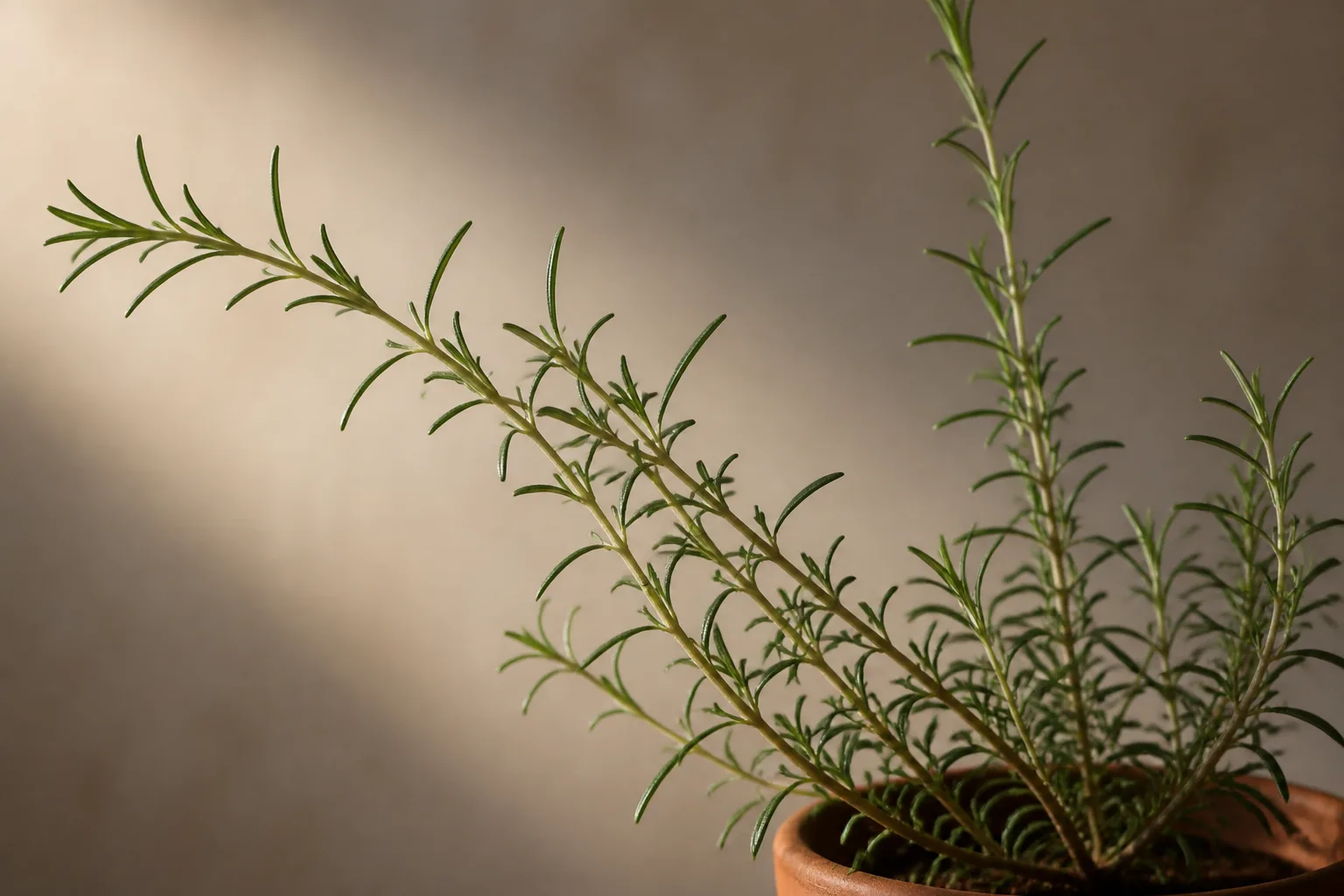
Leggy Growth on Rosemary: Causes, Checks & Fixes
This guide covers leggy growth on Rosemary. See also the general Leggy Growth guide, watering, and light pages for this plant.
Leggy Growth on Rosemary: Causes, Checks & Fixes
Quick answer
Leggy growth on rosemary (Salvia rosmarinus) is a shape and woody-base recovery guide-not the broader light-deprivation page. If you need to confirm whether your plant is getting enough sun, weak scent, or winter light setup, start with not enough light on rosemary and the rosemary light guide. Use this page when stems are already stretched, bare wood shows at the base, and you need pruning limits plus realistic shape recovery.
Leggy rosemary is a light problem at its root, not a disease. The species evolved for Mediterranean scrub with intense sun and sharp drainage-when photons fall short, stems elongate toward the brightest direction and side buds stay quiet.
First step: move the pot to full sun outdoors or the brightest south-facing window you have, targeting at least six hours of direct sun daily. Once light is corrected, trim stretched green stems back by up to one-third to force bushier breaks. Do not cut into bare brown woody sections; rosemary rarely regrows from old wood.
What leggy growth looks like on rosemary
Healthy rosemary forms a dense mound of aromatic needle-like leaves on stiff stems. Leggy plants look different:
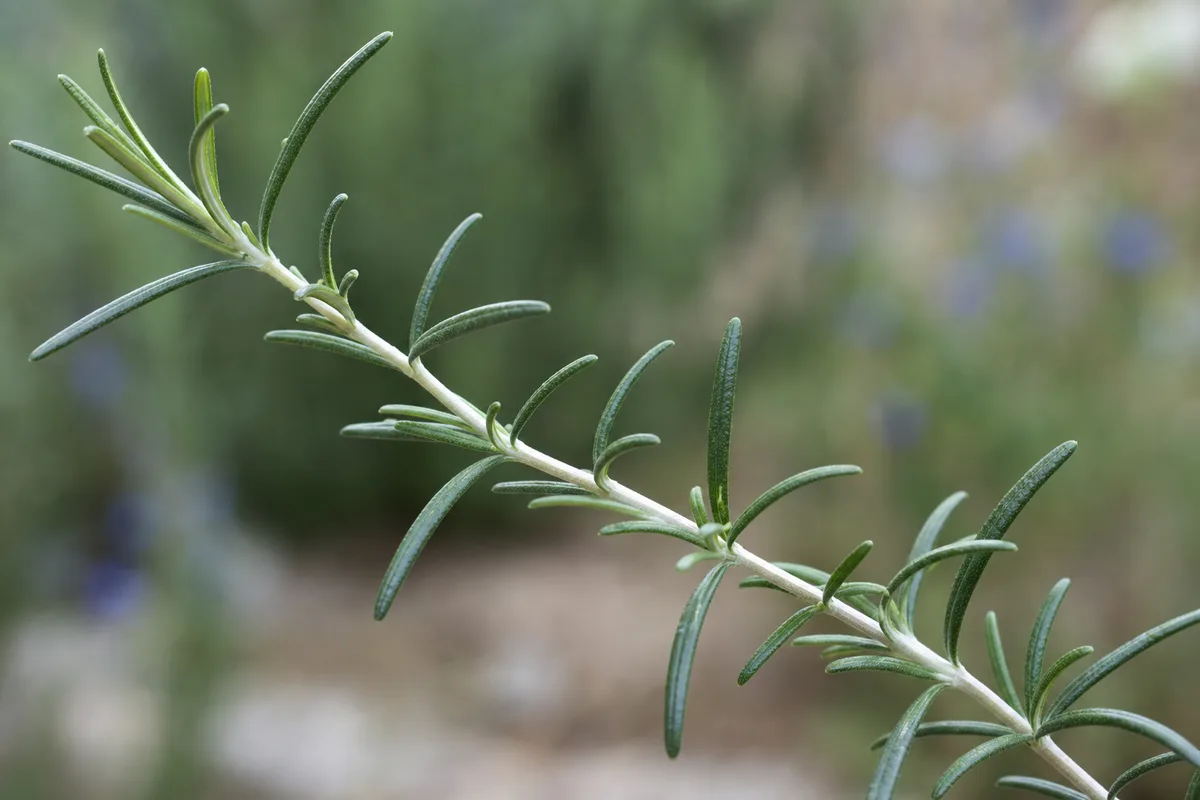
Leggy Growth symptoms on Rosemary - compare with healthy tissue on the same plant.
- Long gaps between needle pairs - internodes stretch far apart compared with compact outdoor growth
- Pale, smaller new needles on upper stems instead of deep green tight clusters
- Strong lean toward a window, door, or single light source
- Bare woody lower stems with foliage concentrated at the tips
- Weaker fragrance when you crush needles - oils concentrate in sun-lit young tissue
- Winter acceleration - stretch often worsens November through February when daylight drops indoors
Leggy growth can look like fast vertical progress, but the tissue is structurally weak. Stems may flop under their own weight or snap when you harvest.
Why rosemary gets leggy
Rosemary is a sun-hungry shrub, not a typical low-light houseplant. UF/IFAS notes rosemary demands well-drained soil and at least six hours of sun. Missouri Botanical Garden recommends full sun for best performance and states that indoor plants need at least six hours of sun per day-or supplemental grow lights per the light guide.
Insufficient direct light is the dominant cause indoors and on shaded balconies. When light intensity or duration falls below what the plant needs, stems stretch toward available light (etiolation) to intercept more photons. Warm room temperatures plus weak light make stretch worse-the plant keeps trying to grow but cannot build dense tissue.
Seasonal light drop hits potted rosemary brought inside for winter. Penn State Extension notes that overwintering rosemary indoors may be difficult because of low-light conditions combined with watering mistakes-a south window in northern climates often delivers far less usable light November through February than the same spot in summer.
One-sided exposure produces uneven legginess. Stems on the bright side stay shorter while the shaded side reaches. Without weekly rotation, the whole plant develops a permanent lean.
Skipped pruning lets apical stems keep extending. RHS guidance notes that left unpruned, rosemary becomes leggy, woody, and bare at the base. Light is still the root fix, but harvest and annual trimming per the pruning guide maintain the bushy shape once sun is adequate.
Overfertilizing in dim conditions can push soft, elongated shoots when light cannot support dense foliage. Rosemary in gritty mix rarely needs heavy feeding; excess nitrogen in a dark corner fuels weak stretch.
Rosemary in wet, poorly drained mix with weak light often looks pale and sparse, but the primary stretch pattern still points to photons first. Check roots separately if bases soften or soil stays wet for days-see root rot on rosemary when wet mix accompanies collapse.
How to confirm the cause
Work through these checks before you prune or repot:
- Sun-hour audit - Track how many hours of direct sun hit the pot. Partial shade through glass, nearby buildings, or winter sun angle often delivers less than it appears. Below six hours strongly supports a light diagnosis; the light guide explains the sharp-shadow test.
- Asymmetry test - Rotate the pot 180° and watch new bud break over two weeks. Strong one-sided lean and faster growth toward glass confirms directional light shortage.
- Green versus woody line - Follow stems down to where needles stop and bare brown wood begins. If most length is woody with tips only, you are correcting an advanced case-light plus careful tip pruning, not hard rejuvenation.
- Compare to outdoor reference - If a rosemary in full sun on the same balcony stays compact while the indoor pot stretches, light-not soil brand or fertilizer-is the variable.
- Season timing - Leggy onset after moving indoors or as days shorten implicates winter light drop even if watering stayed the same.
- Root and soil check - Push a finger 5 cm into mix. Rosemary should dry fully between drinks. Soggy mix with soft stem bases suggests layered root stress; fix drainage and hold water, but still increase light for stretched tissue.
If the plant already sits in six or more hours of direct outdoor sun and still looks sparse with even internode spacing, suspect age and woody habit rather than etiolation. Very old rosemary often needs replacement or cuttings, not another relocation.
First fix for rosemary
Move the pot to the sunniest location available-outdoor full sun is ideal; indoors, an unobstructed south-facing window or grow lights if six hours of direct sun is impossible.
Do not prune first in a still-dim spot. Cutting triggers new buds that will also stretch without adequate light, wasting the plant’s stored energy. Relocate, wait one to two weeks while you assess new tip color and spacing, then trim.
If outdoor sun is an option, acclimate gradually over several days if the plant lived in deep shade-move to bright indirect first, then full sun-to avoid sunscorch on pale needles. Established rosemary tolerates direct sun once adjusted.
For indoor-only setups, Missouri Botanical Garden advises supplemental lighting when six hours of sun cannot be provided. Follow the rosemary light guide for LED distance, 12 to 16 hour daily schedules, and winter top-up rather than guessing lamp placement.
Step-by-step recovery
After light improves:
- Rotate the pot weekly so all sides receive similar exposure and the plant stops leaning one direction.
- Prune stretched green stems - Cut back up to one-third of soft green growth to just above a leaf node. RHS recommends trimming lightly after flowering and avoiding cuts into old wood. Full tool timing and old-wood limits live on the pruning guide. Never remove more than one-third of the plant at once on a stressed specimen.
- Harvest-style pinching - Snip soft tips during cooking prep to encourage lateral branching without a heavy shear event.
- Hold fertilizer until new growth looks firm and greener for two weeks. Feeding a light-stressed plant in low light before correction can repeat weak stretch.
- Keep watering on dry cycles - Water only when mix is dry 5 cm down. Wet soil in a dim corner slows recovery and invites root rot on rosemary.
- Replace hopeless specimens - If stems are mostly bare wood with only a few green tips, RHS notes old straggly plants are best replaced, propagated from healthy cuttings per the propagation guide.
Do not repot on day one unless mix is clearly failing or rootbound. Legginess rarely requires a container change.
Recovery timeline
With adequate sun, tighter new needle clusters often appear within two to three weeks on pruned tips. Judge success by new growth spacing and color, not old elongated sections-they stay long until you remove them.
Full shape recovery may take one full growing season of regular light pinching, especially if lower stems were already woody and bare. Rosemary is slow to moderate in growth rate; expect gradual bushiness rather than overnight density.
Worsening signs: continued pale stretch after four weeks in improved light, stems flopping and shedding needles at the base, or soft brown tissue at soil line. Those point to layered root rot, extreme woody decline, or light still insufficient-reassess sun hours honestly before pruning again.
Lookalike symptoms to rule out
Use this table when stretch, pale needles, or bare wood could mean more than one problem:
| What you see | Light / lean | Soil / roots | Likely cause | Next step |
|---|---|---|---|---|
| Long internodes, lean toward window, pale new tips | Low direct sun, one-sided stretch | Usually dry to normal | Etiolation (leggy growth) | Move to full sun; prune green tips only |
| Even internode spacing, open base, full outdoor sun | Six or more hours direct sun | Dry, firm stems | Age-related woody habit | Light annual trim; replace when mostly bare wood |
| Limp needles, sour smell, no directional lean | Any light level | Wet for days, soft stem base | Root rot | Stop water; inspect roots per root rot guide |
| Curled needles, very light pot, crispy tips | Adequate or high sun | Bone dry throughout | Underwatering | Deep soak once; see underwatering on rosemary |
Normal winter rest - Rosemary may grow slowly indoors in cool bright rooms without dramatic stretch. Slow compact idle growth differs from active etiolation with long internodes and lean.
Spider mites or aphids - Stippling, webbing, or sticky residue on needles are pest signs, not etiolation. Stretch with clean undersides and no insects stays a light diagnosis.
Cold damage after a freeze - Blackened or brittle tips on outdoor pots may need selective removal of dead tissue, not a light move. Confirm whether damage followed a frost event.
Broader light deprivation without woody shape focus - Weak scent, flowering failure, and general pale decline without a bare-base pruning crisis may fit not enough light on rosemary better than this shape-recovery page.
Mistakes to avoid
Do not prune heavily before fixing light - new breaks will stretch again in the same dim conditions.
Do not cut into bare brown woody stems expecting lavender-like regeneration. Those sections typically stay bare or die back.
Do not move from deep shade to harsh midday sun in one step on pale indoor plants-sunburn can brown needles. Acclimate over several days.
Do not interpret fast height as health - vertical reach with thin stems and wide spacing is etiolation, not vigor.
Do not boost nitrogen fertilizer hoping for fullness in a dark corner. Match feeding to improved light and active spring-summer growth only.
Do not keep rosemary in high humidity rooms with weak light-powdery mildew risk rises when airflow is poor, though mildew is separate from legginess.
Rosemary care cross-check
Leggy recovery sticks when baseline care matches this plant’s Mediterranean habit. For full depth on each topic, use the linked guides rather than repeating every detail here:
- Light: Full sun-six or more hours of direct sun daily (light guide)
- Soil: Sandy, gritty, fast-draining mix; never let pots sit in saucer water (soil guide)
- Water: Dry fully between drinks; push finger 5 cm down and water only when completely dry at that depth (watering guide)
- Pruning: Light annual trim after flowering; routine harvest pinches during the growing season (pruning guide)
- Rotation: Turn pots weekly on windowsills to prevent one-sided stretch
Rosemary tolerates being slightly root-bound and repots every two to three years in spring when truly needed-not as a legginess fix.
How to prevent leggy growth next time
Place new pots where full sun is realistic year-round, not only in summer. If you overwinter indoors, plan grow lights per the light guide before stretch starts in late autumn.
Rotate weekly and pinch soft tips whenever you harvest-culinary trimming doubles as density maintenance.
Trim lightly after bloom each year to keep side branches developing. RHS recommends annual clipping to stay compact and bushy.
Restart from cuttings when the base goes woody and bare despite good light-trying to salvage mostly bare wood rarely beats a fresh young plant propagated per the propagation guide.
When to worry - and when to start fresh from cuttings
Intervene early when stretch is still mostly green tissue-you can redirect shape with light and moderate pruning. Worry when bare woody stems dominate and only a few tip clusters remain; semi-hardwood cuttings from firm upper growth may be smarter than repeated hard cuts into old wood.
Also act if leggy pale growth coincides with soft stem bases and wet soil, which can indicate root rot layered on light stress. Fix drainage and hold water while improving sun, but inspect roots if decline continues.
Leggy rosemary with firm roots, dry mix, and six or more hours of direct sun likely needs pruning discipline or age management, not emergency rescue-unless the plant has become unstable and mostly wood.
Related rosemary guides
- Rosemary light - Full sun hours, windows, and grow-light setup
- Not enough light on rosemary - Broader light deprivation, scent, and flowering failure
- Rosemary pruning - Post-flowering timing and old-wood limits
- Rosemary propagation - Semi-hardwood cuttings when bare wood dominates
- Root rot on rosemary - Wet soil collapse layered on dim conditions
- Rosemary overview - Baseline culture for Mediterranean herbs
Conclusion
Leggy rosemary tells you the plant is reaching for sun it is not getting. Move to full light first, then prune green growth in moderation while avoiding old wood. Old stretched sections do not compact retroactively-recovery shows in new tight needles at the tips. When bare wood dominates despite good sun, start fresh from cuttings on the propagation guide rather than fighting a plant that cannot regrow from its base. Match light correction with dry-down watering and annual light trimming, and you keep a dense aromatic plant worth harvesting instead of a tall sparse silhouette against the glass.