How to Prune Rosemary: Timing, Tools, and Safe Cuts
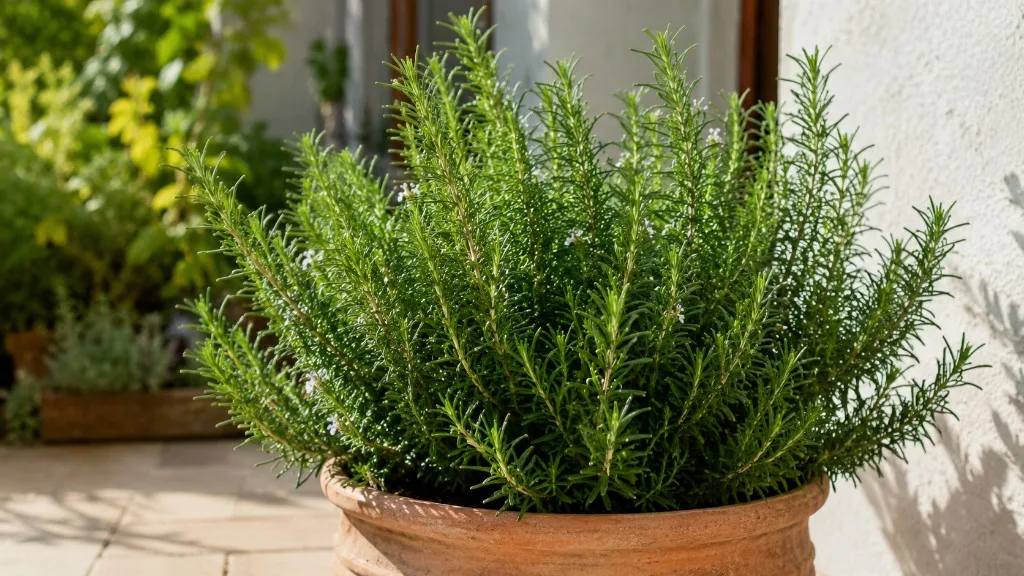
How to Prune Rosemary: Timing, Tools, and Safe Cuts
How to Prune Rosemary: Timing, Tools, and Safe Cuts
Quick Answer - Start by Reading the Green Line
Before you shorten a single stem, trace each branch downward until you find the lowest healthy green leaves. Everything below that line is old wood - cut there and that section will not sprout new needles. Your first action on any rosemary is to locate that green boundary on every stem you plan to shorten, then decide whether the plant needs deadwood removal, a post-flowering shape, or only a light harvest snip. Structural cuts belong in leafy green tissue only; dead stems can come out anytime.
What Rosemary Pruning Actually Does
Rosemary (Salvia rosmarinus, formerly Rosmarinus officinalis) is a woody Mediterranean subshrub. Each season it pushes flexible green shoots that flower, then slowly lignify at the base. Without annual trimming, energy shifts toward that bare framework and away from the outer green layer where leaves, essential oils, and flowers form. The plant opens at the center, blooms less, and becomes harder to rescue.
Pruning on rosemary serves three overlapping jobs. Post-flowering shaping removes spent bloom stalks and shortens current green growth to reset a compact mound. Harvest trimming takes small sprigs for the kitchen during active growth - useful, but not a substitute for the annual shape. Sanitation removes dead, diseased, or frost-damaged wood whenever you spot it. The post-flowering session is the one that prevents a hollow, woody base; harvest cuts and tip nips are secondary.
The Royal Horticultural Society rosemary guide recommends trimming lightly every year after flowers fade while avoiding old wood. Left unpruned, rosemary becomes leggy and bare at the base - and because it does not usually recover from heavy pruning into hardwood, straggly old plants are best replaced with cuttings or new stock.
What to Check Before You Cut
Walk the plant once before opening secateurs. Look for dead or brittle stems, pest damage on needle undersides, soft brown tissue at the base, and signs of root stress - wilting despite dry soil surface, sudden collapse, or yellow lower leaves with soggy mix. If the plant is clearly stressed from overwatering on Rosemary, recent Rosemary repotting guide, or indoor light decline, limit yourself to deadwood removal and postpone firm shaping until vigor returns.
On healthy specimens, note whether you are approaching the main annual prune or a light harvest trim. They use the same green-wood rule but different intensity. Also check your frost calendar: substantial cuts need enough warm weeks afterward for new growth to harden.
Green Growth, Semi-Woody Stems, and Old Wood
Green growth bends without snapping, carries aromatic needles along its length, and holds the buds that break after a cut. This is your safe zone. Semi-woody tissue lower on older stems has firmed up but still bears leaves - the post-flowering prune usually works here, always where foliage remains.
Old wood is thick, brown or grey, bark-covered, and leafless. It supports the plant structurally but does not carry latent leaf buds. University of Arizona Cooperative Extension notes that rosemary grows back only from leafy shoots, not from cuts in bare wood - the same limitation that rules out rejuvenation pruning on many Mediterranean subshrubs.
Field test: run your finger down each stem until you hit the lowest pair of green leaves. Your shortening cut stays above that point, leaving several centimeters of foliage below the blade.
When to Prune Rosemary
Timing follows flowering and frost, not an arbitrary calendar - though regional growers learn reliable month windows.
The Post-Flowering Shape (Your Main Annual Cut)
The primary shaping session belongs in late spring to early summer, right after flowering finishes - often May through June in temperate Northern Hemisphere gardens. Rosemary produces small blue, mauve, pink, or white flowers popular with pollinators; once those fade, cut spent stalks and reduce overall height by roughly one-third in green tissue. Penn State Extension recommends pruning rosemary after flowering, giving new shoots time to mature before winter.
Stop substantial pruning at least six to eight weeks before your first expected fall frost, as emphasized in the Knox County Master Gardeners rosemary pruning handout. Late-season soft regrowth may not harden and can die in sudden cold. In mild zones (USDA 9–10) this cutoff matters less; in zone 7 and colder pockets, late-summer discipline prevents winter dieback on fresh shoots.
Harvest Trims and Light Touch-Ups
During active growth - typically late spring through summer - you can snip sprigs for cooking, nip wayward tips, or shorten individual stems that break the outline. Take modest amounts from many stems rather than stripping one branch bare. These are frequent small cuts into green tissue, not the once-a-year reshape.
Dead, diseased, or frost-damaged stems are the exception: remove them whenever found, including a late-winter cleanup of winter-killed tips, cutting back to the nearest healthy green. That is sanitation, not the annual shape.
When Not to Prune
Avoid heavy structural pruning in autumn or winter when growth is slow. Fresh wounds plus cold stress increase branch dieback risk. Do not attempt a hard “reset” on a woody leggy plant the way you might coppice a lilac - rosemary will not cooperate.
The First Cut to Make
On a healthy plant entering the post-flowering window, remove spent flower stalks first. Cut each stalk back to the first set of healthy green leaves or to the contour of the mound you are building. This clears visual clutter, shows you the live framework, and prevents the plant from directing energy into seed formation. Only after deadheading should you begin the one-third height reduction on green stems.
If the plant has dead wood only, your first cut is different: trace the dead section to where green tissue begins and remove the dead portion entirely - or pull the whole dead stem at the base if it is dry and brittle throughout.
Step-by-Step Post-Flowering Prune
- Inspect for stress signals and postpone firm shaping if the plant is struggling.
- Mark the old-wood line on each major stem - lowest green leaves define your floor.
- Sterilize bypass secateurs with 70% isopropyl alcohol; wipe resin between plants.
- Deadhead spent bloom stalks to the first green leaf pair.
- Shape the dome stem by stem, reducing height roughly one-third in leafy tissue. Cut 5–10 mm above a leaf node, not mid-stem where no buds wait.
- Step back often from front, back, and sides. Stop before the center looks hollow - next year can finish the job.
- Collect trimmings; compost only if disease-free. Healthy non-flowering tips can become cuttings.
- Clean tools and wash hands - rosemary oils linger on skin.
For first-year plants, skip the one-third reduction. After the first bloom cycle, lightly pinch wayward tips to encourage branching while the root system establishes.
For hedges, shear a slightly tapered profile - wider at the base than the top - so lower green stems receive light. Surface-only shearing year after year creates a thin green shell over an empty woody interior.
How Much You Can Safely Remove
The green-wood rule overrides every quantity guideline. For the main post-flowering shape on a healthy established plant, roughly one-third of overall foliage is the standard starting point. The Knox County Master Gardeners rosemary pruning handout recommends trimming the entire plant by about one-third its height in late spring or early summer, making cuts only in succulent green portions.
For harvest and tip pruning, remove a few inches from many stems rather than long sections from one branch. For mid-to-late summer touch-ups on vigorous in-ground plants in Rosemary light guide, some growers remove up to half the new green growth while still avoiding woody stem bases - not appropriate for stressed containers or recently transplanted specimens.
If rosemary is recovering from root rot on Rosemary, drought, or repotting shock, skip the firm one-third prune that year. Dead stem removal plus minimal shaping is enough until new growth stabilizes.
Tools for Clean Cuts
Rosemary stems are wiry and resinous; dull blades crush tissue and cause dieback farther than intended - sometimes visually pushing you toward old wood. Bypass secateurs are the default for individual stems and precise domes. Hedge shears suit formal rosemary hedges where many stems are cut at once - still staying in green wood only. Avoid anvil pruners on live stems when possible; the crushing action damages thin material.
Sanitize blades before the first cut and between plants when removing diseased tissue. North Carolina State Extension emphasizes that clean tools reduce pathogen spread. Do not apply wound sealants - open cuts in dry weather heal best on their own.
Shaping Upright, Prostrate, and Hedge Rosemary
Upright cultivars - ‘Tuscan Blue’, ‘Barbecue’, ‘Blue Spires’ - grow 90–150 cm tall and respond well to the standard post-flowering one-third reduction in full sun and sharp drainage.
Prostrate forms like ‘Prostratus’ spread horizontally and still lignify at the base. Prune trailing stems into green tissue after flowering, preserving the cascade rather than shearing flat.
Cold-hardy ‘Arp’ may survive lower winter temperatures with protection, but pruning rules do not change - winter damage calls for deadwood removal before spring shaping, not cuts into living old wood.
Container rosemary - common on patios and for indoor overwintering - needs the same green-wood discipline in a smaller package. Root-bound or light-stressed pots should get lighter cuts. If your indoor plant flowers in winter under bright conditions, prune after that bloom cycle rather than forcing an outdoor calendar date.
What Happens When You Cut Into Old Wood
Rosemary concentrates regenerative capacity in green, leafy stems. Bare hardwood lacks the buds needed for new shoots. Shear below the foliage line and you create a permanent stub that may resin-bleed or die back but will not leaf out.
This usually happens during overgrown rescue attempts, blind hedge-trimmer passes through a hollow-centered plant, or assuming rosemary behaves like buddleia or forsythia. Thompson & Morgan’s rosemary pruning guide states plainly that like lavender, rosemary does not regrow from old wood - once too leggy, starting again beats rejuvenation.
Warning signs you are crossing the line: stem color shifts green to brown, bark becomes ridged, leaves are absent for several centimeters below your intended cut, the stem feels rigid. Move the cut upward into leafy tissue.
If a stem is entirely dead - dry, brittle, no green anywhere - remove it at the base for cleanup. That is removal, not a heading cut expecting regrowth.
When living stems were cut into old wood and show no green regrowth after four to six weeks of active season in full sun, recovery is unlikely. Partial plants with remaining green tissue can be reshaped lightly at the next post-flowering window; mostly bare specimens are best replaced - the Royal Horticultural Society rosemary guide notes that even with good care, replacing rosemary every seven or eight years with a young plant is often sensible as woody buildup eventually outpaces trimming.
Aftercare and Recovery Timeline
After shaping, keep conditions stable. Rosemary wants full sun - at least six hours daily outdoors. Do not move a freshly pruned container from a bright patio into deep shade.
Hold fertilizer for two to three weeks after a moderate post-flowering prune. Reduced leaf area and fresh wounds mean the plant is not ready for a nitrogen push. Rosemary thrives in moderately lean, well-drained soil; resume light feeding on containers only when new green shoots clearly extend.
Water by need, not habit. Established in-ground rosemary is drought tolerant; containers dry faster but should never stay soggy after pruning - less foliage transpires less water.
Expect new buds from cut green stems within two to four weeks during the active season. Full mound refinement takes the remainder of the growing year. The post-flowering window is also ideal for stem cuttings from healthy trimmings if you want replacements before an older plant ages out.
Mistakes That Turn Rosemary Woody
Skipping years between prunes lets lignification advance and leaves fewer green nodes at a useful height. Pruning too late in autumn triggers soft regrowth that frost damages. Stripping long sections from a few harvest stems creates bare patches functionally similar to bad structural pruning. Shearing hedges without checking the base builds a green facade over empty wood. Pruning wet plants in humid climates increases fungal risk at cut sites - choose a dry day when possible.
Pruning without fixing culture produces repeated legginess. Rosemary in too much shade stretches toward light; cutting alone will not fix placement. Over-fertilizing immediately after a prune pushes soft vulnerable tissue. Ignoring stress before cutting - yellowing leaves, blackened cut ends, sudden dieback - usually means root rot, overwatering, or insufficient light came first; fix that before shears return.
Conclusion
Rosemary pruning succeeds when you treat it as annual shaping inside green wood, not rescue surgery on a woody skeleton. Deadhead after flowering, reduce height by roughly one-third while staying above the old-wood line, use sharp clean bypass secateurs, and stop substantial cuts six to eight weeks before frost. Light harvest trims through summer support kitchen use without replacing that structural session. When a specimen has already crossed into all-woody decline, replacement is the honest path - but on a healthy plant, one short shaping session each year keeps it dense, fragrant, and productive for many seasons.
When to use this page vs other Rosemary guides
- Rosemary overview - Start here for whole-plant context before deep-diving this topic.
- Rosemary problems hub - Jump to symptom-specific fix guides when this care topic does not resolve the issue.
- Leggy Growth on Rosemary - Escalate here when pruning adjustments are not enough.
- Slow Growth on Rosemary - Escalate here when pruning adjustments are not enough.
- Brown Tips on Rosemary - Escalate here when pruning adjustments are not enough.