Brown Tips on Rosemary: Causes, Checks & Fixes
Quick answer
Brown tips on rosemary usually trace to underwatering, salt buildup, or failing roots from overwatering-not random bad luck. First step: stick your finger 5 cm into the mix, note whether the pot feels light or heavy, and stabilize watering before trimming or repotting.
Brown Tips on Rosemary: Causes, Checks & Fixes
This guide covers brown tips on Rosemary. See also the general Brown Tips guide, watering, and light pages for this plant.
Brown Tips on Rosemary: Causes, Checks & Fixes
Quick answer
Brown tips on rosemary (Salvia rosmarinus) almost always mean the plant’s water balance is off-not that the herb is “randomly dying.” Needle tips are the last tissue to receive water moving through woody stems, so they brown first when roots cannot keep up, whether from drought, salt stress, or rot.
First step: check soil moisture 5 cm deep and note pot weight before you trim, repot, or feed. A light pot with dry mix calls for a deep soak-not more cosmetic pruning. A heavy pot with wet mix means stop watering and inspect roots. Everything else depends on which side of that line you land on.
What brown tips look like on rosemary
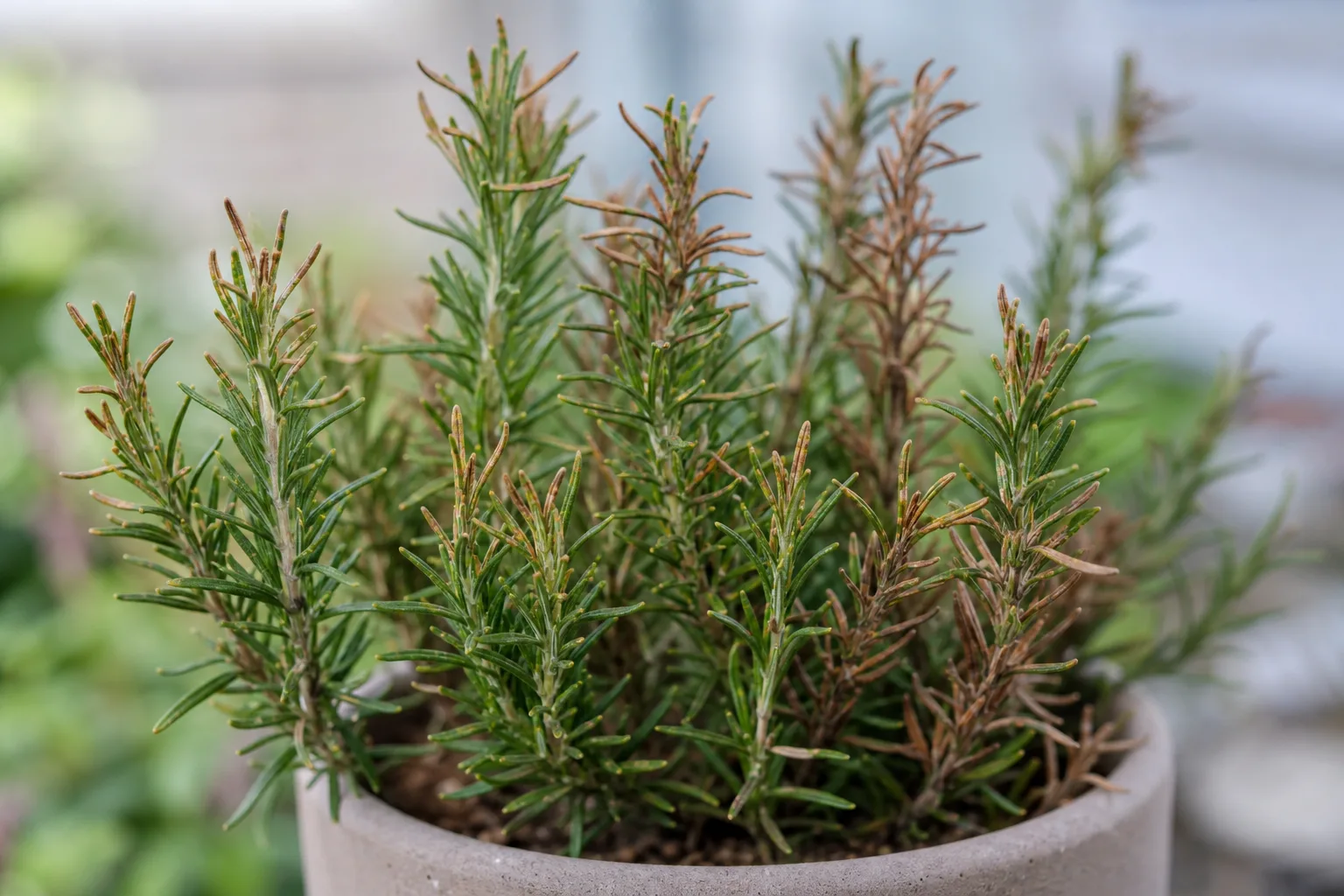
Healthy rosemary needles are narrow, stiff, and gray-green with a strong pine-camphor scent when crushed. Brown tips show as dry, tan-to-dark brown patches confined to the needle ends-or sometimes the outer margins-while the rest of the needle may still look green for a while.
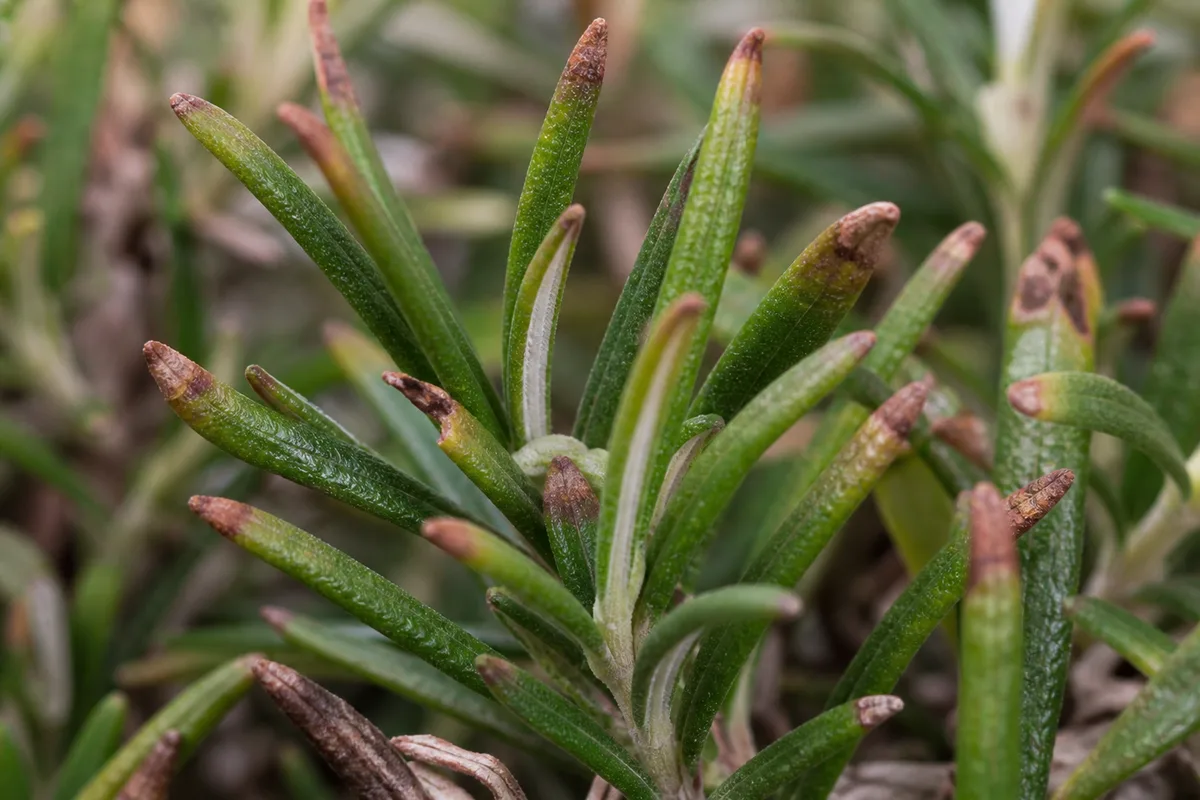
Brown Tips symptoms on Rosemary - compare with healthy tissue on the same plant.
Typical patterns:
- Drought stress - Tips crisp and brown; needles may curl inward; stems feel brittle; pot is light; mix is dry 5 cm down or deeper.
- Root stress from overwatering on Rosemary - Tips brown while lower needles yellow; soil stays wet days after watering; stems may feel limp rather than snappy; pot feels heavy.
- Salt or mineral burn - Tips brown on otherwise firm plants; white crust may appear on soil surface or pot rim; often follows heavy feeding or repeated hard tap water without flushing.
- Dry indoor air - Browning concentrates on needles closest to radiators, heat vents, or sunny windows in heated winter rooms; soil moisture may be fine.
- Spider mite damage - Fine stippling with pale dots, sometimes webbing on needle undersides; tips brown after feeding stress, not from a single dry spell.
A few brown tips on lower, older stems after a hot week outdoors is often cosmetic. Worry when new growth at stem tips browns repeatedly, or when browning climbs inward from needle tips toward the base.
Why rosemary gets brown tips
Rosemary evolved for Mediterranean scrub-Rosemary light guide, sharp drainage, and long dry intervals between rains. Its needle-like leaves lose moisture quickly in bright light, which is normal for a sun-loving herb. When water delivery fails, tips desiccate first because they sit farthest from the root system.
underwatering on Rosemary and boom-bust watering are common on sunny windowsills and balconies. Owners skip water during a travel week, then sprinkle lightly every day without soaking the root ball. Shallow drinks wet the surface while inner mix stays dry. Needles at the growing tips starve for moisture and crisp even though the top layer looked damp yesterday.
Overwatering and poor drainage produce a different brown-tip pattern. Rosemary tolerates drought once established but performs poorly in heavy, wet soil. Penn State Extension notes that browning of needle tips is a sign of root rot from overwatering. UC Marin Master Gardeners similarly link brown leaf tips on overwatered rosemary to likely root rot. Soggy mix deprives roots of oxygen; damaged roots cannot move water upward, so tips brown even though the soil feels wet-mimicking thirst while the real problem is rot.
Salt and mineral buildup hits container rosemary hard. Tap water minerals and fertilizer salts accumulate in small pots with no leaching. Salts pull moisture away from root hairs and burn needle margins. Missouri Botanical Garden guidance on indoor plant tip browning lists excess soluble salts from water and fertilizer as a common trigger-especially in pots that never drain freely.
Dry winter air browns rosemary brought indoors. Missouri Botanical Garden’s indoor herb guide warns that dry air from radiators and forced-air vents damages leaves nearest the heat source, browning and curling tips before entire needles drop. Central heating can drop humidity well below what most houseplants prefer. Rosemary is not a tropical humidity lover, but sudden desiccation beside a heat vent still scorches needle tips.
Insufficient light worsens both watering mistakes. Rosemary needs full sun-at least six hours of direct light daily for good indoor performance. In weak light the plant uses less water, so the same Rosemary watering guide keeps roots wet longer. Leggy, pale growth plus brown tips often means the pot needs more sun, not more water.
How to confirm the cause
Work through these checks in order before changing anything major:
- Soil moisture at 5 cm - Push your finger in or use a moisture meter. Completely dry at depth with a light pot points to drought. Wet or cool damp mix days after watering points to overwatering or poor drainage.
- Pot weight and drainage - Lift the container. Heavy and soggy is trouble. Light and airy suggests thirst. Confirm drainage holes are open and the saucer is not holding standing water.
- Needle and stem feel - Snappy, brittle stems with inward-curling needles fit drought. Limp stems with yellow lower needles on wet soil fit root stress.
- Salt check - Look for white crust on soil or pot edges. If present, flush before assuming pure underwatering.
- Location scan - Is the pot directly above a heat vent or beside a radiator? Are only the windward needles browning? That pattern fits dry air, not root rot.
- Light hours - Count direct sun on the pot. Fewer than six hours indoors increases both stretch and watering errors.
- Pest inspection - Hold needles up to light and check undersides for stippling, webbing, or moving specks. Spider mites thrive in warm, dry indoor air.
If soil is dry throughout, the caudex-like woody base is firm, and stems snap cleanly, treat as drought. If soil is wet, smell is sour, and lower needles yellow, unpot and inspect roots before the next watering-brown tips from rot will not stop until roots breathe again.
First fix for rosemary
Check soil moisture 5 cm deep, then give one corrective watering-or withhold water-based on what you find.
That single decision prevents the most common mistake: drowning a plant whose tips browned from overwatering because the owner assumed dryness. For a genuinely dry pot, water deeply until a little runs from drainage holes, then discard saucer water and do not water again until the top 5 cm is completely dry. For a wet pot, skip watering entirely and move the plant to its brightest spot with good airflow while you plan a root inspection.
Do not fertilize, repot, or aggressively prune on day one. Stressed rosemary roots absorb nothing useful from feed, and Rosemary repotting guide wet rotting roots spreads damage. Trim brown tips only after watering rhythm stabilizes for one to two weeks.
Step-by-step recovery
Once the first moisture correction is done, follow the path that matches your diagnosis:
If drought caused the brown tips
- Deep-soak the pot in a sink or tray until mix is evenly moist, then let it drain fully.
- Wait until the top 5 cm is completely dry before the next drink-often 5–7 days in summer, 10–14 days in winter for indoor pots.
- Snip fully brown needle tips with clean scissors, leaving a thin brown edge if needed to avoid cutting into green tissue.
- Move to the sunniest window or outdoors once nights stay above 10°C if you have outdoor space.
If salt buildup caused the brown tips
- Stop feeding until new growth looks healthy for two weeks.
- Flush the pot with clean water equal to two to three times the pot volume, letting it run freely from drainage holes. Repeat once after the mix drains.
- Resume a lighter feeding schedule only during active spring and summer growth.
- Trim burned needle tips for appearance after flushing.
If overwatering or root stress caused the brown tips
- Stop watering until you inspect roots-do not wait for tips to “dry out” on their own while soil stays wet.
- Unpot gently and rinse away old mix. Healthy rosemary roots are firm and pale; rotted roots are brown, mushy, and may smell sour.
- Trim all mushy roots back to firm tissue with sterilized scissors. Let the plant dry on newspaper in bright indirect light for 24–48 hours if you removed significant root mass.
- Repot into gritty, fast-draining mix-roughly 40% potting soil, 40% coarse sand or perlite, and 20% fine gravel-with a container just large enough for the trimmed root ball.
- Wait five to seven days after repotting before the first light watering, then follow dry-down checks strictly.
If dry indoor air caused the brown tips
- Move the pot away from radiators, heat vents, and hot window glass.
- Set the container on a pebble tray filled with water kept just below pebble level so evaporation raises local humidity without wetting roots.
- Avoid misting needles directly-wet foliage in cool rooms invites powdery mildew on rosemary.
- Trim browned tips once humidity stress stops.
Recovery timeline
Cosmetic tip trim after a single dry spell shows improvement within days-no new browning on fresh needles is the real win. Drought recovery with proper watering usually produces firm new shoots within two to three weeks in warm, bright conditions.
Salt-flush results appear on leaves that open after flushing; older browned needles stay brown. Allow four to six weeks to judge whether new growth emerges clean.
Root rot recovery is slower. If enough firm roots remain, expect cautious new growth in three to six weeks after repotting into dry mix. If the stem base softens despite correction, the plant may not recover-take healthy stem cuttings as backup before wood rots through.
Dry-air browning stops within one to two weeks once the pot moves off the heat path and local humidity improves. No fungicide is needed for pure desiccation damage.
Lookalike symptoms
Whole-branch browning from cold or frost hits suddenly after a freeze, often affecting outer foliage uniformly-not just tips. Indoor rosemary near cold glass in winter can show similar patch browning. Firm roots and dry or normal soil distinguish cold damage from rot.
Powdery mildew shows white dusty coating on needles, not clean crisp tip necrosis alone. Mildew favors stagnant humid air; tip burn from dry heat does not produce white powder.
Botrytis stem dieback blackens stems from the base upward while roots may still look healthy. Tip browning alone without stem blackening rarely means botrytis.
Normal aging on woody lower stems sheds older needles with slight browning at the base of the plant. If new tips at the top stay green and firm, lower stem tan needles may need no action beyond light grooming.
Mistakes to avoid
- Adding water because tips look dry while soil is wet - This accelerates root rot. Always confirm moisture at depth first.
- Shallow daily sprinkles - Wet surface, dry core; tips keep browning.
- Heavy feeding to “green up” tips - Salt burn worsens margin damage on stressed plants.
- Repotting into larger containers while roots are rotting - Extra wet soil volume suffocates recovery.
- Misting as the only humidity fix - Brief surface wetting does not replace moving the pot off a heat vent or using a pebble tray.
- Deep pruning into old woody stems before fixing water - Rosemary regrows slowly from hard wood; fix culture first, then shape.
How to prevent brown tips on rosemary
Match care to how this herb actually grows:
- Full sun - Six or more hours of direct light daily indoors or out. Weak light makes every watering mistake worse.
- Gritty, fast-draining mix - Never use heavy peat alone in a closed saucer. Exceptional drainage is non-negotiable for container rosemary.
- Dry-down watering - Water only when the top 5 cm is completely dry, then soak thoroughly. Empty saucers after every drink.
- Seasonal rhythm - Reduce watering sharply in cool winter months when growth slows; most indoor deaths are overwatering during rest.
- Monthly salt flush during active growth if you feed or use hard tap water.
- Airflow and placement - Keep pots out of heated draft paths; group with other plants or use pebble trays in dry winters.
- Weekly needle checks - Spider mites and scale appear on indoor rosemary; catch them before feeding stress browns new tips.
Rosemary is forgiving once sun, drainage, and watering align. Tips that stay brown on old needles are cosmetic-judge success by aromatic new shoots, firm woody stems, and a pot that dries predictably between deep soaks.
When to use this page vs other Rosemary guides
- Rosemary watering guide - Use for routine moisture checks before assuming brown tips is the main issue.
- Rosemary problems hub - Browse all 18 common issues on this species.
- Low Humidity on Rosemary - Different entry point when symptoms overlap with brown tips.
- Underwatering on Rosemary - Different entry point when symptoms overlap with brown tips.
- Overwatering on Rosemary - Different entry point when symptoms overlap with brown tips.