Low Humidity on Rosemary: Causes, Checks & Fixes
Quick answer
Outdoors, rosemary thrives in dry Mediterranean air-low humidity is rarely the problem. Indoors in winter, forced-air heat dries foliage and invites spider mites. First step: move the pot away from heating vents into a cool, bright window and use a pebble tray-not heavy misting or extra watering.
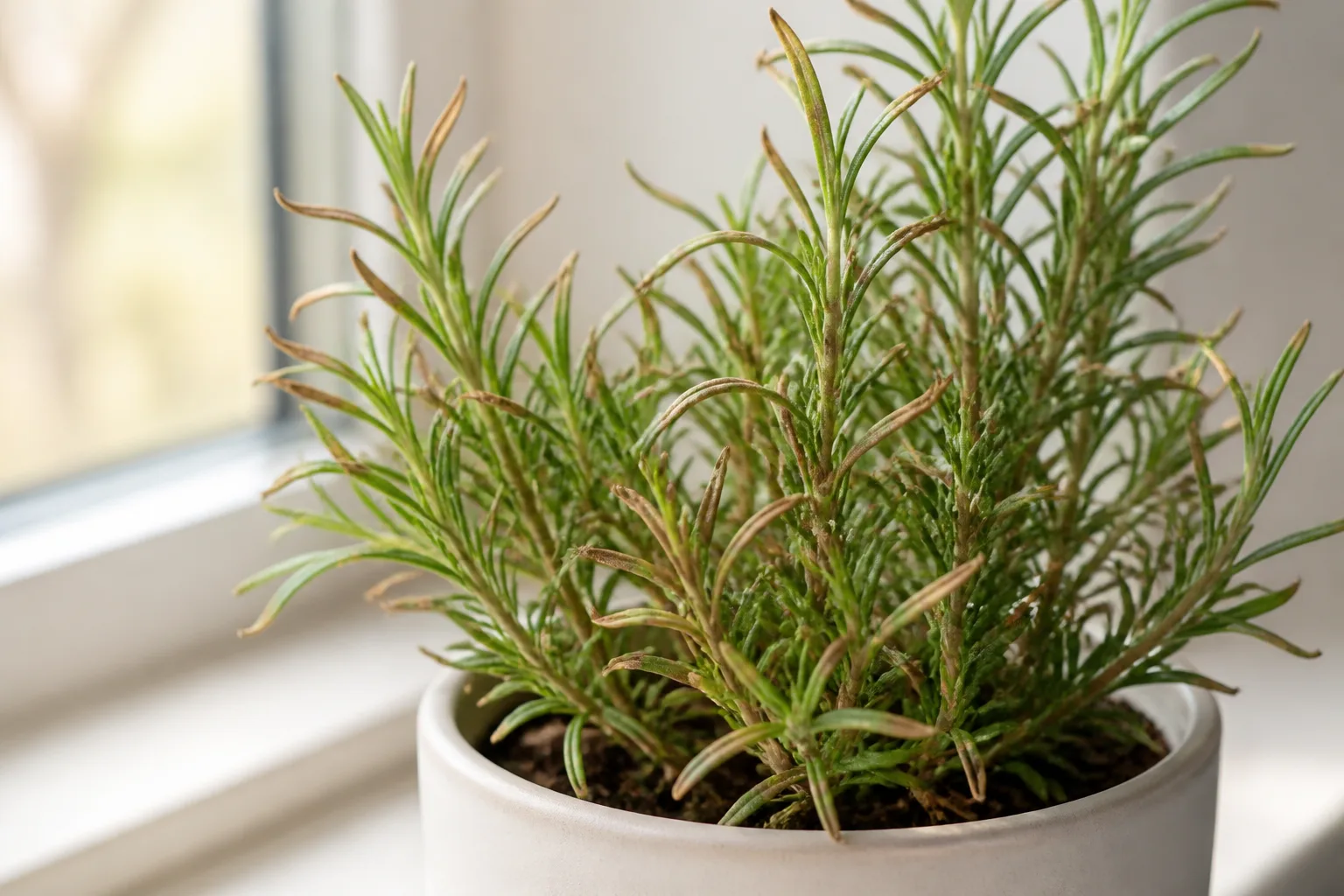
Low Humidity on Rosemary: Causes, Checks & Fixes
This guide covers low humidity on Rosemary. See also the general Low Humidity guide, watering, and light pages for this plant.
Low Humidity on Rosemary: Causes, Checks & Fixes
Quick answer
Rosemary evolved for dry Mediterranean scrub, so low outdoor humidity is usually not a problem-this herb prefers air on the dry side and tolerates drought once established. The trouble starts when container rosemary moves indoors for winter: forced-air heat drops ambient moisture, brown needle tips appear near vents, and spider mites thrive in hot, dry conditions.
First step: move the pot away from heating vents and radiators into a cool, bright window, then set the container on a pebble tray with water below pot level. Do not respond to crispy tips by watering heavily-that invites root rot on Rosemary on a plant that already wants dry soil between drinks.
What low humidity looks like on Rosemary
Unlike tropical houseplants that wilt and crisp evenly when air is dry, rosemary shows a narrower, placement-driven pattern:
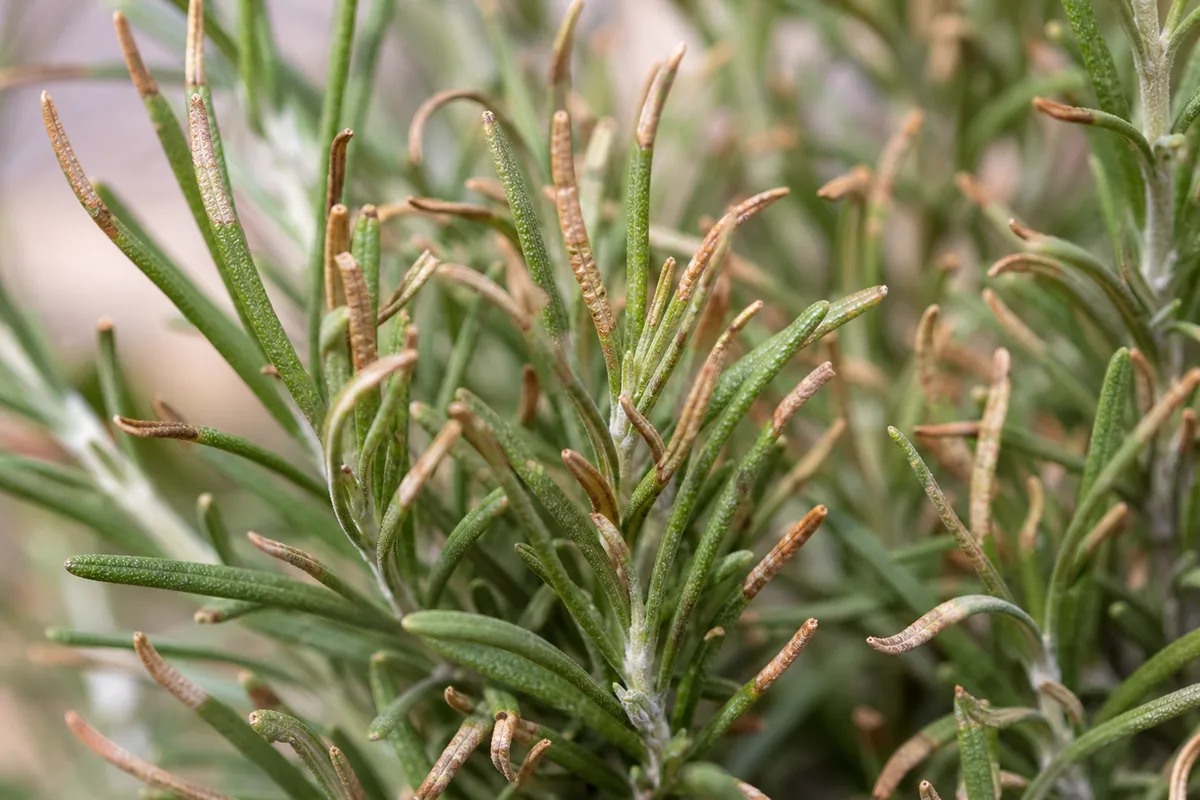
Low Humidity symptoms on Rosemary - compare with healthy tissue on the same plant.
- Brown or tan needle tips and margins on foliage closest to radiators, stove vents, or forced-air registers-the damage often appears on one side of the plant first.
- Dull, slightly inward-curling needles on an otherwise woody, firm plant whose soil reads dry at 5 cm depth. This can look like underwatering on Rosemary, but the pot weight stays light and roots are still white when you check.
- Faster-than-expected pot dry-down near sunny winter glass combined with heat-soil and foliage both lose moisture quickly.
- Fine pale stippling on needle undersides if spider mites follow the dry heat. Webbing may appear between stems before upper surfaces look obviously damaged.
What low humidity on rosemary usually does not look like: soft mushy stems at the base on wet soil (overwatering on Rosemary or rot), a white powdery coating on needles in a stuffy humid corner (powdery mildew from poor airflow), or uniform yellowing across the whole plant without a heat-source pattern.
Why Rosemary reacts differently to dry air
Outdoors in Rosemary light guide with gritty, fast-draining soil, rosemary is built for dry air. It performs best in full sun with dry to medium, well-drained soil and dislikes chronically wet roots-exactly the opposite of humidity-loving ferns.
Indoor winter culture flips the stress profile. Illinois Extension notes that rosemary brought inside dries out quickly in the indoor environment, often producing brown leaf tips and die-back even when soil moisture is managed correctly. Home heating lowers humidity while small pots on windowsills bake in afternoon sun. Growers see brown tips and assume the plant needs water; on rosemary, that mistake is often fatal because overwatering leads to root rot.
Dry air also stacks with pest pressure. Spider mites are common on indoor rosemary and reproduce fast when heat is high and humidity is low. The symptom search term may say “low humidity,” but the actionable problem indoors is often dry heat placement plus mite risk, not a need to turn your home into a steam room.
Rosemary also sits in an awkward middle ground for humidity advice. It dislikes very high, stagnant humidity that encourages powdery mildew when air circulation is poor-yet overwintering success improves in a cool, bright room with moderate localized humidity, not a tropical bathroom. Pebble trays and clustering pots raise moisture near the plant without soaking needles the way daily misting can.
How to confirm the cause
Work through these checks in order before changing care:
- Heat-source map - Stand where the pot sits. Is any foliage within a metre of a vent, radiator, or frequently opened oven door? One-sided browning strongly implicates dry drafts, not generic “low humidity” in the whole room.
- Soil at 5 cm - Push your finger 5 cm into the mix. Dry soil with crispy tips near heat: foliage desiccation from dry air, possibly combined with missed watering-but do not soak yet if the plant was recently watered and stems are firm.
- Pot weight and drainage - Lift the container. A heavy pot with yellowing and soft lower stems means too much water, not too little humidity. Empty saucers after every drink.
- Light audit - Count direct sun hours on the sill. Rosemary overwintered indoors needs at least six hours of bright light; leggy pale growth in a dim warm room dries unevenly and weakens the plant. Supplement with a grow light if the window is north-facing or obstructed.
- Needle underside exam - Hold stems over white paper and tap. Moving specks confirm spider mites. Stippling without webbing still warrants a weekly rinse in dry heated rooms.
- Compare to outdoor pots - If outdoor rosemary looks fine in the same dry climate while indoor pots crisp, the issue is indoor heat and air movement, not regional humidity percentage.
If soil is soggy, stems are soft, or white powder coats needles in a humid kitchen, stop this humidity track and diagnose overwatering or mildew instead.
First fix for Rosemary
Move the pot away from heating vents and radiators into the coolest bright window available, and set the container on a pebble tray with water kept below the pot bottom.
This single change addresses the most common indoor pattern: foliage desiccation from hot dry drafts. Illinois Extension recommends a cool sunny indoor location with pebble-filled saucers to raise humidity around the plant while keeping soil on the dry side. Clustering herbs together also modestly increases local humidity without turning the room tropical.
Do not mist heavily on day one. Wet foliage in a warm, poorly ventilated room raises powdery mildew risk-rosemary is susceptible when air circulation is poor. Do not soak the root ball because tips look brown; confirm dryness at 5 cm first.
Step-by-step recovery
After repositioning and setting up the pebble tray:
- Rinse needle undersides weekly with a gentle sink spray or outdoor hose on mild days. This dislodges spider mites before webbing spreads and adds brief moisture without leaving crowns wet overnight indoors.
- Water only when completely dry at 5 cm - Deep soak until water runs free, then empty the saucer. In winter, intervals often stretch to 10–14 days; let the pot tell you, not the calendar.
- Keep the room cool overnight if possible - Temperatures roughly 50–65°F (10–18°C) near the window slow mite reproduction and match extension guidance for overwintering herbs. Avoid placing pots where daytime heat spikes above 75°F beside glass.
- Improve airflow without blasting heat - A small fan elsewhere in the room reduces stagnant pockets that favor mildew; do not aim hot dry air directly at the plant.
- Treat confirmed mites - If stippling persists after two weekly rinses, apply insecticidal soap to needle undersides following label intervals. Isolate the plant from other houseplants until populations drop.
- Trim cosmetic damage last - Once new growth looks healthy, snip fully brown needle clusters for appearance. Leave partially green needles in place-they still photosynthesize.
Return the plant outdoors after the last frost when nights stay consistently above its hardiness limit, and harden it off over a week.
Recovery timeline
Brown needle tips do not re-green. Expect visible improvement within two to three weeks when browning stops spreading and fresh silvery-green shoots appear at stem tips. Mite control may take one to two weeks of rinses or soap repeats.
If stems stay firm, new growth emerges aromatic, and soil dries predictably between waterings, the plant is recovering even if old damage looks rough. Decline beyond six weeks with continuing die-back on dry soil suggests root failure, severe mite infestation, or insufficient light-not humidity alone.
Lookalike symptoms to rule out
Underwatering - Entire plant wilts, soil is bone dry throughout the root ball, and pot weight is very light. Fix with a deep soak, not a pebble tray alone.
Overwatering and root rot - Yellowing, soft stems at the base, sour-smelling mix, and wet soil at 5 cm despite “dry air” worries. Stop watering and assess roots; humidity fixes will not help.
Powdery mildew - Dry white powder on needle surfaces, often in humid kitchens or crowded shelves with poor airflow. Improve ventilation; avoid encouraging extra humidity without circulation.
Spider mites without obvious humidity stress - Stippling and webbing can appear on indoor rosemary even when placement is good. Treat the pest directly.
Not enough light - Leggy pale stems stretching toward glass, sparse needles, and slow winter growth. Add light before chasing humidity.
Mistakes to avoid
Do not install a room humidifier aimed at rosemary if you also keep soil wet-this herb needs dry roots more than tropical-level air moisture.
Do not mist foliage daily in a warm closed room. Brief rinses for mite control differ from constant leaf wetting that favors fungal issues.
Do not interpret every crispy tip as a call to water. Brown tips from indoor dryness are not solved by keeping mix moist-that pattern kills more container rosemary than dry air does.
Do not place rosemary in a steamy bathroom or grouped tightly with moisture-loving tropicals under high humidity. Powdery mildew and weak leggy growth follow.
Do not ignore mites because the label says “low humidity.” Dry heated windowsills are prime mite territory on Rosemary overview.
How to prevent dry-air damage next time
Plan overwintering before frost: grow rosemary in containers outdoors so you are not digging and shocking established roots in fall. Choose clay or breathable pots that dry evenly.
Place the winter station in a south-facing window when possible, with pebble trays refilled as water evaporates and vents avoided. Rosemary prefers bright light and cool indoor conditions during overwintering.
Maintain gritty mix-roughly 40% potting soil, 40% coarse sand or perlite, and 20% fine gravel-and never let saucers hold standing water.
Scout needle undersides weekly through heating season. Early mite knockdown with water prevents outbreaks that mimic humidity injury.
When spring nights stabilize, move plants back to full outdoor sun. Outdoor dry air is an ally for rosemary, not an enemy.
Rosemary care cross-check
If you are debating humidity, ask whether the plant is indoors or out. Outdoor rosemary in Pune hills, Delhi winter sun, or a Mediterranean-climate balcony rarely needs humidifiers. Indoor rosemary on a central-heating windowsill often needs localized humidity and cooler placement-not tropical houseplant rituals.
Pair humidity adjustments with this plant’s non-negotiables: six or more hours of direct sun, alkaline gritty mix, and dry-down watering. Container rosemary in dry spells needs deep water at the root zone, not foliar misting, when soil actually dries out.
When to worry
Treat as urgent when fine webbing covers multiple stems, powdery white coating spreads rapidly in a humid room, stem bases soften while soil stays wet, or whole branches die back within days. Those patterns point to mites, mildew, or rot-not manageable winter tip crispness.
Low dry air with firm woody stems, correct soil dryness, and slow winter growth is normal for overwintering rosemary. Adjust placement and localized humidity before assuming the plant is doomed.
Conclusion
Low humidity outdoors suits rosemary; low humidity beside a winter heat vent does not. Move the pot to a cool bright window, raise moisture gently with a pebble tray, rinse needles to deter mites, and keep soil dry between soaks. That path fixes most indoor brown-tip scares without the overwatering that kills more rosemary than dry air ever could.
When to use this page vs other Rosemary guides
- Rosemary watering guide - Use for routine moisture checks before assuming low humidity is the main issue.
- Rosemary problems hub - Browse all 18 common issues on this species.
- Brown Tips on Rosemary - Different entry point when symptoms overlap with low humidity.