Rosemary Watering Guide: Schedule and Soil Checks
Rosemary Watering Guide: Schedule and Soil Checks
Rosemary Watering Guide: Schedule and Soil Checks
A rosemary plant that gets the wrong watering rhythm will still hold green needles for a while, but it will never develop the tight, aromatic growth you want for cooking, garnishing, or a sunny balcony display. Rosemary watering is less about memorizing a day of the week and more about reading the soil, the season, and the plant’s own signals before you touch the watering can. Rosemary (Salvia rosmarinus, formerly classified as Rosmarinus officinalis) evolved on sun-baked Mediterranean cliffs with thin, stony soil that drains in minutes and dries for weeks between rain. That heritage means it punishes soggy roots far more aggressively than it punishes a missed watering session. The practical goal is a full dry-down between deep soaks - moist enough during the brief window after watering to fuel new growth and harvest-quality shoots, dry enough at the root zone before the next session that roots can breathe. This guide walks you through how much water rosemary needs, how often to apply it in pots and garden beds, what overwatering on Rosemary and underwatering on Rosemary actually look like, and the small habits that separate a reliable culinary herb from a cycle of yellow needles, sour soil, and woody decline.
Why Rosemary Watering Is About Dry-Down, Not a Calendar
Most rosemary watering advice online collapses into a single number: water once a week, or every two weeks, or wait until the soil is dry and call it done. That number is a starting point, not a rule. A rosemary in a 15-centimetre plastic pot on a west-facing balcony railing will dry out faster than the same cultivar in a 40-centimetre terracotta planter on a sheltered patio, and both will outpace an established bush planted in a mulched garden bed with afternoon shade from a neighbouring wall. Soil texture changes the math again - sandy, gritty mix drains in hours, while peat-heavy potting soil or heavy clay can hold moisture at the core while the surface looks dusty. Weather layers on top: a breezy week with low humidity pulls water from leaves and soil faster than a still, overcast stretch even at the same temperature.
The habit that saves more rosemary plants than any product is a soil moisture check before every watering decision. The Royal Horticultural Society advises that established rosemary in the ground should not need additional watering once settled, while container plants need supplemental water during dry spells - but never waterlogged compost. Penn State Extension notes that although rosemary is drought-tolerant once established, it does poorly in wet or poorly drained clay soil, and browning of needle tips is a sign of root rot on Rosemary. When you build your routine around those checks instead of a calendar, you stop the two most common failures: watering on autopilot into already-wet soil, and skipping a session because it rained yesterday while the root zone under an eave or balcony overhang stayed bone dry.
Rosemary also telegraphs water stress through needle texture, not only posture. Overwatered plants often keep a green appearance briefly, then show pale yellowing needles, soft limp foliage, and a sour smell from the soil as roots suffocate. Underwatered plants develop dry, brittle needles that crumble at the tips and a pot that feels feather-light when lifted. If you pair soil checks at 5 centimetres depth with a quick feel of the foliage, you catch problems earlier than either signal alone would reveal.
Understanding Rosemary’s Mediterranean Water Needs
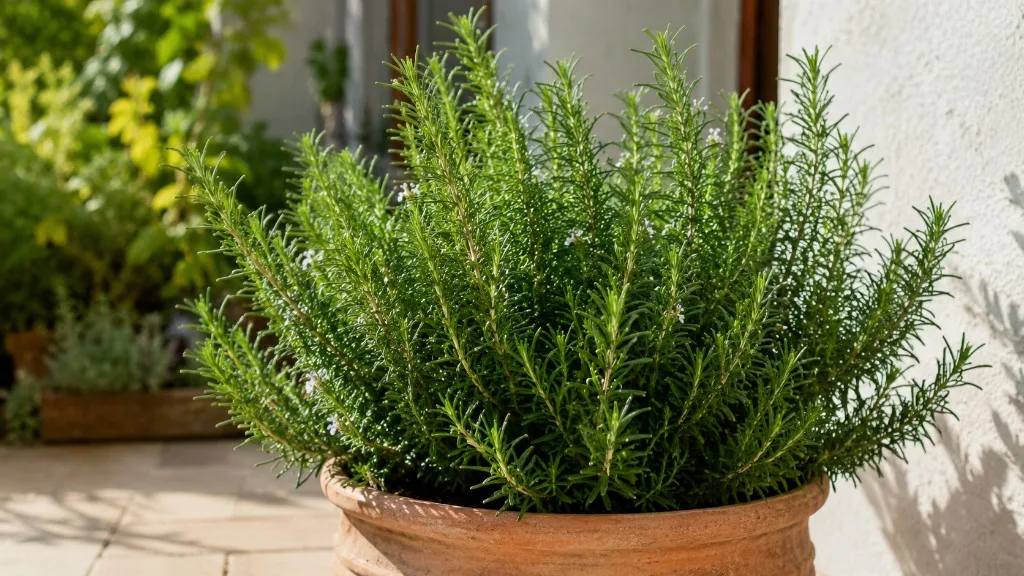
Rosemary is a woody evergreen shrub from the Mediterranean basin - coastal cliffs, dry summers, alkaline soil, and intense sun. Its needle-like leaves are adapted to reduce water loss: leathery, revolute margins that roll slightly downward, dark green above with pale, fuzzy undersides. Those leaves are not delicate foliage that wants constant misting. They are built for heat and drought. The root system mirrors that design. In native conditions, roots chase occasional deep moisture, then sit in aerated soil for extended dry periods. Replicating that rhythm in a pot or garden bed is the entire game.
Rosemary is often sold alongside herbs that want steadier moisture - basil, parsley, mint - and new growers apply the same weekly watering reflex to all of them. Rosemary is usually the one that dies. Texas A&M AgriLife Extension identifies overwatering and poor drainage as the most common reasons rosemary fails in home gardens. Good growth means firm woody stems and harvest-quality shoots, which depends on roots that breathe, not roots that swim. Rosemary light guide - six or more hours of direct sunlight daily - speeds drying and supports healthy uptake; low light plus frequent watering is the worst combination, because soil stays wet while the plant cannot metabolize normally.
How Much Water Rosemary Actually Needs
Rosemary does not want a measured weekly quota the way a thirsty rose bush might. It wants intermittent deep moisture followed by a genuine dry-down. When you do water, the session should be thorough: run water evenly through the mix until excess drains freely from the bottom on containers, or until the soil accepts moisture to a meaningful depth in garden beds. A half-cup top-up every morning may look attentive while the centre of the root ball stays dry - one of the most common reasons container rosemary fails in its first season. Deep, occasional soaks beat frequent shallow sprinkles every time, because shallow watering keeps fine roots near the surface where they dry out within hours on a hot terrace.
For established in-ground rosemary, rainfall in most temperate climates supplies enough moisture without supplemental irrigation. The RHS states that once established, rosemary growing in the ground should not need additional watering. Supplement only during prolonged dry spells - think three or more weeks without meaningful rain during active growth - and even then, one deep soak is preferable to several light passes. You are supporting survival and continued harvest, not trying to keep soil constantly moist.
For container rosemary, think in terms of full saturation plus drainage - water until excess runs freely, then empty the saucer so roots are not sitting in stale runoff. Indoor overwintering rosemary in a cool bright room may need water only every two to three weeks when fully dry, far less than summer container care.
How Often to Water Rosemary in Containers
Container rosemary dries faster than in-ground plants because the soil volume is small, pot walls absorb and radiate heat, and drainage is sharper. During warm active growth, many balcony and terrace rosemary plants need checking every few days, with actual watering often landing at every 5 to 7 days in summer and every 10 to 14 days in cooler months once growth slows. Those ranges describe how fast a typical well-draining gritty mix dries in a sunny spot - not a universal rule you apply without checking.
A rosemary in a small starter pot can go from adequately moist to critically dry in a single hot afternoon on a south-facing railing. A mature plant in a large terracotta container with horticultural grit mixed into the compost will hold its dry-down longer, but still outpaces an in-ground shrub because roots cannot reach groundwater. Terracotta breathes: water evaporates through the porous walls, which helps prevent the chronic wet-core problem of glazed ceramic, but also means you may water slightly more often in peak heat - always confirmed by soil checks, not assumptions.
Finger Test, Pot Weight, and Skewer Depth Checks
The fastest check is the finger test: push your finger into the soil 5 centimetres deep (roughly 2 inches) near the edge of the root ball. For rosemary, water only when that depth feels completely dry. If it still feels cool or slightly moist, wait. Surface colour is misleading - especially on mulched beds where the top layer dries while the root zone holds water, or on dense mixes where the crust looks dry while the core stays saturated.
A wooden skewer pushed to the same depth and left for a few minutes gives a cleaner read if you prefer not to use your finger. Pull it out: clinging soil means moisture remains; a clean, dry skewer means the root zone has dried enough for a soak. For large containers, combine the top check with a skewer inserted through a side drainage hole if accessible - if it comes up muddy, the centre is not ready for more water even if the rim feels dry.
Pot weight confirms what your finger or skewer suggests. A fully watered rosemary pot has a distinct heft. As the mix dries through the full profile, weight drops. When weight is light and the 5-centimetre test reads dry, water thoroughly. Morning needle posture is a secondary signal: slight droop in extreme afternoon heat on dry soil can be normal; persistent limp needles in the morning on a pot that still feels heavy point to overwatering instead.
How Often to Water Rosemary in the Ground
For established in-ground rosemary, supplemental watering is the exception, not the routine. In most gardens with average rainfall, nature handles the schedule once roots have spread beyond the original planting hole. The RHS is explicit: established rosemary in the ground should not need additional watering. Your job shifts from irrigation to drainage verification - making sure the site does not collect standing water after storms, especially in winter when cold, wet soil is more damaging than summer wetness because roots respire less and oxygen deprivation lasts longer.
New in-ground plantings are different for the first year. Young roots are still exploring, and dry spells during establishment warrant a deep soak. Water when the top 5 centimetres dry out, roughly every 5 to 10 days depending on heat and soil, tapering as the plant settles. Rosemary planted in raised beds or mounded soil over heavy clay mimics native drainage better than flat planting in water-retentive ground. If your garden soil is clay-heavy, amendment with sharp sand or horticultural grit at planting time matters more than any summer watering calendar.
Rosemary near walls or roof overhangs sits in rain shadows where storms never reach the root zone - verify moisture yourself during dry months.
Seasonal Watering Rhythms for Rosemary
Rosemary does not need the same irrigation rhythm in July and January, and treating winter like summer is how healthy plants develop root rot in a cool, low-light corner. Seasonal adjustment is not optional for anyone growing rosemary as a harvest crop rather than a static ornamental shrub.
Summer Heat, Winter Dormancy, and Monsoon Rain
Summer is peak evaporation. June through September, container rosemary on sunny balconies may need watering every 5 to 7 days, with daily checks during heat waves. In-ground established plants may need one supplemental deep soak only if rainfall fails for several weeks. Harvest pressure increases water demand slightly - removing shoots triggers new growth that pulls moisture - but that does not justify keeping soil constantly damp. It justifies checking more often and soaking when the 5-centimetre test reads dry.
Winter drops demand sharply. Growth slows, transpiration falls, and roots respire less. Container rosemary in a cool bright spot may need water every 10 to 14 days, sometimes less. Indoor overwintering plants in the 10 to 15°C range may go two to three weeks between sessions when fully dry. Overwatering dormant rosemary in cold, low-light conditions is a direct path to sour soil, yellow needles, and weak spring regrowth. If you bring pots indoors before hard frost, reduce watering immediately - kindness kills more winter rosemary than cold itself.
Monsoon and rainy seasons flip part of the challenge. Rain delivers volume, but enclosed balconies may receive little of it, and constant damp air keeps foliage wet longer if you overhead water. During heavy rain periods, skip irrigation when soil at 5 centimetres is already moist, but verify under eaves and wall shadows. During breaks in rain with returning sun, pots can dry surprisingly fast because humidity drops and airflow increases. The rule stays the same: check depth, then decide.
Watering Young Rosemary vs Established Plants
The difference between a young rosemary and an established one is root reach. A fresh transplant or newly rooted cutting has a confined root ball exploring unfamiliar soil. An established bush has woody stems, a deeper root profile, and the drought tolerance that earned rosemary its reputation as a low-maintenance herb.
For young rosemary - cuttings recently potted, nursery plugs just brought home, or first-year garden transplants - keep a closer watch without keeping soil soggy. Check every few days. Water thoroughly when the top 5 centimetres dry, then let the mix dry again. Daily sips are worse than a proper soak followed by a wait. Young plants in small pots dry fast in heat; that is a pot-size problem as much as a species trait. Upsize to a larger container with gritty mix once roots fill the starter pot reduces the roller-coaster between dust and mud.
Established rosemary shifts toward need-based deep watering with longer intervals when soil checks support it. Even mature container plants need more frequent checks than in-ground shrubs. Woody, bare-at-the-base plants that no longer produce tender shoots often need fresh cuttings, not more water.
The Right Way to Water Rosemary Thoroughly
How you apply water matters as much as when. Water the soil evenly around the root zone, not the woody stem crown. Running a narrow stream around the perimeter of the pot or the drip line of an in-ground shrub delivers moisture where roots actively absorb it. Avoid blasting the crown with a hard hose jet that compacts soil and splashes debris into needle clusters. Rosemary is not prone to the foliar disease pressures of roses, but unnecessarily wet foliage in humid, low-airflow corners still encourages powdery mildew - Penn State Extension recommends adequate airflow between plants for that reason.
Run water slowly until the soil accepts it without sheeting off the surface. On containers, water until excess runs freely, wait ten minutes, and add a small second pass if the mix absorbed the first quickly. Always empty saucers and cachepots within 30 minutes - standing water re-saturates the root ball and causes yellow needles and stem base rot.
Signs You Are Overwatering Rosemary
Overwatering is the most misdiagnosed rosemary problem because the top symptom - wilting - looks identical to drought stress. The decisive clue is soil moisture: wilting with persistently wet soil at 5 centimetres depth is overwatering, not thirst. If you see drooping needles, soft limp foliage, and soil that has not dried in a week, stop watering immediately and let the root zone breathe.
Yellow or pale needles, especially on older growth near the stem base, often signal root stress from excess moisture. Needles may feel soft and fleshy rather than firm. Penn State Extension lists browning of needle tips as a sign of root rot. In advanced cases, you may notice a sour smell from the soil, dark slimy roots when you inspect the edge of the root ball, and stems that turn mushy at the base. The Pacific Northwest handbooks describe affected roots as dark brown, sometimes extending into the crown, with whole branches browning as vascular function fails.
Chronic overwatering produces weak new shoots and fading aroma. If several signs appear together, pause irrigation, add horticultural grit, and check whether the mix is too peat-heavy or a saucer never gets emptied.
Signs Rosemary Is Thirsty or Underwatered
Underwatered rosemary also wilts, but the needles typically feel dry, papery, or crispy at the edges rather than soft. They may curl inward and lose their waxy sheen. Soil pulls away from the pot wall or cracks on the surface of a garden bed. The pot feels unusually light when lifted. Severe drought produces brown, brittle tips that crumble when touched, and stems remain woody rather than mushy - the opposite texture of overwatered crown rot.
A single dry episode is usually recoverable with one thorough soak, then a return to the dry-down rhythm. Midday needle droop in extreme heat can be normal transpiration - confirm with the 5-centimetre test before adding moisture.
Soil Mix, Drainage, and Pot Choice as Watering Variables
Your soil texture quietly overrides every schedule printed on a care tag. Rosemary wants sandy, gritty, alkaline mix with excellent drainage - not rich, moisture-retentive compost. The RHS recommends a peat-free soil-based compost with up to 25 percent horticultural grit by volume for containers, in a pot at least 30 centimetres wide and deep with plenty of drainage holes. That combination dries predictably and matches the thin, stony soils of the plant’s native range.
Terracotta pots accelerate drying through breathable walls, which suits rosemary’s dry-down preference and gives you earlier warning when the mix has dried. Glazed ceramic and plastic retain moisture longer - helpful in windy, desert-hot balconies only if the mix is genuinely gritty; risky if the compost is standard peat-based potting soil. Drainage hardware matters: one small hole in thick ceramic behaves differently from a nursery pot with multiple openings. Add holes if needed rather than assuming the plant will tolerate wet feet.
In-ground rosemary in heavy clay needs raised planting, sharp sand amendment, or container culture. Clay holds moisture against roots for days after a single watering, which is why extension sources consistently flag wet clay as a rosemary killer even when watering frequency seems modest. In sandy garden soil, established plants may never need your hose. In clay, you may never need your hose either - but for the opposite reason: rainfall sits too long, and your intervention should focus on drainage, not irrigation.
Indoor Rosemary Watering and Overwintering Moisture
Indoor rosemary is where watering advice most often goes wrong, because growers see limp needles and assume thirst when the soil is still wet from last week. Rosemary brought inside for winter needs a cool, bright room - ideally around 10 to 15°C with as much direct sun as the window allows - and sparse watering when the soil is fully dry. Every two to three weeks is a realistic starting interval in those conditions, always confirmed by the 5-centimetre test rather than the calendar.
Warm living rooms are hostile to rosemary: low light slows growth while warm air stresses needles, and soil stays wet at the core. Prioritize cool temperature and maximum light over misting, which does not hydrate roots. When moving plants back outdoors in spring, increase checks gradually - do not jump from a three-week winter interval to daily watering the first warm weekend.
Water Quality, Timing, and Humidity Considerations
Morning watering suits rosemary: roots hydrate before daytime heat, and incidental splashing on needles dries quickly. Cold tap water is fine; avoid salty or heavily mineralized supplies that cause tip burn mimicking drought. Rosemary prefers low to moderate humidity (30–50 percent) and active growth temperatures between 15°C and 28°C (60–82°F). Below that range, growth and uptake slow - another reason winter schedules must shrink.
Rosemary Watering in Hot and Mediterranean Climates
Hot climates - including much of the Indian subcontinent during pre-monsoon heat - compress the drying window dramatically. A terrace rosemary in full sun may need checking every day and soaking every 5 to 7 days even in a medium terracotta pot. Heat waves add transpiration load: the plant loses water through needles faster than roots can replace it if the soil is even slightly dry at depth. Afternoon shade cloth during extreme spells reduces stress, but it does not remove the need for consistent dry-down checks.
In Mediterranean-type climates, established in-ground rosemary often thrives on rainfall alone; container culture still demands attention. Wind accelerates drying on exposed rooftops - pot weight and the 5-centimetre test matter more than any published weekly average.
Common Rosemary Watering Mistakes and Quick Fixes
The first mistake is watering on a calendar without checking soil. Fix: adopt a check-first rule - finger or skewer at 5 centimetres - before every session. The second is shallow daily sips that keep the surface damp while the root ball starves or stays alternately flooded at the bottom. Fix: fewer, deeper soaks that produce drainage from pots or measurable penetration in beds, then a full dry-down. The third is leaving runoff in saucers, which turns the bottom third of the root mass into a swamp. Fix: empty saucers within 30 minutes.
Other frequent errors include peat-heavy mix without grit, assuming rain reached a wall-side pot, and increasing water when needles drop in a warm dim winter room. When you change pot, placement, or mix, adjust watering expectations and watch for two weeks before changing other variables.
Root Rot, Sour Soil, and Standing Saucer Water
Root rot shows up as wilting in wet soil, dark mushy roots, and sour-smelling compost. Mild cases improve when you stop watering and add grit; severe cases need root trimming and Rosemary repotting guide into fresh gritty mix, kept dry for about a week before careful resumption. Sour soil means anaerobic conditions - unpot, remove blackened roots, and rebuild drainage rather than flushing with more water. Standing saucer water is the most avoidable killer: water at the sink and return the plant only after drainage finishes.
Conclusion
Watering rosemary well comes down to a short loop you can repeat all season: check the soil 5 centimetres down, water slowly and thoroughly until the root zone is genuinely moist, let containers drain fully, and stretch or shorten the interval based on season, pot size, and weather. Established in-ground rosemary rarely needs supplemental water once settled; container and balcony plants typically need soaking every 5 to 7 days in summer and every 10 to 14 days in cooler months - always adjusted by what the soil tells you, not what the calendar says. Indoor overwintering plants follow a sparser rhythm of every two to three weeks when fully dry in cool, bright conditions. Watch for the pairing that solves most confusion: wilting with wet soil means stop watering; wilting with dry, lightweight soil means soak thoroughly. Keep mix gritty and fast-draining, empty saucers every time, and match your rhythm to summer harvest growth and winter rest. Get that dry-down cycle right and rosemary rewards you with firm aromatic needles, fresh shoots for the kitchen, and roots tough enough to forgive the occasional missed check - but never forgive a pot that stays wet.
When to use this page vs other Rosemary guides
- Rosemary overview - Start here for whole-plant context before deep-diving this topic.
- Rosemary problems hub - Jump to symptom-specific fix guides when this care topic does not resolve the issue.
- Overwatering on Rosemary - Escalate here when watering adjustments are not enough.
- Underwatering on Rosemary - Escalate here when watering adjustments are not enough.
- Root Rot on Rosemary - Escalate here when watering adjustments are not enough.
Related Rosemary guides
- Rosemary overview
- Rosemary light
- Rosemary soil
- Rosemary propagation
- Rosemary fertilizer
- Rosemary repotting
- Overwatering on Rosemary
- Underwatering on Rosemary
- Root Rot on Rosemary
- Wilting on Rosemary
- Drooping Leaves on Rosemary
- Mold on Soil on Rosemary
Related tool
Try the Plant Watering Calculator with rosemary pre-selected to estimate needs for your setup.