Mold on Soil on Rosemary: Causes, Checks & Fixes
Quick answer
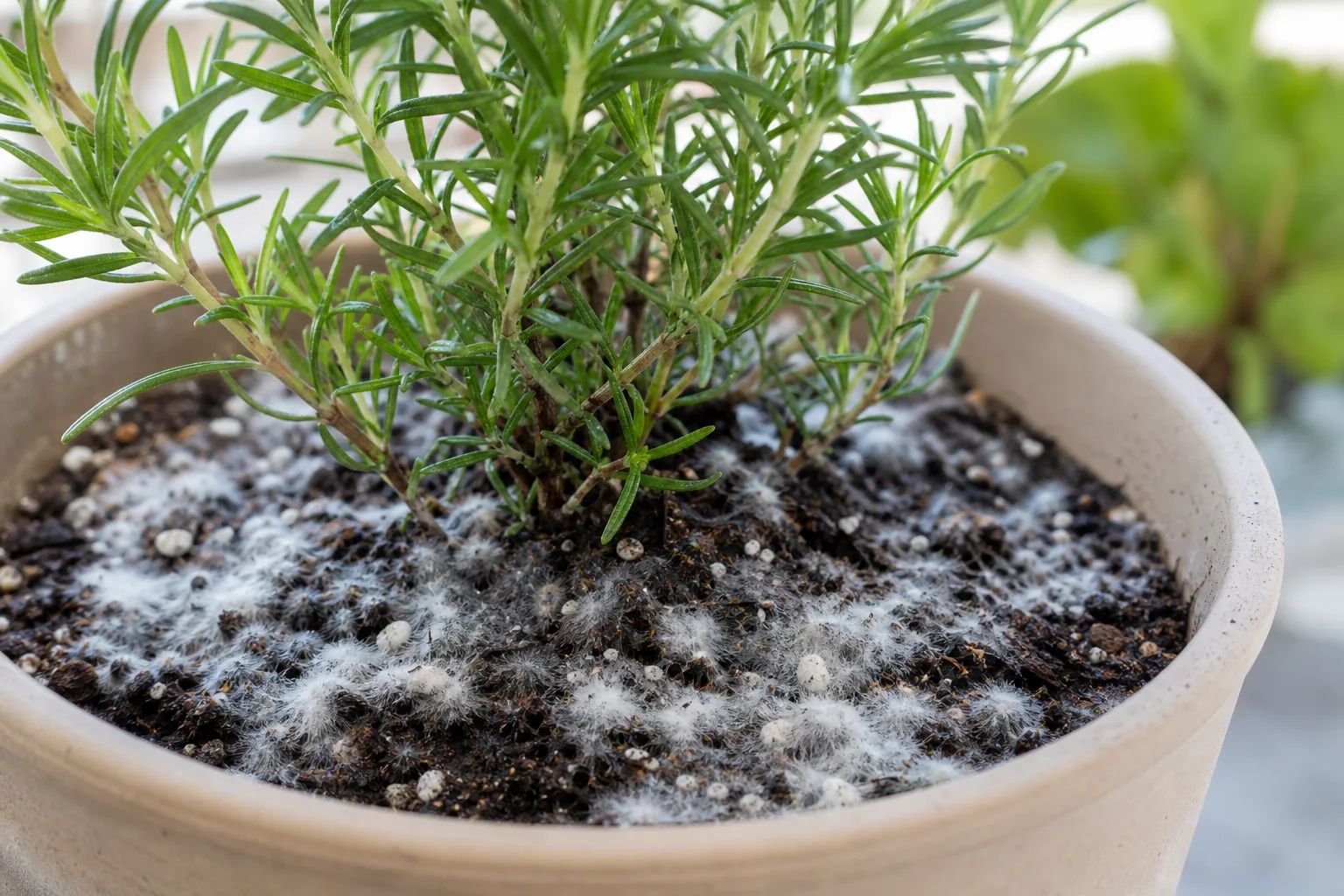
Mold on rosemary soil means the mix surface stays wet and organic-often from overwatering in low light or humid rooms. First step: scrape the top centimeter of moldy mix, stop watering until the top 5 cm is completely dry, and empty any saucer water.
Mold on Soil on Rosemary: Causes, Checks & Fixes
This guide covers mold on soil on Rosemary. See also the general Mold on Soil guide, watering, and light pages for this plant.
Mold on Soil on Rosemary: Causes, Checks & Fixes
Quick answer
White or green fuzz on rosemary potting soil almost always means the surface stays wet and organic long enough for saprophytic fungi to grow. On Salvia rosmarinus, that is a serious warning sign-not because the mold usually attacks needles directly, but because rosemary needs dry to medium, well-drained soil and fails quickly in chronically wet mix.
First step: scrape off the top centimeter of moldy mix, stop watering until the top 5 cm is completely dry, and empty any water sitting in the saucer. Do not pour another drink because needles look limp-that reflex keeps the surface damp and invites root trouble on a plant that evolved for dry Mediterranean hillsides.
What mold on soil looks like on Rosemary
Surface mold on rosemary containers shows up on the mix, not on the needle-like leaves themselves-unless a separate problem like powdery mildew is also present.
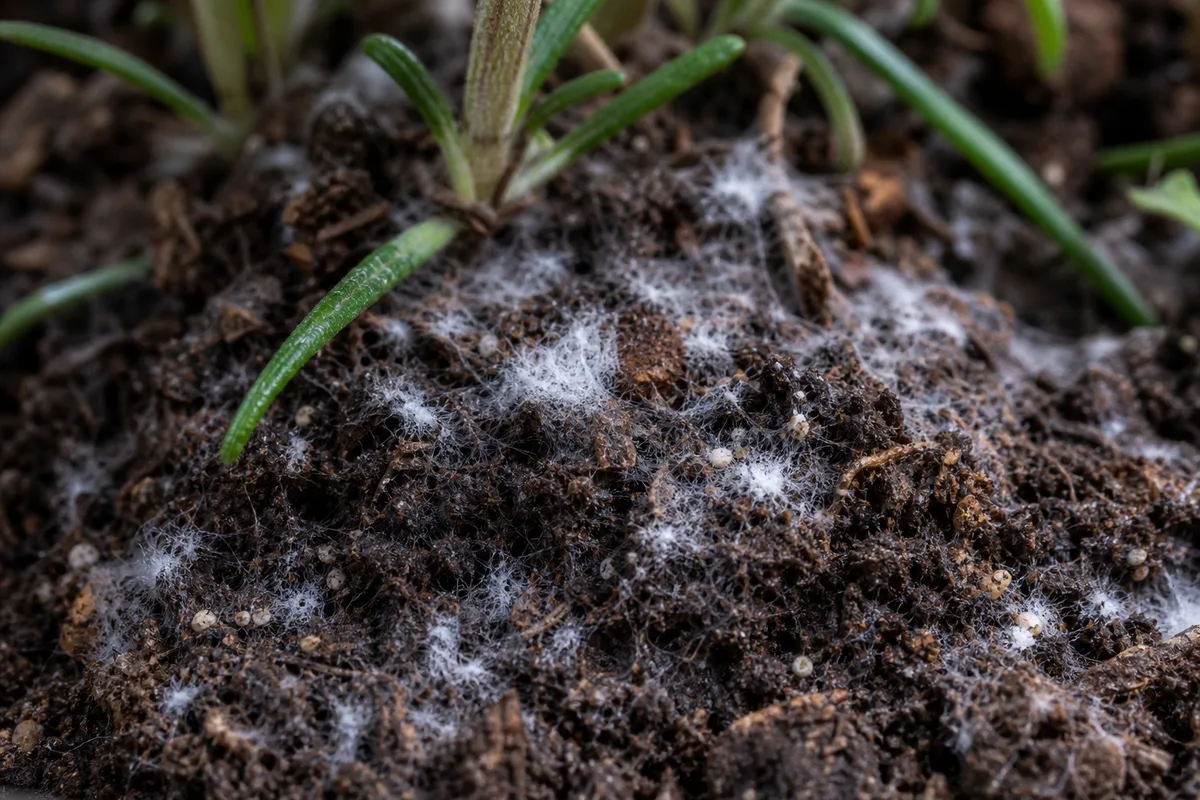
Mold on Soil symptoms on Rosemary - compare with healthy tissue on the same plant.
Typical signs include:
- White, gray, or green fuzzy film on the top layer of potting mix, sometimes spreading to the pot rim
- Surface that stays damp for days after you water, even when upper needles still look green
- Musty or earthy smell when you disturb the soil or lift the pot
- Small dark flies hovering when you water or poke the surface-often fungus gnats sharing the same wet habitat
- Mold returning within days after you scrape it off, which confirms the environment-not the scrape- is the problem
Early on, rosemary may still smell aromatic and hold firm woody stems while only the soil looks wrong. That quiet phase is exactly when fixing moisture is easiest. Saprophytic fungi feed on decaying organic matter in soil and typically do not harm living plant tissue-but on rosemary, persistent surface wetness often precedes root rot on Rosemary, not a harmless cosmetic phase.
Green algae on the pot rim or soil crust is a related surface issue from constant moisture and low evaporation, especially on pots in dim corners. Treat it the same way: dry the surface and improve light and airflow.
Why Rosemary gets mold on soil
Rosemary is a drought-tolerant Mediterranean shrub that does poorly in wet or poorly drained soil. When growers water on a calendar-especially indoors in winter-or use peat-heavy bagged mix without enough grit, the top layer holds moisture long after the plant has stopped using water quickly.
Several rosemary-specific factors make surface mold common:
- Shallow frequent watering - Wetting only the top inch daily keeps that layer saturated while deeper mix may still be damp. Rosemary prefers deep dry-down cycles; the finger check at 5 cm depth matters more than surface appearance.
- Low light indoors - Without at least six hours of direct sun, transpiration drops and mix dries slowly. Missouri Botanical Garden notes rosemary performs poorly overwintered indoors when light and airflow are inadequate-conditions that also favor surface fungi.
- Dense woody stems at the soil line - Mature rosemary develops a woody base that shades the pot surface and reduces evaporation compared with smaller herbs.
- Oversized or cache pots - A large volume of mix stays wet around a small root ball; decorative outer pots trap humidity at the rim.
- Organic-rich surface debris - Fallen needles, compost top-dress, or decorative moss feed saprophytic fungi the same way manure-enriched soil feeds bird’s nest fungi in garden beds.
- Humid monsoon or coastal rooms - Rosemary dislikes very high humidity; stagnant damp air slows surface drying even when you water less.
Mold and fungus gnats often appear together. UC IPM notes fungus gnats thrive in moist potting mix where larvae feed on fungi and organic matter-and can chew roots when populations are heavy. On rosemary, that combination turns a surface warning into root stress faster than on moisture-loving houseplants.
How to confirm the cause
Work through these checks before Rosemary repotting guide or spraying fungicide:
- Surface moisture - Does the top 1–2 cm stay cool and cling to your finger two or three days after watering? Persistent dampness confirms the habitat mold needs.
- Depth dry-down - Push your finger or a bamboo skewer 5 cm into the mix. Rosemary should be watered only when completely dry at that depth-not merely dry on top with wet material below.
- Pot weight and drainage - Lift the container. A heavy pot days after watering suggests saturation. Water should exit drainage holes within minutes in gritty mix.
- Saucer and cache pot - Standing water re-wets the mix from below and keeps the surface humid.
- Light and airflow - Count direct sun hours. Stagnant corners with weak light extend surface wetness.
- Fly and larva check - Disturb the soil and watch for small flies. Scrape aside the top half-inch: translucent larvae confirm fungus gnats linked to wet mix.
- Plant tissue check - Pinch stem bases at the soil line. Firm aromatic wood with only surface fuzz points to cultural mold. Soft brown tissue, yellow clusters, or sour smell on a wet pot means escalate to root inspection.
If mold returns within a week of scraping while the surface never truly dries, you have confirmed a watering and drainage problem-not a random fungal attack that needs chemical treatment first.
First fix for Rosemary
Scrape off the top centimeter of moldy mix, discard it, and withhold water until the top 5 cm is completely dry.
That single step removes active spore load on the surface and breaks the wet cycle that feeds both mold and fungus gnats. Empty the saucer, pull the pot out of any decorative cache holder, and set it where it gets stronger direct sun if it has been in shade.
Do not follow scraping with an immediate soak. Do not blanket the soil with cinnamon, hydrogen peroxide, or fungicide before fixing moisture-those treat symptoms, not the oxygen-poor wet surface rosemary roots cannot tolerate long term.
Step-by-step recovery
After the first dry-down, work in this order:
- Refresh the surface if needed - Replace scraped material with a thin layer of dry gritty mix or fine gravel-not wet compost or peat top-dress.
- Adjust Rosemary watering guide - When you do water, soak until excess runs from drainage holes, then let the top 5 cm dry fully before the next drink. Allow container soil surface to dry between waterings to suppress both gnats and surface fungi.
- Improve light and airflow - Move to the sunniest spot available-ideally six or more hours of direct sun outdoors or in a south window. A small fan in humid rooms speeds evaporation without blasting cold drafts on the plant.
- Manage fungus gnats if present - Yellow sticky traps catch adults; fixing moisture is the main control. Severe infestations may need a labeled soil drench, but dry surface culture usually collapses populations within one to two weeks.
- Top-dress with gravel optionally - A thin inorganic layer keeps the surface dry and limits organic food for saprophytes-useful on rosemary that sits in humid kitchens.
- Inspect roots only if plant declines - If needles yellow, stems soften, or smell turns sour while soil stays wet, unpot and check roots. Firm pale roots are healthy; brown mushy roots mean repot into fresh gritty mix after trimming decay-see root rot guidance if tissue is advanced.
Skip repotting on day one for surface mold alone on a firm plant. Repot when mold recurs after culture fixes, mix is compacted peat that never dries, or roots show decay.
Recovery timeline
Surface mold should stop returning within one to two weeks once the top layer dries reliably between waterings and sun/airflow improve. Fungus gnat flights usually taper in the same window as larvae lose moist habitat.
Needles that yellowed from chronic wetness will not turn deep green again-judge recovery by firm new shoot tips, stable aroma when you rub foliage, and mold-free dry surface soil. If stems stay firm and new growth looks crisp after two to three weeks of corrected culture, the plant has cleared the warning phase.
Lookalike symptoms to rule out
Powdery mildew coats needle surfaces with dry white powder in humid, poorly ventilated conditions-not fuzzy growth confined to soil. Rosemary is susceptible to powdery mildew when air circulation is poor. Improve airflow and avoid wetting foliage late in the day.
Botrytis on stems shows gray-brown mold on woody tissue in persistently damp conditions, often with healthy roots. Roots feel firm on inspection; stems near the base blacken. That is stem disease, not surface potting mix mold alone.
White mineral crust from hard tap water can look like faint white film on dry soil. It feels gritty, not fuzzy, and appears on the surface of mix that is actually dry-not constantly damp.
Normal potting mix color - Dark peat that looks “wet” because of dye or compaction is not mold. Confirm with a magnifier or scrape test: mold is filamentous or cottony; plain wet peat smears without structure.
Mistakes to avoid
Do not scrape mold repeatedly without changing watering-spores return within days on a still-wet surface.
Do not interpret surface mold as a sign the plant needs more water because needles look limp. Limp foliage on wet mix often means damaged roots, not drought.
Do not use decorative moss, compost blankets, or heavy organic mulch on rosemary pots-they hold moisture at the crown and feed fungi.
Do not keep rosemary in a cache pot that hides standing water. Mediterranean herbs need saucers emptied after every soak.
Do not reach for fungicide as the first response. Control is usually unnecessary for saprophytic surface fungi once moisture and organic debris are corrected.
Do not assume mold is harmless forever on rosemary. Unlike some tropical houseplants, Rosemary overview suffers root rot from overwatering-surface mold is an early warning on a plant with low tolerance for wet feet.
Rosemary care cross-check
Mold means your pot environment is too wet for a dryland herb. Pair surface fixes with rosemary’s core needs: Rosemary light guide, gritty alkaline mix, infrequent deep watering, and sharp winter cutbacks when growth slows indoors.
If you overwinter rosemary inside, expect slower dry-down and reduce watering frequency sharply-many container deaths trace to winter moisture in dim rooms, not cold alone. Clay pots dry faster than glazed ceramic and suit rosemary’s preference for mix that dries between water applications.
Right-size the container to the root ball. Rosemary tolerates being slightly root-bound; an oversized pot holds excess wet mix that surface mold exposes before roots fail.
How to prevent mold on soil next time
- Water only when the top 5 cm is completely dry-use finger or skewer checks, not a calendar.
- Use sandy, gritty mix with perlite or coarse sand; avoid straight peat-heavy blends indoors.
- Give full sun and open airflow between grouped pots.
- Empty saucers immediately after watering; never let the root ball sit in standing water.
- Remove fallen needles and organic debris from the pot surface promptly.
- Prefer gravel top-dress over wet organic mulch if the surface chronically stays damp.
- Quarantine new nursery pots that arrive with surface fuzz until dry-down culture is established.
When to worry
Treat as urgent when mold accompanies soft stems at the base, widespread yellowing on a heavy wet pot, sour root-zone smell, or fungus gnats in dense swarms with declining new growth. Those patterns suggest root stress or rot-not cosmetic surface fungi alone.
Surface mold on a firm, aromatic plant with no stem softening is a moderate-priority culture fix. You have time to adjust watering and light before repotting.
Replace or restart from cuttings if most roots are mushy and woody stems collapse despite dry-down-salvage is unlikely once rot hollows the base, though healthy softwood cuttings can restart a clone.
Conclusion
Mold on rosemary soil is a moisture alarm, not a mysterious leaf disease. Scrape the surface, dry the mix deeply between drinks, improve sun and airflow, and empty saucers. On this drought-tolerant herb, fixing wet culture early prevents the root rot that kills more container rosemary than drought ever does.
When to use this page vs other Rosemary guides
- Rosemary watering guide - Use for routine moisture checks before assuming mold on soil is the main issue.
- Rosemary problems hub - Browse all 18 common issues on this species.
- Fungus Gnats on Rosemary - Different entry point when symptoms overlap with mold on soil.
- Overwatering on Rosemary - Different entry point when symptoms overlap with mold on soil.
- Root Rot on Rosemary - Different entry point when symptoms overlap with mold on soil.