Root Rot on Rosemary: Causes, Checks & Fixes
Quick answer
Root rot on rosemary follows chronic wet mix and poor drainage, especially indoors in winter. First step: stop watering, unpot gently, and inspect whether roots are pale and firm or brown and mushy before you trim or repot.
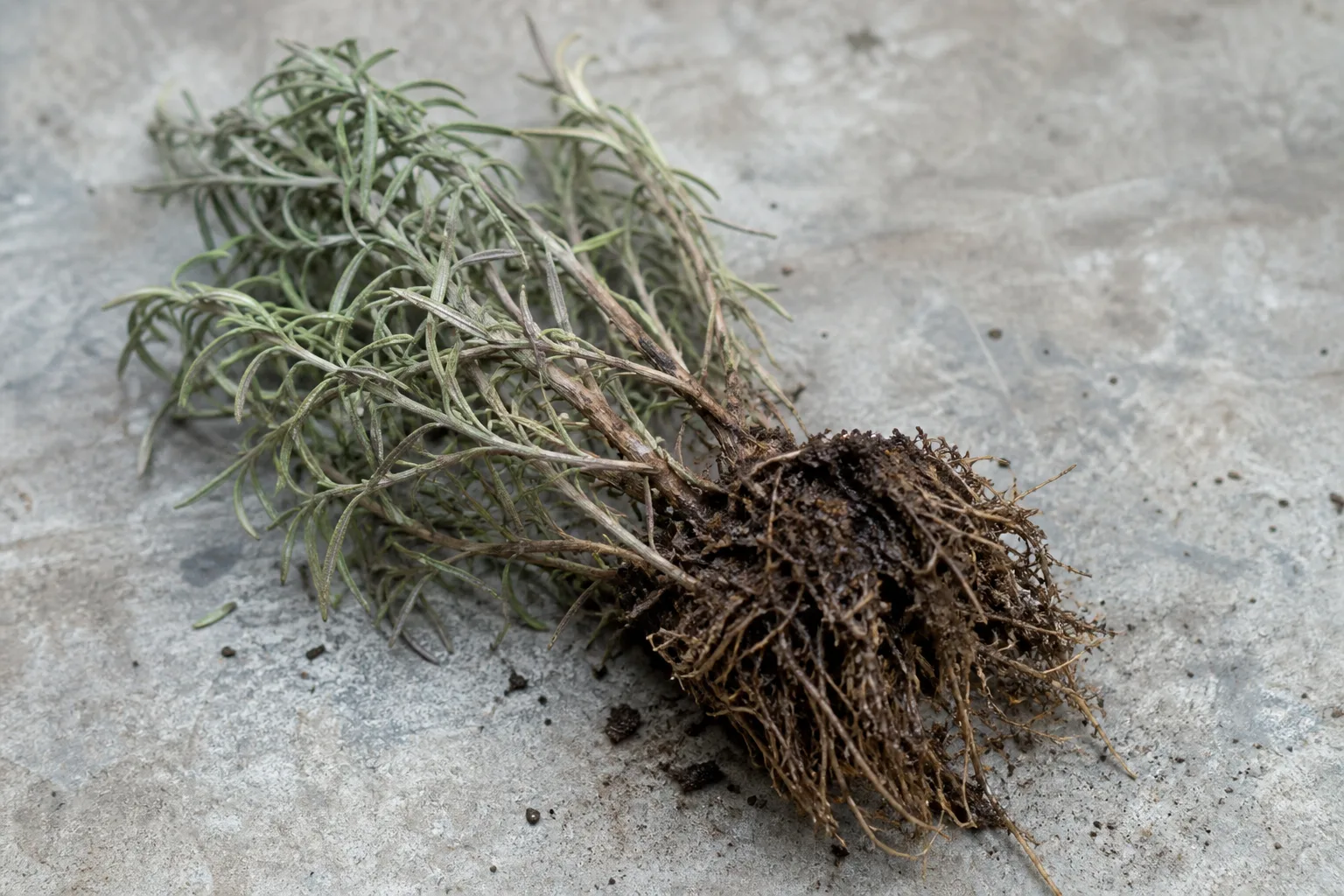
Root Rot on Rosemary: Causes, Checks & Fixes
This guide covers root rot on Rosemary. See also the general Root Rot guide, watering, and light pages for this plant.
Root Rot on Rosemary: Causes, Checks & Fixes
Quick answer
Root rot on rosemary (Salvia rosmarinus) is a rescue guide for confirmed root decay-not early overwatering triage. If stems are still firm and you suspect too much water but have not inspected roots, start with the rosemary watering guide and overwatering on rosemary first. Use this page once decay is likely or confirmed.
Rosemary evolved on dry Mediterranean scrub and needs dry to medium, well-drained soils between deep soaks. When peat-heavy mix stays wet-especially indoors in winter-roots suffocate and decay. The cruel paradox: damaged roots cannot move water upward, so needles wilt despite wet soil. Cool dim rooms plus frequent watering mimic the worst of a humid monsoon climate.
First step: stop watering and unpot gently to inspect the roots. Do not pour another drink because needles look limp. A heavy pot, sour smell, and mushy brown roots confirm rot; a light dry pot with firm wilted needles points to thirst instead.
What root rot looks like on Rosemary
Symptoms build from the root zone upward. Watch for these patterns together rather than in isolation:
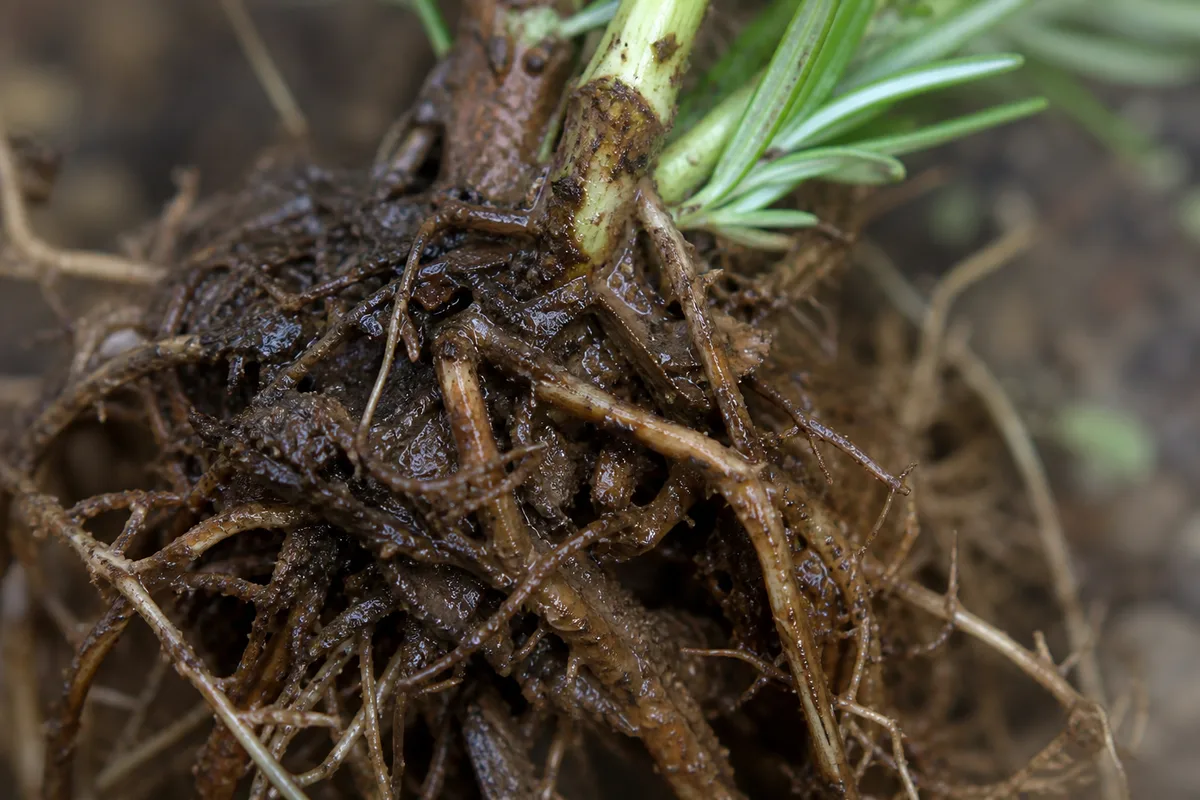
Root Rot symptoms on Rosemary - compare with healthy tissue on the same plant.
Yellow lower needles on wet soil
Lower needle clusters turn dull yellow or gray-green while the mix still feels damp days after watering. Upper growth may look acceptable briefly, which delays action. Root crown rots result in yellowing and dying of leaves on rosemary as feeder roots fail-often the first visible sign before stems soften.
Wilt-with-wet-soil trap
Needles droop or feel limp even though you have not skipped watering. That mismatch is classic root uptake failure: the plant looks thirsty above soil while roots below are drowning. If a deep soak does not restore firm needles within hours, suspect rot-not drought. See wilting on rosemary for the full wilt-on-wet-soil branch.
Sour smell and soft stem bases
Lift the pot and sniff near drainage holes. A sour or swampy odor suggests anaerobic decay in the root zone. Pinch woody stems at the soil line-firm is good; soft, dark, wet tissue means crown involvement. Browning of needle tips often follows as rot advances from roots into stem tissue.
Other signs include white mold or fungus gnats on a constantly wet surface, new shoot tips stalling, and roots visible through drainage holes turning dark and slippery.
Why Rosemary gets root rot
Rosemary is built for drought, not saturation. Several setup choices push container plants into rot faster than outdoor specimens in full sun.
Mediterranean drought biology vs. chronic wet mix
Established rosemary has good drought tolerance but does poorly in wet or poorly drained clay soil. Its fine feeder roots need oxygen between soaks. Overwatering causes root rot that can be deadly outdoors and especially in pots overwintered indoors. Cultural rot-roots sitting in stale water-is the primary home failure mode; pathogens such as Pythium, Rhizoctonia, and Berkeleyomyces often finish the breakdown once tissue is oxygen-starved.
Winter indoor overwintering failure mode
Rosemary moved inside for winter faces weak light and slower evaporation. The same watering rhythm that worked on a sunny balcony keeps roots wet for days in a dim room. Penn State Extension notes that overwintering rosemary indoors may be difficult due to low-light conditions and too little or too much water-chronic wetness is the dangerous partner. Cool indoor overwintering combined with daily watering can collapse a container plant within one to two weeks.
Peat-heavy mix, oversized pots, and blocked drainage
Standard moisture-retentive houseplant mix holds water too long for this species. Oversized pots surround a small root ball with damp substrate that never dries at the center. Decorative cache pots, saucers left full after watering, and stones covering drainage holes all keep the root zone saturated. Wet, poorly-drained soils in winter are usually fatal to rosemary.
How to confirm the cause
Work through this inspection order before you trim roots or repot:
- Pot weight and smell - A heavy pot days after watering plus a sour odor suggests anaerobic conditions in the root zone.
- Moisture at 5 cm depth - Push your finger or a bamboo skewer 5 cm into the mix. Constantly wet deep soil with limp needles fits rot. Bone-dry soil with firm stems suggests underwatering instead.
- Stem-base firmness - Pinch woody stems at the soil line. Soft, dark tissue on wet mix confirms advanced trouble.
- Unpot and rinse roots - Shake off wet mix gently and rinse roots under lukewarm water so you can see color and texture clearly.
- Root comparison - Healthy rosemary roots are pale and firm. Rotten roots turn brown to black, feel slippery or mushy, and may fall away when touched.
- Watering history - Have you watered before the top 5 cm dried, left the saucer full, or repotted into a much larger pot recently? That pattern fits root rot on this species.
If more than one-third of roots are mushy, or black tissue is climbing above the soil line, treat the case as advanced.
Lookalike symptoms to rule out
| What you see | Pot / mix | Roots (if checked) | Likely cause | Next step |
|---|---|---|---|---|
| Limp needles, heavy wet pot, sour smell | Saturated days after watering | Brown, mushy | Root rot | Stop water; unpot; trim and repot |
| Limp needles, light dry pot | Dry throughout | Firm, pale | Underwatering | Water deeply once; recheck in 24 h |
| Yellow lower needles, firm stems, wet pot | Wet but no sour smell yet | Still firm, pale | Early overwatering | Dry root zone; see overwatering guide |
| White dusty coating on needles, neutral soil smell | Normal moisture | Firm | Powdery mildew | Improve airflow; treat foliage, not roots |
| Leggy pale growth, slow dry-down | Wet for days in dim room | Firm | Not enough light | Move to full sun; adjust watering |
| Stippling, webbing on needle undersides | Normal moisture | Firm | Spider mites | Inspect undersides before assuming water stress |
Upstream yellowing without confirmed mushy roots may also connect to the yellow leaves on rosemary cluster-sort wet-soil rot from other causes before you operate on roots.
First fix for Rosemary
Stop watering and unpot gently to inspect the roots.
Move the plant to a clean work surface. Tilt the pot and slide the root ball out with minimal pulling on woody stems. Knock away wet mix so you can see root color and texture clearly. Do not water during this inspection.
If roots are mostly firm and pale with only a few soft tips, trim the damaged sections, let cut surfaces air-dry briefly, and repot into fresh gritty mix without soaking the plant again first.
If more than one-third of roots are mushy or stem bases are soft, proceed immediately to the recovery steps below. Do not return the plant to the same wet mix hoping it dries out on its own-decay spreads in waterlogged, oxygen-poor soil.
Make one correction at a time. Do not fertilize, move to a new room, and repot into a much larger pot on the same day-that stack hides what actually helped.
Step-by-step recovery
After inspection confirms rot, proceed based on severity:
Mild: dry-down and drainage first
When roots are still mostly firm, stems are solid at the base, and smell is neutral:
- Stop all watering until the top 5 cm is completely dry.
- Empty any saucer water and move the pot to the brightest spot available-full sun if possible.
- Confirm open drainage holes and gritty mix per the rosemary soil guide.
- Resume watering only on the finger test once dry-down stabilizes pot weight.
If stems soften or smell turns sour during dry-down, escalate to moderate rescue immediately.
Moderate to severe: unpot, trim, air-dry, repot
When mushy roots, sour smell, or soft stem bases are present:
- Trim decay with sterile scissors - Cut away brown, soft roots back to firm, pale tissue. Remove blackened stem-base tissue the same way. Disinfect blades between cuts with rubbing alcohol.
- Rinse gently - Lukewarm water removes contaminated mix clinging to remaining roots. Pat dry lightly; do not scrub healthy tissue.
- Air-dry 12–24 hours - Lay the trimmed root ball in bright indirect light so cut surfaces dry before repotting. Skip watering during this window.
- Repot into fresh gritty mix - Use sandy, alkaline blend with perlite, coarse sand, and fine gravel as detailed in the rosemary soil guide. Choose a pot only slightly larger than the trimmed root ball with open drainage holes. Do not cover holes with stones.
- Hold water for one to two weeks - Let the new mix stay dry while cut tissue calluses. The plant relies on stored moisture in woody stems and remaining roots.
- Resume cautious watering - When the top 5 cm is completely dry, water until a little runs from holes, then discard saucer water within 30 minutes.
- Hold fertilizer - Do not feed until new shoot tips look firm and aromatic for several weeks.
- Start backup cuttings - Take healthy semi-hardwood cuttings from firm upper growth the same day you unpot. Root them separately per the rosemary propagation guide so you do not lose the plant if the parent collapses.
Severity decision guide
Mild - Few soft root tips, firm woody stems, no sour smell. Trim tips, improve drainage, dry-down rhythm. Expect stabilization within one to two weeks.
Moderate - Roughly one-third to half of roots mushy, stem bases still firm. Aggressive trim, air-dry, smaller pot, backup cuttings started the same day. New growth may take three to six weeks in active season.
Severe - Soft stem bases, more than two-thirds of roots mushy, blackening climbing woody stems. Focus on propagation from firm upper shoots; parent recovery is unlikely once old wood rots through. Rosemary does not regrow from bare woody stubs the way some herbs do-see the pruning guide for old-wood limits.
Recovery timeline
Mild root damage with firm woody stems may stabilize within one to two weeks after trim and repot. Moderate cases often need three to six weeks before firm new shoot tips appear in spring or summer. Severe crown involvement can take a full growing season-and some specimens never regain dense form indoors.
Damaged needles rarely return to deep green. Judge recovery by:
- Firm aromatic new shoot tips when pinched
- Pot weight dropping predictably between waterings
- Neutral soil smell when lifted
- No spread of yellowing or blackening up stems
- Firm roots on reinspection after four to six weeks
Signs the problem is worsening: stem bases blacken and climb upward, wilting spreads on soil that never dries, mushy roots increase on recheck, or sour smell returns within days of repotting.
What not to do
Do not keep watering because needles look limp when the soil is already wet. Overwatering deprives roots of oxygen-the reflex that worsens rot.
Do not repot into a much larger pot to “help drying.” Extra mix holds moisture and slows recovery.
Do not use standard peat-heavy houseplant mix without grit. Texture matters more than watering frequency on rosemary.
Do not let the root ball sit in saucer water after watering, even briefly.
Do not fertilize a rotting plant hoping to push growth. Stressed roots cannot handle salts.
Do not rely on fungicide alone without removing mushy tissue and fixing drainage. Home rescue is cultural-trim, dry, gritty mix-not a spray substitute.
Do not assume toughness means the plant can wait until next weekend-crown rot on woody stems moves fast once started.
How to prevent root rot on Rosemary
Prevention belongs on the rosemary watering guide-this page is for rescue. After recovery, align these species-specific habits:
- 5 cm dry-down rule - Water only when the top 5 cm is completely dry, confirmed by pot weight and finger checks
- Gritty alkaline mix - Sandy, fast-draining texture with open drainage; details in the soil guide
- Right-sized pot - Sized to the root ball; rosemary tolerates being slightly root-bound better than swimming in extra substrate
- Full sun - Six or more hours of direct light daily when possible so transpiration cycles moisture faster
- Winter slowdown - Cut watering sharply when growth pauses in cool, dim rooms
- Empty saucers - Never leave the pot standing in runoff water
Overwatering and poor drainage remain among the most common reasons rosemary fails in home gardens and containers.
When to worry
Treat root rot as high severity on rosemary. Escalate immediately if:
- Stem bases soften and collapse at the soil line
- Black tissue spreads upward from roots into woody stems
- More than one-third of roots are mushy on inspection
- The plant wilts on soil that stays soggy for a week despite stopping water
- Soil smells sour even though you have stopped watering
If only lower needles yellow but stems are firm, roots smell neutral, and dry-down fixes pot weight within days, the situation is serious but not yet emergency-level-hold to drainage fixes before escalating to root surgery.
When to propagate instead of rescuing the parent
Shift focus to cuttings when:
- Most of the root system is gone and lower stems are mushy
- Blackening has climbed into woody stems with no firm green tissue below
- Sour smell returns within days of trim and repot despite dry mix
- New shoot tips fail to emerge after six to eight weeks in warm bright conditions
Take semi-hardwood cuttings from firm upper growth before wood rots through-non-flowering shoots 3 to 6 inches long with two or three nodes. Root them in separate small pots per the propagation guide. Do not wait until every tissue collapses; rosemary amplifies weakness rather than recovering from bare old wood.
Related rosemary guides
- Rosemary watering - Prevention, dry-down rhythm, and winter indoor care
- Overwatering on rosemary - Before roots have decayed
- Yellow leaves on rosemary - Upstream symptom cluster
- Rosemary propagation - Semi-hardwood cuttings when the parent fails
- Rosemary soil - Gritty alkaline mix specification
- Rosemary pruning - Old-wood limits after severe crown damage
Conclusion
Root rot on rosemary is almost always a drainage and watering problem, not random disease. Confirm with wet heavy soil, sour smell, and mushy roots; act by unpotting, pruning all soft tissue, repotting into dry gritty mix, and waiting one to two weeks before the first drink. When woody stems rot through, start cuttings from firm upper growth rather than waiting months on a failing parent. Prevent it by letting the top 5 cm go dry, using gritty mix in full sun, and watering less in winter. Judge success by firm roots and aromatic new shoot tips-not by old needles returning to perfect green.