Drooping Leaves on Rosemary: Causes, Checks & Fixes
Quick answer
Drooping rosemary needles usually mean a water mismatch-dry soil thirst or wet soil with failing roots-not a leaf disease. First step: push your finger 5 cm into the mix and lift the pot to judge weight before you add any water.
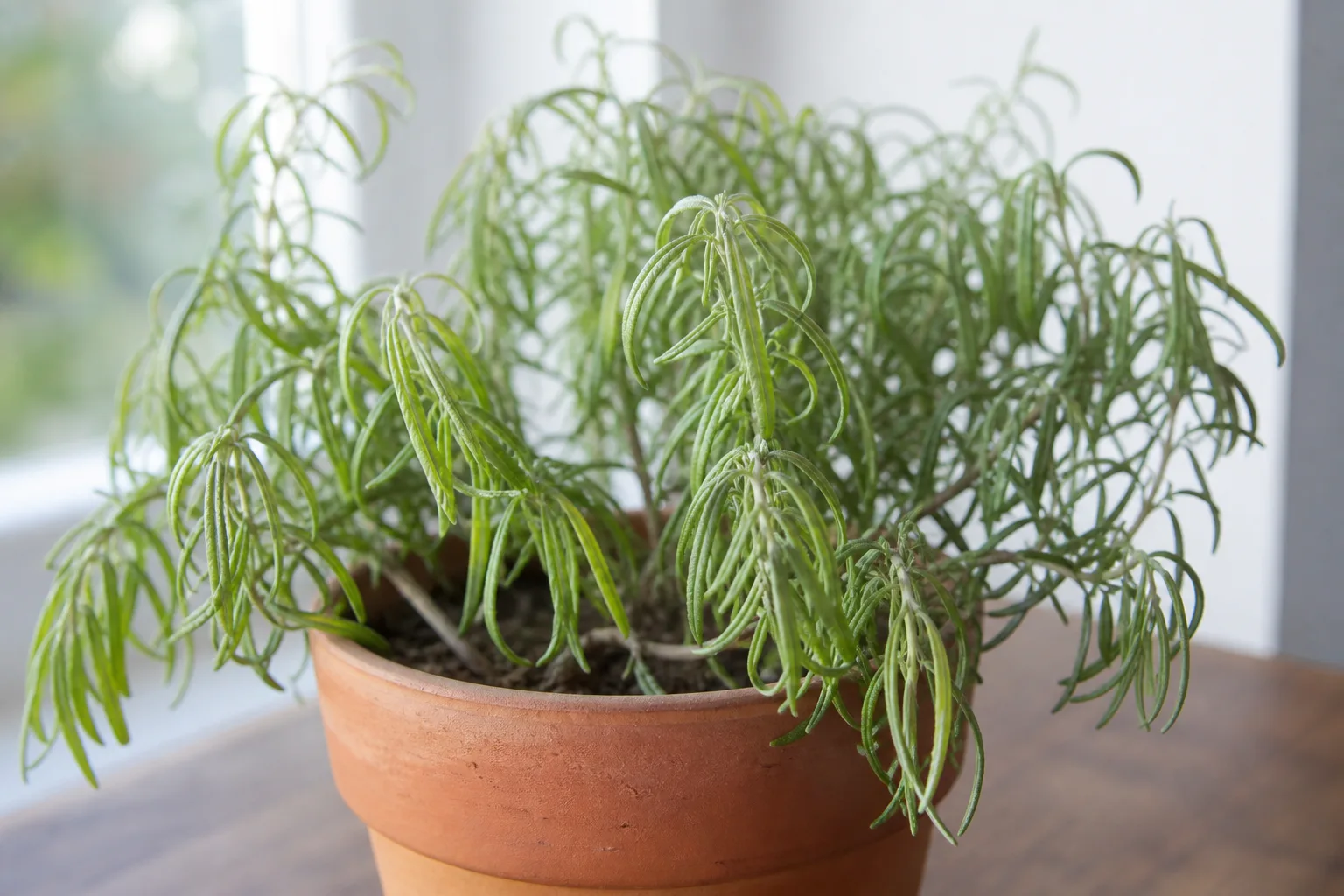
Drooping Leaves on Rosemary: Causes, Checks & Fixes
This guide covers drooping leaves on Rosemary. See also the general Drooping Leaves guide, watering, and light pages for this plant.
Drooping Leaves on Rosemary: Causes, Checks & Fixes
Quick answer
When rosemary needles hang down and lose their usual stiff, aromatic feel, the problem is almost always water moving wrong through the root zone-not a mystery leaf fungus. Mediterranean rosemary evolved for dry, rocky soil and full sun; in pots it droops quickly when roots cannot supply turgor pressure to needle-like leaves.
First step: push your finger 5 cm into the mix and lift the pot before you water. A light, dry pot needs a deep soak. A heavy, wet pot with limp foliage needs drying time and root checks-not more water.
What drooping leaves look like on Rosemary
Healthy rosemary holds its needle-like leaves at a slight upward angle along woody stems. The foliage feels firm, releases strong scent when rubbed, and springs back when you bend a stem lightly.
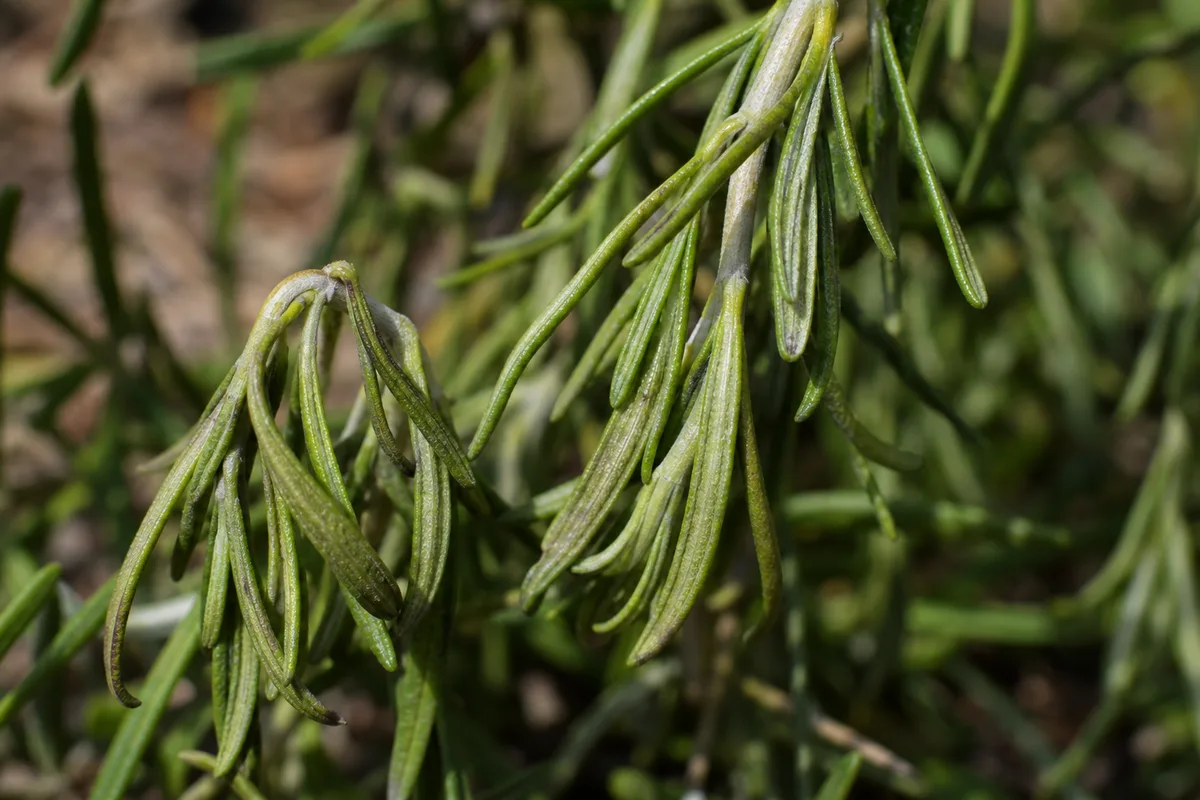
Drooping Leaves symptoms on Rosemary - compare with healthy tissue on the same plant.
Drooping shows up differently depending on cause:
Drought droop:
- Needles hang limply along the stem but stay mostly green
- Leaves may curl inward slightly and feel less aromatic
- Mix is dry at 5 cm depth; pot feels noticeably light
- Tips may turn gray-green or brown if dryness lasted several days
overwatering on Rosemary and root-failure droop:
- Needles wilt despite wet or cool soil
- Foliage feels soft rather than crisp; older needles may yellow
- Stem bases near the soil line turn brown, mushy, or hollow when pressed
- Mix smells sour; saucer water sits for days
- Whole sections collapse while neighboring stems still look normal
Temporary heat droop:
- Branches flop during hot midday sun on a dry pot
- Plant often recovers by evening or the next morning after soil cools
- No mushy stems or sour smell
Low-light weak droop:
- Long, pale stems lean toward the window
- Sparse needle clusters along stretched internodes
- Drooping worsens on lower shaded branches while tips reach for light
Rosemary droop rarely comes with heavy pest clusters, powdery coating, or chewed holes. If those appear alongside limp needles, treat the pest or disease-but still check soil moisture first because water stress and pests often overlap on stressed plants.
Why Rosemary gets drooping leaves
Rosemary is a drought-tolerant shrub from the Mediterranean basin. Its roots expect fast drainage, dry intervals between rain, and high light. When home conditions reverse those traits, needles lose internal water pressure and hang.
underwatering on Rosemary in fast-draining pots is common on sunny balconies and south-facing windows. Small terracotta pots in full summer sun can go from adequately moist to critically dry within a day or two. Rosemary needles have a low surface-area-to-volume ratio compared with broad-leaf herbs, so the plant can look fine until turgor drops suddenly.
Overwatering and root rot on Rosemary is the leading killer of container rosemary, especially indoors, in humid climates, and during winter when evaporation slows. Saturated mix drives out oxygen; roots stop functioning and rot. The cruel paradox: damaged roots cannot absorb water, so the plant wilts while standing in wet soil-exactly like many other herbs, but rosemary tolerates dry soil far better than wet.
Heat and transpiration mismatch hits rosemary hard when a root-bound pot in blazing sun cannot resupply water as fast as leaves lose it through midday heat. This is usually reversible if soil is rehydrated and the pot is not waterlogged.
Insufficient light produces weak, elongated stems that cannot support their own weight. Rosemary in a dim kitchen window may not wilt from thirst but still sags because the plant is etiolating-stretching for sun it needs to stay compact.
Heavy or moisture-retentive mix keeps roots wet too long even when you water sparingly. Standard peat-heavy potting soil works against rosemary; the plant wants sandy, gritty, well-drained conditions.
Recent Rosemary repotting guide or indoor move can cause temporary droop while fine roots re-establish. Rosemary dislikes wet roots in winter and poor indoor air circulation, so the shift from outdoor summer sun to a heated room often triggers stress droop if watering habits do not change.
How to confirm the cause
Work through these checks in order. Each step narrows the diagnosis before you change anything.
-
Morning inspection - Check the plant before midday heat. Overnight droop that remains by morning is more serious than afternoon flop that recovered overnight.
-
Soil moisture at 5 cm - Push your finger or a bamboo skewer 5 cm deep. Completely dry means drought. Cool, clinging, or soggy mix at that depth means excess moisture.
-
Pot weight - Lift the container. A light pot with limp green needles strongly suggests underwatering. A heavy pot with wilted foliage suggests root uptake failure on wet mix.
-
Drainage audit - Confirm holes are open, saucer water is emptied, and no decorative pot liner traps runoff. Rosemary should never sit in standing water.
-
Stem base test - Gently press lower woody stems where they meet the soil. Firm, dry bark is healthy. Soft, dark, or peeling tissue indicates basal rot from chronic wetness.
-
Smell check - Sour, anaerobic odor from the mix confirms overwatering damage. Dry, dusty smell with no odor of decay fits drought.
-
Light and placement history - Note direct sun hours, recent moves, and whether the plant came indoors for winter. Less than six hours of direct sun plus sagging often means etiolation, not thirst.
-
Recovery test (dry soil only) - If mix is dry at 5 cm, water thoroughly until runoff drains, empty the saucer, and recheck needle firmness in four to six hours. Perking up confirms simple dehydration. No improvement on already-wet soil means inspect roots instead of watering again.
First fix for Rosemary
Before adding or withholding water, confirm soil moisture at 5 cm depth and judge pot weight.
That single diagnostic pause prevents the most common rosemary mistake: watering a wilted plant that is already drowning. If the mix is dry, water deeply until water runs from drainage holes, then empty the saucer. If the mix is wet and stems are soft at the base, stop watering, move the pot to brighter air flow, and plan a root inspection within 24 hours if droop continues.
Do not repot, prune heavily, or fertilize on day one. Rosemary under stress needs stable conditions, not a stack of interventions.
Step-by-step recovery
If soil is dry (underwatering)
- Water until the mix is evenly moist and excess drains freely.
- For severely dry mix that repels water, bottom-soak the pot in a tray for 30–45 minutes, then let it drain completely.
- Place the plant back in full sun once foliage is dry to the touch.
- Wait five to seven days before the next watering, then resume checking at 5 cm depth only when dry.
If soil is wet (overwatering suspected)
- Stop watering immediately. Empty any saucer water.
- Move the pot to the brightest spot with good air movement-still at least six hours of direct sun if possible.
- If droop persists 48 hours on wet mix, or stems are soft at the base, unpot and inspect roots. Trim dark, mushy roots with clean scissors; leave firm, light-colored roots intact.
- Replant into fresh gritty mix (roughly 40% potting soil, 40% coarse sand or perlite, 20% fine gravel) in a pot only slightly larger than the root ball, with open drainage.
- Wait until the top 5 cm of new mix is dry before watering again-often seven to ten days after repotting from rot.
If heat caused temporary midday droop
- Confirm recovery happened overnight. If yes, adjust timing so the pot does not go into peak heat bone-dry.
- Consider a slightly larger pot or afternoon shade only during extreme heat waves-not permanent shade, which weakens rosemary further.
If low light is the driver
- Move to a south-facing window or outdoors into full sun gradually over a week.
- Trim the longest leggy stems after two weeks of improved light to encourage bushier regrowth.
Recovery timeline
Simple drought droop often improves within four to twelve hours after a thorough soak when roots are intact. Heat-related afternoon flop may resolve the same evening once temperatures drop.
Root-rot recovery takes longer-typically two to six weeks before new firm needle growth appears at stem tips, and only if enough healthy root tissue remains. Badly rotted plants may lose entire branches permanently even after repotting.
Lower needles that turned brown or crispy from extended drought usually do not green up again. New growth at tips is the reliable sign that recovery is working.
Lookalike symptoms to rule out
Powdery mildew coats needles with a dry white film and thrives in stagnant humid indoor air. It does not cause the soft, limp turgor loss of water-stress droop, though both can appear on an overwintered plant.
Spider mites cause stippling, fine webbing, and dull gray-green needles on drought-stressed rosemary-but the primary fix still starts with moisture and light correction before treating pests.
Normal winter slowdown reduces growth and scent indoors without true wilt. Needles stay firm; the plant simply stops pushing new shoots until light improves in spring.
Herb harvest shock from cutting more than one-third of foliage at once can temporarily reduce turgor on remaining stems. Recovery follows if roots and Rosemary watering guide stay stable.
Mistakes to avoid
Do not water automatically because needles look limp. Wet-soil wilt from root failure looks identical to drought from above.
Do not leave rosemary in a saucer of runoff. Reabsorbed water is a common path to root rot from overwatering on Rosemary overview.
Do not move the plant repeatedly between rooms while diagnosing. Pick a bright, airy spot and stabilize care there.
Do not use heavy peat mix or oversized decorative pots “so you water less often.” Extra soil volume holds moisture rosemary roots cannot tolerate.
Do not fertilize a drooping plant hoping to perk it up. Feed only after new growth resumes and only at low strength during active season.
Do not prune all drooping stems immediately. Wait to see which branches produce firm new tips; remove only dead or mushy wood.
Rosemary care cross-check
Drooping often exposes a mismatch between how you care for rosemary and what the plant needs:
- Light: At least six hours of direct sun daily. Weak light produces sagging leggy growth, not just slow growth.
- Water: Drought-tolerant does not mean neglect. Small pots in summer sun need regular dry-down checks-not a calendar schedule.
- Soil: Sandy, gritty, fast-draining mix with excellent aeration. Never allow water to sit in the saucer.
- Humidity: Rosemary dislikes very high humidity combined with poor airflow-common indoors in monsoon or winter heating seasons when overwatering is most fatal.
- Pot size: Rosemary tolerates being slightly root-bound better than sitting in a large wet root zone.
If several of these are off, fixing the environment matters more than treating individual drooping branches.
How to prevent drooping leaves next time
Check soil at 5 cm depth before every watering session-not on a fixed weekly calendar. Let the mix dry between water applications. In summer sun, outdoor pots may need water every few days; indoors in winter, the same plant may go two weeks between drinks.
Use terracotta or unglazed clay pots with drainage holes when possible. They dry more predictably than glazed ceramic or plastic.
Match mix to the plant: amend standard potting soil with coarse sand, perlite, and fine gravel until water drains in seconds, not minutes.
Keep rosemary in full sun year-round when growing indoors; supplement with a grow light if a south window cannot deliver six hours of direct light.
Improve airflow around overwintered plants. Powdery mildew and botrytis pressure rise when wet foliage, dim light, and stagnant air overlap-conditions that also encourage overwatering habits.
When bringing pots indoors for winter, reduce watering frequency before you reduce light, and never let cold wet mix sit against roots.
When to worry
Treat drooping as urgent when stem bases soften and darken, the mix smells sour, entire branches collapse while soil stays wet, or limp needles persist more than 48 hours after you corrected obvious dry-soil thirst.
A plant that revives after watering but wilts again within one to two days on still-moist soil likely has active root rot-delaying inspection reduces salvage chances.
Replace or restart from cuttings when more than half the root mass is mushy, the main stem is hollow at the base, or no firm new tips appear six weeks after repotting from rot. Rosemary is easy to propagate from healthy stem cuttings; nursing a rootless woody skeleton rarely succeeds.
Temporary midday droop on an otherwise healthy outdoor plant in summer is not urgent if needles firm up overnight and soil moisture checks stay on schedule.
Conclusion
Drooping rosemary needles are a water-and-roots signal, not a reason to spray or feed blindly. Read the mix at 5 cm depth, feel the pot weight, and check stem bases before you act. Dry soil gets a deep soak; wet soil with soft stems gets drying time and possible root surgery. Match that rhythm to full sun and gritty drainage, and most droop resolves before branches die back-leaving you with firm, fragrant needles ready for the kitchen again.
When to use this page vs other Rosemary guides
- Rosemary watering guide - Use for routine moisture checks before assuming drooping leaves is the main issue.
- Rosemary problems hub - Browse all 18 common issues on this species.
- Underwatering on Rosemary - Different entry point when symptoms overlap with drooping leaves.
- Overwatering on Rosemary - Different entry point when symptoms overlap with drooping leaves.
- Root Rot on Rosemary - Different entry point when symptoms overlap with drooping leaves.