Haworthia Plant Care: Light, Water & Soil Guide
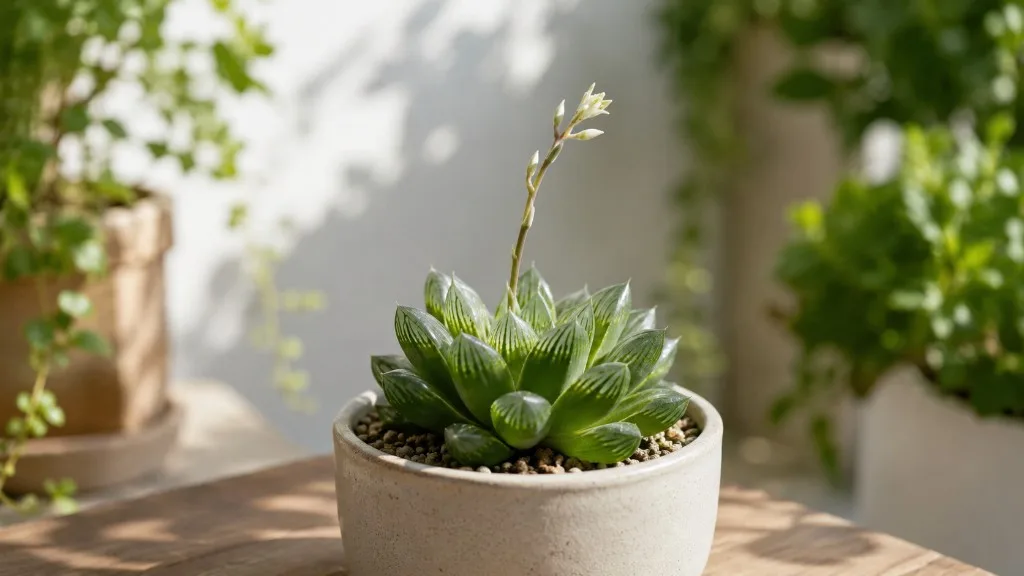
Haworthia spp.
Haworthia tolerates lower light than other succulents. Water when soil is completely dry - every 10–14 days in summer. Perfect for north-facing windows and offices. Separates offsets easily.
Haworthia Plant Care: Light, Water & Soil Guide
Start with wateringThe most common care mistake for HaworthiaWatering guide →Haworthia care essentials
Light
bright indirect light
Water
Soak and dry. Water when soil is completely dry - every 10–14 days summer; 21–28 days winter.
Soil
Fast-draining succulent mix: standard compost 50% + perlite 30% + grit 20%.
Humidity
Low to average (30–50%)
Temperature
18–26°C (65–79°F)
Fertilizer
Use diluted cactus and succulent fertilizer at half strength and stop if the plant is stressed, newly repotted, or not actively growing. Do not fertilize in autumn or winter.
About Haworthia
Haworthia is native to South Africa (Eastern Cape Province, semi-arid fynbos and karoo biomes), typically reaches 4–6 inches tall, 4–8 inch rosette spread indoors, with slow growth. Haworthia has a rosette growth habit and part of the Asphodelaceae family. It is also known as Zebra Plant, Zebra Cactus, and Haworthiopsis fasciata.
| Detail | Information |
|---|---|
| Also known as | Zebra Plant, Zebra Cactus, Haworthiopsis fasciata |
| Native region | South Africa (Eastern Cape Province, semi-arid fynbos and karoo biomes) |
| Mature size | 4–6 inches tall, 4–8 inch rosette spread |
| Growth rate | Slow |
| Growth habit | Rosette |
| Scientific name | Haworthia spp. |
| Family | Asphodelaceae |
Haworthia Plant Care: Light, Water & Soil Guide
What Is Haworthia?
Haworthia is a genus of small, slow-growing rosette succulents prized for thick, patterned leaves that store water and tolerate indoor conditions that would stress most other succulents. The group includes familiar houseplants such as zebra haworthia (Haworthia fasciata and closely related H. attenuata), window haworthia (H. cooperi), and dozens of miniature species and hybrids sold under the catch-all label Haworthia spp. on nursery tags. Indoors, most plants reach roughly 4 to 6 inches (10 to 15 cm) tall with a 4 to 8 inch (10 to 20 cm) rosette spread, forming tight clusters of fleshy leaves often marked with white stripes, bumps, or translucent “windows” near the tips.
If you are deciding whether Haworthia fits your home, the honest summary is this: Haworthia rewards Haworthia light guide, thorough but infrequent watering, and fast-draining soil - and it tolerates lower light better than echeveria, crassula, or most aloes. It is easier than a finicky calathea and slower than a pothos, which makes it ideal for desks, north-facing windows, and beginners who have already killed a succulent by treating it like a tropical foliage plant. The payoff is a compact, sculptural rosette that multiplies through offsets with minimal intervention. One practical caveat: low light keeps Haworthia alive but not always compact - survival and ideal form are different goals, and the article below explains how to balance both.
Botanical Background and Native Habitat
Haworthia belongs to the family Asphodelaceae, grouped with aloes, gasterias, and related succulents from southern Africa. That family connection matters for care because Asphodelaceae plants share a few baseline patterns: they store water in leaves, they depend on excellent drainage, and most problems start at the roots long before the rosette collapses. Haworthia is native primarily to South Africa, especially the Eastern Cape Province and surrounding semi-arid regions associated with fynbos and karoo biomes - landscapes with bright ambient light, cool nights, and long dry spells punctuated by seasonal rain.
In habitat, Haworthia often grows partially shaded under rocks, scrub, or taller vegetation, which explains its unusual tolerance for dimmer indoor rooms. Unlike desert cacti that bake in full sun all day, many Haworthia species receive filtered light for much of the year and retreat deeper into shade during the hottest, driest months. That ecology is the reason Haworthia can sit on a north windowsill or office shelf while an echeveria beside it etiolates within weeks. It is also why summer heat can trigger partial dormancy in some species - growth slows, water needs drop, and feeding should pause even though the plant still looks green.
Taxonomy shifts occasionally. Some species once listed as Haworthia have moved to Haworthiopsis, and retail tags lag behind scientific names. For practical care, rosette Haworthia, Haworthiopsis, and related gasterias follow similar indoor rules: fast drainage, infrequent watering, and light bright enough to prevent stretching. Do not confuse Haworthia with Aloe vera - both are rosette succulents with fleshy leaves, but aloe generally wants more light, grows larger, and is handled differently for pet safety and watering. Haworthia leaves are typically smaller, more translucent at the tips in many species, and the plant stays desk-sized for years.
Outdoors, Haworthia is hardy in USDA Zones 9 to 11, where it works as a water-wise ground cover or container plant in frost-free climates. Everywhere else, it is grown as a houseplant year-round or moved outdoors only during frost-free months. Any exposure to 32°F (0°C) or below is typically fatal, and sustained temperatures below about 50°F (10°C) can damage leaves and stall root activity.
Why Haworthia Outperforms Other Succulents Indoors
The single trait that sets Haworthia apart in apartment and office settings is partial-shade tolerance without immediate rot. Most popular succulents - echeveria, sedum, jade plant, many aloes - evolved for stronger light and dry-down cycles that match sunny windows. Place them in a dim corner and they stretch toward the glass while their soil stays wet too long, a combination that ends in root rot on Haworthia. Haworthia slows down in low light instead of aggressively reaching, and its thick leaves buffer short droughts, which gives you more margin for error when watering on an imperfect schedule.
That tolerance has limits worth stating clearly. Low light does not kill Haworthia quickly, but it does change the plant. New leaves may be smaller, paler, or spaced farther apart on the stem - a condition called etiolation. Once a leaf has stretched, it will not compact again; only new growth formed under better light will look tight. Think of Haworthia in a dim room as a survival mode plant, not a display specimen. Move it to an east window or add a grow light if compact rosettes matter to you.
Haworthia also fits small spaces. The slow growth rate means you are not Haworthia repotting guide every three months, and the rosette habit looks intentional on a shelf or terrarium ledge without pruning. Many species produce offsets - small clones at the base of the mother rosette - that you can leave for a clustered look or remove to share. That offset habit is Haworthia’s other great indoor advantage: you get backup plants for free without mastering leaf propagation or dealing with finicky cuttings.
Best Growing Conditions for Haworthia
Haworthia does best when your space approximates the bright-but-filtered rhythm of its native range. The four variables that decide almost every outcome are light, water, soil, and temperature. Align those and feeding, repotting, and propagation become routine. Misalign any one - especially water in low light - and the plant declines slowly enough that many growers blame the species instead of the environment.
Light Requirements and Low-Light Limits
Haworthia grows best in bright, indirect light - strong ambient daylight without harsh midday sun beating directly on the leaves for hours. An east-facing window is often ideal: gentle morning sun, then bright indirect exposure the rest of the day. West-facing windows work with filtered afternoon light or when the plant sits a few feet back from the glass. North-facing windows are where Haworthia earns its reputation; many rosettes remain healthy there when echeveria would stretch, though growth will be slower and offset production less frequent.
The fastest diagnostic for incorrect light is new growth, not old leaves. Compact new leaves that match the species’ expected color and spacing mean the plant is probably happy. Longer gaps between leaf pairs, thinner leaves, or a rosette leaning toward the window mean the plant wants more light - even if it is technically surviving. Bleached patches, brown scorch on sun-facing leaves, or a red-to-purple flush across the whole rosette usually mean too much direct sun or too fast an acclimation to a brighter spot. That reddish stress color is harmless in moderation but signals that the plant is working harder than it needs to indoors.
Low-light tolerance is real but frequently misunderstood. Haworthia can tolerate medium or even relatively low indirect light in many homes, especially compared with other succulents, but it will not thrive in a completely dark hallway or a windowless room without supplemental lighting. If your only option is a dim desk, add a full-spectrum LED grow light on a 10–12 hour timer, positioned 6–12 inches above the rosette, to keep growth compact. Rotate the pot weekly so offsets develop evenly rather than all leaning one direction.
Acclimate gradually when moving from a dim shop shelf to a brighter windowsill. Leaves formed in low light burn easily if you jump straight into unfiltered south-facing afternoon sun. Increase exposure over one to two weeks and read the newest leaves after each step.
Temperature and Humidity
Haworthia prefers stable indoor temperatures between 65 and 79°F (18 and 26°C) during active growth. It tolerates normal home heat up to about 90°F (32°C) if soil dries appropriately, but cold drafts and sustained temperatures below 50°F (10°C) can damage tissue and trigger dormancy at the wrong time. Avoid placing pots directly on cold window sills in winter, above radiators that cook roots, or in the direct path of air-conditioning vents that swing temperature hourly.
Humidity is a secondary concern compared with light and watering. Haworthia handles low to average indoor humidity in the 30–50% range well - typical of heated and air-conditioned homes. Very dry winter air can encourage spider mites, especially if airflow is poor, but Haworthia does not need misting and wet leaf surfaces can invite fungal spotting in stagnant corners. Good air circulation matters more than raising humidity; a small fan moving air in the room helps more than a pebble tray for this genus.
Some Haworthia species enter partial summer dormancy when temperatures climb and days are longest. Growth may pause even though the plant looks fine. During that phase, stretch watering intervals and skip fertilizer until cooler fall weather resumes visible offset production. Treat dormancy as a seasonal rhythm, not a sign of failure.
Soil and Drainage
Use a fast-draining succulent mix built around the principle that water moves through quickly and air reaches the roots. A workable home recipe is roughly 50% standard potting compost, 30% perlite, and 20% grit or coarse sand - adjust toward more mineral content if your home runs cool and dim, because wet organic matter lingers longer in those conditions. Commercial cactus and succulent mixes work if you amend heavy bags with extra perlite or pumice; straight peat-heavy indoor mix is the most common reason Haworthia rots in low light.
Target a slightly acidic to neutral pH around 6.0–7.0. Hobbyists rarely need to meter pH for Haworthia; the bigger practical issues are compaction, old broken-down mix, and salt buildup from hard tap water and over-fertilizing. Repot into fresh mix every one to two years even if the plant has not outgrown the pot, because mineral grit does not decompose but organic components do.
Always use a container with a drainage hole. Terracotta pots are especially helpful for Haworthia because they wick moisture through the walls and shorten dry-down time - valuable insurance when a plant lives in lower light. Decorative cachepots are fine only if you empty runoff after every watering and never let the inner pot sit in standing water.
How to Water Haworthia
The general rule for Haworthia is soak and dry. Water thoroughly when the root zone has dried, then let the mix go fully dry again before the next drink. A practical starting interval for many indoor setups is roughly every 14 to 21 days in the warm, bright months and once a month or less in winter, but your calendar should be a reminder to check, not a rule to follow blindly. Pot size, soil texture, light intensity, and whether the plant is actively producing offsets all change how fast the mix dries.
Check moisture at depth - not just on the surface, which dries first and misleads beginners. Insert a wooden skewer or chopstick into the pot; if it comes out clean and dry at the root zone, water. You can also lift the pot: a light container usually means dry mix, while a heavy pot with cool, damp soil means wait. When you water, soak evenly until a small amount runs from the drainage hole, then empty the saucer so roots are not standing in stale water.
Haworthia watering guide During Active Growth
During active growth - typically spring and fall for many Haworthia, with a possible summer pause - the plant uses water on a predictable rhythm when light and temperature are stable. The goal is a full drink followed by a complete dry-down, not permanently damp soil or tiny daily sips that wet only the top inch. Haworthia leaves store water; slightly thinner, softer leaves can indicate thirst, while mushy, translucent leaves at the base indicate the opposite problem.
If you just bought the plant, expect a short adjustment period. Nursery Haworthia often arrives in peat-heavy mix under greenhouse light. Do not compensate for transplant stress by watering more frequently unless the pot is genuinely dry at depth; stabilize placement first, then fine-tune the interval based on how fast your specific container dries in your room.
Seasonal Adjustments and Dormancy
In cooler, dimmer months - especially December through February in northern latitudes - growth slows and the pot dries more slowly. Stretch the interval between waterings and reduce or pause fertilizer until new offset leaves appear in spring. The most common winter failure mode is continuing a summer watering schedule in lower light, which keeps the mix waterlogged and leads to yellow lower leaves, fungus gnats, and root rot.
During summer dormancy in hot homes, apply the same caution. High temperatures plus wet soil suffocate roots even when the plant looks fine above the surface. Some growers water only lightly or skip entirely for several weeks in peak heat, then resume when nights cool and new growth resumes. Let the plant and the pot weight guide you rather than a rigid seasonal chart copied from a different climate.
Common Watering Mistakes
The single most damaging mistake is watering on a fixed schedule without checking the pot, especially in low light where soil stays wet far longer than on a bright windowsill. The second is letting the plant sit in a full saucer or cachepot, which suffocates roots within days even if the top of the mix looks dry. The third is giving small daily splashes instead of a thorough soak when the plant is genuinely dry - that wets the surface while the center stays parched, producing a cycle of stress without reliable hydration.
People also misread Haworthia symptoms. A thirsty plant often has slightly deflated but firm leaves and a light pot; a rotting plant may show yellow, mushy lower leaves while the mix still feels cool and damp. Always pair leaf softness with a moisture check at depth before adding more water. If the base smells sour or leaves pull away with no resistance, stop watering, unpot, trim brown mushy roots, and repot into fresh dry mix.
How to Feed Haworthia
Haworthia is a light feeder compared with fast-growing foliage plants. A balanced water-soluble cactus or succulent fertilizer - for example 10-10-10 - diluted to one-quarter to one-half of the label rate is sufficient for most indoor rosettes. Apply to already-moist soil once or twice during active growth, commonly in spring and again in early fall, not monthly year-round. If your potting mix contains a slow-release starter charge, hold off on supplemental feeding for the first few months after repotting.
Pause fertilizer entirely during winter dormancy, summer heat dormancy, after repotting until new growth appears, and while the plant is recovering from root rot or pest damage. Overfeeding produces salt buildup that shows up as brown leaf tips even when watering is otherwise correct. If margins crisp despite good moisture, flush the pot with plain water at two to three times the pot volume and pause feeding for several months.
Feeding cannot fix etiolation, rot, or poor drainage. If the rosette is stretching or yellowing from the base, address light and watering before reaching for fertilizer.
Repotting and Root Health
Repot Haworthia roughly every one to two years, or whenever roots circle drainage holes, the plant dries out unusually fast after watering, water runs straight through without soaking in, or the mix has broken down into fine, water-retentive mud. The best timing is early spring as active growth resumes, giving the plant a full season to re-establish. Haworthia grows slowly, so aggressive upsizing is rarely needed - refreshing depleted soil is often the main reason to repot.
Choose a pot only one size larger than the current root ball - typically 1 inch (2.5 cm) wider. Haworthia roots are proportionally large for the rosette and appreciate some depth, but an oversized pot holds excess wet mix that small root systems cannot use, which is the most common trigger for rot after repotting. Use fresh, well-draining mix, plant at the same depth as before, and wait five to seven days before the first thorough watering so cut or disturbed roots callus slightly.
Signs It Is Time to Repot
Physical signs include offsets crowding the pot rim, roots emerging from drainage holes, or mix that has shrunk away from the sides and dries unevenly. Performance signs include stalled offset production for a full growing season despite adequate light, or chronic tip burn that persists after you have corrected watering - sometimes indicating mineral-loaded old mix rather than current care errors.
Do not repot a plant actively collapsing from overwatering on Haworthia until you have inspected roots and trimmed rot. Moving a failing root ball into fresh mix without fixing the moisture problem rarely saves Haworthia.
Propagation Methods for Haworthia
The standard home propagation method for Haworthia is offset division, not leaf cuttings. Mature rosettes produce pups - small clones attached at the base - that you can remove once they have their own roots or after they have grown to one-third the size of the mother plant.
Wait until the offset has several of its own leaves and visible roots when you gently lift the cluster from the pot. Use a clean, sharp knife or twist the pup free with a slight rocking motion, keeping as many offset roots as possible. Let the cut surface dry for one to two days in shade, then pot the offset in the same fast-draining mix you use for adults. Water lightly after a week, then transition to normal soak-and-dry once the plant resists a gentle tug.
Leave offsets attached if you prefer a clustered, colony look - Haworthia often displays best as a tight group in a shallow dish. Separate them when you want individual pots or need to share plants with friends.
Do not propagate stressed, rotting, or heavily pest-infested rosettes. Pups inherit the parent’s problems, and weak offsets fail at a much higher rate than healthy ones. Leaf propagation works for some succulent genera but is unreliable for most Haworthia species compared with division; beginners should start with offsets.
Common Haworthia Problems
Most Haworthia problems are environmental, not mysterious diseases. The plant communicates through leaf firmness, color, spacing, and base integrity long before the entire rosette collapses. The useful habit is to check light, moisture, and drainage in that order before reaching for pesticide or extra fertilizer.
Yellow Leaves, Root Rot, and Pests
Yellow, mushy lower leaves usually mean overwatering, poor drainage, or watering on a summer schedule in a dim winter room. If yellow leaves are soft and the mix is wet at depth, unpot and inspect roots - healthy Haworthia roots are white or tan and firm; rotting roots are brown, black, or mushy and may smell sour. Trim affected tissue, let the plant dry briefly, and repot into fresh grit-heavy mix. Remove badly damaged leaves; they will not green up again.
Brown, crispy tips on otherwise firm leaves often point to salt buildup, prolonged underwatering on Haworthia, or very low humidity combined with heat stress. Flush the pot if salts are suspected and review whether the watering rhythm matches how fast the plant actually dries in its current light.
Etiolation - leggy, stretched growth means insufficient light, especially common on desks several feet from windows. Move the plant brighter or add a grow light; accept that existing stretched leaves will not revert, and judge success by new compact growth after several weeks.
Red or purple leaf color often signals light stress from too much direct sun or grow lights placed too close. Move the plant to softer indirect light; color may fade slowly on new leaves.
Watch for mealybugs hiding in leaf axils as white cottony clusters, scale as immobile bumps along the base, and fungus gnats if the mix surface stays wet. Catch infestations early with weekly inspection. Manual removal, a strong rinse, and insecticidal soap applied per label directions handle most issues if you act before populations spread. Spider mites appear as fine stippling in very dry air - increase airflow and treat promptly because mites spread quickly among succulents on the same shelf.
Is Haworthia Safe for Pets?
Haworthia is non-toxic to cats and dogs according to the ASPCA’s toxic plant listing, which lists Haworthia species as non-toxic to both dogs and cats. The separate entry for zebra haworthia (Haworthia fasciata) also classifies the plant as non-toxic to cats, dogs, and horses. That makes Haworthia one of the safer succulent choices for pet households, especially compared with jade plant (Crassula ovata), aloe, and many euphorbias, which carry documented toxicity concerns.
Non-toxic does not mean trouble-free. The ASPCA notes that ingestion of any plant material can cause mild gastrointestinal upset such as vomiting in some pets, even when the plant itself is not classified as poisonous. Non-toxic also does not mean chew-proof - a determined cat can still knock over pots or damage rosettes. Haworthia’s small size helps on high shelves, but curious pets may still investigate spiky leaf tips.
If you suspect your pet ingested an unknown succulent, identify the plant by botanical name, not common name alone - “zebra plant” and similar labels apply to multiple species with different toxicity profiles. For confirmed Haworthia ingestion with mild symptoms, monitor your pet and contact your veterinarian or the ASPCA Animal Poison Control Center at (888) 426-4435 if vomiting, lethargy, or loss of appetite persists. This is general information, not veterinary advice.
For households with chewers, Haworthia belongs in the same practical category as peperomia or spider plant: a good choice, but still worth placing out of reach if your pet treats every pot as a snack bar.
Conclusion
Haworthia (Haworthia spp.) is a slow-growing South African rosette succulent that trades a little patience for exceptional indoor adaptability. Give it bright indirect light when you want compact form, soak-and-dry watering in fast-draining mix, stable warm temperatures above 50°F, and patience through summer and winter slow periods, and it will stay firm and multiply through offsets for years. It tolerates north windows and office desks better than most succulents - as long as you slow watering in low light to match the slower dry-down.
When something looks wrong, read the plant in context: stretched pale leaves mean more light; red or scorched leaves mean less direct sun; mushy yellow bases mean too much water or poor drainage; firm leaves on a dry, light pot mean it is time to soak. Remove offsets when you want new plants, repot when mix breaks down, and skip fertilizer during dormancy. Do that, and Haworthia becomes one of the most reliable small succulents for rooms where echeveria and aloe struggle - compact, pet-safe according to the ASPCA, and generous with pups when conditions finally align.
When to use this page vs other Haworthia guides
- Haworthia overview - Canonical hub for this species - care topics and problems branch from here.
- Haworthia problems - Symptom-first path when you already know something is wrong.
Related Haworthia guides
How to care for Haworthia?
How much light does Haworthia need?
bright indirect light
- bright indirect light - bright indirect light.
When should you water Haworthia?
Soak and dry. Water when soil is completely dry - every 10–14 days summer; 21–28 days winter.
- Insert a wooden skewer into the soil - Water when soil is completely dry - every 10–14 days summer; 21–28 days winter.
- if it comes out clean and dry - Soak and dry.
- water - Water when soil is completely dry - every 10–14 days summer; 21–28 days winter.
- Drain excess water - Water when soil is completely dry - every 10–14 days summer; 21–28 days winter.
What soil works best for Haworthia?
Fast-draining succulent mix: standard compost 50% + perlite 30% + grit 20%.
- cactus potting mix - Fast-draining succulent mix: standard compost 50% + perlite 30% + grit 20%.
- coarse perlite (30–40%) - Fast-draining succulent mix: standard compost 50% + perlite 30% + grit 20%.
Grower notes for Haworthia
What matters most with Haworthia
Haworthia stores water in leaves, stems, roots, or a swollen base, so overcare is usually more dangerous than short dry spells. Strong light and drainage are the safety net. In practice, the care checkpoint is simple: bright indirect light. Pair that with fast-draining succulent mix: standard compost 50% + perlite 30% + grit 20%, and avoid changing water, pot size, and placement all at once.
Best placement in a real home
Haworthia belongs where bright indirect light is realistic for most of the day, not only where the pot looks good. Soak and dry. Water when soil is completely dry - every 10–14 days summer; 21–28 days winter. If the pot stays wet longer than expected, move the plant into better light or reassess the mix before watering again. Humidity target: Low to average (30–50%). Temperature comfort zone: 18–26°C (65–79°F).
Before you buy this plant
Choose Haworthia with firm new growth, clean leaf undersides, and soil that does not smell sour or feel compacted. Be cautious if you see overwatering, sticky residue, collapsed crowns, or a pot that is wet in poor light. Cosmetic old-leaf damage is less worrying than weak roots or active pests.
First month after bringing it home
Do not repot Haworthia on day one unless the mix is failing or pests are obvious. Quarantine it, learn how fast the pot dries, and keep care boring while it adjusts. Watch especially for overwatering, etiolation, and mealybugs. If problems appear, correct the condition first rather than stacking fertilizer, repotting, and pruning together.
Pet-aware note for Haworthia
Haworthia is a better choice for pet-aware homes than toxic ornamentals, but pet safe does not mean the plant should be chewed. Use hanging, shelf, or room placement if pets dig in soil or shred leaves, and choose sturdier plants for high-traffic pet zones.
How to tell Haworthia is settling in
Also sold as Zebra Plant, Zebra Cactus, and Haworthiopsis fasciata, this plant should be judged by stable new growth rather than label names alone. If you plan to multiply it later, common methods include Offsets and Leaf cuttings. Repot only when you see Pups crowding the pot and soil degraded and no longer draining well. If etiolation shows up early, inspect light, watering, and roots before assuming the plant is permanently weak.
Is it pet safe?
Haworthia is generally considered non-toxic to cats and dogs.
Non-toxic to cats and dogs per ASPCA. Safe for pet households.
Watering Haworthia
For Haworthia, insert a wooden skewer into the soil; if it comes out clean and dry, water and water every 14–21 days in summer; once a month or less in winter. Minimal water in winter; near-dormant growth.
| Detail | Information |
|---|---|
| How often | Every 14–21 days in summer; once a month or less in winter |
| How to check | Insert a wooden skewer into the soil; if it comes out clean and dry, water |
| Seasonal changes | Minimal water in winter; near-dormant growth |
Signs of overwatering
- Leaf tips turning brown then entire leaves yellowing
- soft mushy leaves at base of rosette
- stem rot
Signs of underwatering
- Leaves becoming thinner and more papery
- slight curling inward
Soil & potting for Haworthia
Use a mix of cactus potting mix, coarse perlite (30–40%) for Haworthia. Excellent drainage essential; terracotta pots work well. Target soil pH around 6.0–7.0. Repot every 2–3 years; prefers to be slightly root-bound, ideally in spring.
| Detail | Information |
|---|---|
| Recommended mix | cactus potting mix, coarse perlite (30–40%) |
| Drainage | Excellent drainage essential; terracotta pots work well |
| Soil pH | 6.0–7.0 |
| Repotting frequency | Every 2–3 years; prefers to be slightly root-bound |
| Best season to repot | Spring |
Signs it needs repotting
- Pups crowding the pot
- soil degraded and no longer draining well
Humidity & temperature for Haworthia
Haworthia prefers low to average (30–50%), though normal home humidity is usually fine. Keep temperatures around 18–26°C (65–79°F).
| Detail | Information |
|---|---|
| Humidity | Low to average (30–50%) - normal home humidity is fine. |
| Ideal temperature | 18–26°C (65–79°F) |
Fertilizer & pruning for Haworthia
Use use diluted cactus and succulent fertilizer at half strength and stop if the plant is stressed, newly repotted, or not actively growing. Do not fertilize in autumn or winter. for Haworthia.
| Detail | Information |
|---|---|
| Fertilizer type | Use diluted cactus and succulent fertilizer at half strength and stop if the plant is stressed, newly repotted, or not actively growing. Do not fertilize in autumn or winter. |
Common problems on Haworthia
Overwatering
HighLikely cause: Haworthia is particularly susceptible to root and crown rot from overwatering in low-light conditions
Quick fix: Remove from pot, inspect roots, trim rotted parts, repot in dry mix, do not water for 2 weeks
Full fix guide →Mealybugs
MediumLikely cause: Mealybugs hide in the tight leaf axils of haworthia rosettes, well-protected and hard to spot
Quick fix: 70% isopropyl alcohol on cotton swab to each axil; neem oil spray; inspect weekly for 3 weeks
Full fix guide →Yellow Leaves
MediumLikely cause: Common on this plant type; confirm with recent watering, light, and root checks.
Quick fix: Inspect the plant and correct the most likely care stressor before stacking treatments.
Full fix guide →Brown Tips
MediumLikely cause: Common on this plant type; confirm with recent watering, light, and root checks.
Quick fix: Inspect the plant and correct the most likely care stressor before stacking treatments.
Full fix guide →Root Rot
MediumLikely cause: Common on this plant type; confirm with recent watering, light, and root checks.
Quick fix: Inspect the plant and correct the most likely care stressor before stacking treatments.
Full fix guide →Underwatering
MediumLikely cause: Common on this plant type; confirm with recent watering, light, and root checks.
Quick fix: Inspect the plant and correct the most likely care stressor before stacking treatments.
Full fix guide →Spider Mites
MediumLikely cause: Common on this plant type; confirm with recent watering, light, and root checks.
Quick fix: Inspect the plant and correct the most likely care stressor before stacking treatments.
Full fix guide →Aphids
MediumLikely cause: Common on this plant type; confirm with recent watering, light, and root checks.
Quick fix: Inspect the plant and correct the most likely care stressor before stacking treatments.
Full fix guide →Leggy Growth
MediumLikely cause: Common on this plant type; confirm with recent watering, light, and root checks.
Quick fix: Inspect the plant and correct the most likely care stressor before stacking treatments.
Full fix guide →Slow Growth
MediumLikely cause: Common on this plant type; confirm with recent watering, light, and root checks.
Quick fix: Inspect the plant and correct the most likely care stressor before stacking treatments.
Full fix guide →Wilting
MediumLikely cause: Common on this plant type; confirm with recent watering, light, and root checks.
Quick fix: Inspect the plant and correct the most likely care stressor before stacking treatments.
Full fix guide →Drooping Leaves
MediumLikely cause: Common on this plant type; confirm with recent watering, light, and root checks.
Quick fix: Inspect the plant and correct the most likely care stressor before stacking treatments.
Full fix guide →Low Humidity
MediumLikely cause: Common on this plant type; confirm with recent watering, light, and root checks.
Quick fix: Inspect the plant and correct the most likely care stressor before stacking treatments.
Full fix guide →Not Enough Light
MediumLikely cause: Common on this plant type; confirm with recent watering, light, and root checks.
Quick fix: Inspect the plant and correct the most likely care stressor before stacking treatments.
Full fix guide →Fungus Gnats
MediumLikely cause: Common on this plant type; confirm with recent watering, light, and root checks.
Quick fix: Inspect the plant and correct the most likely care stressor before stacking treatments.
Full fix guide →Mold on Soil
MediumLikely cause: Common on this plant type; confirm with recent watering, light, and root checks.
Quick fix: Inspect the plant and correct the most likely care stressor before stacking treatments.
Full fix guide →