Yellow Leaves on Haworthia: Causes, Checks & Fixes
Quick answer
Yellow leaves on Haworthia usually mean overwatering, underwatering, too much direct sun, or harmless lower-leaf aging-not one disease. First step: squeeze the lowest affected leaf-mushy translucent yellow on wet mix calls for dry-down; thin shriveled leaves on a light pot call for a cautious soak.
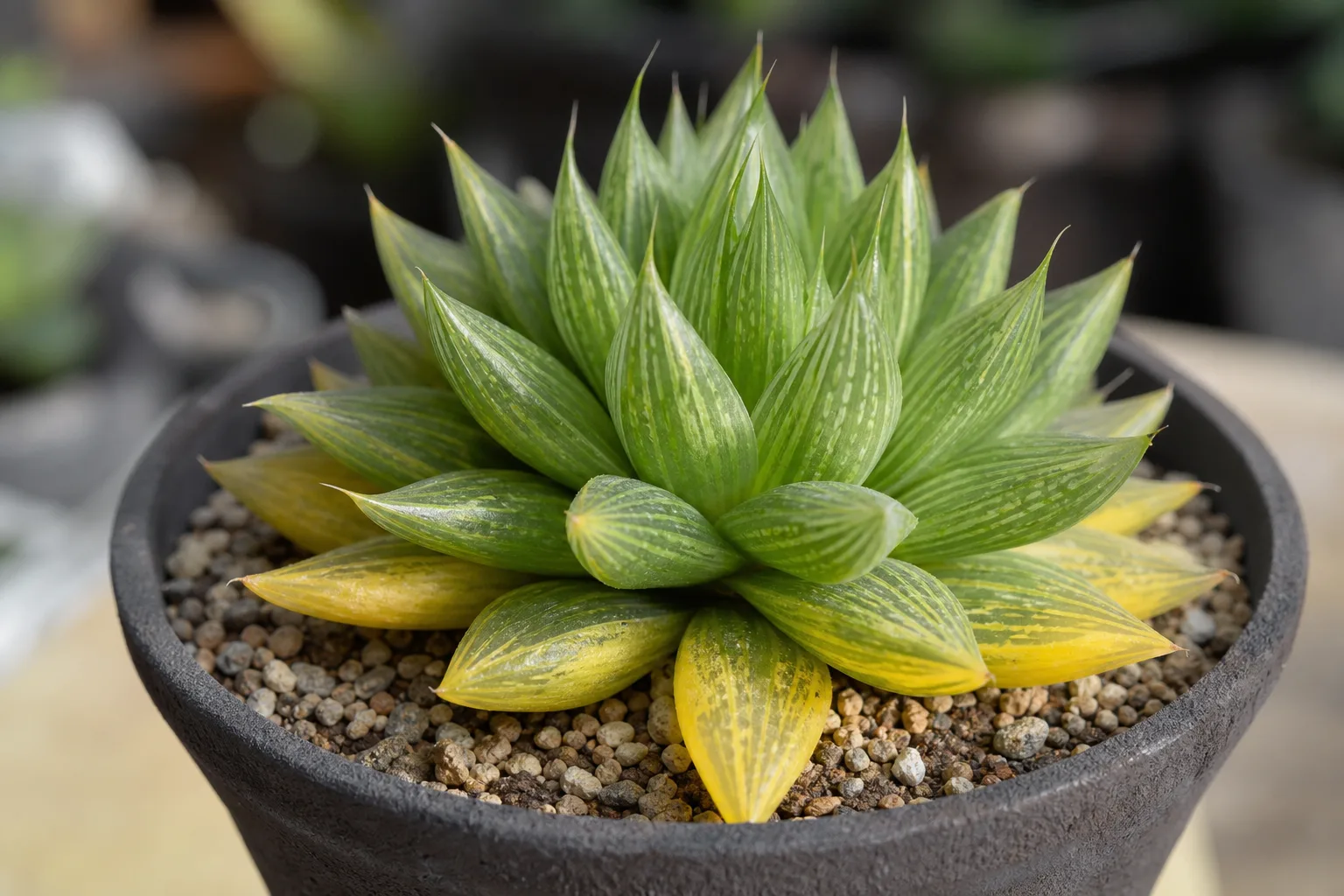
Yellow Leaves on Haworthia: Causes, Checks & Fixes
This guide covers yellow leaves on Haworthia. See also the general Yellow Leaves guide, watering, and light pages for this plant.
Yellow Leaves on Haworthia: Causes, Checks & Fixes
Quick answer
Haworthia rosettes are small succulent houseplants that tolerate lower light than sun-hungry Echeveria but still demand infrequent watering and sharp drainage. Yellow leaves on Haworthia almost always trace to overwatering (mushy translucent lower leaves on wet mix), underwatering on Haworthia (thin shriveled outer leaves on a dry pot), direct sun scorch, or normal aging of the lowest rosette leaves.
The indoor trap: Haworthia sits in a dim bathroom or desk where mix never dries, while the owner treats it like a drought-proof desert plant and keeps watering on schedule.
First step: squeeze the lowest yellow leaf and lift the pot. Mushy, translucent tissue on heavy wet soil means stop watering until the mix dries completely. Thin, concave leaves on a very light pot mean one thorough soak, then wait for dry-down per the watering guide. Bleached firm patches on sun-facing leaves mean move out of direct afternoon beams.
What yellow leaves look like on Haworthia
Haworthia yellows through texture and soil moisture, not color alone.
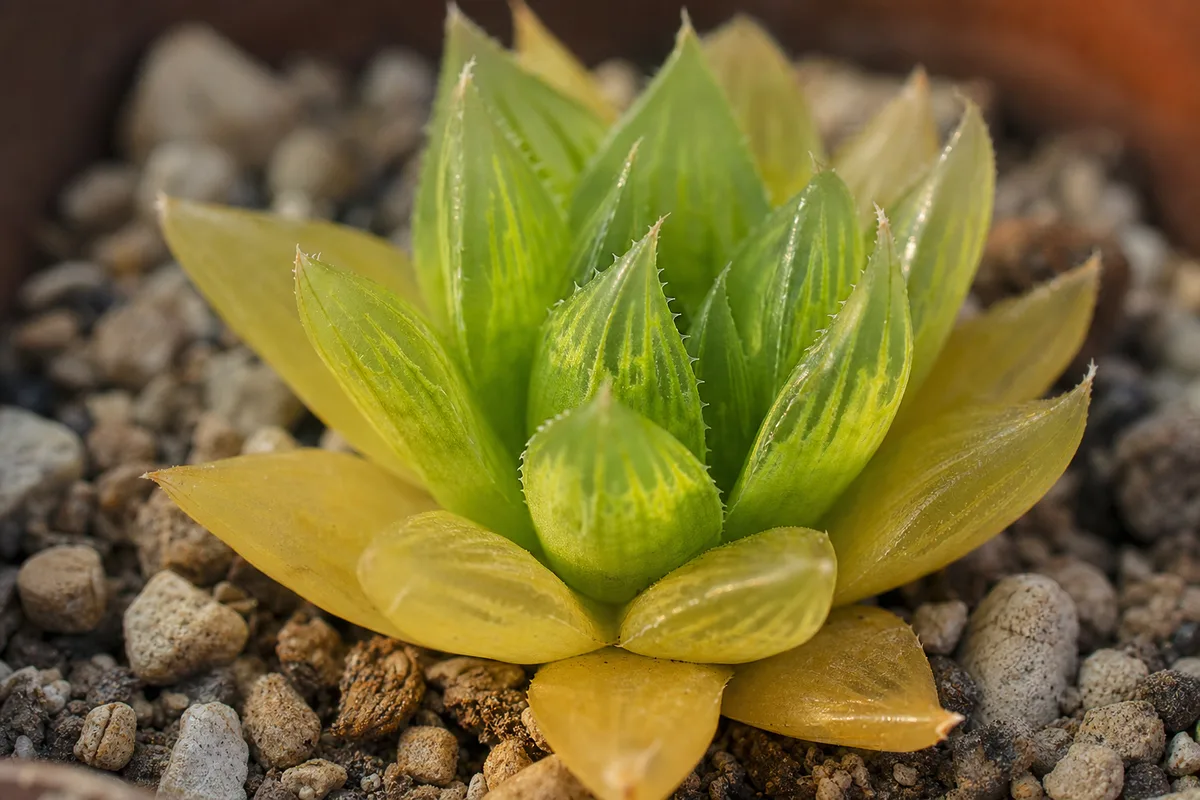
Yellow Leaves symptoms on Haworthia - compare with healthy tissue on the same plant.
Overwatering / rot pattern:
- Translucent, mushy lower leaves yellow from the base upward
- Pot stays heavy days after light watering
- Leaves pull off easily with gentle pressure
- Blackening at rosette base or sour smell
- Pairs with fungus gnats-see overwatering and root rot
Underwatering pattern:
- Outer leaves thin and concave, sometimes yellow-brown at tips
- Very light pot, mix shrunken from edges
- Leaves still firm, not mushy
- Recovery within 24–48 hours after soak if stem base is sound
Sun scorch pattern:
- Bleached yellow-white patches on leaves facing intense sun
- Firm leaf texture-not translucent like rot
- Often after moving from shade to south window without acclimation
Low-light + overwatering combo:
- Pale dull green-yellow whole rosette in dim wet conditions
- Mix stays damp for weeks; lower leaves mushy while center still looks okay briefly
- See not enough light
Normal aging:
- One or two oldest bottom leaves dry yellow and papery over months
- Firm green center, normal pot weight on soak-and-dry schedule
Why Haworthia gets yellow leaves
Overwatering in low-light spots. Haworthia needs well-drained soil and careful watering. Dim rooms slow evaporation; calendar watering keeps roots oxygen-poor. Saturated soil damages root function and yellows lower leaves first.
Underwatering in hot windows. Small pots in summer sun dry fast. Outer leaves shrivel yellow while the center still looks fine.
Sun scorch after sudden moves. Haworthia tolerates lower light but burns in harsh midday sun. Variegated forms bleach faster.
Winter dormancy mismatch. Succulents slow in cool low-light months. Summer watering frequency in winter keeps mix wet too long.
Natural senescence. Oldest bottom leaves yellow as new center leaves emerge-harmless if the stem base stays firm.
How to confirm the cause
- Leaf squeeze - Mushy on wet mix = rot risk. Thin and firm on dry mix = drought.
- Pot weight - Heavy and damp vs. light and dusty.
- Sun exposure - Bleached patches on window-facing leaves = scorch.
- Stem base - Black soft tissue = urgent rot.
- Light level - Dim shelf plus wet mix = compound stress.
| Pattern | Pot weight | Leaf texture | Sun side | Likely cause |
|---|---|---|---|---|
| Lower mushy yellow | Heavy | Soft, translucent | Any | Overwatering |
| Outer shriveled yellow | Light | Thin, firm | Any | Underwatering |
| Bleached patches | Normal | Firm | Window-facing | Sun scorch |
| 1–2 bottom leaves | Normal | Dry, papery | Any | Aging |
First fix for Haworthia
- Wet heavy pot with mushy leaves: Stop watering until mix is fully dry. Do not mist.
- Light dry pot with shriveled leaves: Soak until runoff, drain, wait for full dry-down before next drink.
- Sun scorch: Move to Haworthia light guide with only gentle morning sun.
One targeted fix first-no repot, fertilizer, and pesticide stack on day one.
Step-by-step recovery
Overwatering
- Dry-down one to two weeks indoors.
- Remove mushy yellow leaves.
- Unpot if stem base blackens; trim rot, repot in gritty mix.
Underwatering
- Deep soak once.
- Trim fully crisp outer leaves.
Sun scorch
- Relocate to filtered light.
- Remove worst bleached leaves cosmetically.
Recovery timeline
- Underwatering: Plump leaves in 24–48 hours.
- Overwatering (mild): Spread stops in two to three weeks.
- Scorch: New clean leaves in three to four weeks.
Judge success by firm new center leaves.
Mistakes to avoid
- Do not keep Haworthia in a dim bathroom on a weekly water schedule.
- Do not place shade-grown plants into harsh south sun without acclimation.
- Do not assume yellow leaves need fertilizer on wet mix.
How to prevent yellow leaves next time
Water when the mix dries at the rosette base. Use fast-draining succulent mix. Give bright indirect light with limited direct sun. Remove spent lower leaves during checks. See the Haworthia overview.
When to use this page vs other Haworthia guides
- Haworthia watering guide - Use for routine moisture checks before assuming yellow leaves is the main issue.
- Haworthia problems hub - Browse all 16 common issues on this species.
- Overwatering on Haworthia - Different entry point when symptoms overlap with yellow leaves.
- Underwatering on Haworthia - Different entry point when symptoms overlap with yellow leaves.
- Not Enough Light on Haworthia - Different entry point when symptoms overlap with yellow leaves.