Root Rot on Haworthia: Causes, Checks & Fixes
Quick answer
Root rot on Haworthia follows chronically wet gritty mix in a leaf-storage succulent-limp leaves on damp soil and soft tissue at the rosette base are the classic trap. First step: stop watering, lift the pot, and check crown firmness and mix moisture at depth before you unpot or trim.
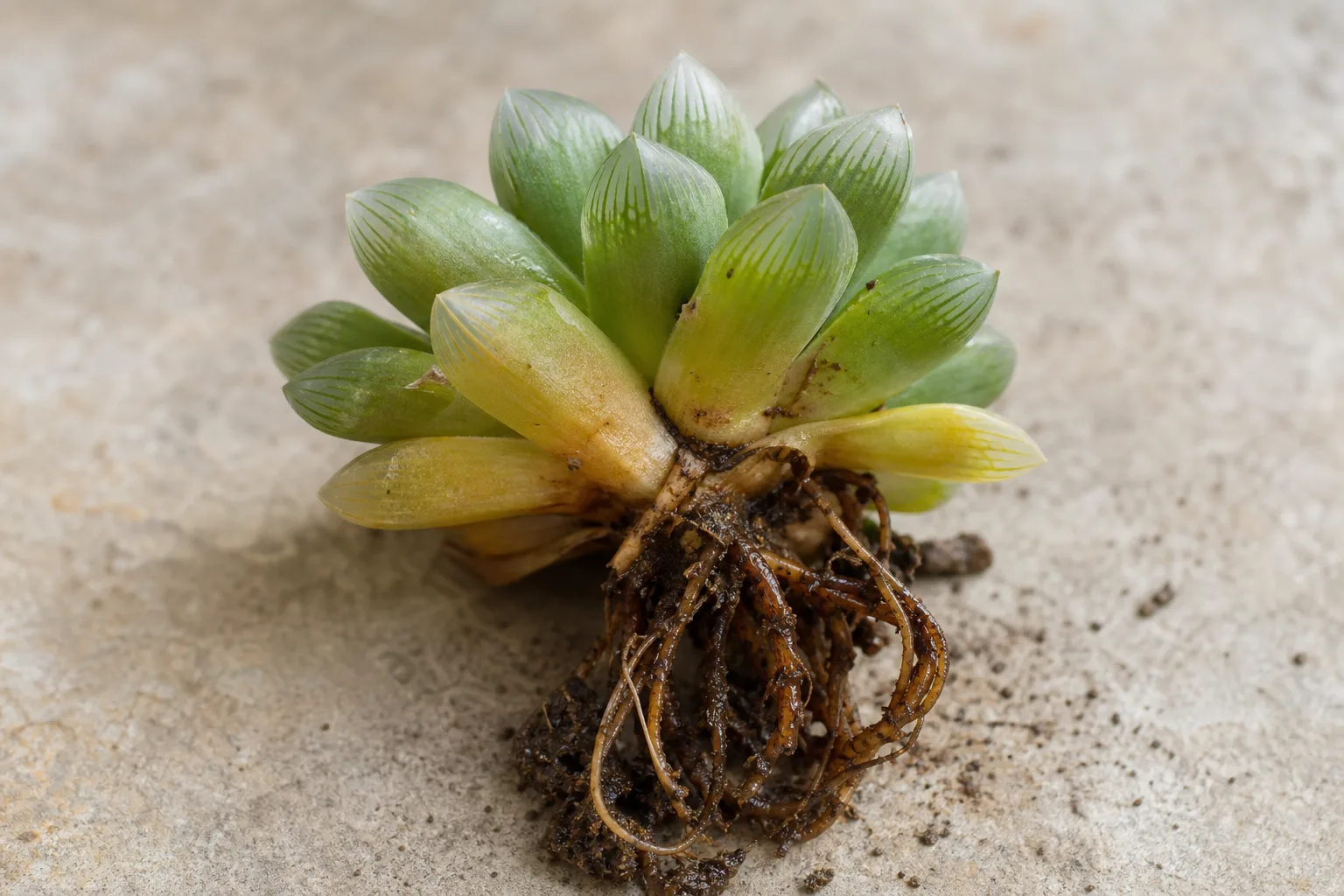
Root Rot on Haworthia: Causes, Checks & Fixes
This guide covers root rot on Haworthia. See also the general Root Rot guide, watering, and light pages for this plant.
Root Rot on Haworthia: Causes, Checks & Fixes
Quick answer
Root rot on Haworthia (Haworthia spp.) is almost always a watering and drainage failure in a leaf-storage succulent-not a mysterious disease you treat with spray. These compact South African rosettes evolved for soak-and-dry cycles: a thorough drink, then a full dry-down before the next water. When mix stays damp for weeks-especially in low light or winter dormancy-roots suffocate, fungi move in, and rot climbs from the root zone into the crown at the rosette base.
The signature trap: limp, translucent leaves on heavy wet soil. Growers see wilt and water again, but rotting roots cannot absorb moisture. The wilt-on-wet-soil paradox is your first clue-wilting with moist soil often means roots cannot absorb water because they are decaying.
First step: stop watering immediately. Lift the pot. Press a wooden skewer through the drainage hole to the lower third of the mix. If soil clings and the pot feels heavy, plus the crown near the soil line feels soft or smells sour, treat root rot as likely before you repot, trim, or fertilize.
Root rot vs. other Haworthia problems
The wilt-on-wet-soil pattern separates root rot from thirst on Haworthia better than any single leaf color. Underwatered Haworthia wilts on a light, dry pot and firms up within days after one thorough soak once the mix is confirmed dry. Root rot produces the opposite: collapse on heavy wet mix with no rebound after watering.
| Pattern | Pot weight | Mix at depth | Crown at soil line | What it usually means |
|---|---|---|---|---|
| Root rot | Heavy | Wet, cool; skewer damp | Soft, mushy, or translucent | Failed roots on saturated mix |
| Underwatering | Light | Bone dry throughout | Firm and plump or thin-papery | Turgor loss from drought |
| Low light + slow dry-down | Medium-heavy | Damp for weeks | Firm but stretched rosette | Overwatering risk; rot may follow |
| Natural old-leaf drop | Normal | Dry on schedule | Firm center | One or two lower leaves yellow alone |
Fungus gnats hovering over the surface and white mold on cool damp soil often appear alongside chronically wet mix-they are clues that the root zone is not drying fast enough. For early saturation before roots fail, see overwatering on Haworthia.
What root rot looks like on Haworthia
On this rosette succulent, rot rarely starts at leaf tips. Dense fleshy leaves mask root decline until several outer leaves change at once.
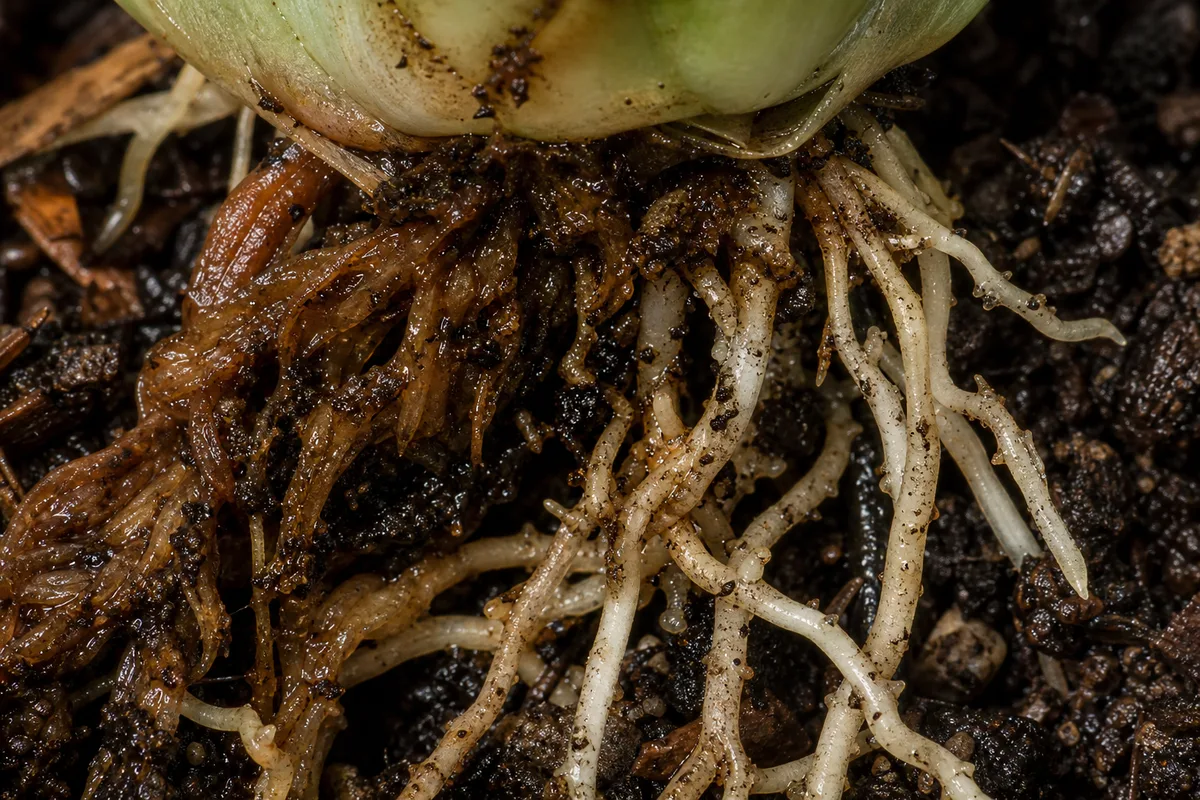
Root Rot symptoms on Haworthia - compare with healthy tissue on the same plant.
Early signs
- Yellowing lower or outer leaves while mix stays damp-not the slow fade of a single aging leaf
- Limp, soft, or translucent leaves on wet soil that do not firm after you water
- Sour or musty smell from the drainage hole or when you lift the pot
- No new center leaves for months with consistently moist mix
- Brown leaf tips while soil below the surface stays damp-a paradox that points to root damage, not low humidity
Advanced signs
- Soft, mushy tissue at the rosette base where leaves meet soil-the crown is the danger zone on Haworthia
- Translucent, waterlogged leaves near the center that collapse when pressed
- Roots that slip off when touched-healthy Haworthia roots are white or tan and firm
- Whole rosette collapse with leaves turning brown and papery despite moisture in the pot
Compare with underwatering: a light pot, bone-dry skewer, firm but thin papery leaves, and quick recovery after one soak point away from rot. Compare with yellow leaves from chronic overwatering when color change dominates but the crown is still firm.
Why Haworthia gets root rot
Haworthia belongs to Asphodelaceae-a family built for semi-arid South African conditions where rain is sporadic and drainage is sharp. Thick leaves act as water reservoirs, so the plant survives drought far better than constant dampness. Overwatering is the primary indoor killer-soil oversaturation causes roots to become waterlogged and unable to take up nutrients.
Overwatering on wet mix. Calendar watering, frequent small sips, or soaking before the mix has fully dried keeps the root zone oxygen-poor. Saturated mix deprives roots of air and decay; pathogens feed on damaged tissue; rot moves upward into the stem.
Poor drainage and standing water. Blocked drainage holes, dense peat-heavy mix, oversized pots with a wet column of soil below shallow roots, and saucers or cachepots left full after watering all recreate the anaerobic conditions Haworthia cannot tolerate.
Winter dormancy trap. Short days, cool room temperatures, and reduced growth slow water use while evaporation drops. The same two-week schedule that worked in April keeps mix damp for weeks in January. Haworthia tends to rot if left in damp compost during winter, especially when it needs cooler, drier dormant conditions.
Low-light slow dry-down. Haworthia tolerates dim offices better than many succulents-which creates a trap. The plant uses water slowly, the grower keeps a summer rhythm, and the pot never dries at depth even though the surface looks acceptable.
How to confirm the cause
Work through these checks in order. Each step narrows the diagnosis without stacking unnecessary treatments.
Skewer, pot-weight, and crown firmness
Insert a wooden skewer or chopstick through the drainage hole to the lower third of the mix. If particles cling, the root zone is still moist-wait before any soak. Lift the pot after a known good watering to learn what “heavy” feels like; a heavy pot plus wilt means trouble, not thirst.
Press gently at the soil line where leaves emerge. Healthy Haworthia feels firm like a firm grape. Mush or give at the crown means rot may already be in the stem-not just peripheral roots.
Sniff the drainage hole. A sour or rotten odor means anaerobic conditions; unpot and inspect.
Root and crown inspection on rosette succulents
Gently knock the plant out of its pot. Shake or rinse mix from roots so color and texture are visible. Healthy roots are white or tan and firm when pressed. Rotted roots are brown, black, gray, slimy, or hollow-and they smell sour.
Follow each leaf cluster to the base. The growing point at the rosette center should be firm. Soft translucent tissue at the center is a worse sign than peripheral root loss alone.
Lookalikes to rule out
- Underwatering - Light pot, dry skewer at depth, firm thin leaves, recovery after soak
- Overwatering without advanced rot - Wet mix and yellow edges but mostly firm white roots; dry-down and repot may be enough
- Low light etiolation - Stretched pale rosette, firm leaves, no sour smell or crown mush
- Natural leaf aging - One or two old outer leaves yellow while center growth and roots stay healthy
First fix for Haworthia
Make one clear first move: stop watering and move the plant to bright indirect light with good airflow-not a dark corner where wet mix will never dry. Do not fertilize. Do not repot on day one unless the crown is already mushy and you need to trim immediately.
Once wet mix with failing roots is confirmed, follow this numbered rescue workflow:
- Unpot and inspect - shake off or rinse mix so roots and crown are visible. Haworthia is non-toxic to cats and dogs, but wash hands after handling rotted tissue.
- Trim all mushy, brown, black, or hollow roots with clean scissors until only firm white or tan tissue remains. Sterilize blades between cuts if rot was advanced.
- Cut away soft crown tissue back to firm growth if mush has entered the stem base. If the center growing point is fully collapsed, skip to offset salvage below.
- Let cut surfaces callous in dry air out of direct sun for one to two days on a paper towel or rack-not sealed in plastic.
- Repot into fresh dry gritty succulent mix in a clean pot with open drainage, sized to the remaining root mass-not the former rosette spread. See the soil and repotting guides for mix ratios.
- Wait about two weeks before the first cautious soak so cut roots callous and the mix stays aerobic. The pot should feel light and read dry on a skewer before you water.
- Resume soak-and-dry only when you see stability: firm center leaves, no spreading mush, and mix that dries fully between drinks.
Keep the plant in bright indirect light during recovery. Avoid cold drafty windows and hot AC blasts that slow drying unevenly.
Recovery timeline
Recovery is judged by firm new center leaves or healthy offset pups, not by old yellow leaves re-greening. Damaged outer leaves rarely recover their color; they may dry and drop while the plant stabilizes.
- Mild rot with mostly firm roots - Stabilization within one to two weeks after repot and corrected watering; first new center leaves in three to six weeks
- Moderate rot with heavy root trim - Four to eight weeks before consistent center growth; expect some outer leaf loss
- Crown mush limited to outer leaf bases - Possible if center growing point stayed firm after trim and callous
- Advanced center crown collapse - Main rosette often lost; prioritize offset salvage
Signs of improvement: firm crown at the soil line, new leaves emerging from the center, roots holding firm tan tips when you gently check after a month, and mix that dries throughout between soaks.
Signs the problem is worsening: spreading mush into the center, wilt returning on wet soil after repot, sour smell within days of watering, or no new growth after eight weeks in good light.
What not to do
- Do not water because leaves look wilted when soil is already wet-that deepens root failure on a succulent that stores water in its leaves.
- Do not fertilize until new center growth resumes; stressed roots cannot use nutrients safely.
- Do not repot into garden soil, a larger pot, or a container without drainage hoping it will dry faster.
- Do not leave the plant in the same sour mix without trimming damaged roots-the anaerobic conditions remain.
- Do not mist the crown as a humidity fix-wet leaf centers invite rot in tight rosettes.
- Do not assume surface-dry means ready to water in deep or oversized pots; always check at depth.
How to prevent root rot next time
Prevention on Haworthia is mostly soak-and-dry rhythm, not luck:
- Water only when the mix is fully dry throughout the pot-not when the top inch alone looks pale. Use skewer, finger, or pot-weight checks at root depth before every soak.
- Use fast-draining gritty succulent mix and a pot matched to the root ball, not a decorative bowl sized for a larger plant.
- Empty saucers within 30 minutes of every watering. Lift nursery pots out of cachepots to drain.
- Cut back sharply in winter dormancy-often once a month or less, only when the skewer confirms bone-dry mix throughout.
- Match watering to light-dim offices need longer dry-down intervals even in “active” seasons.
The watering guide is the best long-term companion to this page-it covers seasonal intervals, the winter danger zone, skewer and pot-weight technique, and the full overwatered-Haworthia symptom set in depth.
Offset salvage when the mother rosette is lost
Before discarding a rotted rosette, check the base for firm offset pups-small rosettes clustered around the mother plant. Clump-forming haworthias are easy to propagate by separating smaller rosettes at the base, and pups often stay healthy when the main crown has failed.
If pups are firm with their own small root systems, separate them gently with a clean knife, let cut surfaces callous one to two days, then pot into fresh dry gritty mix. Withhold water for about two weeks, then resume cautious soak-and-dry. See the propagation guide for offset timing and pot sizing.
If every pup is mushy or the entire base is hollow, discard the plant and start fresh with corrected mix and watering habits.
Related Haworthia guides
- Watering - soak-and-dry protocol, winter dormancy, and wilt-on-wet-soil diagnosis
- Overwatering - early saturation before roots fail
- Yellow leaves - lower-leaf yellowing patterns on wet mix
- Wilting - dry-pot vs wet-pot first checks
- Fungus gnats and mold on soil - wet-soil co-symptoms
- Soil and repotting - gritty mix and pot sizing for recovery
- Propagation - offset salvage when the mother rosette is lost
- Overview - species context and general care