Wilting on Haworthia: Causes, Checks & Fixes
Quick answer
Haworthia wilts from opposite water problems-lift the pot and probe the root zone before watering. A light dry pot with slightly deflated but firm leaves usually means thirst; a heavy cool pot with mushy lower leaves means stop watering and inspect roots.
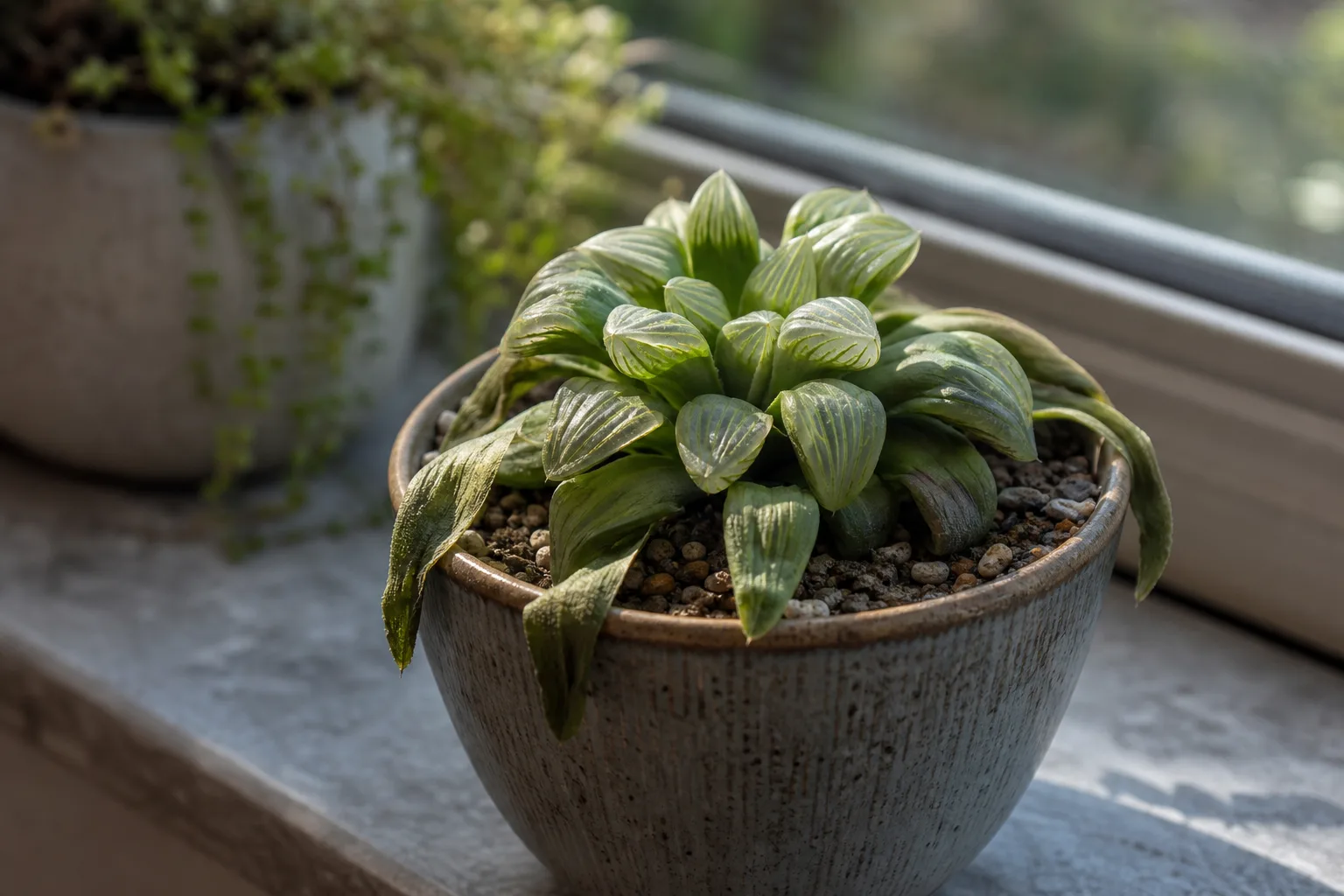
Wilting on Haworthia: Causes, Checks & Fixes
This guide covers wilting on Haworthia. See also the general Wilting guide, watering, and light pages for this plant.
Wilting on Haworthia: Causes, Checks & Fixes
Quick answer
Wilting on Haworthia (Haworthia spp.) almost always traces to water stress at the roots-but the fix depends on whether the mix is too wet or too dry. Haworthia’s thick water-storing leaves hide trouble until turgor drops, so wilt often means the problem is already advanced.
First step: lift the pot and probe moisture at the root zone with a wooden skewer. A light, dry pot with slightly deflated but firm leaves usually means underwatering. A heavy, cool pot with mushy translucent lower leaves means stop watering and inspect roots-do not add more water. If the rosette is stretched in a dim room, address light and dry-down before treating wilt as thirst.
What wilting looks like on Haworthia
On a healthy Haworthia, leaves are plump, firm, and tightly stacked in a compact rosette. Wilting means the plant has lost enough internal water pressure that leaves soften, sag, or look deflated.
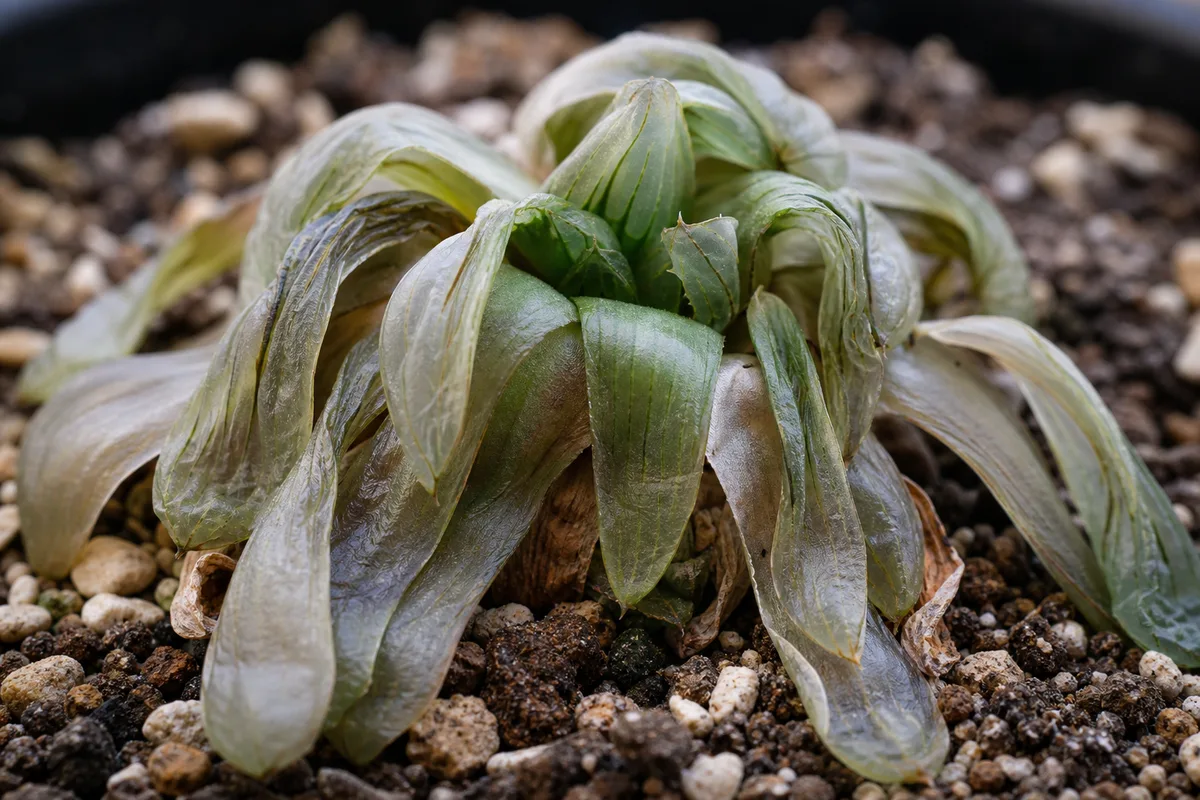
Wilting symptoms on Haworthia - compare with healthy tissue on the same plant.
Deflated firm leaves on dry mix (underwatering)
A thirsty Haworthia often shows slightly thinner, wrinkled, or dull leaves that still feel firm when gently squeezed-more deflated balloon than wet sponge. The pot feels light for its size. Mix may pull away from the pot sides. Lower, older leaves show stress first because the plant draws on stored water from the base. Window species like H. cooperi lose their glossy translucent tip sheen when dehydrated.
Mushy translucent lower leaves on wet soil (overwatering / root failure)
Overwatered or rotting Haworthia wilts while soil stays damp or cool at depth. Lower leaves turn soft, yellow, or translucent and may detach with little pressure. The pot feels heavy. Mix may smell sour or rotten. This is the dangerous pattern: roots in saturated soil lose oxygen and stop functioning, so the plant cannot take up water even though the mix is wet-wilt with moist soil, not dry.
Stretched rosette with weak leaf hold (low light / etiolation)
In dim offices or north windows, Haworthia survives but stretches-longer gaps between leaves, paler color, and a rosette that sags under its own weight. Soil dries slowly in low light, so the same watering schedule that worked in summer can keep roots wet through winter and produce limp mushy wilt that looks like overwatering. Weak structural hold from etiolation overlaps with water stress; fix light and watering rhythm together.
Whole-rosette collapse after repot shock
After repotting-especially from heavy peat nursery mix into gritty soil-a Haworthia may wilt for days while roots re-establish. Leaves look slightly soft but bases stay firm and mix is neither bone-dry nor waterlogged. This temporary wilt differs from rot: no sour smell, no black mush at the crown.
Wilting vs. drooping on Haworthia - when to use this page
Wilting here means lost turgor-the rosette feels deflated, limp, or mushy and may collapse inward. Drooping on Haworthia usually describes outer leaves angling downward while the center stays firm-often early thirst, recent move, or top-heavy offset clusters. Both can share water-stress roots, but wilting with wet soil and mushy bases is almost always rot-direction, while drooping with a light dry pot is thirst-direction. See the drooping leaves guide for sagging outer leaves on an otherwise firm center; stay on this page when the whole rosette has lost firmness or feels translucent at the base.
Why Haworthia wilts
Haworthia evolved in semi-arid South African habitats with long dry spells and seasonal rain. Leaves store water precisely so roots can survive drought-but that buffer also masks root damage until wilt appears. By the time a rosette looks limp, fine feeder roots may already be dead from rot or desiccation.
The low-light dry-down paradox
Haworthia tolerates lower light better than most succulents, which tempts growers to keep a summer watering calendar on a winter desk. In cool, dim rooms, mix stays wet far longer. Haworthias tend to rot if watered too much or left in damp compost, especially when not allowed a drier winter rest. Calendar watering in low light is the most common cause of wilt on wet soil.
Oversized pots, heavy mix, and standing water
Nursery Haworthia often arrives in peat-heavy mix under greenhouse light. At home in a cachepot with no drainage check, the root zone stays saturated. An oversized pot holds excess wet mix small root systems cannot use-producing chronic root stress that shows as wilt before obvious yellowing.
Underwatering after trust in thick leaves
Because leaves look firm for weeks, underwatering is easy to miss until several leaves wrinkle at once. Extended dryness kills fine roots; even after you water, uptake lags until new roots form.
Repot and root disturbance
Trimming roots, changing mix texture, or moving to a brighter spot after repot can trigger short-term wilt while the plant re-anchors. Disturbed roots underperform temporarily-especially if the room is hot and dry right after transplant.
Lookalike symptoms to rule out
Before treating wilt, rule out overlapping Haworthia problems:
- Overwatering - Limp leaves with wet heavy pot; primary overlap with this page. Yellow mushy lower leaves confirm.
- Underwatering - Light pot, dry skewer, firm wrinkled leaves; fixes with one deep soak.
- Root rot - Wilt with moist soil, sour smell, soft crown; needs unpot and trim, not another drink.
- Yellow leaves - Often precedes full wilt; mushy yellow bases signal rot branch.
- Mealybugs in leaf axils - Cottony clusters weaken plants over time but rarely cause sudden whole-rosette collapse unless infestation is heavy.
- Heat shock near a radiator - Temporary afternoon limpness that recovers overnight; soil moisture normal and tissue firm.
How to confirm the cause
Work through this checklist in order-do not water until you know which branch applies:
- Pot weight - Lift the container. Light and airy = dry branch. Heavy and cool = wet/rot branch.
- Skewer or chopstick at depth - Insert to the root zone, not just the surface. A dry surface is not always a sign of water need; the top dries first while the center stays wet in cool rooms.
- Leaf texture at the base - Firm but thinner = thirst. Mushy, translucent, or pulling away freely = rot.
- Crown firmness - Press gently at the center. Soft spongy crown with wet soil is urgent rot.
- Smell - Sour or rotten odor from drainage holes or skewer hole confirms anaerobic wet mix.
- Light context - Dim room + winter calendar watering + heavy pot = overwatering paradox. Bright warm window + forgotten weeks + light pot = thirst.
- Recent repot timeline - Wilt within two weeks of repot without mush may be shock; worsening mush means rot was already present.
- New growth quality - Compact new leaves mean recovery underway. Continued pale stretch means light still insufficient.
First fix for Haworthia
Lift the pot and probe the root zone before you touch the watering can.
That single check prevents the classic Haworthia mistake: watering a wilted plant that is already drowning. If the skewer comes out clean and dry and leaves are firm-but-deflated, proceed to a thorough soak (underwatering branch). If the skewer shows damp soil and base leaves are mushy, stop all watering and inspect roots (overwatering/rot branch). If the rosette is stretched in a dim room with a heavy pot, move to brighter indirect light and pause watering until the mix dries at depth-do not assume thirst from limp leaves alone.
Step-by-step recovery by cause
If soil is wet at depth and base leaves are mushy
- Stop watering immediately. Empty any saucer or cachepot water.
- Unpot and inspect roots-healthy Haworthia roots are white or tan and firm; rotting roots are brown, black, or mushy.
- Trim all soft root and leaf tissue with clean scissors; let cuts dry one to two days.
- Repot into fresh, gritty, fast-draining mix in a pot only slightly larger than the root ball.
- Wait two weeks before the first light water at the pot edge-see overwatering recovery for detail.
- Move to brighter indirect light if the plant was in deep shade-faster dry-down prevents repeat rot.
If pot is light and leaves are deflated but firm
- Confirm dryness with skewer and pot weight.
- Water thoroughly until a small amount drains from the hole; empty the saucer completely.
- Do not water again until the root zone is fully dry-often one to three weeks indoors depending on light and season.
- Expect visible plumping on outer leaves within three to five days; full firmness may take one to two weeks.
If crown is soft or mix smells sour
Treat as advancing rot, not reversible wilt. Remove the plant from wet mix, trim mushy crown tissue if any firm tissue remains above it, air-dry one to two days, and repot shallow offsets if the main rosette is lost. See root rot on Haworthia. Success means healthy offsets or new root white tips-not re-firming a dissolved center.
If rosette is stretched in a dim room
- Move to an east window or add a grow light six to twelve inches above the rosette.
- Stretch watering interval to match slower dry-down-water sparingly only when compost approaches dryness.
- Stake or support only if offsets pull the pot off balance; stretched old leaves will not compact-judge by new tight growth after four to eight weeks.
If plant was recently repotted
Hold the plant in bright indirect light. Wait five to seven days before the first soak unless the pot is genuinely dry at depth. Avoid fertilizer, heavy pruning, and direct sun during recovery. Mild wilt should stabilize within two weeks if roots were healthy at repot.
Recovery timeline
Thirst wilt on dry mix often shows plumper leaves within three to five days after one proper soak; full turgor may return in one to two weeks. Rot-related wilt takes longer-two to four weeks minimum after trim and dry repot before new growth confirms survival. Low-light overwatering improves only after you both dry the mix and brighten the site; expect four to eight weeks for compact new leaves.
Damaged lower leaves rarely return to original plumpness. Judge progress by stable new growth at the center, firm crown tissue, and a pot that reaches a predictable light-to-heavy rhythm with your watering checks.
What not to do
Do not water a wilted Haworthia when the skewer shows damp soil at the root zone-that deepens rot. Do not fertilize a stressed rosette; salts on compromised roots worsen collapse. Do not repot into a larger container “to help drying”-extra wet mix suffocates small root systems. Do not stack repot, root prune, and pesticide on the same day.
Do not move a wilted plant into harsh direct south sun to “perk it up”-sunburn on stressed leaves adds injury. Do not assume wilting always means thirst; prolonged dehydration and oversaturation both damage roots and produce similar limp foliage with opposite fixes.
Haworthia care cross-check
Stable Haworthia combines bright indirect light, soak-and-dry watering in fast-draining mix, and pot size matched to the root ball. Review the Haworthia care overview for skewer checks, terracotta benefits, and winter slow-down. In dim rooms, slow watering matters more than misting or humidity tweaks-Haworthia handles average indoor air fine when roots breathe.
Water when the root zone dries, not when the calendar says so. Use a drainage hole, empty saucers within thirty minutes, and avoid letting water sit in decorative outer pots. Offsets in crowded pots dry unevenly-check the heaviest side of the cluster, not just the surface.
How to prevent wilting next time
Check pot weight or skewer moisture before every water-especially October through March when growth slows. Match interval to your room: a north-window desk may need water monthly in winter while a bright east window needs more in spring.
Repot into gritty mix every one to two years before peat collapses into water-retentive mud. Choose pots one size up at most. After buying nursery stock, plan to refresh heavy peat under your actual light level within the first season.
Rotate the pot weekly for even growth if you use a single window. When in doubt after a missed watering cycle, confirm dryness before soaking-a little wilting from underwatering is easier to reverse than rot from overwatering.
When to worry
Escalate immediately if the crown feels soft while soil is wet, leaves detach at a touch, or wilt spreads to the center over a few days despite dry-down. Blackening tissue working upward from the base, fungus gnats with persistently wet surface, or no new firm growth four weeks after correcting thirst all signal deeper failure.
Low urgency: slight deflation on a dry light pot you forgot to water; mild post-repot limp with firm crown and drying mix on schedule. Medium urgency: yellow mushy lower leaves on a heavy pot-act within days before crown involvement.
Related Haworthia problems
- Overwatering on Haworthia - Limp leaves on wet soil and pot-weight checks
- Underwatering on Haworthia - Wrinkled firm leaves on dry mix
- Root rot on Haworthia - Wilt with moist soil and sour smell
- Drooping leaves on Haworthia - Outer leaf sag with firm center
- Yellow leaves on Haworthia - Early warning before full collapse
- Haworthia care overview - Soak-and-dry rhythm, light, and soil basics
Conclusion
Haworthia wilting is a directional diagnostic, not one disease. Lift the pot, probe at depth, and read leaf texture at the base before watering. Dry and firm-deflated means soak; wet and mushy means stop and inspect roots; stretched in dim light means brighten and slow watering. Old wilted leaves may not recover-watch for new compact growth and a firm crown. Get the water direction right once and this slow succulent forgives many earlier mistakes.