Best Soil for Haworthia: Gritty Mix, Drainage & Repotting
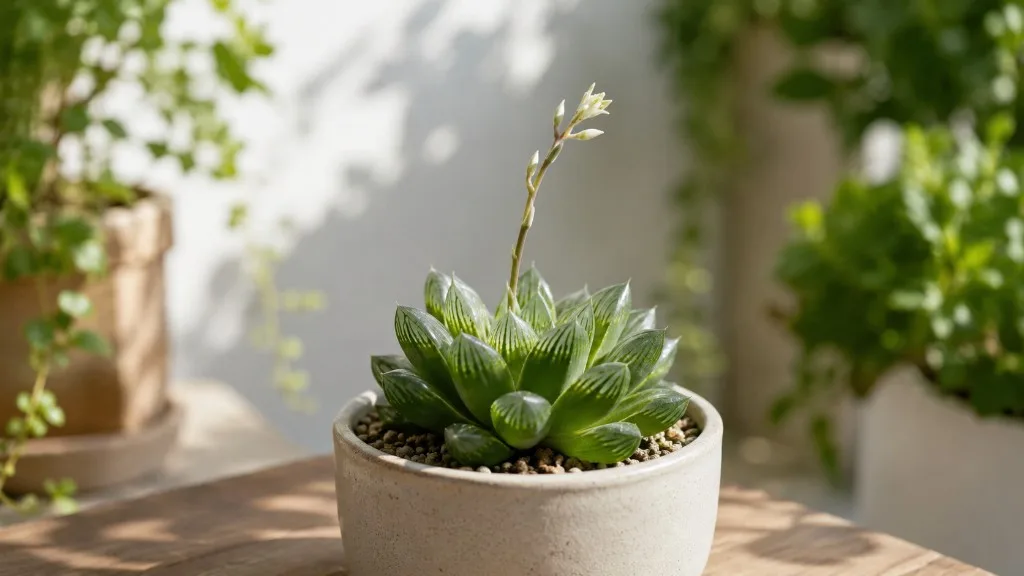
Best Soil for Haworthia: Gritty Mix, Drainage & Repotting
Best Soil for Haworthia: Gritty Mix, Drainage & Repotting
Haworthia looks tough. The leaves are thick, the rosette is compact, and the plant tolerates low light better than most succulents on a desk or north-facing windowsill. That toughness is real, but it is not unlimited. The fastest way to lose a Haworthia indoors is not forgetting to water it - it is keeping the roots in soil that stays wet for days. Haworthia (Haworthia spp.) evolved in rocky, mineral-rich, fast-draining substrates across South Africa’s semi-arid fynbos and karoo regions. Its roots expect air, grit, and a predictable dry-down after every watering. Standard indoor potting soil delivers the opposite: fine particles, peat sponges, and moisture that lingers long after the plant has had enough.
The best soil for Haworthia is a gritty succulent mix with fast drainage - typically 50–70% inorganic mineral material (perlite, pumice, coarse sand, or grit) blended with 30–50% organic base (cactus potting mix or a lean compost). A practical starter recipe that works in most homes is 50% standard compost or cactus mix + 30% perlite + 20% coarse grit. The exact brand names matter less than the outcome: water should drain through the pot in seconds, the mix should feel dry within a few days in normal indoor conditions, and the texture should stay loose enough for roots to breathe. Get that right and Haworthia becomes one of the easiest succulents to keep alive. Get it wrong and even careful watering will not save the plant.
What Haworthia roots need from soil
Haworthia roots are small, fleshy, and fragile compared with the woody roots of a tree or the aggressive runners of a pothos. They are built for shallow, rocky ground where rainfall is brief and the sun pulls moisture back out quickly. In a pot, the soil has to replicate that rhythm: a short wet phase, a brief moist phase, and then a longer dry phase before the next watering. The mix is the timer. If it holds water like a sponge, the timer breaks and the roots sit in low-oxygen conditions that invite rot.
Three properties matter most, in this order: drainage speed, aeration, and modest moisture retention. Drainage speed means excess water leaves the pot immediately after a thorough watering rather than pooling around the lower roots. Aeration means permanent air gaps between coarse particles so oxygen reaches root tissue even when the mix is moist. Modest moisture retention means a small organic fraction holds just enough water for the plant to draw on between waterings without staying damp for a week. Haworthia does not need rich, fertile soil. It needs a substrate that dries on a schedule your home can support.
The plant stores water in its leaves, so the root zone can go dry between drinks. That is a feature, not a flaw. Many beginners interpret slightly soft lower leaves as an emergency thirst signal and water again into already-damp soil. The soil mix should make the actual moisture state obvious: when the top inch is dry and the pot feels light, water; when the deeper mix is still cool and heavy, wait. A gritty mix makes that distinction easy. A peat-heavy mix hides it until the roots are already damaged.
The South African habitat behind every good recipe
Haworthia is native to South Africa, especially the Eastern Cape Province, where it grows among rocks, gravel, and thin organic litter in semi-arid scrubland. The RHS describes Haworthia as a compact rosette succulent adapted to bright light and sharp drainage - a summary that matches the habitat reality. Rainfall in these regions is often seasonal and intense but brief. Water moves through rocky soil fast. Organic matter is present but sparse, and what exists breaks down slowly in dry conditions.
That habitat explains why “succulent soil” from a garden center is sometimes still too wet for Haworthia. Many commercial bags are peat-forward blends labeled for cacti and succulents but engineered to stay saleable and moist on a shelf. They drain better than all-purpose potting mix, yet they may still hold water for four to seven days in a cool office - longer than Haworthia roots comfortably tolerate. The fix is not a different watering mantra alone. It is a grittier mix with more mineral content and coarser particles so the dry-down matches the plant’s native rhythm.
Why drainage beats fertility for Haworthia overview
Haworthia is not a heavy feeder. In bright, warm months it appreciates light fertilizer at low concentration, but it will survive long periods on the modest nutrients in a lean cactus mix. What it will not survive is a root zone that stays wet. Specialist growers and the RHS converge on the same priority: drainage and oxygen first, nutrients second. A mineral-heavy mix with almost no organic matter can grow excellent Haworthia if you feed lightly during active growth. A nutrient-rich, moisture-retentive mix will grow a rotting Haworthia regardless of how premium the compost was.
Think of soil for Haworthia as infrastructure, not food. The mix holds the roots in place, lets air circulate, and governs how long water remains available. Food comes from fertilizer applied at the right season, not from heavy garden compost. When you choose between a richer organic base and more perlite, choose the perlite unless you live in an extremely dry climate where pots desiccate in 24 hours. Most indoor growers are fighting excess moisture, not drought.
The ideal Haworthia soil mix ratio
The best soil for Haworthia is not one universal bag - it is a ratio range you adjust to your room. The target most growers land on is 50–70% inorganic material and 30–50% organic base. In humid homes, apartments with weak airflow, or dim offices where pots dry slowly, push toward 60–70% mineral. In hot, dry, bright conditions where small pots bake dry in a day or two, 50–55% mineral with slightly more organic matter is reasonable. The plant is flexible within that band. What it cannot flex around is fine, compacted, water-holding mix with no air space.
The best soil for Haworthia is a gritty succulent mix that drains in under 30 seconds on a pour test, dries enough within three to five days after a full watering in typical indoor conditions, and stays crumbly when squeezed in a damp fist. If your current mix fails any of those three checks, amend it or replace it - do not wait for leaf symptoms to confirm the problem.
Mineral and organic components, explained
Inorganic components create drainage channels and air pockets. They do not break down quickly, so they keep the mix structurally open for years. Perlite is lightweight volcanic glass; pumice is a porous volcanic rock that holds a little moisture without staying wet; coarse horticultural sand and grit add weight and sharp drainage; crushed granite, lava rock, and decomposed granite are favored in advanced “gritty mix” culture for long-term stability. Any of these work if particle size is coarse enough.
Organic components provide slight moisture retention, cation exchange, and a slow nutrient reservoir. Suitable options include commercial cactus or succulent potting mix (already leaner than standard potting soil), a small amount of compost, coconut coir used sparingly, or pine bark fines at 10–15% for growers who want a touch more moisture buffer. Standard peat-heavy indoor potting mix is acceptable only as a minority ingredient - never as the majority of the blend. Peat compacts as it ages, and compaction is the silent killer of Haworthia roots.
The relationship between the two groups is simple: minerals set the drainage speed; organics set how long the mix holds a little moisture before going dry. Haworthia wants a fast mineral majority with a modest organic minority. Flip that ratio and you are growing a different class of plant.
A reliable DIY recipe you can mix today
Here is a reliable Haworthia soil mix you can assemble from common garden-center materials. The Almanac suggests a DIY blend of equal parts potting mix, sand, and perlite for potted Haworthia - a workable starting point before you tune mineral content to your room.
- 50% cactus or succulent potting mix (or a lean compost if that is what you have on hand)
- 30% perlite or pumice
- 20% coarse grit or horticultural sand
Mix thoroughly in a bucket until the mineral material is evenly distributed. The finished texture should look speckled with white or gray particles, not like dark, uniform potting soil. For a single 4-inch pot, that translates to roughly 1 cup cactus mix + ⅔ cup perlite + ⅓ cup grit. Scale proportionally for larger batches and store dry mix in a sealed tub until you need it.
If you want a leaner, more advanced blend closer to what specialist growers use, try equal parts pumice, lava rock (or coarse calcined clay), and decomposed granite with 10–15% pine bark fines added. That near-mineral mix drains almost instantly and dries in two to three days, which is excellent for rot prevention but demands more attentive watering - better suited to growers who already read their pots well. Beginners should start with the 50/30/20 recipe and only move toward mineral-heavy blends after they can predict dry-down in their own home.
Inorganic ingredients: perlite, pumice, grit, and sand
The inorganic fraction does the heavy lifting. Without enough of it, every other care decision - light, Haworthia watering guide, pot type - becomes a gamble. Each material has trade-offs, and Haworthia is forgiving enough that you do not need exotic imports unless you want them. You do need coarse material, not powder.
Perlite is cheap, widely available, and excellent at breaking up dense organic mix. It is ultra-light, which helps keep small pots from becoming top-heavy. The downside is that perlite floats toward the surface over repeated waterings, leaving the lower portion of the pot denser than the top. For a windowsill Haworthia in a 4-inch pot, that drift is minor. For long-term culture or humid rooms, pumice is the better investment.
Pumice costs more but stays distributed in the mix, holds a little moisture in its pores without becoming soggy, and resists compaction for years. Growers in humid climates often prefer pumice for exactly that reason: it keeps drainage consistent in the lower root zone where rot usually starts. If you buy one premium amendment for Haworthia, make it pumice.
Coarse horticultural sand and grit add weight and sharp drainage. Use horticultural sand or builder’s sand that has been rinsed - not fine beach sand, which packs like cement. Grit labeled for succulents or poultry grit (crushed granite, not oyster shell) works well. These materials mimic the rocky soils of the Eastern Cape and help prevent the mix from collapsing when you press a newly repotted plant into place.
Perlite vs pumice for Haworthia
Both perlite and pumice improve drainage. The practical difference is longevity and stability in the pot. Perlite is the budget choice and performs well for beginners mixing their first batch. Pumice is the durability choice: it does not float, it weathers watering better, and it provides a more stable air-to-moisture balance in the root zone. In a side-by-side comparison, perlite wins on cost and availability; pumice wins on long-term structure and lower rot risk in slow-drying rooms. Either is correct. Using neither - or using so little that the mix still clumps - is not.
Particle size and why fine grit fails
Particle size matters more than the ingredient label on the bag. Ideal succulent particles for Haworthia are roughly 2–4 mm - about the size of coarse sand or small gravel, large enough to leave air gaps, small enough for roots to navigate. Particles under 2.5 mm pack together over time, especially as organic matter decomposes, and create a perched water table that keeps the bottom of the pot wetter than the top. That is where Haworthia rot usually begins.
A quick squeeze test catches bad texture: dampen a handful of mix and squeeze firmly. When you open your hand, the mix should fall apart immediately. If it forms a tight ball that holds shape, the particles are too fine or the organic content is too high. Add more perlite, pumice, or coarse grit until the ball crumbles. This test is more reliable than trusting a “succulent soil” label on a bag that has been sitting in a damp garden center.
Organic bases that will not stay soggy
Can you use regular potting soil for Haworthia? Not on its own. Standard indoor potting mix is engineered for tropical foliage plants that want consistent moisture. It is dominated by fine peat and composted bark that hold water for days and compact within months. Used alone, it will suffocate Haworthia roots in a typical home. If regular potting soil is all you have, treat it as a minor ingredient - no more than half the total volume - and amend heavily with perlite or pumice until the finished blend passes the squeeze test and drains in under 30 seconds.
The best organic base for most growers is a commercial cactus or succulent potting mix. These blends already contain sand, perlite, or pumice and are leaner than all-purpose soil. They are a sensible starting point, not a finished product. Most bags still benefit from 30–50% additional perlite or pumice by volume before use with Haworthia, especially indoors. “Moisture control” or “water retaining” potting mixes - often marketed for houseplants that like steady dampness - are the wrong category entirely. Avoid them.
Coconut coir and pine bark fines can replace a portion of peat if you want a slightly more moisture-buffered mix for very dry homes. Keep coir under 20% of total volume; it holds more water than it appears to. Compost should be well aged and used sparingly. Fresh, heavy compost is too wet and too hot for Haworthia roots. The organic fraction’s job is to keep the mix from drying into dust in one day, not to feed the plant richly.
Pre-made succulent mixes and how to amend them
Store-bought succulent soil is a reasonable shortcut if you amend it. Bags from Espoma, Hoffman, Miracle-Gro, Black Gold, and similar lines vary by batch, but most share the same limitation: they are designed for a broad succulent audience, including plants that tolerate more moisture than Haworthia. Open the bag, moisten a handful, and run the squeeze test. If it clumps, add 30–50% perlite or pumice by volume and mix thoroughly. Premium fast-draining mixes such as Bonsai Jack Succulent and Cactus Soil often work without amendment in average homes; humid-climate growers sometimes still add pumice for insurance.
Testing your mix before you repot
Do not repot Haworthia on faith alone. Two quick tests tell you whether a blend is actually fast-draining or just labeled that way. Run both before you commit a healthy plant - especially if you mixed a new batch or opened a fresh bag.
The pour test and the dry-down clock
Pour test: Fill a pot with your dry mix and saturate it with water until it runs freely from the drainage hole. Well-made Haworthia soil should drain most of the volume in 10–30 seconds for a rosette succulent. If water pools on the surface for a minute or more, the mix is too fine or too organic. Add mineral material and test again.
Dry-down clock: After the pour test, note how long the mix takes to feel dry an inch below the surface in your actual growing room. The BBC advises letting compost dry completely between waterings - if your pot is still cool and damp at the root depth on day seven in ordinary indoor light, the mix is too heavy, the pot is too large, or both.
Together, the pour test and dry-down clock are more useful than any recipe copied from a forum. Your apartment’s humidity, your pot material, and your light level all change the calendar. The mix has to match the calendar you actually live with.
Pairing soil with pots and drainage holes
Soil does not work in isolation. The same gritty mix behaves differently in a terra cotta pot versus a glazed ceramic cachepot with no exit for water. Terra cotta breathes through its walls and accelerates dry-down - an excellent pairing for Haworthia in humid rooms. Unglazed clay is less forgiving if you underwater, but for rot prevention it is one of the best choices. Plastic and glazed pots hold moisture longer; they work fine if the mix is extra gritty and you respect the dry-down clock.
A drainage hole is non-negotiable for long-term Haworthia care indoors. Without one, even perfect soil cannot shed excess water after a thorough soak. If you use a decorative outer pot, plant in a plastic inner pot with holes and empty the saucer after every watering. Sitting in runoff is the same as having no hole at all.
Do not add a layer of gravel or pebbles at the bottom of the pot “for drainage.” That practice creates a perched water table where fine soil meets coarse gravel, leaving the bottom of the root zone wetter, not drier. Washington State University Extension documents this mechanism: water does not jump across particle-size boundaries the way intuition suggests. Use the same fast-draining mix from top to bottom and let the hole do its job.
Pot size matters too. Haworthia grows slowly and prefers a snug pot only slightly wider than the rosette. An oversized container surrounds the roots with a large volume of mix that stays wet long after the plant has taken what it needs. Match pot width to root mass, not to how big you hope the plant will become this season.
pH, minerals, and feeding in a gritty mix
Haworthia prefers a slightly acidic root zone, roughly pH 5.5–6.5. The RHS recommends planting in peat-free cactus compost, which most lean mixes already approximate without adjustment.
Hard, alkaline tap water can push pH upward over time and leave mineral crust on soil surfaces. If you see white deposits and stalled growth, flush the pot with rainwater or filtered water occasionally, or repot into fresh mix. For most indoor growers, choosing a mineral-heavy blend and avoiding heavy peat is enough pH management.
Fertilizer belongs in the water, not in heavy compost. During active growth - usually spring and summer - a dilute balanced succulent fertilizer at one-quarter to half label strength every four to six weeks is adequate. Near-mineral mixes need light feeding more often; a 50/30/20 blend with cactus mix base can go longer without supplement. Pause feeding in winter when growth slows.
Signs your Haworthia soil is failing
Soil problems show up in the leaves and roots before they show up on the label of the bag. Learn to read the early signals and you can repot into fresh gritty mix before the plant is gone.
Watch for these signs your Haworthia soil is wrong:
- Lower leaves turning mushy, translucent, or detaching with light pressure - classic overwatering on Haworthia, often caused by slow-draining mix even when you believed you watered sparingly.
- Plant stalls for months with no new center growth while the pot stays heavy - compacted or peat-heavy mix holding moisture too long.
- Water runs down the inside wall of the pot instead of soaking the root ball - hydrophobic, decomposed, or shrunken peat pulling away from the sides.
- Sour or swampy smell from the drainage hole - anaerobic conditions in wet, fine soil.
- White fuzzy mold on the soil surface in low light - excess moisture and poor airflow in organic-heavy mix.
- Roots brown, mushy, or missing when you gently unpot - rot advanced; salvage offsets if any tissue is firm and repot into fresh mineral-heavy mix.
Yellow leaves alone are ambiguous; Haworthia also yellows from natural old-leaf senescence and from sudden light changes. When yellowing pairs with a pot that never seems to dry, suspect the soil first. The RHS warns that Haworthia tends to rot when left in damp compost - waterlogged substrate is the primary indoor failure mode for Haworthia.
When to refresh or repot into new mix
Organic components break down. Perlite drifts. Peat compacts. Even a good Haworthia soil mix has a service life. Repot every 18–24 months as routine maintenance, or sooner when drainage clearly slows. Mineral-dominant commercial mixes may last three to five years, but peat-based blends rarely do.
Repot when you see roots circling the pot bottom, when the plant is top-heavy and unstable, when the mix has shrunk away from the pot walls, or when dry-down has gone from three days to eight. Spring is the safest window - active growth helps roots reestablish. Avoid Haworthia repotting guide a stressed plant unless the soil itself is the stressor (sour smell, visible mold, constant wetness). If you must repot, use dry or barely moist fresh mix, do not water heavily for several days, and keep the plant in Haworthia light guide while roots settle.
To refresh without upsizing, remove the plant, gently shake off old mix from the roots, trim any clearly dead tissue with a clean blade, and replant into the same pot with new gritty mix. Wait a week before resuming your normal soak-and-dry rhythm. Haworthia recovers well from repotting when the new soil drains fast and the pot is appropriately sized.
Common Haworthia soil mistakes to avoid
The same errors appear on every Haworthia troubleshooting thread. Most are preventable with better mix choices.
Using standard potting soil alone is the most common mistake - amend heavily or switch to cactus mix plus perlite. Trusting the “succulent” label without testing wastes time; run the squeeze and pour tests on every new bag. Adding only a handful of perlite to peat-heavy base is cosmetic; you need 30–50% mineral material by volume. Choosing pots with no drainage holes, layering gravel at the bottom, using fine or beach sand, oversized pots with moisture-retentive soil, repotting into wet heavy compost, and watering on a summer calendar through winter all produce the same outcome: roots that stay wet too long. Avoid each one.
Conclusion
The best soil for Haworthia is not a mystery formula locked behind specialist jargon. It is a gritty succulent mix with fast drainage - roughly half lean organic base and half mineral amendments, adjusted upward in mineral content if your home is humid or your desk is dim. Build the 50% cactus mix + 30% perlite + 20% grit recipe, or amend any store-bought succulent soil with an equal volume of perlite or pumice, then confirm performance with a pour test and a dry-down clock. Pair that mix with a pot that has a real drainage hole, skip the gravel layer, and repot into fresh substrate every year or two before peat compacts.
Haworthia rewards boring soil more than exciting soil. Give the roots air, grit, and a predictable dry phase after each watering, and the rosette will sit quietly on your windowsill for years - firm, patterned, and easy to misread as indestructible. That resilience is real, but it starts below the surface. Get the mix right, and almost everything else in Haworthia care becomes simpler.
When to use this page vs other Haworthia guides
- Haworthia overview - Start here for whole-plant context before deep-diving this topic.
- Haworthia problems hub - Jump to symptom-specific fix guides when this care topic does not resolve the issue.
- Root Rot on Haworthia - Escalate here when soil adjustments are not enough.
- Mold on Soil on Haworthia - Escalate here when soil adjustments are not enough.
Related Haworthia guides
- Haworthia overview
- Haworthia watering
- Haworthia light
- Haworthia propagation
- Haworthia fertilizer
- Haworthia repotting
- Root Rot on Haworthia
- Mold on Soil on Haworthia
- Haworthia problems
Related tool
Try the Soil Mix Calculator with haworthia pre-selected to estimate needs for your setup.