How to Propagate Haworthia: Offsets and Leaf Cuttings
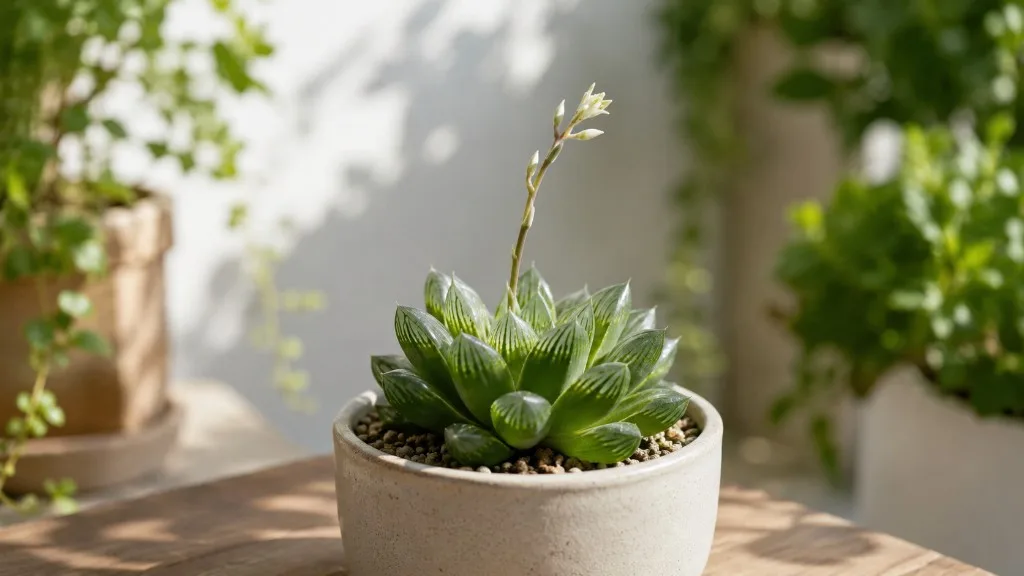
How to Propagate Haworthia: Offsets and Leaf Cuttings
How to Propagate Haworthia: Offsets and Leaf Cuttings
Author: sai-ananth · Reviewed by: LeafyPixels Review Board · Updated: 2026-06-15
How to Propagate Haworthia: Offsets and Leaf Cuttings
If pups are visible at the base of your rosette, offset division is almost always the right first move - not because it is trendy, but because Haworthia already built the new plant for you. These small South African rosettes multiply by producing genetically identical offsets at the mother base, each with its own crown and often its own roots. Separating those pups and giving them a shallow pot with fast drainage is the default route every serious reference recommends. Leaf cuttings remain a legitimate backup when pups are scarce or you are experimenting with spare foliage, but they demand more patience and accept a lower success rate than division. Haworthia is a slow grower that matures around 4–6 inches tall with a 4–8 inch rosette spread indoors - that pace shapes every timeline below.
How Haworthia Reproduces Naturally
Haworthia (Haworthia spp.) belongs to Asphodelaceae, the same broad family as aloe, and shares a clumping habit common to many South African succulents adapted to semi-arid fynbos and karoo conditions. In habitat and in a well-lit pot, mature plants gradually form dense clusters of daughter rosettes around the parent base. Each pup is a miniature copy of the mother - same leaf pattern, same windowed translucence on species like Haworthia cooperi, same stripe arrangement on zebra types often sold as Haworthia fasciata or Haworthia attenuata. The pups connect through a short stem segment at the base, and as they age they develop their own root initials.
That natural architecture is the foundation of reliable haworthia propagation. You are not asking a water-storage leaf to reinvent a rosette from scratch; you are transplanting a partial plant that already contains concentrated meristematic tissue at its crown. Leaf propagation works differently. A detached Haworthia leaf can sometimes produce adventitious roots and, much later, a tiny plantlet, but the meristem is not as accessible as it is on an echeveria leaf that snaps off cleanly at the stem. Understanding that distinction prevents the most common beginner disappointment: treating Haworthia like a fast-rooting echeveria and wondering why nothing happens for half a year.
Haworthia also stores water in thick, fleshy leaves. That adaptation is excellent for surviving dry spells and terrible for surviving wet, airless propagation setups. Fresh cuts that sit in damp soil before they seal invite fungal infection. Unrooted tissue that gets watered on a houseplant schedule rots from the base up. The propagation methods below all assume you will pair moisture control with Haworthia light guide and the fast-draining succulent mix detailed in our soil guide - the same environmental logic that keeps mature plants alive on north windows and office desks.
Which Method Should You Use? (Quick Decision Guide)
Use this flowchart before you cut anything. It is Haworthia-specific - the leaf-cutting branch exists because some solitary or slow-offset species give you few pups, not because leaf propagation is equally easy across all succulents.
START: Look at the base of your Haworthia rosette
│
├─ Firm pups present (≥1–2 in / 2.5–5 cm, own roots visible)?
│   └─ YES → OFFSET DIVISION (primary method)
│       • Separate at repot or dedicated session
│       • Callus 24–72 hr → pot in gritty mix → light first watering after 3–7 days
│
├─ Pups present but tiny / no roots yet?
│   └─ WAIT or LEAVE ON MOTHER
│       • Improve light + snug pot per [Haworthia overview](/plants/haworthia/) guide
│       • Re-check next active season
│
└─ No pups, healthy parent rosette?
    ├─ Outer leaves firm and detachable? → LEAF CUTTING TRIAL (backup)
    │   • Twist base intact → callus 3–5 days → lay flat on barely moist mix
    └─ Plant stressed / recently shipped? → FIX CULTURE FIRST
        • See watering + root-rot guides before propagating
Offset division gives you a near-complete plant on day one. The pup has a central growing point, several firm leaves, and frequently an independent root system. Your job is surgical separation, brief drying, and conservative watering - not coaxing new organ formation from passive leaf tissue. Leaf cuttings ask detached foliage to form roots first and only later - sometimes much later - to generate a bud that becomes a rosette. That second step is the bottleneck. Roots without a pup are partial success, not a finished plant.
Water propagation appears often in generic succulent tutorials, but Iowa State University Extension notes that most succulents do not root well in a glass of water - Haworthia fits that pattern. Thick leaves left suspended over water may root, yet the transition to soil and the long wait for pup formation still apply. For most growers, soil-surface leaf rooting in a barely moist gritty mix produces cleaner results with less stem-end rot than a jar of stagnant water.
| Method | Typical home success (heuristic) | Time to established rosette (heuristic) | Best for |
|---|---|---|---|
| Offset division (with roots) | High | 2–4 weeks | Most growers, first attempt |
| Offset division (rootless) | Moderate | 4–8 weeks | Patient growers with good drainage |
| Leaf cutting | Low to moderate | 2–6+ months | Pup-less plants, experiments |
| Water propagation (leaf) | Low | Variable, often slow | Not recommended as default |
When to Propagate Haworthia
Spring through early summer - roughly March through June in the Northern Hemisphere - is the best window for Haworthia propagation. The Almanac propagation steps call for separating pups, letting cuts callus 1 to 2 days, and potting in succulent mix during active growth - timing that matches warm-season root activity indoors. BBC Gardeners’ World describes splitting offsets when they reach about a third of the parent plant’s size - a practical size cue that often aligns with spring cluster expansion on a windowsill.
You can separate pups in fall if the plant is healthy and your home stays warm and consistently lit, but expect slower rooting and a higher rot risk when cool nights and shorter days keep soil damp longer. Avoid winter propagation unless you are rescuing a plant from a broken pot or emergency - and accept that establishment may take twice as long when the plant is barely growing. Calendar date matters less than plant readiness. A Haworthia that was shipped last week, recently repotted, or showing soft base tissue from overwatering on Haworthia is a poor propagation candidate regardless of season.
Plant readiness signals are concrete. Wait until pups are at least 1 to 2 inches across with several mature leaves and, ideally, visible roots emerging from their base - a home-climate heuristic many growers use; BBC Gardeners’ World frames readiness as roughly one-quarter to one-third parent size instead of a fixed inch measure. The mother should look firm, with no active mealybug infestation and no sour-smelling soil. Young plants under a few years old may produce few or no offsets; a slightly snug pot, strong indirect light per our overview guide, and patient watering often encourage pup formation more reliably than an oversized container where soil stays wet and idle.
Do not propagate from a stressed parent. Recently shipped plants, active rot, mealybugs, or post-overwatering softness need culture correction first - propagation multiplies problems rather than solving them. Stabilize light, drainage, and pests before separating tissue.
Supplies and Setup Basics
Good Haworthia propagation starts with boring basics done right. For offset division, gather a clean sharp knife or bypass pruners wiped with 70% isopropyl alcohol, a small shallow pot 2.5 to 4 inches wide with a drainage hole, and a gritty succulent or cactus mix - use the blend and squeeze test from our soil guide rather than improvising a heavy peat mix here. Terracotta pots are popular because porous walls pull moisture away from the root zone faster than plastic, though any well-drained container works. Shallow pots suit Haworthia’s spreading root habit; see the repotting guide for depth pairing when you propagate and repot in one session.
For leaf cuttings, use the same knife, mix, and small pots or shallow trays. Rooting hormone is optional; it will not compensate for a leaf torn halfway through the base. Labels help if you are running multiple species side by side, because leaf attempts can look unchanged for months and you will forget which tray is which.
Light setup matters as much as soil. Place propagations in bright indirect light - an east window, a few feet from a south window with sheer curtain, or a north window that stays bright most of the day. Haworthia tolerates lower light than many succulents, but dim corners slow rooting and encourage etiolation in new pups. Direct midday sun on unrooted cuts can scorch tissue before roots form. Temperature comfort for rooting sits roughly 18–26°C (65–79°F), which most indoor rooms already provide.
Method 1: Propagating Haworthia from Offsets (Pups)
Offset division is the method to learn first. You are moving a small, largely complete plant - not negotiating with a detached leaf to maybe produce a bud six months from now. The RHS describes clump-forming Haworthia as easy to propagate by separating smaller rosettes - healthy pups with visible roots and a brief callus routinely establish far more reliably than leaf cuttings in home conditions.
Identifying Pups Ready to Separate
Look at the base of the mother rosette after gently brushing away top dressing. Healthy pups form tight miniature rosettes with firm, plump leaves and their own central growing point. They should stand at least 1 to 2 inches tall with three or four mature leaves before you remove them. Gently expose the connection point; if you see white or pale roots emerging from the pup’s base, it is ready. Pups still flat against the mother with no independent roots can still work, but plan for a longer, drier establishment period and lower odds than rooted offsets.
Discard any pup with a mushy base, collapsed center, or brown soft tissue at the attachment point - those are rot vectors, not propagation material. One clean pup beats three questionable ones. If the cluster looks tight and healthy, you can remove several pups in one session during repotting; for the full unpot-and-recluster workflow, follow our repotting guide rather than repeating every soil-handling step here.
Step-by-Step Offset Division
- Dry the mother slightly. Skip watering for 5 to 7 days before division so the root ball holds together and cut surfaces are less saturated at the moment of separation.
- Unpot the cluster. Tip the container on its side, squeeze flexible pots or run a knife around rigid rims, and slide the whole plant out while supporting the mother rosette. Do not yank by the leaves.
- Expose the connections. Shake or brush away loose soil until you can see where each pup attaches to the parent through a short basal stem segment.
- Cut cleanly. Use one smooth knife stroke to sever the connection as close to the mother as practical while preserving as much of the pup’s root mass as possible. Pulling pups apart by hand tears tissue and slows healing.
- Sort and inspect. Set firm pups aside for callusing. Repot the mother immediately in fresh mix if the old substrate was exhausted, compacted, or smelled sour.
Callusing and Potting Offsets
Let cut pups sit in a dry, shaded, airy spot for 24 to 72 hours so the wound forms a callus - a dried, sealed surface that resists infection. Iowa State University Extension emphasizes that letting cut ends dry for several days before planting dramatically reduces rot risk compared with placing fresh cuts directly into damp media. Pups with intact roots and minimal damage may need only one day; rootless pups or ragged cuts benefit from two to three days. The callus should look dull and firm, not wet or glossy.
Pot each pup in its own small shallow container filled with dry gritty mix. Nestle roots into the substrate without burying the crown too deeply; the base of the rosette should sit at or just above soil level. Wait 3 to 7 days after potting, then give one light watering around the roots - not a flood. Place the pot in bright indirect light and do not water again until the mix is fully dry and you see signs of new firm growth at the center. That first month is about preventing rot, not maximizing hydration.
Rootless pups are common on younger clusters and still worth potting if the tissue is firm. Treat them more conservatively: longer callus (up to three days), shallower planting, and longer dry intervals between waterings. Some growers anchor rootless pups with a ring of top gravel so they do not tip while roots form. Expect four to eight weeks before you can treat them like established plants - a home-climate heuristic. A pup that looks unchanged but stays firm is often working underground; a pup that goes translucent or soft at the base needs less water and more airflow, not more patience.
Worked scenario (home observation, March 2026): Haworthia attenuata cluster repotted with three 2-inch rooted pups callused 48 hours, potted in 3-inch terracotta with the site’s standard gritty mix; firm new center leaves at 18 days on a bright east windowsill; one rootless pup from the same session took 6 weeks before resisting a gentle tug. Your timeline will differ - track firmness at the crown, not calendar days alone.
When to Leave Pups on the Mother Plant
Not every offset needs its own pot immediately. Haworthia is attractive as a clumping specimen, and a dense cluster of varied rosette sizes can be more visually interesting than a shelf of identical singles - especially on windowed H. cooperi or zebra-striped H. attenuata where the group shows pattern contrast. If space, soil, and light support the clump - meaning the pot drains fast, mealybugs are absent, and rosettes are not crowding each other into rot at the center - you can leave pups attached indefinitely. They will continue drawing some resources from the shared root mass while developing their own structure.
Remove pups when the pot is overcrowded, when you want to share plants, when the cluster is lifting out of the container, or when soil stays wet too long because root mass has outgrown drainage capacity. Division during repotting every one to two years is the natural maintenance rhythm for heavy pup producers - pair that session with the repotting guide rather than treating propagation as a standalone surgery when the whole cluster needs fresh mix anyway.
Method 2: Propagating Haworthia from Leaf Cuttings
Leaf propagation is the backup plan - useful, educational, and sometimes successful, but never the first recommendation when offsets are available.
Why Haworthia Leaves Are Harder Than Echeveria
Echeveria leaves detach cleanly from the stem with a characteristic snap that often includes a crescent of meristematic tissue at the base. That tissue houses the cells capable of forming both roots and the new rosette bud. Haworthia leaves are thicker, more fibrous, and frequently break unevenly when pulled, leaving behind the very cells you need for pup formation. Even when roots appear along the leaf margin or base, the bud step can lag by months or never arrive - leaf propagation on Haworthia is typically slower and less reliable than offset division for most home growers.
The practical test is the break itself. A successful Haworthia leaf cutting shows a clean concave scar at the base where it attached to the stem - similar in concept to echeveria’s “whole leaf including the attachment point” rule, but harder to achieve on thick Asphodelaceae foliage. A mid-blade tear or jagged base usually produces roots at best, not a rosette.
Rooting Leaves on Soil
Choose a healthy outer leaf from a well-hydrated but not recently watered plant. The leaf should be firm, fully expanded, and free of pest damage or brown basal scarring. Twist the leaf gently at the base with a slow rotating motion rather than cutting mid-blade. The goal is the entire base intact. Take two or three leaves if you are experimenting. Discard leaves that snap halfway, leak fluid excessively, or show pre-existing rot at the attachment scar. Let chosen leaves sit on a dry surface in indirect light for 3 to 5 days until the base is visibly callused and no longer shiny.
Lay callused leaves flat on top of barely moist gritty mix - do not bury the base or insert the leaf vertically. Burial traps moisture against the wound and is one of the fastest routes to basal rot. A shallow tray or small pot works; humidity should stay moderate, not tropical. Mist lightly every few days or water sparingly near the base only when the mix has dried, avoiding puddles.
Place the tray in bright indirect light with good airflow. Over the next 4 to 12 weeks - a wide home-climate heuristic - some leaves will produce thin roots along the base. A few may eventually show a pinhead bud that grows into a miniature rosette. Leave successful leaves undisturbed until the new plantlet reaches roughly half an inch across with several leaves of its own, then sever the connection to the parent leaf with a clean knife and pot gently. Attempting to move a leaf at the first root hair usually breaks progress.
Water propagation - suspending a callused leaf above water without submerging the base - occasionally produces roots, but it does not bypass the slow pup timeline and adds transition stress when moving to soil. For Haworthia, soil-surface rooting in a dry-wet cycle you control is the more dependable home approach.
Offset vs Leaf Cuttings: Success Rates and Timelines
Method choice should be driven by evidence, not optimism. Offset division with roots is the high-confidence path: many growers see firm new center growth within two to four weeks and treat the plant as established within four to six weeks in warm active-season conditions - both figures are home-climate heuristics, not guarantees. Rootless offsets extend that by roughly two to four weeks. Leaf cuttings occupy a different calendar entirely - roots may appear in one to three months, plantlets in six to twelve months, and some leaves will root yet never pup.
The decision framework is simple. If pups exist at the base, divide them. If no pups exist and the rosette is healthy, wait a season while improving light and avoiding overpotting before forcing leaf experiments. If outer leaves are naturally senescing and firm, a leaf trial costs little. If the plant is stressed, declining, or recently overwatered, fix the parent first using our watering and root rot guides; propagation is not a rescue tool for active rot.
Neither method benefits from fertilizer during rooting. Unrooted or newly rooted tissue cannot use concentrated nutrients effectively, and salts in dry mix can burn tender initials. Hold feeding until the new plant has been independently potted and watered on a normal soak-and-dry rhythm for four to six weeks.
First-Month Care After Propagation
New Haworthia plants - whether from pups or young leaf plantlets - need steadier, drier conditions than mature specimens. Think of the first month as infection control. Water only when the mix is dry throughout the small pot, and then water lightly enough that the container drains in seconds. Empty saucers promptly. A pup with roots may tolerate a modest soak; a freshly potted rootless offset or tiny leaf plantlet prefers a teaspoon-scale drink near the base over drenching.
Keep bright indirect light consistent. Sudden moves to harsh sun scorch unrooted leaves; deep shade slows rooting and stretches new growth. Temperature swings above radiators or beside cold drafty glass stress small root systems. Humidity in the 30–50% range typical of most homes suits Haworthia well; enclosed domes are usually unnecessary and can promote mold on cut surfaces.
Resist checking roots daily. Disturbing an establishing pup to satisfy curiosity breaks fragile new threads. Visible success looks like firm new leaves emerging from the center, resistance to a gentle tug after several weeks on rooted offsets, and no softening at the base. Failure looks like translucent mush, blackening at the cut, or persistent wrinkling while soil stays wet - the last often means rot, not thirst.
Hold off on repotting until the plant clearly outgrows its container or the mix fails to drain. Quarantine new propagations from your main collection for two to three weeks if the mother had any pest history. Mealybugs hide in leaf axils and transfer easily on shared tools or benches - see our mealybug guide if cottony residue appears after division.
Troubleshooting Failed Propagations
Most Haworthia propagation failures trace back to a short list of causes: too much water too soon, poor detachment, weak parent tissue, or wrong season. Mushy pups almost always mean the cut was not callused, the mix stayed wet, or the pup was already compromised before separation. Remove rotting tissue immediately with a clean blade, let the remainder dry two to three days, and repot in fresh dry mix - or discard if the crown is gone.
Leaf cuttings that shrivel completely while the tray is dry often lost too much moisture through the large leaf surface without roots to replace it; slight misting increases may help, but a desiccated leaf rarely recovers. Leaves that stay plump for months with no roots may lack basal meristem; try again with a cleaner twist-off. Leaves that root but never pup are the classic Haworthia leaf outcome; treat rooted leaves as partial experiments, not failures, unless mold intervenes.
Black spots spreading from the base on offsets signal fungal infection. Unpot, trim to firm tissue, callus, and restart in sterile mix with better airflow. Etiolated new growth - pale, stretched leaves - means more light, not more water. Mealybugs on fresh pups require isolation and manual removal with alcohol-dipped cotton swabs; do not propagate from heavily infested mothers without treating the source.
If the same problem repeats across multiple attempts, compare your propagation setup with the plant’s watering, light, and soil care pages before changing several variables at once. Propagation exposes weaknesses that mature plants tolerate; fixing the underlying environment often improves offset production more than repeated leaf trials.
Species Differences Worth Knowing
Commercial Haworthia labels are inconsistent, but growth habit still influences propagation ease. Clumping windowed species such as Haworthia cooperi and Haworthia cymbiformis tend to produce offsets readily and show somewhat better leaf-cutting response than highly textured or slow species - windowed leaves root on soil surface in habitat-like bright conditions, but pup formation still lags echeveria. Zebra-striped rosettes - commonly sold as Haworthia fasciata or Haworthia attenuata - pup reliably from offsets but follow the general Haworthia leaf-cutting odds: possible, not dependable. Solitary or slow-offset species like some Haworthia retusa forms may give you fewer pups per year, which makes patience and good culture more important than technique tweaks.
A practical comparison: an H. cooperi clump on a bright sill may offer six to eight separable pups every 18–24 months if lightly root-bound, while a solitary H. retusa might produce one small offset in the same window - plan leaf trials only when division is not an option.
Regardless of species, ASPCA lists Haworthia as non-toxic to cats and dogs, which makes sharing pups with pet-owning friends low-risk from a toxicity standpoint - though confirm with a current authoritative source before assuming safety for every household animal. Genetic identity matters for collectors: offsets are true clones, while seed-grown plants - outside this article’s scope - introduce variability. For preserving a particular window pattern or stripe density, division is the only reliable home method.
When to use this page vs other Haworthia guides
- Haworthia overview - Start here for whole-plant context before deep-diving this topic.
- Haworthia problems hub - Jump to symptom-specific fix guides when this care topic does not resolve the issue.
Related Haworthia guides
- Haworthia overview
- Haworthia watering
- Haworthia light
- Haworthia soil
- Haworthia fertilizer
- Haworthia repotting
- Haworthia problems
Conclusion
Haworthia propagation rewards growers who match method to clumping biology. Offset division is the clear first choice: separate firm pups with clean cuts, callus briefly, pot in shallow gritty mix, and water conservatively until new center growth proves the roots are working. Leaf cuttings belong in the toolkit for pup-less plants and curious experiments, with clean twist-off detachment, surface placement on barely moist soil, and patience measured in months rather than days. Spring and early summer offer the fastest results, but plant health and drainage matter more than any calendar rule.
What makes Haworthia different from the echeveria propagation playbook is not the callus step - it is the plant you start with. A pup is already a rosette; a leaf is a bet that meristem tissue survived the break. Choose offsets when you have them, leave a handsome clump intact when you do not need singles, and treat slow progress as normal rather than failure. One well-rooted offset on a windowsill beats a tray of rotting leaves every time.