Drooping Leaves on Haworthia: Causes, Checks & Fixes
Quick answer
Healthy Haworthia leaves stand firm and upright in a tight rosette-drooping is abnormal. Soft, translucent leaves on dark wet soil usually mean overwatering or root failure; shriveled firm leaves on bone-dry gritty mix mean thirst. First step: lift the pot and probe moisture at depth with a skewer before watering.
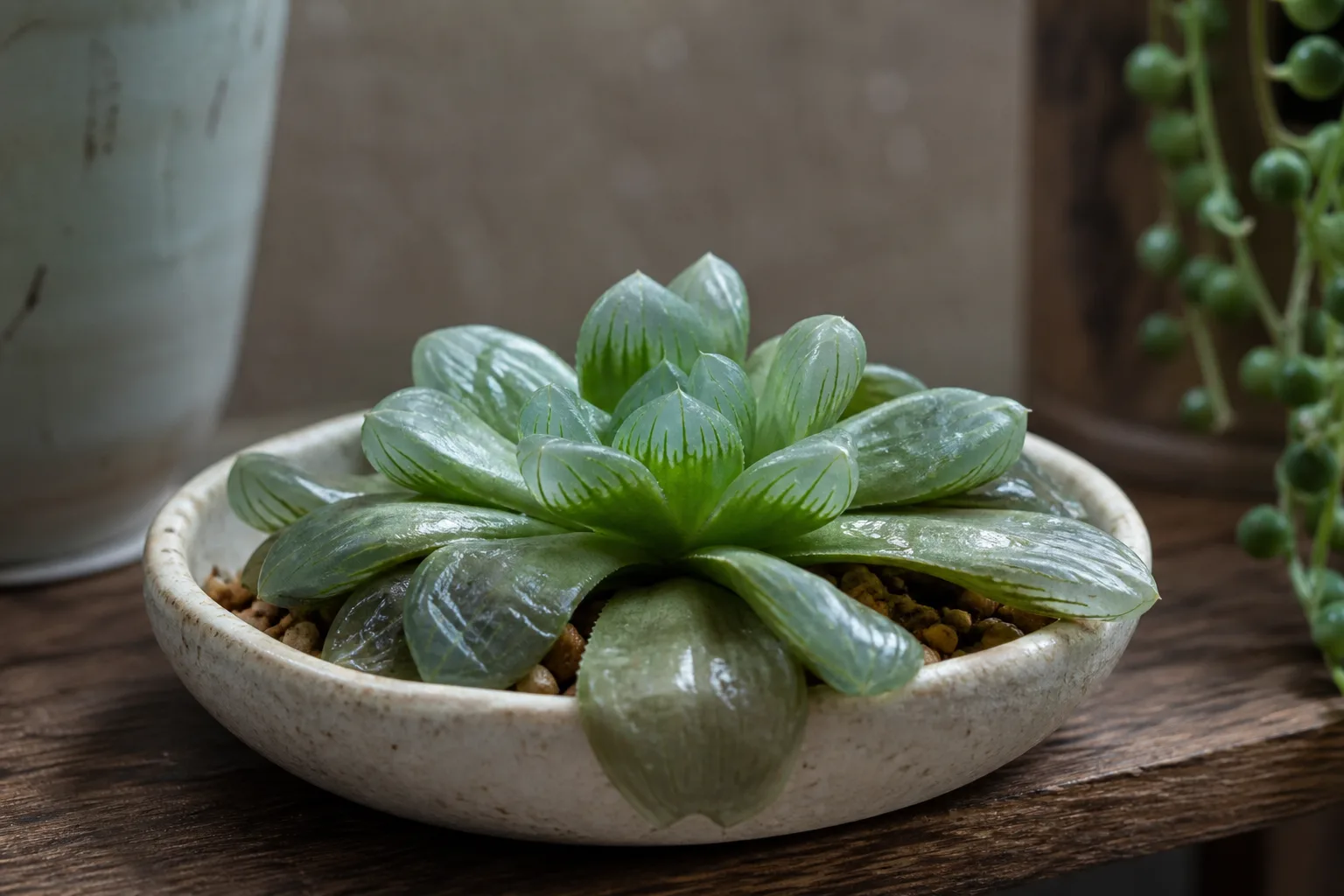
Drooping Leaves on Haworthia: Causes, Checks & Fixes
This guide covers drooping leaves on Haworthia. See also the general Drooping Leaves guide, watering, and light pages for this plant.
Drooping Leaves on Haworthia: Causes, Checks & Fixes
Quick answer
On a healthy Haworthia (Haworthia spp.), leaves are firm, plump, and stacked upright in a compact rosette. Drooping means that posture has failed-outer leaves sag, the rosette leans, or tissue feels soft instead of springy. Unlike a stretching etiolated plant, drooping usually signals water stress or root failure, not just low light.
The two patterns you will see most often:
- Soft, translucent droop on dark wet soil - overwatering, poor drainage, or root rot. Adding water makes this worse.
- Shriveled, deflated droop on bone-dry gritty mix - underwatering. The leaves stay firm when pinched but look thinner and dull.
First step: lift the pot and probe moisture at the root zone with a wooden skewer. Do not water until you know whether the mix is wet or dry at depth-the surface dries first and misleads beginners. Full species context: Haworthia overview.
What drooping looks like on Haworthia
Haworthia stores water in thick succulent leaves, so droop shows up as a change in leaf angle, firmness, and translucence before the whole rosette collapses. Compare your plant to these four patterns.
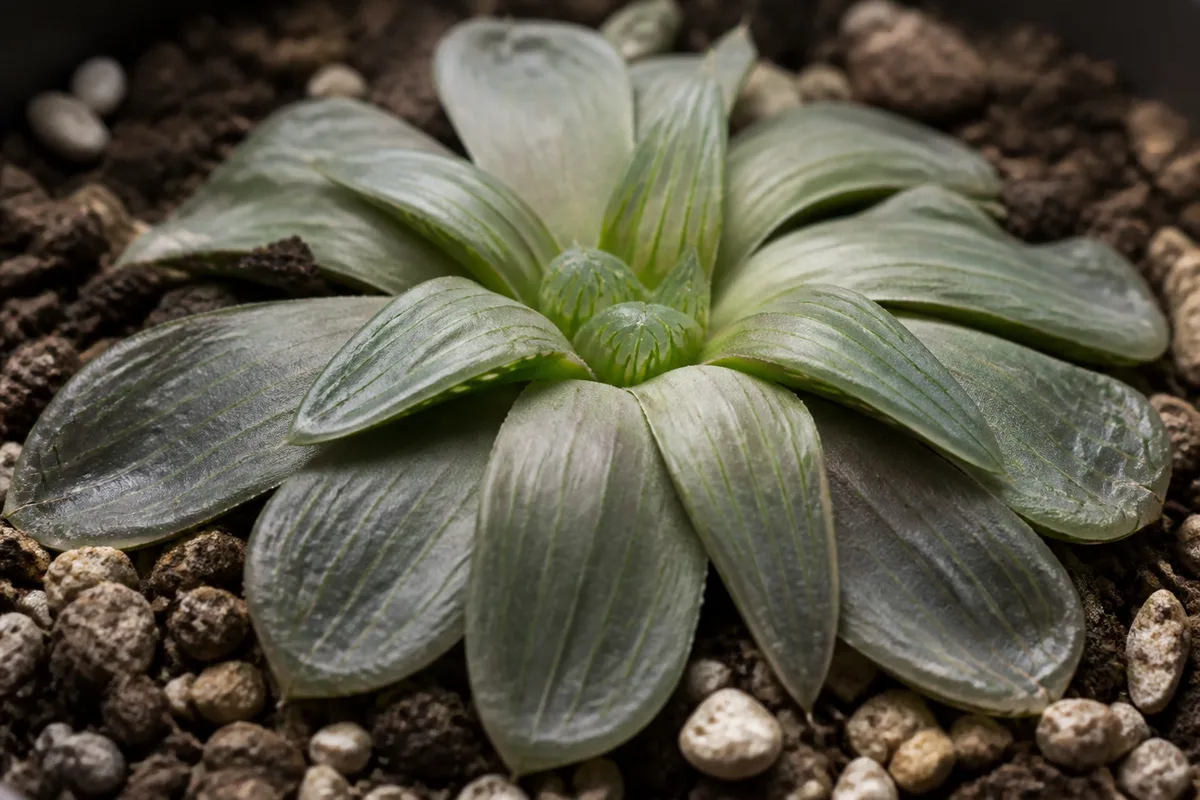
Drooping Leaves symptoms on Haworthia - compare with healthy tissue on the same plant.
Firm upright rosette (healthy baseline)
Healthy Haworthia leaves feel springy and rigid when gently squeezed-like a firm grape, not a wet sponge. They stand at a consistent angle from the center, with tight spacing between leaf pairs. Window species such as Haworthia cooperi show glossy translucent tips as a normal trait; the tissue is still firm. If your rosette matches this baseline, drooping is not the issue-check for pests or recent repot shock instead.
Soft, translucent droop on wet soil (overwatering / root failure)
The most dangerous pattern: leaves lose turgor and sag outward or downward while the mix stays damp or cool several inches down. Lower and outer leaves turn soft, yellow, or translucent-cell damage from excess moisture. The pot feels heavy. You may smell a sour or rotten odor at the base. Roots in saturated soil lose oxygen and stop functioning, so the plant cannot take up water even though the soil is wet-a wilted appearance with moist soil paradox that tricks many growers into watering again.
This overlaps heavily with overwatering on Haworthia and can escalate to root rot. Treat wet-soil soft droop as a root-zone emergency, not a thirst signal.
Shriveled, deflated leaves on dry gritty mix (underwatering)
A thirsty Haworthia draws down stored moisture. Outer leaves look thinner, dull, and slightly curled inward-deflated but still firm when pinched, not mushy. The pot feels feather-light. Mix may be dusty dry throughout and sometimes shrunken away from the pot wall. Water may channel through hydrophobic dry mix without wetting the center.
Unlike soft rot droop, this pattern responds to one thorough soak. See underwatering on Haworthia for the full dry-soil branch.
Wobbly rosette with mushy crown base (advancing root rot)
Late-stage droop: the whole rosette rocks at the base with little resistance. Leaves pull away easily. Tissue at the crown or stem base feels mushy or black. Soil may be wet or recently dried after chronic saturation. This is urgent-delay risks losing the plant within days. Unpot, trim rotted roots and mushy leaves, and repot into fresh dry gritty mix without watering for one to two weeks.
Drooping vs wilting on Haworthia - when to use this page
These terms overlap in everyday speech, but they point to slightly different diagnostic paths on Haworthia.
Drooping describes leaves losing their normal upright posture-sagging, leaning, or hanging at a wider angle than healthy tissue. The rosette may still look partially full.
Wilting is broader loss of turgor-leaves look deflated, thin, or collapsed from root-zone water stress. A severely wilted Haworthia also droops, but mild thirst can wilt center leaves without dramatic outward sag.
Etiolation from low light produces a stretched rosette with longer gaps between leaves. The plant may lean toward the window and sag under weak structural hold, but leaves are often pale and papery-firm rather than mushy. Fix light and dry-down rhythm together-do not assume thirst.
Use this page when leaves change angle or softness from their normal firm upright stack. Use the wilting guide when the whole rosette looks deflated or collapsed regardless of leaf angle. Both pages share the same wet-vs-dry first check.
Why Haworthia leaves droop
Haworthia’s thick leaves buffer short droughts, which means droop often appears only after the problem has been building for days or weeks. The usual causes tie directly to how this succulent handles water and light indoors.
Overwatering in low light. Haworthia tolerates dim rooms better than most succulents, but soil dries far slower away from bright windows. Calendar watering that worked in summer keeps the root zone wet through winter, suffocating roots and producing soft droop on saturated mix. Haworthia is particularly susceptible to root and crown rot from overwatering in low-light conditions-the single most common cause of drooping Haworthia in offices and north-facing rooms.
Root failure from poor drainage. Oversized pots, heavy peat mix, blocked drainage holes, and cachepots that hold standing water all keep roots wet too long. Haworthia roots are proportionally large for the rosette but cannot use an entire pot of soggy mix.
Underwatering after long dry spells. Haworthia survives drought, but months without a full soak depletes leaf reserves. Outer leaves shrivel and droop inward while the center may still look acceptable-until the whole rosette deflates.
Recent repot into heavy mix or oversized pot. Fresh peat-heavy nursery soil plus a pot one size too large holds moisture the small root ball cannot manage. Mild droop for one to two weeks after repot is common shock; worsening mush on wet soil is rot.
Heat or bright-window stress combined with irregular watering. High temperatures speed evaporation from leaves faster than roots replace moisture, producing temporary droop on otherwise healthy plants-especially in small terracotta pots on hot windowsills.
Lookalike symptoms to rule out
Before treating droop, rule out problems that mimic water stress.
Yellow leaves from chronic overwatering often appear alongside soft droop but may be the primary visible sign on outer lower leaves. See yellow leaves on Haworthia if color change dominates.
Leggy stretched growth in dim light looks like a sagging rosette but leaves stay firm and pale with wide spacing-not soft or translucent. Move to brighter indirect light; existing stretched leaves will not compact.
Pest damage - mealybugs at the base and spider mites in dry air can weaken leaf hold. Inspect leaf axils and undersides weekly. Drooping with firm soil moisture and no water-history change warrants a pest check.
Normal offset crowding - a mature cluster may lean as pups push the mother rosette sideways. Individual leaves should still feel firm. Separate or repot if the base is stable and soil moisture is normal.
How to confirm the cause (inspection checklist)
Work through these checks in order. One skewer test at depth beats guessing from how the surface looks.
- Pot weight - Lift the container. A noticeably light pot after you know its freshly watered weight strongly suggests dry mix. A heavy, cool pot suggests saturation.
- Skewer moisture probe - Push a wooden skewer or chopstick to the bottom. If it emerges with damp clinging soil, the root zone is wet-do not water. Clean and dry means thirst is likely.
- Leaf firmness and translucence - Gently squeeze an outer leaf. Firm but thin and dull = drought. Soft, jelly-like, or translucent = overwatering or rot. Healthy Haworthia should feel rigid.
- Base and crown check - Wiggle the rosette at soil level. Stable and firm is reassuring. Mushy, black, or sour-smelling base tissue means unpot immediately.
- Recent care history - Calendar watering through winter? Repot into a larger pot last month? Plant moved to a dimmer desk? Vacation neglect? Match the timeline to wet-soil or dry-soil patterns.
- Drainage verification - Confirm drainage holes are open, saucers were emptied after the last soak, and no cachepot is holding standing water.
| Signal | Wet-soil droop (overwatering / rot) | Dry-soil droop (underwatering) |
|---|---|---|
| Pot weight | Heavy, cool | Light, feather-light |
| Skewer at depth | Damp soil clinging | Clean, dry |
| Leaf feel | Soft, mushy, translucent | Firm, thin, shriveled |
| Leaf color | Yellowing lower leaves | Dull, grayish, crispy tips |
| Soil smell | Sour or rotten | Neutral, dusty |
| First action | Stop watering; inspect roots if worsening | Bottom-water thoroughly once |
First fix for Haworthia
The first fix is always one diagnostic action based on soil moisture at depth-not a bundle of repotting, pruning, and watering on the same day.
If soil is wet and leaves are soft or translucent
Stop watering immediately. Move the plant to brighter indirect light if it sits in a dim corner-faster dry-down helps roots recover. Let the mix dry completely at the root zone before considering another drink. If droop worsens over two weeks of dry-down, or the crown feels mushy, unpot, trim brown rotted roots, and repot into fresh dry gritty succulent mix. Do not water for one to two weeks after repotting from rot.
If soil is dry and leaves are shriveled but firm
Bottom-water thoroughly once. Set the pot in a tray of room-temperature water until the surface moistens, then lift out and drain completely. Do not mist the rosette daily or pour water on hydrophobic dry mix that channels straight through. Wait until the skewer comes out clean and dry before the next soak.
If rosette wobbles or crown feels mushy
Unpot the same day. Trim all brown, black, or mushy roots with clean scissors. Remove soft detached leaves. Let the plant air-dry in shade for one to two days. Repot into fresh fast-draining mix in a pot only slightly larger than the trimmed root ball. Hold water for one to two weeks, then resume soak-and-dry only when mix is fully dry.
If plant was recently repotted or moved
Stabilize placement in bright indirect light and wait five to seven days before the first thorough watering if you repotted into dry mix. Mild droop without mush or sour smell is often temporary shock-not rot. Do not stack fertilizer, heavy pruning, and extra water to “help” the plant.
Step-by-step recovery by cause
Overwatering recovery: Dry-down → brighter indirect light → root inspection if no improvement in 10–14 days → trim and repot if rot found → resume soak-and-dry only when mix is fully dry at depth. Expect two to four weeks before new firm offset growth appears.
Underwatering recovery: One thorough bottom-water → full drainage → normal soak-and-dry rhythm based on skewer tests, not calendar dates. Outer leaves may plump within days; brown crispy tips on old tissue will not revert.
Drainage fix: Repot into gritty succulent mix (roughly 50% mineral grit, perlite, or pumice) in a pot with drainage holes only one size larger than the root ball. Terracotta speeds dry-down in low light.
Post-rot recovery: After trim and dry repot, keep the plant in bright indirect light with no fertilizer until new growth is firm. Offsets may be your backup if the mother rosette loses too many leaves.
Recovery timeline
Thirst on dry mix: Leaves often regain turgor within two to five days after one proper soak. Severely dehydrated plants may need a second cycle after full dry-down.
Mild overwatering without rot: Drooping may stabilize within one to two weeks once soil oxygen returns and you stop adding water. Old soft leaves may not re-firm.
Root rot after trim and repot: New compact growth in three to six weeks is a realistic success marker. Badly damaged outer leaves will not recover-judge progress by new growth and firm center leaves, not by old drooping tissue.
Repot shock: Mild droop for seven to fourteen days is normal. Worsening mush on wet soil is not normal shock.
What not to do
Do not water a drooping Haworthia when the skewer shows damp soil at depth-overwatering wet soil is a common mistake when leaves look tired, and it accelerates root rot rather than recovery. Do not fertilize a stressed or drooping plant; salts in dry or damaged roots worsen stress. Do not repot into a larger pot “to help drying”-oversized pots hold excess wet mix. Do not stack repotting, root pruning, pesticide, and heavy watering on the same day. Do not judge recovery by old drooping leaves re-firming; watch for new compact growth instead.
How to prevent drooping leaves on Haworthia
Follow soak-and-dry rhythm: water thoroughly when the root zone is fully dry, then let the mix go completely dry again before the next drink. Check soil moisture before watering again with a skewer or pot weight-not a fixed weekly schedule. Use fast-draining succulent mix in a pot with drainage holes; empty saucers within 30 minutes of watering. In dim winter rooms, stretch watering intervals because evaporation slows. Avoid cachepots that trap standing water. Learn your pot’s dry weight so a light lift tells you when to soak. Full watering guidance: Haworthia watering guide.
When to worry
Treat drooping as urgent when:
- The rosette wobbles at the base or crown tissue feels mushy
- Soil smells sour or rotten despite surface dryness
- Soft translucent leaves spread upward from the base over several days
- Drooping continues on wet mix after two weeks of dry-down
- Black roots appear after unpotting
Lower urgency: a few outer leaves droop on an otherwise firm center rosette with stable soil moisture-you have time to diagnose before escalating.
Related Haworthia problems
- Overwatering - limp leaves on wet soil, root inspection, repot protocol
- Underwatering - papery shriveled leaves on dry mix
- Root rot - crown mush, black roots, emergency trim and repot
- Wilting - broader turgor loss and wet-vs-dry wilt patterns
- Yellow leaves - color change with soft lower foliage
- Haworthia overview - light, soil, soak-and-dry watering, seasonal rhythm