Underwatering on Haworthia: Causes, Checks & Fixes
Quick answer
Underwatered Haworthia leaves turn thin, papery, and slightly curled inward while the pot feels very light and the mix is dusty dry throughout. First step: bottom-water thoroughly until the surface moistens, drain completely, then resume watering only when the skewer comes out clean and dry.
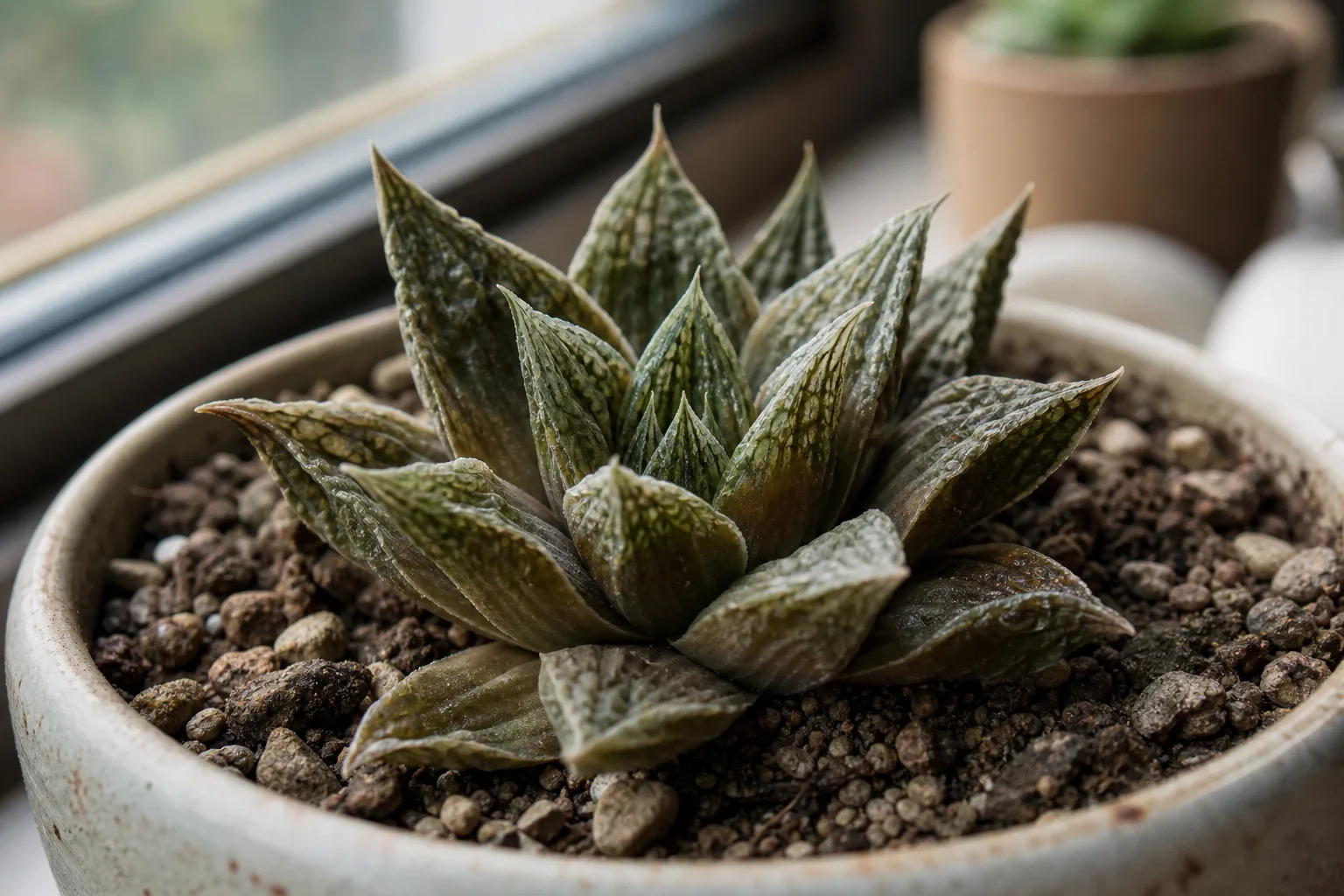
Underwatering on Haworthia: Causes, Checks & Fixes
This guide covers underwatering on Haworthia. See also the general Underwatering guide, watering, and light pages for this plant.
Underwatering on Haworthia: Causes, Checks & Fixes
Quick answer
Underwatered Haworthia does not look like a rotting succulent. The leaves draw down their stored moisture and turn thin, papery, and slightly curled inward at the tips-firm but deflated, not soft and translucent. The pot feels feather-light, soil may pull away from the sides, and water sometimes runs through the mix without soaking the center.
First step: bottom-water the pot thoroughly. Set it in a tray of room-temperature water until the surface moistens, then lift it out and let every drop drain. Do not spray the rosette daily or dump a full watering can on bone-dry hydrophobic mix-that rarely rewets the root ball evenly. One proper soak, then wait until the soil is completely dry before the next drink. For ongoing soak-and-dry rhythm after recovery, see our Haworthia watering guide-this page focuses on rescue when leaves have already lost volume.
What underwatering looks like on Haworthia
Haworthia stores water in its thick leaves, so drought shows up as lost leaf volume before the plant wilts dramatically. Early signs include:
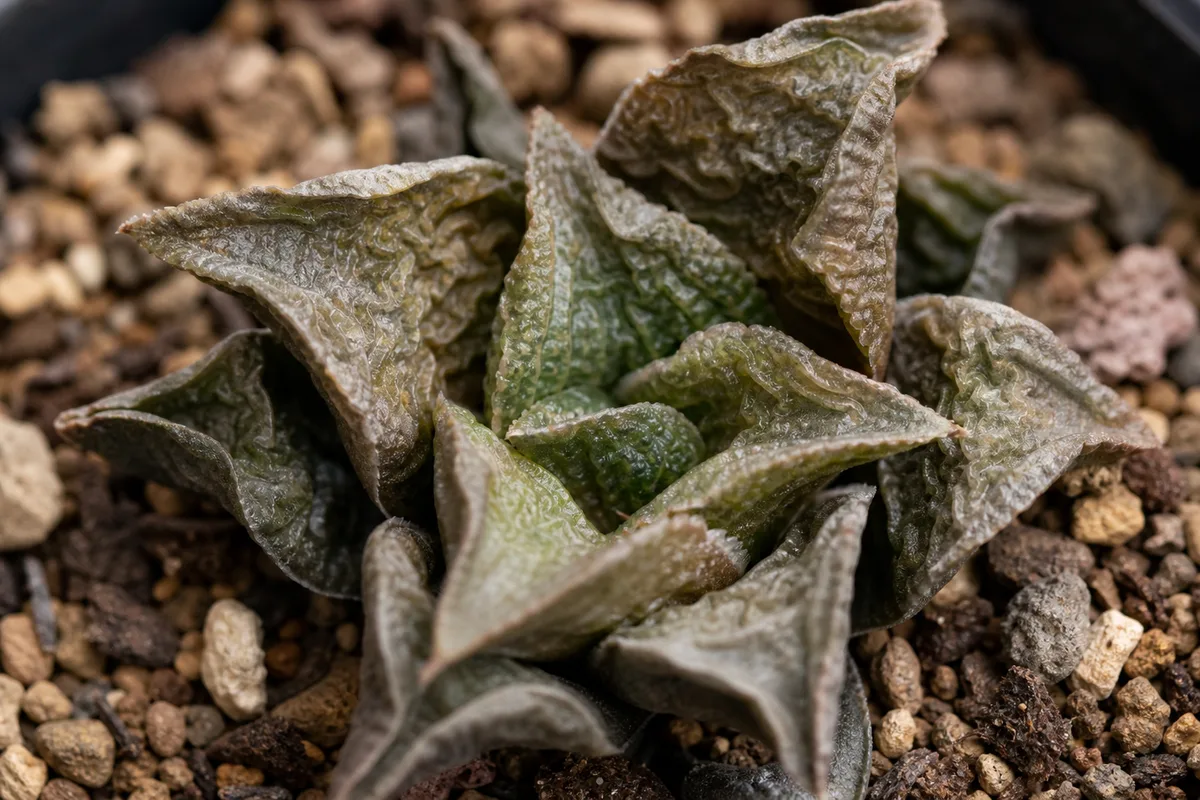
Underwatering symptoms on Haworthia - compare with healthy tissue on the same plant.
- Leaves that feel thinner and more papery than usual, with subtle inward curling at the tips or along outer leaves
- A dull, slightly gray or flat look compared with plump, glossy healthy tissue
- Brown crispy edges or tips that progress slowly from the outside in-not the sudden base-up browning of rot
- Soil dusty dry several inches down, sometimes shrunken away from the pot wall
- A pot that feels very light when lifted; water may channel through the mix and out the drainage hole in seconds
Unlike overwatered Haworthia, underwatered leaves stay firm when pinched-wrinkled or rubbery, not mushy. Wilted leaves with moist soil often mean rotting roots, not thirst. The rosette center usually stays intact. Lower outer leaves may yellow and dry after repeated drought cycles, but you will not smell sour soil or find black mush at the crown. If the base turns soft on wet mix, switch to the root rot guide-that is rot, not drought.
Transparent-window species such as Haworthia cooperi lose their characteristic glassy leaf tips first-the tissue turns dull and opaque when moisture reserves drop.
Why Haworthia gets underwatered
Haworthia tolerates drought better than most houseplants, which makes chronic underwatering easy to miss until leaves visibly shrink. Several patterns push this species into dry stress:
Fear of overwatering. Haworthia is famously sensitive to rot in low light and wet mix-overwatering is the most frequent problem with cacti and succulents. Many growers swing too far the other way-skipping water for weeks because the plant “is a succulent.” Short dry spells are survivable; months without a full soak deplete leaf reserves and stress roots. Haworthia stores water in thick leaves but still needs periodic deep soaks during active growth.
Calendar watering in the wrong season. Haworthia needs more frequent drinks during bright active growth (roughly spring through early autumn) and far less in winter rest, when growth slows and evaporation drops. Watering on the same summer interval through winter can underwater a plant in a hot south window while overwatering one in a cool dim room-pot weight and skewer tests matter more than the date.
Fast-drying conditions without adjusted checks. Small terracotta pots, gritty succulent mix, bright indirect light, and heating vents all speed drying. A Haworthia that needed water every two weeks in autumn may need it every ten days in a sunny summer window. Root-bound plants in small pots also exhaust moisture quickly.
Hydrophobic, peat-heavy mix. When soil stays dry too long-especially lightweight peat blends-it repels water. Once dry, light soilless mixes are difficult to moisten. You think you watered because the surface darkened, but the center of the root ball stayed dry. This mimics chronic underwatering even when you pour water regularly.
Neglect during travel or winter. Near-dormant Haworthia still needs occasional deep soaks. A plant left completely dry for six weeks in active growth will show papery leaves; one forgotten on a windowsill over a hot vacation week collapses faster.
How to confirm the cause
Work through these checks before you change anything else:
- Pot weight - Lift the pot. Very light means dry; heavy means wet. Learn the difference after a thorough soak versus after two weeks dry.
- Skewer or finger test at depth - Insert a wooden skewer to the bottom. Clean and dry coming out confirms drought. Damp soil clinging means the plant does not need water-and wilting with wet skewer suggests rot, not thirst.
- Leaf texture - Pinch an outer leaf. Firm but wrinkled = underwatering. Soft, translucent, or squishy = overwatering or rot.
- Soil pull-away and channeling - Dry mix shrunk from the pot sides, or water running straight through in seconds, supports drought or hydrophobic soil.
- Recent history - When did you last soak until water drained? Has the plant sat in a hot window without water through a heat wave?
- Smell and crown check - Sour odor, soft base leaves, or black tissue at the soil line rules out simple underwatering. Unpot only if texture and smell suggest rot. If symptoms are ambiguous-limp leaves but you are unsure whether the mix is wet or dry-compare with our wilting guide before you pour more water.
If the pot is light, skewer is dry throughout, and leaves are firm-wrinkled, underwatering is the working diagnosis. Proceed to one thorough rehydration-not repotting, fertilizer, or daily spritzing.
First fix for Haworthia
Bottom-water until the entire root zone rewets, then drain completely.
Place the potted Haworthia in a sink or tray filled with room-temperature water deep enough to reach the pot rim. Bottom-watering lets the soil absorb water over several hours until the top surface of the mix darkens-usually 20 to 45 minutes for a standard small pot. Remove the pot, let excess drain for at least fifteen minutes, and empty the saucer.
This single step fixes most mild underwatering without drowning the crown. Top-watering dry gritty mix often fails because water tunnels along the pot wall; bottom-watering saturates the root ball evenly.
Do not water again until the skewer test shows completely dry soil throughout. Do not fertilize, repot, or move the plant to full sun on the same day.
Step-by-step recovery
If one bottom-watering does not plump leaves within a few days, work through these steps in order:
- Repeat bottom-watering once - If the first pass ran through too fast on hydrophobic mix, soak again after the surface dries slightly-only if the skewer still reads dry at depth.
- Break surface tension on stubborn dry mix - For severely repelling soil, poke a few shallow holes with a chopstick before bottom-watering so water penetrates. Do not aggressively disturb roots.
- Move to appropriate light - Bright indirect light supports recovery. Avoid harsh midday sun on a stressed rosette; drought-weakened tissue sunburns easily.
- Hold fertilizer - Skip feed until leaves firm up and new center growth looks normal for two weeks. Salts on drought-stressed roots cause tip burn.
- Repot only if mix will not rewet - If repeated soaks leave the center dry and the plant has not been repotted in years, move to fresh fast-draining succulent mix in spring-but only after rehydration attempts fail and roots look firm and white, not rotted.
Recovery timeline
Mild dehydration: Outer leaves plump within 24 to 72 hours after one good bottom-watering. The rosette feels firmer when you touch it.
Moderate stress (weeks dry): Recovery takes five to ten days for visible turgor return. New center leaves should look normal within two to three weeks.
Severe or repeated drought: Brown tips and flattened outer leaves never green up again-damaged leaves will not recover. Judge success by firm new growth from the center, not by old leaf cosmetics. Growth may stay slow for a month after heavy stress.
Signs the fix worked: Pot weight increases after watering and drops predictably over one to two weeks. Center leaves regain thickness. No new browning spreads from tips inward.
Signs the problem is worsening or misdiagnosed: Leaves stay flat after the mix is wet-roots may be rotted and cannot take up water. Crown softens, soil smells sour, or lower leaves turn mushy. Stop watering and inspect roots; that is rot, not drought.
Lookalike symptoms
Underwatering and overwatering both make Haworthia look unhappy, but the fixes are opposite. Use this quick split:
| Clue | Underwatering | Overwatering / rot |
|---|---|---|
| Soil | Dusty dry throughout | Wet, cool, or sour-smelling |
| Pot weight | Very light | Heavy days after watering |
| Leaf feel | Firm, thin, wrinkled | Soft, mushy, translucent |
| Browning pattern | Tips and edges, slow | Often from base upward |
| Center rosette | Usually intact | May collapse or detach |
Sunburn browns the sun-facing side of leaves in a directional patch-not uniform tip crisping from drought. Fluoride or low humidity can brown tips on an otherwise plump plant with moist soil; switch to room-temperature water and check whether the mix is actually dry before blaming thirst alone-see brown tips if tips brown while leaves stay plump on moist mix.
Mistakes to avoid
- Daily light sprinkles - Surface moisture without root-zone soaking keeps Haworthia in chronic deficit.
- Panic-drenching every day after one dry spell - Swings into overwatering and crown rot, especially in winter or low light.
- Assuming all shriveling is thirst - Mushy leaves with wet soil mean rot; more water kills the plant.
- Misting instead of soaking - Haworthia needs moisture at the roots; misting leaves does not refill leaf stores.
- Fertilizing a dry plant - Rehydrate first; fertilizer on drought-stressed roots burns tissue.
- Repotting on day one - Unnecessary unless mix is hydrophobic beyond repair or roots are confirmed healthy but locked in concrete-dry peat.
How to prevent underwatering next time
Build a soak-and-dry rhythm tied to your pot, not a calendar:
- Skewer test before every major watering - Water only when the skewer comes out clean and dry from the bottom of the pot.
- Learn dry versus wet pot weight - A light lift is the fastest check once you know the feel.
- Adjust for season and placement - Expect more frequent soaks in bright summer growth; stretch to roughly monthly in winter rest if the pot stays light but leaves remain firm. Full seasonal targets live in the watering guide.
- Use fast-draining mix and drainage holes - Gritty succulent blend in terracotta dries predictably; match your check frequency to that speed.
- Refresh peat-heavy soil every two to three years - Old mix goes hydrophobic and resists water even when you try to care for the plant.
Haworthia forgives short dry spells better than wet feet. The goal is not constant moisture-it is full soaks followed by complete drying, repeated consistently.
When to worry
Underwatering rarely kills Haworthia overnight, but act promptly when:
- The entire rosette is limp and paper-thin with soil dry for weeks during active growth
- Water will not penetrate the mix after two bottom-water attempts-roots may be dead or mix is failed
- All outer leaves brown and dry while the center stays tiny-severe reserve depletion; recovery depends on a healthy growing point
- Leaves stay flat after the soil is genuinely wet-unpot and inspect for brown mushy roots (rot mimic)
If the center crown is firm, roots are white and intact when sampled, and only outer leaves are damaged, the plant almost always recovers with corrected watering. Cosmetic leaf loss is acceptable; a soft crown is not. When most outer leaves are crispy but the center crown stays firm, offsets may still be salvageable-see Haworthia propagation before you discard the pot.
Related Haworthia guides
Related guides: Overview · Watering · Overwatering · Root rot · Wilting · Brown tips · Propagation