Brown Tips on Haworthia: Causes, Checks & Fixes
Quick answer
Brown tips on Haworthia usually trace to chronic drought crisping on a feather-light dry pot, root stress from soil that stays damp too long, directional sun scorch on the sun-facing rosette face, or fluoride and fertilizer salt buildup on otherwise plump leaves. First step: run a skewer test at depth, lift the pot for weight, and note which side of the rosette faces the window before you change watering or light.
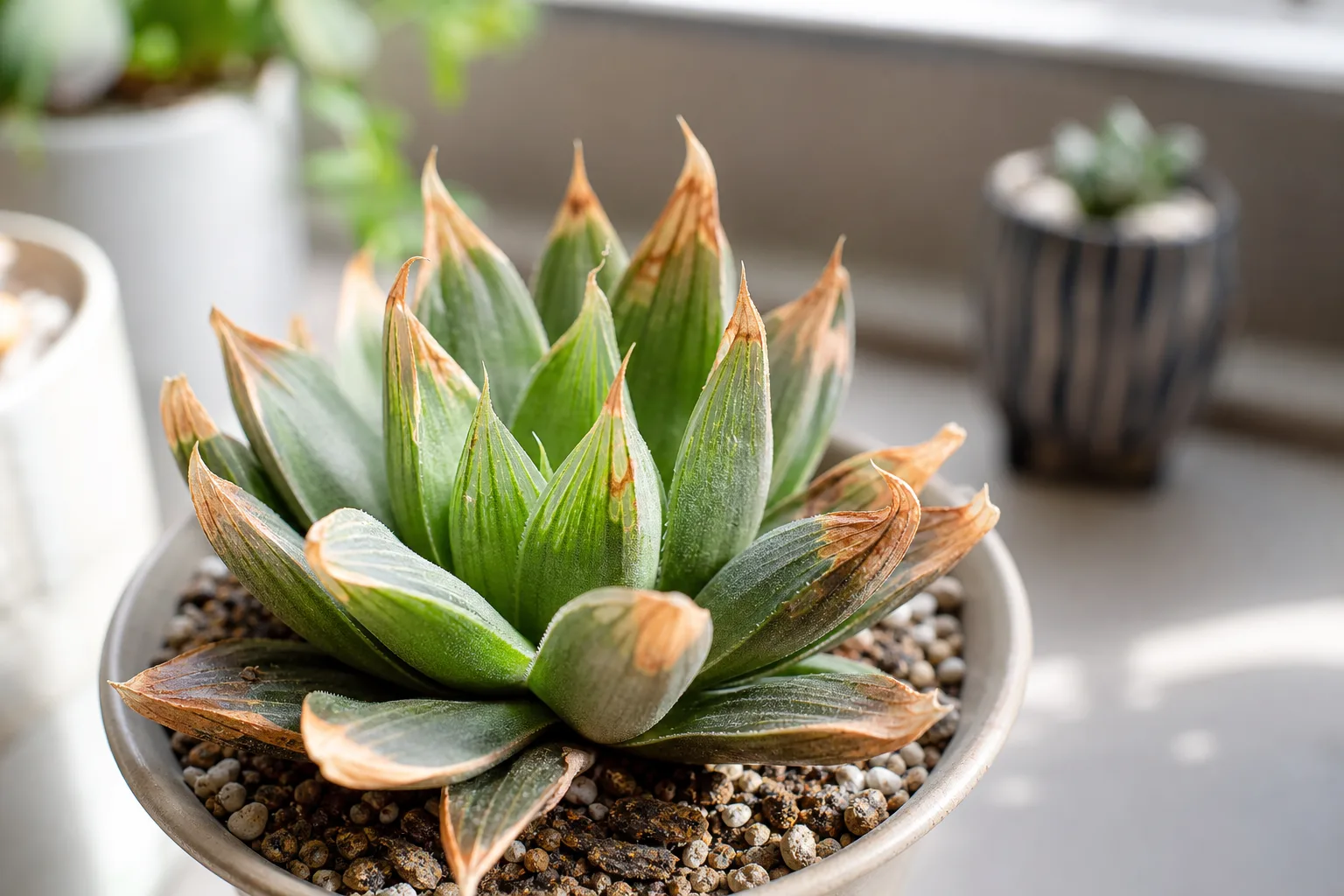
Brown Tips on Haworthia: Causes, Checks & Fixes
This guide covers brown tips on Haworthia. See also the general Brown Tips guide, watering, and light pages for this plant.
Brown Tips on Haworthia: Causes, Checks & Fixes
Quick answer
Brown tips on Haworthia are a margin stress signal, not one diagnosis. On these compact rosette succulents, the leading triggers are chronic drought crisping on a feather-light dry pot, root stress from soil that stays damp too long, directional sun scorch on the window-facing side of the rosette, and fluoride or fertilizer salt buildup on otherwise plump leaves. Haworthia stores water in thick leaves, so tip damage often appears before the whole rosette wilts-and the fix depends on whether the pot is light and dry or heavy and wet.
First step: run a skewer test at depth, lift the pot for weight, and note which side of the rosette faces the window. Do not add water until you know whether the mix is dry throughout or still damp below the surface. Brown tips on a wet heavy pot mean the opposite intervention from crisp tips on a light dry pot with firm-wrinkled outer leaves.
Separate slow cosmetic aging on one or two oldest outer leaves from a pattern that hits new center growth or spreads while soil stays saturated.
What brown tips look like on Haworthia
Haworthia forms tight rosettes of thick, fleshy leaves-often banded or windowed at the tips. Tip browning shows up in distinct patterns:
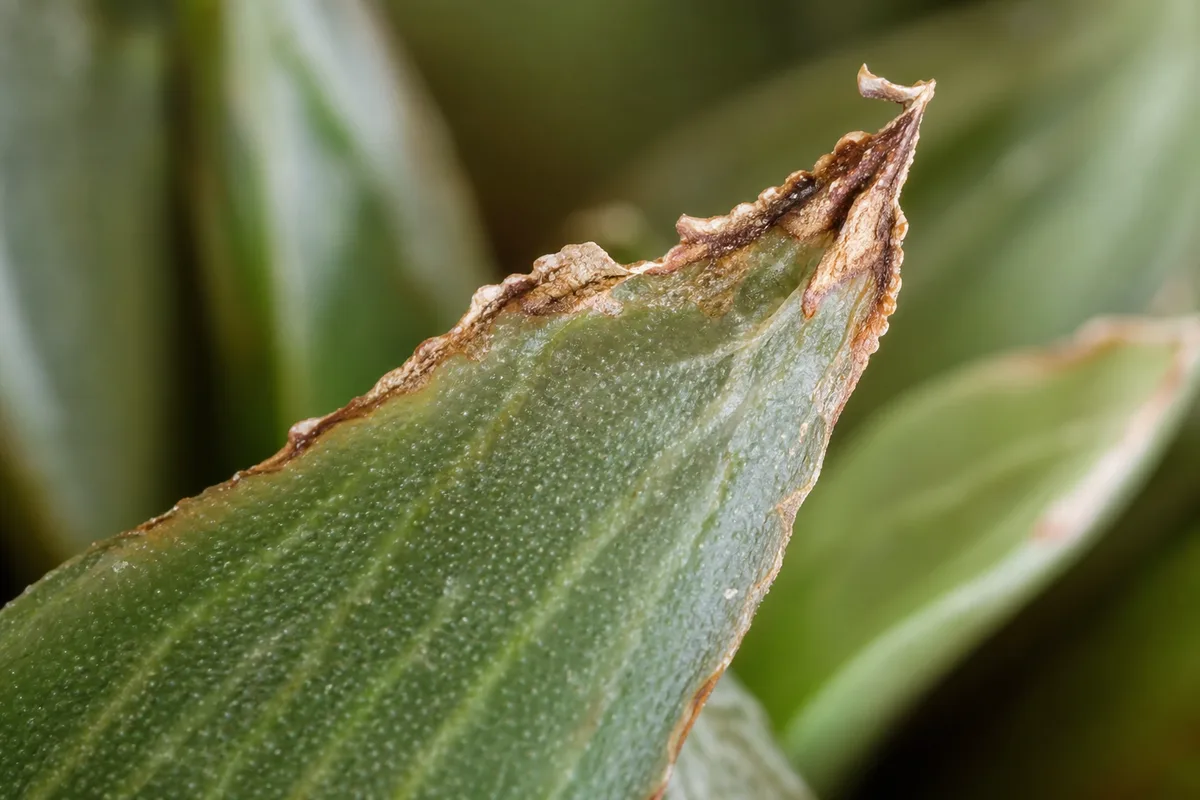
Brown Tips symptoms on Haworthia - compare with healthy tissue on the same plant.
- Drought crisp tips - Outer leaves develop slow, dry brown tips or edges while leaves feel firm but thinner or slightly wrinkled. The pot feels feather-light, soil is dusty dry several inches down, and the center rosette usually stays intact. Progression is gradual from tips inward, not sudden base-up collapse.
- Overwatering stress on damp mix - Tips brown while soil stays damp below the surface, the pot feels heavy days after watering, and lower leaves may yellow or feel soft. Leaves can look plump at first but lose healthy color at margins because roots in oxygen-poor wet mix cannot move water efficiently to leaf tips.
- Sun scorch - Sun-facing leaves show a directional brown or reddish patch on the side that gets direct rays-not uniform tip crisping on every leaf. Often follows a sudden move to a hot south or west window, or afternoon sun through glass. Shaded sides of the same rosette stay green.
- Fluoride or salt burn - Tips brown on plump, otherwise healthy-looking leaves while soil moisture is normal-not paired with a very light dry pot or directional sun patch. May follow months of hard tap water, winter fertilizer on a slow-growing plant, or white crust on the soil surface.
- Natural aging - One or two oldest bottom leaves may show minor tip browning over months on an otherwise stable plant. New center growth stays firm and clean. Low priority if skewer tests and pot weight look normal.
Transparent-window species such as Haworthia cooperi lose their glassy tip clarity first-tissue turns dull and opaque when drought or salt stress hits the leaf margins.
Worry when browning hits new center leaves, pairs with soft mushy bases or sour soil, or spreads on a heavy wet pot-not when a single old outer leaf shows a few millimeters of slow crispy tip.
Why Haworthia gets brown tips
Chronic underwatering and drought crisping
Haworthia tolerates dry spells better than most houseplants, which makes chronic underwatering easy to miss until tips crisp. When leaf reserves drop, outer leaves thin slightly and tips brown slowly while tissue stays firm-not mushy. Small terracotta pots, bright windows, and gritty succulent mix all speed drying. A plant that needed water every two weeks in autumn may need it every ten days in a sunny summer window.
Fear of overwatering pushes many growers to skip soaks for too long. Short dry periods are survivable; months without a full soak depletes reserves and stresses roots. See underwatering on Haworthia for drought crisping, bottom-watering recovery, and firm-wrinkled leaf texture.
Overwatering on wet mix
Overwatering is the most frequent problem with cacti and succulents indoors. Haworthia roots need air between soaks. When mix stays damp in low light or cool winter rooms, roots suffocate in wet soil and lose function-so tips crisp even though the pot is wet. The RHS notes Haworthia tends to rot if watered too much or left in damp compost, especially in winter.
Brown tips while skewer readings stay damp often precede yellow mushy lower leaves and base-up browning. This is the opposite branch from drought crisping. Review overwatering on Haworthia and the Haworthia watering guide for soak-and-dry rhythm and brown-tip signs on wet soil.
Direct sun scorch
Haworthia evolved in partially shaded rock pockets in South Africa-not open midday sun. Direct sunlight can scorch succulent leaves, creating crisp brown or reddish patches on the exposed face of the rosette. Sunburn is directional: the window-facing side burns first while shaded tissue stays green.
Drought-weakened leaves sunburn faster. A stressed rosette moved to “fix” pale growth with harsh sun often shows tip and patch browning within days. See not enough light on Haworthia for safe bright placement-not direct afternoon rays.
Fluoride, tap water, and low humidity
Tip burn on plump leaves with moist soil and no sun patch often traces to fluoride or mineral buildup from treated tap water over months of regular watering. Heated winter air can compound margin drying on leaf tips-the farthest point from roots-though Haworthia handles average indoor humidity better than tropical foliage plants.
Resting tap water overnight reduces chlorine but not fluoride. Switch to filtered or room-temperature water when new growth keeps browning at tips despite correct watering. Low humidity can brown leaf tips on indoor plants when paired with mineral stress. See low humidity on Haworthia when dry air near vents may be contributing.
Fertilizer salt accumulation
Haworthia is a light feeder that needs only diluted fertilizer during active growth. Feeding in winter, on dry roots, or at full label strength lets soluble salts accumulate in the small root zone. Symptoms include brown tips, white crust on soil, and stalled center growth. Salt burn can mimic fluoride damage on plump tissue.
Do not fertilize to “green up” tipped leaves on a stressed plant. Review the Haworthia fertilizer guide for growing-season-only feeding and salt-flush steps.
Natural aging of outer leaves
Lower outer leaves eventually senesce after many months. A few millimeters of brown tip on one old leaf while new center growth stays firm is cosmetic-not a crisis. Trim for appearance if you like; do not overhaul watering for a single aging leaf.
Brown tips vs. base-up browning from rot
Tip browning and crown rot are different urgency levels on Haworthia:
| Pattern | Tip browning (this page) | Base-up rot (urgent) |
|---|---|---|
| Browning location | Tips and outer margins, slow | Base of leaves, spreading upward |
| Leaf feel | Firm (drought) or plump with dry margins (salt/sun) | Soft, mushy, translucent |
| Soil | Dry (drought) or damp (overwatering stress) | Wet, cool, often sour-smelling |
| Pot weight | Very light (drought) or heavy (overwatering) | Usually heavy |
| Center rosette | Usually firm | May collapse or detach |
If lower leaves turn mushy from the base up while soil stays wet, stop watering and inspect roots-that is rot, not a humidity tweak. Cosmetic tip damage on firm tissue is manageable; a soft crown on saturated mix is not.
How to confirm the cause
Work through these checks before you change watering, light, or fertilizer:
- Pot weight - Lift the pot. Very light means dry; heavy means wet. Learn the feel after a thorough soak versus after two weeks dry.
- Skewer test at depth - Insert a wooden skewer to the bottom. Clean and dry confirms drought branch. Damp soil clinging means do not add water-and tip browning with wet skewer points to overwatering stress or salt burn, not thirst.
- Leaf firmness - Pinch an outer leaf. Firm but wrinkled or thin = drought. Soft, translucent, or squishy = overwatering or rot.
- Light direction - Note which rosette face points at the window. Directional brown patch on the sun-facing side supports scorch; uniform outer tip crisping on a dry pot supports drought.
- Water and feed history - Months of hard tap water or winter fertilizer on plump tipped leaves supports salt or fluoride burn. Weeks without a full soak on a light pot supports drought.
- Smell and crown check - Sour odor, soft base leaves, or black tissue at the soil line rules out simple tip burn. Unpot only if texture and smell suggest rot.
Quick cause reference
| Clue | Likely cause | First direction |
|---|---|---|
| Light pot, dry skewer, firm-wrinkled leaves | Drought crisping | One bottom-water soak, then dry-down |
| Heavy pot, damp skewer, plump or yellowing leaves | Overwatering stress | Stop watering; check drainage and roots |
| Sun-facing brown patch, recent sun move | Sun scorch | Move to bright indirect light |
| Plump leaves, moist soil, no sun patch, salt crust | Fluoride or fertilizer salts | Pause feed; flush or switch water |
| One old outer leaf only | Natural aging | Monitor; trim if desired |
If two branches fit, address water status first-wrong watering kills Haworthia faster than wrong humidity or a missed fertilizer pause.
First fix for Haworthia
Do not stack repotting, fertilizer, and heavy pruning on day one. Pick the branch that matches your checks:
If the pot is light and the skewer is dry (drought)
Bottom-water once until the surface moistens, then drain completely. Set the pot in a tray of room-temperature water. Bottom-watering lets the soil absorb water evenly until the mix darkens at the top, then lift out and empty the saucer. Do not water again until the skewer reads dry throughout. Full drought recovery steps live on underwatering on Haworthia.
If the pot is heavy and the skewer is damp (overwatering stress)
Stop watering immediately. Confirm drainage holes are open, empty any standing saucer water, and move the plant to bright indirect light-not dark shade. If lower leaves are mushy or soil smells sour, unpot, trim rotted roots, and repot into dry fast-draining mix before the next cautious soak. See overwatering on Haworthia.
If sun-facing tissue burned after a light move
Move the rosette out of direct afternoon sun to bright indirect light-typically an east window or several feet back from south glass. Do not compensate with extra water; sunburned tissue will not re-green. Wait for firm new center leaves before judging recovery.
If plump leaves show tip burn with moist soil and no sun patch
Pause fertilizer and switch to room-temperature filtered or rested tap water for the next several waterings. If white crust sits on the soil surface, flush the pot with plain water twice over one week, letting it drain fully each time. Resume light feeding only when new center growth looks normal for two weeks.
Recovery timeline
Drought crisp tips: After one proper bottom-watering, outer leaves usually firm within two to five days. Brown tips never re-green-judge success by firm new center leaves and no fresh browning spreading inward.
Overwatering tip stress: Once watering stops and roots recover in dry mix, new tip damage should halt within one to two weeks. Yellow mushy leaves may need removal; growth may stay slow for a month.
Sun scorch: Burned patches are permanent on affected tissue. New leaves emerging after light correction should look normal within two to three weeks in active growth.
Salt or fluoride burn: Tip damage stops when salts are flushed and feeding pauses. Two to four weeks of clean new center growth confirms the fix.
Signs recovery is working: Pot weight rises after watering and drops predictably. Center leaves stay thick and firm. No new browning on emerging leaves.
Signs the problem is worsening or misdiagnosed: Tips keep browning while soil stays wet-roots may be failing. Crown softens, soil smells sour, or lower leaves turn mushy. Stop watering and inspect roots; that is rot, not drought or salt burn alone.
Lookalike symptoms
Brown tips overlap with several Haworthia stress pages. Use this split before you treat:
- Underwatering - Thin papery leaves, very light pot, dry skewer throughout, firm-wrinkled texture. Fix: one deep soak.
- Overwatering - Heavy wet pot, soft or yellow lower leaves, tip browning on damp mix. Fix: dry-down and root check.
- Wilting - Whole rosette loses firmness; urgent when paired with wet soil and mush.
- Not enough light - Pale stretch before tips brown; fix placement before assuming water quality.
- Low humidity - Margin drying near vents on otherwise well-watered plants; less common on Haworthia than on ferns.
Tip browning alone on firm leaves with a clear dry-or-wet pot signal usually stays on this page. Base mush on wet soil belongs on overwatering or root rot guides.
What not to do
- Assume all brown tips mean underwatering - Wet heavy pots need dry-down, not another soak.
- Panic-drench after one dry spell - Swings into overwatering and crown rot, especially in winter or low light.
- Move a drought-stressed rosette into direct sun - Weak tissue burns faster; fix water first, then adjust light gradually.
- Fertilize tipped leaves - Rehydrate and correct water or salts before any feed. Fertilizer on stressed roots worsens tip burn.
- Stack repotting, pruning, and pesticide on one day - Make one care correction at a time so you can read the plant’s response.
- Trim tips into healthy green tissue - Leave a thin margin of brown to avoid opening fresh wounds on succulent leaves.
How to prevent brown tips next time
Build a soak-and-dry rhythm tied to your pot, not a calendar:
- Skewer test before every major watering - Water only when the skewer comes out clean and dry from the bottom of the pot, as described in the Haworthia watering guide.
- Learn dry versus wet pot weight - A light lift is the fastest check once you know the feel after a proper soak.
- Keep bright indirect light, not harsh midday sun - Haworthia wants bright filtered light, not south-window afternoon rays.
- Use room-temperature water - Filtered or rested tap water if fluoride tip burn recurs on new growth.
- Feed lightly during active growth only - Quarter- to half-strength fertilizer in spring through early fall; pause in winter per the fertilizer guide.
- Inspect outer leaves weekly - Catch slow tip crisping while only one or two leaves are affected.
Haworthia forgives short dry spells better than wet feet. The goal is full soaks followed by complete drying, repeated consistently-not constant moisture or long drought in active growth.
When to worry
Cosmetic tip browning on firm outer leaves rarely kills Haworthia overnight. Act promptly when:
- Browning spreads from tips into soft mushy bases while soil stays wet
- The crown feels squishy or detaches with gentle pressure
- Soil smells sour and lower leaves yellow and soften together
- New center leaves brown as they emerge on a heavy wet pot-roots may be failing
- Water will not penetrate hydrophobic mix after two bottom-water attempts during drought-roots or mix may need attention
If the center crown is firm, skewer and pot weight match one clear branch above, and only outer tips are damaged, the plant almost always recovers with the targeted fix. A soft crown on saturated mix is not a tip-trim problem.
Related Haworthia guides
- Haworthia watering - Soak-and-dry rhythm and brown tips on damp mix
- Underwatering on Haworthia - Drought crisp tips and bottom-watering recovery
- Overwatering on Haworthia - Wet-pot tip stress and root recovery
- Haworthia fertilizer - Salt burn and winter feeding mistakes
- Not enough light on Haworthia - Safe bright placement vs. sun scorch
- Low humidity on Haworthia - Margin drying near vents