Not Enough Light on Haworthia: Causes, Checks & Fixes
Quick answer
Haworthia survives dim corners better than most succulents, but weak light still causes etiolation-loose, stretched rosettes that lean toward windows. First step: move the pot to the brightest safe indirect spot in your home, usually within 2–3 feet of an east-facing window, before changing watering or fertilizer.
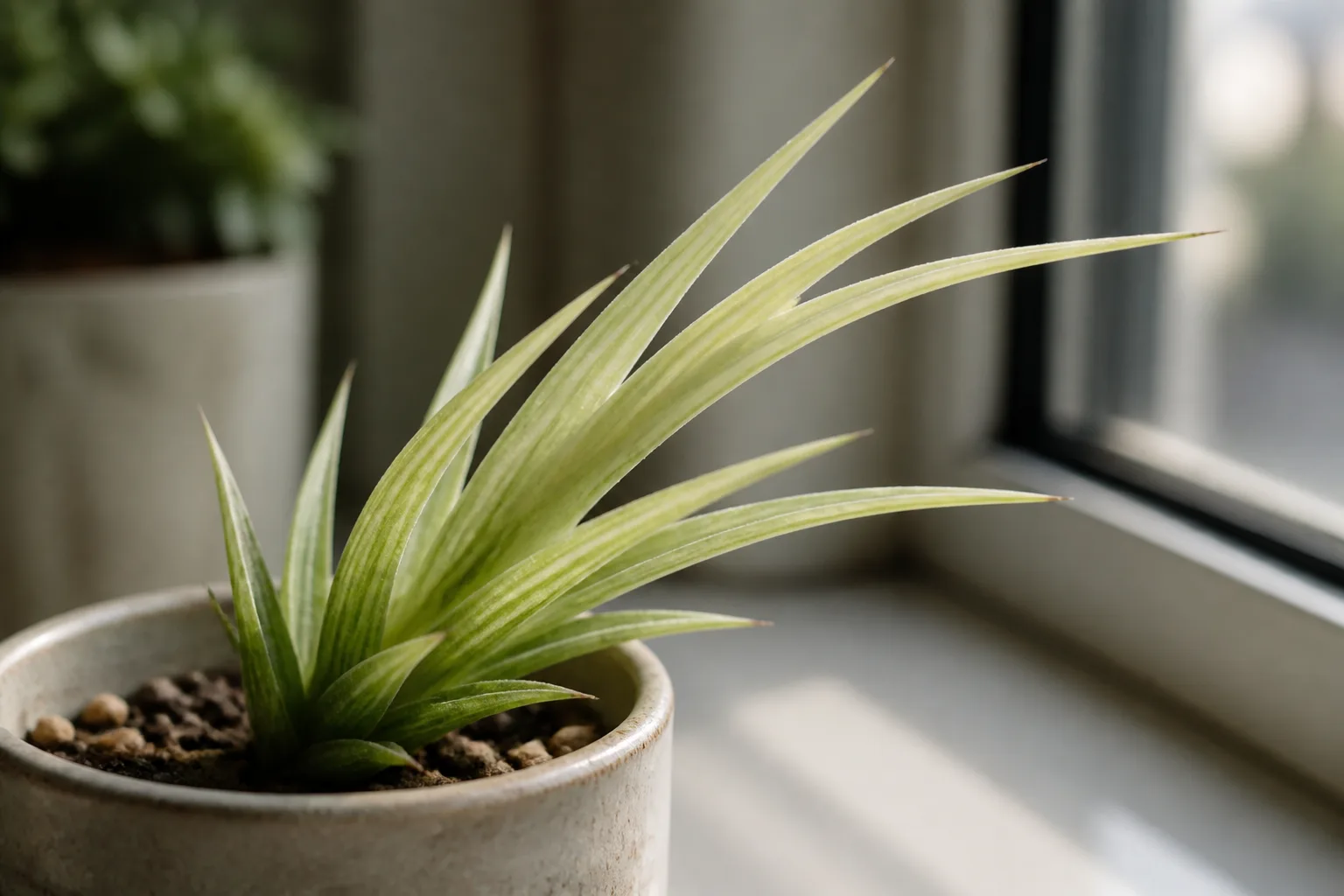
Not Enough Light on Haworthia: Causes, Checks & Fixes
This guide covers not enough light on Haworthia. See also the general Not Enough Light guide, watering, and light pages for this plant.
Not Enough Light on Haworthia: Causes, Checks & Fixes
Quick answer
Haworthia is marketed as a low-light succulent, and it does tolerate shade better than echeveria or jade plant. But tolerate is not thrive. In weak light, the rosette stretches upward, leaves spread apart, color dulls, and offsets stall-classic etiolation.
First step: move the pot to the brightest safe indirect spot in your home-typically within 2–3 feet of an east-facing window or a filtered south- or west-facing window-before you change watering, fertilizer, or pot size. Haworthia does not want harsh midday sun on the glass, but it still needs meaningful daily light to stay compact.
Why Haworthia lacks sufficient light
In South African habitat, haworthias grow under rock overhangs and scrub where they receive bright ambient light filtered through shade-not the deep interior darkness of a bookshelf or distant corner. NC State Extension notes haworthia prefers full sun or bright indirect light, which produces the best leaf color indoors.
That tolerance gap matters. Haworthia survives office desks and north rooms longer than most succulents, but photosynthesis still drives growth structure. When light is inadequate, houseplants stretch toward the source and develop spindly growth with small pale leaves. On a rosette succulent, that reads as a tall stack of leaves instead of a tight cushion.
Light intensity drops fast with distance. Indoor light falls sharply as you move away from windows, and winter short days cut exposure further even when the pot never moved. A haworthia that looked fine in summer on a side table may etiolate by February in the same spot.
Low light also slows water use. Haworthia stores moisture in thick leaves and prefers the mix to dry fully between drinks. In dim placement, evaporation lags, soil stays wet longer, and the same Haworthia watering guide that worked in brighter light can push roots toward rot. Plants in inadequate light can become stressed or waterlogged. Light and watering are linked on Haworthia overview more than on many foliage houseplants.
What low light looks like on Haworthia
Etiolation is the signature pattern-not a single yellow leaf, but a change in overall architecture.
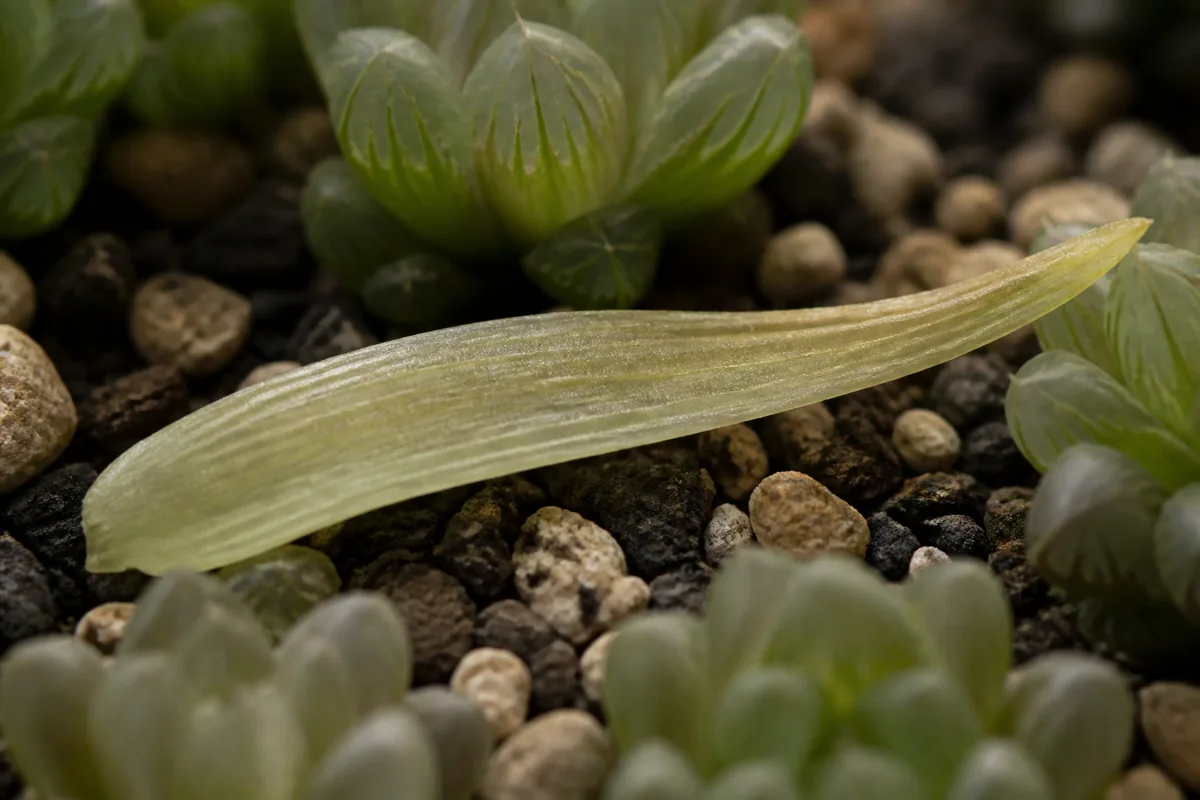
Not Enough Light symptoms on Haworthia - compare with healthy tissue on the same plant.
Typical low-light signs:
- Rosette loses its tight ball shape; leaves stand more upright with visible gaps between them
- Plant leans or faces one direction toward the brightest source
- New leaves look smaller, thinner, or less plump than older compact growth
- Deep green fades to dull olive or yellow-green; windowed species like Haworthia cooperi lose clarity in translucent leaf tips
- Growth slows beyond normal winter dormancy-few or no offsets for months
- Flower stalks may not appear even in spring on plants that once bloomed
Species-specific nuance: Striped haworthiopsis types often keep some pattern but on elongated leaves. Truncata and retusa forms that should look like flat tiles or compact stars instead resemble loose stacks. The change is gradual, which is why owners notice only after several new leaves open.
Etiolated tissue does not revert. Stretched growth remains elongated; you judge recovery by the next leaf set, not by old leaves shrinking.
How to confirm the cause
Work through these checks before Haworthia repotting guide or fertilizing:
- Placement audit - Record window direction and distance from glass. Within 2 feet of an unobstructed east or west window is bright indirect for most homes; beyond 6 feet is often low light even if the room feels bright to you.
- Lean test - If every rosette faces the same way, the plant is actively seeking light. Rotate the pot; if it re-leans within a week, exposure on the current spot is weak.
- New-growth trial - Move the plant closer to a brighter filtered window for 14 days without changing water volume. If the next two leaves open tighter and more plump, light was limiting.
- Soil moisture cross-check - Insert a dry skewer. If mix stays damp at depth while leaves look tired, suspect overwatering on Haworthia compounded by low light-not light alone.
- Season check - Haworthia slows in winter naturally. Etiolation continues through spring if days lengthen but the rosette still stretches and gaps widen.
- Offset pattern - Healthy haworthia in adequate light produces pups at the base over time. Months with zero offsets in an otherwise mature clump suggest chronic weak light or stress.
If the rosette is compact, soil dries on schedule, and growth is merely slow through winter dormancy, you may not have a light problem.
Lookalike symptoms to rule out
Overwatering - Leaves feel soft or mushy at the base while soil is wet or cool. Sour smell from the pot confirms saturated roots. Haworthia is particularly susceptible to root and crown rot when overwatered in low-light conditions. Fix drainage and pause water before chasing more light alone.
underwatering on Haworthia - Leaves become thin, papery, and may curl inward, but the rosette stays compact rather than stretched. Soil is bone dry and pot feels light.
Sun stress (too much light) - Opposite problem. Leaves blush red, orange, or brown; window tips cloud over. Occurs after sudden moves to unfiltered south glass, not from dim corners.
Normal winter slowdown - Growth pauses and watering stretches to monthly in cool rooms. Leaves do not elongate with widening gaps; the plant simply waits for spring.
Mealybugs - White cottony patches in leaf axils, sticky residue, and distorted new tips. Pests can weaken growth that mimics stress; inspect axils with a hand lens before blaming light.
First fix for Haworthia
Move the pot to the brightest safe indirect location available-usually within 2–3 feet of an east-facing window-and leave it there for two full weeks without other care experiments.
East exposure delivers gentle morning sun and bright indirect light the rest of the day-close to haworthia’s wild partial-shade niche. If only south or west windows are available, set the pot back from the glass or behind a sheer curtain so midday rays do not scorch leaves. Bright light can cause leaf stress colors; haworthia prefers partial shade rather than all-day direct sun.
Do not jump to a south windowsill in one step if the plant lived in a dark room for months. Increase exposure over 7–10 days to avoid sun shock.
If no window gives enough light-common on north exposures or interior offices-add a full-spectrum LED grow light 6–12 inches above the rosette for 12–14 hours daily. Sixteen hours of supplemental light with eight hours of darkness works for most indoor plants.
Do not fertilize, repot, or prune heavily on day one. Light correction is the single variable that tells you whether etiolation was the core issue.
Step-by-step recovery
After the initial move:
- Hold watering steady - Keep the soak-and-dry rhythm, but verify the skewer is dry before each drink. Brighter light dries soil faster; a calendar that worked in shade may now be too frequent.
- Rotate weekly - A quarter turn prevents one-sided lean and encourages even rosette form on the new growth.
- Watch the next three leaves - Compact spacing at the center confirms success. Continued stretching means the spot is still too dim-move closer or add a grow light.
- Trim only after stabilization - Once new growth is tight for several weeks, remove the worst elongated outer leaves with a clean knife if the silhouette bothers you. Old stretched leaves will not shorten.
- Propagate if needed - Severely etiolated plants often look better as a fresh offset cluster. Twist off firm pups with roots and pot separately once the parent is stable in better light.
- Adjust winter expectations - Even in good light, haworthia grows slowly in cool months. Do not interpret dormancy as failure if the rosette holds shape.
Recovery timeline
Expect visible change in new growth within two to three weeks after a meaningful light upgrade. The first one or two leaves may still show some stretch if the plant was mid-growth when moved; judge by leaves three and four.
Offsets may take one to two growing seasons to resume in bright conditions after long deprivation. Flower stalks often return the following spring on mature plants once light and watering align.
Old etiolated leaves remain long permanently. A haworthia can look “half fixed” for months-compact center, leggy skirt-until you trim or let outer leaves age out.
Mistakes to avoid
Do not blast a shade-grown haworthia with unfiltered afternoon sun to “fix” legginess quickly. Sunburn shows as bleached or brown patches and stresses an already weak plant.
Do not keep the same watering frequency after moving to brighter light without checking soil. Faster drying plus old habits causes underwatering stress on top of recent etiolation.
Do not fertilize a stretched plant hoping to push compact growth. Nutrients cannot replace photons; fertilizer on stressed succulents risks salt burn without solving structure.
Do not assume every slow haworthia needs more light. Confirm winter dormancy and root health first.
Do not discard a plant because old leaves look ugly. If the center is firm and new growth is compact, the haworthia is recovering.
Haworthia care cross-check
Light sits at the center of haworthia’s indoor success. Bright indirect exposure helps soil dry predictably, keeps leaf tissue firm, and supports offset production. Dim placement forces the plant to spend stored energy reaching for photons while roots sit in wet mix longer than this succulent tolerates.
Pair your light fix with fast-draining succulent mix and terracotta if rot has been a past issue. Water when a skewer comes out clean and dry-not on a rigid calendar from a darker room.
Temperature comfort is 18–26°C (65–79°F). Cold, wet, dark combinations are especially risky; move to better light before increasing water in winter.
How to prevent low-light stress next time
Place haworthia where bright indirect light is realistic for most daylight hours, not only where décor looks best. North windows can work for survival but often need winter supplementation.
Clean window glass seasonally. Sheers, tinted film, and tall furniture between plant and glass cut intensity more than owners expect.
Rotate pots weekly during the growing season so rosettes stay symmetrical.
When you must keep haworthia in a dim office, run a grow light on a timer rather than accepting slow etiolation as normal.
Reduce watering proportionally if the plant stays in lower light-you cannot compensate for weak photosynthesis with more water.
Choose a species suited to the spot. Window haworthias with translucent tips need brighter ambient light to keep their characteristic look.
When to worry
Treat as urgent when a dim-room haworthia has soft base leaves, blackening stem tissue, or sour wet soil. That is likely advancing rot, not cosmetic stretch. Roots in saturated soil lose function and need dry mix, root inspection, and brighter placement together.
Worry if etiolation continues through an entire growing season despite a window move-your location may be below the plant’s minimum usable light without artificial supplementation.
Cosmetic stretch alone is not an emergency. Haworthia can live etiolated for years; the issue is appearance and long-term vigor, not immediate death.
Conclusion
Not enough light on haworthia shows up as architecture change-loose rosettes, lean, dull color, and stalled offsets-not a single discolored leaf. Move to bright safe indirect light first, confirm with new compact growth, and adjust watering as the pot dries faster. Old stretched leaves will not shrink back, but better placement gives you a tighter plant going forward and reduces the rot risk that comes from slow-growing succulents sitting in wet soil too long.
When to use this page vs other Haworthia guides
- Haworthia watering guide - Use for routine moisture checks before assuming not enough light is the main issue.
- Haworthia problems hub - Browse all 16 common issues on this species.
- Leggy Growth on Haworthia - Different entry point when symptoms overlap with not enough light.
- Slow Growth on Haworthia - Different entry point when symptoms overlap with not enough light.
- Yellow Leaves on Haworthia - Different entry point when symptoms overlap with not enough light.