Slow Growth on Haworthia: Causes, Checks & Fixes
Quick answer
Haworthia is naturally slow-growing, and winter dormancy is normal. First step: note the season, count new center leaves and base offsets from the last three months, and measure window distance before changing watering, fertilizer, or pot size.
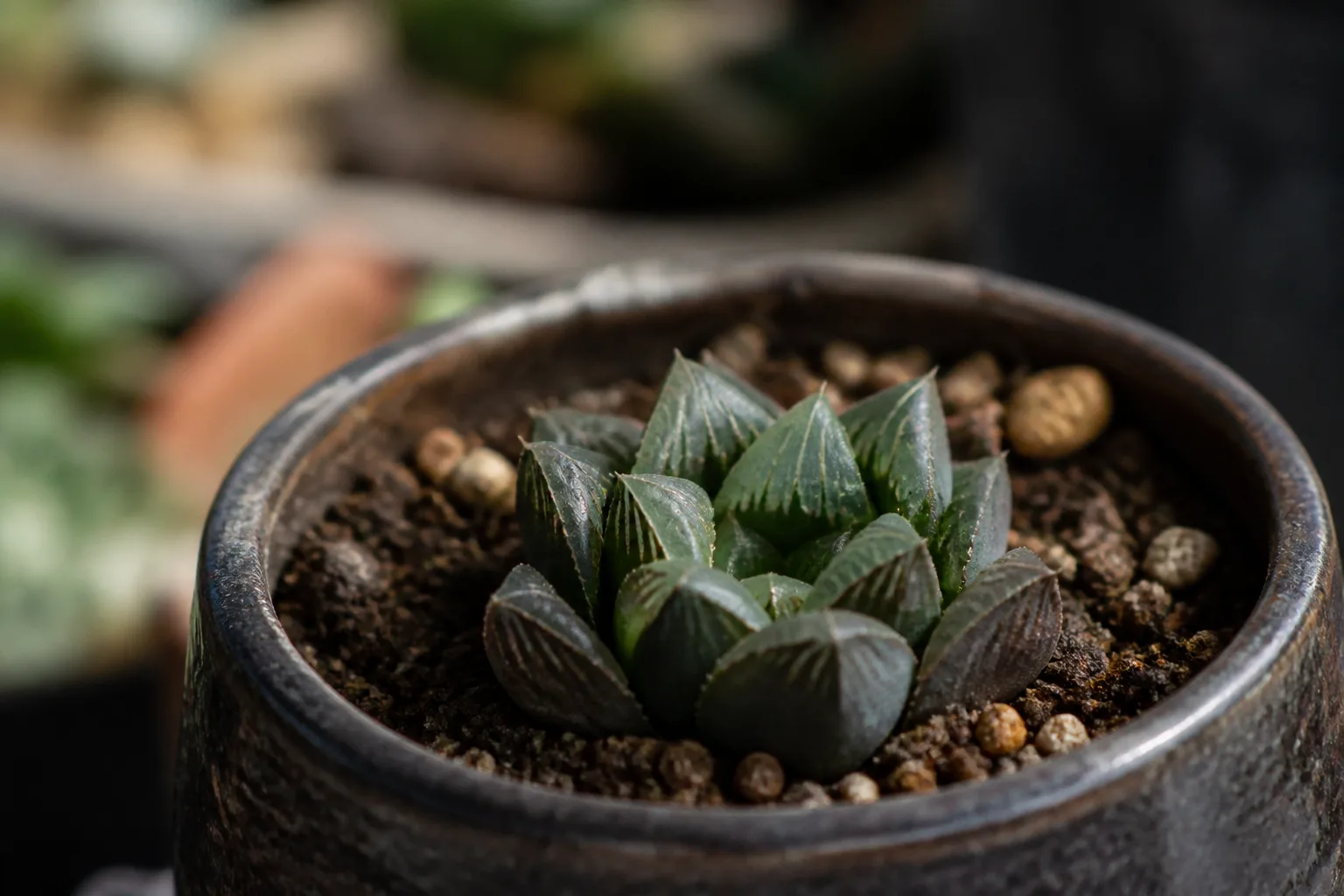
Slow Growth on Haworthia: Causes, Checks & Fixes
This guide covers slow growth on Haworthia. See also the general Slow Growth guide, watering, and light pages for this plant.
Slow Growth on Haworthia: Causes, Checks & Fixes
Quick answer
Haworthia (Haworthia spp.) is a slow-growing South African rosette succulent-not a pothos that adds length every week. Many owners worry when a zebra haworthia or window haworthia looks unchanged for months, but slow is the default. Concern starts when no new center leaves or offsets appear through an entire warm season despite stable care.
First step: run a growth audit before changing anything. Note the calendar month, count how many new center leaves opened in the last three months, check whether pups formed at the base, and measure how far the pot sits from glass. Winter dormancy, post-repot pause, and inherent slow baseline explain many stalls. Warm-season stagnation with zero offsets usually points to light limits, wet soil in dim rooms, root-binding, or nutrient timing-not a dead plant.
What slow growth looks like on Haworthia
Slow growth on haworthia means little or no new tissue production, not one outer leaf drying naturally. Learn the species-specific pattern:
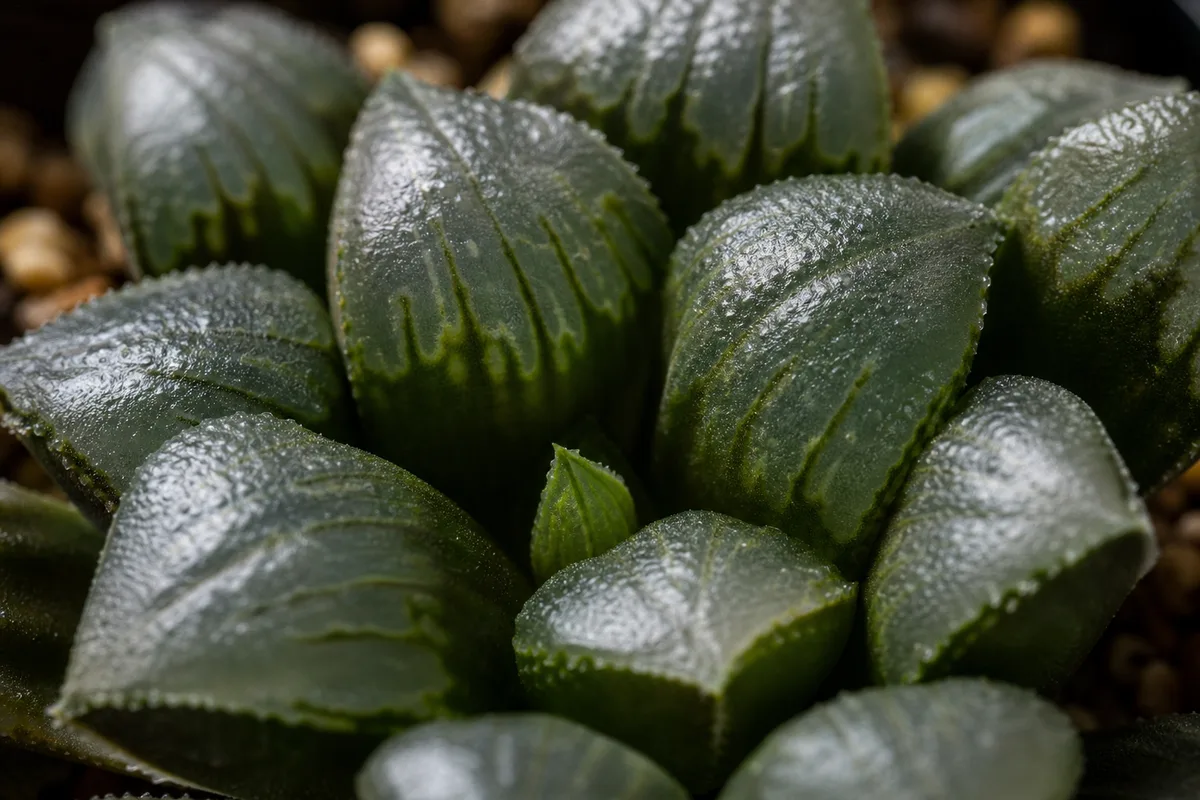
Slow Growth symptoms on Haworthia - compare with healthy tissue on the same plant.
Normal active-season growth:
- One or two new center leaves opening per spring or fall flush in bright indirect light-the fastest pace most haworthias achieve indoors
- Offsets (pups) appearing at the base over months or seasons; BBC Gardeners’ World notes clump-forming haworthias produce pups when conditions align
- Rosette stays compact with tight leaf spacing; pot weight cycles between light dry and heavier after a full soak
- Gardener’s Path lists haworthia as a slow-growing succulent that rarely needs frequent repotting
Slow-growth signals (problem, not rest):
- No new center flush for six or more weeks during March through September despite firm existing leaves
- Zero offsets for a full year on a mature rosette in a room that is not a dark closet
- Wet soil persisting two or more weeks with no new growth-common when low light slows evaporation while watering stays on a summer schedule
- Water runs through in seconds without soaking in, roots visible at drainage holes, or mix shrunk away from pot sides
- Rosette stays compact but thin without internode stretch-different from leggy etiolation where leaves gap and lean
Seasonal pause (normal, not a problem):
- Winter dormancy from late fall through February: little or no center activity while leaves stay firm and green
- The RHS recommends a dormant period in winter with cooler conditions and only occasional light watering-growth resumes when warmth and day length return
- Two to four weeks of pause after repotting while roots settle-expected, not pathological
What’s normal: baseline growth rate and dormancy
Haworthia is sold as easy and slow, which creates false alarms. Indoors, most species reach roughly 4 to 6 inches tall with a 4 to 8 inch rosette spread and stay that size for years without looking “stuck.” BBC Gardeners’ World describes varieties averaging 4 cm to 25 cm in height-a wide range, but always modest compared with echeveria or jade plant.
Think in seasons, not daily change:
| Season | What healthy growth usually looks like |
|---|---|
| March–May | Center flush resumes; offsets may appear on mature plants |
| June–August | Steady or partial summer slowdown in hot homes-some species pause in heat |
| September–November | Second active window for many indoor haworthias |
| December–February | Winter rest-little or no new leaves is normal |
British Cactus and Succulent Society cultivation notes explain that most haworthias grow mainly during cooler spring and autumn weather and stop in mid-summer heat-indoors under air conditioning, the pattern may blur, but zero growth through an entire spring is not normal baseline slowness.
Offset production is the best growth signal on this genus. A rosette that opens occasional center leaves but never pups in bright light may still be acceptable for a solitary species. A plant in a north room with no center flush and no offsets for twelve months is stalled, not merely “haworthia slow.”
Why Haworthia stops growing - cause matrix
1. Winter dormancy and short days
The most overlooked cause is calendar, not care failure. Lower light and cooler rooms slow metabolism. Combined with reduced watering needs, the plant can look unchanged for weeks without being sick. Do not repot, fertilize, and move to a new window simultaneously in January in response to stillness.
2. Insufficient light limiting photosynthesis and offsets
Haworthia tolerates dim rooms longer than most succulents, but survival is not vigor. NC State Extension notes haworthia prefers full sun or bright indirect light for best leaf color-dim placement keeps the rosette alive while offset production stalls. Low light also slows evaporation, so the same watering rhythm causes wet-soil root stress before leaves look sick. When stretch and lean dominate, see not enough light on Haworthia.
3. Root-bound container and depleted mix
Haworthia roots are shallow but can circle tightly after two or more years in the same pot. When mix breaks down into fine mud, water channels through without wetting roots, salts accumulate, and center growth stalls despite green leaves. Repotting details: repotting guide.
4. Chronic overwatering root stress in low light
The classic haworthia trap: dim placement plus frequent watering. The RHS warns haworthias tend to rot if watered too much or left in damp compost, especially in winter. Roots in oxygen-poor wet mix stop absorbing-growth pauses while the rosette still looks green. Overlap with overwatering and root rot.
5. Underwatering and drought stall
Less common but real: prolonged dry spells in small pots during hot bright windows deplete leaf reserves. Thin papery leaves on a very light pot point here-see underwatering.
6. Nutrient depletion during active season only
After years without repot or feed, pale new center leaves in bright light with firm roots may indicate depleted mix. Haworthia is a light feeder-quarter-strength feed in active growth only, never as a first response to stall. Full timing: fertilizer guide.
7. Cool temperatures and draft stress
Sustained temperatures below about 50°F (10°C) can damage haworthia and stall root activity. Cold window sills in winter plus wet soil compound the stall.
8. Relocation or repot shock
A two to four week pause after repotting or a major move is normal. Translucent mush at the base is not-inspect roots instead of waiting.
How to confirm the cause
Work through these checks in order-each narrows the list before you stack treatments:
- Season check - Note the month. December through February pause with firm leaves is normal if soil is not sour.
- Center leaf count - Mark the rosette center with a photo. In March through September, zero new leaves in six weeks suggests a limiter beyond baseline slowness.
- Offset audit - Mature haworthia in adequate light should produce pups occasionally. Months with zero offsets in a bright east window points to chronic stress.
- Window distance - Indoor light falls sharply as you move away from windows. Beyond six feet is often survival light, not growth light. Full placement workflow: light guide.
- Soil moisture at depth - Skewer the pot. Damp mix at depth for two-plus weeks with no flush suggests overwatering compounded by low light-not hunger.
- Root-bound screen - Roots at drainage holes, water racing through, mix crumbling to mud → repot candidate in spring.
- Post-repot timeline - Repotted within the last month? Pause may be normal shock.
- Pest scan - Mealybugs in leaf axils drain vigor; inspect before fertilizing.
If winter rest explains the pause, hold course. If four or more active-season checks point to light or roots-and rot and pests are absent-treat that as confirmed.
Lookalike symptoms
| What you see | Likely cause | First direction |
|---|---|---|
| No new tips Dec–Feb, firm leaves, dry rhythm | Winter dormancy | Wait; resume checks in March |
| Widening leaf gaps, lean toward window, pale stretch | Etiolation / low light | Not enough light, leggy growth |
| Compact rosette, static all spring, fast drain-through, circling roots | Root-bound / spent mix | Repotting in spring |
| Wet soil weeks, soft base leaves, sour smell | Overwatering / root rot | Overwatering, root rot |
| Thin papery leaves, very light pot, bone-dry mix | Underwatering | Underwatering |
| Firm plant, no growth 2–4 weeks after repot | Transplant pause | Hold watering rhythm; do not re-repot |
| White cottony axils, sticky residue | Mealybugs | Mealybugs |
Slow growth is the headline-general stall with compact spacing. Etiolation is architecture change (stretch and lean). Dormancy is a seasonal pause with stable form.
First fix for Haworthia (by confirmed cause)
Make one primary change, then wait two to three weeks before stacking treatments.
If winter dormancy: Reduce watering toward the monthly-or-less winter rhythm from the watering guide; stop fertilizer. Keep reasonable indirect light-rest is not an excuse for a dark closet.
If light is limiting: Move to the brightest safe indirect spot-usually within two to three feet of an east-facing window-and hold other variables for fourteen days. Do not simultaneously repot or feed. Full workflow: not enough light.
If root-bound or spent mix: Repot in spring into a shallow pot one size wider with fresh gritty mix. Wait five to seven days before the first modest soak; no fertilizer for four weeks.
If overwatering or rot: Stop watering, inspect roots, trim mushy tissue, repot into dry mix. Growth resumes only after roots stabilize-often with brighter placement so soil dries predictably.
If underwatering: Water thoroughly once the skewer confirms dryness at depth-not small daily splashes.
If nutrients (last resort): After light and roots check out, use quarter-strength succulent feed once or twice in active season per fertilizer guidance-never on wet rotting roots or in winter.
Step-by-step recovery by cause
After the initial fix:
- Hold one variable - Light OR repot OR watering correction-not all three on day one unless rot is advancing.
- Watch the next three center leaves - Firm, plump new leaves confirm success. Continued stall with good light means inspect roots.
- Adjust watering to new dry-down - Brighter light dries soil faster; a calendar from a dim room may now underwater. Soak-and-dry rhythm stays the rule.
- Resume offsets on a long timeline - Pups may take one to two seasons after long deprivation; center flush comes first.
- Skip fertilizer until growth proves itself - University of Maryland Extension notes excess fertilizer causes salt buildup and stalled growth even when moisture looks adequate.
Recovery timeline
Expect first visible new center leaves within two to four weeks after correcting light or repotting root-bound plants in spring. Light fixes may show sooner on small rosettes; repot recovery often needs four to six weeks for full root re-establishment.
Offsets may take one to two growing seasons to resume after long light deprivation. Judge success on new center tissue and pup formation, not on old leaf size-existing leaves do not accelerate retroactively.
Winter pause may need until March light before any timeline starts. Post-repot pause of two to four weeks is normal; beyond six weeks with spreading translucency at the base, inspect for rot or oversized pot.
What not to do
Do not fertilize a stalled haworthia to “wake it up”-especially in winter or when soil stays wet. Plants in inadequate light can become stressed or waterlogged when watering does not match reduced evaporation.
Do not repot before checking light and moisture-root disturbance on a stressed succulent compounds stall unless roots are clearly bound or rotting.
Do not confuse survival with vigor. Haworthia on a north windowsill may live for years with almost no offsets-that is tolerance, not the growth rate you see in reference photos from bright placements.
Do not stack repot, prune, and pesticide on one day. One change at a time keeps the diagnosis readable.
How to prevent slow growth on Haworthia
Match the plant’s active-season rhythm: bright indirect light from the light guide, soak-and-dry watering that slows in dim rooms, and repot every one to two years before mix turns to mud.
In winter, accept slower growth, water less, and skip feed. In spring, verify window distance and offset production before assuming failure. For desk haworthias, rotate weekly and clean glass seasonally-small gains in photons matter on slow growers.
Cross-check baseline biology on the overview guide when multiple symptoms overlap.
When to worry
Escalate when the crown softens, soil stays sour despite dry surface attempts, lower leaves turn translucent and mushy, or pests coat every new tip. Those are decline patterns, not dormancy or baseline slowness.
Patience is enough when leaves stay firm, mix smells neutral, the calendar is winter, or you repotted two weeks ago and the plant is in expected transplant pause.
Haworthia care cross-check
| Factor | Active season target | Slow-growth mistake |
|---|---|---|
| Light | Bright indirect; offsets in good placement | Dark shelf survival mode |
| Water | Full dry-down between soaks | Summer calendar in dim winter room |
| Roots | Refresh mix before severe binding | Waiting until water runs through instantly |
| Feed | Quarter strength in spring–fall only if growing | Winter fertilizer on wet soil |
| Season | Expect winter pause | Panic-repot in January |
Related Haworthia problems
- Not enough light - etiolation, pale stretch, and offset stall from weak light
- Leggy growth - when stretch, not general stall, is the main symptom
- Overwatering and root rot - wet-soil stall in dim rooms
- Underwatering - drought before collapse
- Light requirements - window placement and growth throttle
- Fertilizer - feeding only during active growth
- Repotting - root-bound and spent-mix recovery
- Watering - soak-and-dry rhythm and winter reduction
When to use this page vs other Haworthia guides
- Haworthia watering guide - Use for routine moisture checks before assuming slow growth is the main issue.
- Haworthia problems hub - Browse all 16 common issues on this species.
- Not Enough Light on Haworthia - Different entry point when symptoms overlap with slow growth.
- Leggy Growth on Haworthia - Different entry point when symptoms overlap with slow growth.
- Yellow Leaves on Haworthia - Different entry point when symptoms overlap with slow growth.