Mealybugs on Haworthia: Causes, Checks & Fixes
Quick answer
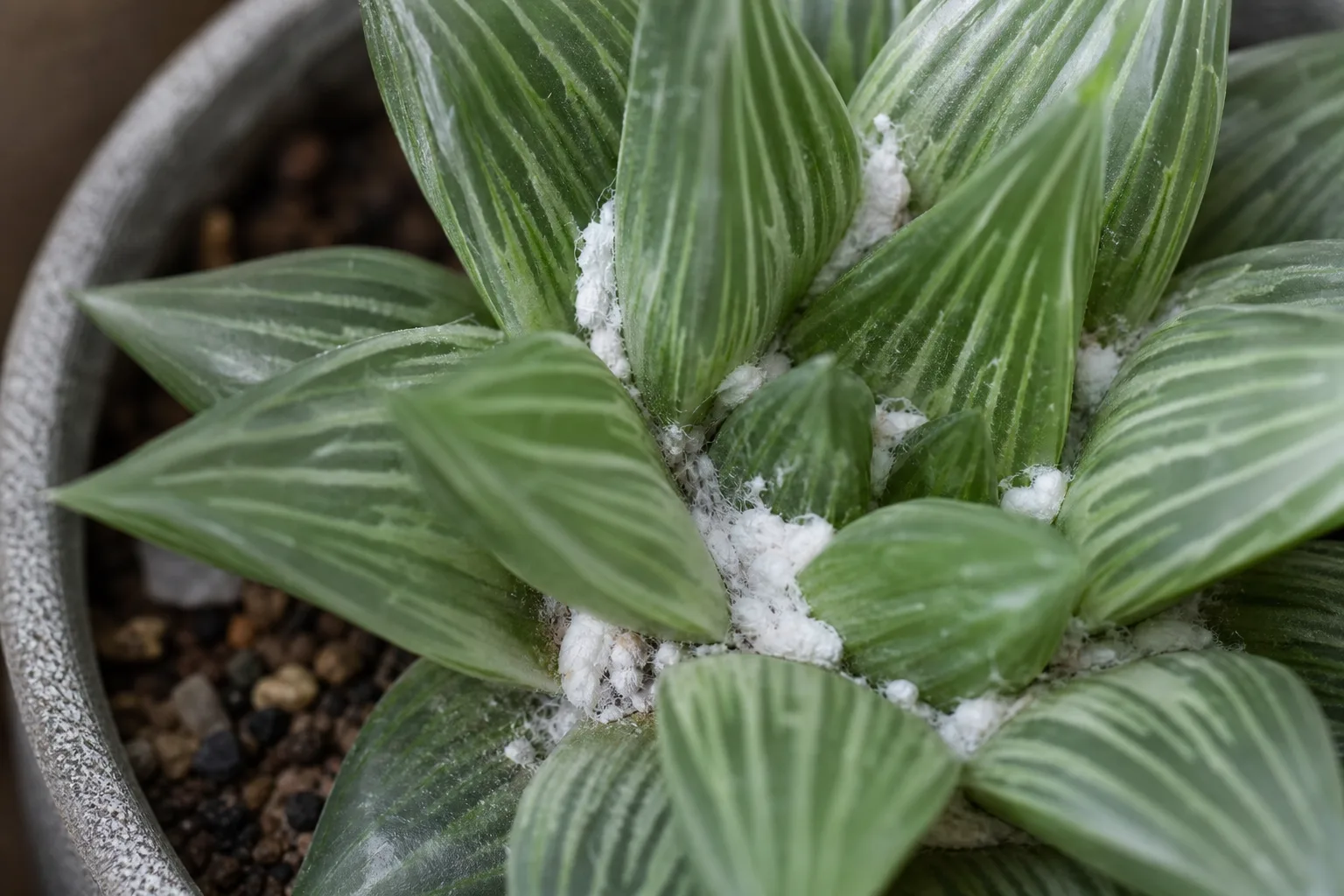
Mealybugs on Haworthia hide as white cottony masses wedged in tight rosette axils and offset bases where leaves overlap. First step: move the plant away from others and dab every visible cluster with a cotton swab dipped in 70% rubbing alcohol before any spray.
Mealybugs on Haworthia: Causes, Checks & Fixes
This guide covers mealybugs on Haworthia. See also the general Mealybugs guide, watering, and light pages for this plant.
Mealybugs on Haworthia: Causes, Checks & Fixes
Quick answer
Mealybugs on Haworthia appear as white, cottony wax clusters tucked where rosette leaves overlap-in the crown center, along inner leaf bases, and at the junction where offset pups meet the mother plant. They suck sap, weaken slow-growing rosettes, and leave sticky honeydew that can support black sooty mold on leaves below.
First step: isolate the plant and dab every visible mealybug with a cotton swab dipped in 70% isopropyl alcohol. Move Haworthia away from other succulents on the shelf, then work systematically through each leaf axil and offset base. Alcohol kills exposed adults on contact and is the safest starting treatment for tight rosettes where sprays miss crevices.
After the dab pass, plan weekly repeats for at least three to four weeks to catch newly hatched crawlers. Only add insecticidal soap or neem after manual removal, and test one leaf first-succulent foliage can burn if solution pools in the crown or hits windowed leaf tips in direct sun.
What mealybugs look like on Haworthia
Haworthia grows as a compact rosette of thick, overlapping leaves-often striped (H. fasciata, H. attenuata), windowed at the tips (H. cooperi), or smooth and dark green. That spiral packing is exactly where mealybugs hide: protected from casual glances and from light spray coverage.
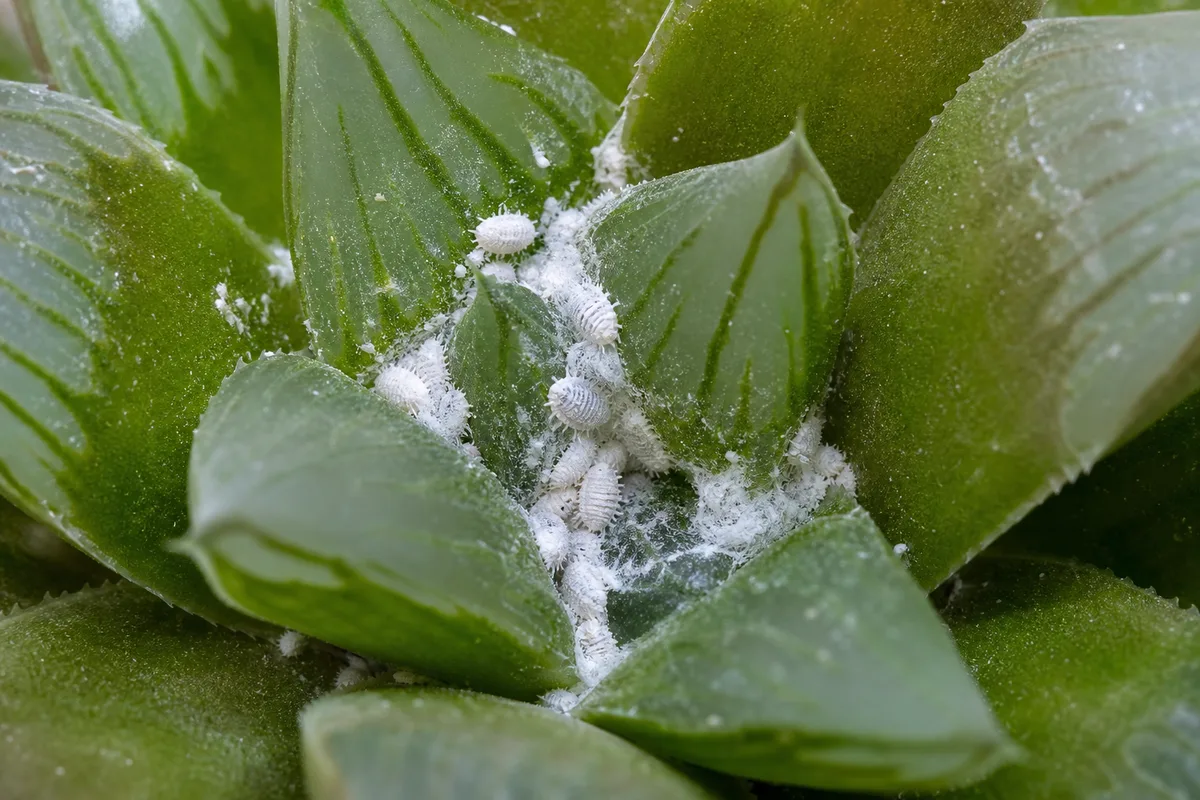
Mealybugs symptoms on Haworthia - compare with healthy tissue on the same plant.
Typical signs on Haworthia include:
- White cottony masses in leaf axils, rosette centers, and where offset pups attach to the mother plant
- Slow-moving pinkish or gray bodies if you part the wax with a fingernail or swab
- Sticky honeydew on lower leaves, pot rims, or windowsills-often the first clue before you spot insects
- Black sooty mold growing on honeydew-coated foliage, especially on glossy or windowed leaves
- Ant trails on the pot or shelf farming honeydew from colonies above
- Yellowing, curling, or stunted new leaves when feeding is heavy on a slow-growing rosette
- White flecks in gritty mix or on roots when you unpot-possible root mealybugs, not just foliar wax
Unlike the fixed white tubercles on zebra Haworthia leaves, mealybug wax sits in clusters at joints and wipes away. Unlike scale, mealybugs look fluffy and cottony rather than hard domes fused to the leaf. Unlike aphids, which favor soft spring flower stalks and newest tips, mealybugs persist in the tight permanent architecture of the rosette itself.
Fuzz vs. wax: what to look for without a magnifier
The most common Haworthia misdiagnosis is confusing natural zebra texture with mealybugs. Use this side-by-side mental picture before you treat:
| Feature | Natural H. attenuata / H. fasciata tubercles | Mealybug wax cluster |
|---|---|---|
| Location | Even rows or bands across the open leaf face | Wedged in the V where two leaves overlap at the base |
| Touch | Hard, fixed bumps-part of the leaf skin | Soft cotton that lifts off with a dry swab |
| Crush test | Swab stays white or chalky | Swab smears pink or orange-red |
| Honeydew | None | Often tacky residue on the leaf below |
| Pattern | Repeats symmetrically on every leaf | Random tufts; may appear on one offset only |
On windowed H. cooperi, chalky mineral deposits from hard water can add a third lookalike-they sit on open leaf tips, wipe dry without pink smear, and never cluster deep in axils.
Heavy feeding scars old leaves permanently. Haworthia offsets slowly, so a damaged center leaf may sit for months-but clean new growth from the crown is the recovery signal once pests are gone.
Why Haworthia gets mealybugs
Mealybugs are common on cacti and succulents grown as houseplants, including Haworthia. Outbreaks almost always trace to introduction or stress, not random bad luck on an otherwise healthy desk plant.
Tight rosette architecture hides colonies. Mealybugs often live in protected areas-crowns, branch crotches, stems near soil, and spaces between touching leaves. On Haworthia, every overlapping leaf pair is a potential shelter. You can water the plant weekly and miss wax wedged two layers deep until honeydew appears on lower foliage.
Offset clusters bridge infestations. Haworthia produces pups at the base of the mother rosette. Crawlers walk from infested offsets to clean neighbors on shared trays long before the outer leaves look affected. A single crowded pot with three offsets can harbor four times the hidden axil surface area of one rosette.
Warm indoor conditions favor year-round reproduction. Indoor plants are especially vulnerable because heated homes lack the cold breaks and natural enemies that suppress mealybugs outdoors. All life stages can persist through winter on a windowsill.
Introduction from new stock. Mealybugs arrive on nursery plants, gift offsets, or pots moved outdoors in summer and back inside without quarantine. Adult females do not fly, but crawlers spread on contact between touching leaves, shared tools, and crowded shelves.
Stress invites trouble. Overwatered Haworthia in dim light grows soft, etiolated tissue that is easier to pierce. High nitrogen coupled with regular watering stimulates tender new growth where mealybugs prefer to lay eggs. Wet crowns from heavy rinsing or poor drainage compound sap loss with rot risk-see root rot if the rosette base turns mushy.
How to confirm the cause
Work through this checklist before buying spray:
- Location on the plant - Mealybugs cluster in leaf axils, rosette centers, and offset bases. Random chalky dust on open leaf faces alone is less typical.
- Pink-crush swab test - Touch a cotton swab to the white mass and crush gently. Mealybugs smear pink or orange-red; mineral deposits and natural leaf fuzz do not.
- Texture and movement - Part the wax. Mealybugs feel soft and may show a gray-pink body. Scale is hard and immobile. Natural H. attenuata tubercles are fixed bumps on the leaf blade, not removable cotton at the base.
- Honeydew check - Rub a lower leaf. Tacky residue with optional sooty film points to sap feeders. Dry crust without stickiness may be hard-water spotting.
- Offset and crown inspection - Gently spread outer leaves with a hand lens or phone light. Check every pup base where it meets the mother rosette.
- Root check - If foliar treatment clears wax but colonies return within days, unpot one side and look for white deposits on roots in gritty mix-root mealybugs are common on potted succulents.
- Neighbor plants - Inspect every succulent, cactus, and leafy houseplant on the same shelf. Mealybugs rarely stay on one pot once established.
If you find cottony colonies with honeydew and no hard scale shell, mealybugs are confirmed. If the crown is soft with sour wet soil and no insects, treat drainage first per the watering guide-that is rot, not wax.
First fix for Haworthia
Isolate the plant and dab every visible mealybug with a cotton swab dipped in 70% isopropyl alcohol.
Move Haworthia to a separate surface away from your collection. Direct alcohol contact kills exposed mealybugs on houseplants when applied with a swab. Test alcohol on one leaf first and wait one to two days-windowed H. cooperi tips and variegated forms can show phytotoxicity if solution pools on translucent tissue in bright sun.
Work from the rosette center outward:
- Part each leaf pair and dab wax clusters in the axil
- Treat every offset pup base where it attaches to the mother plant
- Wipe honeydew from lower leaves with a damp cloth once insects are dead
- Discard swabs when they pick up heavy wax rather than smearing bugs across clean tissue
Expect twenty to forty minutes on a mature clustered Haworthia with several offsets. Haworthia is non-toxic to cats and dogs, but gloves still help when handling alcohol and sticky honeydew during a long treatment pass.
Do not soak the crown with rinse water on day one. Do not repot unless root mealybugs are suspected. Do not fertilize a pest-hit plant-tender new growth attracts the next generation.
Step-by-step recovery
After the initial alcohol dab pass:
- Repeat manual dabbing every three to five days for the first two weeks until live white clusters stop appearing on inspection.
- Apply insecticidal soap to leaf axils and offset bases where mealybugs hide, following label intervals. Soap and oils work on direct contact and are most effective against younger nymphs with less wax. Cover crevices thoroughly; spray that only hits open leaf faces misses the crown.
- Optional neem or horticultural oil only after a patch test on one leaf. Succulents can be sensitive to repeated oil films on windowed leaves-use sparingly and never in full midday sun.
- Brief targeted rinse if mix is dry and the plant can drain the same day. A firm stream on outer leaves dislodges exposed crawlers-avoid flooding the rosette center or leaving the pot saturated. Morning treatment in Haworthia light guide lets foliage dry before night.
- Inspect offset pups separately. If one pup is clean and another is heavily infested, quarantine and treat each pot on its own schedule.
- Manage ants on pot rims and shelves. Ants protect mealybugs from predators in exchange for honeydew.
- Monitor weekly for six weeks. Eggs hatch on a staggered schedule; most failures come from stopping after one dab pass.
- Repot only if root mealybugs are confirmed-shake off old gritty mix, rinse roots gently, and repot into fresh fast-draining succulent soil. Wait before resuming normal soak-and-dry watering.
Repeat alcohol or soap treatments weekly until the infestation is gone. Plan for at least three to four weekly cycles indoors.
Recovery timeline
First week: Visible cottony clusters should decline sharply after isolation and systematic dabbing. Honeydew production slows when feeding stops.
Two to three weeks: With weekly repeats, you should find no new live clusters in axils or offset bases. Sooty mold stops spreading once honeydew is wiped away.
Four to eight weeks: Clean new center leaves and firm offsets emerging without wax at their bases are the best success sign. Haworthia grows slowly-do not expect a full cosmetic refresh for several months even after pests are gone.
Long term: Old leaves with stippling, yellow patches, or light scarring from heavy feeding will not revert. Trim only for appearance once the plant is pest-free for two weeks.
Worsening signs: Wax returns in the crown within days of treatment, colonies spread to every offset, ants intensify, or the rosette base softens while soil stays wet-re-check for root mealybugs and crown rot, not foliar mealybugs alone.
Editorial case note (March 2026): A four-inch clustered pot of H. fasciata on a west-facing windowsill showed sticky lower leaves before any obvious white tufts. Spreading the outer leaves with a phone flashlight revealed cottony wax at three inner axils and one offset base where a pup met the mother rosette-classic tight-spiral hiding. Week 1: Isolation on a dry tray; alcohol dabs on every axil and pup junction (about thirty-five minutes for the whole cluster). Honeydew wiped from lower striped leaves. Week 2: Repeat dab found one new crawler at a previously clean offset base-crawlers had bridged from the mother plant overnight. Week 3: Second full dab pass plus insecticidal soap on axils only, applied the morning after alcohol so foliage dried by afternoon. Week 4: A firm new center leaf emerged without wax at its base; two consecutive weekly crown inspections found zero live clusters before the pot rejoined the shelf. Total elapsed time: twenty-two days from first dab to clearance.
Lookalike symptoms
| What you see | Likely cause | How to tell apart |
|---|---|---|
| White cottony clusters in leaf axils | Mealybugs | Smears pink on crush; sticky honeydew; slow movement when disturbed |
| Fixed white bumps or stripes on leaf surface | Natural H. attenuata / H. fasciata texture | Part of the leaf epidermis; evenly patterned; no honeydew; swab stays white |
| Hard brown or tan domes on leaf bases | Scale insects | Immobile; shell does not wipe off; no cottony filaments |
| Fine stippling and webbing on leaf faces | Spider mites | Tiny moving dots; favors hot dry air; no cottony wax in axils |
| Soft pear-shaped insects on spring flower stalk | Aphids | Naked bodies on tender new growth; more mobile than mealybugs |
| Chalky dry spots on open leaves | Mineral deposits from hard water | Wipes off dry; no clustering in axils; no pink smear |
| White fuzz on wet soil surface only | Saprophytic mold | On mix, not on leaf joints; see mold on soil |
| Soft mushy crown, sour soil, no insects | Crown or root rot | Firm tissue with wax clusters = pests; mush without cotton = rot |
What not to do
Do not stop after one alcohol dab. Mealybug eggs and hidden nymphs hatch over weeks-a single pass rarely clears an indoor rosette.
Do not let rinse water sit in the crown overnight. Standing moisture in tight Haworthia spirals invites rot faster than mealybugs weaken the plant.
Do not apply alcohol or soap to sun-stressed leaves in hot direct light. Test one leaf first; windowed tips and variegated forms burn more easily.
Do not use a dilute alcohol spray on the whole rosette without testing. Sensitive cacti and succulents can be damaged by broad alcohol applications-targeted swabs are safer on Haworthia.
Do not overwater while treating. Wet gritty mix plus sap loss from pests compounds stress. Keep soak-and-dry watering once the crown is dry after any rinse.
Do not return the plant to your collection early. Two pest-free weeks after the last live insect is a minimum.
Do not ignore neighboring pots. Mealybugs on one Haworthia often mean hidden colonies on other succulents sharing the tray.
Haworthia care cross-check
While fighting mealybugs, keep baseline care stable:
- Light - Bright indirect light supports recovery. Haworthia tolerates lower light than most succulents, but very dim spots slow new growth and extend rehab time.
- Water - Water only when the mix is fully dry at the rosette base. Haworthia needs well-drained soil and careful watering year-round; do not compensate for pest stress with extra drinks.
- Soil - Fast-draining gritty mix in a pot with open drainage. Root mealybugs hide in the same succulent soil structure that prevents rot when dry.
- Temperature - Average room temperatures are fine. Cold drafts below about 50°F (10°C) stall growth and slow visible recovery.
- Fertilizer - Hold feed until new growth looks firm for two weeks. Excess nitrogen pushes soft tissue pests prefer.
Fixing only the bugs while ignoring wet soil or dark placement often brings the infestation back within a month.
How to prevent mealybugs next time
Quarantine every new plant and offset for two to three weeks before it joins your Haworthia shelf. Inspect rosette centers and pup bases on day one and again before merging collections.
Add weekly axil checks to your care routine. Lift outer leaves with a hand lens and scan offset junctions-five minutes per pot once you know the hiding spots.
Keep Haworthia in bright indirect light with sharp drainage so growth stays firm and etiolation does not create extra soft axil tissue.
Avoid excess nitrogen fertilizer during active growth. If you feed, use modest diluted doses-not every watering.
Space pots so rosette leaves do not touch neighboring plants. Crawlers bridge gaps on shared trays.
Inspect the whole collection when one plant shows pests. Examine plants regularly when you water-mealybugs on one Haworthia often mean hidden colonies on nearby succulents.
See the Haworthia overview for baseline light, water, and soil standards that keep rosettes resilient.
When to worry
Treat as urgent when cottony colonies cover multiple offsets, ants farm honeydew across the tray, sooty mold blocks light on windowed leaves, or wax returns in soil within days of foliar treatment-root mealybugs may be the real source.
Seek a different diagnosis if the crown turns soft and mushy, soil smells sour, or lower leaves collapse translucent while mix stays wet. That pattern is root rot or chronic overwatering on Haworthia, not mealybugs alone.
When infestations become severe, consider discarding houseplants rather than repeatedly treating them with insecticides-especially if the mother rosette is heavily scarred but clean offsets can be removed, treated, and repotted separately.
If foliar alcohol and soap cycles fail after six weeks of weekly treatment, contact your local cooperative extension office for identification help or consider a labeled systemic insecticide only when the product explicitly lists mealybugs on ornamentals and you follow all label directions for indoor use.
A few isolated white tufts in one axil, caught early on a single rosette, are manageable. Scale your response to the spread you actually see.
Conclusion
Mealybugs on Haworthia hide where rosette leaves overlap-out of sight until honeydew or sooty mold gives them away. Isolate first, dab with alcohol on every axil and offset base, then repeat weekly until new center growth emerges clean. Stable bright light, dry-down watering, and weekly crown checks keep this slow-growing succulent ahead of the next crawler wave. For related problems on the same plant, compare spider mites, aphids, and root rot before you treat the wrong symptom.
When to use this page vs other Haworthia guides
- Haworthia watering guide - Use for routine moisture checks before assuming mealybugs is the main issue.
- Haworthia problems hub - Browse all 16 common issues on this species.
- Yellow Leaves on Haworthia - Different entry point when symptoms overlap with mealybugs.
- Slow Growth on Haworthia - Different entry point when symptoms overlap with mealybugs.
- Spider Mites on Haworthia - Different entry point when symptoms overlap with mealybugs.