Spider Mites on Haworthia: Causes, Checks & Fixes
Quick answer
Spider mites on Haworthia cause fine stippling and webbing in dry, warm rooms-often where winter heat dries air around a desk rosette. First step: isolate the plant and rinse leaf undersides with a firm angled stream while keeping the crown dry and the pot draining the same day.
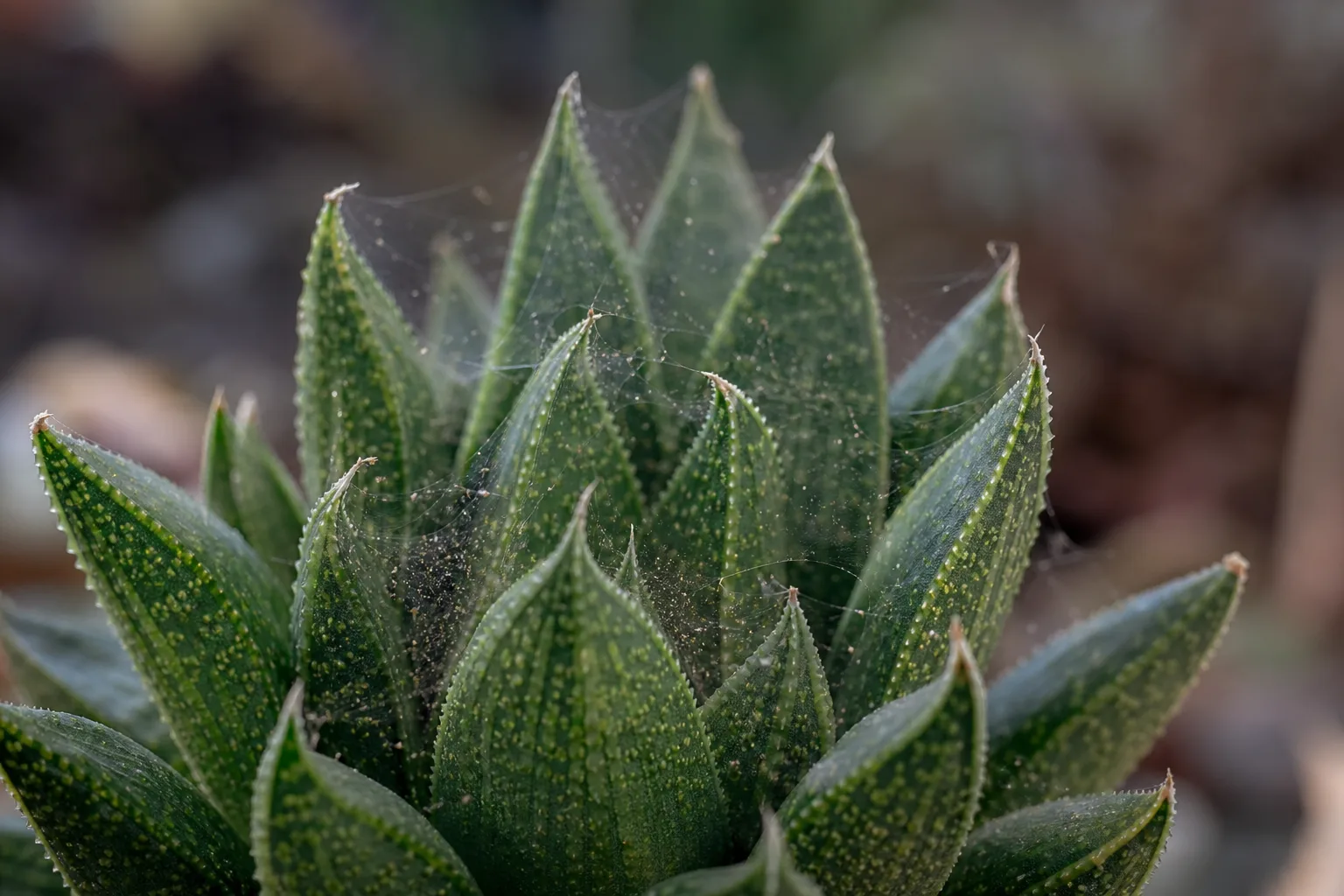
Spider Mites on Haworthia: Causes, Checks & Fixes
This guide covers spider mites on Haworthia. See also the general Spider Mites guide, watering, and light pages for this plant.
Spider Mites on Haworthia: Causes, Checks & Fixes
Quick answer
Spider mites on Haworthia show up as fine yellow or white stippling on leaf faces, bronzing as feeding continues, and delicate silk webbing at the bases of overlapping rosette leaves. They thrive in warm, dry indoor air-common on desk Haworthia near a heater, on a south-facing windowsill in winter, or beside an AC vent that strips humidity without moving air.
First step: isolate the plant and rinse mite colonies off leaf undersides with a firm angled water stream. Move Haworthia away from other succulents, tilt the rosette so water runs down outer leaf surfaces rather than pooling in the crown center, and let the plant drain in Haworthia light guide the same day. Empty the saucer. Haworthia stores water in thick leaves and tolerates dry mix, but you do not want the rosette center or soil staying wet for hours after repeated rinses.
After the first rinse, confirm live mites remain before reaching for sprays. On slow-growing Haworthia, isolation plus scheduled rinses and targeted oil or soap beat a single heavy chemical application that can spot succulent foliage or soak the crown.
What spider mite damage looks like on Haworthia
Haworthia grows as a compact Asphodelaceae rosette of thick, overlapping leaves-striped on H. fasciata and H. attenuata, windowed and translucent at the tips on H. cooperi, or smooth dark green on other species. That tight spiral architecture is where spider mites hide and where damage often appears last from a casual top-down glance.
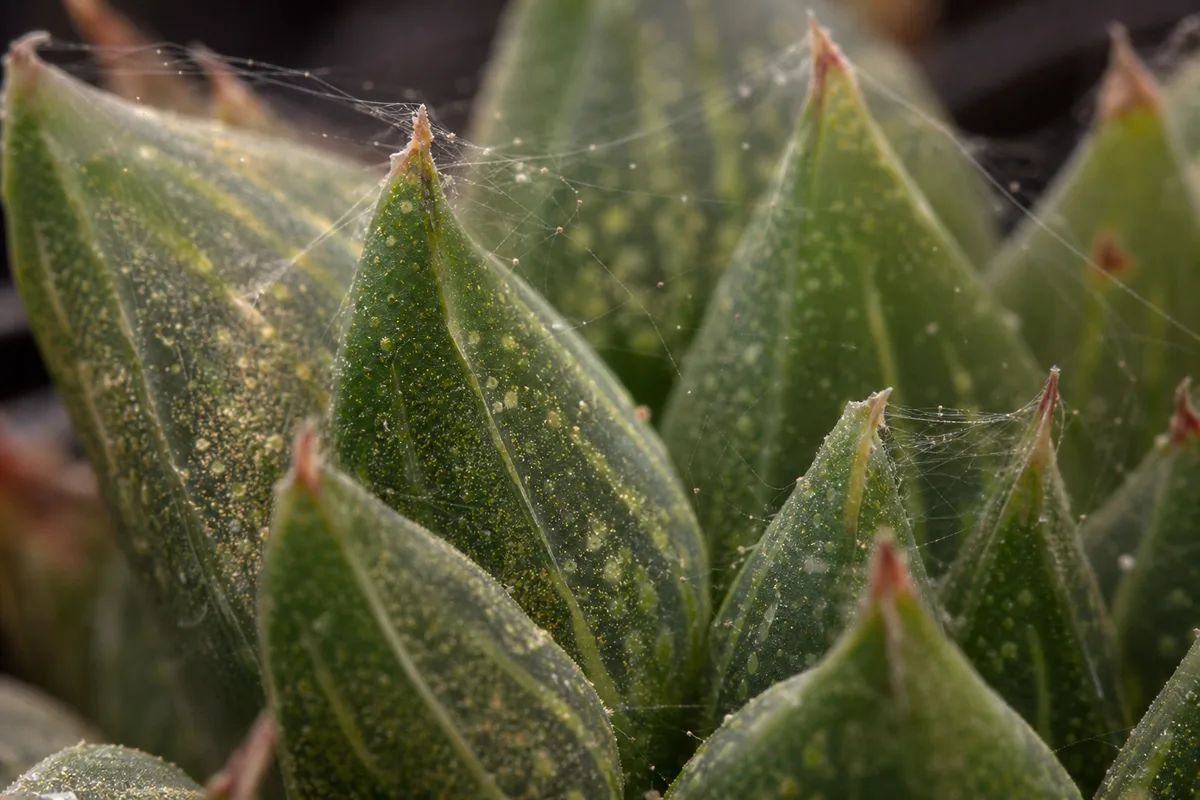
Spider Mites symptoms on Haworthia - compare with healthy tissue on the same plant.
Typical signs on Haworthia include:
- Fine yellow or white pinprick stippling across leaf faces-easiest to spot against the translucent “windows” on H. cooperi before bronzing spreads
- Bronze or dull gray cast on older rosette leaves as mite feeding continues
- Delicate webbing at inner leaf bases and axils where leaves overlap-not the thick cottony wax of mealybugs
- Crisp, desiccated leaf tips on heavy infestations, sometimes mistaken for low humidity alone
- Tiny moving specks on white paper when you tap a suspect leaf over it
Unlike mealybugs-the more commonly reported pest on tight succulent rosettes-spider mites leave stippling and silk, not white cottony clusters in axils. Unlike aphids, which favor soft spring flower stalks and newest tips, mites persist on mature rosette tissue and leaf undersides in dry heat.
Stippled leaf tissue does not green up again on slow-growing Haworthia. The plant recovers through clean new center leaves and offsets, not by repairing old speckled faces.
Why Haworthia gets spider mites in dry winter rooms
Spider mites are tiny arachnids, not insects-they have eight legs and reproduce quickly in warm, dry conditions with poor airflow. Haworthia is not uniquely susceptible, but where and when indoor growers keep it creates the classic mite trigger.
Winter heating dries air around desk rosettes. Haworthia handles low to average indoor humidity well, but very dry winter air combined with stagnant corners encourages mite outbreaks-especially if the pot sits on a warm windowsill above a radiator. The overview for this genus notes that good air circulation matters more than raising humidity; a small fan moving room air helps more than a pebble tray for Asphodelaceae succulents.
Tight rosette leaf overlap shelters colonies. Mites feed on leaf undersides in the spiral gaps between leaves. You can water weekly and miss early stippling wedged two layers deep until webbing appears at inner bases.
South-facing window plus indoor heat creates a microclimate mites love: bright warm glass, fast leaf-surface drying, and limited airflow between crowded succulent trays.
Stressed or dusty plants attract pests. Haworthia in dim light with wet soil grows weak; dust on leaves blocks light and is associated with more pest problems on indoor collections.
New plants without quarantine introduce mites from nursery benches or summer outdoor placement. Because Haworthia is often grouped with echeveria, gasteria, and other small succulents on one shelf, one infested pot can spread mites across an entire tray within weeks.
On cacti and succulents grown as houseplants, mealybugs, scale, and spider mites are among the most frequently reported pests-mealybugs are more common on Haworthia, but mites still appear often enough in dry heated rooms to warrant quick action.
Spider mites vs. mealybugs, low humidity, and salt buildup
| What you see | Likely cause | Key difference on Haworthia |
|---|---|---|
| Fine pinprick stippling plus silk at leaf bases | Spider mites | Tiny moving dots on paper tap; webbing in axils, not cotton |
| White cottony clusters in rosette axils | Mealybugs | Wax wipes away; pink smear when crushed; often sticky honeydew |
| Brown or crisp tips only, no speckling | Low humidity or brown tips | Even tip browning without yellow pinpricks or webbing |
| White crust on leaf faces or pot rim | Hard-water salt buildup | Dry crust, not moving specks; flush pot if margins crisp despite good watering |
| Soft pear-shaped insects on spring flower stalk | Aphids | Naked bodies on tender new growth; sticky honeydew |
| Silvery scars, no webbing | Thrips | Slender fast insects; different leaf scarring pattern |
If tips brown but you find no stippling, webbing, or moving specks, treat the environment first-see low humidity and brown tips-before spraying for mites.
How to confirm spider mites (six-step checklist)
Work through these checks before treating:
- Stippling pattern - Mites cause evenly spaced yellow-white pinpricks that may bronze. Random tip browning alone points to dry air or salt, not mites.
- Paper-tap test - Hold white paper under a leaf and tap firmly. Slow-moving specks confirm spider mites; fast slender insects suggest thrips.
- Webbing location - Fine silk at inner leaf bases and axils supports mites. Thick cottony wax in the same crevices points to mealybugs.
- Axil inspection - Gently spread outer leaves with a hand lens or phone light. Mites colonize undersides in overlapping gaps a top-down watering glance misses.
- Crown and soil - Press the rosette base. Firm tissue with dry mix suggests a pest-only problem. Soft mushy center with sour wet soil is crown rot-treat drainage, not just insects.
- Neighbor plants - Check every succulent on the same shelf. Spider mites spread quickly among houseplants in dry indoor air even when only one Haworthia looks bad at first.
If you see stippling plus webbing and moving specks on paper, mites are confirmed. If stippling is absent and only tips are brown, rule out humidity stress before any pesticide.
First fix: isolate, crown-safe rinse, and treat on a schedule
Isolate the plant and rinse mite colonies off leaf undersides with water.
Move Haworthia away from other plants to a sink or shower. Spray outer leaf faces and undersides with enough force to knock mites loose, but tilt the rosette so water runs down leaf surfaces rather than flooding the crown center. Wrap the pot in plastic if needed to keep gritty mix from saturating. Let the plant drain fully; empty the saucer. Place in bright indirect light so foliage dries the same day-do not rinse at night and leave the rosette wet until morning.
Repeat the rinse every five to seven days for at least three cycles if you still see live mites or fresh webbing. Physical removal and repeated treatments are needed because mite eggs survive single applications.
Only after rinsing, if mites persist:
- Apply horticultural oil or insecticidal soap labeled for mites-not general insecticides, which often miss arachnids
- Test one leaf and wait 24 hours before full treatment. Succulent leaves can show phytotoxicity from oils and soaps in hot sun or temperatures above 90°F on drought-stressed plants.
- Treat in early morning or evening, not midday on a bright windowsill
- Coat leaf undersides and axils where mites feed; avoid drenching the crown overnight
Repeat oil or soap at five- to seven-day intervals for three cycles to catch newly hatched nymphs. Mites reproduce quickly in warm dry air-indoor populations rarely clear after one spray.
Do not repot, fertilize, or prune heavily on day one. Focus on foliage treatment first.
Pet-accessible homes: Haworthia is listed as non-toxic to cats and dogs by the ASPCA. Still ventilate the room when applying oils or soaps indoors, keep pets away until sprays dry, and wash hands after handling treated plants.
Step-by-step recovery
Once mites are confirmed, work in this order:
- Isolate - Keep Haworthia separate until you see no live mites or fresh webbing for two weeks after the last treatment.
- Rinse - Knock off adults and nymphs with angled water; protect the crown and drainage so the root zone does not stay wet.
- Monitor weekly - Inspect axils and windowed tips with a lens; one missed colony restarts the cycle indoors.
- Horticultural oil or insecticidal soap - Apply per label after a patch test; cover undersides and axils without pooling solution in the rosette center overnight.
- Check neighbors - Treat or monitor every succulent that shared the shelf or tray.
- Resume normal care - Return Haworthia to bright indirect light and soak-and-dry watering only after pests are gone. Hold fertilizer until new growth looks firm for two weeks.
If webbing returns within days despite treatment, re-check that you are using a miticide or oil labeled for mites, not an insect-only product.
Recovery timeline
First week: Live mite counts should drop sharply after isolation and the first rinse. Expect stippled and bronzed leaves to remain-that damage is cosmetic and permanent.
Two to three weeks: With repeated rinse and oil or soap cycles, you should find no new webbing in rosette axils. Stippling stops spreading to new tissue.
Four to eight weeks: Clean new center leaves and firm offsets emerging without fresh speckling are the best success sign on slow-growing Haworthia. Old bronzed leaves can be trimmed for appearance once the plant is pest-free.
Worsening signs: Webbing spreads to every axil despite treatment, stippling reaches all windowed tips, mites jump to neighboring pots, or the crown softens at the base with wet sour soil-re-check for rot or a second pest, not mites alone.
What not to do
Do not use insecticides labeled only for insects as your default-mites need miticides, horticultural oils, or insecticidal soaps labeled for mite control.
Do not let water sit in the rosette center for hours after rinsing or spraying. Standing moisture in tight Haworthia crowns invites rot-rinse in the morning so foliage dries the same day in bright indirect light.
Do not apply horticultural oil or soap in full sun or above 90°F. Heat-stressed Haworthia is more likely to spot or drop leaves.
Do not stop after one rinse or one spray. Mite eggs hatch within days; a single application rarely clears an indoor infestation.
Do not return an isolated plant to the collection early. Two pest-free weeks minimum after the last live mite or fresh webbing.
Do not overwater while treating. Rinsing plus wet soil from extra watering invites root and crown rot on Haworthia, which kills faster than mites.
Do not mist or pebble-tray the rosette hoping to prevent mites. Haworthia does not need misting; wet leaf surfaces in stagnant air can invite fungal spotting. Improve airflow instead-see the Haworthia overview for baseline guidance.
Do not confuse tip browning from dry air with mite stippling. Treat the environment or flush salts before spraying if no specks or webbing are present.
Prevention: airflow, rosette scouting, and windowsill placement
Improve room airflow before chasing humidity gadgets. A small fan moving air between pots dries leaf surfaces and disrupts mite colonies better than a pebble tray for this genus.
Inspect rosette centers and axils weekly during winter heating season-especially on Haworthia near radiators, sunny glass, or AC vents. Lift outer leaves with a lens; stippling is easier to stop when colonies are small.
Quarantine every new plant for at least two weeks before it joins your succulent shelf. Tap leaves over white paper on day one and again before merging collections.
Keep Haworthia in bright indirect light with fast-draining gritty mix in terracotta. Firm, slow growth tolerates dry air better than weak etiolated rosettes in dim corners with wet soil.
Dust leaves gently when dry. Dusty foliage blocks light and is associated with more pest problems on indoor plants.
Monitor the whole collection when one plant shows mites. Examine plants regularly for early pest colonies when one Haworthia shows stippling-neighbors on the same windowsill are often infested too.
Avoid crowding pots so leaves from different rosettes do not touch and transfer crawlers.
When to worry
Escalate treatment when webbing covers multiple rosette axils, stippling spreads to all windowed tips, or mites appear on every succulent on the shared tray. Sap loss on slow-growing Haworthia adds up over weeks even if the rosette does not wilt immediately.
Seek a different diagnosis if the crown turns soft and mushy, soil smells sour, or lower leaves turn translucent and collapse while mix stays wet-that is rot or overwatering on Haworthia, not mites alone.
If repeated labeled treatments fail and mites persist on older rosette leaves after three full rinse-and-spray cycles, consider discarding severely infested small offsets before they spread to a mature specimen-or isolating the plant long term while trying predatory mites in an enclosed indoor setup.
Conclusion
Spider mites on Haworthia are manageable when you catch stippling and webbing in rosette axils before populations spread across a crowded succulent shelf. Isolate, rinse undersides with a crown-safe angled stream, confirm live mites, then treat with oil or soap on a five- to seven-day schedule-and judge success by clean new center leaves, not by old bronzed tissue. Prevention comes from airflow, weekly axil checks in dry heated rooms, and quarantine-not from misting or pebble trays that wet rosette crowns without moving air. For related problems on the same plant, compare mealybugs, brown tips, and low humidity before you treat the wrong symptom.
When to use this page vs other Haworthia guides
- Haworthia watering guide - Use for routine moisture checks before assuming spider mites is the main issue.
- Haworthia problems hub - Browse all 16 common issues on this species.
- Low Humidity on Haworthia - Different entry point when symptoms overlap with spider mites.
- Slow Growth on Haworthia - Different entry point when symptoms overlap with spider mites.