Low Humidity on Haworthia: Causes, Checks & Fixes
Quick answer
Haworthia evolved in semi-arid South Africa and tolerates normal indoor humidity of 30–50% without a humidifier. Brown crispy tips in winter often trace to underwatering, root stress, or heat vents before dry air is the culprit. First step: run a skewer moisture test and lift the pot for weight-do not reach for a humidifier until watering and roots check out.
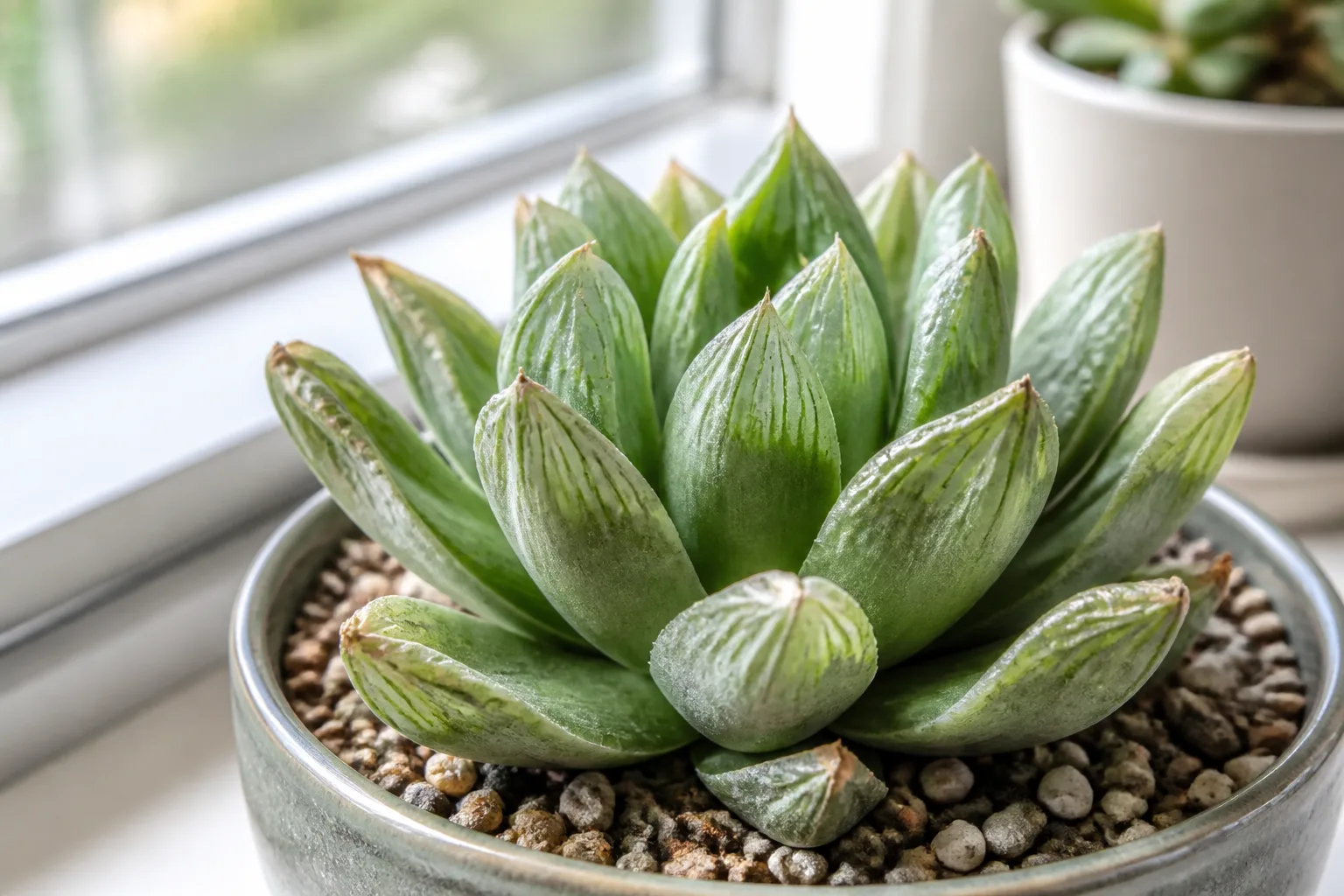
Low Humidity on Haworthia: Causes, Checks & Fixes
This guide covers low humidity on Haworthia. See also the general Low Humidity guide, watering, and light pages for this plant.
Low Humidity on Haworthia: Causes, Checks & Fixes
Quick answer
Haworthia (zebra plant and related rosette succulents) evolved in dry regions of South Africa and stores water in thick leaves. Unlike tropical houseplants, it handles normal indoor humidity of 30–50% without a humidifier-typical of heated and air-conditioned homes. Most cacti and succulents tolerate the low humidities and warmth of the home, and Haworthia is among the easiest in that group.
That does not mean dry air never matters. Winter forced-air heating, a pot directly above a radiator, or stagnant dry corners near sunny glass can dry leaf margins faster than roots replace moisture-especially when heat and low RH combine. The non-obvious answer for most growers: low humidity is rarely the real problem on Haworthia. Brown tips in winter more often trace to underwatering, root stress from damp mix, tap-water salts, or heat blast before dry ambient air alone.
First step: run a skewer moisture test at depth and lift the pot for weight. A feather-light dry pot means fix watering before you buy a humidifier. A heavy pot with cool damp mix means inspect roots and drainage-not humidity hardware. Full species context: Haworthia overview.
Does Haworthia actually need high humidity?
For most indoor growers, no. Haworthia is a secondary humidity concern compared with light and watering-the same priority the overview humidity section establishes.
Normal indoor range (30–50% RH): This matches what most homes provide year-round. If a hygrometer near the rosette reads 35–45% and leaves stay firm with clean new center growth, humidity is already adequate. No pebble tray, humidifier, or misting routine is required.
When extreme dry air becomes a problem: Sustained RH below 25–30% combined with heat sources-registers, radiators, fireplace proximity, or intense sun on glass-can desiccate outer leaf tips on an otherwise healthy plant. The stress is usually heat plus dry moving air, not ambient winter humidity alone. Stagnant dry corners with poor airflow also favor spider mites that thrive in dry, warm conditions.
What raising humidity will not fix: Mushy lower leaves, a soft crown, or tip browning on a heavy wet pot point to overwatering or root dysfunction-not dry air. Increasing humidity on a succulent with failing roots can worsen rot risk in stagnant corners. See overwatering on Haworthia when soil stays damp.
What low humidity stress looks like on Haworthia
Dry-air damage on Haworthia is subtle compared with ferns or calatheas. Look for these patterns on firm rosettes-not limp, mushy collapse.
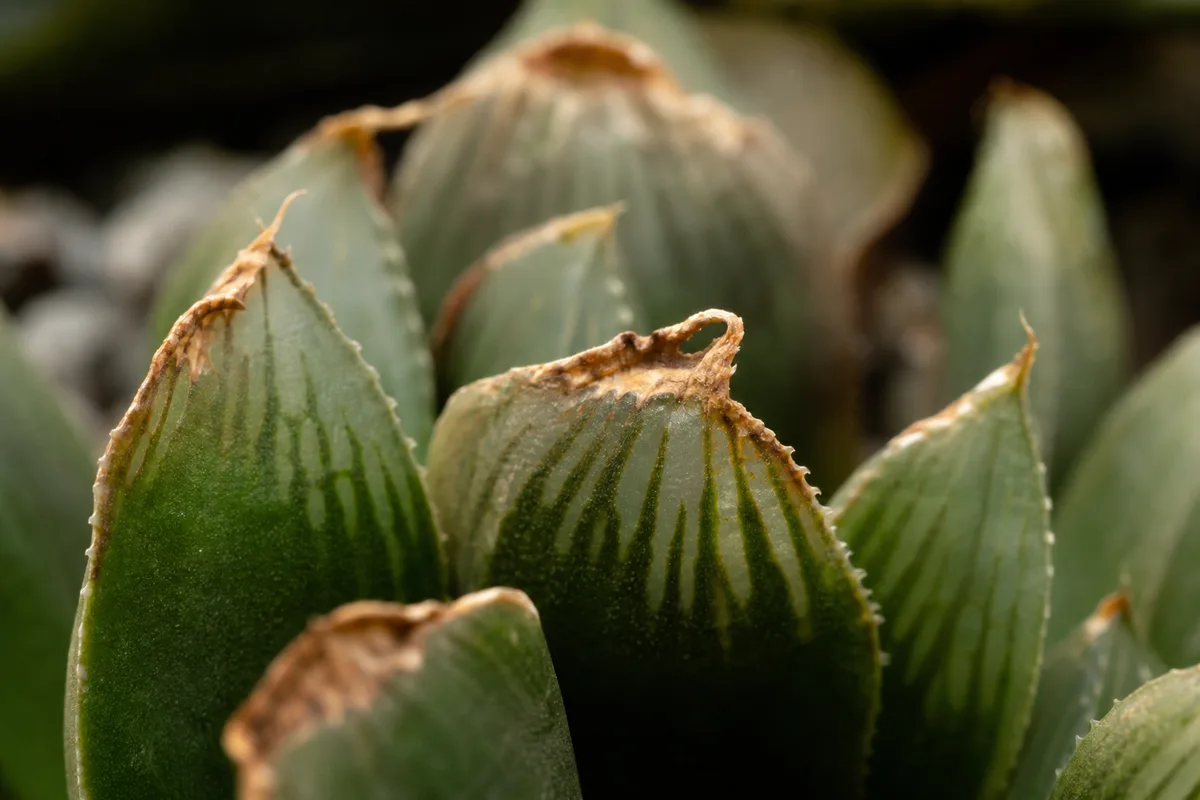
Low Humidity symptoms on Haworthia - compare with healthy tissue on the same plant.
Brown crispy leaf tips (most common dry-air sign):
- Narrow tan-to-brown band at the leaf point, papery and dry
- Often on outer leaves nearest a heat vent, radiator, or winter window
- Center leaves and stem stay firm; no squishy base
- Soil moisture normal when you skewer-test-not dusty dry throughout
Slight leaf shrivel or slower growth:
- Outer leaves may look slightly thinner in prolonged dry heat
- Growth slows in winter anyway; do not confuse dormancy with humidity stress
- Plump center leaves that stay firm suggest the plant is coping
Spider mites in dry stagnant corners:
- Fine yellow stippling on leaf faces plus delicate webbing on undersides
- The twospotted spider mite prefers hot, dry weather-common on houseplants near heaters and sunny glass
- Crispy tips without stippling or webbing usually are not mites-see spider mites on Haworthia when both appear
Unlike underwatering, dry-air tip burn often shows when soil moisture is appropriate and the pot has normal weight. Unlike sun scorch, damage concentrates on tips and margins, not a directional bleached patch on the window-facing side.
For tip necrosis with multiple possible causes, see brown tips on Haworthia.
Low humidity vs. underwatering vs. root rot on Haworthia vs. sun scorch on Haworthia
Haworthia shows margin damage from several stresses that look similar at a glance. Work through this comparison before changing humidity.
| Pattern | Likely cause | First direction |
|---|---|---|
| Crispy tips; light dry pot; firm-wrinkled outer leaves | Underwatering | Soak when skewer is dry throughout-see underwatering |
| Crispy tips; heavy wet pot; cool damp mix | Root stress / overwatering | Stop watering; check drainage-see overwatering |
| Crispy tips; normal soil moisture; plant above heat vent | Dry air + heat blast | Relocate away from vent; improve airflow |
| Directional bleached or brown patch on sun-facing leaves | Sun scorch | Move to Haworthia light guide-see not enough light |
| Tips on plump leaves; white soil crust; moist mix | Fluoride / salt burn | Flush pot; use filtered water-see brown tips |
| Fine stippling + webbing on undersides | Spider mites | Rinse and treat; improve airflow |
Low humidity is confirmed when RH near the rosette stays below 30% for weeks, tips brown on outer leaves nearest dry heat paths, skewer reads appropriately moist, pot weight is normal, and no pest stippling or directional sun patch explains the damage.
Why Haworthia tolerates dry air
Understanding the biology explains why humidifier marketing rarely applies to this genus.
Semi-arid South African habitat. Haworthia species grow among rocks and thin soil in regions with seasonal rain and long dry spells. The RHS describes them as originating from dry regions where water is stored in succulent leaves between infrequent soaks.
Leaf water storage buffers short dry spells. Thick leaves hold internal moisture, so brief low-RH episodes cause less immediate collapse than on thin-leaf tropicals. Transpiration from leaf tips-the farthest point from roots-can still brown margins when heat and dry air outpace uptake, but the rosette core stays firm longer.
Airflow matters more than RH for succulents indoors. Cacti and succulents generally tolerate home warmth and low humidity; winter heating makes humidity hard to regulate, but these plants are built for it. Moving air prevents stagnant pockets where mites establish and reduces heat buildup on leaves above vents.
How to confirm low humidity is the real issue
Work through these checks in order. One hygrometer reading beats guessing from symptom photos.
- Skewer moisture and pot weight first - Push a bamboo skewer to the pot bottom. Completely dry throughout with a feather-light pot means underwatering, not humidity. Heavy cool damp mix means root stress before any humidifier purchase.
- Hygrometer near the rosette - Place a digital hygrometer within 6 inches of the leaves, not across the room. Readings of 30–50% with firm growth mean humidity is fine. Sustained below 25–30% plus tip browning on a correctly watered plant increases dry-air probability.
- Heat-source map - Note distance to forced-air registers, radiators, and single-pane winter glass. A plant in a 40% room can sit in a dry microclimate directly above a vent.
- Which tissue failed - Outer tip crisping on firm leaves fits dry air or salt stress. Mushy lower leaves or soft crown on wet mix is rot-see overwatering.
- Pest inspection - Tap leaves over white paper; moving specks plus stippling mean treat spider mites even while you adjust placement.
- Seasonal context - Gradual tip browning weeks after heating season starts, with stable watering and no recent repot, fits dry-air contribution. A plant fresh from a humid greenhouse may show acclimation tip browning for a few weeks-usually not an emergency.
You have likely confirmed dry-air stress when RH near the plant stays chronically low, watering and roots check out, tips brown on perimeter leaves near heat paths, and pests and sun scorch are ruled out.
First fix for Haworthia
After skewer and weight checks show normal moisture and healthy roots, apply one placement correction at a time-not a humidifier, misting, and repot on the same day.
Move away from heat vents and stagnant hot glass
Relocate the pot before you buy hardware. Pull Haworthia at least 2–3 feet from forced-air registers and radiators. In winter, move it inward from single-pane glass that radiates cold at night and bakes by day. Low humidity is a common cause of brown leaf tips on houseplants, but on succulents the fix usually starts with removing the dry heat path, not raising whole-room RH.
Improve airflow
A small fan moving air in the room-or simply opening shelf space so leaves are not packed against a wall-reduces stagnant dry pockets and mite-friendly conditions. This often stops slow tip browning without any humidity device.
Correct watering if the pot was light and dry
If the skewer showed drought, give a full soak until water runs from drainage holes, then let the mix dry completely before the next drink. Dry-air tips on a thirsty Haworthia will not resolve until roots receive water. See underwatering on Haworthia when outer leaves are firm-wrinkled and the pot is light.
Pebble tray only if extreme dry air persists
If RH stays below 25%, tips keep browning after placement and airflow fixes, and watering is verified correct, a pebble tray below the pot (water below stone level-never standing water in the rosette) adds modest localized moisture. Expect a small bump, not tropical humidity. Humidifiers are usually unnecessary for Haworthia and can raise rot risk if they keep surrounding air damp and stagnant.
Recovery timeline
Tip and margin damage is permanent. Brown crispy tissue does not re-green. Judge recovery by new center leaves opening clean and stopped spread to previously healthy foliage.
- After moving off a heat vent: Perimeter crisping often stabilizes within one to two weeks if watering was already correct.
- After correcting underwatering: New growth may emerge firm within two to three weeks of a proper soak-and-dry rhythm.
- If spider mites appeared in dry heat: Stippling may stop spreading within one to two weeks of treatment plus airflow improvement; damaged leaves rarely look pristine again.
If new tips stay clean for three weeks and the rosette center stays firm, consider the dry-air problem controlled. Continue monitoring through heating season.
What not to do
- Do not mist Haworthia leaves for humidity. Wet rosette centers on succulents invite fungal spotting in stagnant air. Misting does not hydrate roots.
- Do not run a humidifier aggressively to “help” a succulent unless RH is chronically extreme and other fixes failed-Haworthia tends to rot if left in damp conditions, and high stagnant humidity worsens that risk on wet mix.
- Do not increase watering to fix dry-air brown tips when the pot is already appropriately moist-extra water on heavy mix worsens root stress.
- Do not fertilize a stressed rosette before placement and watering stabilize.
- Do not stack Haworthia repotting guide, pruning, and humidity gadgets on one day. Haworthia responds best to one care correction at a time.
How to prevent dry-air stress on Haworthia
- Keep permanent placement away from heat vents and draft paths once the rosette acclimates.
- Run a hygrometer through heating season-act on placement when outer tips crisp while center growth stays firm and soil moisture is normal.
- Inspect leaf faces weekly in winter for early spider mite stippling in dry corners.
- Match watering to light and season per Haworthia watering guidance-winter slow-down means longer dry intervals, not more misting.
- Use room-temperature filtered or rested water if fluoride tip burn compounds margin drying on plump leaves.
Stable bright indirect light, soak-and-dry watering in fast-draining mix, and sensible placement beat humidity hardware for this genus.
When to worry
Act within a few days if:
- Tips brown rapidly while the crown softens and lower leaves turn mushy on wet mix-that is rot, not dry air.
- Fine stippling and webbing spread across the rosette-treat mites before cosmetic tip trimming.
- New center leaves emerge smaller and distorted with persistent drought stress after verified dry soil-roots may be failing.
A few slow crispy tips on firm outer leaves in a heated room is lower urgency. Fix placement and verify watering before any humidifier purchase.
Conclusion
Low humidity on Haworthia is often a misdiagnosis. These South African rosette succulents handle 30–50% indoor RH without humidifiers or misting-the same range most homes already provide. When winter dry air does contribute to stress, it usually appears as slow brown tips on outer leaves near heat sources, not sudden collapse. Check watering and roots first, move the pot off vents, improve airflow, and use a pebble tray only if extreme dry air persists after those steps. Recovery shows on new growth, not repaired old tips. For overlapping symptoms, see brown tips, underwatering, and the Haworthia overview humidity section.
When to use this page vs other Haworthia guides
- Haworthia watering guide - Use for routine moisture checks before assuming low humidity is the main issue.
- Haworthia problems hub - Browse all 16 common issues on this species.
- Brown Tips on Haworthia - Different entry point when symptoms overlap with low humidity.