Leggy Growth on Haworthia: Causes, Checks & Fixes
Quick answer
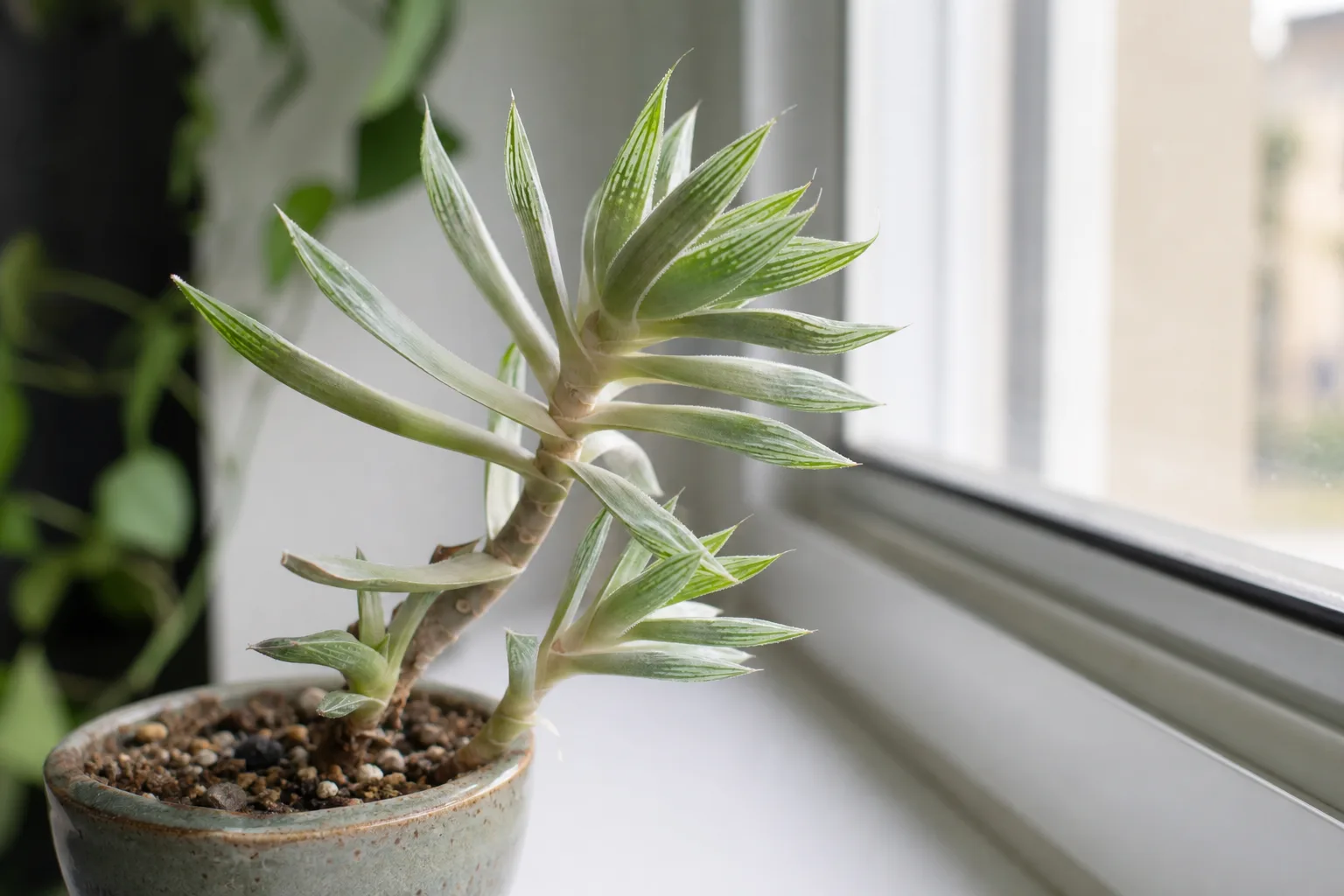
Leggy Haworthia rosettes lose their tight ball shape-leaves stack upright with visible gaps and dull color from etiolation. Stretched tissue is permanent. First step: move to bright indirect light per the not-enough-light guide, then prune or remove worst outer leaves once new growth opens compact.
Leggy Growth on Haworthia: Causes, Checks & Fixes
This guide covers leggy growth on Haworthia. See also the general Leggy Growth guide, watering, and light pages for this plant.
Leggy Growth on Haworthia: Causes, Checks & Fixes
Quick answer
Leggy growth on Haworthia is etiolation-the rosette stretches upward, leaves spread apart, color dulls, and offsets stall when light is too weak. Haworthia tolerates shade longer than echeveria, but survival in a dim corner still produces a tall loose stack instead of a tight succulent cushion.
Stretched leaves do not compact again. Etiolated growth remains elongated; recovery shows only on new leaves after light improves.
First step: move to bright indirect light using the not enough light on Haworthia guide. Wait two weeks for tighter new leaves. Then remove worst outer etiolated leaves or propagate offsets to reset the rosette shape.
This page covers structural recovery after stretch-pruning, offset division, and timelines. Diagnosis and placement targets live on not-enough-light.
What leggy growth looks like on Haworthia
Healthy haworthia forms a tight rosette-leaves packed in a ball or flat tile depending on species. Leggy plants lose that architecture:
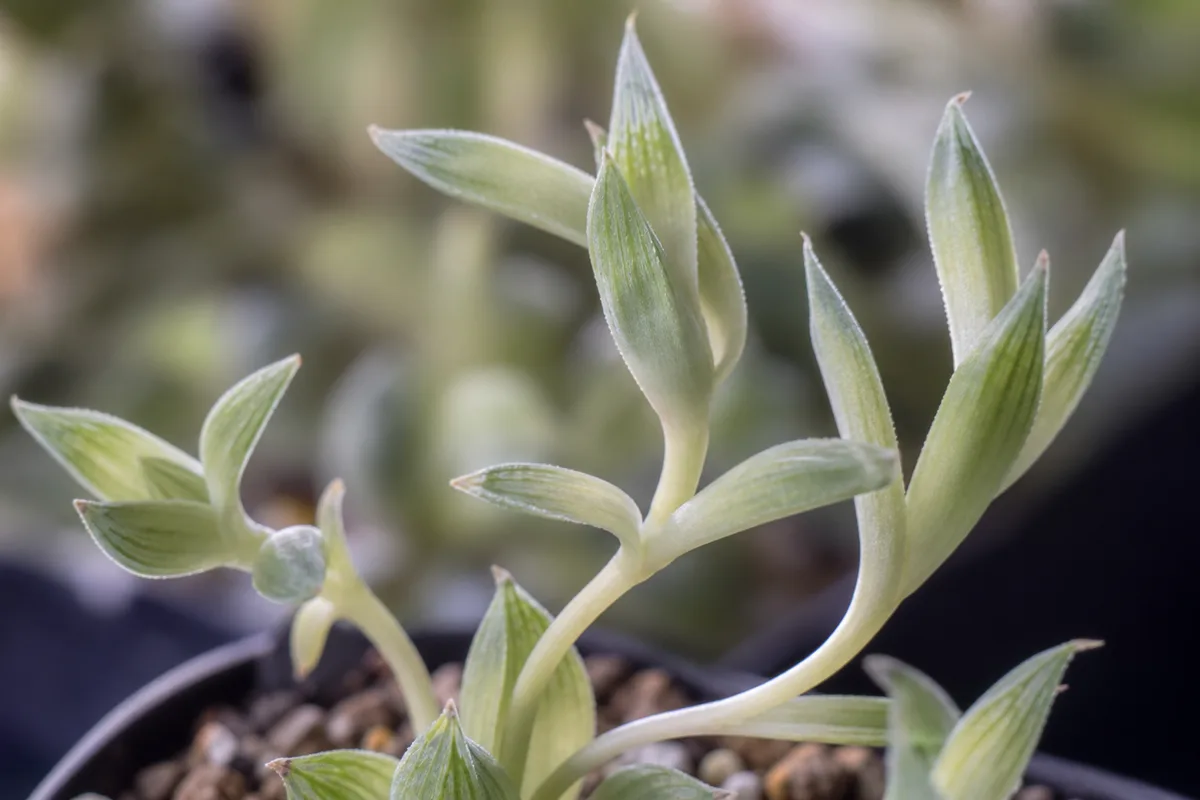
Leggy Growth symptoms on Haworthia - compare with healthy tissue on the same plant.
- Loose upright stack with visible gaps between leaves
- Lean toward one window-entire rosette faces the brightest direction
- Smaller, thinner, duller new leaves vs. older compact growth at the base
- Windowed species (H. cooperi, H. truncata) lose translucent tip clarity
- No offsets for months on mature clumps that once produced pups
- Flower stalks absent in spring even when the plant previously bloomed
Change is gradual-owners notice only after several new leaves open elongated.
What leggy growth is not:
- Soft mushy base on wet soil-overwatering on Haworthia / rot
- Red-orange sun blush on leaf tips-too much direct sun
- Thin papery leaves on bone-dry soil-underwatering on Haworthia with compact rosette
Why Haworthia gets leggy
Haworthias grow under bright filtered light in South African rock pockets-not deep interior shade. NC State notes haworthia prefers full sun or bright indirect light for best color indoors.
In weak light, houseplants stretch toward the source with spindly growth. On rosette succulents that reads as tall stacks instead of cushions.
Low light slows water use. The same watering schedule that worked in a bright window leaves soil wet too long in shade-plants in inadequate light can become waterlogged, stacking rot risk on cosmetic stretch.
How to confirm structural legginess
- Rosette shape audit - Tight ball at purchase vs. loose stack now
- Light still marginal? - If placement hasn’t improved, fix not-enough-light first
- Two-week trial - After brighter filtered light, next two leaves should open tighter and more plump
- Offset pattern - Zero pups for months on mature plants suggests chronic weak light
- Soil cross-check - Damp mix at depth with tired leaves = overwatering overlap
If light is adequate but old stretch remains, you need prune/offset reset, not more light alone.
First fix for Haworthia
Brighten light, wait for compact new leaves, then remove etiolated outer leaves or divide offsets.
Sequence:
- Move to brightest safe indirect spot-typically within 2–3 feet of east glass per haworthia light guide
- Wait 14 days without changing water volume
- Twist off worst elongated outer leaves at the base (clean break) or divide offsets with a sharp knife
Do not repot or fertilize on day one. Haworthia is susceptible to rot when overwatered in low light-confirm dry-down before extra care.
Step-by-step recovery
- Remove elongated outer leaves - Twist cleanly; let wounds dry 24 hours before watering
- Divide offsets - Separate pups with tight rosettes; pot in fast-draining mix
- Gradual light increase - Slide toward brighter spots over days; avoid sudden hot south glass
- Adjust watering - Brighter placement dries soil faster; water only when mix is fully dry
- Rotate weekly - Even rosette fill once light is adequate
- Optional spring repot - Only when offsets or parent are stable, using repotting guide
Truncata and retusa forms that should look flat may need heavier outer-leaf removal to restore tile shape.
Recovery timeline
Weeks 1–2: First new leaves after light upgrade open tighter.
Weeks 3–6: Rosette looks fuller from the crown; offsets may resume after removal of stressed outer leaves.
Old stretched leaves: Permanent unless removed.
Full cushion shape: One to two growing seasons with consistent bright indirect light and periodic outer-leaf grooming.
Lookalike symptoms
- Active low light - Pale reach without structural reset yet; see not-enough-light
- Crown rot - Soft center on wet soil; dry down and inspect, do not just add light
- Sun stress - Red-brown tips after sudden move to harsh sun
What not to do
Do not fertilize stretched haworthia. Do not jump to blazing south-window sun from a dim shelf. Do not expect old leaves to shrink. Do not overwater while light is still weak.
How to prevent leggy growth next time
- Bright indirect light year-round; grow lights in north rooms winter
- Rotate weekly; clean window glass seasonally
- Remove outer leaves when gaps widen-early grooming beats tall stacks
- Match watering to dry-down in your light level
Conclusion
Leggy Haworthia is permanent stretch on old tissue plus ongoing etiolation if light stays weak. Fix placement per not-enough-light, confirm compact new leaves, then remove elongated outer leaves or divide offsets to restore the tight rosette. New plump leaves at the crown tell you the fix worked-not old tissue shrinking back.
When to use this page vs other Haworthia guides
- Haworthia watering guide - Use for routine moisture checks before assuming leggy growth is the main issue.
- Haworthia problems hub - Browse all 16 common issues on this species.
- Not Enough Light on Haworthia - Different entry point when symptoms overlap with leggy growth.
- Slow Growth on Haworthia - Different entry point when symptoms overlap with leggy growth.
- Yellow Leaves on Haworthia - Different entry point when symptoms overlap with leggy growth.