Dahlia Plant Care: Sun, Staking & Tubers
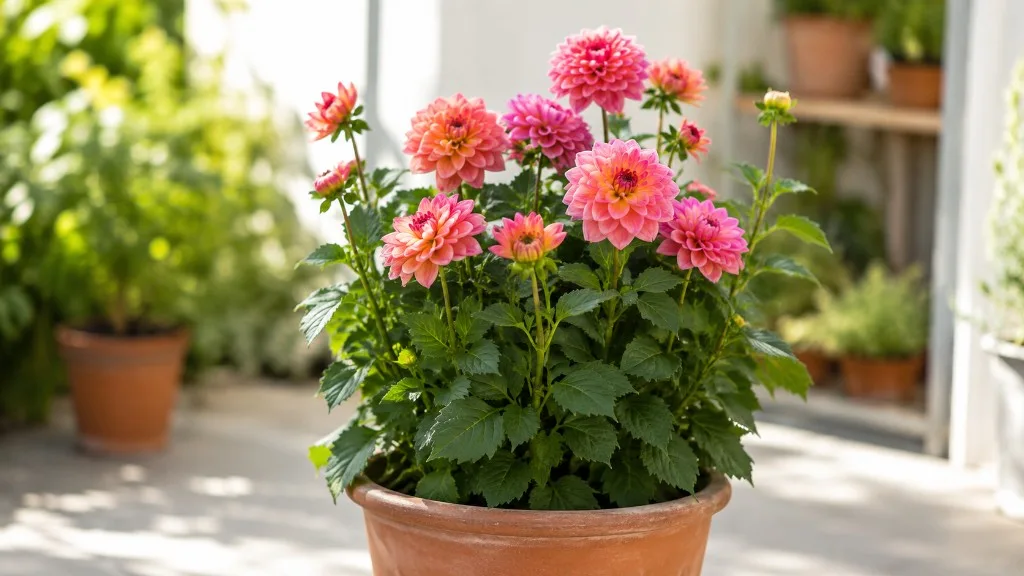
Dahlia pinnata
Plant dahlia tubers in warm soil with good drainage. Pinch at 30 cm for more flowers. Feed high potassium from bud stage. Full sun, deadhead regularly, stake tall varieties.
Dahlia Plant Care: Sun, Staking & Tubers
Start with wateringThe most common care mistake for DahliaWatering guide →Dahlia care essentials
Light
full sun - 6–8 hours of direct sunlight for maximum flower production
Water
Deep watering when top 3–5 cm dries out; every 2–3 days in summer.
Soil
Rich, loose, well-draining soil with excellent organic content.
Humidity
Moderate (40–60%); not a high-humidity plant
Temperature
15°C to 25°C (60–77°F)
Fertilizer
Use high-potassium fertilizer from bud stage; balanced NPK in early growth and stop if the plant is stressed, newly repotted, or not actively growing.
About Dahlia
Dahlia is native to Mexico and Central America, typically reaches 30 cm–1.5 m tall depending on variety; 30–60 cm wide indoors, with fast once tubers sprout growth. Dahlia has a upright growth habit and part of the Asteraceae family. It is also known as Garden Dahlia and Georgina.
| Detail | Information |
|---|---|
| Also known as | Garden Dahlia, Georgina |
| Native region | Mexico and Central America |
| Mature size | 30 cm–1.5 m tall depending on variety; 30–60 cm wide |
| Growth rate | Fast once tubers sprout |
| Growth habit | Upright |
| Scientific name | Dahlia pinnata |
| Family | Asteraceae |
Dahlia Plant Care: Sun, Staking & Tubers
What Is Dahlia?
Dahlia is a tuberous tender perennial grown for showy flowers that range from tight pompons a few centimetres across to dinnerplate blooms wider than a side plate. The genus Dahlia belongs to the family Asteraceae (historically called Compositae), the same broad plant family that includes sunflowers, daisies, zinnias, and asters. Dahlias are native to the highlands of Mexico and Central America, where mild days, cool nights, and distinct wet and dry seasons shaped how the plant stores energy underground and pushes growth above ground in warm months.
In the garden, most dahlias reach 60 cm to 1.5 m (2 to 5 ft) tall depending on cultivar, with a similar spread at maturity. They grow from underground tubers - swollen storage organs attached to a central crown - not from a woody root or a true bulb. Each spring, eyes on the crown sprout stems; through summer and fall those stems carry leaves and flowers; after the first hard frost the aerial growth dies back while the tuber clump waits out cold months below soil or in storage. That cycle is the backbone of dahlia care: everything you do in a given year serves either strong tuber formation, continuous flowering, or safe overwintering.
If you are deciding whether dahlias fit your garden, the honest summary is this: dahlias reward Dahlia light guide, fertile well-drained soil, regular deadheading, and - for most varieties - staking. They punish shade, soggy soil, skipped frost protection, and the assumption that a tuber left in wet ground will survive every winter. The payoff is one of the longest-running flower displays in the warm-season garden, often from midsummer until the first killing frost, plus stems long enough for cutting if you choose the right cultivars. Dahlias ask more of a gardener than a self-supporting marigold, but they return proportionally more colour late in the season when many spring annuals have faded. Their peak bloom window runs from midsummer through autumn, and the maintenance rhythm is front-loaded and seasonal - stake once, deadhead weekly through bloom, water steadily in dry spells, and handle tubers at planting and season’s end. One critical caveat for pet owners: the ASPCA lists dahlias as toxic to cats, dogs, and horses, causing mild gastrointestinal signs and possible skin irritation - not usually life-threatening, but worth planning around if animals share your outdoor space.
Botanical Background and Tuber Biology
Understanding a dahlia tuber saves you from the most expensive beginner mistakes. A viable tuber clump has three parts worth identifying before you plant: the crown where stems emerge, the eye (a small bump or sprout point on the crown), and the tuber body itself - the fleshy storage lobe connected to the crown by a neck. Without an eye, a tuber alone will not produce a plant. When dividing clumps in spring or fall, each division needs at least one eye and a piece of crown attached to viable tuber tissue; a severed tuber with no eye is dead weight.
Dahlias are tender perennials, meaning they can live many years but cannot survive freezing temperatures on exposed tubers the way a hardy hosta can. In USDA Hardiness Zone 8 and warmer, many gardeners leave tubers in the ground year-round with minimal protection. In Zone 7, in-ground overwintering under thick mulch is possible on well-drained sites but carries real loss risk from cold snaps and rodent damage. In Zones 3 through 6, lifting and storing tubers indoors after frost is the standard reliable approach. The RHS and multiple North American extension services treat indoor storage as the safest default wherever winters are wet, heavy clay keeps soil cold and saturated, or hard freezes are routine.
Centuries of breeding have produced thousands of named cultivars grouped by flower form - cactus, decorative, ball, pompon, collarette, waterlily, anemone, orchid, and single types among others - and by height class from dwarf bedding types under 45 cm to giant stems exceeding 1.8 m. Two pots both labeled “dahlia” at a garden centre may need completely different staking and spacing. Keep cultivar tags when you have them; when you do not, observe mature height and flower size the first season and adjust support and spacing the next year accordingly. Miss support before stems flop or frost protection before tubers freeze, and the plant may still grow but will underperform or fail to return next year - predictable once you learn the calendar, demanding if you skip the seasonal rhythm.
Best Growing Conditions for Dahlia
Dahlia success rests on four environmental pillars: light, soil, water, and frost timing. Nail those and feeding, deadheading, and pest control become fine-tuning. Get any pillar badly wrong - shade on a sun cultivar, clay that holds winter water, or tubers planted while ground frost still threatens - and no amount of fertilizer rescues the season.
Light Requirements
Dahlias need full sun: at least six hours of direct sunlight daily, with six to eight hours ideal for maximum flower count and stem length according to the RHS, BBC Gardeners’ World, and Oregon State University Extension. A south- or west-facing border sheltered from strong wind performs best. Partial shade may keep plants alive but typically reduces flower size, lowers stem count, and encourages leggy growth that lodges even with stakes.
Wind matters as much as sun angle. Dahlia stems are hollow and top-heavy when laden with water-filled blooms; exposed sites cause breakage independent of light quality. If your sunniest bed is also your windiest, use a fence, hedge, or temporary windbreak rather than accepting snapped stems mid-season. Container dahlias on sunny balconies often outperform in-ground plantings in partly shaded yards because the pot can be placed where both light and shelter align.
Acclimate started plants gradually if they were grown under shade cloth at a nursery. Move them into full sun over seven to ten days, increasing exposure daily. Sudden relocation without hardening produces bleached or scorched leaves on tender new growth even though mature dahlias tolerate strong sun once established.
Temperature and Frost Limits
Dahlias are frost-tender. Tubers should not go into the ground until all danger of ground frost has passed and soil has warmed. A practical regional cue used by many Pacific Northwest growers - plant when lilacs bloom, often around early May in moderate climates - appears in WSU Extension guidance. Northern gardens may need to wait until late May or early June; warm southern zones can plant earlier once nights stay consistently above frost risk.
Active growth prefers warm days and moderate nights, roughly 15 to 24°C (60 to 75°F) during the main season. Growth slows sharply when nights drop below 10°C (50°F) for extended periods. The first killing frost ends the flowering season above ground: foliage turns dark, blooms collapse, and the plant shifts energy back toward the tuber. That frost date starts the overwintering clock - whether you mulch in place or dig for storage.
Starting tubers indoors four to six weeks before last frost gives earlier blooms. Pot tubers in moist compost at 18 to 21°C (65 to 70°F), keep just barely moist until shoots appear, then grow on in bright cool conditions before hardening off outdoors. Do not plant out until nights are reliably frost-free; a single late freeze can kill fresh transplants to the ground.
Soil and Drainage
Dahlias want fertile, moist, yet free-draining soil. The RHS states plainly that they will not thrive in very dry sites and may rot in waterlogged soil - both extremes show up as failed tubers more often than as gradual decline. Target pH 6.0 to 7.0, though most garden loams sit close enough that pH adjustment is rarely the limiting factor for hobbyists.
Prepare planting holes 30 cm (12 in) wide and deep, working in well-rotted compost or manure to improve fertility and structure. On heavy clay, add horticultural grit at the base of the hole and consider planting on a slight mound or in a raised bed so winter drainage improves - critical if you hope to overwinter in ground. On sandy soil, extra organic matter holds moisture through summer bloom. In containers, use a quality peat-free multipurpose compost with added slow-release fertilizer or plan to liquid-feed through the season; pots dry faster and heat roots on hot patios, so monitor moisture daily in peak summer.
Plant tuber clumps horizontally, 10 to 15 cm (4 to 6 in) deep, with eyes facing up, covering with 2.5 to 5 cm (1 to 2 in) of soil initially per West Virginia University Extension. Space 45 to 60 cm (18 to 24 in) apart for medium varieties; giant dinnerplates may need 90 cm (3 ft) or more. Many growers do not water at planting until shoots break the surface, because saturated cold soil around dormant tubers invites rot before roots activate - a point emphasized in WSU Master Gardener material.
How to Water Dahlia
The general rule: water deeply when the top few centimetres of soil dry out during active growth, rather than on a fixed calendar. Dahlias are not drought-tolerant once stems and buds load up in midsummer, but they are highly sensitive to tuber rot when soil stays wet while tubers are dormant or newly planted.
Dahlia watering guide During Active Growth
Once shoots are 15 to 20 cm (6 to 8 in) tall, increase water to keep soil evenly moist but never sodden. In dry summer weather with full sun, that often means roughly weekly deep watering if rain is absent, though sand, pots, and reflected heat from walls can require two to three sessions per week. Water at the base of the plant in the morning when possible; wet foliage overnight encourages powdery mildew in dry hot spells.
A practical check: insert a finger or a dry stake 5 cm (2 in) into the soil. If it comes out clean and dry, water until moisture penetrates the root zone and a little runs from drainage holes in pots. If it feels cool and soil clings, wait. Wilting at midday on hot days can be normal temporary flagging; wilting in morning shade usually means genuine thirst or root damage - check moisture before reflex watering.
Mulch with shredded bark, compost, or straw after soil warms to reduce evaporation and suppress weeds, but keep mulch a few centimetres back from the crown early in the season so slugs have fewer hiding spots against tender shoots.
Seasonal Adjustments
In spring, while tubers wake slowly, err on the dry side. In peak bloom, demand peaks - a large dinnerplate dahlia transpires heavily and aborts buds if stressed. In late fall, after frost kills tops, stop watering in-ground plants you plan to dig; dry-ish soil lifts cleaner. For stored tubers, no watering at all until spring potting.
Container dahlias outgrow their water supply faster than border plantings. A 45 cm (18 in) pot with a tall cultivar may need daily checks in heat. Self-watering reservoirs help on hot balconies but must not keep mix waterlogged at tuber level during cool spring nights.
Staking and Support for Tall Varieties
Most dahlias need staking; skipping support is one of the fastest routes to snapped stems and mud-spattered blooms after the first rainstorm. Dwarf bedding dahlias under about 45 cm (18 in) often stand without help. Medium and tall cultivars - essentially everything grown for cutting or large decorative blooms - need sturdy canes or stakes 1.2 to 1.5 m (4 to 5 ft) tall. Giant dinnerplate types with massive flowers may need one stake per main stem, tied individually as each lengthens, per RHS guidance.
The critical technique: drive stakes into the ground before or at planting, positioning them 15 to 23 cm (6 to 9 in) from the tuber so you never pierce the clump later. OSU Extension recommends anchoring stakes 30 cm (1 ft) deep for stability. As stems grow, tie at 45 cm and 90 cm (18 and 36 in) heights with soft garden twine or Velcro plant ties in a loose figure-eight so stems can thicken. Add ties for lateral branches on multi-branching varieties.
Some growers use four stakes in a square around a clump with twine looped around the outside - effective for bushy decorative types. Others use corral fencing for rows of cut-flower dahlias. Whatever system you choose, install it early; retrofitting stakes after stems are 1 m tall usually breaks more growth than it saves. In windy sites, shorten final height by pinching the growing tip once when plants reach two-thirds of desired stature - trading a little stem length for thicker, more self-supporting structure.
Deadheading for Continuous Blooms
Deadheading - removing spent flowers - is not optional if you want dahlias to bloom until frost. Left in place, fading blooms set seed and drain energy that would otherwise fuel new buds on lateral shoots. The RHS recommends deadheading ideally weekly through the season.
The technique matters visually and horticulturally. A spent dahlia flower often looks pointed or conical as petals wither and the central seed structure swells. A fresh bud looks rounded and compact. Hold the faded bloom, slide your hand down the stem to the next leaf set, side shoot, or visible bud, and cut just above that joint. OSU Extension notes this cut encourages longer stems on cut-flower types because new growth breaks from lower nodes.
Do not simply pull petals off and leave the hollow flower base - that stub still signals “seed making” to the plant. For exhibition-sized blooms on large cultivars, some growers disbud side shoots early, forcing energy into a single terminal flower; that is optional and reduces total bloom count. For garden display and cutting rows, leave side shoots and deadhead all branches regularly.
When frost ends the season, deadheading stops mattering for flowers; shift focus to tuber maturity and overwintering prep.
How to Feed Dahlia
Dahlias are moderate to heavy feeders during active growth, but timing and balance matter more than raw quantity. At planting, many growers work compost and a balanced granular fertilizer or bone meal into the hole - WSU Extension suggests fertilizing planting holes about two weeks before tubers go in so nutrients integrate without burning dormant tubers.
Once plants are 30 cm (12 in) tall, switch to regular feeding through midsummer: a balanced liquid fertilizer (for example 10-10-10 or 5-5-5) at half label strength every two to three weeks, or a slow-release granular applied once at midseason. Some cut-flower growers prefer slightly lower nitrogen after initial growth to avoid excessive foliage at the expense of blooms, but nitrogen deficiency shows as yellowing lower leaves and stunted stems - do not cut nitrogen too aggressively on young plants.
Stop feeding by early fall or six weeks before expected frost so growth can harden. Never feed cold, waterlogged, or visibly stressed plants; salts accumulate and burn roots. In rich compost-amended beds, supplemental feeding can be lighter than in sandy soil where nutrients leach quickly.
The Dahlia Seasonal Bloom Cycle
Thinking in seasons prevents the common mistake of treating dahlias like everblooming annuals from day one. The cycle has distinct phases:
Late winter to early spring: Stored tubers are inspected, divided if needed, and started in pots indoors or held cool until planting time. Eyes swell; first shoots appear.
Spring planting to early summer: Tubers go out after frost. Growth is slow initially while roots establish. Slug protection is critical as shoots emerge. First side branches form; staking ties go on.
Midsummer to early fall - peak bloom: Flower production accelerates as days stay long and warm. Deadheading weekly keeps the pipeline of buds full. Earwig damage on petals peaks in warm dry spells. This is the cut-flower harvest window for most cultivars.
Late fall - first frost: Cold kills aerial parts. Tubers stop sending energy to stems and begin curing in soil if you will dig them - WVU Extension recommends leaving tubers one to two weeks after frost before lifting so skins toughen for storage, unless a hard freeze is forecast sooner.
Winter: Tubers rest in storage or in ground under mulch. No growth, no feeding, minimal or no water.
That calendar explains why a dahlia planted in late June may bloom lightly before frost while the same cultivar planted in early May delivers months of flowers - you are buying calendar time, not just plant size.
Overwintering Dahlia Tubers
Overwintering is the defining maintenance task for dahlias in most of North America and much of the UK. You have two broad strategies: leave tubers in the ground with insulation, or dig and store indoors. Choice depends on USDA zone, soil drainage, winter wetness, and rodent pressure.
In-ground overwintering works most reliably in Zone 8 and warmer, and sometimes in Zone 7 on light, free-draining soil according to OSU Extension. After frost, cut stems to ground level, then cover crowns with 15 cm (6 in) of mulch - compost, bark, or straw - per RHS guidance. Remove mulch in spring to expose eyes to warmth and light. Risks include unexpected cold snaps, saturated soil rot, and voles or gophers eating tubers; trapping may be necessary where rodents are common.
Indoor storage is safest where winters are cold, wet, or both. Dig before soil freezes if frost has not already forced the issue - the RHS advises lifting by late November in marginal climates even if frost is late. Stored tubers need a cool, dark, frost-free place holding roughly 4 to 10°C (40 to 50°F) with moderate humidity; basements, unheated garages, and root cellars are typical if they never drop below freezing.
Digging, Curing, and Storage Steps
After foliage blackens, wait one to two weeks when weather allows so tuber skins cure - but dig immediately if a hard freeze threatens; frozen tubers usually die. Cut stems to 10 to 15 cm (4 to 6 in) stubs, then fork carefully outward from the clump to avoid spearing tubers. Shake off soil; wash only if you must, and dry thoroughly if washed.
Label cultivars now - colours fade from memory by spring. Divide every two to three years, or annually if you want more plants, using a clean knife so each division has one eye minimum. Discard rotten, shriveled, or damaged tubers; storage fails if diseased tissue enters the box.
Pack in barely moist vermiculite, peat-free compost, wood shavings, or newspaper in cardboard boxes or crates with air gaps. Check monthly for shriveling (lightly remoisten packing medium) or mold (trim affected areas and improve airflow). In spring, six weeks before last frost, pot stored tubers to wake them, or plant directly outdoors once frost passes.
Common Dahlia Pests and Problems
Most dahlia problems map to predictable causes if you inspect stems, undersides of leaves, and flower interiors regularly. Patience matters: environmental stress shows for days before pests colonize, and pest damage accumulates fast once ignored.
Yellow lower leaves often mean nitrogen deficiency, overwatering on Dahlia, or natural senescence on older foliage - check soil moisture and feeding history before assuming disease. Powdery mildew - white coating on leaves - appears in dry hot spells when roots are thirsty; improve watering consistency and airflow. Dahlia mosaic virus causes streaked, distorted foliage and stunting; there is no cure - remove and destroy affected plants and do not reuse tubers.
Stem lodging without pests usually means insufficient staking or too much shade. Tuber rot smells sour and turns tubers mushy - caused by winter wetness or planting in cold saturated soil. Prevention beats rescue: drainage, cure time, and cool dry storage.
Slugs, Earwigs, and Seasonal Pest Timing
Slugs and snails attack emerging shoots in spring when tissue is softest. BBC Gardeners’ World and multiple extension sources recommend night checks, copper tape barriers, clearing debris from crowns, and iron phosphate bait where legal - applied at planting and renewed after heavy rain. A single night of slug feeding can erase a tuber’s entire first growth flush.
Earwigs cause ragged holes in petals and young leaves, especially on large multi-petaled blooms where they hide by day. They are often the culprit behind “mystery” shredded flowers that look fine at dusk and ruined by morning. Upturned pots stuffed with straw on canes make effective traps - empty into soapy water each morning per BBC and Longfield Gardens guidance. Petroleum jelly bands on lower stems block climbing. Earwigs also eat aphids, so total eradication is unnecessary; petal damage control is the goal.
Aphids - especially blackfly - cluster on tender new growth in early summer. Blast with water, prune heavily infested tips, or use insecticidal soap before populations explode. Spider mites appear in hot dry air, showing stippled yellow leaves and fine webbing; increase humidity around plants and rinse undersides. Capsid bugs and caterpillars chew irregular holes in leaves less often than earwigs chew petals; hand-pick when seen.
Inspect weekly from shoot emergence through first frost. Early intervention with mechanical controls preserves blooms without broad-spectrum sprays that harm pollinators on open dahlia flowers.
Is Dahlia Safe for Pets?
Dahlias are toxic to cats, dogs, and horses according to the ASPCA. The toxic principle is not fully identified, but clinical signs are generally mild gastrointestinal upset - vomiting, diarrhea, decreased appetite - and mild dermatitis from sap contact on sensitive animals or people. This is not in the same risk category as lilies for cats or oleander for dogs, but it is also not pet-safe.
Tubers concentrate storage tissue underground and may attract digging dogs; fallen petals and leaves attract curious cats. If pets share your garden, plant dahlias in fenced beds, raise containers out of reach, or choose confirmed non-toxic alternatives such as zinnias or roses for pet-accessible zones. If ingestion is suspected, contact your veterinarian or the ASPCA Animal Poison Control Center at (888) 426-4435 rather than waiting for severe symptoms - early guidance reduces unnecessary panic and catches true emergencies faster.
Conclusion
The most useful mental model for dahlia plant care is seasonal rhythm tied to a tuberous tender perennial from Mexico and Central America. Give full sun and fertile, free-draining soil, water deeply during active bloom, stake before stems need saving, deadhead weekly to the next leaf joint, and protect tubers from frost either with thick mulch in mild drained sites or by digging, curing, and storing cool everywhere else. Match pest control to the calendar - slugs at emergence, earwigs at peak bloom - and treat the plant as mildly toxic to pets per the ASPCA. When those pieces align, dahlias repay the effort with one of the longest, most colourful runs in the late-season garden, often from midsummer until frost ends the show.
When to use this page vs other Dahlia guides
- Dahlia overview - Canonical hub for this species - care topics and problems branch from here.
- Dahlia problems - Symptom-first path when you already know something is wrong.
Related Dahlia guides
How to care for Dahlia?
How much light does Dahlia need?
full sun - 6–8 hours of direct sunlight for maximum flower production
- full sun - 6–8 hours of direct sunlight for maximum flower production - full sun - 6–8 hours of direct sunlight for maximum flower production.
When should you water Dahlia?
Deep watering when top 3–5 cm dries out; every 2–3 days in summer.
- Water when 3–5 cm deep is dry - Deep watering when top 3–5 cm dries out; every 2–3 days in summer.
- Drain excess water - Deep watering when top 3–5 cm dries out; every 2–3 days in summer.
What soil works best for Dahlia?
Rich, loose, well-draining soil with excellent organic content.
- 40% potting mix
- 30% compost or leaf mould - Rich, loose, well-draining soil with excellent organic content.
- 20% perlite - Light white granules that keep soil airy and help prevent compaction.
Grower notes for Dahlia
What matters most with Dahlia
Dahlia needs enough light and seasonal rhythm to bloom well. Leaves may stay alive in mediocre light, but flowers usually reveal whether the plant is truly getting what it needs. In practice, the care checkpoint is simple: full sun - 6–8 hours of direct sunlight for maximum flower production. Pair that with rich, loose, well-draining soil with excellent organic content, and avoid changing water, pot size, and placement all at once.
Best placement in a real home
Dahlia belongs where full sun - 6–8 hours of direct sunlight for maximum flower production is realistic for most of the day, not only where the pot looks good. Deep watering when top 3–5 cm dries out; every 2–3 days in summer. If the pot stays wet longer than expected, move the plant into better light or reassess the mix before watering again. Humidity target: Moderate (40–60%); not a high-humidity plant. Temperature comfort zone: 15°C to 25°C (60–77°F).
Before you buy this plant
Choose Dahlia with firm new growth, clean leaf undersides, and soil that does not smell sour or feel compacted. Be cautious if you see wilting, sticky residue, collapsed crowns, or a pot that is wet in poor light. Cosmetic old-leaf damage is less worrying than weak roots or active pests.
First month after bringing it home
Do not repot Dahlia on day one unless the mix is failing or pests are obvious. Quarantine it, learn how fast the pot dries, and keep care boring while it adjusts. Watch especially for wilting, yellow-leaves, and white-spots. If problems appear, correct the condition first rather than stacking fertilizer, repotting, and pruning together.
Safety note for Dahlia
Dahlia is not a plant to keep within reach of pets or children. The database flags it for cats and dogs. Use gloves if sap or plant tissue is irritating, and pick a pet-safe alternative for floor pots or low shelves.
How to tell Dahlia is settling in
Also sold as Garden Dahlia and Georgina, this plant should be judged by stable new growth rather than label names alone. If you plan to multiply it later, common methods include Tuber division, Stem cuttings from tuber sprouts, and Seeds. Repot only when you see N/A - replant tubers annually. If yellow-leaves shows up early, inspect light, watering, and roots before assuming the plant is permanently weak.
Is it pet safe?
Dahlia is toxic to cats and dogs.
ASPCA lists dahlias as toxic to cats and dogs. Ingestion causes mild GI irritation. Tubers are the most concentrated source.
Watering Dahlia
For Dahlia, water when 3–5 cm deep is dry and water every 2–3 days in summer; every 5–7 days in cooler months. Stop watering after first frost or when leaves die back naturally.
| Detail | Information |
|---|---|
| How often | Every 2–3 days in summer; every 5–7 days in cooler months |
| How to check | Water when 3–5 cm deep is dry |
| Seasonal changes | Stop watering after first frost or when leaves die back naturally |
Signs of overwatering
- crown rot at base
- yellow leaves
- tuber rot
Signs of underwatering
- wilting flowers
- flower heads drooping
- dry crumbly soil
Soil & potting for Dahlia
Use a mix of 40% potting mix, 30% compost or leaf mould, 20% perlite, 10% coarse sand for Dahlia. Critical - tubers rot quickly in waterlogged soil. Target soil pH around 6.0–7.0. Repot annual - tubers lifted and stored (or left in ground in frost-free areas), ideally in plant tubers in August–September; lift in March after flowering ends.
| Detail | Information |
|---|---|
| Recommended mix | 40% potting mix, 30% compost or leaf mould, 20% perlite, 10% coarse sand |
| Drainage | Critical - tubers rot quickly in waterlogged soil |
| Soil pH | 6.0–7.0 |
| Repotting frequency | Annual - tubers lifted and stored (or left in ground in frost-free areas) |
| Best season to repot | Plant tubers in August–September; lift in March after flowering ends |
Signs it needs repotting
- N/A - replant tubers annually
Humidity & temperature for Dahlia
Dahlia prefers moderate (40–60%); not a high-humidity plant, though normal home humidity is usually fine. Keep temperatures around 15°C to 25°C (60–77°F).
| Detail | Information |
|---|---|
| Humidity | Moderate (40–60%); not a high-humidity plant - normal home humidity is fine. |
| Ideal temperature | 15°C to 25°C (60–77°F) |
Fertilizer & pruning for Dahlia
Use use high-potassium fertilizer from bud stage; balanced NPK in early growth and stop if the plant is stressed, newly repotted, or not actively growing. for Dahlia.
| Detail | Information |
|---|---|
| Fertilizer type | Use high-potassium fertilizer from bud stage; balanced NPK in early growth and stop if the plant is stressed, newly repotted, or not actively growing. |
Common problems on Dahlia
Wilting
HighLikely cause: Crown rot from overwatering or extreme heat and drought combined
Quick fix: Check moisture; water if dry; check for stem rot at crown if wet
Full fix guide →Yellow Leaves
MediumLikely cause: Magnesium deficiency, overwatering, or natural lower-leaf ageing
Quick fix: Apply Epsom salt solution; improve drainage; remove lower yellow leaves
Full fix guide →White Spots
MediumLikely cause: Powdery mildew from cool nights combined with warm days and poor airflow
Quick fix: Spray with neem oil or potassium bicarbonate solution; improve airflow
Full fix guide →Brown Tips
MediumLikely cause: Common on this plant type; confirm with recent watering, light, and root checks.
Quick fix: Inspect the plant and correct the most likely care stressor before stacking treatments.
Full fix guide →Root Rot
MediumLikely cause: Common on this plant type; confirm with recent watering, light, and root checks.
Quick fix: Inspect the plant and correct the most likely care stressor before stacking treatments.
Full fix guide →Overwatering
MediumLikely cause: Common on this plant type; confirm with recent watering, light, and root checks.
Quick fix: Inspect the plant and correct the most likely care stressor before stacking treatments.
Full fix guide →Underwatering
MediumLikely cause: Common on this plant type; confirm with recent watering, light, and root checks.
Quick fix: Inspect the plant and correct the most likely care stressor before stacking treatments.
Full fix guide →Spider Mites
MediumLikely cause: Common on this plant type; confirm with recent watering, light, and root checks.
Quick fix: Inspect the plant and correct the most likely care stressor before stacking treatments.
Full fix guide →Mealybugs
MediumLikely cause: Common on this plant type; confirm with recent watering, light, and root checks.
Quick fix: Inspect the plant and correct the most likely care stressor before stacking treatments.
Full fix guide →Aphids
MediumLikely cause: Common on this plant type; confirm with recent watering, light, and root checks.
Quick fix: Inspect the plant and correct the most likely care stressor before stacking treatments.
Full fix guide →Leggy Growth
MediumLikely cause: Common on this plant type; confirm with recent watering, light, and root checks.
Quick fix: Inspect the plant and correct the most likely care stressor before stacking treatments.
Full fix guide →Slow Growth
MediumLikely cause: Common on this plant type; confirm with recent watering, light, and root checks.
Quick fix: Inspect the plant and correct the most likely care stressor before stacking treatments.
Full fix guide →Drooping Leaves
MediumLikely cause: Common on this plant type; confirm with recent watering, light, and root checks.
Quick fix: Inspect the plant and correct the most likely care stressor before stacking treatments.
Full fix guide →Low Humidity
MediumLikely cause: Common on this plant type; confirm with recent watering, light, and root checks.
Quick fix: Inspect the plant and correct the most likely care stressor before stacking treatments.
Full fix guide →Not Enough Light
MediumLikely cause: Common on this plant type; confirm with recent watering, light, and root checks.
Quick fix: Inspect the plant and correct the most likely care stressor before stacking treatments.
Full fix guide →Fungus Gnats
MediumLikely cause: Common on this plant type; confirm with recent watering, light, and root checks.
Quick fix: Inspect the plant and correct the most likely care stressor before stacking treatments.
Full fix guide →Mold on Soil
MediumLikely cause: Common on this plant type; confirm with recent watering, light, and root checks.
Quick fix: Inspect the plant and correct the most likely care stressor before stacking treatments.
Full fix guide →