Not Enough Light on Dahlia: Causes, Checks & Fixes
Quick answer
Dahlia is a full-sun plant. If stems stretch, leaves stay pale, and buds never form, move the pot or bed to a spot with at least six hours of direct sun before changing fertilizer or water.
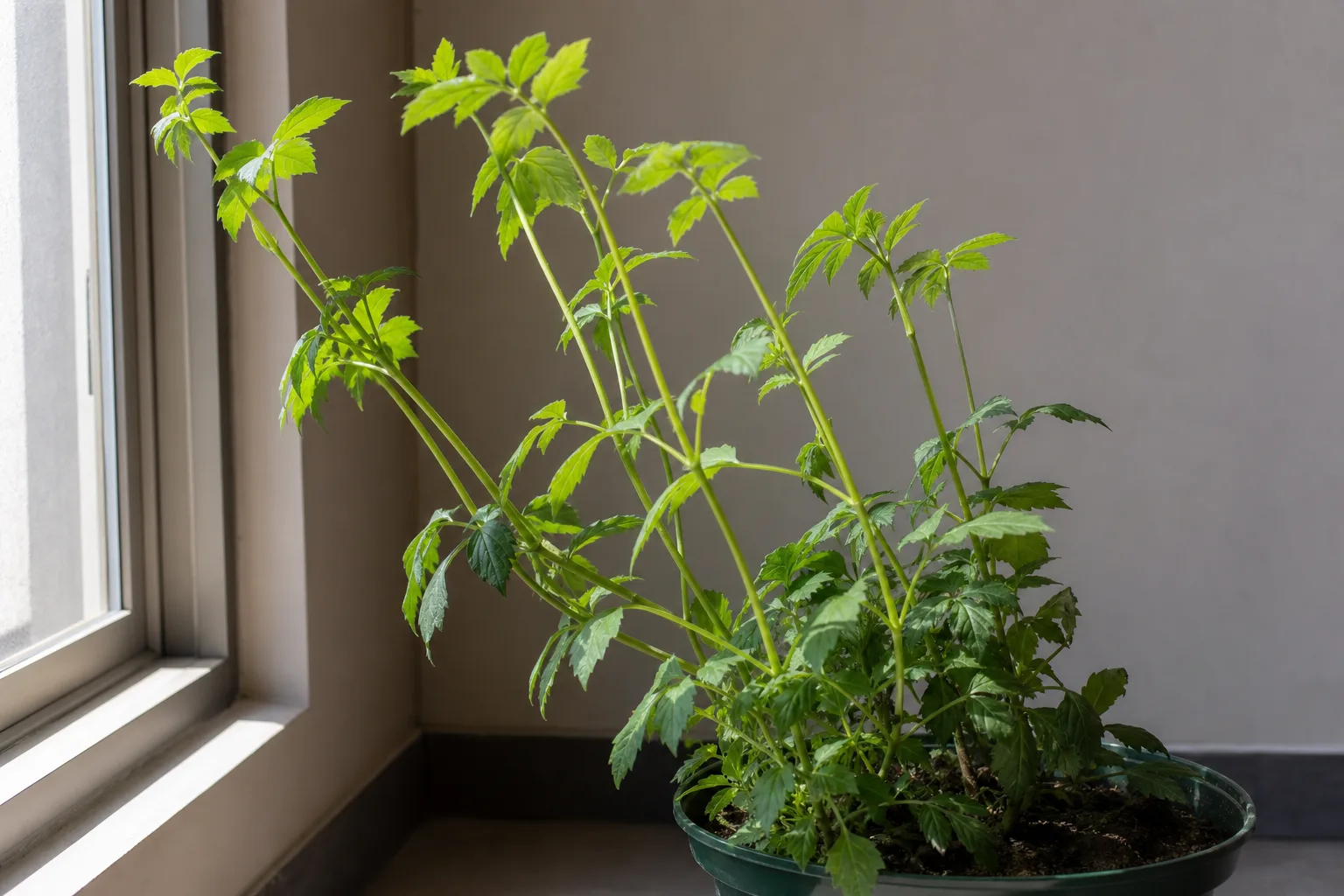
Not Enough Light on Dahlia: Causes, Checks & Fixes
This guide covers not enough light on Dahlia. See also the general Not Enough Light guide, watering, and light pages for this plant.
Not Enough Light on Dahlia: Causes, Checks & Fixes
Quick answer
Dahlia (Dahlia spp.) is built for Dahlia light guide, not the bright-indirect corners that suit many foliage houseplants. Leaves may look acceptable in mediocre light, but flowers tell the truth-without enough direct sun, stems stretch, buds fail, and tall varieties flop.
First step: move the plant to the sunniest spot you can offer with at least six hours of direct sunlight on the leaves. Do that before adding fertilizer, Dahlia repotting guide, or increasing water. More nitrogen or more moisture cannot replace the solar energy dahlias need to build stems strong enough to carry heavy blooms.
What not enough light looks like on Dahlia
On a sun-starved dahlia, the clearest pattern is green growth without bloom:
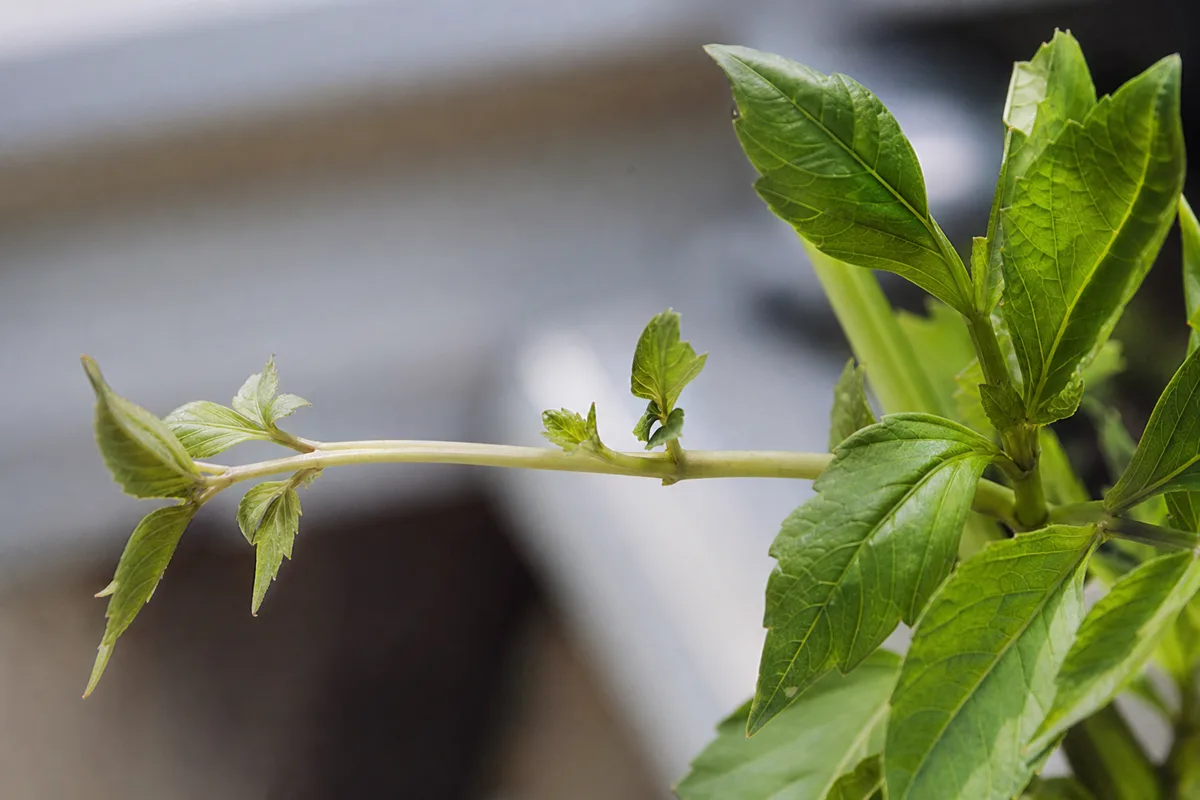
Elongated internodes and thin stretched dahlia stems - move to at least six hours of direct sun before changing fertilizer or water.
- Leggy, spindly stems that grow taller than the variety tag suggests, often leaning toward one direction
- Thin, weak stems that need staking even on varieties that should stand upright in full sun
- Few or no flower buds despite healthy-looking foliage-a bushy plant with no buds is a classic light problem
- Smaller, paler new leaves and sparse lower foliage as the plant channels energy upward
- Slow or stalled growth once shade deepens mid-season from nearby shrubs, fences, or building shadows
Dahlia compound leaves may stay green in partial shade, which tricks growers into thinking care is fine. The bloom count drops first. Dinnerplate and other large-flowered types show stress fastest-their stems lack the strength to support big heads without strong daily sun.
Stretching toward light (etiolation) is not subtle on dahlias. Stems between leaf nodes lengthen, the plant looks sparse rather than bushy, and wind or rain knocks stems over because they never thickened properly.
Why Dahlia runs out of light
Dahlia evolved in the high, sunny climates of Mexico and Central America. It is a high-maintenance, fast-growing summer bloomer that puts massive energy into flower production. That habit only works when photosynthesis runs at full capacity.
Common placement mistakes:
- Decor-first pots on shaded patios, north-facing balconies, or under deep eaves
- Morning sun only filtered through trees-dappled shade is not the six to eight hours of direct light dahlias need for peak bloom
- Mid-season shade creep as nearby trees leaf out or annuals and shrubs grow taller
- Indoor or porch holding after sprouting tubers, where glass cuts intensity and days are short
- Dense spacing that blocks lower leaves and traps damp air-shade plus poor airflow invites powdery mildew, which further weakens the plant
Shade also changes watering math. Soil in low light dries slowly. Many growers respond to limp leaves by watering more, but slow evaporation plus reduced uptake can leave tubers sitting in wet mix-a setup for crown and tuber rot that looks like thirst from above.
How to confirm the cause
Work through these checks before treating another problem:
- Direct sun hours on foliage - Watch the plant for a full day. Count hours when sun hits leaves directly, not just bright ambient light on the pot. Dahlias need six or more hours of direct sun daily for best performance; fewer than six hours commonly produces leggy growth and sparse flowers.
- Bloom history - Did flowers appear last year in this spot? Did bloom stop after something new cast shade? A sudden drop in buds after unchanged watering strongly points to light.
- Stem pattern - Measure internode length on new growth. Long gaps between leaves with upward lean confirm stretching for light.
- Soil moisture rhythm - Stick a finger 3–5 cm into the mix. If it stays wet for days in shade while stems elongate, you may have shade plus overwatering on Dahlia, not simple drought.
- Fertilizer review - High-nitrogen feed produces lush leaves with few flowers and can mimic light stress. If you have been feeding heavily in a dim spot, note that-but still fix placement first.
- Pest and disease scan - Powdery mildew on shaded, crowded plants causes white spots on leaves; aphids on soft new growth cause stickiness. Those are separate issues, but chronic shade makes all of them worse.
If the pot is in six or more hours of direct sun, stems are stocky, and buds still fail, look next at heat stress, tuber health, or excess nitrogen-not more light.
First fix for Dahlia
Relocate to full sun today.
For containers, move the pot to the brightest open location available-south- or west-facing patio, driveway edge, or open bed with unfiltered direct sun for at least six hours. Avoid jumping from deep shade to harsh afternoon-only sun in one step if the plant was fully shaded; give it morning-to-midday sun for a few days, then slide into the full sun target.
For in-ground plantings you cannot move this season:
- Prune overhanging branches that block afternoon light
- Shift potted dahlias off the shaded bed onto a sunny hardscape
- Plan to dig and replant tubers next season in the brightest well-drained site
Once light improves:
- Install stakes immediately if stems are already floppy-do not wait for buds
- Pinch the center stem when growth reaches about 30 cm to force bushier side branches after light is adequate
- Hold nitrogen-heavy fertilizer until new compact growth and visible buds appear
- Recheck watering-brighter sun dries soil faster; water when the top 3–5 cm is dry, not on the old shaded schedule
If no outdoor full-sun spot exists, use full-spectrum LED grow lights 15–30 cm above foliage for 12–14 hours daily on seedlings or container plants you must keep indoors-but outdoor direct sun remains the better long-term solution for blooming dahlias.
Step-by-step recovery
After the move, expect this sequence:
- Week 1 - Stems may still lean; stop rotating daily until new growth points toward open sky. Reduce water if the old shaded schedule left soil soggy.
- Weeks 2–3 - New leaves should look darker and closer together on the stem. First tiny buds may appear on side shoots after pinching.
- Weeks 4–6 - Open flowers on sturdier stems mean the fix worked. Deadhead spent blooms to keep energy flowing to new buds.
- Rest of season - Stake tall varieties before storms. Watch for new shade from neighboring plants.
Old stretched stems do not revert. You can leave them staked until new side shoots bloom, or cut leggy tops back to a strong node once light is stable-avoid heavy pruning on a plant still recovering from shade stress.
Recovery timeline
| Sign | What it means |
|---|---|
| New leaves closer together within 2 weeks | Light is improving |
| First buds on side shoots after pinching | Enough energy for bloom |
| Stems still elongating after 3 weeks in “brighter” spot | Spot still too shady-move again |
| Yellow lower leaves with wet soil in shade | Possible overwatering or rot-check tubers |
| Buds form then drop in heat wave | Heat stress, not light-provide afternoon shade only during extreme heat |
Most container dahlias show visible bud set within two to four weeks after reaching true full sun during active growth (roughly 15–25°C). Cool weather or late-season planting slows that timeline.
Lookalike symptoms
High nitrogen without enough sun - Massive leafy plants, zero buds. Fix light first, then switch to low-nitrogen, higher-potassium feed only after buds appear.
Overwatering in shade - Wilting with wet soil, yellow lower leaves, sour smell. Unpot and inspect tubers; firm white tissue with dry mix points to underwatering on Dahlia instead.
Heat stress in full sun - Crisp leaf edges and midday wilting despite moist soil in hot climates. Dahlias may need light filtered afternoon shade only when temperatures exceed about 32°C-not the deep shade that causes legginess.
Powdery mildew - White powder on leaves in cool, shaded, crowded spots. Improve air flow and sun; treat fungus separately once placement is corrected.
Mistakes to avoid
- Treating “bright indirect light” as enough-dahlias are not African violets or pothos
- Fertilizing heavily to force blooms in a dark corner- you get taller, leafier plants, not flowers
- Watering on a calendar without adjusting for shade slowing evaporation
- Moving from deep shade straight into harsh afternoon-only sun without a short acclimation period
- Skipping stakes on already-leggy stems before the next rain
- Assuming indoor south windows equal outdoor full sun-glass and winter day length often fall short
Dahlia care cross-check
Light sits at the center of dahlia care. Pair full sun with:
- Rich, loose, well-draining mix-tubers rot quickly in waterlogged soil
- Deep watering when the top 3–5 cm dries, not constant moisture in shade
- Low-nitrogen fertilizer from bud stage onward
- Deadheading to extend bloom once light is adequate
- Staking tall varieties at planting time
If placement, drainage, and sun align, dahlias reward you with continuous color from mid-season until frost.
How to prevent light stress next time
- Site tubers in the brightest bed when planting in August–September (or your local spring window)-not where the pot looked prettiest
- Track midday shadows in spring before surrounding trees fill in
- Space plants so lower leaves receive sun and air-crowding creates micro-shade and mildew
- Rotate container pots weekly only after they are already in full sun, for even growth
- Choose shorter border varieties for spots that cannot reach eight hours of direct sun
- Lift and store tubers from failed shady sites rather than repeating the same placement next year
When to worry
Low light alone rarely kills a dahlia in one season-it steals the reason you grow it (flowers) and leaves weak stems. Worry more when:
- Stems collapse in deep shade with constantly wet soil-inspect tubers for rot
- No new growth at all after four weeks in improved light-tuber may be exhausted or diseased
- Blackening at the crown with foul smell-rot, not light; stop watering and inspect immediately
A leggy, bloomless dahlia in partial sun is a placement problem you can fix. A soft, smelly base in a dark wet pot is a different emergency.
Conclusion
Dahlia does not negotiate on light. Six to eight hours of direct sun on the leaves is the baseline for strong stems and abundant blooms; less than that produces the leggy, flower-shy plants most growers blame on feed or water.
Move to full sun first, stake what is already weak, pinch once new growth firms up, and judge success by buds on the next shoots-not by old stretched stems standing taller. Get the sun right, and the rest of dahlia care finally makes sense.
When to use this page vs other Dahlia guides
- Dahlia watering guide - Use for routine moisture checks before assuming not enough light is the main issue.
- Dahlia problems hub - Browse all 17 common issues on this species.
- Leggy Growth on Dahlia - Different entry point when symptoms overlap with not enough light.
- Slow Growth on Dahlia - Different entry point when symptoms overlap with not enough light.
- Yellow Leaves on Dahlia - Different entry point when symptoms overlap with not enough light.