Underwatering on Dahlia: Causes, Checks & Fixes
Quick answer
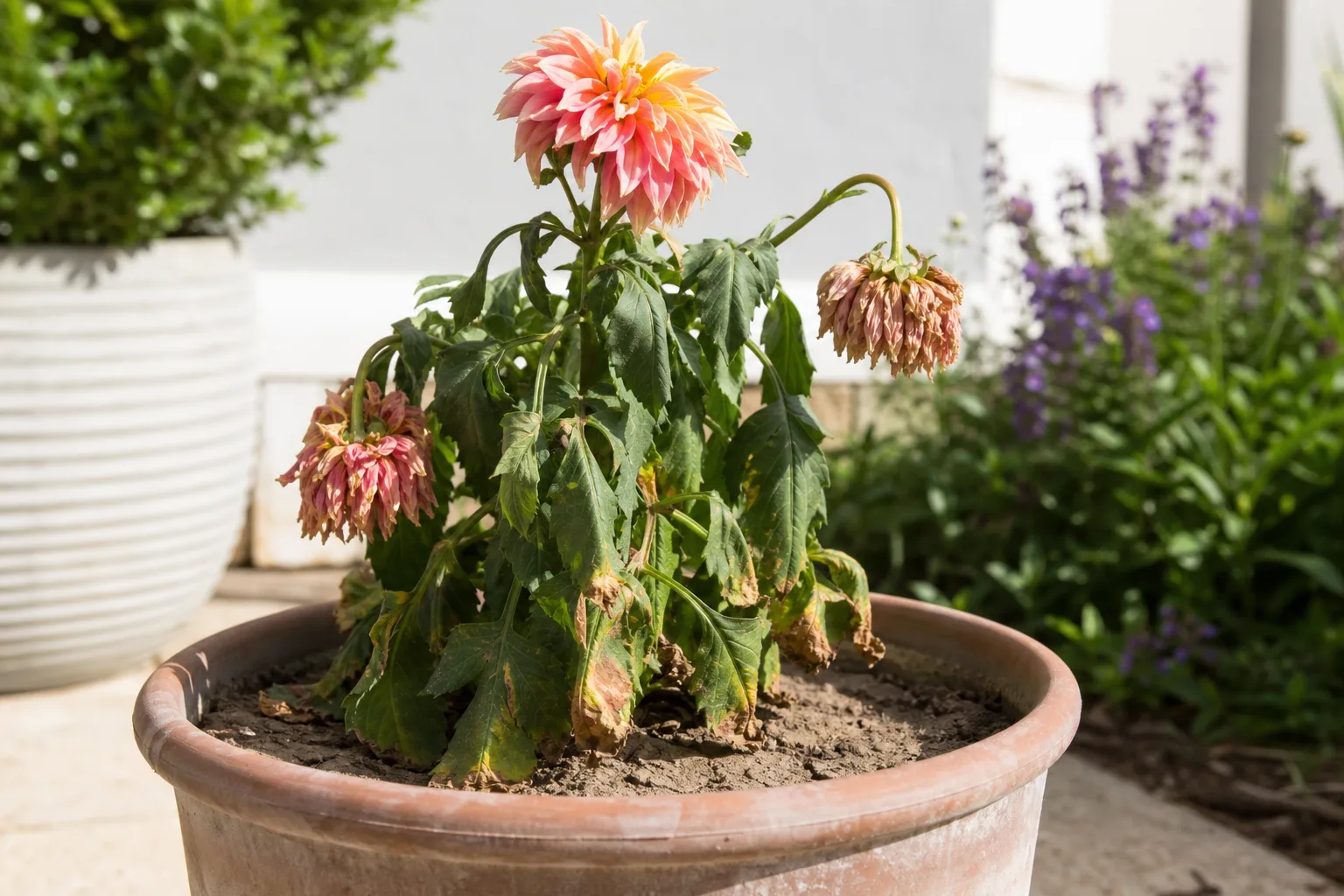
Underwatering on Dahlia shows up as morning wilt with dry soil 3–5 cm down, drooping flower heads, and crispy leaf edges. First step: probe the root zone, then soak slowly at the base until moisture reaches tuber depth.
Underwatering on Dahlia: Causes, Checks & Fixes
This guide covers underwatering on Dahlia. See also the general Underwatering guide, watering, and light pages for this plant.
Underwatering on Dahlia: Causes, Checks & Fixes
Quick answer
Underwatering on Dahlia means the root zone and tuber stay dry too long during active growth-not a single missed watering on a cool day, but a pattern where shallow passes or long gaps leave the plant thirsty while stems and blooms demand heavy moisture.
Dahlias in Dahlia light guide push large leaves and showy flowers through summer. They need deep, consistent moisture once established, yet their tubers also hate sitting wet-so many growers undercorrect after a rot scare and swing too far toward dryness. The result is drooping flower heads, crispy margins, and buds that never fully open.
First step: probe the soil 3–5 cm down near the stem base before you add water. If that zone is dry and the plant is limp in cool morning air, soak slowly at the base until moisture penetrates 20–25 cm. If soil is wet at depth, stop-more water will not fix wilt from root rot on Dahlia or heat droop.
What underwatering looks like on Dahlia
Drought stress on dahlias shows up in foliage, flowers, and soil together-not as a single yellow leaf in isolation.
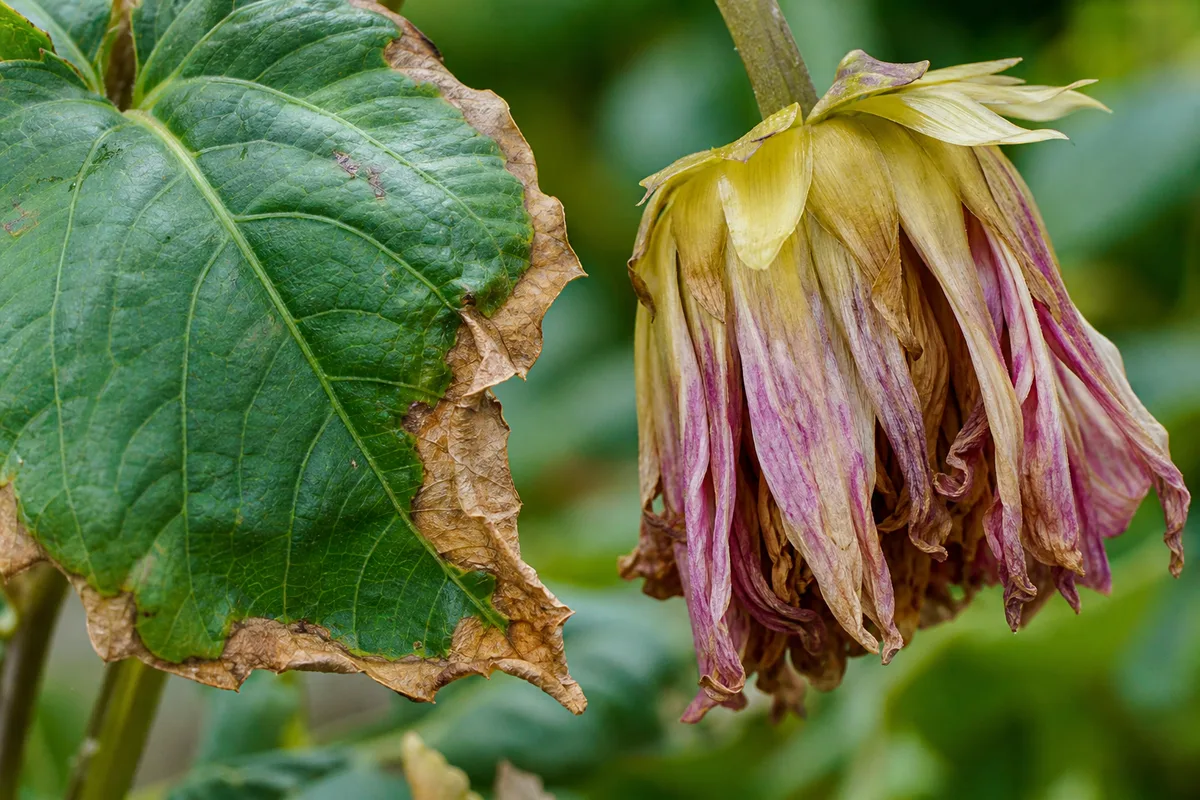
Crispy brown leaf edges and a wilted dahlia bloom on dry soil - probe 3–5 cm down before you soak the root zone.
Flowers and buds often fail first because blooms lose turgor faster than woody stems. Expect drooping or wilting flower heads, partially opened blooms, and buds that stall or abort before they expand. Underwatered plants may produce smaller or distorted flowers because petals cannot fill out without steady internal water pressure.
Leaves develop crispy brown edges, lower yellowing with a dry papery feel, and sometimes upward curling. New growth may look smaller or slower than on well-watered neighbors. Unlike soft yellow leaves on a waterlogged plant, drought yellowing feels dry and brittle, not limp and soggy.
Soil and containers tell the rest of the story. Surface mix may pull away from pot edges, look dusty, or crack in garden beds. Containers feel noticeably light when lifted. Water poured on very dry soil sometimes runs off the surface without soaking in-a sign the root ball has gone too dry.
Timing matters. Dahlias in hot sun often droop at midday even with adequate moisture-a temporary heat load, not always a call for more water. Some droop in the hot midday sun is normal. True underwatering usually shows morning wilt that does not recover until you irrigate, paired with dry soil at the probe depth.
Why Dahlia gets underwatered
Dahlias are thirsty during the growing season, but their watering needs change sharply by stage. That mismatch is the root of most underwatering cases.
Shallow or infrequent watering is the most common trigger. A quick sprinkle wets only the top few centimetres while the tuber and main roots sit dry 20–25 cm down. The plant may look green at the surface while the storage organ and feeder roots experience chronic drought. Oregon State University Extension notes that when dahlias droop, stress from lack of water at depth is a frequent cause-and that water should seep slowly and deeply into loose, well-drained soil.
Calendar watering without soil checks fails because dahlias use water faster in peak bloom, full sun, wind, and container culture than in mild spring weather. A twice-weekly schedule that works in May may leave July plants dry every afternoon. The RHS dahlia growing guide recommends keeping soil moist during active growth without waterlogging-moisture must match growth phase and climate, not a printed day of the week.
Container culture dries faster than in-ground beds. Small pots on hot patios can lose most of their moisture in one sunny afternoon. Gardeners who treat potted dahlias like in-ground plants-checking every few days instead of every morning in August-often discover underwatering only after buds drop.
Fear of tuber rot pushes the pendulum too far. After learning that dahlias hate wet feet-especially before sprouts emerge-some growers withhold water too aggressively once stems are up. Established plants in active bloom still need roughly 2.5 cm of water weekly from rain plus irrigation combined, scaled up for heat and wind. Underwatering during bloom reduces flower size and weakens tubers stored for next season.
Sandy or raised beds drain quickly and may need irrigation every two to three days in peak heat despite deep passes. Compacted clay can mislead in the opposite direction: the surface looks merely dusty while deeper zones hold moisture-but if the top 5 cm stays bone dry for days during bloom, roots still suffer.
Extreme heat and dry wind increase evaporation faster than roots can supply water, especially when plants are large and flowering heavily. Even sun-loving dahlias need supplemental irrigation during prolonged hot, dry spells.
How to confirm the cause
Work through these checks before you change your routine:
- Wilt timing - Is the plant limp in cool morning air, or only drooping at midday? Morning wilt plus dry soil equals drought. Midday droop with moist depth and overnight recovery often equals heat stress.
- Soil probe - Insert a finger, skewer, or trowel about 5 cm down near the stem. Dry at that depth during active growth confirms underwatering is plausible. Wet at depth with wilt means investigate rot or drainage instead.
- Depth check - After your last watering, wait 30 minutes and probe 10–15 cm. If still dry, your passes have been too shallow-that is chronic underwatering even if you water often.
- Pot weight - Lift containers when freshly watered and again when due. A very light pot with dry top soil confirms drought in pots.
- Leaf and flower texture - Crispy brown edges and dry yellow lower leaves fit drought. Soft yellow leaves on heavy wet soil fit overwatering on Dahlia.
- Recent weather - Several hot windy days without rain or irrigation make underwatering likely in containers regardless of your normal schedule.
If soil is damp 5 cm down, stems are soft at the base, or the mix smells sour, rule out overwatering and crown rot before soaking again. Adding water to rotting roots makes recovery harder, not easier.
First fix for Dahlia
Probe the root zone, then soak slowly at the base until moisture reaches tuber depth.
Move a hose or watering can to the stem base-not over open blooms-and apply water slowly enough that it infiltrates rather than running off compacted or very dry soil. Continue until the top 15–20 cm is evenly moist, or until excess runs freely from container drainage holes. Empty saucers within 30 minutes so the tuber zone does not sit in standing water.
For a container that has gone completely dry, a two-pass soak helps: a light first pass to rewet the surface, wait ten minutes, then soak thoroughly so the root ball absorbs water instead of shedding it down the pot sides.
Do not compensate with daily shallow sprinkles-that trains roots upward and leaves the tuber zone thirsty again within days. One proper deep soak, then a return to consistent depth-based checks, is the correct response.
Hold fertilizer until the plant looks turgid again. Feeding drought-stressed roots adds salt stress without fixing the underlying moisture deficit.
Step-by-step recovery
After the first deep soak, stabilize moisture over the next one to two weeks:
- Recheck in 24 hours - Probe again at 3–5 cm. If dry and the plant is still in active growth, repeat a deep base soak. If damp, wait.
- Adjust frequency, not depth - Match how often you water to your soil, container size, and weather. Peak-summer containers often need daily checks; in-ground loam may need two or three deep sessions weekly plus rain.
- Mulch in-ground plants - Apply 5–7 cm of shredded bark or straw, kept a few centimetres from the stem, to slow surface evaporation. OSU Extension recommends mulching to preserve soil moisture in dry conditions.
- Water early in the day - Base irrigation in morning lets roots take up moisture before peak heat. Avoid overhead sprinkling on open blooms when possible; wet flowers become heavy and can spot or break.
- Track rainfall - Use a simple gauge. Subtract weekly rainfall from your irrigation target so you do not underwater during dry weeks or overwater during wet ones.
- Remove dead tissue only after recovery - Trim fully crispy leaves and spent blooms once new growth looks firm. Do not strip the plant bare while it is still stressed.
If buds still fail to open after two weeks of consistent moisture, look for thrips, earwigs, or nutrition issues-but restore hydration first so you are not treating the wrong problem.
Recovery timeline
Mild dehydration often shows improvement within 24–48 hours after a proper deep soak: stems stiffen, leaves feel less papery, and drooping flower heads may lift if tissue is not already dead.
Crispy brown leaf edges and fully yellowed lower leaves will not revert to green-brown crispy tissue is dead, though new growth can be healthy after proper watering. Judge success by new leaves, firm stems, and buds that open fully-not by old damaged foliage.
Repeated drought cycles during bloom may take several weeks to fully overcome even after watering improves, because the plant redirects energy away from flower production toward root and leaf repair. Tubers stressed by chronic summer drought can emerge smaller the following season.
If the plant stays limp through cool mornings with wet soil at depth, or the stem base goes soft, underwatering is no longer the diagnosis-inspect for rot promptly.
Lookalike symptoms
Several dahlia problems mimic drought. Checking soil moisture and wilt timing separates them.
Midday heat wilt - Stems droop in afternoon sun but recover overnight while soil 5 cm down remains moist. Patience or light shade during extreme heat beats extra water.
Overwatering and root rot - Morning wilt with wet, heavy soil, soft yellow lower leaves, sour smell, or mushy stem base at the crown. More water worsens this pattern.
Magnesium deficiency - Interveinal yellowing on older leaves with green veins, often on alkaline soil, without the dry crispness of drought. Soil can be moist; Epsom salt or balanced feeding may help once hydration is stable.
Thrips and pest damage - Silvery scarring or distorted buds on otherwise well-watered plants. Extension troubleshooting guidance notes thrips are especially active in dry weather, so drought and pest pressure can overlap-check leaf undersides and buds closely.
Natural lower-leaf ageing - Older bottom leaves yellow and drop on healthy plants. This is gradual, not paired with dry soil throughout the root zone or collapsed blooms.
Mistakes to avoid
- Reacting to midday droop alone without a morning soil check-easy way to swing from drought to rot.
- Light daily sprinkles that never reach tuber depth while the calendar says you “watered every day.”
- Waiting for visible wilt before the first summer soak in containers-by then buds may already abort.
- Fertilizing before rehydrating drought-stressed roots.
- Overhead soaking open blooms in hot sun-damages flowers and encourages foliar disease without solving root-zone dryness.
- Assuming rain counted when a brief shower wet the mulch but did not penetrate 15 cm.
How to prevent underwatering next time
Build a depth-check habit tied to growth stage. During active growth and bloom, water when the top 3–5 cm dries-not when the whole pot is desiccated, and not on a fixed weekday regardless of weather.
Aim for deep, slow irrigation that wets 20–25 cm of soil in beds or runs freely from container drainage holes. Target roughly 2.5 cm of water weekly from rain plus irrigation combined, increasing during hot, dry, or windy bloom periods.
Check containers every morning in peak summer. In-ground plants in loam may need probing every two to three days; sandy soil and raised planters dry faster.
Mulch garden beds after soil warms. Group containers where you can monitor them daily rather than in a far corner of the patio.
Learn your plant’s morning versus midday pattern once, early in the season. That single observation prevents panic watering and panic withholding alike.
When to worry
Underwatering is urgent when:
- Stems stay limp through cool morning hours with dry soil at the probe depth
- Buds abort en masse during peak bloom after a hot dry spell
- A container goes completely dry on a windy day and does not recover overnight after soaking
- Repeated drought cycles weaken the plant heading into tuber dormancy
You can usually recover an established dahlia from drought if tubers and stem bases stay firm. If the stem softens at soil line while the mix is wet, or the plant collapses despite moist soil, stop treating it as underwatering and inspect for rot immediately.
Conclusion
Underwatering on Dahlia is a depth and consistency problem, not simply forgetting to water. Shallow passes, calendar schedules, and fear of rot leave tubers and roots dry while leaves and blooms demand steady moisture through the growing season.
Confirm drought with a morning soil probe, distinguish it from midday heat droop, and respond with one slow, deep soak at the base before adjusting your ongoing rhythm. Crispy leaves will not green again-watch new growth and open blooms for proof of recovery. Match your checks to containers, soil texture, and summer heat, and dahlias reward you with the full flowers they were bred to produce.
When to use this page vs other Dahlia guides
- Dahlia watering guide - Use for routine moisture checks before assuming underwatering is the main issue.
- Dahlia problems hub - Browse all 17 common issues on this species.
- Wilting on Dahlia - Different entry point when symptoms overlap with underwatering.
- Brown Tips on Dahlia - Different entry point when symptoms overlap with underwatering.
- Yellow Leaves on Dahlia - Different entry point when symptoms overlap with underwatering.