Wilting on Dahlia: Causes, Checks & Fixes
Quick answer
On outdoor dahlias, wilting usually means midday heat slump, dry soil at tuber depth, tuber rot in wet soil, or vascular wilt-not indoor light stress. First step: note time of day, probe soil 5 cm deep, and feel stem firmness at the crown before watering.
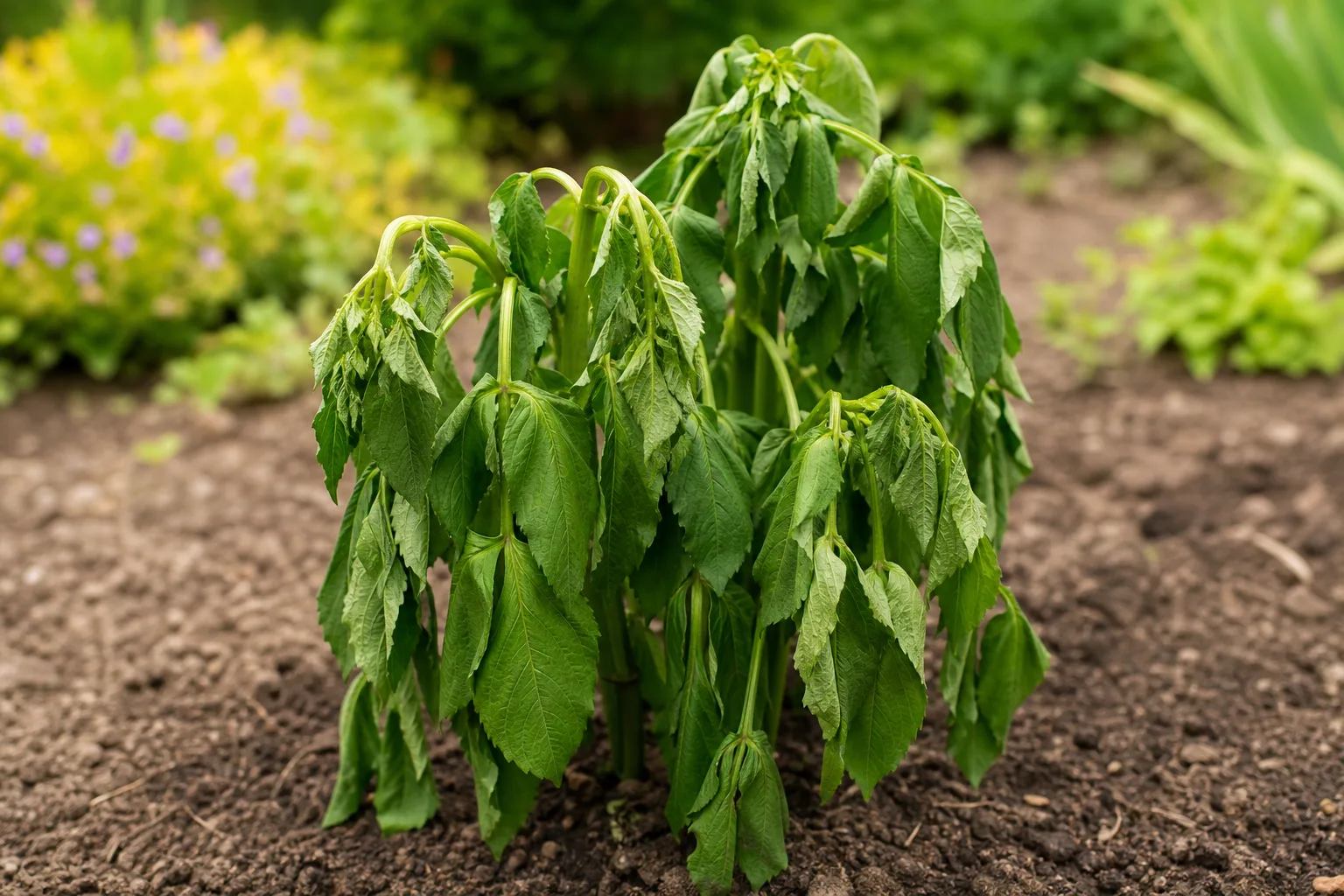
Wilting on Dahlia: Causes, Checks & Fixes
This guide covers wilting on Dahlia. See also the general Wilting guide, watering, and light pages for this plant.
Wilting on Dahlia: Causes, Checks & Fixes
Quick answer
Dahlia (Dahlia spp.) is an outdoor tuberous perennial grown in full sun for summer bloom-not an indoor foliage plant. When foliage wilts-loses turgor and looks spent rather than merely leaning-the cause is usually one of five patterns: midday heat slump, drought when soil is dry 5 cm down, tuber or crown rot in wet soil, stem breakage or borer damage, or vascular wilt disease.
First step: note the time of day, probe soil 5 cm (2 in) deep at the crown, and pinch the stem base for firmness. Afternoon wilt with moist depth and evening recovery on a hot day means wait, not water. Morning wilt with dry soil means deep soak at the base. Morning wilt with wet soil and soft yellow lower leaves means stop irrigation and inspect the tuber-do not add water. One-sided collapse with dark stem tissue at soil line may be verticillium-remove the plant.
For seasonal watering rhythm, see the dahlia watering guide. For leaning stems under heavy blooms, see drooping leaves on Dahlia.
Wilting vs. drooping on Dahlia - which page to use
| Symptom | What you see | Likely cause | Read next |
|---|---|---|---|
| Wilting | Leaves and stems lose turgor; plant looks collapsed or limp | Heat slump, drought, rot, vascular disease | This page |
| Drooping | Stems bow or lean; foliage may still look hydrated | Unstaked heavy blooms, gradual heat stress | Drooping leaves |
| Yellow leaves | Chlorosis with or without wilt | Senescence, wet rot, virus, nitrogen drain | Yellow leaves |
Wilting is the sharper emergency signal-especially morning collapse or wet-soil slump. Drooping often describes weight and posture; wilting describes the plant failing to hold water in its tissues.
What dahlia wilt looks like
On active dahlias, healthy leaves stand firm on hollow stems that pipe water from tuber roots to large blooms. Problem wilt shows the plant unable to maintain turgor-leaves hang limp, stems may kink, and the whole clump can look exhausted.
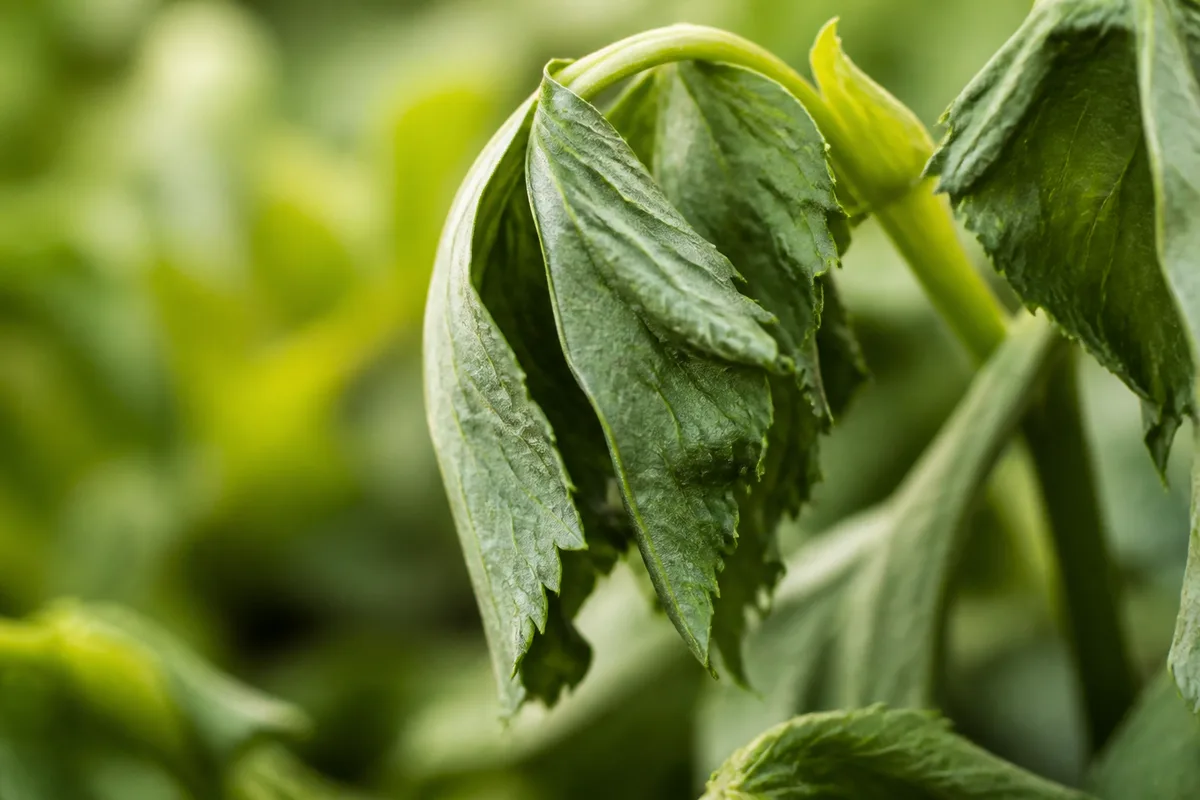
Wilting symptoms on Dahlia - compare with healthy tissue on the same plant.
Midday heat wilt (often normal)
In full sun on hot July or August afternoons, dahlias often fold and slump even when the root zone holds adequate moisture. Hollow stems lose water through leaves faster than roots can refill them-a temporary hydraulic stress growers call the midday slump. OSU Extension notes that some droop in hot midday sun is normal and that plants exhibiting stress often need water-but only after you confirm dry soil at depth, not from afternoon appearance alone.
Key sign: wilt appears mid-afternoon, soil is moist 5 cm down, and the plant recovers by evening or the next cool morning. No intervention beyond patience and mulch on exposed containers.
Drought wilt
When soil dries at tuber depth during peak bloom, leaves wilt from morning onward, often with crispy brown edges and smaller or aborted buds. Containers on hot patios desiccate in a single afternoon; in-ground sandy beds may need irrigation every two to three days in heat despite recent rain on the surface.
Key sign: dry soil 5 cm down plus persistent morning limpness. Recovery follows a deep base soak that wets 20–25 cm of root zone-not a light sprinkle.
Overwatering and tuber rot (paradoxical wilt)
Saturated soil excludes oxygen from feeder roots and tuber tissue. The plant cannot absorb water even though soil feels wet-classic paradoxical wilt. Lower leaves turn soft yellow, the crown may smell sour, and stems stay limp morning and night.
Pre-sprout rot shows no leaves at all-a planted tuber fails to emerge with unpleasant smell from the planting hole. Post-emergence rot may collapse one stem in a multi-stem clump before others fail.
Key sign: morning wilt + wet heavy soil + soft lower leaves. Stop water immediately; compare overwatering and root rot.
Verticillium and Fusarium vascular wilt
Soilborne fungi including Verticillium dahliae and Fusarium oxysporum colonize xylem and block water transport. Unlike heat wilt, vascular wilt often starts on one side of the plant or a single stem, persists in cool weather, and does not recover overnight despite moist soil. PNW Plant Disease Handbook guidance on dahlia wilt describes darkened vascular stem tissue near soil level, brown-black root streaks, and top growth that wilts and dies back.
These infections are not fixable by watering adjustments. Remove affected plants, do not compost stems, and avoid replanting susceptible crops in that spot for years. Send suspicious samples to your local extension office for confirmation.
Stem damage and breakage
Hollow dahlia stems snap or crush under wind, stakes driven too close to tubers, or stem borer entry holes. One stem may wilt suddenly while neighbours look fine. Inspect the base for clean breaks, sawdust-like frass, or slug damage on young shoots.
Why dahlias wilt
Dahlias move large volumes of water through hollow stems to support broad compound leaves and open blooms that can exceed 25 cm (10 in) across on dinnerplate types. That plumbing is efficient in cool morning hours but stressed when evaporation outpaces root uptake in afternoon heat-or when roots themselves have failed underground.
Tuber biology raises the stakes. The storage organ fuels sprouting before a full root system exists. Cold wet soil at planting rots tubers before leaves appear. During growth, dahlias need consistent moisture without waterlogging-the RHS warns they won’t thrive in very dry conditions and may rot in waterlogged soil.
Full sun (six or more hours daily) drives both bloom quality and heat load. Shade-grown dahlias wilt less in midday heat but produce weaker stems and fewer flowers-so the trade-off is real on sunny borders and hot patios.
Container culture amplifies swings: pots dry faster than garden beds but also trap water when drainage fails. A black nursery pot on a deck can wilt from drought by noon and rot from saucer water by autumn if checks are inconsistent.
How to confirm the cause
Work through these checks in order. One honest soil probe and time-of-day note prevents most watering mistakes.
Soil moisture at tuber depth
Press a finger or skewer 5 cm (2 in) deep at the stem base-not just the mulch surface. Dry at depth during active growth supports drought diagnosis. Wet, sticky, or heavy soil with morning wilt supports rot investigation.
During pre-sprout stage, soil should be damp, not saturated. OSU Extension advises not watering after outdoor planting until the first two leaves are present unless soil was genuinely dry at planting-only then water once lightly.
Time-of-day check
| Observation | Soil at 5 cm | Likely diagnosis |
|---|---|---|
| Afternoon wilt, evening recovery | Moist | Heat wilt - wait |
| Morning wilt | Dry | Drought - deep soak |
| Morning wilt | Wet, heavy | Rot / overwatering - stop water |
| One-sided wilt, cool day | Any | Vascular wilt or stem injury - inspect |
| No sprouts 3+ weeks, sour smell | Wet | Pre-sprout tuber rot - dig tuber |
Tuber and root inspection
When wet-soil wilt persists, stop irrigation and gently expose the crown:
- Firm white or tan tuber flesh with healthy eyes - rot may be early; dry down and improve drainage
- Mushy brown tissue, hollow neck, or sour smell - advanced rot; see root rot salvage thresholds
- Dark streaks in stem vascular tissue at soil line - suspect verticillium; do not store tubers with healthy stock
Decision table - drought vs. heat vs. rot vs. disease
| Pattern | Whole plant? | Morning state | Soil | First action |
|---|---|---|---|---|
| Heat slump | Usually yes | Perky | Moist at depth | Wait; mulch pots |
| Drought | Yes | Limp | Dry 5 cm down | Deep soak at base |
| Paradoxical rot | Often yes | Limp | Wet | Stop water; inspect tuber |
| Verticillium | Often one-sided | Limp, no recovery | Moist | Remove plant; don’t compost |
| Stem break | One stem | Sudden | Varies | Cut above break; stake |
The first fix to try
Before adding or withholding water, record time of day and probe soil 5 cm deep at the crown.
That single triage step prevents the two most common errors: drowning a heat-stressed plant in afternoon panic, and pouring water onto rotting roots because leaves look thirsty.
- Dry soil + morning wilt → deep soak at the base until moisture penetrates 20–25 cm; empty saucers on containers
- Moist soil + afternoon-only wilt → no water today; recheck tomorrow morning
- Wet soil + morning wilt → stop all irrigation; inspect crown firmness
- One-sided wilt with dark stem base → remove affected plant; do not compost
Do not fertilize, repot, or divide while wilt cause is unknown. Stressed dahlias need diagnosis first.
Step-by-step recovery
Dry soil, firm stems
- Water slowly at the base until soil wets 20–25 cm deep-not a surface sprinkle
- For severely dry containers, apply a light pass to rewet the surface, then soak thoroughly ten minutes later if runoff was an issue
- Mulch exposed pot surfaces to slow evaporation
- Expect visible perk-up within 24–48 hours if tubers stayed firm
Wet soil, soft lower leaves
- Stop irrigation immediately
- Improve drainage-clear blocked holes, empty saucers, divert runoff from low spots
- Let soil dry toward moist, not soggy over one to two weeks
- Lift and inspect if slump worsens; trim only firm tissue with sterile tools per root rot guidance
Heat wilt only
- Confirm evening recovery and moist depth
- Add afternoon shade cloth on exposed containers if wilt is severe daily-not less sun for in-ground bloom beds unless plants are failing entirely
- On extreme heat days when soil temperature exceeds 35°C (95°F), OSU Extension recommends targeted base watering to cool roots-distinct from routine scheduling
Suspected verticillium
- Remove the entire plant including roots
- Do not compost affected material unless hot-composting above pathogen kill temperatures
- Avoid replanting dahlia or other susceptible hosts in that soil for several years
- Use only healthy firm tubers for future stock
Recovery timeline and success signs
| Cause | Typical recovery window | Success signal |
|---|---|---|
| Heat slump | Hours to overnight | Evening perk-up, firm stems |
| Mild drought | 1–2 days after deep soak | New leaf expansion, bud opening |
| Early overwatering | 1–2 weeks dry-down | Yellowing stops; new growth firm |
| Advanced tuber rot | Uncertain | Firm tissue after trim only |
| Vascular wilt | None | N/A - remove plant |
Judge progress by new growth and morning firmness, not by whether old wilted leaves fully rehydrate. Lower leaves that turned soft yellow from rot rarely green up again.
Escalate urgently if the crown feels mushy, the whole plant stays limp through a cool morning in wet soil, or vascular streaking spreads after a dry-down attempt.
What not to do
- Do not water every afternoon because leaves fold in sun-check morning soil first
- Do not keep watering wilted plants in wet soil-paradoxical wilt means roots are failing
- Do not fertilize a collapsed dahlia before diagnosing moisture and tuber health
- Do not overhead sprinkle open blooms to “cool” the plant-weights flowers and invites foliar issues; water at the base
- Do not store wilted tubers with healthy winter stock-rot spreads in storage
- Do not compost verticillium- or rot-affected stems without hot composting
Dahlias are listed as toxic to cats and dogs by the ASPCA-relevant if pets dig near lifted tubers during inspection.
How to prevent wilting next season
Spring planting: soil slightly moist at planting; water once if dry, then hold until two leaves show. Tubers in cold wet spring soil rot before you see green.
Active growth and bloom: aim for roughly 2.5 cm (1 in) of water per week from rain plus irrigation, applied deeply at the base per the dahlia watering guide. Check containers every morning in peak heat.
Drainage: amend heavy clay, avoid low spots, never leave saucers full, stake tall cultivars before rain-loaded blooms bow stems into wet soil.
Fall: stop irrigation when foliage dies; cure tubers before storage. Continuing moisture on dormant tubers invites storage rot.
Disease prevention: rotate planting sites when possible, destroy affected stock promptly, and buy firm healthy tubers from reputable sources.
When to worry - and what to read next
| Situation | Action |
|---|---|
| Evening recovery after hot afternoon | Normal heat slump - monitor |
| Morning wilt, dry soil | Underwatering + watering guide |
| Morning wilt, wet soil | Overwatering + root rot |
| Stems lean under blooms | Drooping leaves staking |
| One-sided vascular streaking | Remove plant; extension sample |
| Whole-season culture | Dahlia overview |
Recommendations were cross-checked against OSU Extension FS-95, the RHS dahlia growing guide, WSU Extension dahlia pamphlet, PNW Plant Disease Handbook dahlia wilt, and LeafyPixels dahlia watering and overview guides. Salvage thresholds vary by cultivar and pathogen-contact your local extension office when whole beds collapse.
When to use this page vs other Dahlia guides
- Dahlia watering guide - Use for routine moisture checks before assuming wilting is the main issue.
- Dahlia problems hub - Browse all 17 common issues on this species.
- Underwatering on Dahlia - Different entry point when symptoms overlap with wilting.
- Overwatering on Dahlia - Different entry point when symptoms overlap with wilting.
- Root Rot on Dahlia - Different entry point when symptoms overlap with wilting.