Drooping Leaves on Dahlia: Causes, Checks & Fixes
Quick answer
On outdoor dahlias, drooping usually means unstaked heavy blooms, midday heat wilt, underwatering, or tuber rot from wet soil-not indoor light stress. First step: note time of day, feel soil 5 cm deep, and check whether stems lean from weight while roots are firm.
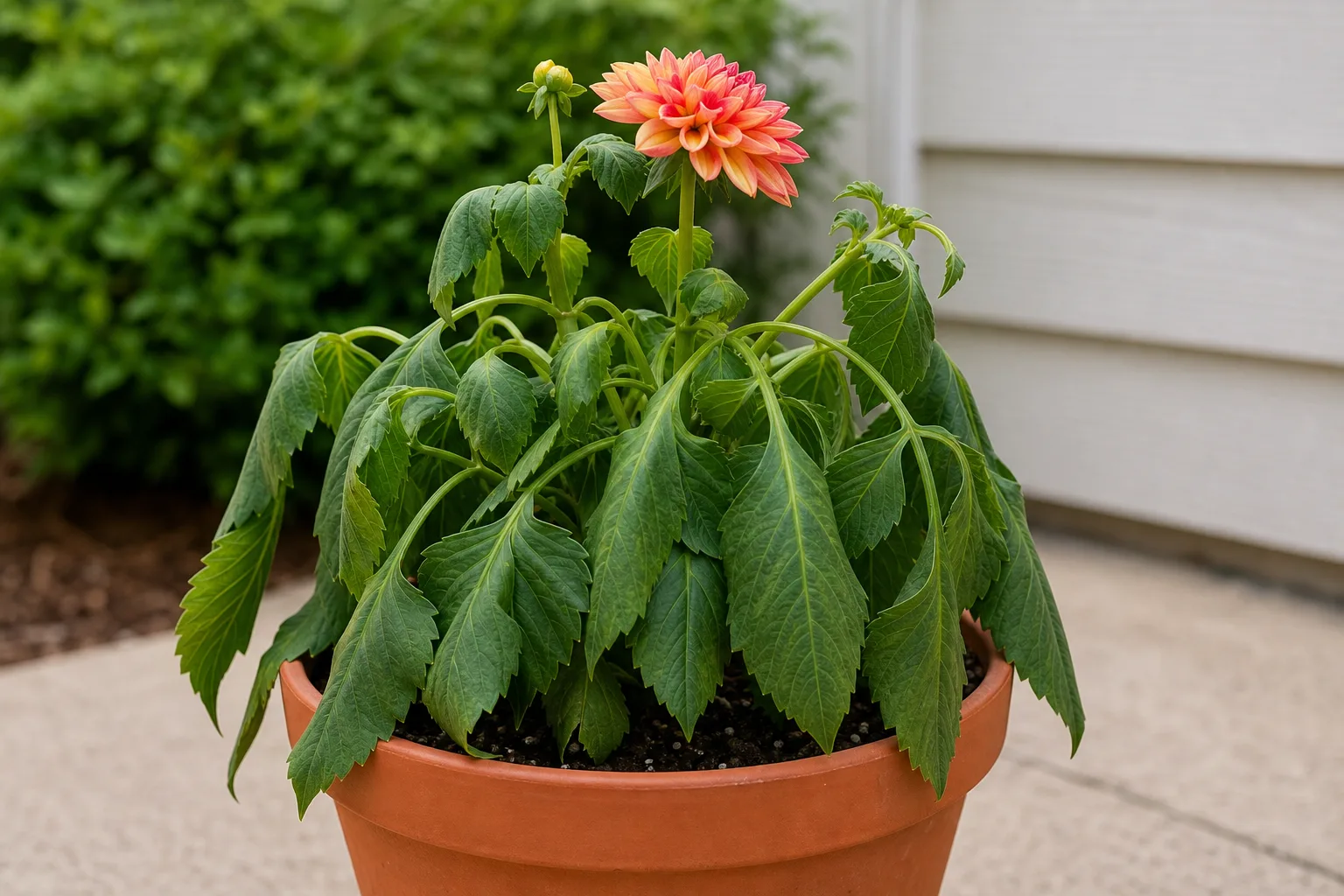
Drooping Leaves on Dahlia: Causes, Checks & Fixes
This guide covers drooping leaves on Dahlia. See also the general Drooping Leaves guide, watering, and light pages for this plant.
Drooping Leaves on Dahlia: Causes, Checks & Fixes
Quick answer
Dahlia (Dahlia spp.) is an outdoor tuberous perennial grown in full sun for heavy summer bloom-not an indoor foliage plant. When leaves and stems droop or lean, the cause is usually one of four patterns: unstaked stems overloaded by large wet blooms, midday heat wilt in containers or hot beds, underwatering when soil is dry 5 cm down, or tuber or crown rot when soil stays wet and lower leaves yellow.
First step: note the time of day, press soil 5 cm (2 in) deep at the base, and look at whether stems bow from weight while the crown stays firm. Moist soil plus evening recovery on a hot afternoon points to heat stress, not drought. Moist soil plus morning droop and soft yellow lower leaves points to rot-do not add water. Dry soil plus limp foliage in the morning means deep soak at the base. Stems arching under dinnerplate blooms with firm roots means stake now, not water.
What drooping leaves look like on Dahlia
On healthy active dahlias, hollow stems carry pairs of compound leaves and hold blooms that can exceed 25 cm (10 in) across on dinnerplate cultivars. A little flex in tall stems is normal; problem drooping is when the plant looks unable to hold itself up or the slump worsens instead of recovering.
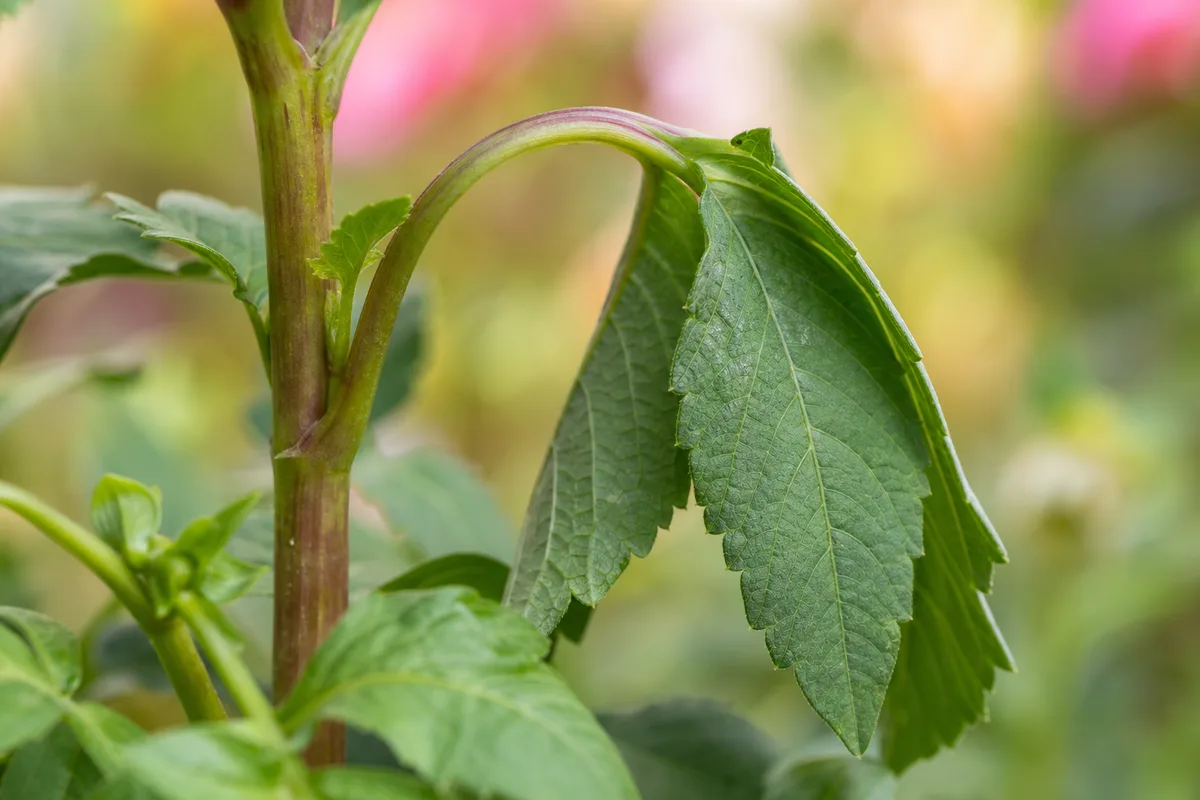
Drooping Leaves symptoms on Dahlia - compare with healthy tissue on the same plant.
Common patterns:
- Whole stems arch horizontally under heavy flower heads, often after rain or wind, while lower leaves stay green and soil is moist-classic staking failure
- Leaves and upper stems fold midday on sunny days, then straighten by evening while soil is damp at depth-heat wilt or temporary hydraulic stress
- Limp foliage from morning onward, dry soil 5 cm down, sometimes crispy leaf edges-underwatering or shallow irrigation
- Progressive droop day and night, wet soil, soft yellow lower leaves, sour smell at crown-tuber or crown rot (paradoxical wilt)
- One-sided flop after slug damage, stem borer holes, or physical breakage near the base-mechanical or pest injury
- Sudden collapse across neighbouring plants with darkened stem tissue at soil line-possible vascular wilt; discard affected stock
Drooping describes leaning, folding, or sagging that may leave foliage intact. Wilting on dahlias often looks more collapsed, with tissue losing turgor faster-see the wilting guide when the plant looks spent rather than merely heavy.
Why Dahlia gets drooping leaves
Inadequate staking for heavy blooms
Dahlia stems are hollow and brittle. Large decorative and dinnerplate flowers hold rainwater like a sponge, adding sudden weight at the top. The RHS notes that tall types and large blooms need support to prevent stems snapping or lodging. Border and mignon dahlias under 60 cm (2 ft) with small flowers often stand alone; anything taller than 90 cm (3 ft) or carrying very large blooms should be staked from planting.
Wind compounds the problem on exposed sites. A hollow stem that survives calm weather can kink or snap when a gust catches a water-heavy bloom. This cause is especially common in peak bloom-July and August in temperate gardens-when flower size and irrigation demand peak together.
Tuber or crown rot from wet soil
Dahlias store energy in underground tubers attached to a central crown. Soil that stays cold and saturated after planting, or waterlogged during growth, excludes oxygen from roots. Feeder roots fail, and the plant cannot move water upward-so leaves droop despite wet soil. Lower leaves often turn soft yellow, and the stem base may feel mushy.
OSU Extension warns that tubers are especially rot-prone before the first two leaves appear and that soil should stay consistently moist but never soggy during active growth. Heavy clay, low spots, and pots without drainage multiply this risk. This pattern overlaps with overwatering on Dahlia and root rot-treat wet-soil droop as urgent.
Heat and drought stress-especially in containers
Dahlias transpire heavily through large leaf area and open blooms. On hot, windy afternoons, roots may not refill hollow stems as fast as leaves lose moisture. The plant reduces internal pressure and folds slightly-a temporary slump that recovers by evening when soil cools and roots catch up. Containers on sunny patios dry faster than in-ground beds and show this pattern more often.
True drought droop differs: soil is dry 5 cm down in the morning, leaf edges may crisp, and buds stall. Sandy beds and missed irrigation during bloom week produce the same look. The dahlia watering guide separates midday heat wilt from underwatering and rot.
Underwatering during active growth
Established dahlias need deep, consistent moisture when the top 2.5–5 cm (1–2 in) dries during active growth-roughly 2.5 cm (1 in) of water per week from rain plus irrigation, more in heat, per OSU Extension. Light surface sprinkles leave the tuber zone dry while the top looks damp; the plant droops from depth thirst even when you watered “yesterday.”
Less common causes
Transplant shock after moving started plants into the garden can cause temporary limpness for several days while roots re-establish-usually improves with shade cloth for a week and steady moisture, not extra fertilizer.
Slug or snail damage at the stem base weakens one side; look for slime trails and chewed tissue near soil level.
Verticillium or Fusarium wilt (soilborne fungi) causes vascular browning near the soil line and one-sided or whole-plant collapse that does not recover with watering. The PNW Plant Disease Handbook recommends removing affected plants and not composting infected material unless hot composting.
How this differs from wilting on Dahlia
| Pattern | Drooping leaves | Wilting |
|---|---|---|
| Timing | Often worse midday; may recover by evening | Often persistent morning to night |
| Soil | Variable-dry, moist, or wet depending on cause | Frequently wet (rot) or very dry (drought) |
| Stem feel | Bends under bloom weight; crown often firm | Soft base, collapse, or sudden flagging |
| First fix | Stake, deep soak, or stop water based on check | Moisture correction or rot triage-higher urgency |
Use the wilting page when tissue collapses sharply or crown tissue softens. Use this page when stems lean under blooms or foliage folds gradually with a clear environmental trigger.
How to confirm the cause - step-by-step checklist
Work through these checks in order:
- Time of day - Is it mid-afternoon on a hot sunny day? Wait until evening. Recovery with moist soil means heat wilt, not drought.
- Soil moisture at 5 cm - Dry: drought branch. Wet and heavy: rot branch. Moist at depth with midday-only droop: heat or staking.
- Bloom weight - Are dinnerplate or large decorative flowers open or rain-soaked? Do stems arch from the flower head downward? Staking branch.
- Crown and lower leaves - Soft yellow lower leaves, sour smell, mushy stem base: stop watering and inspect tuber-rot branch.
- Container vs. in-ground - Pots dry faster; confirm drainage holes are open and saucers are not holding water.
- Physical damage - Holes in stem, slug grazing, wind snap at a joint: mechanical repair and stake, not more irrigation.
- Neighbour pattern - One plant vs. several in the same wet bed: single-plant stake or pest vs. drainage failure.
- Recovery test - After a deep soak (if dry) or after evening cool-down (if heat), does new growth look firm by next morning?
Quick pattern guide
| What you observe | Likely cause | First action |
|---|---|---|
| Arches under large blooms, firm crown, moist soil | Staking failure | Install stake; tie main stem loosely |
| Midday fold, evening recovery, moist soil | Heat wilt | Mulch, optional afternoon shade in pots; do not overwater |
| Morning limp, dry soil 5 cm down | Underwatering | Deep soak at base until moisture reaches 20 cm |
| All-day droop, wet soil, yellow lower leaves | Tuber or crown rot | Stop water; inspect crown; see root rot |
| Limp after transplant 3–5 days | Transplant shock | Light shade, steady moisture, wait |
| Collapse with dark stem at soil line | Vascular wilt | Remove plant; do not compost |
First fix for Dahlia
Run the three-point check: time of day, soil 5 cm deep, and stem load from blooms-then apply exactly one correction.
If stems bow under heavy flowers and soil is moist with a firm crown, drive a sturdy stake 15–30 cm (6–12 in) from the base (or use a corral of three canes) and tie the main leader loosely without crushing the hollow stem. Longwood Gardens recommends placing stakes before planting when possible; late stakes go in carefully to avoid tuber damage.
If soil is dry in the morning and leaves feel limp, water deeply at the base until moisture penetrates 20–25 cm (8–10 in)-not a light sprinkle on leaves.
If soil is wet and the plant droops around the clock with yellowing lower leaves, stop all irrigation and expose the crown slightly for airflow. Do not fertilize. Inspect tuber firmness before the next action.
If droop appears only mid-afternoon and the plant recovers by dusk with moist soil, do not add water-that is heat stress. Mulch containers and ensure roots are not baking against hot pavement.
Make one correction at a time and read the plant’s response over three to seven days of warm weather.
Step-by-step recovery
Staking a floppy bloom-heavy plant
- Drive a 1.2–1.8 m (4–6 ft) stake 30–45 cm (12–18 in) into soil on the windward side, or set a tomato cage at planting depth if the plant is still small enough.
- Tie the central stem first with soft twine in a loose figure-eight.
- Add ties every 30–40 cm (12–15 in) as stems elongate; support heavy side branches with sling ties to the main stake.
- Remove ties that constrict thickened stems; re-tie higher as needed through bloom.
Wet-tuber or crown rot droop
- Stop watering until the top 5 cm dries unless plants are in active growth on genuinely dry soil elsewhere in the bed.
- Gently clear mulch from the crown for airflow.
- Scratch soil at the base-firm tuber tissue may recover once soil oxygen returns; mushy crown needs lifting and inspection per root rot.
- Improve drainage for next season: raised bed, grit amendment, or relocation-see the soil guide.
Heat wilt in containers
- Move pots off hot surfaces (concrete, black asphalt) if roots are overheating.
- Mulch the soil surface to slow evaporation.
- Water early morning deeply when the top 5 cm is dry-avoid panic watering at peak heat when roots are least active.
- Provide temporary afternoon shade only if droop becomes daily damage, not a one-hour fold.
Underwatering droop
- Run a slow soak at the stem base for each plant or use soaker hose until a probe 15 cm down shows moisture.
- Empty saucers on containers after watering.
- Increase frequency during peak bloom and heat-containers may need daily checks.
Recovery timeline
| Situation | Realistic expectation |
|---|---|
| Unstaked flop, firm roots | Perk visible within hours after staking; bent stems may not straighten fully |
| Midday heat wilt | Evening recovery same day; no leaf damage if pattern is occasional |
| Drought stress after deep soak | Firmness returns 24–48 hours; crisp edges stay on damaged leaves |
| Mild crown stress from brief overwatering | Improvement 1–2 weeks after soil dries if tuber stays firm |
| Advanced tuber rot | Unlikely to recover-replace tuber and fix drainage |
| Transplant shock | 5–10 days to stable turgor with shade and even moisture |
Judge success by upright new growth, firm stems above ties, and new buds opening-not by older leaves that already folded.
Lookalike symptoms
Leggy shade growth produces weak stems that flop easily-but the primary issue is too little direct sun, not missing stakes alone. Stems are thin with wide leaf gaps. See not enough light and the light guide.
Botrytis on spent blooms can weigh down flower heads and infect stems in humid weather-remove spent flowers to the next leaf joint per the dahlia overview.
Nitrogen-heavy feeding produces lush soft tissue that lodges before bloom weight arrives-avoid high nitrogen during stem elongation; see the fertilizer guide.
What not to do
Do not treat outdoor dahlias like houseplants: bright indirect light and “water when the surface dries” without depth checks fail on tuber crops that need six to eight hours of direct sun and deep irrigation.
Do not fertilize a drooping dahlia before you know whether soil is dry, wet, or rot-affected-salts stress roots that are already failing.
Do not add water when soil is wet and the plant droops morning and night-that deepens rot.
Do not stack repotting, heavy pruning, and pesticide on the same day as a major care correction.
Do not compost plants suspected of vascular wilt-discard stems and avoid replanting dahlias in the same spot without soil renewal.
How to prevent drooping leaves next time
Stake at planting for any cultivar expected to exceed 90 cm (3 ft) or carry large blooms-place stakes before tubers when possible per Longwood Gardens. Use corral stakes or row twine for cutting beds.
Match watering to growth stage: minimal irrigation until two leaves after planting, then consistent deep moisture when the top 5 cm dries during bloom per the dahlia watering guide. Mulch after soil warms, but keep mulch back from the crown early in the season.
Plant in full sun with free-draining soil-six to eight hours of direct light and amended beds per the dahlia overview and soil guide.
Deadhead weekly through peak season to reduce rain-soaked spent blooms weighing stems down.
Label cultivars so you learn which need aggressive staking versus self-supporting border types.
When to worry
Treat droop as urgent if the crown softens, odour is sour, drooping spreads to all stems by morning despite moist soil, or dark vascular streaks appear at the soil line.
Contact your local extension office if multiple plants in a well-drained bed collapse the same week-possible soilborne wilt or drainage failure.
Pet note: Dahlias are toxic to cats and dogs; tubers are the most concentrated part. Wear gloves when handling damaged crown tissue if sap irritates your skin.
Related Dahlia guides
- Dahlia overview - tuber biology, staking, deadheading, full sun
- Dahlia watering - drought vs. rot, container rhythm, midday wilt
- Dahlia light - sun hours, heat protection
- Overwatering on Dahlia - wet-soil paradox and tuber inspection
- Root rot on Dahlia - crown mush and saveability
- Wilting on Dahlia - sharp collapse vs. gradual droop
Related tool
Use the Plant Problem Diagnosis Tool to narrow causes for drooping leaves on this plant before changing multiple variables at once.