Dahlia Fertilizer: When, How, and Mistakes to Avoid
Dahlia Fertilizer: When, How, and Mistakes to Avoid
Dahlia Fertilizer: When, How, and Mistakes to Avoid
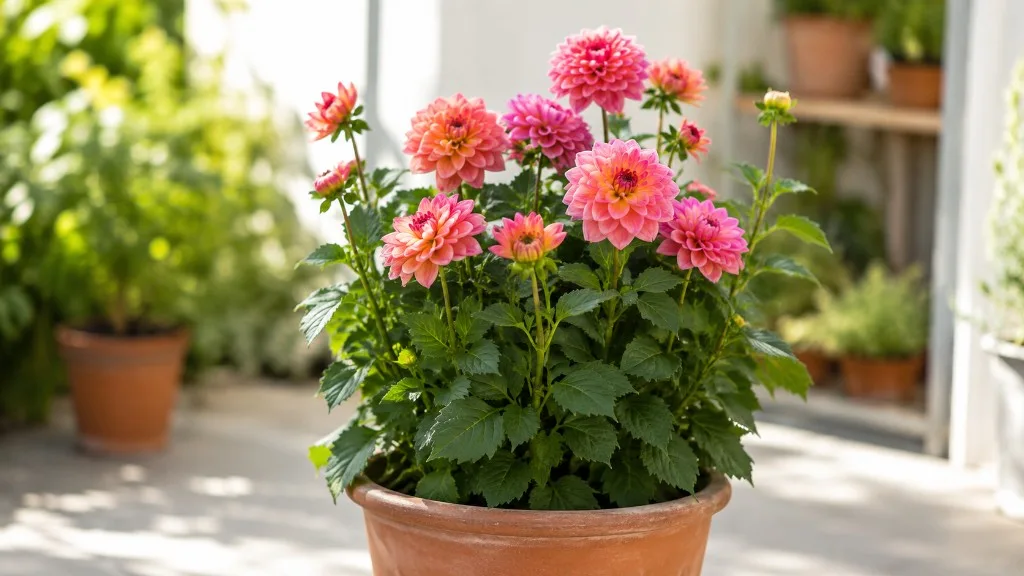
Dahlia fertilizer decisions are less about finding a magic product and more about steering a heavy-feeding plant toward flowers instead of foliage. Dahlias are grown for show-stopping blooms - dinnerplate disks, cactus forms, pompons, and decorative doubles that can carry a border or patio from midsummer through first frost. They build all of that floral mass from stored energy in the tuber plus whatever nutrients the root zone supplies during the growing season. Feed with too much nitrogen, start too early, or keep pouring on fertilizer while the plant should be ripening tubers for storage, and you get the classic failure mode: tall, dark green plants with thick stems, abundant leaves, and disappointing bud counts.
The practical goal for most home growers is straightforward: wait until shoots are established, then use a low-nitrogen, bloom-focused formula where the first NPK number is roughly half or less of the phosphorus and potassium numbers - ratios like 5-10-10 or 10-20-20. Apply on a steady schedule through peak bloom - every three to four weeks in garden beds, every two to three weeks in containers - and stop fertilizing four to six weeks before your average first frost, typically late August or early September in many temperate climates. Water onto moist soil, never onto dry roots. Organic amendments like composted manure at planting plus synthetic bloom boosters during the season work well together; what matters is keeping nitrogen restrained once the plant shifts from building structure to setting buds.
This guide covers why dahlias need bloom-focused feeding, when to start and stop, how much to use, organic versus synthetic trade-offs, container versus in-ground schedules, and the mistakes that cost more blooms than skipping a month ever would.
Why Bloom-Focused Feeding Matters for Dahlias
Dahlias are heavy feeders relative to many ornamentals, but they are also nitrogen-sensitive. Nitrogen drives vegetative growth; phosphorus supports root development and triggers flower bud formation; potassium strengthens stems and improves drought tolerance during heavy bloom. The three macronutrients appear on fertilizer labels as a three-number series such as 5-10-10, representing nitrogen (N), phosphorus (P), and potassium (K) by weight.
Swan Island Dahlias recommends fertilizers where the first component is half or less than half of the second two components - examples include 4-10-7, 5-10-10, and 8-16-16 (Swan Island Dahlias - Fertilizing Tips). Proven Winners echoes the same principle with a roughly 1-2-2 NPK bloom booster applied monthly after the initial waiting period (Proven Winners - Dahlia Growing Guide).
Think of feeding as fuel for the bloom engine - not a rescue for a dahlia in too much shade, waterlogged soil, or fighting disease. Fix light, drainage, and water first, then add nutrients on a conservative bloom-focused schedule. Container plants lose nutrients faster than in-ground beds; match the schedule to the root zone.
When to Fertilize Dahlias: From Sprouts to Bud Set
Timing separates successful dahlia feeding from the two most common beginner errors: fertilizing at planting and using high-nitrogen all-purpose feeds through the entire season. Dahlias emerge from tubers with stored carbohydrates that fuel the first weeks of growth. Adding concentrated fertilizer before roots are active and shoots are established risks root burn on tender new tissue and pushes soft, leggy growth that snaps in wind or rain.
The feeding window opens when the plant has built enough leaf area to process nutrients safely and begins shifting metabolic priority toward reproductive growth - bud set and bloom. That transition does not happen on a fixed calendar date; it follows shoot height, leaf count, and local weather. A cool, wet spring delays the window; a warm early season advances it.
The 30-Day Wait After Planting
Do not fertilize at planting time. Focus instead on well-draining soil, adequate moisture, and soil temperature around 60°F (15°C) before tubers go in the ground, as OSU Extension recommends. Many experienced growers work composted steer or cow manure into the bed before planting - a safe, slow-release organic base that does not shock roots. That pre-plant amendment is not the same as post-emergence feeding; it supplies background nutrition without the salt spike of concentrated soluble fertilizer on dormant tubers.
The first commercial fertilizer application should come roughly 30 days after planting, or when shoots reach 4 to 6 inches (10 to 15 cm) tall with several sets of true leaves. The RHS dahlia guide advises waiting until plants are established before feeding concentrated fertilizer. Below that threshold, the plant is still running on reserves; above it, a gentle bloom-focused feed supports structure without overwhelming young roots.
Some growers apply one diluted balanced feed - such as 20-20-20 at half strength - when the plant reaches about 12 inches (30 cm) to support early leaf and stem development, then switch to low-nitrogen bloom booster as buds form. Others go straight to 5-10-10 from the first feed. Both approaches work if nitrogen stays restrained before bud set. What fails consistently is starting with high-nitrogen all-purpose products like standard Miracle-Gro formulations and never switching - Longfield Gardens and Swan Island Dahlias both caution that all-purpose high-nitrogen feeds produce lush foliage at the expense of flowers.
Feeding Through Bud Set and Peak Bloom
Once the first feed is down, maintain a steady, moderate supply of phosphorus and potassium through bud set and peak bloom. Bud set - when rounded buds form in leaf axils - is when phosphorus availability matters most. Inconsistent feeding produces uneven bloom cycles: a flush, then a gap, then another flush if conditions improve. Through July and August, continue your regular schedule without increasing concentration. Deadheading spent flowers redirects energy to new buds; fertilizer supplies the raw materials for continuous production.
| Growth phase | Plant signal | Feeding action |
|---|---|---|
| At planting | Tuber in soil, no shoots | No fertilizer; compost/manure only if pre-amended |
| Weeks 1–4 | Shoots emerging, under 4–6 inches | Hold; plain water only |
| Early growth | 6–12 inches, leaf development | First low-N feed (5-10-10 or equivalent) |
| Bud set | Rounded buds visible in axils | Continue low-N on regular schedule |
| Peak bloom | Multiple open flowers, cutting | Maintain schedule; do not increase dose |
| Late summer | Bloom slowing, 4–6 weeks before frost | Stop or switch to 0-10-10 once |
The table is a framework, not a rigid law. A container dahlia on a hot patio drying out daily needs more frequent feeding than an in-ground plant in a cool coastal garden. Watch the plant: sturdy stems, deep green but not dark jungle green foliage, and steady bud production mean your timing is right.
Best Fertilizer Type for Dahlias
The best dahlia fertilizer for most gardens is a complete bloom booster with low nitrogen, moderate to high phosphorus, and adequate potassium, plus micronutrients if your soil is sandy or heavily leached. You are not shopping for a product labeled “dahlia” specifically - tomato fertilizer, bulb food, and products marketed as bloom boosters often carry appropriate ratios. Read the NPK numbers on the bag, not the picture on the front.
Low-Nitrogen NPK Ratios and Bloom Boosters
The rule of thumb across dahlia specialists: nitrogen should be half or less of phosphorus and potassium. Commonly recommended ratios include:
- 5-10-10 - widely cited as the gold standard; gentle nitrogen with double phosphorus and potassium
- 10-20-20 - same proportional logic at higher concentration; adjust application rate accordingly
- 4-10-7, 3-9-4, 2-15-15 - all acceptable when the first number stays restrained
- 0-10-10 (such as Alaska MorBloom) - reserved for late-season use only, not early or mid-season
Swan Island Dahlias explicitly warns that zero-nitrogen formulas should only be used late in the blooming season to support final flower production and tuber development. Dahlias need some nitrogen early and mid-season to stay green and build the photosynthetic factory that powers blooming. Stripping nitrogen too early produces pale, weak plants that cannot sustain heavy flowering.
Avoid fertilizers where the first number equals or exceeds the others - 20-20-20 at full strength, 24-8-16 lawn-style feeds, or standard all-purpose Miracle-Gro with very high nitrogen. These push vegetative growth. The telltale result is a plant that looks healthy, even impressive, from across the yard but produces few buds up close. If you already fed heavily with high nitrogen, stop feeding for three to four weeks, let the plant use the excess, then resume with a low-nitrogen bloom booster.
Soil test caveat: phosphorus is important for blooming, but excess phosphorus in already-rich soil can interfere with micronutrient uptake and offers no additional benefit. If you garden in the same beds year after year and add bloom booster every month, a periodic soil test through your local extension service is worth the small cost before loading more phosphorus into the system.
Organic vs Synthetic: What Each Delivers
Both organic and synthetic fertilizers work for dahlias; the choice is about speed, precision, and soil-building goals - not about “natural equals better” in every situation.
Organic options release nutrients gradually and improve soil structure. Composted steer or cow manure worked in before planting, compost in beds, bone meal when soil tests show low phosphorus, and diluted fish emulsion (check labels - some are nitrogen-heavy) all have roles. Organic feeds forgive imprecise timing better than concentrated synthetics but are less ideal as the sole source for container dahlias that leach quickly.
Synthetic options deliver immediately absorbable nutrients. Water-soluble liquids offer precise dose control in pots; granular slow-release synthetics suit monthly bed application. The trade-off is salt accumulation in containers and no soil-building benefit. Many experienced growers use both: organic amendment at planting, synthetic bloom booster during the season - the combination Swan Island Dahlias recommends. Neither type fixes poor drainage or inadequate sun.
How Much Fertilizer to Use on Dahlias
Follow the manufacturer’s application rate on the product label for the delivery method you chose - granular broadcast, liquid drench, or water-soluble mix. Dahlias are heavy feeders, but “heavy feeder” means consistent moderate supply, not double the label dose. Over-application causes salt burn, soft growth, and the nitrogen overload that steals blooms.
For granular bloom booster in garden beds, a typical application is a measured handful or label-specified scoop per plant, sprinkled from the stem outward to the drip line, then watered in until the soil is moist to depth. For liquid bloom booster, mix at the label rate for flowering ornamentals or vegetables - many growers use the standard concentration without dilution for outdoor in-ground plants, but half strength is safer in containers and on young plants under 12 inches tall.
A practical volume reference for liquid feeding: mix enough solution to moisten the root zone thoroughly without leaving the plant in standing water. In a 14-inch container, that often means watering until a small amount drains from the bottom, then discarding saucer water. In garden beds, a slow, deep soak after granular application carries nutrients to the root zone where feeder roots actively absorb.
When switching from a balanced early feed to bloom booster, change the formula, not the volume. Keep application amounts consistent and let the NPK ratio do the work. Increasing volume to “push” more blooms late in season is how tubers arrive at frost under-ripened and storage failures follow.
How Often to Fertilize Dahlias
Frequency depends on where the plant grows and how fast nutrients leave the root zone. The same NPK formula at different intervals is the core distinction between in-ground and container culture.
For in-ground garden beds:
- Every 3 to 4 weeks from the first feed (~30 days post-planting) through late summer
- Roughly once per month if using granular bloom booster
- Liquid feeds can be applied every 2 weeks in beds if diluted appropriately, but monthly granules are simpler for most home gardeners
For container-grown dahlias:
- Every 2 to 3 weeks with liquid bloom booster through peak bloom
- Containers leach nutrients every time you water; limited soil volume means the plant exhausts available nutrition faster
- Proven Winners recommends container feeding every 2 to 3 weeks (Proven Winners - Dahlia Growing Guide)
Late season (roughly 4–6 weeks before average first frost): stop fertilizing entirely, or apply one final 0-10-10 feed to support last blooms and tuber starch accumulation before storage. OSU Extension notes stopping feed before frost helps tubers harden for storage. Soft, watery tubers at harvest often trace to late nitrogen pushes - getting the stop date right matters as much as the start date.
| Situation | Suggested frequency | Formula |
|---|---|---|
| In-ground, active bloom | Every 3–4 weeks | Low-N bloom booster (5-10-10) |
| Container, active bloom | Every 2–3 weeks | Low-N liquid bloom booster |
| Early establishment (first feed) | Once at 30 days | Low-N or half-strength balanced |
| Extreme heat stress | Delay feed until plant recovers | Plain water first |
| Late August / pre-frost | Stop or one 0-10-10 | Zero nitrogen optional |
| After over-fertilizing | Pause 3–4 weeks | Flush; resume low-N |
During extreme heat, dahlias may wilt even when soil is moist because transpiration outpaces water uptake. Swan Island Dahlias notes that stressed plants use fertilizer faster but also absorb it poorly when roots are compromised. Water thoroughly, wait until evening coolness, and feed only after the plant recovers - feeding a wilted dahlia at noon in a heatwave is a reliable way to damage roots.
In-Ground vs Container Feeding Schedules
The container versus in-ground divide is not a minor adjustment - it is a different feeding contract. Same plant species, different root environment, different leaching dynamics, different schedule.
Garden Bed Dahlia Nutrition
In-ground dahlias spread roots deep and wide. Pre-plant compost or composted manure supplies baseline nutrition; monthly granular bloom booster supplements through summer. Deep soakings twice a week keep fertilizer in the root zone longer than daily surface sprinkles. Rich beds with years of organic matter may need slightly less frequent feeding, but heavy-blooming cultivars still benefit from mid-season supplementation. Missing one monthly application rarely ends the season; missing two consecutive container feeds in July often shows as smaller flowers within ten days.
Potted Dahlia Nutrition and Leaching
Container dahlias exhaust a finite soil volume quickly. Every irrigation carries dissolved nutrients toward drainage holes - daily summer watering can strip a pot in days. Biweekly liquid bloom booster is the standard container recommendation from Longfield Gardens, Proven Winners, and Swan Island Dahlias. Use quality potting mix with drainage holes; liquid feed doubles as a watering event. Track dates on a calendar - container feeding fails most often from forgetting, not wrong NPK. If the plant wilts in heat, recover with plain water first and feed only after it looks turgid by morning.
Pet note: The ASPCA lists dahlias (Dahlia species) as toxic to cats, dogs, and horses, with mild gastrointestinal signs and mild dermatitis possible (ASPCA - Dahlia). Concentrated fertilizer solution is also hazardous if ingested. Keep pots, spilled granules, and runoff away from curious pets.
Step-by-Step: How to Feed Dahlias Safely
Safe feeding is about sequence and observation, not brand loyalty. The same 5-10-10 works well or poorly depending on whether the soil was moist, the plant was heat-stressed, and the season was right for another dose.
Here is a reliable routine:
- Confirm the plant is past the 30-day / 6-inch threshold and actively growing before the first feed of the season. If it is late summer and you are within four weeks of frost, skip to the late-season rules instead.
- Check for stress signals - wilt, yellow lower leaves from overwatering on Dahlia, pest damage, or recent transplant shock. Resolve stress before feeding.
- Verify soil moisture. If the top 2–3 cm is dry, water with plain water first and fertilize the next day if still in your feeding window.
- Measure the product. Use a scoop, spoon, or mixing container - never eyeball concentrated soluble powder.
- Apply granular feed around the drip line, not against the stem, and water in until soil is moist to depth. Apply liquid feed slowly and evenly across the soil surface.
- Avoid wetting foliage with fertilizer solution; leaf burn and fungal issues follow lingering droplets in humid weather.
- Record the date and note whether the plant is in bud set, full bloom, or winding down - context for the next decision.
Morning or evening application beats midday in summer heat, but moist soil matters more than clock time. A well-hydrated root zone dilutes fertilizer salts at the point of contact; dry soil concentrates them and burns feeder roots.
Pre-Feed Checks and the Moist-Soil Rule
Before every application, run a three-point check: moisture, growth stage, and nitrogen history.
Moisture first. Stick a finger into the soil or lift a container to judge weight. Dry soil gets plain water; fertilizer waits. Soggy waterlogged soil means delay - roots need oxygen, and adding fertilizer to anaerobic mix helps nothing.
Growth stage second. Early establishment, bud set, peak bloom, and late-season tuber ripening each have different rules. Feeding zero-nitrogen 0-10-10 in June is a mistake; feeding high-nitrogen 20-20-20 in August is equally wrong.
Nitrogen history third. If the plant is deep green, growing taller weekly, and producing few buds despite good sun, you likely have nitrogen excess already. Another feed - even low-nitrogen - is not the first fix. Stop for three weeks, assess bud formation, then resume conservatively.
Signs Your Dahlia Needs More Nutrition
Under-fertilizing happens, especially in containers and sandy soils that leach quickly, but it is less common than nitrogen excess in gardens where growers default to all-purpose high-N feeds. True nutrient hunger shows on new growth during active summer months when light and water are already adequate.
Watch for these gradual signals:
- Smaller than expected flowers for the cultivar despite Dahlia light guide and regular water
- Pale or yellowish new leaves - uniformly light, not spotted like disease
- Thin, weak stems that struggle to support blooms (distinct from tall nitrogen-driven stems with no buds)
- Long gaps between bloom flushes mid-season when weather is favorable
- Lower leaf yellowing that progresses upward slowly on a plant in a small pot you have not fed in six weeks
If the plant is dark green, tall, and leafy with no buds, that is not under-fertilizing - that is almost always excess nitrogen or insufficient sun. Adding more fertilizer deepens the problem.
When you do increase feeding, adjust frequency before concentration. Move from every four weeks to every three weeks at the same label rate rather than doubling the dose. Container plants respond well to this frequency adjustment; in-ground plants in depleted sandy soil may need both consistent schedule and pre-plant compost renewal for the following year.
Signs of Over-Fertilizing and Excess Nitrogen
Over-fertilizing and excess nitrogen are the dominant fertilizer problems on dahlias. The symptoms are distinctive enough that experienced growers diagnose them from across the garden.
Excess nitrogen signals:
- Dark green, almost lush jungle-green foliage with explosive vertical growth
- Thick, hollow-feeling stems that grow taller faster than buds form
- Few or no flower buds despite healthy-looking leaves and ample water
- Delayed bud set until very late season, when frost cuts the display short
- Soft tissue vulnerable to lodging - stems flop without wind
General over-fertilizing and salt burn signals:
- Brown, crispy leaf margins and tips, especially after a recent feed
- White or yellowish crust on soil surface or pot rim
- Sudden wilt despite moist soil - osmotic stress prevents water uptake
- Leaf scorch on lower leaves in containers where salts concentrate
- Stunted new growth with burnt edges on the smallest emerging leaves
The nitrogen problem is insidious because the plant looks vigorous right up until you realize blooms never arrived. Gardeners often respond by feeding more, assuming hunger. The correct response is stop feeding for three to four weeks, let the plant metabolize stored nitrogen, watch for bud initiation, then resume with a low-nitrogen bloom booster at the normal schedule - not a stronger dose.
Recovery Steps After Over-Feeding
When salts or excess nitrogen have built up, stop all fertilizing immediately. Water in-ground plants deeply several times over a week to leach salts; flush containers by watering with plain water until it runs freely from drainage holes, repeating two to three times over an hour and discarding saucer water. Pause feeding for 3–4 weeks while monitoring new growth. Resume with low-nitrogen bloom booster at standard label rate - never above label rate. Badly scorched leaves do not green up again; judge recovery by new bud formation and healthy new leaves without burnt margins. For chronically over-fertilized beds, a soil test and fall compost top-dress rebuilds biology for the following season.
Common Dahlia Fertilizer Mistakes
The failures that show up most often are predictable and preventable:
- Fertilizing at planting on dormant or just-emerging tubers - root burn and soft growth follow
- Using high-nitrogen all-purpose feed all season - lush plants, few blooms
- Never switching to bloom booster at bud set - phosphorus shortage limits flower count
- Same schedule for pots and garden beds - containers starve while beds accumulate salts
- Feeding wilted heat-stressed plants - root damage compounds stress
- Applying to dry soil - concentrated salt burn at the root surface
- Continuing full schedule into September - soft growth, poor tuber storage
- Using 0-10-10 too early - pale, weak plants that cannot sustain blooming
- Ignoring a soil test on old beds - excess phosphorus locks up micronutrients
- Doubling dose after a slow bloom week - overcorrection causes more damage than patience
- Feeding shaded plants on a full-sun schedule - fix light first; fertilizer cannot replace six to eight hours of direct sun
Garden dahlias in compost-rich beds and patio dahlias in 12-inch pots are not the same organism in practice. Match product type, NPK ratio, frequency, and stop date to the actual root environment and growth phase.
Conclusion
Dahlia fertilizer success comes down to restraining nitrogen, feeding on a steady bloom-focused schedule, and stopping in time for tubers to ripen - not to pouring on the strongest product you can find. Wait 30 days after planting or until shoots reach 4 to 6 inches before the first feed. Use a low-nitrogen bloom booster with NPK ratios like 5-10-10 or 10-20-20, where nitrogen is roughly half or less of phosphorus and potassium. Feed every three to four weeks in garden beds and every two to three weeks in containers through peak bloom. Stop four to six weeks before frost, with an optional single 0-10-10 application only at the very end of the season.
Organic compost and manure at planting build soil; synthetic or organic bloom boosters during summer deliver reliable phosphorus and potassium for bud set. Choose based on whether you grow in-ground or in pots, not based on ideology. Water onto moist soil, recover from nitrogen excess by pausing feeds rather than switching products blindly, and fix light and drainage before assuming hunger.
When in doubt, less nitrogen is more. Dahlias forgive a skipped monthly feed far better than they forgive a season of 20-20-20. Watch for rounded buds in leaf axils and sturdy stems supporting open flowers - that is the signal your feeding rhythm is working. Dark green jungle growth with no buds means pull back, flush if salts built up, and let the plant show you when it is ready to bloom again.
When to use this page vs other Dahlia guides
- Dahlia overview - Start here for whole-plant context before deep-diving this topic.
- Dahlia problems hub - Jump to symptom-specific fix guides when this care topic does not resolve the issue.
Related Dahlia guides
- Dahlia overview
- Dahlia watering
- Dahlia light
- Dahlia soil
- Dahlia propagation
- Dahlia repotting
- Dahlia problems
Related tool
Try the Fertilizer Dilution Calculator with dahlia pre-selected to estimate needs for your setup.