Root Rot on Dahlia: Causes, Checks & Fixes
Quick answer
Dahlia rot usually means the tuber or crown sat in cold, wet, or poorly drained soil too long-not a mysterious houseplant disease. First step: stop irrigation, lift or unpot the clump, and squeeze the tuber neck and crown for mush before you add water or fertilizer.
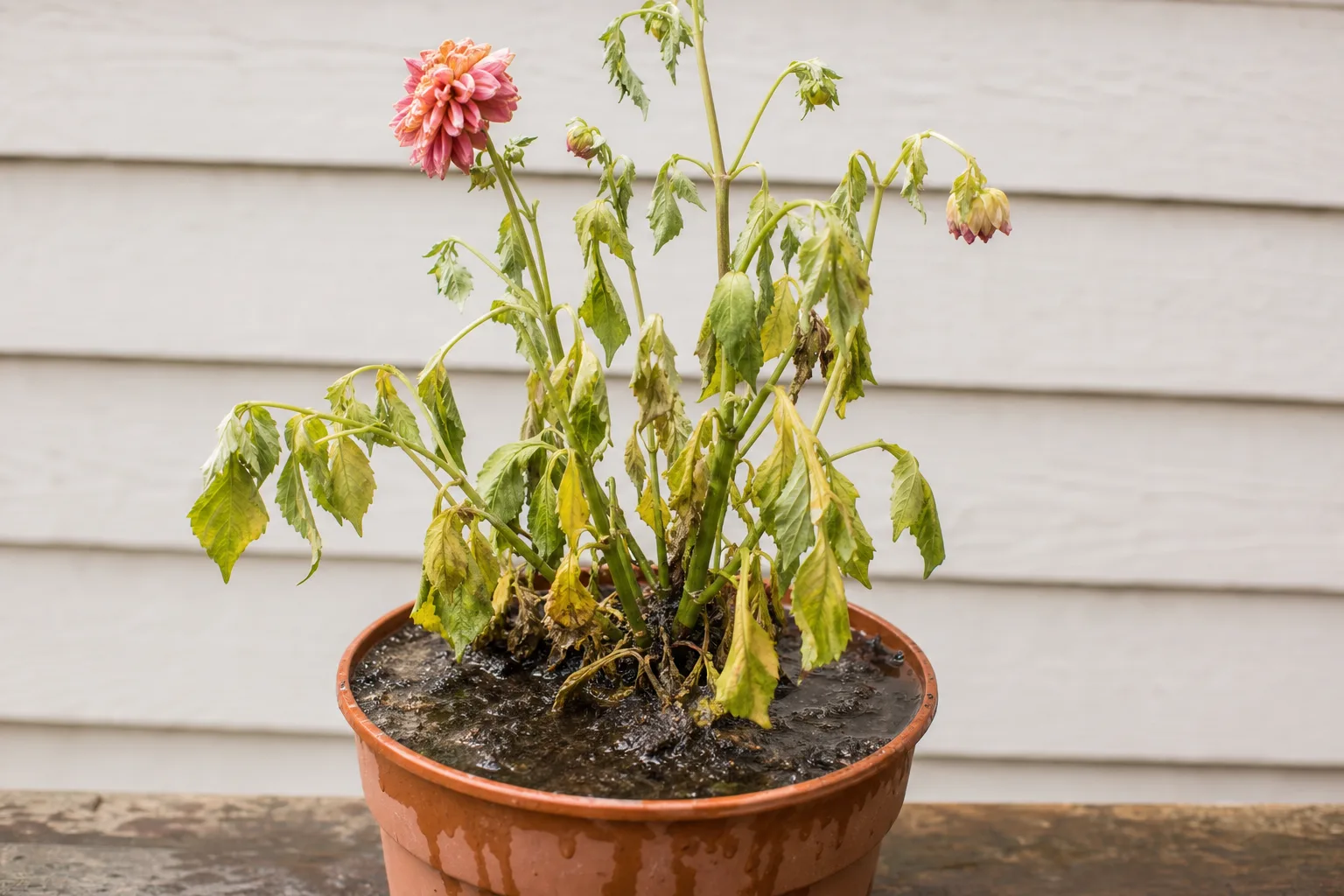
Root Rot on Dahlia: Causes, Checks & Fixes
This guide covers root rot on Dahlia. See also the general Root Rot guide, watering, and light pages for this plant.
Root Rot on Dahlia: Causes, Checks & Fixes
Quick answer
Dahlia (Dahlia spp.) is a tuberous tender perennial grown in Dahlia light guide for summer-to-frost bloom-not a compact rosette houseplant. When growers say root rot, they usually mean tuber, crown, or feeder-root decay from soil that stayed too wet, too cold, or poorly drained at the wrong growth phase. Rot can strike before sprouts appear, mid-season in beds or containers, or after lift when tubers store too wet.
First step: stop all irrigation and lift or unpot the clump to inspect the crown, tuber neck, and eyes. Mushy brown tissue, sour smell, or hollow tuber flesh confirms rot. Firm white or tan tissue with at least one healthy eye may be salvageable after sterile trimming and drying. Do not keep watering because leaves wilt while soil is wet-that deepens paradoxical wilt when decaying roots cannot absorb water.
For chronic wet soil before roots fail, see overwatering on Dahlia. For stage-based watering that prevents rot, see the dahlia watering guide.
Root rot vs. tuber rot on Dahlia - what growers mean
Dahlias store energy in fleshy tubers attached to a central crown where eyes (sprout points) sit. The same organ roots from, grows through summer, and survives dormancy-so decay is not just “bad roots in a pot.”
| What you may hear | What is actually failing | Typical timing |
|---|---|---|
| Tuber rot | Mushy tuber body, neck, or crown before or without much top growth | Planting, pre-sprout, storage |
| Root rot | Feeder roots blackened while crown still partly firm | Active growth in wet clay or saucer water |
| Crown or neck rot | Soft black tissue at soil line; stems detach from tuber | Mid-season saturation or wound entry at lift |
| Storage rot | Breakdown in vermiculite or peat over winter | Post-lift, high humidity, sealed containers |
All of these share one mechanism: prolonged saturation or injury lets fungi or bacteria colonize tuber tissue. OSU Extension stresses that tubers are especially susceptible to rot before the first two leaves appear and that soil should stay consistently moist but never soggy once growth is underway. The RHS adds that dahlias may rot in waterlogged soil even when sun and feeding are correct.
Why Dahlia tubers and roots rot
Rot is almost always a watering, drainage, or storage-timing failure mapped to dahlia biology-not random bad luck.
Pre-sprout: cold, wet planting soil
A dormant tuber has limited ability to move water until shoots and feeder roots expand. Planting into cold, saturated clay or watering on a calendar before green appears keeps the tuber anaerobic. OSU Extension advises not watering after outdoor planting until the first two leaves are present-if soil was dry at planting, water thoroughly once, then wait. WSU Extension guidance similarly warns against saturating tubers at planting in cool ground.
Indoor pre-sprout in soggy mix at room temperature fails the same way: moist medium, not wet, with warmth until shoots show.
Active season: poor drainage in beds or containers
Once stems reach 30 cm or more, dahlias need deep, consistent moisture during bloom-but not constant saturation. Heavy clay, low garden spots, blocked pot holes, and saucers left full exclude oxygen from the tuber zone. Hollow stems may wilt in cool morning hours while soil feels wet because vascular tissue or roots are failing-a pattern the dahlia watering guide separates from harmless midday heat droop.
Containers on hot patios dry quickly on top while the tuber zone stays waterlogged if mix is too heavy or drainage is poor-the opposite failure mode from shallow sprinkles, but equally rot-prone.
Post-frost lift and storage mistakes
After foliage dies, continued irrigation or lifting into wet soil bruises tubers and invites decay. PNW Handbook guidance on tuber storage rot notes that infected tubers break down in storage, often with a white-to-pink fungal coating, and that tubers which wilted during the season should be destroyed. Bacterial soft rot enters through wounds at dig time, producing discolored, mushy, foul-smelling tissue; storage at 40–45°F in dry conditions reduces spread.
What rot looks like on Dahlia (by phase)
Symptoms differ by when saturation happened-match the phase before you treat.
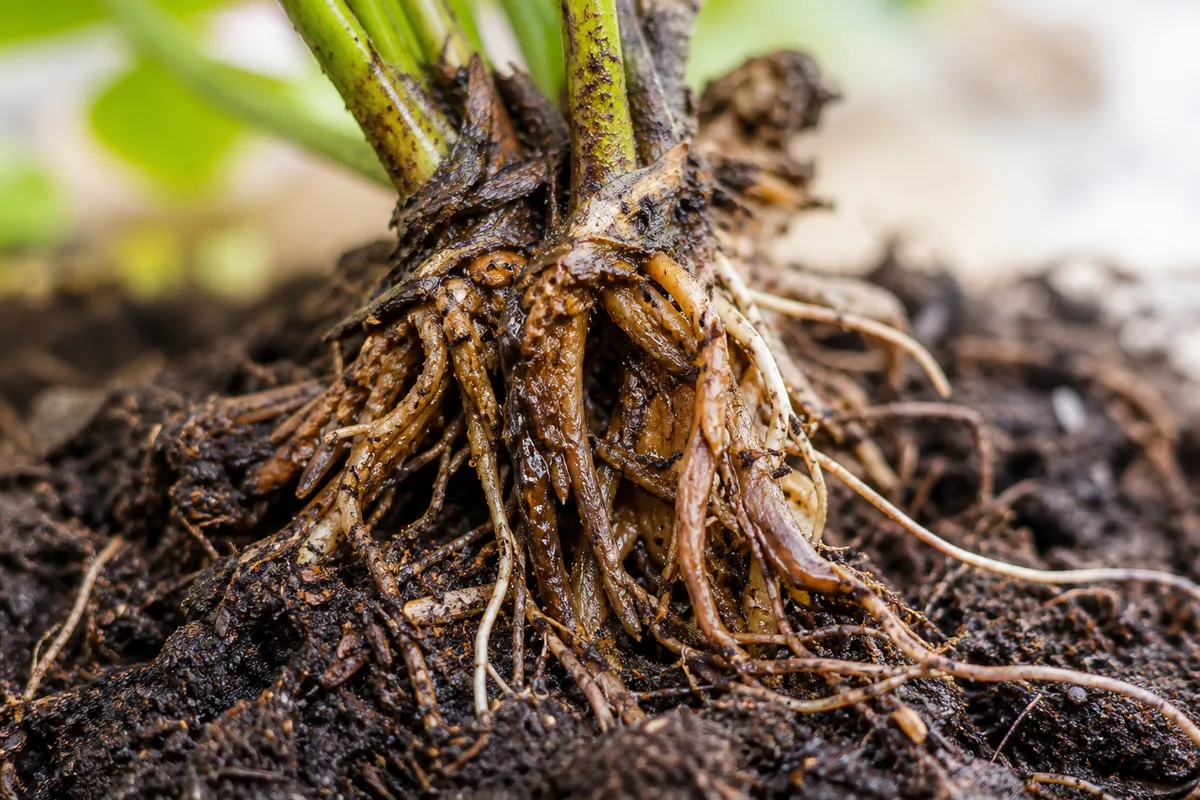
Root Rot symptoms on Dahlia - compare with healthy tissue on the same plant.
Before sprouts (planting failure):
- No emergence weeks after neighbours sprout
- Sunken or dark patch on soil above tuber
- Sour smell when you scrape back planting depth
- Tuber mushy when excavated; eyes brown or absent
During active growth (container or border):
- Lower leaves soft yellow while soil stays wet-not crisp dry yellow
- Morning wilt that does not recover by evening despite moist depth
- Black or mushy stem base at soil line on hollow stems
- Stunted new growth, bud abort, or one stem collapsing while others lag
- Sour or fermented smell near crown when you push soil aside
At lift or in storage:
- Soft neck where tuber joins crown; tuber pulls away from stem
- Brown, hollow, or slimy tuber flesh; advanced cases leave a shell
- White, pink, or gray fungal growth on stored clumps
- Condensation inside sealed storage bags or totes
Not rot: Frost-blackened tops after first hard freeze with firm tubers below-normal dormancy. Midday droop on hot days with moist soil at 5 cm depth and evening recovery-heat stress per drooping leaves on Dahlia.
How to confirm - containers vs. in-ground
Work through these checks in order. One honest tuber inspection beats guessing from wilted leaves alone.
Container dahlias
- Stop watering immediately. Note pot weight-heavy with limp leaves is a red flag.
- Tip the pot and slide the root ball out. Do not yank hollow stems.
- Smell the drain holes and crown-sour means advanced decay.
- Squeeze the tuber neck (where tuber meets crown). Firm tan or white tissue may be saveable; jelly-like neck or disintegrating crown confirms rot.
- Slice one suspicious tuber with a clean knife. Healthy flesh is firm and pale; rot shows brown, water-soaked, or hollow streaks into the crown.
In-ground dahlias
- Pause irrigation and probe moisture 5 cm deep. Wet, sticky clay with morning wilt suggests rot, not drought.
- Fork 15–20 cm from the stem, lever gently, and inspect one side of the clump without destroying the rest if salvage is possible.
- Check the crown and neck first-rot often starts where soil line meets tuber.
- Compare neighbouring plants. One failed clump in a wet low spot points to drainage; multiple collapses in a well-drained bed may need extension help for soilborne wilt versus rot.
Confirmed rot = mushy crown or neck, hollow tuber, sour smell, or brown decay into eyes. Suspected overwatering without mush = wet soil, soft yellow leaves, firm tuber on quick probe-see overwatering on Dahlia and dry the root zone before digging.
First fix - stop water, lift, trim, dry, decide
First action: stop irrigation and expose the tuber zone for inspection. Do not fertilize, divide for propagation, or “help” with extra water while leaves wilt on wet soil.
Then:
- Lift or unpot the clump gently. Shake off loose soil; do not hose mud into wounds.
- Trim all mush back to firm tissue with a sterile, sharp knife. Cut until the cross-section shows no brown streaks in crown or neck.
- Discard tubers with no eyes, hollow bodies, or decay through the crown-they will not sprout and may infect storage.
- Air-dry trimmed clumps 24–48 hours in shade with good airflow before replanting or packing for storage.
- Replant salvageable divisions shallowly in fresh, free-draining mix or amended bed-see the soil guide and repotting guide. Plant eyes up; avoid deep burial into cold wet soil.
- Hold water until new shoots show strong growth-then follow active-season depth checks in the watering guide.
If most of the clump is mush, stop salvage and discard rather than spreading pathogens to healthy tubers in storage.
Step-by-step recovery for salvageable tubers
When at least one firm eye remains:
Partial crown rot on an otherwise firm clump
- Remove only infected tuber lobes and soft neck tissue.
- Dust cut surfaces with sulfur or let them callus dry-avoid sealing wet tissue in plastic.
- Replant in a raised or grit-amended site or clean container with open drainage.
- Stake at replanting if stems will exceed 90 cm-see the dahlia overview.
Single-stem collapse in a multi-stem plant
- Cut the failed stem at the base; inspect whether rot is localized to one tuber lobe or spreading through the crown.
- If crown is firm, reduce watering and monitor remaining stems-do not soak the whole bed “to compensate.”
Container recovery
- Repot into smaller volume if the old mix stayed waterlogged-oversized pots prolong drying.
- Empty saucers after every watering; never let the tuber sit in runoff.
Judge success by new firm shoots from eyes, not by old yellow leaves re-greening.
Recovery timeline and when to give up
Mild feeder-root rot caught early, with a firm crown: stems may stabilize within one to two weeks after soil dries and damaged roots are trimmed-new leaves from the center matter more than old lower foliage.
Neck rot trimmed back to clean tissue: expect several weeks before strong regrowth; bloom may be reduced that season.
Pre-sprout total failure: no recovery timeline-replant with new tubers after fixing drainage or planting timing.
Give up when: the entire crown disintegrates, all eyes are brown, tuber flesh hollows under gentle pressure, or vascular streaking returns after a trim attempt. PNW Handbook storage guidance recommends destroying tubers that wilted in growth or show visible infection rather than storing them with healthy stock.
Root rot vs. overwatering vs. normal frost dieback
| Signal | Overwatering (early) | Root / tuber rot (confirmed) | Frost dieback |
|---|---|---|---|
| Soil moisture | Wet, heavy | Wet or recently wet | Drying as tops senesce |
| Tuber / crown | Still firm on probe | Mushy neck or crown | Firm below dead stems |
| Leaf texture | Soft yellow lower leaves | Soft yellow + collapse | Blackened, frost-killed tops |
| Smell | Sometimes sour | Often sour or fermented | None from tuber |
| Timing | Any active growth | Any phase; storage common | After first hard frost |
Chronic overwatering becomes rot if saturation continues-this page is for when tissue is already decaying. The overwatering page covers pulling back before mush appears.
What not to do
Do not keep watering wilted plants in wet soil-paradoxical wilt means roots are failing, not thirsty.
Do not fertilize rotting clumps; salts stress compromised tissue.
Do not replant into dense garden soil alone in containers-use free-draining mix per the soil guide.
Do not compost mushy tubers or suspected bacterial soft rot clumps when you plan to replant dahlias nearby-bag and discard instead.
Do not seal wet tubers in plastic totes for winter; ventilation and barely moist medium prevent storage breakdown per OSU Extension storage steps.
Do not divide for propagation until you have clean, firm tissue-rot spreads through knives and shared storage bins.
How to prevent rot next season
At planting: Wait until soil warms and frost danger passes; plant into free-draining, amended soil; water once at planting only if dry, then hold until two leaves show. Avoid low spots and un drained cachepots.
During growth: Water deeply at the base when the top 5 cm dries during active bloom-not on a fixed calendar. Aim for consistent moisture, never soggy per OSU Extension. Improve clay with compost and grit; use raised beds where winter wet persists.
In containers: Drainage holes open, saucers emptied, daily checks in peak heat without leaving the tuber zone saturated overnight.
At season end: Stop irrigation when tops die; lift in dry weather if storing; cure and discard rot before packing. Store at 4–10°C (40–50°F) in barely moist vermiculite or coir with airflow-check monthly for condensation and soft necks.
Rotation: After bacterial soft rot, PNW Handbook guidance recommends replanting in a new well-drained site rather than returning to the same infected soil immediately.
Pet safety when discarding rotted tubers
Dahlias are toxic to cats, dogs, and horses, with mild gastrointestinal signs possible if tubers are eaten-tubers are the most concentrated part. Bag mushy clumps for trash rather than leaving them in compost piles pets can reach. Contact your veterinarian or ASPCA Poison Control at (888) 426-4435 if ingestion occurs.
Salvage decision checklist
Before you invest more season time, answer honestly:
- Is there at least one firm eye on the crown?
- After trimming, does cut tissue stay pale and firm, not streaked brown?
- Can you replant into better drainage (raised bed, grit, clean mix)-not the same low wet hole?
- Was the problem localized to one tuber lobe rather than whole-clump breakdown?
Yes to all four → trim, dry, replant, water sparingly until regrowth.
Any no → discard the clump, fix drainage or storage, start with healthy tubers next cycle.
When to use this page vs other Dahlia guides
- Dahlia watering guide - Use for routine moisture checks before assuming root rot is the main issue.
- Dahlia problems hub - Browse all 17 common issues on this species.
- Overwatering on Dahlia - Different entry point when symptoms overlap with root rot.
- Yellow Leaves on Dahlia - Different entry point when symptoms overlap with root rot.
- Wilting on Dahlia - Different entry point when symptoms overlap with root rot.
Related Dahlia guides
- Dahlia overview
- Dahlia watering
- Dahlia light
- Dahlia soil
- Overwatering on Dahlia
- Yellow Leaves on Dahlia
- Wilting on Dahlia
- Mold on Soil on Dahlia
- Dahlia problems
Related tool
Use the Root Rot Risk Checker to narrow causes for root rot on this plant before changing multiple variables at once.